How to Assess Structural Durability of Hinges and Screws in Kids’ Sunglasses?
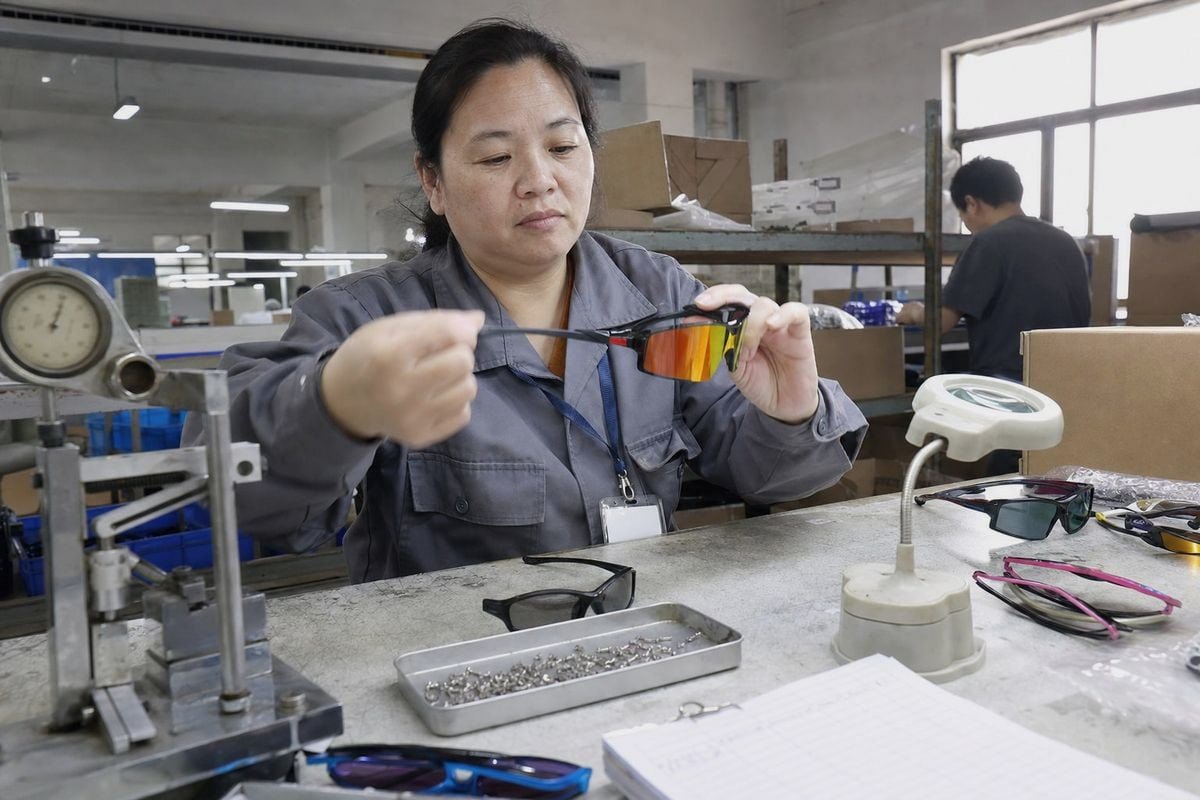
On our Taizhou production line, I have seen one truth repeat itself: the structural durability of hinges and screws in kids’ sunglasses decides whether a product survives real children — or fails within weeks.
To assess structural durability of hinges and screws in kids’ sunglasses, combine hands-on inspection, open-close cycle testing (500–10,000 cycles), torque and pull checks, screw-retention marking tests, and deformation recovery checks, while verifying corrosion-resistant screws, spring or screwless hinge designs, and disclosed test methods.
That is the short answer. Now let me break it down step by step, from failure signs to test methods, materials, and the exact questions you should ask your supplier.
What Hinge and Screw Failures Should I Watch for During Quality Testing?
A buyer from Australia once sent me a competitor's sample with one temple hanging loose. The lens was perfect. The hinge screw had simply backed out. That single tiny part sank the whole return rate.
Watch for loose or off-center screws, wobbly or misaligned hinge barrels, gritty or clicking temple movement, uneven resistance between the two sides, visible gaps at the joint, temples that swing freely, and any small metal part that could detach and create a child-safety hazard.

Hinges fail first because children do not treat eyewear gently. They open frames with one hand, twist the temples outward, drop them on concrete, and stuff them into backpacks. Every one of those actions loads the hinge and screw assembly. In our QC room, we treat this joint as the number one inspection point, ahead of the lens itself.
Structural durability here means more than "does not snap." It means the hinge stays aligned, the resistance stays consistent, the screw stays seated, and the frame returns to shape after flexing. A hinge can be technically intact and still be a failure if it wobbles or grinds.
The Failure Modes I Check on Every Batch
| Failure Sign | What It Tells You | Risk Level for Kids |
|---|---|---|
| Screw backing out | Poor thread lock or wrong torque at assembly | High — small-part risque d'étouffement 1 |
| Off-center or tilted screw head | Rushed or misaligned assembly | Medium — early loosening likely |
| Gritty or popping motion | Burrs, debris, or barrel misalignment | Medium — wear accelerates fast |
| Temple swings freely | Lost friction, over-cycled hinge | High — frame slides off active kids |
| Visible gap at hinge barrels | Overstretched joint or bad tolerance | High — leads to full separation |
| Corrosion spots on screw | Low-grade metal reacting to sweat | High — weakens and stains skin |
Remember the safety angle. In adult eyewear, a loose screw is an annoyance. In children's eyewear, a detached screw is a potential choking hazard, and an unstable frame near a child's eye is a real injury risk. So I always judge hinge failures on two scales at once: mechanical behavior and child-safety consequence.
How Can I Test Hinge Durability Before Placing a Bulk Order?
Before we release any new style from our ~800-model catalog, our team runs samples through a fixed test sequence. I recommend buyers repeat a lighter version of it themselves before signing a bulk PO.
Test hinge durability by cycling temples open and closed at least 500 times, checking friction consistency, running a pull test on the temples, marking screw heads and rechecking rotation after 24 hours of handling, and confirming the frame recovers its shape after stretching.
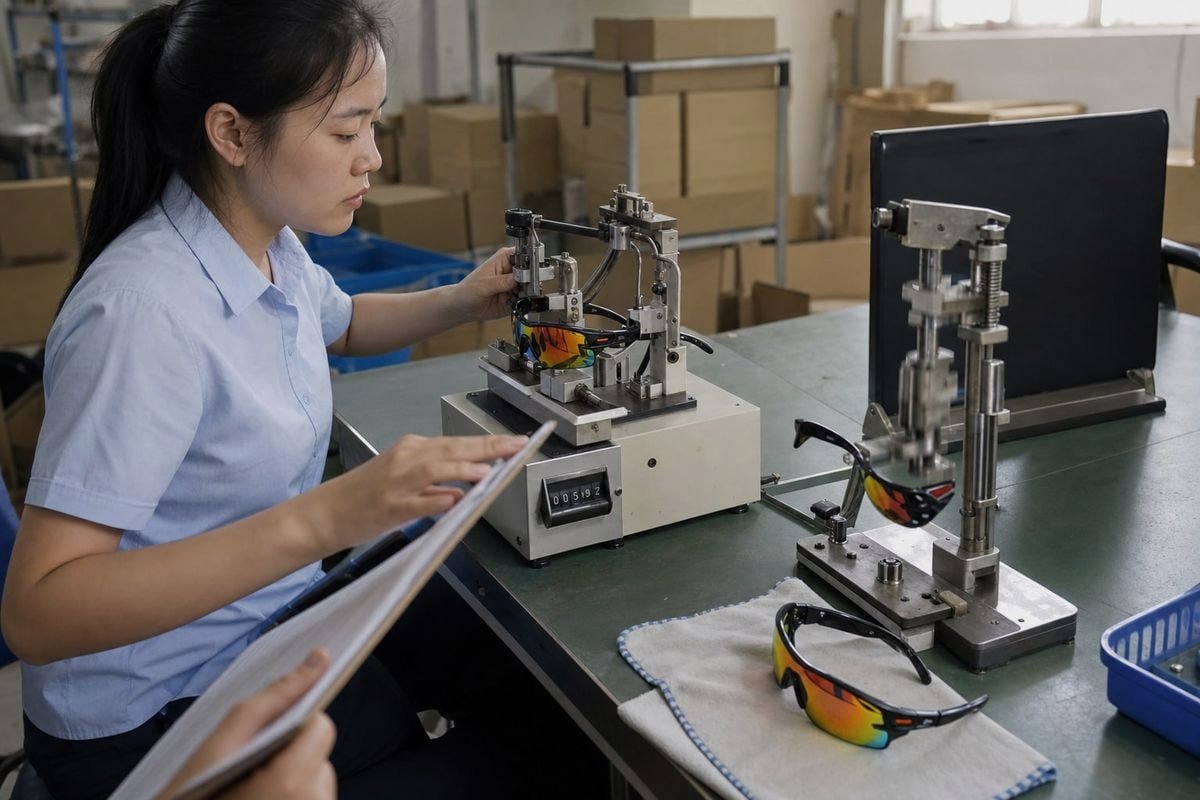
You do not need a full lab to catch most weak hinges. A structured sample test at your desk reveals a surprising amount. Here is the process I walk buyers through when they receive our pre-production samples.
A Six-Step Sample Test You Can Run Yourself
- Baseline feel. Open and close each temple slowly. Note the resistance. Both sides should feel the same. Grit, clicks, or popping are instant red flags.
- Cycle test. Open and close the temples 500 times. It takes about fifteen minutes per pair. Afterward, the friction should not disappear, and no screw should have visibly rotated.
- Screw marking test. Draw a fine marker line across each screw head onto the frame. Use the glasses normally, or simulate handling, for 24 hours. If the line breaks alignment, the screw is self-loosening.
- Pull test. Grip the frame front and pull each temple outward with steady, firm hand force. The hinge should flex or resist, not creak, gap, or deform permanently.
- Deformation recovery. Flex the temples wide open, past the natural stop if the design allows, then release. The frame should return very close to its original spread. Lab construction tests typically expect only a small deviation from the original shape.
- Environmental abuse. Leave one sample in a hot car and one in a freezer for a few hours each. Then repeat the cycle and wobble checks. Hot-cold swings expose weak hinge pins and brittle plastic around the barrel.
How to Read Cycle-Count Claims
Suppliers quote wildly different numbers: 500 cycles, 5,000, 10,000, even 50,000 or more. Treat 500 cycles as a reasonable minimum construction check, and several thousand cycles as a stronger engineering benchmark. Anything above that is only meaningful if the supplier discloses the test method, the fixture, and the pass criteria. A big number without a method is marketing, not evidence. I always tell buyers: ask how it was measured before you ask how high the number is.
Which Materials and Designs Make Hinges Safer for Active Kids?
Our engineers spent years shifting our kids' lines toward TPEE temples and TR90 fronts 2 for one simple reason: flexible materials remove stress from the hinge before it ever reaches the screw.
Screwless one-piece flexible frames in TR90 or TPEE are safest for toddlers, spring hinges with stainless steel screws suit children over six, and split or reinforced hinges add backup retention — while low-grade zinc alloy hinges and rigid miniature screws should be avoided.
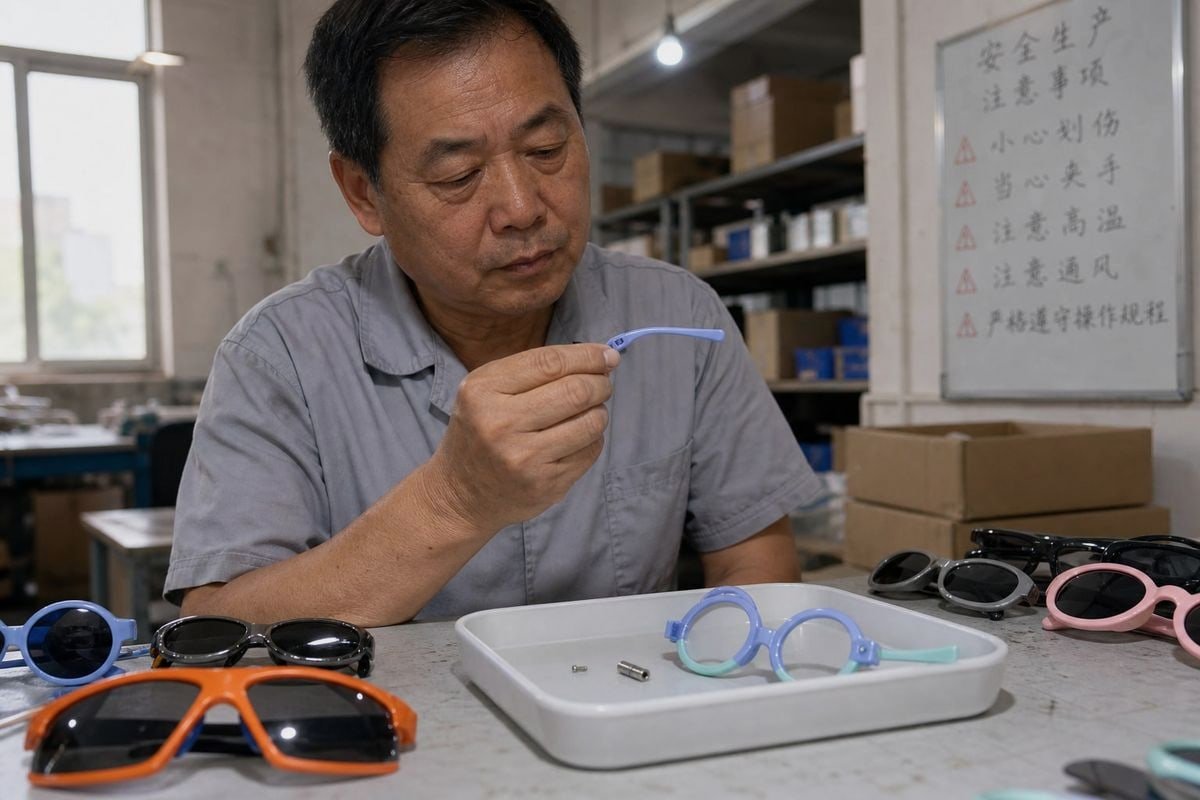
Design strategy matters as much as material grade. There are two schools of thought. One camp reinforces the hinge: spring mechanisms 3, hardened screws, split-hinge double fasteners. The other camp removes the hinge entirely with flexible one-piece construction. Both are valid. The right answer depends on the child's age and how the product will be used.
Comparing Hinge Strategies for Children's Eyewear
| Design | How It Protects | Best Age Group | Trade-Off |
|---|---|---|---|
| Screwless one-piece flexible frame | No small parts, no joint to fail; the material flexes and rebounds | 0–5 years | Less adjustable; durability depends on material rebound quality |
| Standard barrel hinge | Simple and repairable | 8+ with careful use | Weakest against twisting; screws loosen fastest |
| Spring (flex) hinge | Absorbs outward bending, springs back after rough handling | 6+ years | More parts inside; quality varies widely by maker |
| Split hinge (double screw) | Second fastener keeps the frame secure if one screw loosens | 6+ years | Slightly heavier; more assembly steps to control |
| TR90 front + TPEE temples | Whole structure flexes, so the hinge sees far less peak stress | 3+ years | Requires genuine material expertise, not generic plastic |
Screw Material Deserves Equal Attention
Children sweat. They chew temple tips. They swim with sunglasses pushed onto their heads. Sweat and moisture corrode cheap screws quickly, and a corroded screw both weakens and stains. Insist on stainless steel or nickel-free alloy screws 4 for any hinged kids' frame. In our workshop, we also match screw torque 5 to the hinge design during assembly, because an over-torqued screw cracks the barrel and an under-torqued one backs out. Few consumers ever hear about torque specs, but as a buyer you should ask about them directly.
One honest caveat: hinge-free is not automatically better. Removing the hinge shifts the engineering burden onto the material itself. A screwless frame made from brittle, low-grade plastic will crack at the flex point instead. Flexible construction only works when the polymer has genuine rebound quality.
What Should I Ask My Manufacturer to Ensure Long-Term Screw Reliability?
Over fifteen years of exporting children's eyewear to buyers in more than twenty countries, I have learned that the best purchase orders read like small engineering specs. Vague POs get vague quality.
Ask your manufacturer for the screw material and coating, the assembly torque specification, whether thread-locking is applied, the cycle-test count and method, pull-test results, corrosion and thermal testing, applicable safety compliance such as ASTM F963 or EN71, and the AQL inspection plan for hinges.

Good factories will answer these questions in detail. Evasive answers are themselves an answer. When brands audit our line in Taizhou, I encourage them to go station by station: how the hinge is inserted, how the screw is driven, how tension is checked before packing. That transparency is what separates a manufacturing partner from a trader reselling unknown stock.
The Question Checklist I Recommend to Every Buyer
| Question to Ask | What a Good Answer Sounds Like | Red Flag Answer |
|---|---|---|
| What screws do you use? | Stainless steel or nickel-free alloy, with size and coating specified | "Standard screws" with no material named |
| Do you control assembly torque? | Yes, defined torque range per hinge type, checked with calibrated drivers | "Our workers are experienced" |
| Is thread-locking applied? | Yes, micro-dose adhesive or self-locking thread design on hinged kids' styles | "Not necessary" |
| How do you cycle-test hinges? | Stated cycle count, fixture description, and pass criteria after testing | A big number with no method |
| What compliance do you meet? | Children's product safety standards relevant to the destination market, with test reports available | "It's the same as everyone else's" |
| What is your hinge AQL? | Defined inspection level and sampling plan for hinge function and screw seating | No sampling plan at all |
Build Reliability into the PO, Not the Complaint Email
Put your requirements in writing before production, not after a claim. Specify screw material, torque control, thread-locking, cycle-test acceptance, and third-party compliance documents as part of the order. Then verify with a pre-shipment inspection 6 that includes hinge cycling and screw-seating checks on the sampled units. When we run OEM projects 7 — custom colors, logos, lenses, and packaging — these hinge specs sit in the same document as the branding specs, because a beautiful retail box cannot rescue a wobbly hinge. Long-term screw reliability is a process outcome, and the process starts with the questions you ask.
Conclusion
Hinges and screws fail first in kids' sunglasses. Assess them with cycle, torque, pull, and retention tests, favor flexible or reinforced designs, and demand documented methods from your manufacturer.
Notes de bas de page
1. CPSC guidance defines small-part choking hazards relevant to detached hinge screws in children’s products. ↩︎
2. Background on the flexible polymer class used in TPEE and TR90 frame materials. ↩︎
3. General background on spring mechanisms supports the hinge-reinforcement design discussion. ↩︎
4. Medical reference explains nickel dermatitis, supporting the recommendation for nickel-free screw materials. ↩︎
5. Background concept explaining torque, the mechanical property central to correct screw assembly. ↩︎
6. Alibaba.com is a leading manufacturing/trade platform where pre-shipment inspection processes are commonly arranged. ↩︎
7. Wikipedia explains OEM manufacturing, clarifying the custom production model mentioned in the text. ↩︎
Plus d'articles que vous pourriez aimer
1 août 2026
L'usine doit-elle gérer l'emballage et l'étiquetage des lunettes pour enfants, ou utiliser un fournisseur désigné ?

1 août 2026
Entrepôt propre vs. exécution directe par le fournisseur : lequel réduit les coûts de retour pour les marques de lunettes pour enfants ?

1 août 2026
Entrepôt direct au port ou staging outre-mer : lequel permet d'économiser le plus sur l'expédition des lunettes pour enfants ?
Vous recherchez un partenaire fiable en lunetterie pour enfants ?
Explorez plus de 800 styles prêts et un support OEM/ODM complet adapté à votre marque.
Contactez-nous English
  Español de México
  Deutsch
  Français
  日本語
日本語  العربية
  Português do Brasil