How to Set Written Safety Requirements With Suppliers for Kids’ Optical Frames?

Written safety requirements with suppliers for kids’ optical frames are what protect your brand when a verbal promise fails. On our production line, I have seen exactly how that gap opens. A buyer trusts a sample, skips the paperwork, and six months later a shipment arrives with untested nose pads or the wrong lens material. The recall cost lands on the brand, not the factory. The solution is simple but demanding: put every safety expectation in writing before the first purchase order.
To set written safety requirements with suppliers for kids’ optical frames, issue a technical specification sheet plus a supplier quality agreement covering approved materials, CPSIA compliance, impact resistance testing, restricted substances, labeling, batch traceability, third-party test reports, and pre-shipment inspection criteria — with clear pass/fail limits and change-control rules.
That is the short answer. The rest of this article breaks it into four practical steps you can apply with any factory, sourcing agent, or QC team.
What Should I Include in a Safety Specification Sheet for Kids' Optical Frames?
A few years back, a European buyer sent us a "spec" that was one line: frames must be safe for kids. Our team sent back a four-page template. That exchange taught us both something.
A safety specification sheet for kids' optical frames should list approved materials per component, restricted substances with limits, mechanical safety criteria such as rounded edges and secure small parts, lens compatibility requirements, dimensional tolerances, labeling and warning text, and the exact test standards and documents required before shipment.
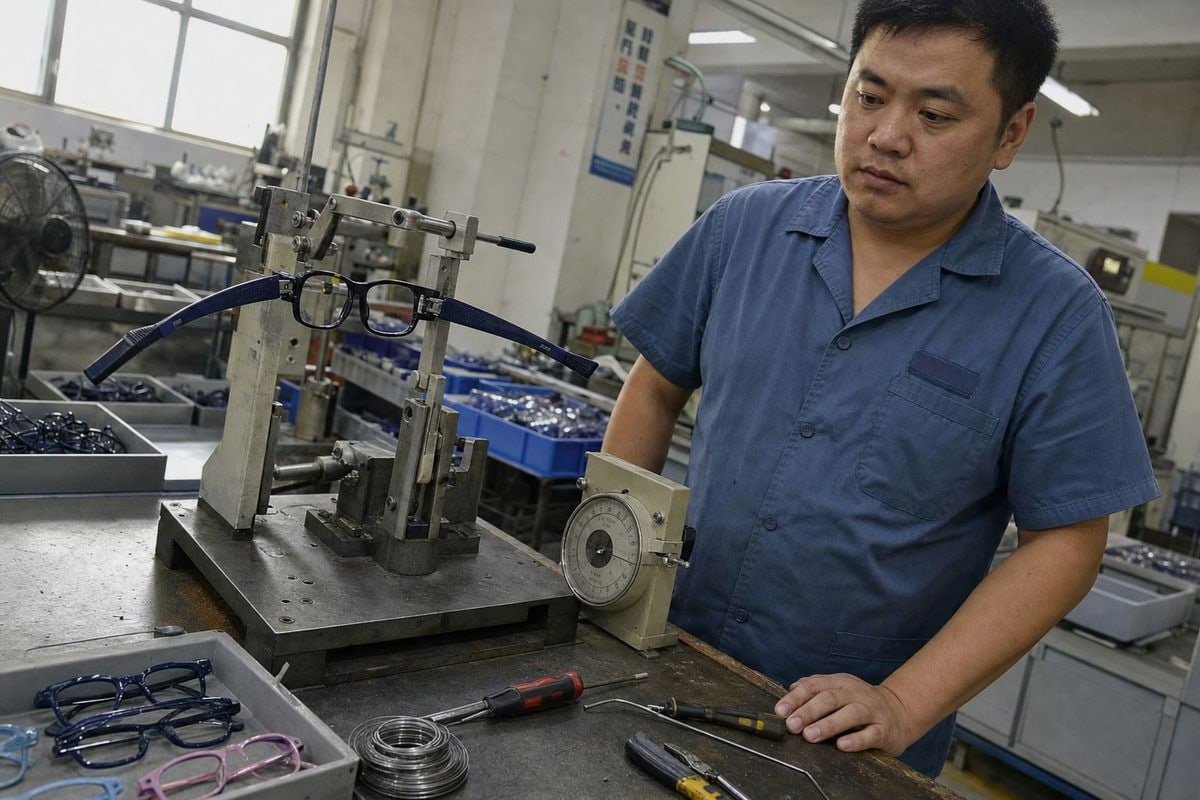
The core rule I share with every new client is this: if it isn't written, it isn't enforceable. "Must be safe" means nothing in a dispute. "No accessible sharp points, edge radius smooth to touch, verified at incoming inspection" means everything. A good specification sheet turns a legal obligation into a measurable factory task.
Break the Spec Into Buckets
Organize the sheet by risk category so nothing gets missed. Here is the structure we recommend to buyers sourcing from our Taizhou factory:
| Spec Bucket | What to Write Down | Example Requirement |
|---|---|---|
| Seguridad química | Restricted substance list per market | Lead and phthalate testing 1 to CPSIA limits; BPA-free materials |
| Seguridad mecánica | Edge, hinge, and small-part criteria | Smooth surfaces, no burrs, rounded edges, no detachable small parts |
| Lens safety | Impact and retention requirements | Impact resistance testing 2; secure lens retention in the groove |
| Fit and design | Child-specific geometry | Adjustable or molded nose pads; lightweight frame target |
| Labeling | Warnings and markings | Age grading, tracking label, care instructions |
| El próximo Pasaporte Digital de Producto de la UE requerirá un registro de transparencia escaneable para EPP. Las marcas que solo tienen informes de prueba en papel tradicionales, comunes en las cadenas de suministro centradas en Australia, deberían comenzar a estructurar archivos de cumplimiento digital ahora. | Evidence required before shipment | Third-party test reports 3, material certificates, Certificate of Conformity |
Make Every Line Measurable
Vague words invite arguments. Replace "durable" with a hinge cycle count. Replace "non-toxic" with named non-toxic frame materials and the test method that proves them. On our TR90 and TPEE kids' frames, we specify component-level materials — frame front, temples, hinge connectors, temple tips, screws — because children's products need material traceability at that level, not just for the finished frame. One overlooked detail worth writing in: even under foreseeable misuse, like a child bending or chewing the temple, the frame must not create a hazard. Flexible materials handle this far better than rigid ones, which is exactly why we built our whole product line around them.
How Do I Set Material and Durability Standards With My Frame Supplier?
There is a trade-off I weigh with buyers all the time: a cheaper acetate or generic plastic frame saves cents per unit, but a flexible TR90 or TPEE frame 4 survives what children actually do to glasses.
Set material standards by naming approved materials per component in writing — such as TR90 fronts, TPEE temples, and polycarbonate or Trivex lenses — then attach durability criteria: hinge cycle tests, bridge deformation limits per ISO 12870 requirements, nickel release limits on metal parts, and a maximum frame weight for children.
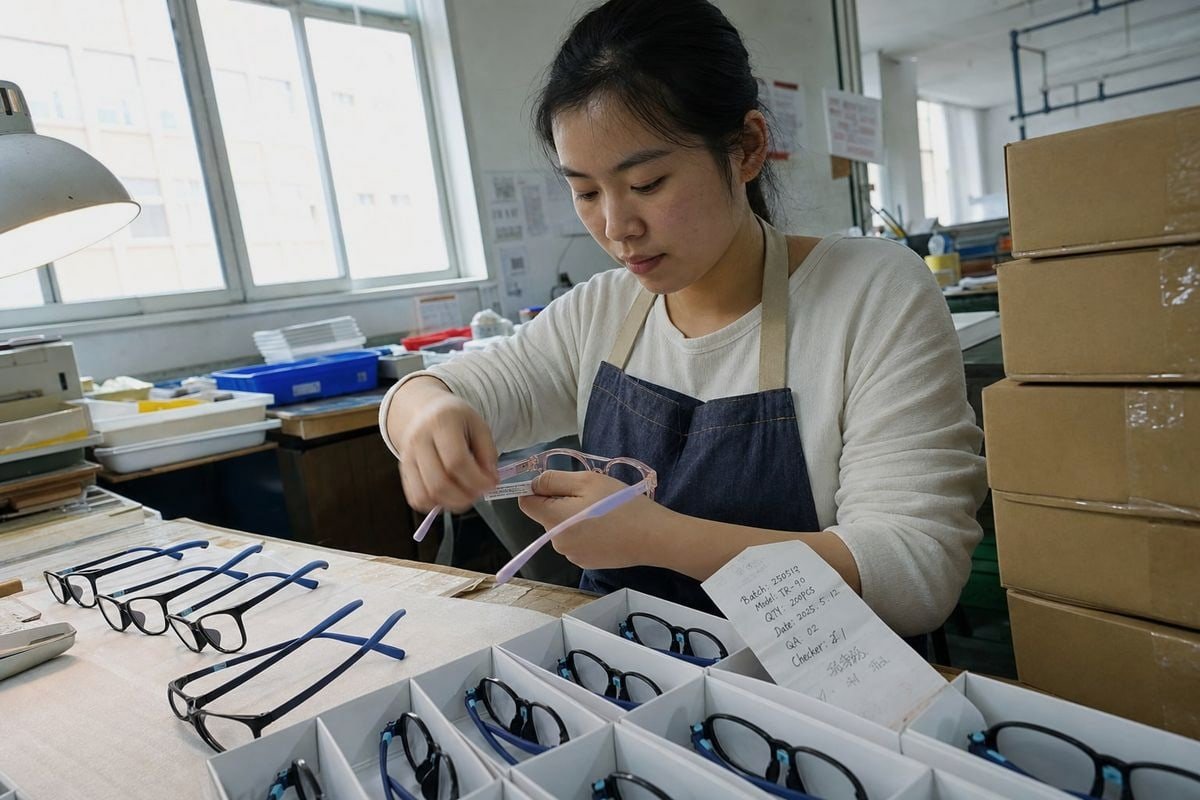
Material choice is the first safety decision, because it determines how the frame fails. A rigid frame snaps and leaves sharp edges near a child's eye. A flexible frame bends and returns. After fifteen years of making kids' eyewear, our engineers treat material specification as the foundation the rest of the spec sits on.
Name Materials, Then Prove Them
Do not accept "plastic frame" on a quotation. Require the supplier to declare the exact polymer for each part, then back it with material certificates and lab reports. Here is a comparison we walk buyers through:
| Material | Uso típico | Safety Advantage | What to Require in Writing |
|---|---|---|---|
| TR90 | Frame fronts, full frames | Lightweight, memory flexibility, resists snapping | Material certificate plus chemical migration report |
| TPEE | Temples, soft components | Extreme flexibility, gentle on skin, eco-friendlier profile | Batch-level testing for sweat and saliva stability |
| Silicona | Hinge connectors, nose pads, ear hooks | Soft, hypoallergenic, slip-resistant | Skin-contact safety declaration |
| Polycarbonate / Trivex | Lenses | Shatter-resistant under impact | Impact resistance testing evidence per lens batch |
| Metal (screws, cores) | Hardware | Structural strength | Nickel release limits and chemical assay per component |
Write Durability as Numbers
Durability standards should read like test instructions. Specify hinge open-close cycles. Specify temple flex angles without permanent deformation. Reference ISO 12870 5 requirements for general frame robustness, and add child-specific extras: a weight cap on the unglazed frame, bite and pull resistance on temple tips, and colorfastness of coatings against sweat. On the two-tone rubber-temple frames we produce, we test the bond between the TR90 core and TPEE overmold, because a delaminating temple is both a durability failure and a choking risk. Finally, lock in a "no change" clause: the supplier may not switch resin grades, colorant suppliers, or hardware sources without your written approval and retesting. Silent material substitutions cause more compliance failures than bad initial design ever does.
Which Safety Certifications Should I Require From My Optical Frame Manufacturer?
When we ship kids' optical frames to buyers in more than twenty countries, the paperwork stack changes with every destination. That reality shapes my advice here.
Require market-matched certifications: for the US, a Children's Product Certificate backed by CPSC-accredited lab testing and FDA lens impact compliance under 21 CFR 801.410; for the EU, REACH testing and a Certificate of Conformity; plus ISO 12870 reports and component-level chemical test certificates everywhere.
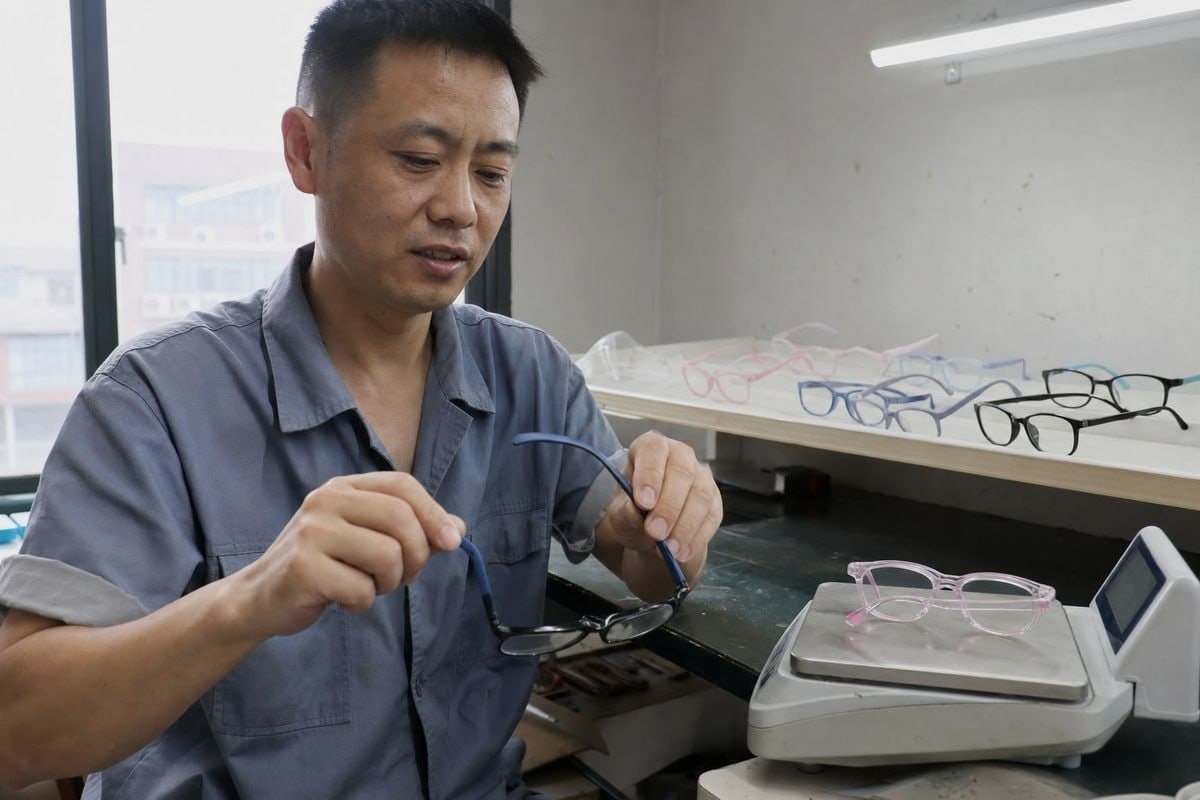
A common buyer objection I hear is: "Can't we just use one universal certificate for all markets?" I understand the appeal, but no single document covers everything. The workable compromise is a global core spec — non-toxic frame materials, mechanical safety, impact resistance testing — plus market-specific annexes listing each region's documents. That keeps your supplier file manageable without leaving legal gaps.
Certifications by Market
| Mercado | Key Requirement | Document to Demand |
|---|---|---|
| Estados Unidos | CPSIA compliance for lead, phthalates, tracking labels | Children's product certificate with CPSC-accredited lab reports |
| Estados Unidos | Lens impact resistance under FDA rules | Drop-ball or equivalent test records; confirm FDA medical device registration status for Rx frames |
| Unión Europea | REACH restricted substances | SVHC screening report and Certificate of Conformity |
| UK / EU protective use | EN 166 markings where applicable | Marked samples plus test report |
| Sports eyewear | ASTM F803 standards for impact protection | Certified test report if marketed for sports |
| General | Frame robustness | ISO 12870 requirements test report |
Treat Missing Reports as a Deal-Breaker
A serious kids' eyewear factory can produce recent third-party test reports on request. If a supplier cannot show them — or offers only self-declared "conformity" letters — walk away. Also check the details: reports must come from accredited labs, reference the correct standard version, and cover the actual materials in your product, not a similar model from two years ago. In our experience, most certification failures are not fraud. They are outdated reports, wrong test standards, or reports that cover the frame but not the decorative parts. Write into your agreement that certifications must be renewed per batch or per year, whichever your market requires.
How Can I Verify My Supplier Is Actually Following Our Written Safety Requirements?
The hardest lesson I have learned running a taller gestionado con 5S 6 is that a signed agreement changes nothing unless someone checks the physical product against it, again and again.
Verify compliance through a gated workflow: audit the factory before ordering, approve a first article sample against the spec, confirm lab results before mass production, run quality control inspections during and after production, spot-test random batches, and retest after any material or tooling change.
Verification is a process, not an event. Here is the six-gate sequence we recommend, and the one we invite our own B2B clients to run on us:
- Pre-qualification audit. Review the factory's compliance history, lab relationships, and test capability. Ask for reports from previous kids' eyewear orders. A factory that only makes adult frames may not understand children's requirements.
- First article approval. Compare the golden sample against every written line: materials, dimensions, edge finish, markings, packaging warnings. Sign and seal the approved sample. All future production is judged against it.
- Pre-production lab testing. Confirm chemical results — lead and phthalate testing, migration testing on skin-contact parts — before the factory buys bulk material. Testing after production is too late to fix anything cheaply.
- In-line and pre-shipment inspection. Check hinge strength, lens retention, surface smoothness, and label accuracy on statistically sampled units. Physically flex temples. Run fingers along every edge. Verify the tracking label matches the batch code.
- Ongoing batch controls. Randomly pull units from shipments for independent retesting once or twice a year. Tie batch codes to raw material lots so a problem can be traced backward and contained.
- Change-control review. Require written notice before any change to materials, sub-suppliers, factory location, or tooling — and retest after approval. Some buyers now go further and request QR-code traceability on the frame or packaging, a step toward digital product passports 7 that regulators increasingly favor.
What to Check on the Frame Itself
At each inspection, verify: smooth edges and finish, hinge durability, secure lens retention, no accessible sharp points, intact temple and nose pad materials, correct markings, and complete packaging warnings. Ten minutes with a checklist catches what months of emails cannot.
Conclusión
Unwritten safety expectations fail silently until a child gets hurt or a shipment gets rejected. Written specs, market-matched certifications, and gated verification turn kids' frame safety into an enforceable system.
Notas al pie
1. CPSC page explains CPSIA lead and phthalate limits referenced for pre-production lab testing. ↩︎
2. ASTM standard governs impact resistance testing methods cited for children’s eyewear safety. ↩︎
3. ISO/IEC 17025 defines the lab accreditation standard behind valid third-party test reports. ↩︎
4. Background on thermoplastic elastomer materials like TPEE used in flexible children’s frames. ↩︎
5. ISO is the official body publishing ISO 12870, the referenced spectacle frame robustness standard. ↩︎
6. Background on the 5S workplace organization methodology referenced for quality verification. ↩︎
7. Explains the emerging traceability concept regulators favor for verifying supply chain compliance. ↩︎
Más artículos que te podrían gustar

5 de agosto de 2026
Bio-Based vs Regular Cellulose Acetate: What's the Difference for Kids' Frames?

5 de agosto de 2026
How Recyclable Are Kids' Optical Frame Materials, and What Eco-Friendly Alternatives Exist?
5 de agosto de 2026
Do Kids Optical Frames Whiten or Age in Storage, and How to Control Warehouse Conditions?
¿Buscas un socio confiable en gafas para niños?
Explore más de 800 estilos listos y soporte OEM/ODM completo adaptado a su marca.
Ponte en contacto English
  Español de México
  Deutsch
  Français
  日本語
日本語  العربية
  Português do Brasil