How to Request PPWR-Compliant Packaging for Kids’ Optical Frames from Suppliers?
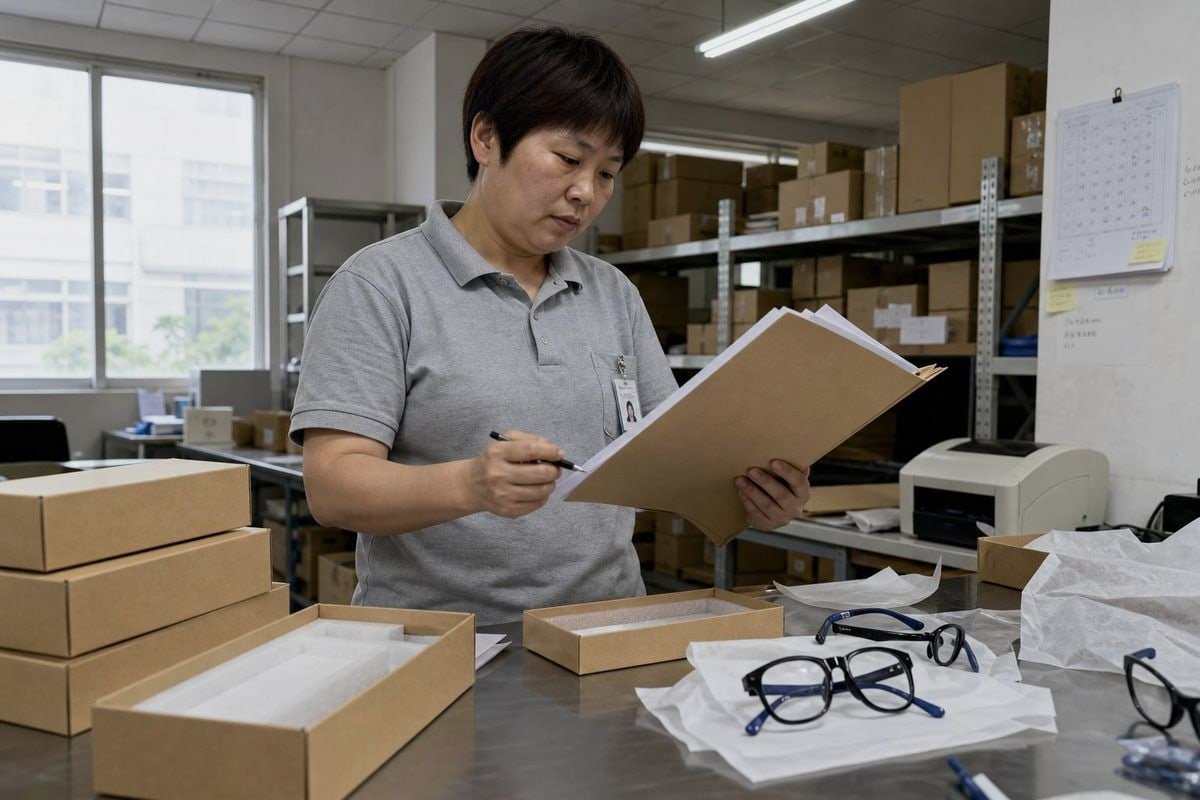
Buyers keep asking our factory about PPWR-compliant packaging 1 for kids’ optical frames. Many suppliers still ship boxes with zero documentation — and that gap can block your EU shipments.
To request PPWR-compliant packaging for kids’ optical frames, ask suppliers for a full compliance dossier: material composition declarations, substance-restriction evidence, recyclability data, harmonized labeling proof, traceability records, and an EU Declaration of Conformity. Specify these requirements per packaging component in your purchase order.
That sounds like a lot. It is manageable if you break it into four steps. Below, I walk through each one from our factory-floor perspective.
What documentation should I ask my supplier to prove PPWR compliance?
Last year, a German buyer sent us a five-page packaging questionnaire before confirming an order of TR90 kids' frames. That questionnaire taught us exactly what serious EU importers now expect.
Ask for a packaging specification sheet, a component-level material composition declaration, substance compliance confirmations covering PFAS and heavy metals, recyclability evidence, harmonized labeling proof, traceability records, and an EU Declaration of Conformity with its supporting technical file, retained for five to ten years.
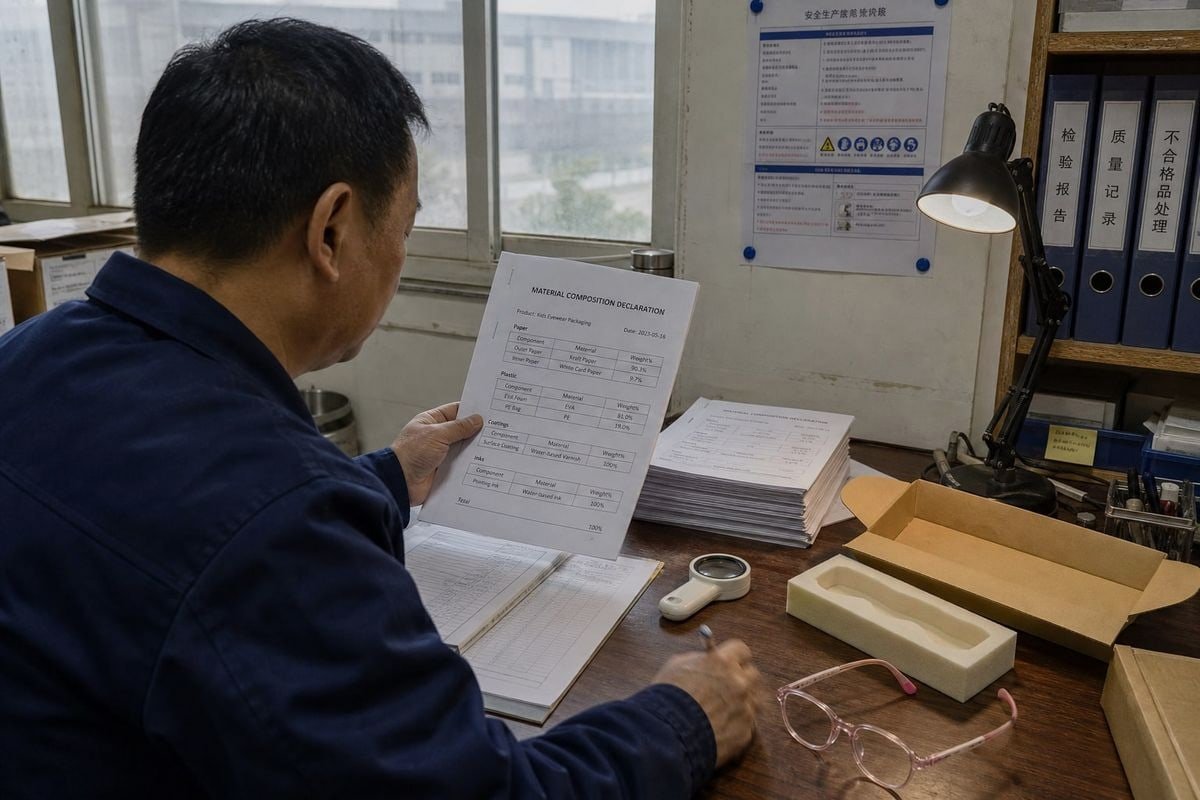
The biggest mistake I see is buyers asking vaguely for "green packaging." PPWR does not reward vague claims. It rewards documented evidence. So your document request must be specific, and it must be tied to the exact packaging SKU you are ordering — not to the supplier's company in general.
The core document set
Here is the dossier we prepare for our own OEM clients, and what each item proves:
| Documento | Lo que prueba | Who issues it |
|---|---|---|
| Packaging specification sheet | Dimensions, weight, format, function of each component | Proveedor |
| Material composition declaration | Exact breakdown of paper, plastic, coatings, inks, adhesives | Supplier + sub-tier vendors |
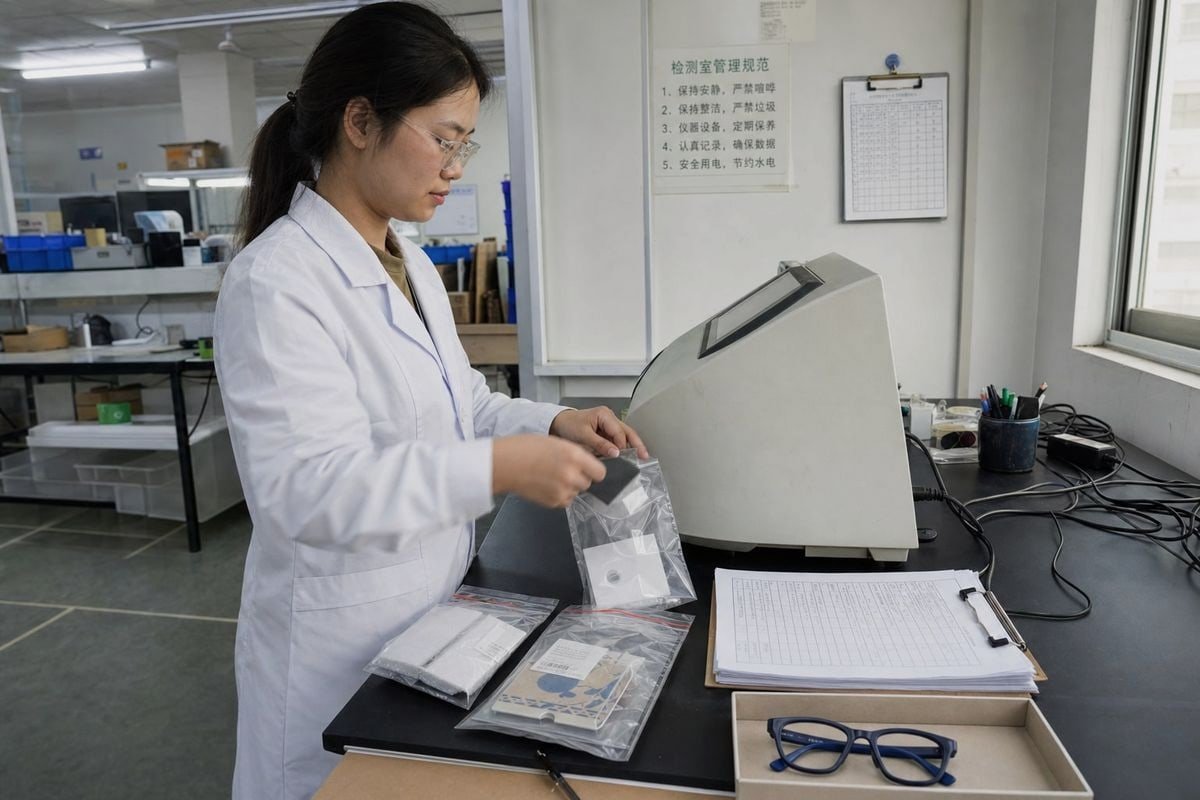
| Substance compliance confirmation | No restricted PFAS or heavy metals (lead, cadmium, mercury, hexavalent chromium) | Supplier, backed by test reports |
| Recyclability / design-for-recycling evidence | Packaging can be recycled at scale in EU infrastructure | Supplier or third-party assessor |
| Labeling proof | Harmonized labels, pictograms, QR or data-carrier content | Supplier artwork files |
| EU Declaration of Conformity 2 | Legal statement of conformity with PPWR articles | The legal manufacturer |
| Traceability records | Batch, type, or serial identification with version control | Proveedor |
One point buyers often miss: retention periods matter. Documentation must be kept at least five years for single-use packaging and ten years for reusable packaging solutions. Ask your supplier who holds the technical file and for how long. If they cannot answer, that is a warning sign.
Also remember substance restrictions apply per component. A compliant box with a non-compliant foam insert still fails. For children's eyewear cases, pouches, hangtags, and inner cards, request declarations for each item separately. Sub-tier evidence matters too — if your supplier buys inks or coatings from another vendor, they should pass upstream declarations through to you. This is where supply chain transparency stops being a buzzword and becomes a paperwork discipline.
How can I specify recyclable or reusable packaging materials in my purchase order?
There is a trade-off we weigh on every kids' packaging project: protection versus material reduction. A child's frame case must survive drops, yet PPWR pushes hard against excess material. Your PO should reflect both.
Specify recyclable or reusable packaging in your purchase order by naming exact materials, minimum recycled content percentages, recyclability performance grades, mono-material construction where possible, and a change-notification clause requiring the supplier to inform you before altering any material, ink, coating, or process.
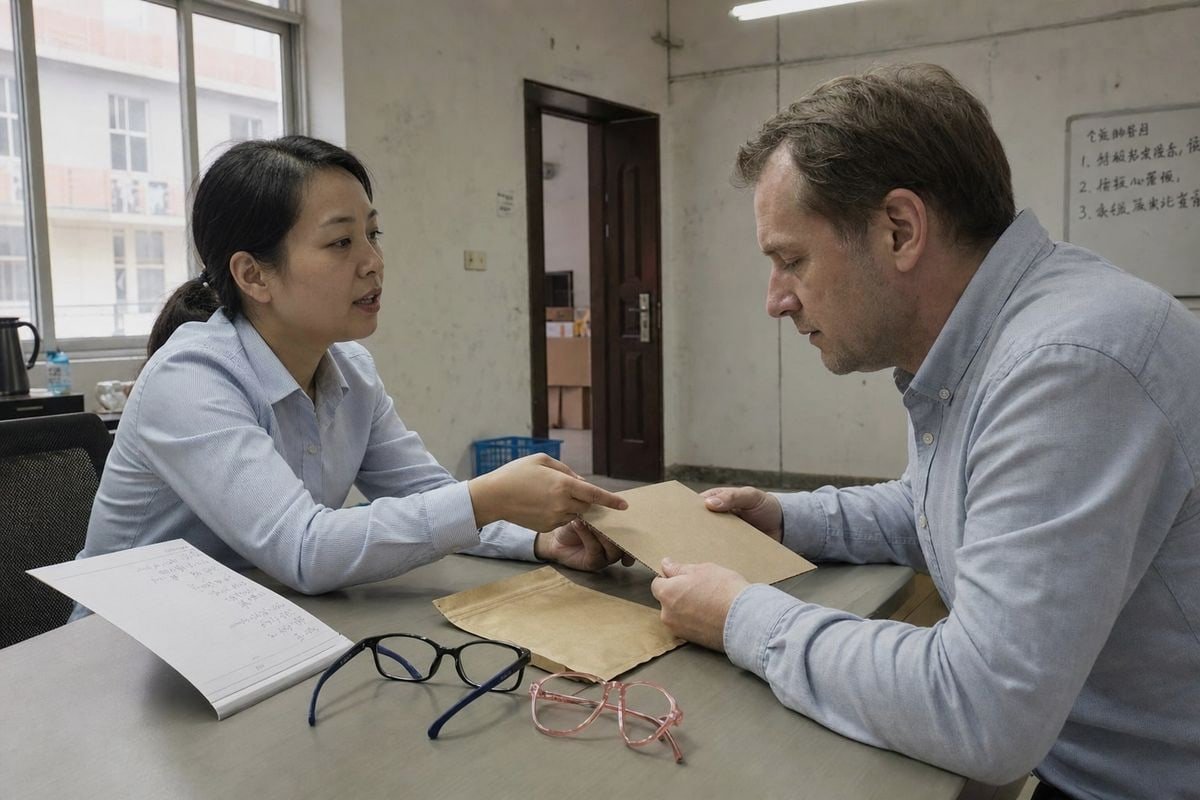
Purchase orders win or lose compliance battles. If your PO says "eco-friendly box," you have no legal leverage when the goods arrive wrapped in laminated composite film. If your PO names materials, grades, and evidence, you do.
What to write, line by line
In our experience supporting brands across 20+ countries, the strongest PO addendums include five elements:
- Named materials. For example: "FSC-certified kraft paperboard, uncoated, minimum 80% recycled fiber" instead of "recycled cardboard."
- Recycled content targets for plastics. PPWR sets minimum recycled content percentages for plastic packaging, with targets that rise incrementally toward 2040. If your children's eyewear cases use plastic, state the required percentage and demand evidence for the claim.
- Design for recyclability grade. Packaging should target at least recyclability Class C 3 by 2030 and Class B by 2038. Write the target class into the PO so the supplier designs toward it now, not later.
- Mono-material preference. Composite layers, plastic windows glued to paperboard, and metallic foils complicate recycling. Ask for mono-material construction unless protection genuinely requires otherwise.
- Change-notification clause. Require written notice of any material or process change that affects PPWR compliance, before production starts.
Reusable options worth considering
Reusable packaging solutions fit kids' optical frames unusually well. A durable case doubles as daily protection, which parents actually value. We often propose a sturdy zip case plus a minimal recyclable outer sleeve, replacing multi-layer retail boxes. This supports packaging waste reduction and gives your brand a functional accessory rather than instant trash. Some buyers also explore bio-based or ocean-bound plastic materials for cases — appealing to environmentally conscious parents, though you should still demand the same substance and recyclability evidence for these sustainable packaging materials as for any conventional option.
What packaging design changes do I need to request to meet PPWR requirements?
A buyer from Australia once sent us their legacy packaging: a printed box, a plastic tray, a foam insert, a pouch, and two hangtags for one pink acetate kids' frame. We redesigned it down to two components.
Request four design changes: minimize weight, volume, and empty space to what product protection actually requires; eliminate unnecessary layers and composite materials; add harmonized labeling with material pictograms and disposal instructions; and remove small detachable elements that create choking hazards for children.
PPWR pushes packaging minimization hard. Empty space, oversized boxes, and features that inflate perceived volume are direct targets. For kids' optical frames, this is very achievable, because the product itself is small and light — our TR90 frames with TPEE temples often weigh under a typical smartphone case.
Design changes ranked by impact
| Design change | PPWR driver | Practical effect for kids' frames |
|---|---|---|
| Right-size the box to the frame or case | Minimization of volume and empty space | Smaller cartons, lower freight cost |
| Remove plastic windows and foam trays | Design for recyclability, mono-material | Simpler recycling stream, fewer declarations |
| Switch to water-based, non-toxic inks | Substance restrictions, child safety | Safer for child-contact packaging |
| Add harmonized material labels and QR codes | Harmonized labeling requirements | Ready for EU market checks |
| Consolidate hangtags and inserts | Packaging waste reduction | Fewer components to document |
| Design a reusable case as primary protection | Reuse targets | Longer packaging lifecycle |
Do not forget child-specific checks
PPWR does not cover everything. For children's products, we add checks beyond the regulation: no small detachable parts that could pose choking hazards, no sharp edges on inserts, and only non-toxic, child-safe inks and dyes. Our 5S-managed workshop treats these as standard QC gates, because a compliant box that hurts a child destroys a brand faster than any regulatory fine.
Also prepare for Digital Product Passports 4. Ask your supplier now whether they can provide granular data on packaging materials, origin, and recyclability that can later be linked to individual product identifiers. Building that data pipe early is far cheaper than retrofitting it.
How do I verify my supplier's PPWR compliance before placing a bulk order?
A hard lesson from fifteen years of eyewear exports: paperwork received after shipment is worthless. Verification only protects you when it happens before you pay the bulk deposit.
Verify PPWR compliance before bulk ordering by reviewing the full document dossier against a checklist, cross-checking material declarations with third-party test reports, inspecting pre-production packaging samples, confirming labeling artwork matches EU requirements, and auditing traceability and version control on the supplier's records.
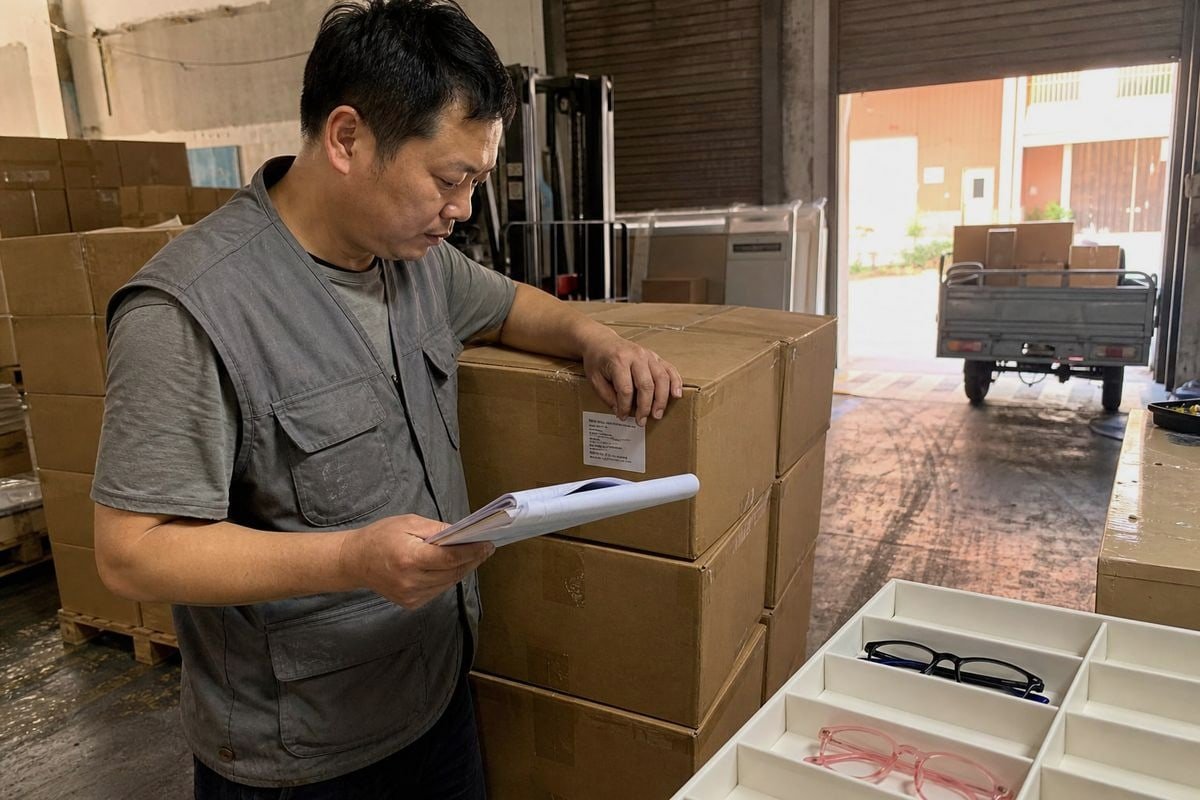
Some buyers object that this verification burden is unfair to smaller kids' brands sourcing from fragmented supplier networks — extra documentation, testing costs, and redesign pressure before every EU launch. I understand the objection, but I have watched the alternative: last-minute redesigns, border delays, and rejected shipments. Early verification is cheaper than late failure, every time. It turns compliance from a scramble into a procurement discipline.
A four-stage verification workflow
| Etapa | When | What you check |
|---|---|---|
| 1. Document review | At RFQ / quotation | Dossier completeness, EU Declaration of Conformity status, sub-tier declarations |
| 2. Evidence cross-check | Before sampling | Test reports match declared materials; substance restrictions verified for PFAS and heavy metals |
| 3. Sample inspection | Aprobación previa a la producción | Physical packaging matches specs; labels, pictograms, and QR payloads are correct |
| 4. Pre-shipment audit | Before bulk shipment | Batch traceability, version-controlled records, no unauthorized material changes |
Handling gaps and escalation
When a supplier cannot provide evidence, escalate in this order: request upstream material declarations from their vendors, require third-party test reports for the specific component, revise the packaging design to remove the problem material, or switch to a supplier who already maintains PPWR-ready records. Keep everything in a central packaging inventory rather than scattered emails — most compliance programs fail on missing data and weak version control, not on the regulation itself.
Also check whether Extended Producer Responsibility registration applies in your destination markets, since EPR fees increasingly reward design for recyclability with lower rates. This is part of a broader shift in optical industry sustainability: away from generic claims, toward data-backed, component-level compliance dossiers that can survive an audit.
Conclusión
PPWR-compliant packaging for kids' optical frames comes down to specific requests, component-level evidence, minimized design, and pre-order verification. Start the conversation with your supplier before your next EU order — not after.
Notas al pie
1. Explains the scope and goals of the EU’s Packaging and Packaging Waste Regulation. ↩︎
2. Details the purpose, content, and manufacturer’s responsibility for the EU Declaration of Conformity under PPWR. ↩︎
3. Explains the PPWR’s recyclability performance grades (A, B, C) and their implications for market access. ↩︎
4. Defines Digital Product Passports (DPP) as an EU mandate for product information, compliance, and sustainability. ↩︎
Más artículos que te podrían gustar
5 de agosto de 2026
Bio-Based vs Regular Cellulose Acetate: What's the Difference for Kids' Frames?
5 de agosto de 2026
How Recyclable Are Kids' Optical Frame Materials, and What Eco-Friendly Alternatives Exist?
5 de agosto de 2026
Do Kids Optical Frames Whiten or Age in Storage, and How to Control Warehouse Conditions?
¿Buscas un socio confiable en gafas para niños?
Explore más de 800 estilos listos y soporte OEM/ODM completo adaptado a su marca.
Ponte en contacto English
  Español de México
  Deutsch
  Français
  日本語
日本語  العربية
  Português do Brasil