How to Choose Sea, Rail, or Air Freight for Kids’ Optical Frames to Europe?
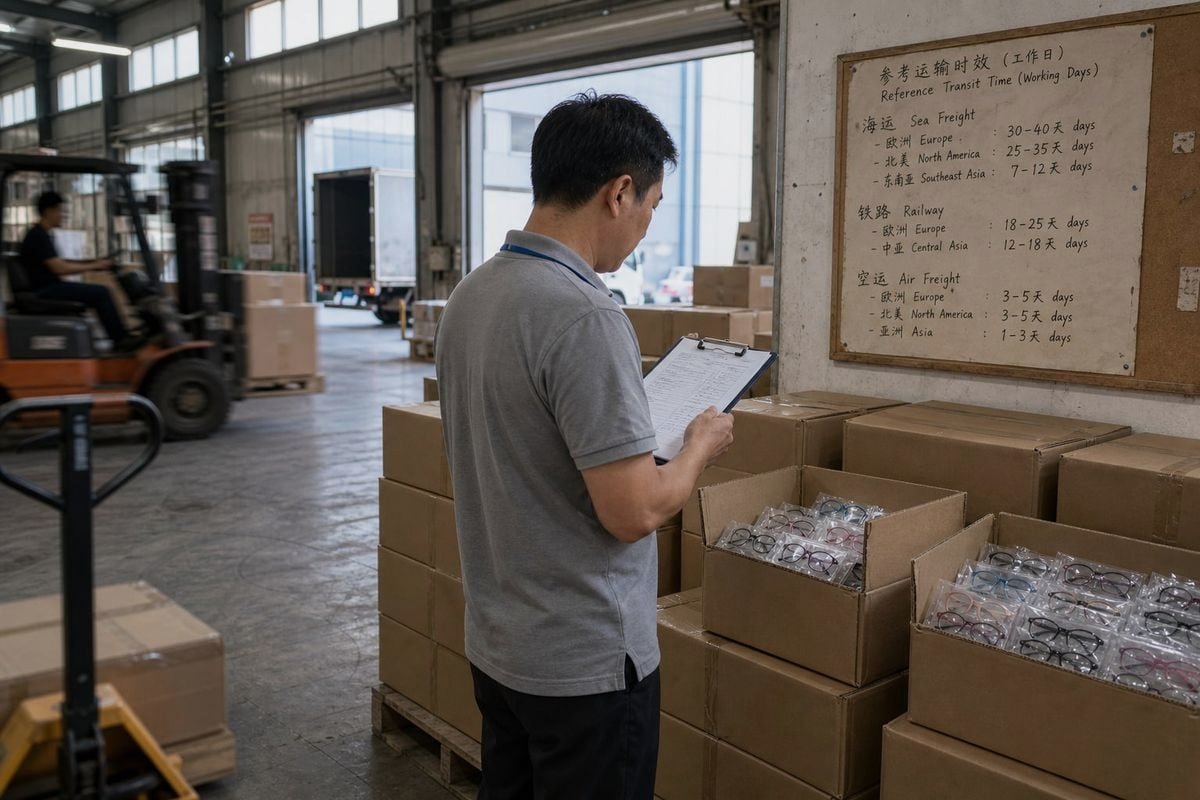
Choosing sea, rail, or air freight for kids’ optical frames to Europe confuses many of our buyers. Pick wrong, and you face stockouts, dead inventory, or freight bills that erase margin.
Choose sea freight for planned bulk replenishment with 25–40 day transit and the lowest cost. Choose rail freight for mid-sized orders needing 15–22 days. Choose air freight for urgent launches or restocks arriving in 3–10 days, when stockout costs exceed the freight premium.
Each mode has a clear use case. Below, I break down cost, timing, product safety, and hybrid strategies so you can decide with confidence.
How do sea, rail, and air freight compare in cost and transit time for shipments to Europe?
Last spring, a German distributor asked us to quote the same 8,000-frame order shipped three different ways. The numbers surprised even their procurement team, so I will share the logic here.
Sea freight to Europe takes roughly 25–40 days and costs the least, often $1,200–$2,500 per 40ft container. Rail takes 15–22 days at mid-range rates. Air takes 3–10 days but costs around $4.80–$7.00 per kg, the most expensive option.

Here is the quick comparison we walk buyers through before they book a freight forwarder:
| Mode | Typical transit to Europe | Relative cost | Lo mejor para | Main limitation |
|---|---|---|---|---|
| Sea | 25–40 days | Lowest | Large planned orders, replenishment | Slowest; ties up inventory capital |
| Rail | 15–22 days | Gama media | Mid-sized orders on Eurasian corridors | Limited route coverage |
| Air | 3–10 days | La más alta | Urgent, high-value, lightweight goods | Expensive; chargeable-weight sensitive |
Why eyewear changes the math
Kids' optical frames are lightweight and compact. A full seasonal order from our Taizhou factory often fits in a few cubic meters. So the real question is rarely about physical bulk. It is about time. Sea freight 1 wins on shipping costs per unit, but you pay in a different currency: waiting. Forty days of transit means forty days of capital locked in a container, plus forty days of demand risk.
Rail freight 2 has become the practical middle ground for our European customers. Trains from China run on fixed schedules through Eurasian corridors, and transit times are far more predictable than ocean sailings during peak season. Air freight, meanwhile, prices by chargeable weight. Because frames are light but boxed with some air space, volumetric weight can push the bill higher than you expect.
Do not forget the costs beyond the linehaul
Freight quotes are only part of the picture. Customs clearance fees, import duties, brokerage, and last-mile trucking within Europe apply to all three modes. In our experience, buyers who compare only the linehaul quote often pick a mode that looks cheap on paper but costs more in total.
What order volume or timeline should determine whether I choose sea, rail, or air freight?
One trade-off we weigh with every new European client is this: how many days of stock do you actually hold? That single number usually answers the mode question before price ever comes up.
Use your inventory runway as the deciding rule. With 40+ days of stock, choose sea freight. With 20–35 days, choose rail. With under 20 days of stock or an urgent launch date, choose air freight, because a stockout usually costs more than the freight premium.
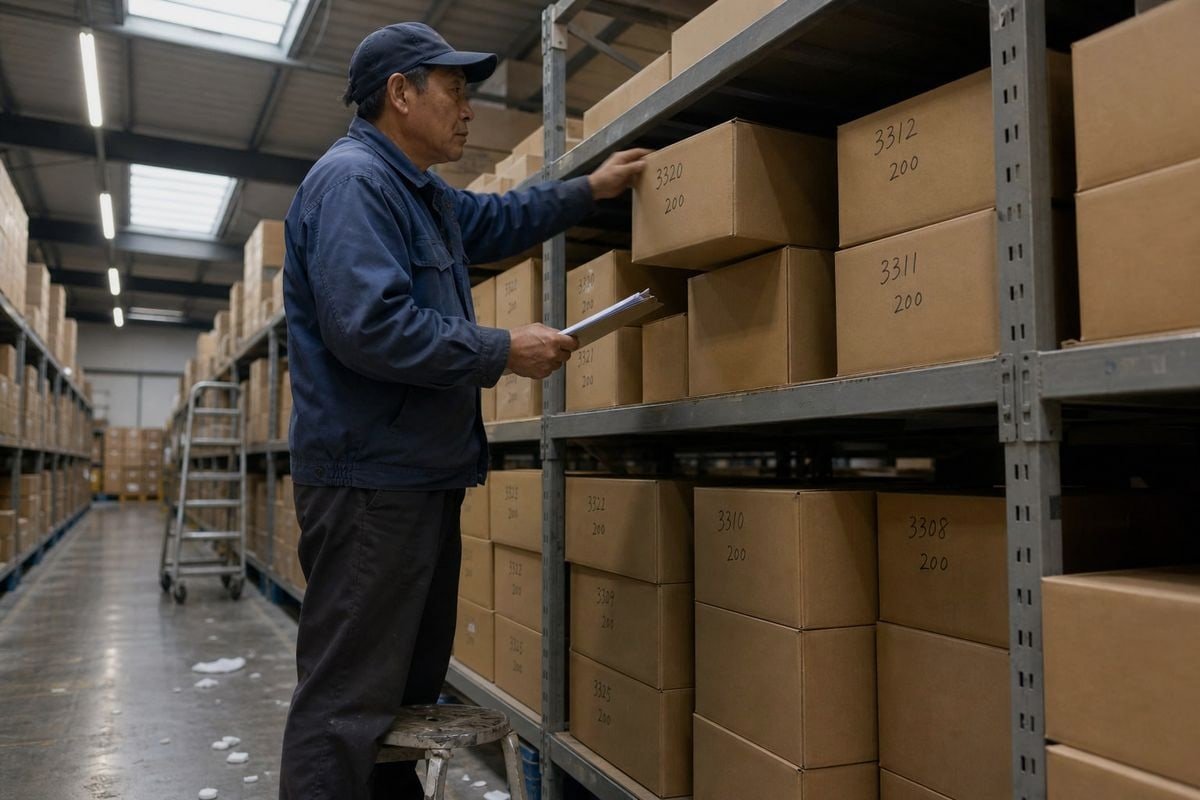
We call this the inventory-days framework, and it works because it converts a logistics question into a business question.
The decision framework in practice
| Your situation | Inventory on hand | Recommended mode | Por qué |
|---|---|---|---|
| Restocking a stable best-seller | 40+ days | Sea | You can absorb the transit time; unit cost matters most |
| Seasonal collection with a firm shelf date | 20–35 días | Rail | Faster than sea, far cheaper than air, predictable schedule |
| Emergency restock or new launch | Under 20 days | Air | Lost sales and empty shelves cost more than air rates |
| Back-to-school pre-order placed early | 60+ days | Sea (FCL or LCL) | Maximum margin on your biggest volume of the year |
Volume shapes the choice too
Order size matters alongside timing. Full container shipping only pays off when you fill enough of the container. Many of our buyers order across 15–30 SKUs in modest quantities per style, because kids' frames sell in many colors and sizes. For those high-mix, low-volume orders, LCL sea, rail groupage, or air consolidation often beats waiting to build a full container load.
Here is a common objection I hear: "Sea is always cheapest, so sea is always best." I understand the instinct, but cheap freight can be an expensive decision. If a slow container makes you miss the back-to-school window, the lost sell-through dwarfs the few hundred dollars you saved. Delivery speed has a real commercial value. The right question is not "what is the lowest rate?" but "what is my costo total entregado, including the cost of not having stock?"
Also plan your Incoterms 3 early. FOB gives you control through your own freight forwarder; DDP shifts the burden to the seller but hides costs in the unit price. We support both, and we always advise buyers to clarify terms before comparing quotes.
Will TR90 and TPEE kids' optical frames stay safe and undamaged during long sea or rail transit?
Fifteen years of shipping children's eyewear from our workshop has taught me one thing: material choice and packaging decide transit safety long before the container door closes.
Yes. TR90 and TPEE are flexible, memory-retaining materials that resist cracking, deformation, and temperature swings far better than rigid acetate. With proper individual bagging, dividers, and sturdy master cartons, these frames survive 40-day sea or rail transit without damage.
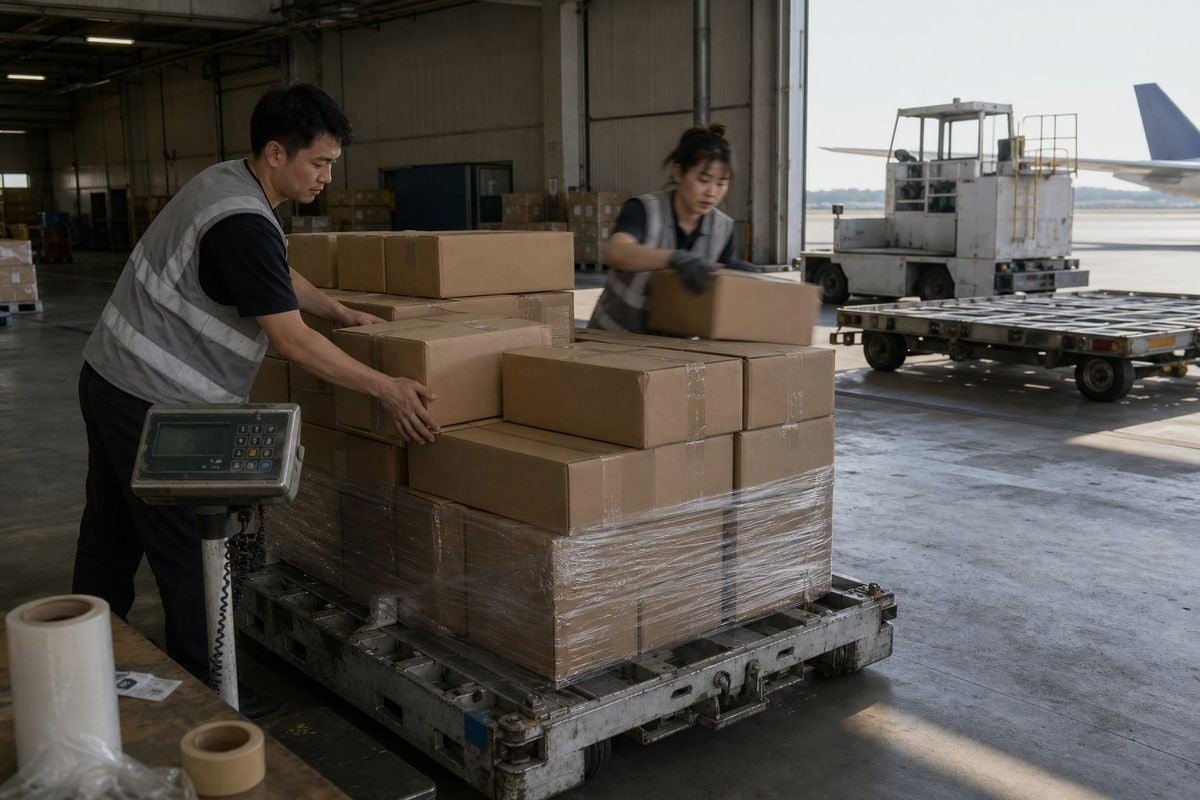
Fragile goods shipping is a fair concern for eyewear. But not all frames are equally fragile, and this is where material engineering does the heavy lifting.
Why flexible materials travel well
TR90 4 is a thermoplastic with shape memory. Bend it, and it returns to form. TPEE 5, which we use for temples on many of our kids' styles, is even softer and more elastic. Our glossy black rectangular frames with TPEE-accented temples, for example, can be twisted flat and spring back without stress marks. Compare that with rigid acetate, which can crack under a point load if a carton is dropped or crushed.
Temperature is the other transit risk. Containers cross climates, and interiors can swing widely between origin, ocean, and European winters. TR90 tolerates these swings well. It does not become brittle in cold the way some cheaper plastics do, and it holds its shape in heat. That is one reason we standardized on TR90 and TPEE across most of our roughly 800 existing styles.
Packaging is the second line of defense
Material alone is not enough. Our standard export packing for optical frames follows a simple layered process:
- Each frame goes into an individual poly bag or microfiber pouch to prevent lens scratching.
- Frames are placed in partitioned inner boxes so units cannot rub or stack pressure on each other.
- Inner boxes go into double-wall master cartons sized to pallet dimensions with no wasted air.
- Pallets are wrapped and corner-protected for container or rail loading.
Tight, efficient packing does double duty. It protects the product, and it reduces volumetric weight, which directly lowers air and rail shipping costs. We test drop scenarios on our packed cartons before approving any new packaging design, because a claim dispute after arrival helps no one.
How can I combine shipping methods to balance cost, speed, and reliability for my European orders?
A Dutch buyer once told me her best year came after she stopped treating freight as one decision. She split her orders by purpose, and her margins and availability both improved. We now recommend that approach widely.
Combine modes by role: ship baseline core-stock volume by sea, move seasonal collections by rail to hit shelf dates, and reserve air freight for emergency top-ups and new-style launches. This hybrid approach minimizes total landed cost while protecting availability.
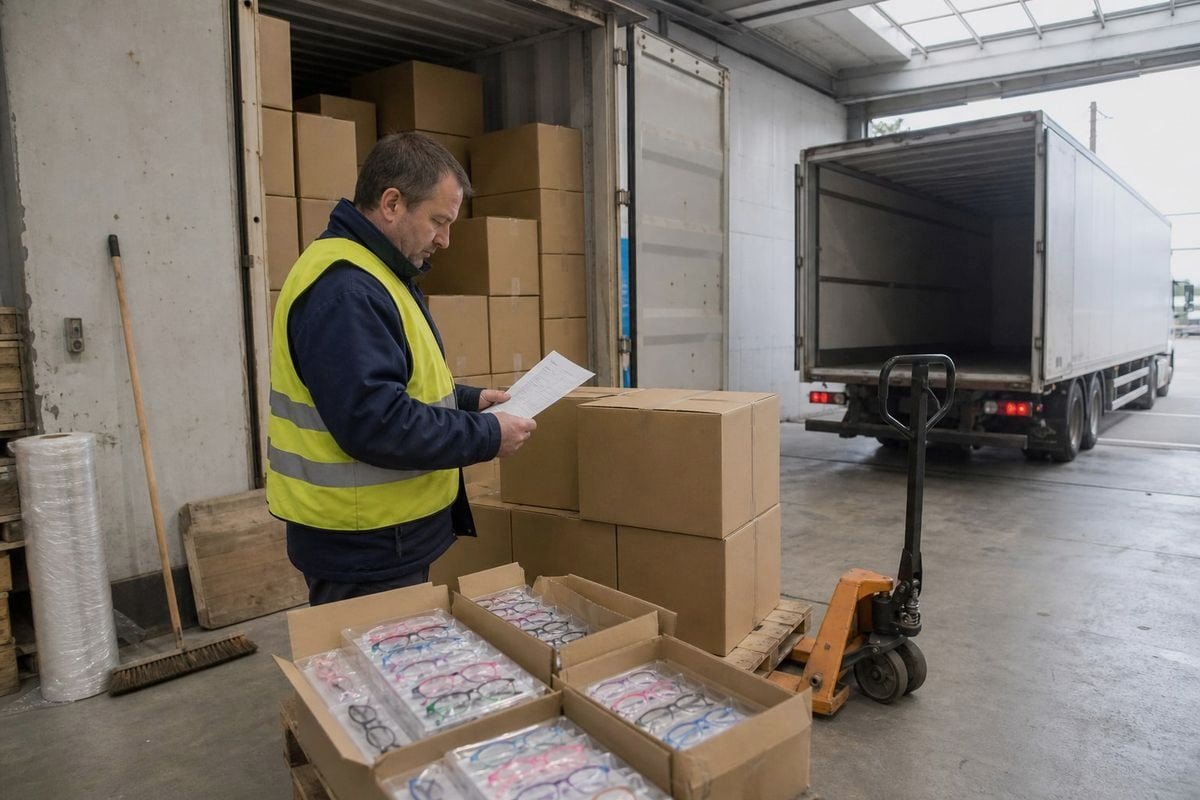
Hybrid shipping is supply chain optimization in its simplest form. You match each shipment's urgency to the cheapest mode that meets its deadline.
A practical hybrid playbook
| Shipment purpose | Share of annual volume | Mode | Racional |
|---|---|---|---|
| Core best-sellers, planned replenishment | 60–70% | Sea | Lowest unit freight cost on predictable demand |
| Seasonal or new collections | 20–30% | Rail | Hits launch windows without air-level cost |
| Emergency restocks, samples, hot SKUs | 5–10% | Air | Protects sell-through when stock runs low |
This split is a starting point, not a rule. A brand with steady year-round demand can push more volume to sea. A fashion-led brand launching frequent drops may lean harder on rail.
Reliability and the green angle
Reliability differs by mode. Rail runs on fixed schedules and is less exposed to port congestion and weather than ocean sailings. Air is the most schedule-protective when a launch date is fixed. Building a small air allowance into your annual freight budget acts like insurance: most years you barely use it, but when a best-seller spikes, it saves the season.
Sustainability increasingly enters the conversation, especially for children's brands with eco-conscious positioning. Per tonne-kilometer, sea emits the least carbon, rail sits next, and air emits by far the most. Since our TPEE and TR90 materials are already chosen for their environmentally friendly profile, many of our buyers extend that thinking to freight and favor sea and rail for the bulk of their volume.
Two final execution points. First, work with a logistics partner experienced in EU customs clearance 6 for children's products; correct HS codes, CE compliance documents 7, and clean paperwork prevent costly delays and unexpected import duties. Second, plan the last mile. A shipment landing in Rotterdam or Duisburg still needs trucking to your warehouse, so choose arrival hubs that connect smoothly to your European distribution network.
Conclusión
Slow freight risks stockouts; fast freight erodes margin. Match sea, rail, and air to inventory days and urgency, pack TR90/TPEE frames properly, and hybrid shipping wins on total landed cost.
Notas al pie
1. Provides an overview of the International Maritime Organization’s role in sea transport. ↩︎
2. Provides an overview of the China-Europe rail freight services and corridors. ↩︎
3. Provides official definitions and rules for international trade terms. ↩︎
4. Explains the properties and benefits of TR90 material in eyewear. ↩︎
5. Describes the characteristics and applications of thermoplastic elastomers, including TPEE. ↩︎
6. Outlines the procedures for importing goods into the European Union. ↩︎
7. Details the requirements for CE marking and related documentation in the EU. ↩︎
Más artículos que te podrían gustar

5 de agosto de 2026
Bio-Based vs Regular Cellulose Acetate: What's the Difference for Kids' Frames?

5 de agosto de 2026
How Recyclable Are Kids' Optical Frame Materials, and What Eco-Friendly Alternatives Exist?

5 de agosto de 2026
Do Kids Optical Frames Whiten or Age in Storage, and How to Control Warehouse Conditions?
¿Buscas un socio confiable en gafas para niños?
Explore más de 800 estilos listos y soporte OEM/ODM completo adaptado a su marca.
Ponte en contacto English
  Español de México
  Deutsch
  Français
  日本語
日本語  العربية
  Português do Brasil