Wie bestätigt man, dass Kinder-Brillenfassungen die EN ISO 12870 Prüfung vor der Beschaffung erfüllen?
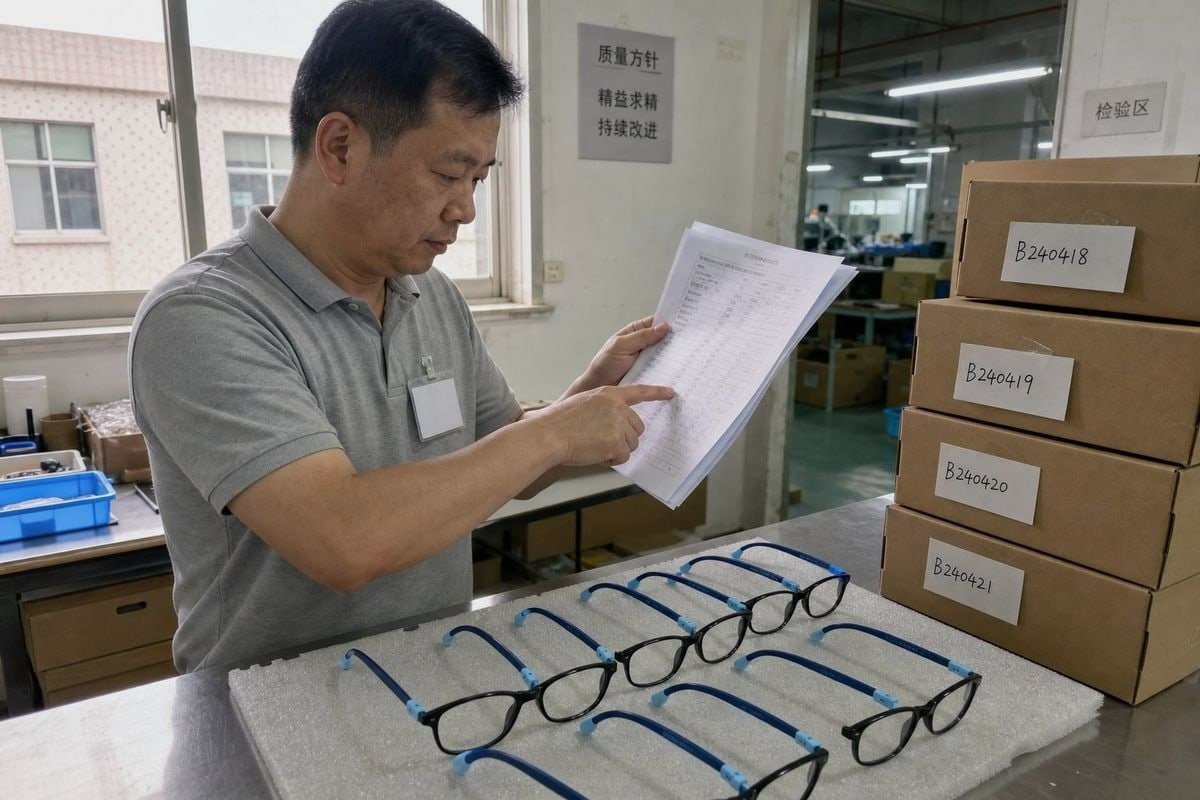
Kinder-Brillenfassungen erfüllen EN ISO 12870 1 vor der Beschaffung ist eine Frage, die unsere Fabrik wöchentlich hört. Eine nicht verifizierte Behauptung kann einen vollen Container in unverkäufliche Bestände verwandeln Formstabilität 2. Hier ist, wie ich Käufer davor schütze.
Um zu bestätigen, dass Kinder-Brillenfassungen die EN ISO 12870 vor der Beschaffung erfüllen, fordern Sie den vollständigen Prüfbericht eines akkreditierten Labors an, überprüfen Sie die getestete Standardausgabe, gleichen Sie den Bericht mit dem genauen Modell, der Größe und dem Material ab, das Sie bestellen werden, und bestätigen Sie, dass der Bericht die mechanische Stabilität, die Dimensionsstabilität, die Nickelabgabe und die Kennzeichnung abdeckt.
Diese kurze Antwort verbirgt viele Details. Im Folgenden gehe ich darauf ein, was der Standard tatsächlich verlangt, wie man gefälschte oder veraltete Berichte erkennt, was man vor einer Großbestellung fragen sollte und welche Konstruktionsdetails am wichtigsten sind.
Was verlangt die EN ISO 12870 tatsächlich für Kinder-Brillenfassungen?
Ein Käufer aus Europa fragte mich einmal, ob es eine separate "Kinderversion" der EN ISO 12870 gäbe akkreditiertes Labor 3. Gibt es nicht – und das Verständnis, warum, hat verändert, wie unser Team jede Kinder-Brillenfassung dokumentiert, die wir versenden.
EN ISO 12870 legt grundlegende Anforderungen an Brillenfassungen für unglasierte Brillenfassungen fest, die für Korrektionsgläser bestimmt sind. Sie umfasst Konstruktion und Ausführung, Maßtoleranzen, Dimensionsstabilität bei erhöhter Temperatur, mechanische Stabilität, Beständigkeit gegen Schweiß, Entflammbarkeit, Beständigkeit gegen optische Strahlung, Nickelabgabegrenzwerte und Produktkennzeichnung – ohne separaten Regelkatalog nur für Kinder.
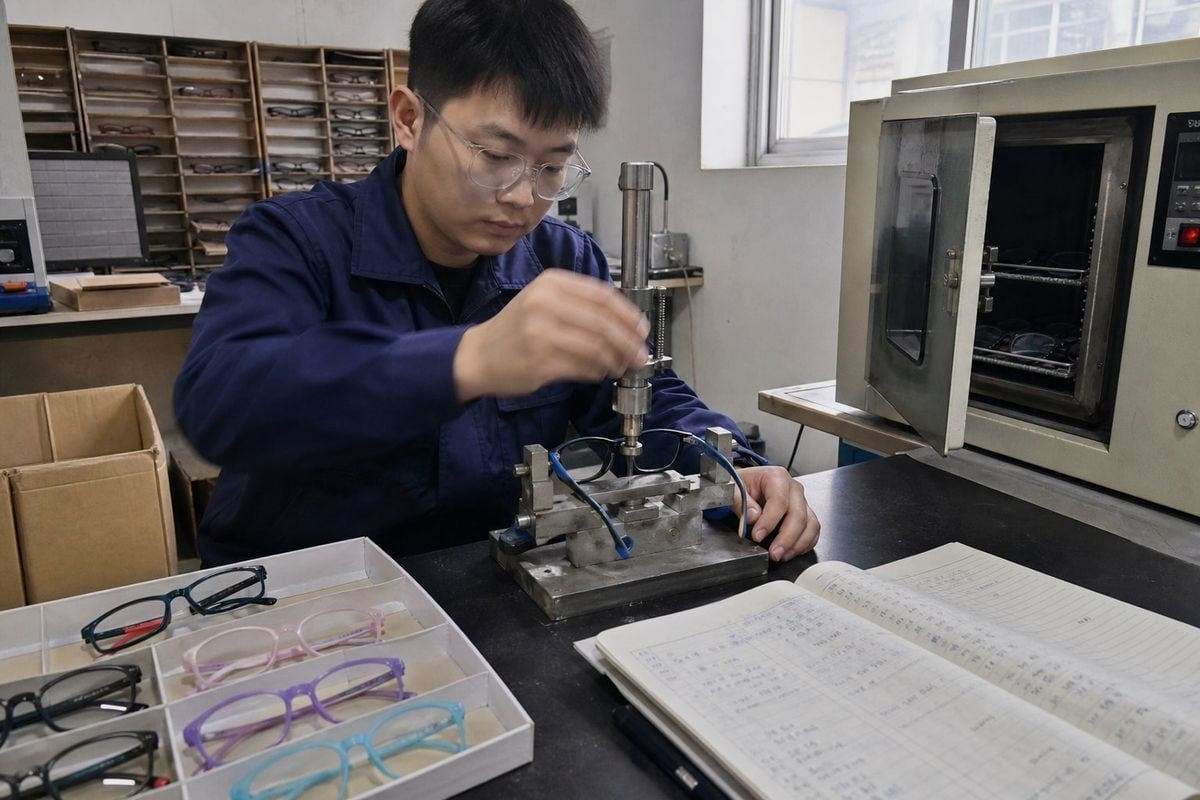
Das Erste, was ich Käufern sage, ist, eine Umfangsüberprüfung durchzuführen. Die EN ISO 12870 gilt für unverglaste Brillenfassungen 4 bestimmt für Korrektionsgläser. Sie gilt nicht für Schutzbrillen oder Sonnenbrillen mit afokalen Filtern. Wenn Sie also eine Kinder-Brillenfassung beschaffen, sind Sie im Geltungsbereich. Wenn Sie Kinder-Sonnenbrillen beschaffen, gilt ein anderer Standard. Das Vermischen dieser ist einer der häufigsten Beschaffungsfehler, die ich sehe.
Der Standard gilt auch am Verkaufsort zwischen dem Hersteller oder Lieferanten und dem Einzelhändler. Einfach ausgedrückt bedeutet dies, dass Sie die Beweise haben sollten, bevor Ihre Ware versendet wird – nicht nachdem sie in Ihrem Lager angekommen ist.
Die Kernprüfbereiche in einfacher Sprache
| Prüfbereich | Was es prüft | Warum es für Kinder wichtig ist |
|---|---|---|
| Konstruktion und Verarbeitung | Glatte, hautberührende Bereiche, keine scharfen Vorsprünge | Kinderhaut ist empfindlich; scharfe Kanten verursachen Verletzungen |
| Maßtoleranzen | Rahmen bleibt innerhalb der zulässigen Größenlimits | Kleine Kindergrößen lassen wenig Spielraum für Fehler |
| Hitzebeständigkeit | Dimensionsänderung innerhalb von etwa +6 mm / −12 mm nach Erwärmung; enger für kleine Rahmen | In heißen Autos gelassene Rahmen dürfen sich nicht verziehen |
| Mechanische Stabilität 5 | Brückenverformung und Linsenrückhaltung unter Last | Aktive Kinder lassen Brillen fallen, verbiegen sie und setzen sich darauf |
| Ausdauer | Wiederholte Belastungszyklen zur Simulation des täglichen Gebrauchs | Kinderrahmen halten mehr Belastungen aus als Erwachsenenfassungen |
| Nickel-Freisetzung | Nicht mehr als 0,5 µg/cm²/Woche von hautberührenden Metallteilen | Chemische Sicherheitsprüfung schützt vor Hautallergien |
| Entflammbarkeitswiderstand | Rahmen darf sich nicht entzünden | Grundlegende Materialunbedenklichkeit für ein am Gesicht getragenes Produkt |
| Kennzeichnung | Rückverfolgbare, identifizierbare Modellkennzeichnung | Ein Bericht muss mit einem echten, benannten Produkt verknüpft sein |
Beachten Sie etwas Wichtiges. Konformität ist kein vager Begriff. Es ist eine Reihe von messbaren Prüfungen, und jede davon liefert eine Zahl in einem Laborbericht. Deshalb bedeutet "ISO-konform" auf der Broschüre eines Lieferanten allein nichts. In unserer Werkstatt behandeln wir jeden Testbereich als eigenständiges technisches Ziel – denn genau so behandelt ihn das Labor auch.
Für die Sicherheit von Kinderbrillen legen Käufer oft zusätzliche Prüfungen auf, wie z. B. Kleinteile- und Scharfkantigkeitsprüfungen, die aus der Spielzeugsicherheitsnorm EN 71 übernommen wurden. Die EN ISO 12870 bleibt die Grundlage, aber die zusätzlichen Belastungstests spiegeln wider, wie Kinder Brillen tatsächlich benutzen.
Wie kann ich überprüfen, ob die Prüfberichte eines Lieferanten echt und aktuell sind?
Früh in unserer Exportgeschichte zeigte mir ein Händler das "Zertifikat" eines Wettbewerbers – eine Seite, keine Modellnummer, kein Laborname, kein Ausgabenjahr. Es sah offiziell aus. Es bewies nichts. Dieser Moment prägte unsere Dokumentationspolitik.
Überprüfen Sie den EN ISO 12870-Bericht eines Lieferanten, indem Sie vier Dinge prüfen: das ausstellende Labor ist für diese Norm akkreditiert, der Bericht nennt Ihr exaktes Brillengestellmodell und -material, die Normausgabe ist aktuell und das Berichtsdatum ist ausreichend aktuell, um die gegenwärtige Produktion des Lieferanten widerzuspiegeln.

Das größte Risiko heute ist, was ich Versionsdrift nenne. Die aktuelle ISO-Veröffentlichung ist ISO 12870:2024, und die EN-Übernahme ist in britischen Aufzeichnungen bis BS EN ISO 12870:2025 fortgeschritten. Dennoch sind ältere Referenzen wie EN ISO 12870:2018 noch weit verbreitet. Ein Lieferant kann ehrlich sagen "wir testen nach ISO 12870" und dabei einen Bericht für eine Ausgabe vorlegen, die Ihre Compliance-Richtlinie nicht mehr akzeptiert. Fragen Sie immer schriftlich nach der genauen Ausgabe.
Ein Schritt-für-Schritt-Verifizierungsprozess
- Fordern Sie den vollständigen Bericht an, nicht nur eine Zusammenfassungsseite. Ein echter Bericht umfasst mehrere Seiten, listet jede geprüfte Klausel auf und zeigt gemessene Werte im Vergleich zu Grenzwerten an.
- Überprüfen Sie den Akkreditierungsumfang des Labors. The lab should explicitly list EN ISO 12870 capability. Contact the accreditation body if you have doubts.
- Stimmen Sie die Musteridentifikation ab. The report must name the model, size, materials, coatings, and hinge type. A report for a generic "frame family" is a red flag.
- Confirm the edition and date. A 2018-edition report may not satisfy your current product compliance certification requirements, even if the frame itself is unchanged.
- Trace the documentation chain. A valid claim runs from the frame model, through the test method and sample conditioning, to the lab results and the exact standard edition.
One more layer matters if you sell in Europe: spectacle frames are Klasse-I-Medizinprodukte 7 unter EU Regulation 2017/745 8. EN ISO 12870 compliance supports the presumption of conformity there, which raises the stakes on report authenticity. Some of our larger brand customers now keep digital traceability files linking every purchase order to its test reports and material certifications — a practice I recommend regardless of your size, because it makes fraudulent paperwork much harder to slip through a supplier quality audit.
Was sollte ich meinen Hersteller fragen, bevor ich eine Großbestellung aufgeben?
When a kids' brand founder from Australia first contacted our sales team, she sent a list of eleven questions before discussing price. I respected that. Her questions became the backbone of the checklist I now share with every new buyer.
Bevor Sie eine Großbestellung aufgeben, fragen Sie Ihren Hersteller nach der genauen EN ISO 12870-Ausgabe, die getestet wurde, dem modellspezifischen Bericht, den Akkreditierungsdetails des Labors, der Bestätigung, dass die getestete Konfiguration Ihrer Bestellung entspricht, dem Nachweis der Nickelabgabe und mechanischen Prüfung sowie den schriftlichen Akzeptanzkriterien, die in der Bestellung angegeben sind.
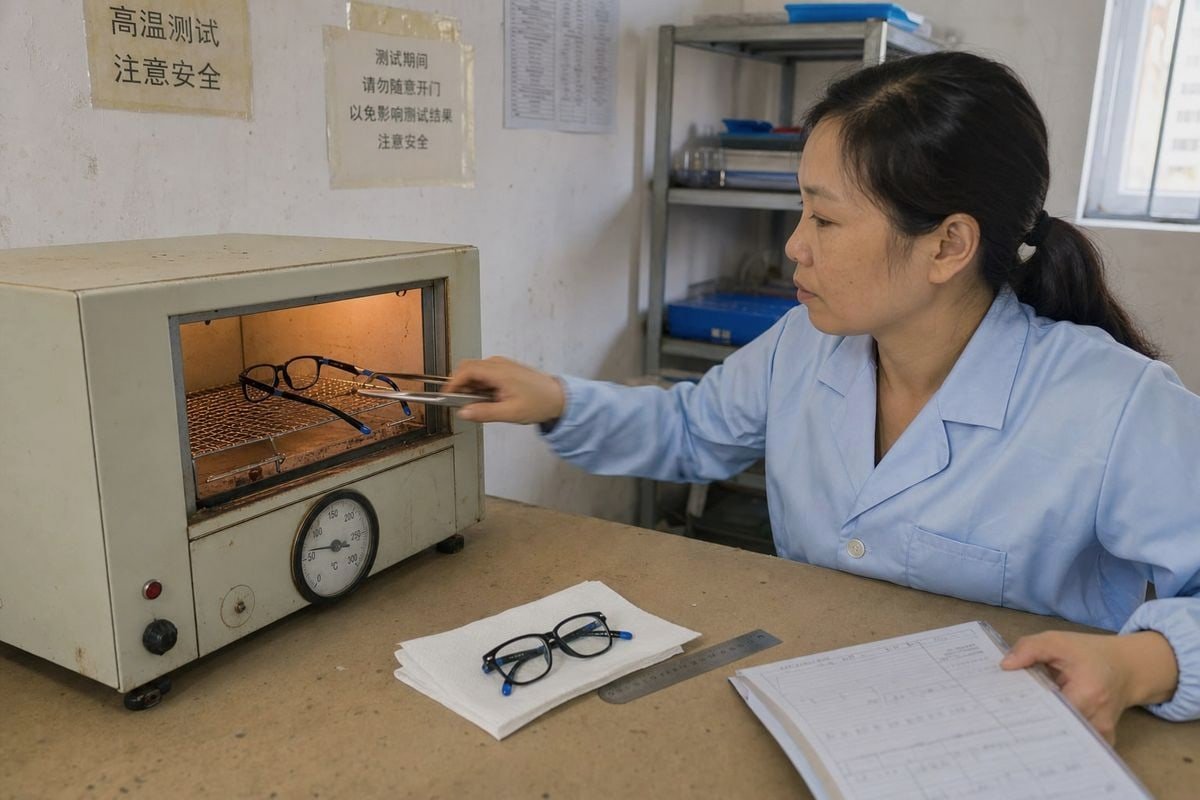
The most credible sourcing workflow is documentation-led purchasing. You buy evidence first, product second. In my experience exporting children's eyewear to buyers in more than twenty countries, the brands that ask hard questions upfront almost never face compliance surprises later. The brands that accept a verbal "yes, it's compliant" are the ones who email me in a panic six months on.
The Pre-Sourcing Question Checklist
| Frage zu stellen | Was eine gute Antwort ausmacht | Rote-Flaggen-Antwort |
|---|---|---|
| Which edition of EN ISO 12870 was tested? | A specific year, e.g., the 2024 ISO text or current EN adoption | "The latest one" with no document |
| Can you share the full test report? | Multi-page report with lab letterhead and clause-by-clause results | A one-page "certificate" or brochure claim |
| Does the report match my exact model and material? | Yes, with matching model code, size, hinge type, and coating | "It covers our whole product line" |
| Did you inform the lab of your production method? | Yes — the standard requires it, and it appears in the report | Confusion about why this matters |
| Do you conduct in-house lens retention and endurance checks? | Documented internal QC alongside third-party testing | Reliance on third-party testing alone |
| What are the acceptance criteria on the PO? | Explicit standard edition, models, sizes, materials, and lab named on the order | "Standard quality terms" |
One detail buyers often miss: the standard notes that the manufacturer must inform the test laboratory of the production method. This tells you something important. How a frame is made is not a minor footnote — it is part of what the lab assesses. So ask your supplier whether the tested samples came from the same production process, tooling, and material batch approach that will produce your order.
At our factory, we also encourage buyers to sample from our existing catalog of roughly 800 styles before committing to custom molds. Testing the market with a proven, documented style carries far less compliance risk than launching an unverified new construction. Then, once volumes justify it, full OEM customization — colors, logos, lenses, packaging — builds on a configuration that already has a testing history.
Welche Materialien und Konstruktionsdetails beeinflussen die Konformität mit EN ISO 12870?
There is a trade-off I weigh on nearly every kids' frame project: the softer and more flexible the material, the more comfortable and safe it feels on a child's face — but the harder it becomes to hold dimensional tolerances through heat testing. Getting both right is where real engineering lives.
Materialien und Konstruktion wirken sich direkt auf die Einhaltung der EN ISO 12870 aus, da Dimensionsstabilität, mechanische Stabilität, Nickelabgabe und Ausdauerergebnisse alle von dem spezifischen Polymer, den Metallteilen, dem Scharnierdesign und der getesteten Rahmenkonstruktion abhängen. Randlose, Halbrand-, Klapp- und flexible Fassungen sind jeweils unterschiedlichen Klauselanwendungen ausgesetzt.
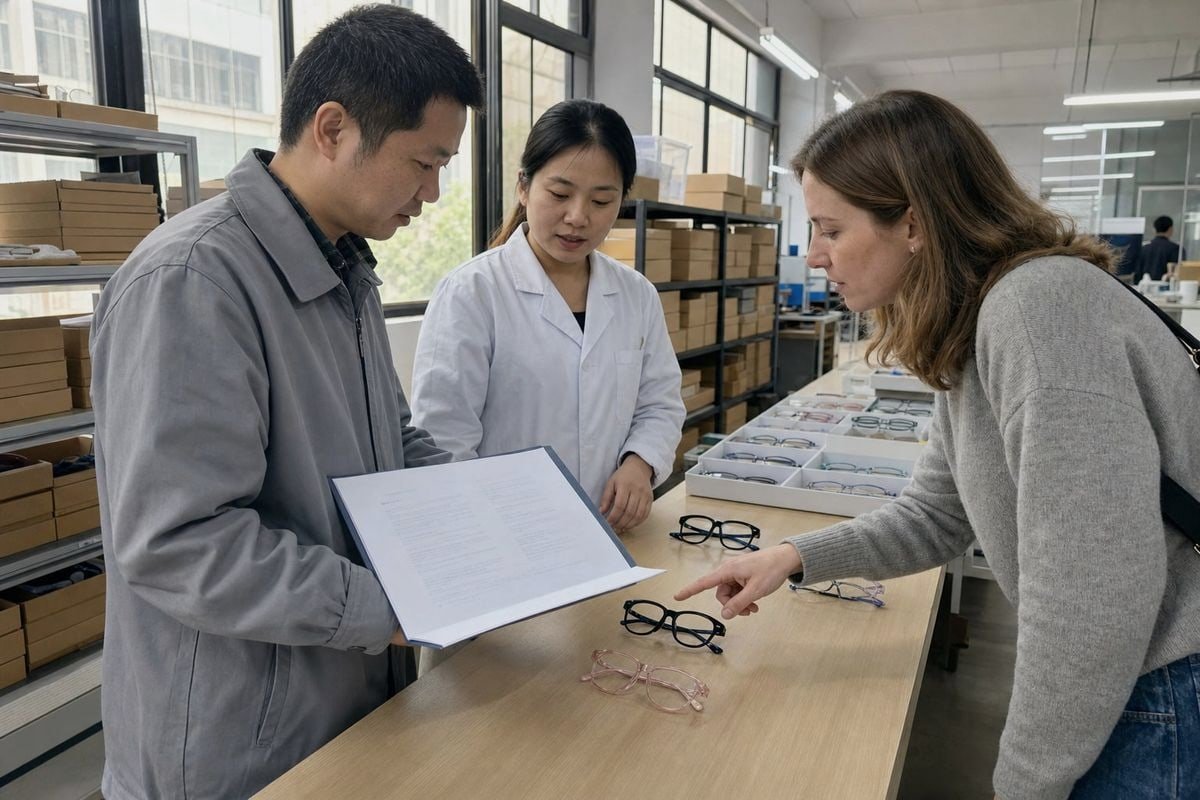
Children's frames are small and light by design. That works against you in testing. Smaller frames face tighter dimensional-change limits in the elevated-temperature test, and lighter structures have less mass to absorb the repeated stress of endurance cycles. So a construction that passes easily in an adult size can struggle in a kids' size. This is why I insist that the lab report identifies the exact size tested, not just the model name.
How Common Kids' Frame Materials Behave
| Material / Construction | Compliance Strengths | Points to Watch |
|---|---|---|
| TR90 frame front | Excellent impact resistance, lightweight, holds shape well | Verify heat stability in the smallest size ordered |
| TPEE flexible temples | High flexibility, hard to snap, comfortable for active kids | Confirm the tested sample used the same temple construction |
| Acetate fronts | Rigid, polishes to a smooth finish, good lens retention | Heavier; check bridge deformation results |
| Silicone temple tips and hinges | Soft skin contact, secure fit, strong children's eyewear safety profile | Confirm material innocuousness and biological compatibility |
| Metal parts (screws, hinges, cores) | Precise adjustment, durable threads | Nickel release must stay under 0.5 μg/cm²/week |
Our own engineers work mostly in TR90 and TPEE because these environmentally friendly polymers combine flexibility with the impact resistance a child's frame needs. Take the sporty style we build with a glossy TR90-type front, two-tone flexible temples, and silicone cable ear hooks: every one of those elements — rigid front, bendable temple, soft hinge connector — behaves differently under heat and mechanical load, so the tested sample must include all of them in the same configuration you order. The same logic applies to a translucent acetate style with silicone temple tips: change the tip material, and the skin-contact and endurance picture changes with it.
Construction type matters too. The standard's text has explicitly referenced rimless, semi-rimless, and folding frames, and lightweight kids' models often borrow these constructions. Lens retention behaves very differently in a semi-rimless frame than in a full-rim one. If your report was issued for a full-rim version, it does not automatically cover the semi-rimless variant of the same style.
Finally, design compliance in from day one. Selecting compliant materials and structures at the design stage is far cheaper than re-engineering after a failed test. And looking ahead, buyers increasingly ask us about recycled and bio-based materials — a shift worth planning for, since new testing protocols will likely accompany circular-economy requirements.
Schlussfolgerung
Sourcing kids’ optical frames without verified EN ISO 12870 evidence is a gamble with children’s safety and your brand. Demand model-specific reports, confirm the edition, match the construction — then order with confidence.
Fußnoten
1. Provides details on the EN ISO 12870:2024 standard, accessible and from a reputable standards aggregator. ↩︎
2. Details the requirement for dimensional stability at elevated temperature within ISO 12870. ↩︎
3. Explains the meaning and importance of an accredited laboratory for testing and calibration. ↩︎
4. The scope of EN ISO 12870:2024, which includes unglazed spectacle frames, is detailed on this page. ↩︎
5. Explains the components of mechanical stability testing as per ISO 12870. ↩︎
6. EN ISO 12870:2024 covers nickel release limits, and this page provides information about the standard. ↩︎
7. Clarifies the classification of spectacle frames as Class I medical devices under EU MDR. ↩︎
8. Provides the official text of the European Union Medical Device Regulation. ↩︎
Weitere Artikel, die Ihnen gefallen könnten


Auf der Suche nach einem zuverlässigen Partner für Kinderbrillen?
Entdecken Sie über 800 sofort verfügbare Modelle und umfassenden OEM/ODM-Support, der auf Ihre Marke zugeschnitten ist.
Kontakt aufnehmen English
 Español de México
 Deutsch
 Français
 日本語
 العربية
 Português do Brasil