How to Confirm Kids’ Optical Frames Meet EN ISO 12870 Testing Before Sourcing?
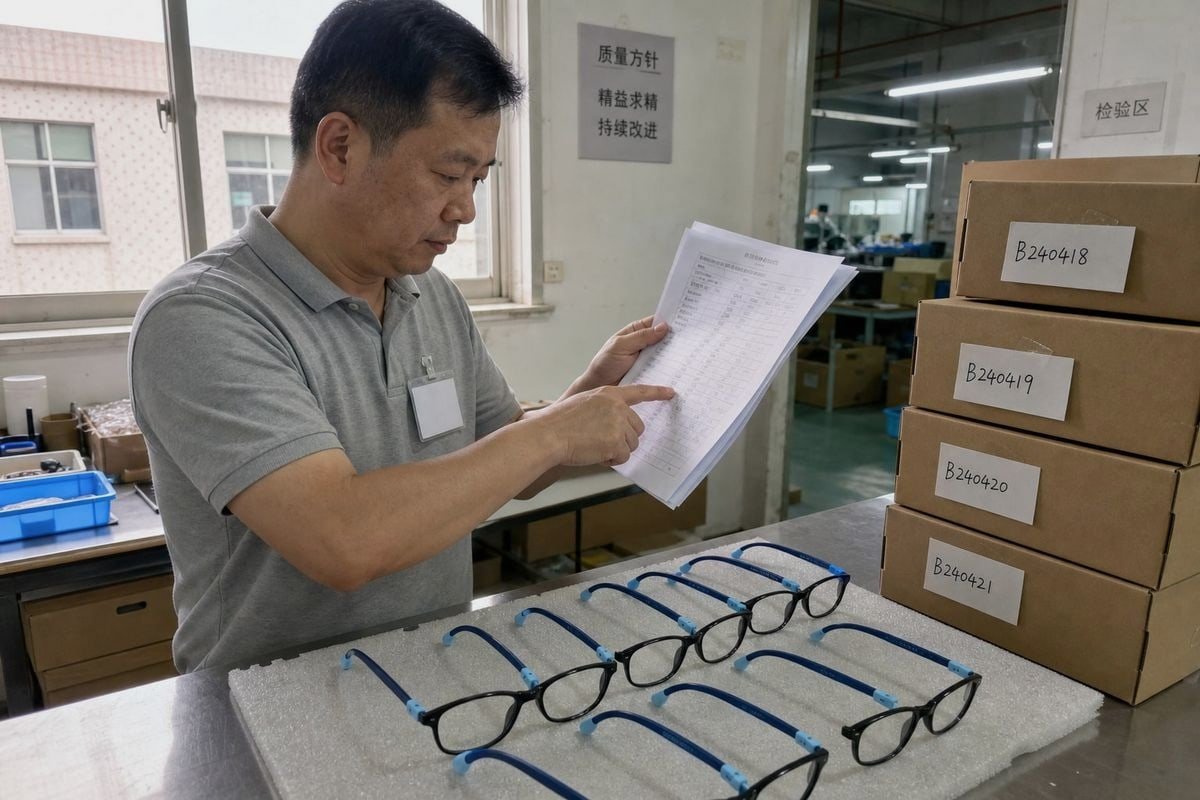
Confirming kids’ optical frames meet EN ISO 12870 1 before sourcing is a question our factory hears weekly. One unverified claim can turn a full container into unsellable inventory dimensional stability 2. Here is how I protect buyers from that.
To confirm kids’ optical frames meet EN ISO 12870 before sourcing, request the full test report from an accredited laboratory, verify the standard edition tested, match the report to the exact model, size, and material you will order, and confirm the report covers mechanical stability, dimensional stability, nickel release, and marking.
That short answer hides a lot of detail. Below, I walk through what the standard actually demands, how to spot fake or outdated reports, what to ask before a bulk order, and which construction details matter most.
What Does EN ISO 12870 Actually Require for Kids' Optical Frames?
A buyer from Europe once asked me if there was a separate "children's version" of EN ISO 12870 accredited laboratory 3. There is not — and understanding why changed how our team documents every kids optical frame we ship.
EN ISO 12870 sets fundamental ophthalmic frames requirements for unglazed spectacle frames designed for prescription lenses. It covers construction and finish, dimensional tolerances, dimensional stability at elevated temperature, mechanical stability, resistance to perspiration, ignition resistance, optical radiation resistance, nickel release limits, and product marking — with no separate children-only rulebook.
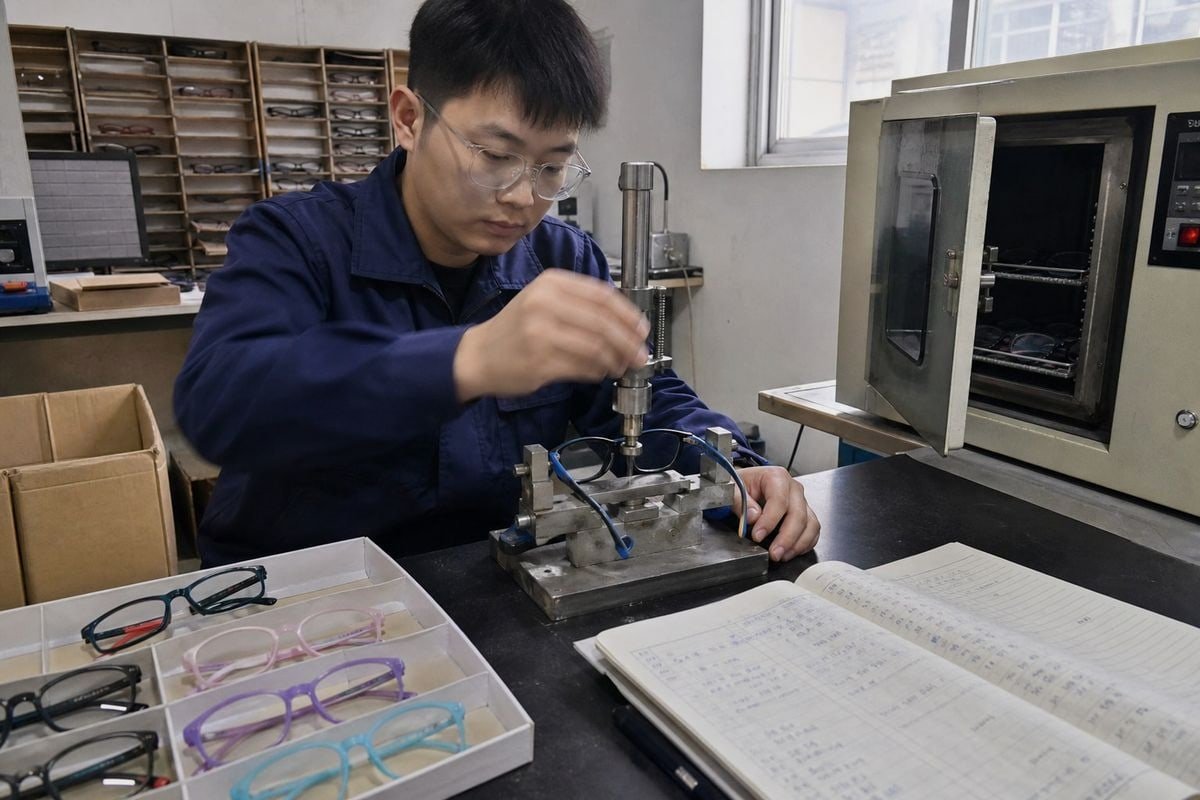
The first thing I tell buyers is to run a scope check. EN ISO 12870 applies to unglazed spectacle frames 4 intended for prescription lenses. It does not apply to eye protection frames or to sunglasses with afocal filters. So if you are sourcing a kids optical frame, you are in scope. If you are sourcing kids' sunglasses, a different standard applies. Mixing these up is one of the most common sourcing mistakes I see.
The standard also applies at the point of sale between the manufacturer or supplier and the retailer. In plain terms, that means you should hold the evidence before your inventory ships — not after it lands in your warehouse.
The Core Test Areas in Plain Language
| Test Area | What It Checks | Warum es für Kinder wichtig ist |
|---|---|---|
| Construction and finish | Smooth wearer-contact areas, no sharp protrusions | Children's skin is sensitive; sharp edges cause injury |
| Dimensional tolerances | Frame stays within allowed size limits | Small kids' sizes leave little margin for error |
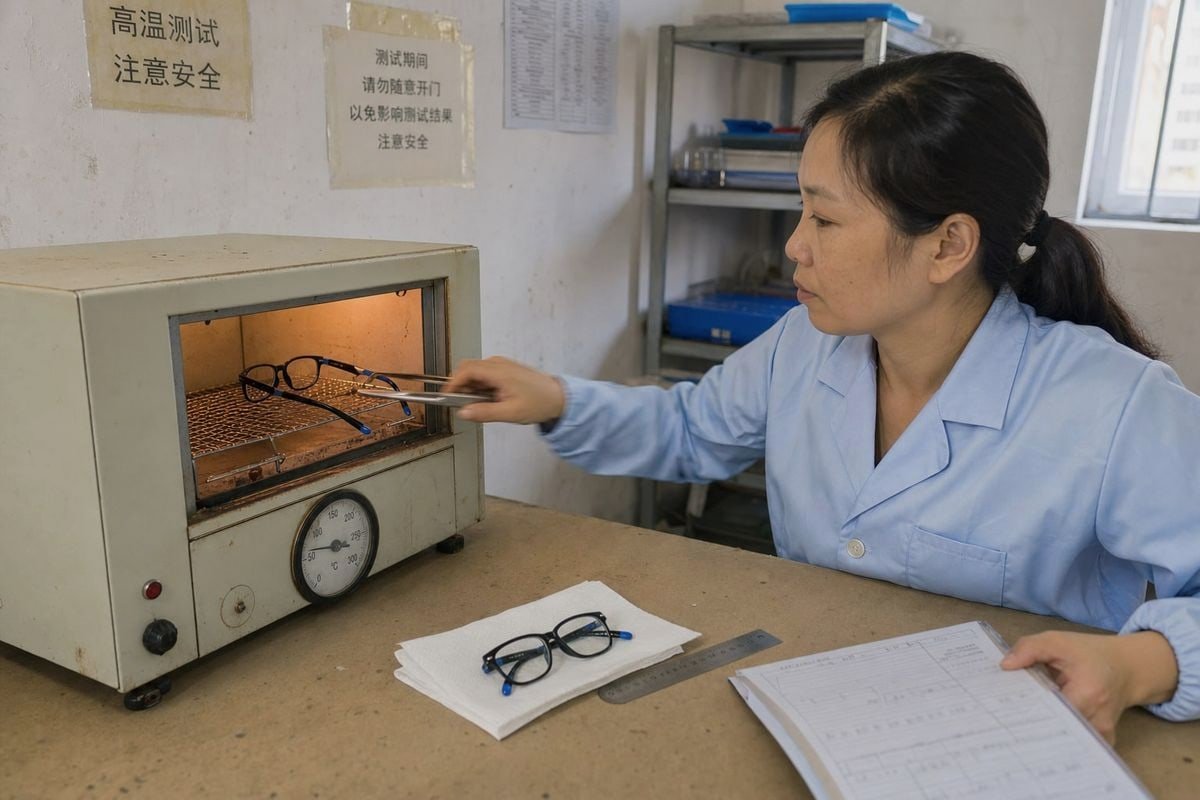
| Heat stability | Dimensional change within roughly +6 mm / −12 mm after heating; tighter for small frames | Frames left in hot cars must not warp |
| Mechanical stability 5 | Bridge deformation and lens retention under load | Active kids drop, bend, and sit on glasses |
| Endurance | Repeated stress cycles to simulate daily wear | Kids' frames endure more abuse than adult frames |
| Nickel release | Not greater than 0.5 μg/cm²/week from skin-contact metal parts | Chemical safety testing protects against skin allergies |
| Ignition resistance | Frame must not sustain ignition | Basic material innocuousness for a product worn on the face |
| Marking | Traceable, identifiable model marking | A report must link to a real, named product |
Notice something important. Compliance is not a vague label. It is a bundle of measurable checks, and each one produces a number in a lab report. That is why "ISO compliant" written on a supplier's brochure means nothing on its own. In our workshop, we treat each test area as a separate engineering target — because that is exactly how the lab treats it.
For children's eyewear safety specifically, buyers often layer additional checks on top, such as small-parts and sharp-edge assessments borrowed from EN 71 toy safety practice. EN ISO 12870 remains the foundation, but the extra abuse tests reflect how children actually use glasses.
How Can I Verify a Supplier's Test Reports Are Genuine and Current?
Early in our export history, a distributor showed me a competitor's "certificate" — one page, no model number, no lab name, no edition year. It looked official. It proved nothing. That moment shaped our documentation policy.
Verify a supplier's EN ISO 12870 report by checking four things: the issuing laboratory is accredited for this standard, the report names your exact frame model and material, the standard edition is current, and the report date is recent enough to reflect the supplier's present production.

The biggest risk today is what I call version drift. The current ISO publication is ISO 12870:2024, and the EN adoption has progressed to BS EN ISO 12870:2025 in British records. Yet older references like EN ISO 12870:2018 still circulate widely. A supplier can honestly say "we test to ISO 12870" while holding a report to an edition your compliance policy no longer accepts. Always ask for the exact edition in writing.
A Step-by-Step Verification Process
- Request the full report, not a summary page. A genuine report runs multiple pages, lists each clause tested, and shows measured values against limits.
- Check the laboratory's accreditation scope. The lab should explicitly list EN ISO 12870 capability. Contact the accreditation body if you have doubts.
- Match the sample identification. The report must name the model, size, materials, coatings, and hinge type. A report for a generic "frame family" is a red flag.
- Confirm the edition and date. A 2018-edition report may not satisfy your current product compliance certification requirements, even if the frame itself is unchanged.
- Trace the documentation chain. A valid claim runs from the frame model, through the test method and sample conditioning, to the lab results and the exact standard edition.
One more layer matters if you sell in Europe: spectacle frames are Klasse-I-Medizinprodukte 7 under EU Regulation 2017/745 8. EN ISO 12870 compliance supports the presumption of conformity there, which raises the stakes on report authenticity. Some of our larger brand customers now keep digital traceability files linking every purchase order to its test reports and material certifications — a practice I recommend regardless of your size, because it makes fraudulent paperwork much harder to slip through a supplier quality audit.
What Should I Ask My Manufacturer Before Placing a Bulk Order?
When a kids' brand founder from Australia first contacted our sales team, she sent a list of eleven questions before discussing price. I respected that. Her questions became the backbone of the checklist I now share with every new buyer.
Before a bulk order, ask your manufacturer for the exact EN ISO 12870 edition tested, the model-specific report, the lab's accreditation details, confirmation the tested configuration matches your order, evidence of nickel release and mechanical testing, and written acceptance criteria stated on the purchase order.
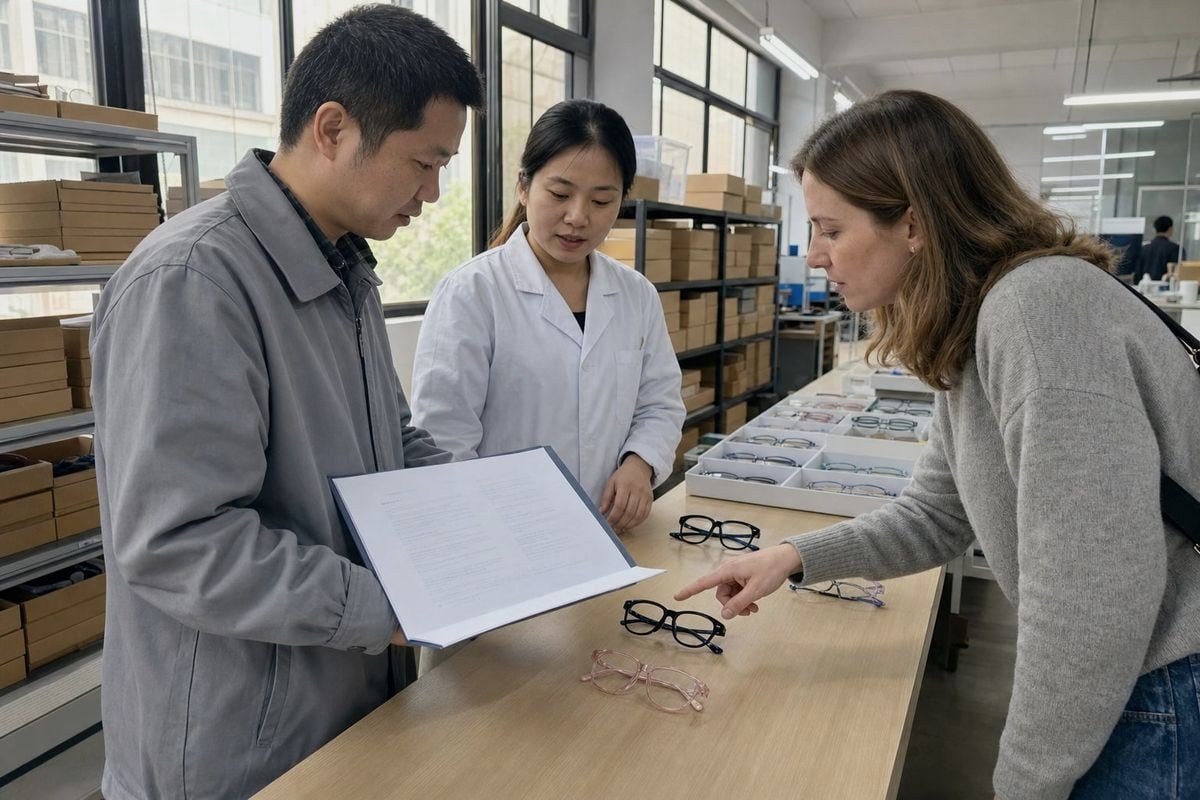
The most credible sourcing workflow is documentation-led purchasing. You buy evidence first, product second. In my experience exporting children's eyewear to buyers in more than twenty countries, the brands that ask hard questions upfront almost never face compliance surprises later. The brands that accept a verbal "yes, it's compliant" are the ones who email me in a panic six months on.
The Pre-Sourcing Question Checklist
| Question to Ask | Was eine gute Antwort ausmacht | Red Flag Answer |
|---|---|---|
| Which edition of EN ISO 12870 was tested? | A specific year, e.g., the 2024 ISO text or current EN adoption | "The latest one" with no document |
| Can you share the full test report? | Multi-page report with lab letterhead and clause-by-clause results | A one-page "certificate" or brochure claim |
| Does the report match my exact model and material? | Yes, with matching model code, size, hinge type, and coating | "It covers our whole product line" |
| Did you inform the lab of your production method? | Yes — the standard requires it, and it appears in the report | Confusion about why this matters |
| Do you conduct in-house lens retention and endurance checks? | Documented internal QC alongside third-party testing | Reliance on third-party testing alone |
| What are the acceptance criteria on the PO? | Explicit standard edition, models, sizes, materials, and lab named on the order | "Standard quality terms" |
One detail buyers often miss: the standard notes that the manufacturer must inform the test laboratory of the production method. This tells you something important. How a frame is made is not a minor footnote — it is part of what the lab assesses. So ask your supplier whether the tested samples came from the same production process, tooling, and material batch approach that will produce your order.
At our factory, we also encourage buyers to sample from our existing catalog of roughly 800 styles before committing to custom molds. Testing the market with a proven, documented style carries far less compliance risk than launching an unverified new construction. Then, once volumes justify it, full OEM customization — colors, logos, lenses, packaging — builds on a configuration that already has a testing history.
Which Materials and Construction Details Affect EN ISO 12870 Compliance?
There is a trade-off I weigh on nearly every kids' frame project: the softer and more flexible the material, the more comfortable and safe it feels on a child's face — but the harder it becomes to hold dimensional tolerances through heat testing. Getting both right is where real engineering lives.
Materials and construction directly affect EN ISO 12870 compliance because dimensional stability, mechanical stability, nickel release, and endurance results all depend on the specific polymer, metal parts, hinge design, and frame construction tested. Rimless, semi-rimless, folding, and flexible frames each face different clause applications.
Children's frames are small and light by design. That works against you in testing. Smaller frames face tighter dimensional-change limits in the elevated-temperature test, and lighter structures have less mass to absorb the repeated stress of endurance cycles. So a construction that passes easily in an adult size can struggle in a kids' size. This is why I insist that the lab report identifies the exact size tested, not just the model name.
How Common Kids' Frame Materials Behave
| Material / Construction | Compliance Strengths | Points to Watch |
|---|---|---|
| TR90 frame front | Excellent impact resistance, lightweight, holds shape well | Verify heat stability in the smallest size ordered |
| TPEE flexible temples | High flexibility, hard to snap, comfortable for active kids | Confirm the tested sample used the same temple construction |
| Acetate fronts | Rigid, polishes to a smooth finish, good lens retention | Heavier; check bridge deformation results |
| Silicone temple tips and hinges | Soft skin contact, secure fit, strong children's eyewear safety profile | Confirm material innocuousness and biological compatibility |
| Metal parts (screws, hinges, cores) | Precise adjustment, durable threads | Nickel release must stay under 0.5 μg/cm²/week |
Our own engineers work mostly in TR90 and TPEE because these environmentally friendly polymers combine flexibility with the impact resistance a child's frame needs. Take the sporty style we build with a glossy TR90-type front, two-tone flexible temples, and silicone cable ear hooks: every one of those elements — rigid front, bendable temple, soft hinge connector — behaves differently under heat and mechanical load, so the tested sample must include all of them in the same configuration you order. The same logic applies to a translucent acetate style with silicone temple tips: change the tip material, and the skin-contact and endurance picture changes with it.
Construction type matters too. The standard's text has explicitly referenced rimless, semi-rimless, and folding frames, and lightweight kids' models often borrow these constructions. Lens retention behaves very differently in a semi-rimless frame than in a full-rim one. If your report was issued for a full-rim version, it does not automatically cover the semi-rimless variant of the same style.
Finally, design compliance in from day one. Selecting compliant materials and structures at the design stage is far cheaper than re-engineering after a failed test. And looking ahead, buyers increasingly ask us about recycled and bio-based materials — a shift worth planning for, since new testing protocols will likely accompany circular-economy requirements.
Schlussfolgerung
Sourcing kids’ optical frames without verified EN ISO 12870 evidence is a gamble with children’s safety and your brand. Demand model-specific reports, confirm the edition, match the construction — then order with confidence.
Fußnoten
1. Provides details on the EN ISO 12870:2024 standard, accessible and from a reputable standards aggregator. ↩︎
2. Details the requirement for dimensional stability at elevated temperature within ISO 12870. ↩︎
3. Explains the meaning and importance of an accredited laboratory for testing and calibration. ↩︎
4. The scope of EN ISO 12870:2024, which includes unglazed spectacle frames, is detailed on this page. ↩︎
5. Explains the components of mechanical stability testing as per ISO 12870. ↩︎
6. EN ISO 12870:2024 covers nickel release limits, and this page provides information about the standard. ↩︎
7. Clarifies the classification of spectacle frames as Class I medical devices under EU MDR. ↩︎
8. Provides the official text of the European Union Medical Device Regulation. ↩︎
Weitere Artikel, die Ihnen gefallen könnten

August 2026
Bio-Based vs Regular Cellulose Acetate: What's the Difference for Kids' Frames?

August 2026
How Recyclable Are Kids' Optical Frame Materials, and What Eco-Friendly Alternatives Exist?

August 2026
Bleichen Kinderbrillengestelle im Lager aus oder altern sie, und wie kontrolliert man die Lagerbedingungen?
Auf der Suche nach einem zuverlässigen Partner für Kinderbrillen?
Entdecken Sie über 800 sofort verfügbare Modelle und umfassenden OEM/ODM-Support, der auf Ihre Marke zugeschnitten ist.
Kontakt aufnehmen English
  Español de México
  Deutsch
  Français
  日本語
日本語  العربية
  Português do Brasil