Which Temple Design—Cable, Straight, or Strap—Is Best for Kids Optical Frames?
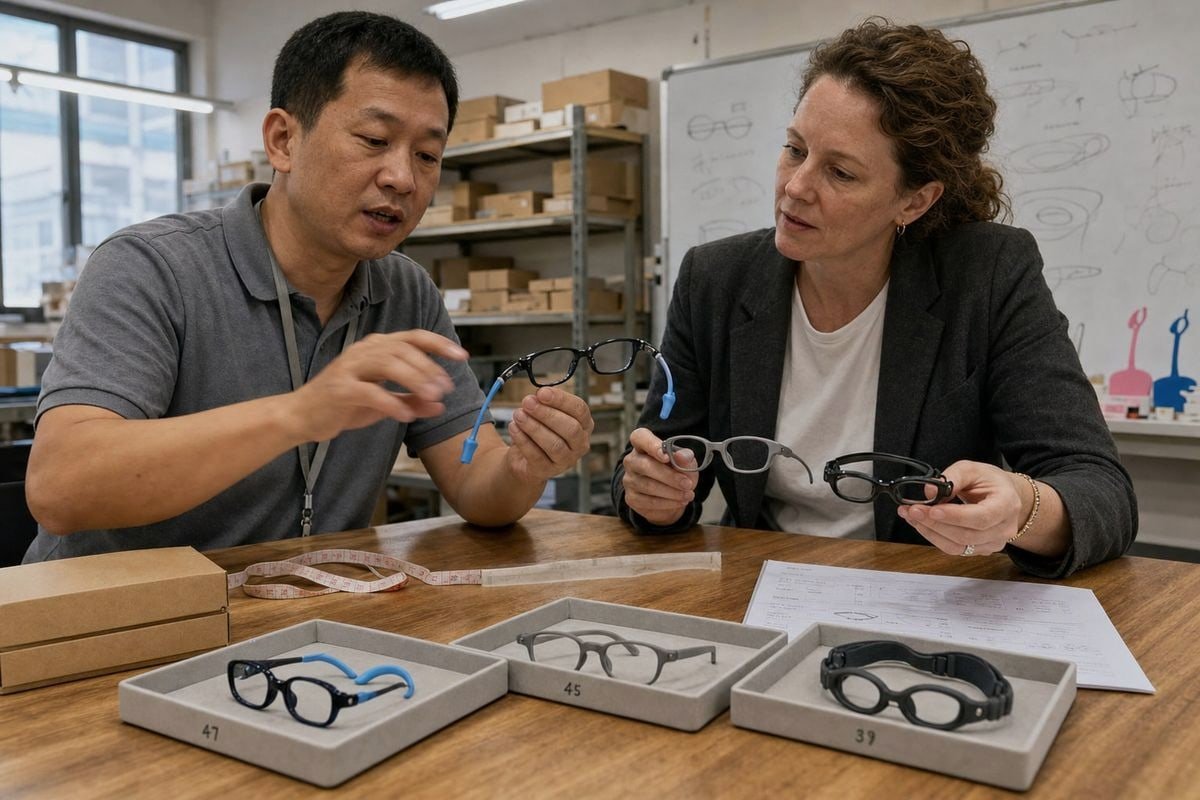
Choosing the right temple design for kids optical frames stumps many buyers who visit our Taizhou factory. Pick wrong, and [frames slide off](https://okayeyewear.com/?p=5787), kids stop wearing them, and returns pile up. Parents blame the brand, not the child. After fifteen years building children’s eyewear, our production team has learned which design fits which situation—and that answer shapes everything below.
Cable temples are best for active preschoolers and kids whose glasses slip, because they wrap behind the ear for maximum retention. Strap systems work best for babies and toddlers under three. Straight temples suit older, school-age children who value comfort and easy on-off handling.
That short answer hides a lot of nuance. Age, activity level, face shape, and wearing habits all change the equation. Let me walk you through each factor, the way I would with a buyer sampling frames in our showroom.
How do I choose the right temple design for different children's age groups?
A buyer from Australia once ordered one temple style for her entire kids' line, ages zero to twelve. Our sales team gently pushed back. In our experience, age is the single biggest factor in temple choice.
Match temple design to developmental stage: strap or headband systems for infants and toddlers (0–3), cable temples for preschoolers and active kids (3–6), and straight or skull temples for school-age children (5+) who can manage glasses independently and prefer adult-style looks.
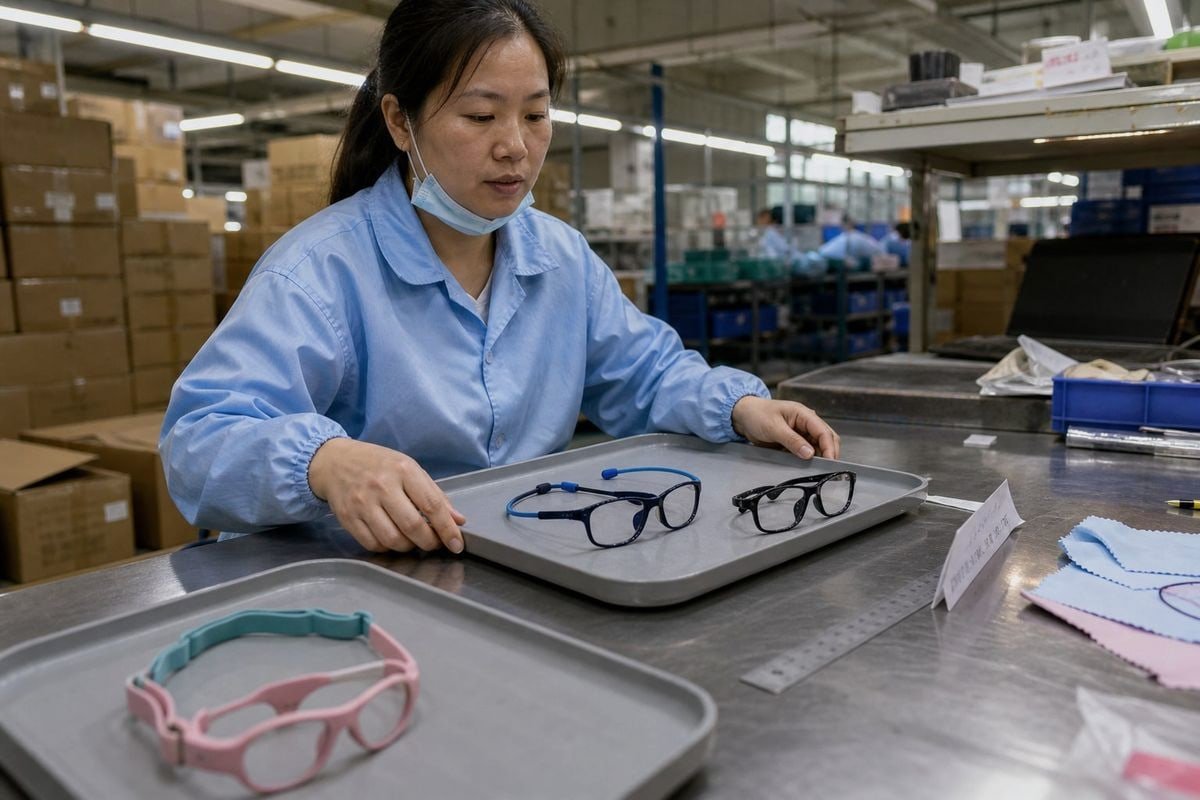
The reason age matters so much comes down to anatomy. Pediatric optometry sources point out that infants and toddlers have flat, underdeveloped nose bridges 1 and small, soft ears. There simply is not enough friction or ear structure to hold a traditional temple arm in place. That is why straps dominate the 0–3 segment. A soft adjustable headband keeps the frame stable even when a baby crawls, rolls, or lies down.
Between ages three and six, ear structure matures but energy levels explode. Kids at this stage lean forward constantly—over toys, over books, over playground equipment. Cable temples shine here because they hook mechanically behind the ear rather than relying on friction alone.
From about age five onward, children develop hand coordination and social awareness. They want to take glasses off by themselves, and they notice what classmates wear. Straight skull temples become the practical transition. They are the easiest style to put on and remove, and they look like adult frames, which matters more than most buyers expect.
Quick age-to-temple reference
| Altersgruppe | Best Temple Design | Warum es funktioniert |
|---|---|---|
| 0–3 years (infants/toddlers) | Strap / adjustable headbands | Flat nose bridge and small ears cannot hold standard temples |
| 3–6 years (preschool) | Cable temples | Wrap-around retention survives forward-leaning play |
| 5–8 years (early school) | Cable or straight, case by case | Depends on activity level and independence |
| 8+ years (older kids) | Straight / skull temples | Easy on-off, adult-style aesthetics, sufficient retention |
One more note from our optical frame sizing 2 work: children can outgrow a cable frame quickly. Several brands we supply plan their assortment so a child graduates from strap to cable to straight as they grow. That progression also gives your customers a reason to return.
Which temple style keeps optical frames securely in place during active play?
Retention is the complaint we hear most often from importers. During one product review, a European buyer showed us a video of her son's frames flying off mid-somersault. Our engineers redesigned that model's temples within a month.
Cable temples keep optical frames most secure during active play. They provide a 360-degree wrap behind the ear, holding glasses mechanically rather than by friction. For sports or PE, hybrid systems—straight temples with a detachable strap—offer goggle-like security plus a normal classroom look.
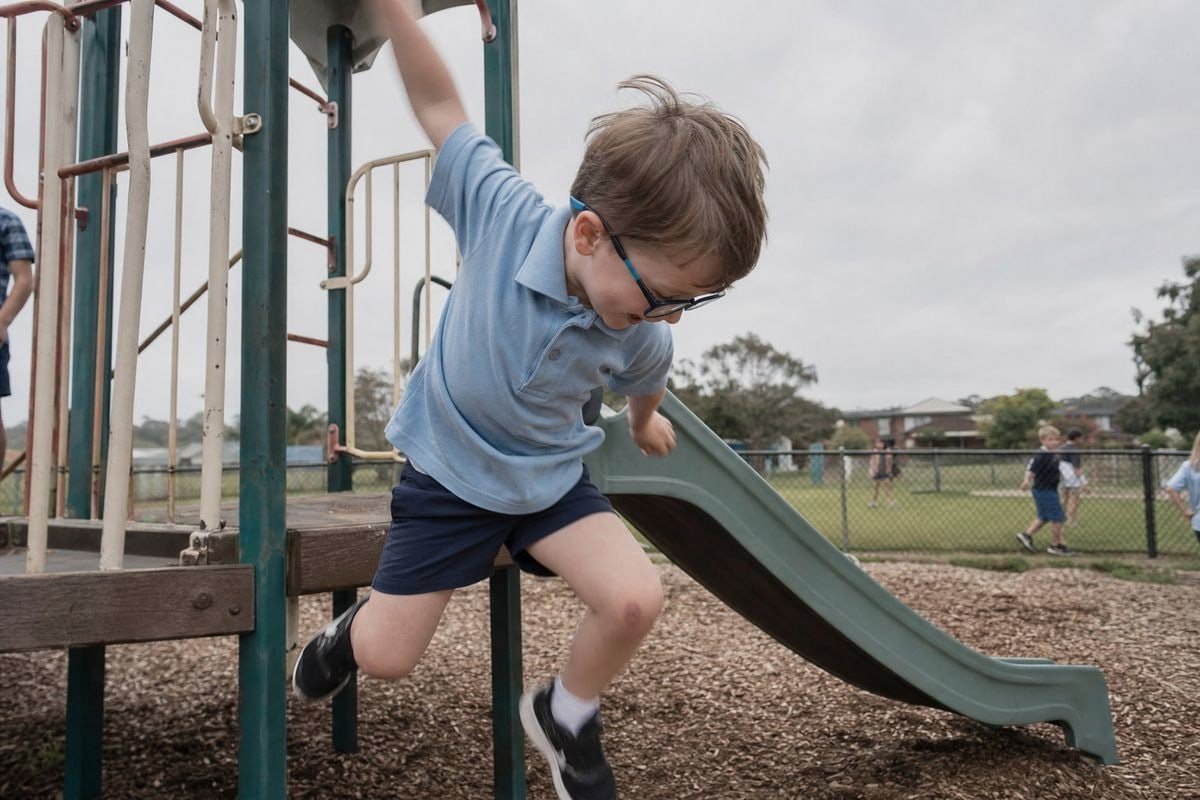
Here is why the physics favors cables. Straight temples rely mainly on gentle skull friction and correct temple length. That works fine when a child sits still. But active kids look down, jump, spin, and collide. Every downward glance lets gravity pull a friction-fit frame forward. A cable temple hooks around the back of the ear, so the frame cannot slide off without the ear letting go first. That is genuine behind-the-ear security, and it is why cables appear so often in sports and safety eyewear, not just children's frames.
Still, I want to raise the objection buyers give us: are cables always the answer for active kids? No. Cables are harder to put on and take off. A child who removes glasses ten times a day may find them frustrating. And a poorly fitted cable can rub or pinch, which makes a child refuse the frame entirely. Retention only matters if the child actually wears the glasses.
Retention options ranked for active kids glasses
- Strap / headband systems — maximum hold, best for the youngest wearers or full-contact activity, least "normal-looking."
- Cable temples — strong mechanical hold, ideal for everyday active play and forward-leaning tasks.
- Hybrid straight temples with detachable strap — versatile; strap on for sports, strap off for class.
- Textured straight temples — internal micro-texturing, sometimes called gecko-grip patterns, adds biomimetic friction without a wrap-around arm.
- Plain straight temples — easiest handling, weakest retention during movement.
We build several hybrid styles on our line for exactly this reason. Frame durability matters here too: temples flex outward every time a child yanks glasses off with one hand, so the retention system must survive thousands of those cycles, not just look secure on day one.
What materials make cable, straight, or strap temples safer and more comfortable for kids?
Material choice is where I get most opinionated, because flexible materials are the core of what our factory has specialized in for fifteen years. A beautiful temple design in brittle plastic is a hazard, not a product.
TR90 memory plastic and TPEE are the safest, most comfortable temple materials for kids. Both flex outward without snapping, return to shape, and stay lightweight. Medical-grade silicone ear hooks and strap pads add soft, skin-friendly contact points, while spring hinges absorb rough handling.
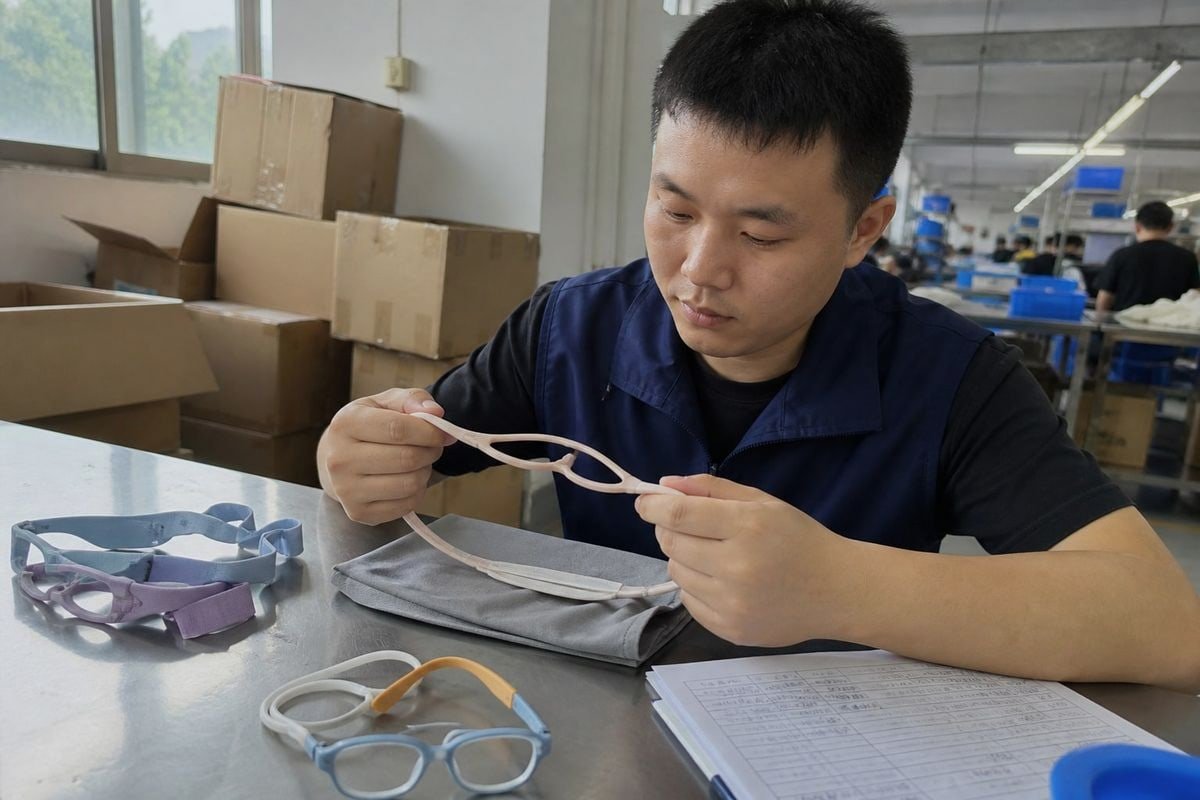
Let me explain the trade-offs we weigh when we spec a new frame. Children remove glasses with one hand, twisting the temples far past their normal opening angle. Rigid acetate or cheap injection plastic can crack under that outward flaring, leaving sharp edges near a child's face. That is why we build most of our kids optical frames in TR90, often paired with TPEE temples. TR90 memory plastic bends and bounces back. TPEE goes further—it is softer, rubbery, and environmentally friendly, which our European and Japanese buyers increasingly require.
The contact point matters as much as the arm itself. Silicone ear hooks and tips distribute pressure over a wider area behind the ear. On one of our two-tone models, a navy TR90 temple transitions into a soft sky-blue silicone tip with embossed dot patterns—the texture adds grip and the silicone adds comfort. For children with sensory processing sensitivities 3, this is not a small detail. Neuro-inclusive design now calls for sensory-neutral, medical-grade silicone tips that mimic skin texture, reducing tactile defensiveness so sensitive kids tolerate all-day wear.
Material comparison by temple type
| Temple Type | Best Core Material | Best Contact Material | Key Safety Benefit |
|---|---|---|---|
| Cable | TR90 or TPEE arm with flexible cable end | Silicone-coated cable curl | Flexes with the ear, no metal digging in |
| Straight / skull | TR90 memory plastic | Silicone ear hooks or soft tips | Survives one-handed removal without snapping |
| Strap / headband | TPEE frame front | Soft elastic or silicone strap | No rigid parts pressing a baby's head |
Two more components deserve mention. Spring hinges let temples flex beyond ninety degrees and spring back, which dramatically extends frame durability with rough handlers. And shape-memory alloy cores such as Nitinol are emerging in premium temples—they maintain gentle, self-calibrating tension even as a child's head widens between optician visits. We do not treat these as gimmicks; they solve the real problem of frames loosening between adjustments.
Can I request custom temple options when sourcing kids optical frames from a manufacturer?
Almost every serious buyer asks us this eventually, usually after their first stock order sells through. The honest answer depends on the factory you choose, so let me describe how it works on our side.
Yes. Established OEM/ODM factories can customize temple length, curvature, tip material, colors, textures, and retention accessories. Many, including ours, offer hundreds of existing styles to modify—changing silicone tips, adding detachable straps, or adjusting cable curves—without the cost of a full custom mold.
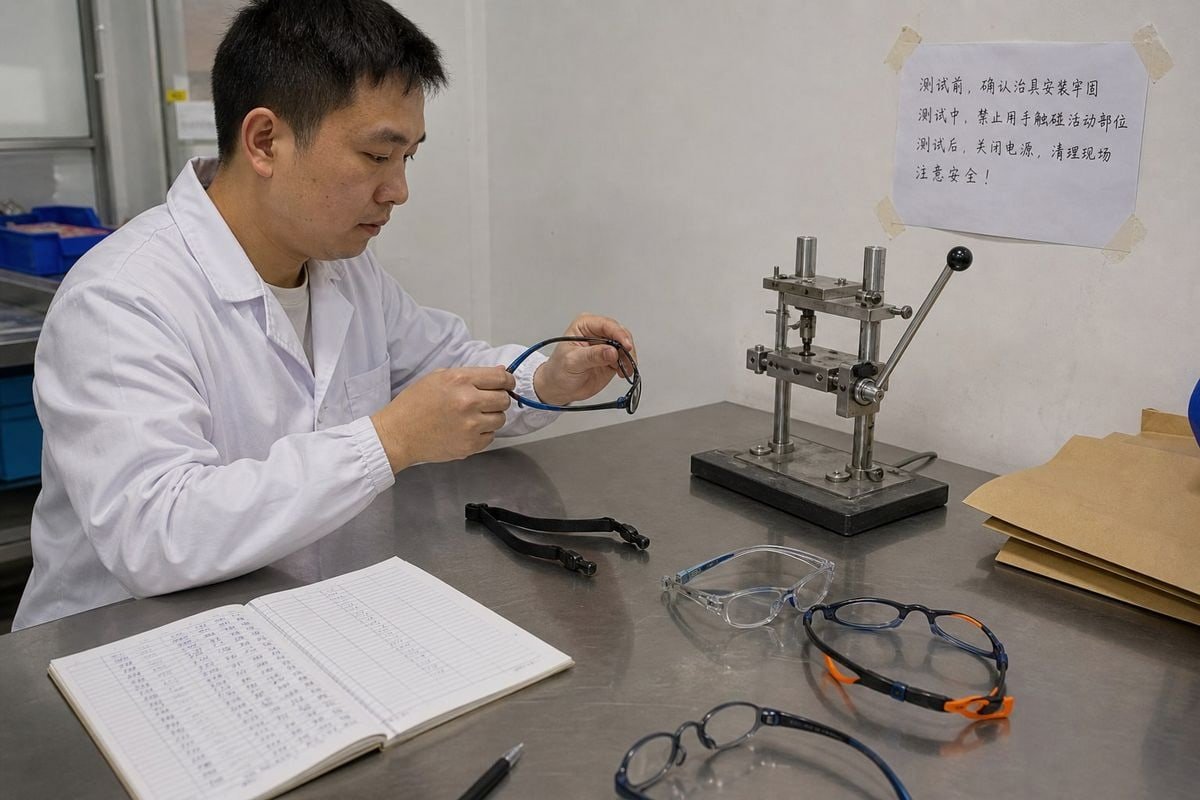
The lesson I share with new brands is this: full custom tooling is rarely the right first step. A new mold is a real investment, and you are betting on an unproven design. Instead, we encourage buyers to start from our library of roughly 800 existing styles. From that base, our team can customize the elements that actually differentiate a kids' line—colors, logos, lens options like UV400 or polarized, packaging, and yes, temple details.
What is typically customizable without new tooling
- Temple tip material and color — swap standard tips for soft silicone ear hooks, or specify sensory-neutral silicone for inclusive lines.
- Surface texture — embossed dots, swirls, or grip patterns on the inner temple surface.
- Retention accessories — detachable straps or adjustable headbands packed with the frame as a hybrid system.
- Cable curvature tuning — the curl should sit along the back of the ear and stop short of the earlobe, without pressing the side of the head; we adjust this during sampling.
- Hinge choice — standard, spring hinges, or flexible hinge-free TPEE construction.
What requires deeper development
More ambitious requests need engineering time. Advanced 3D-printed temple geometry can map anatomical contours, even accounting for ear-height asymmetry, which is common in pediatric facial development 4 and which standard symmetrical frames ignore. Custom temple lengths for a specific market's optical frame sizing chart may also require mold changes. We handle these as ODM projects with proper sampling rounds and quality control gates in our 5S-managed workshop.
One practical fitting standard worth writing into your spec sheet: roughly 30–45 mm of temple should extend beyond the bend point for proper retention without discomfort, and straight temples should exert only gentle pressure on the skull. A bridge fit review belongs in the same sampling meeting—for kids with low nasal bridges, a low, wide saddle bridge can matter as much as the temples themselves. Ask your supplier to confirm both before you approve mass production.
Schlussfolgerung
No single temple design wins for every child. Straps protect the youngest wearers, cables keep active kids' glasses on, and straight temples serve independent school-age children. Frames that slip get abandoned—and abandoned glasses hurt vision and your brand. The fix is matching temple design, flexible materials, and proper fit to each age group. When you sample kids optical frames, test all three designs, check the temple bend and bridge fit, and choose a factory that can adjust both. Get that right, and the glasses stay where they belong: on the child's face.
Fußnoten
1. Authoritative guidance on pediatric eye anatomy and vision development from the American Academy of Ophthalmology. ↩︎
2. Official ISO 12870 standard for ophthalmic optics and spectacle frame requirements and testing. ↩︎
3. Peer-reviewed research on sensory processing and its impact on tactile defensiveness and product tolerance. ↩︎
4. Scientific study on the growth and anatomical development of the pediatric craniofacial structure. ↩︎
Weitere Artikel, die Ihnen gefallen könnten

August 2026
Bio-Based vs Regular Cellulose Acetate: What's the Difference for Kids' Frames?

August 2026
How Recyclable Are Kids' Optical Frame Materials, and What Eco-Friendly Alternatives Exist?
August 2026
Bleichen Kinderbrillengestelle im Lager aus oder altern sie, und wie kontrolliert man die Lagerbedingungen?
Auf der Suche nach einem zuverlässigen Partner für Kinderbrillen?
Entdecken Sie über 800 sofort verfügbare Modelle und umfassenden OEM/ODM-Support, der auf Ihre Marke zugeschnitten ist.
Kontakt aufnehmen English
  Español de México
  Deutsch
  Français
  日本語
日本語  العربية
  Português do Brasil