What Lens Coatings for Kids’ Sunglasses Solve Scratch, Fog, and Glare Issues?
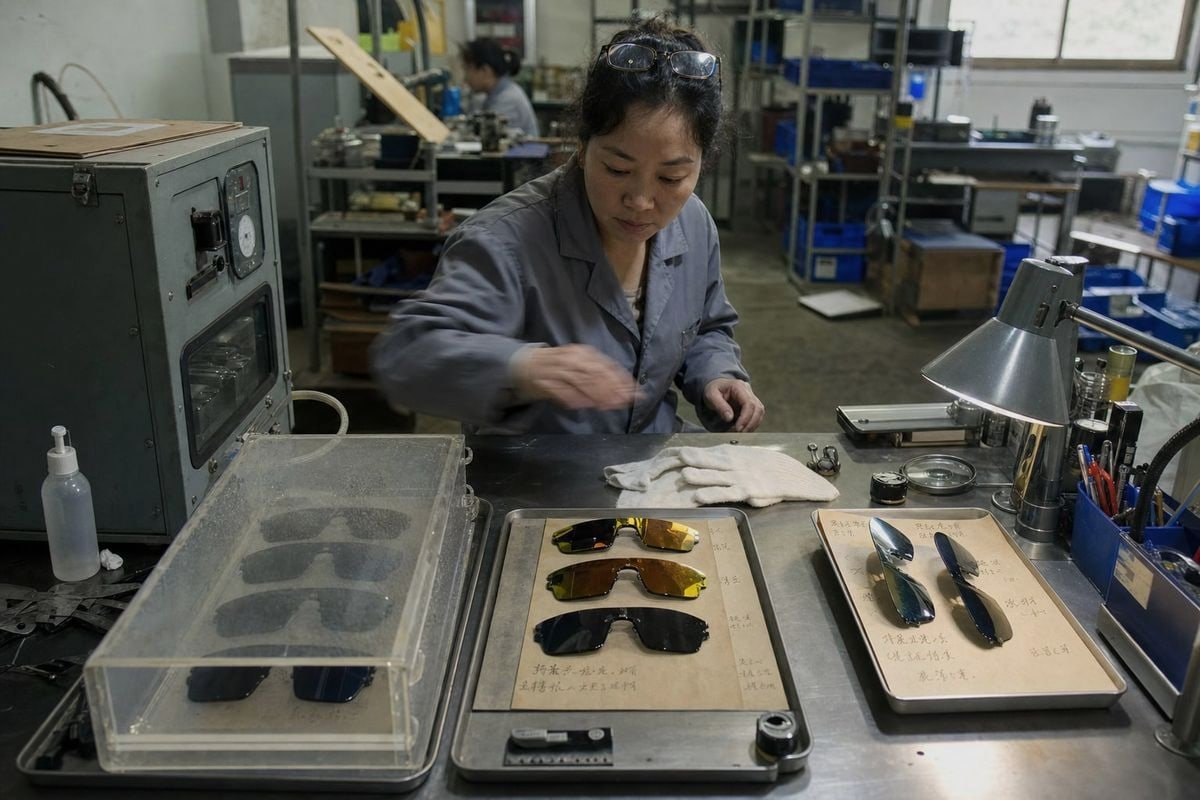
Lens coatings for kids’ sunglasses are the first thing buyers ask about on our production line. Scratched, foggy, glaring lenses frustrate parents fast. Returns pile up. The fix starts with coatings.
Kids’ sunglasses need three coatings to solve the three biggest lens problems: a hard coat for scratch resistance, an anti-fog treatment for condensation during active play, and polarized lenses or an anti-reflective coating for glare. UV400 protection is a separate, non-negotiable requirement.
No single coating does everything. Each one solves a different problem. Let me walk you through how to match each coating to each issue, then show you how to combine them when sourcing.
How do I choose the best scratch-resistant coating for children's sunglasses lenses?
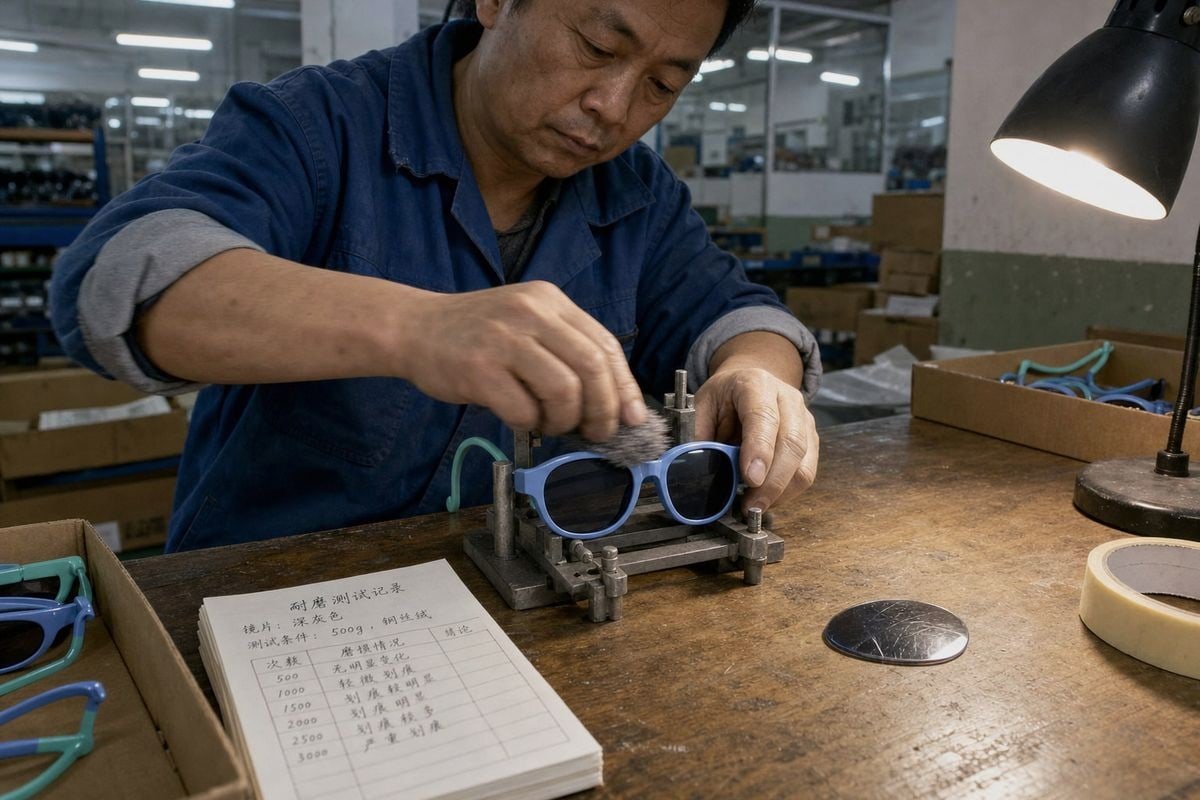
During a QC inspection last year, we pulled a batch of lenses and rubbed them with steel wool as part of our abrasion check. The difference between coated and uncoated Polycarbonatgläser 1 was obvious within seconds.
Choose a hard coat applied to both sides of a polycarbonate or Trivex lens. Premium scratch-resistant coatings bond a thin, durable layer onto the softer lens material, protecting against sand, backpacks, and rough handling. No coating is scratch-proof, but a quality hard coat dramatically extends lens life.
Kids drop their sunglasses on pavement. They shove them into backpacks with zippers and toys. They wipe lenses with sandy fingers or shirt hems. So scratch resistance is not a luxury for children's eyewear. It is the baseline.
Why lens material matters first
The coating is only half the story. Polycarbonate lenses are the standard for kids because of their impact resistance. Trivex-Material 2 offers similar safety with slightly better optical clarity. Both materials are soft on the surface, which is exactly why a hard coat matters so much. The coating compensates for the softness of the substrate.
Here is how the common options compare:
| Lens Setup | Scratch Resistance | Impact Resistance | Am besten geeignet für |
|---|---|---|---|
| Uncoated polycarbonate | Poor | Ausgezeichnet | Not recommended for kids |
| Polycarbonate + standard hard coat | Gut | Ausgezeichnet | Everyday kids' sunglasses |
| Polycarbonate + premium hard coat | Sehr gut | Ausgezeichnet | Active, rough-on-gear kids |
| Trivex + hard coat | Sehr gut | Ausgezeichnet | Premium kids' lines |
What to check when evaluating a hard coat
In our experience supplying children's brands across 20+ countries, buyers should ask three things. First, is the coating applied to both lens surfaces? Back-side scratches are just as common as front-side ones. Second, does the factory run abrasion testing on production batches, not just samples? Third, is the coating cured properly? A poorly cured hard coat can craze or peel, which looks worse than a scratch.
One more honest point. Some suppliers advertise self-healing nano-coatings that fill in micro-scratches with heat. The technology exists, but for children's price points, a well-applied conventional hard coat delivers far more reliable value. Cleaning habits still matter too. A microfiber cloth and a case will make any coating last longer.
What anti-fog coating options work best for kids' active outdoor use?
A buyer from a Japanese outdoor brand once returned samples to us with one note: the lenses fogged the moment kids ran uphill in humid weather. That feedback reshaped how we spec sports styles.
A factory-applied hydrophilic anti-fog coating works best for active kids. It spreads condensation into an invisible water film instead of droplets, so vision stays clear during sports, temperature changes, and humid weather. Spray-on treatments help too, but they wear off and need reapplication.

Fogging happens when warm, moist air hits a cooler lens surface. Kids create this situation constantly. They sprint, sweat, and move between air conditioning and summer heat. Wraparound sport styles, like the single-shield frames we build for cycling and skiing, sit close to the face and trap more warm air, so they fog faster than open styles.
Permanent coating vs. temporary treatment
There are two real options, and they behave very differently:
| Option | Wie es funktioniert | Durability | Best Use Case |
|---|---|---|---|
| Factory hydrophilic coating | Bonded layer spreads moisture into a thin film | Lasts the life of the lens with proper care | Sports and performance styles |
| Anti-fog spray or wipe | Temporary surfactant film | Hours to days, then reapply | Occasional fixes, budget lines |
| Ventilation design | Air channels in the frame reduce trapped heat | Permanent, built into the frame | Wraparound and shield designs |
For a children's product, I always recommend pairing the coating with frame ventilation. Coatings handle the chemistry. Vents handle the airflow. Together they cover the worst-case scenario: a sweaty child stopping suddenly after hard play.
Care matters more with anti-fog
One caution from our workshop. Hydrophilic anti-fog layers are more delicate than a hard coat. Harsh cleaners and aggressive dry wiping degrade them. So if your brand ships anti-fog lenses, include a care card in the packaging. We add these for OEM clients as part of retail-ready presentation, and it noticeably reduces complaint rates. Also be honest in your marketing. Anti-fog reduces fogging in normal conditions. It does not eliminate fog in extreme humidity, and overclaiming only creates disappointed parents.
Can polarized or anti-glare coatings really improve safety for children's eyes?
Every trade-off in kids' eyewear comes down to real use. When we develop lens specs for beach and snow collections, we always weigh polarization against a standard anti-reflective coating, because they solve different glare problems.
Yes. Polarized lenses filter horizontal light waves, cutting blinding glare from water, snow, and pavement, which helps children see hazards clearly. An anti-reflective coating reduces reflections on the lens surface itself. For outdoor sunglasses, polarization is the stronger and more meaningful safety upgrade.

Glare is not just annoying. It is a safety issue. Reflected sunlight off a swimming pool, wet road, or ski slope can momentarily blind a child. Kids also squint less consciously than adults, so they often keep looking into glare instead of turning away. That is where polarisierte Gläser 3 earn their cost.
Polarized vs. anti-reflective: know the difference
These two terms get confused constantly, even by experienced buyers. Here is the simple breakdown:
- Polarisierte Gläser contain a filter that blocks horizontal light waves. They kill reflected glare from external surfaces like water and snow.
- Anti-reflective coating is applied to the lens surface. It reduces reflections and ghost images on the lens itself and lets more light reach the eye.
- Mirror coatings, like the orange-to-gold gradient finish on our sport shield styles, reflect some light away and reduce overall brightness, adding another layer of glare control on top.
For bright outdoor sunglasses, polarization does the heavy lifting. AR coating adds refinement, and it matters more for optical frames used with screens and reading.
Where does UV protection fit?
Here is the point I stress with every new buyer. UV400-Schutz 4 is not a glare solution. It blocks UVA and UVB rays, which children's developing eyes 5 are especially vulnerable to. A dark lens without UV400 protection is actually dangerous, because the pupil dilates behind the tint and lets more UV in. So UV400 is mandatory on every kids' lens we ship, whether polarized or not. Some brands also ask about photochromic lenses 6, which darken automatically in sunlight. They are a nice adaptive option, but they still need UV400 and glare control specified separately.
Which lens coating combination should I request when sourcing kids' sunglasses from a manufacturer?
A procurement manager from an Australian kids' brand recently asked me to spec three product tiers in one email. That conversation became the matrix below, and I now share it with almost every new client.
Request this baseline for every kids' style: polycarbonate or Trivex lenses, a two-sided hard coat, and UV400 protection. Then add polarization for beach and snow lines, anti-fog for sport styles, and hydrophobic or oleophobic top layers for easier cleaning.
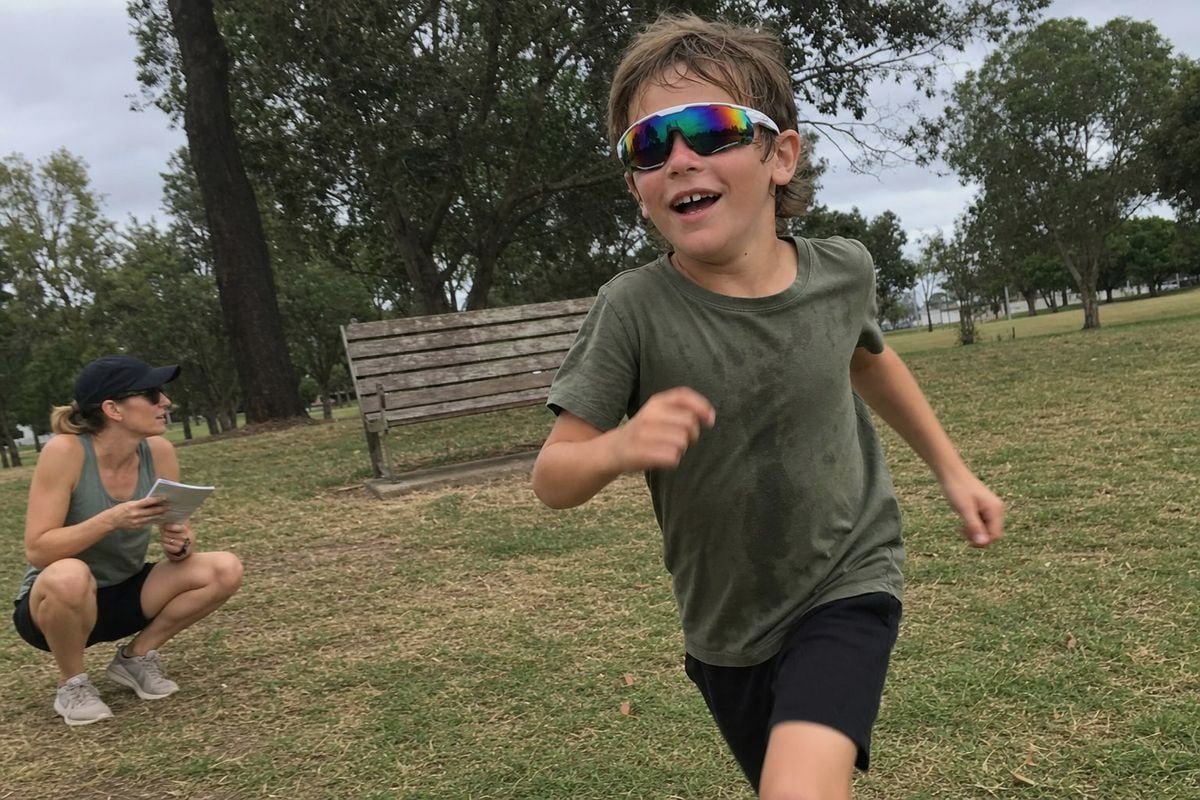
Sourcing gets much easier when you match coating packages to use cases instead of buying the longest spec sheet. More coatings mean higher cost, and not every style needs every layer. Here is the recommendation matrix we use with OEM and ODM clients:
| Product Line | Lens Base | Coating Package | Warum es funktioniert |
|---|---|---|---|
| Everyday / playground | Polycarbonat | Hard coat + UV400 | Covers scratches and sun safety at a strong price point |
| Beach / snow / water | Polycarbonat | Hard coat + UV400 + polarized | Cuts reflected glare from water and snow |
| Sport / performance | Polycarbonat oder Trivex | Hard coat + UV400 + anti-fog + mirror or polarized | Handles sweat, heat, and bright conditions |
| Premium / gift line | Trivex | Hard coat + UV400 + AR + hydrophobic top layer | Maximum clarity and easy cleaning for a flagship product |
Extras worth considering
A hydrophobic treatment repels water and sweat, which keeps sport lenses clearer in rain and humidity. An oleophobic coating resists fingerprints, and children touch their lenses constantly, so it genuinely reduces parent frustration. Antimicrobial lens treatments and graphene-enhanced coatings exist in the market, but I advise buyers to treat them as marketing extras, not core requirements. Spend your budget on the fundamentals first.
Questions to ask your supplier
Before you sign a PO, confirm four things. Does the factory test coating adhesion and abrasion on production batches? Can they document UV400 performance per shipment? Do frame materials match lens performance? Our flexible TPEE temples and TR90 fronts 7 exist because a durable lens on a brittle frame is a wasted investment. Finally, can they support your branding with custom colors, logos, and packaging so the finished product is retail-ready? With around 800 existing styles in our catalog, we usually help new brands launch a coated, tested line without any mold investment at all.
Schlussfolgerung
Scratched, foggy, glaring lenses lose parents' trust fast. Pair a hard coat, anti-fog treatment, and polarized lenses with UV400, and your kids' sunglasses line stays safe and sellable.
Fußnoten
1. Provides technical background on the primary lens substrate discussed throughout the article. ↩︎
2. Explains the alternative lens material referenced as a premium option for clarity. ↩︎
3. Background on polarization physics supports the explanation of glare-blocking technology. ↩︎
4. Official FDA consumer guide on selecting sunglasses with 100% UV protection. ↩︎
5. WHO fact sheet supports the claim about children’s eye vulnerability to UV exposure. ↩︎
6. Background on adaptive lens technology mentioned as an optional feature for buyers. ↩︎
7. Explains the thermoplastic frame material referenced alongside lens durability discussion. ↩︎
Weitere Artikel, die Ihnen gefallen könnten

August 2026
Sollte die Fabrik die Verpackung und Kennzeichnung von Kinder-Sonnenbrillen übernehmen oder einen bestimmten Lieferanten nutzen?

August 2026
Eigenes Lager vs. Direktlieferung durch den Lieferanten: Was senkt die Retourenkosten für Marken von Kinder-Sonnenbrillen?

August 2026
Direkt zum Lagerhafen oder Lagerung in Übersee: Was spart mehr bei den Versandkosten für Kinder-Sonnenbrillen?
Auf der Suche nach einem zuverlässigen Partner für Kinderbrillen?
Entdecken Sie über 800 sofort verfügbare Modelle und umfassenden OEM/ODM-Support, der auf Ihre Marke zugeschnitten ist.
Kontakt aufnehmen English
  Español de México
  Deutsch
  Français
  日本語
日本語  العربية
  Português do Brasil