How to Choose Between Silicone vs Adjustable Metal Nose Pads for Kids Optical Frames?
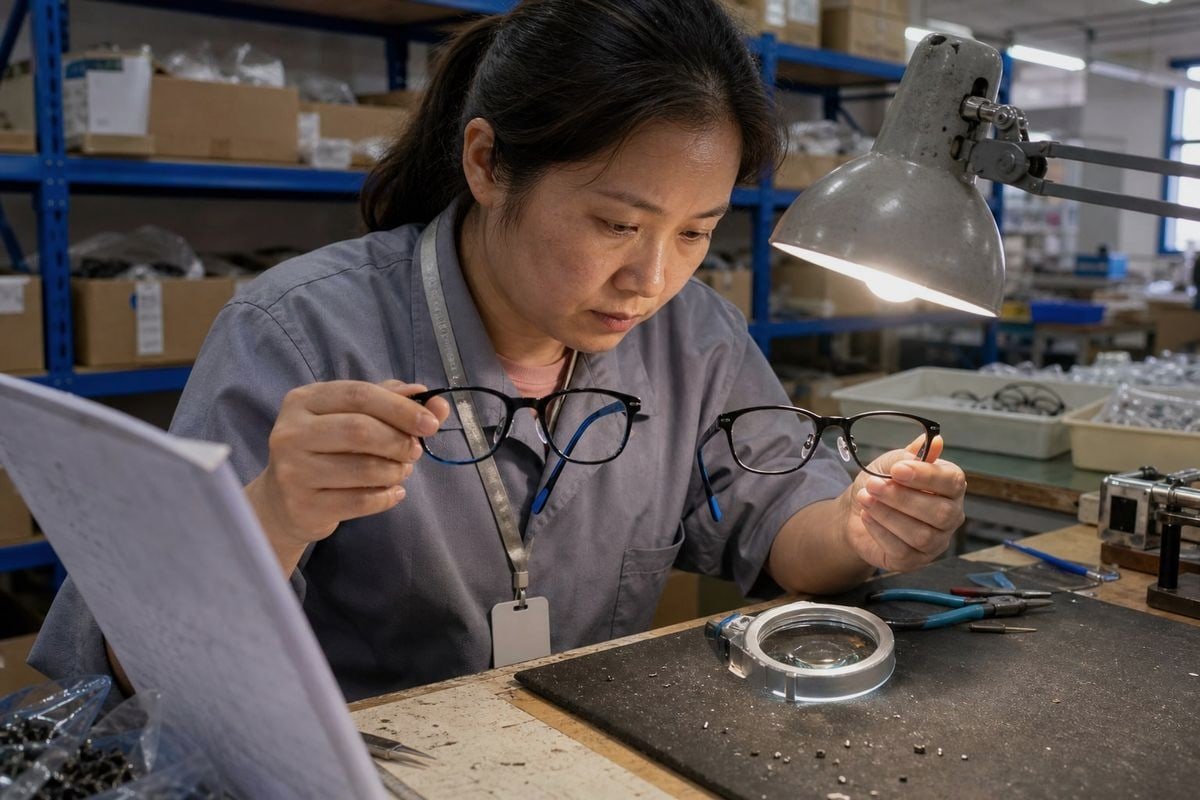
Choosing between silicone vs adjustable metal nose pads for kids optical frames confuses many buyers. On our production line in Taizhou, we see this decision derail orders every month.
Choose silicone nose pads for comfort, grip, and sensitive skin — they suit most active children. Choose adjustable metal nose pads when precise fit tuning matters, such as flat nose bridges or asymmetrical faces. Silicone wins on softness; metal pad arms win on adjustability and long-term fit precision.
That is the short answer. But the details matter, especially if you are building a kids’ eyewear line. Let me walk you through each factor, one section at a time.
How do I know if silicone or metal nose pads are safer for young children?
A buyer from Australia once asked me to swap metal pad arms onto a toddler frame. We talked her out of it. Our engineers had a good reason, and I will explain it here.
Silicone nose pads are generally safer for young children because they are soft, hypoallergenic, and have no rigid parts that can poke or bruise the nose during impacts. Metal pad arms can bend inward during falls and may contain nickel, which triggers skin irritation in sensitive kids.
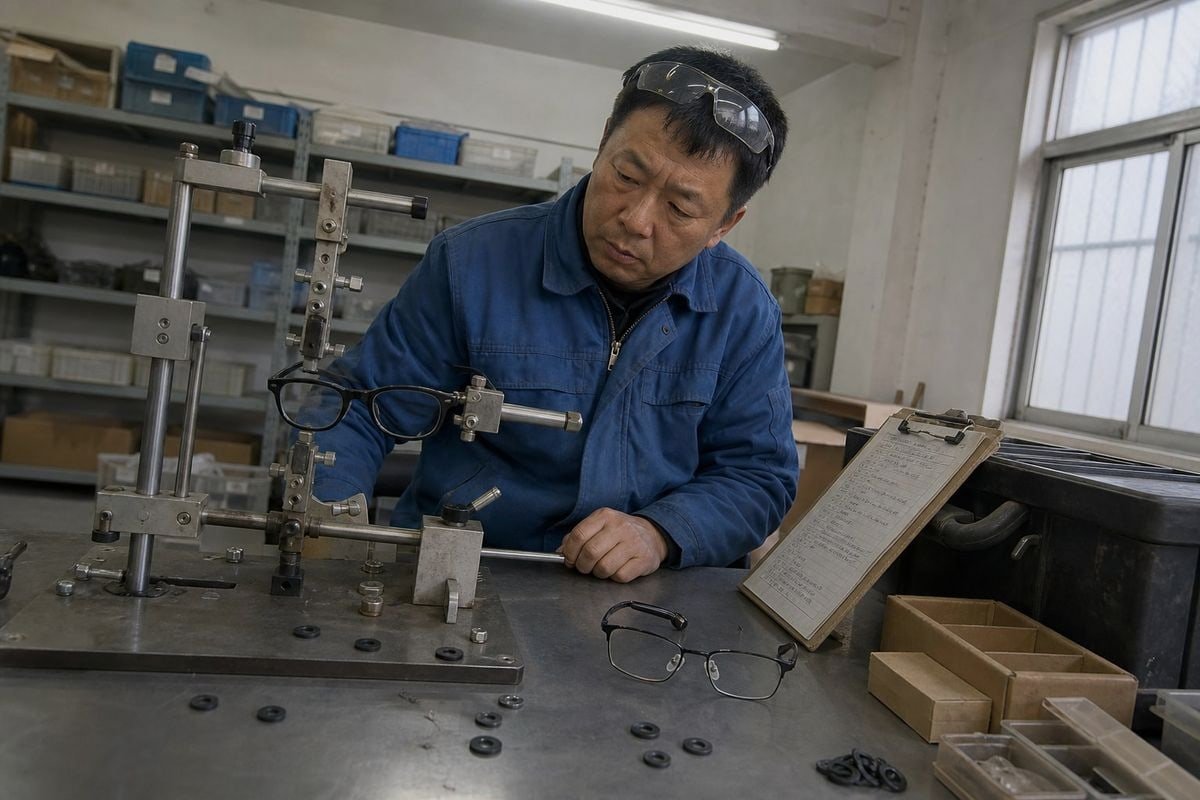
Safety for pediatric eyewear starts with one question: what happens when the child falls, bumps into a friend, or sleeps with the glasses on? Kids do all three. So the contact points on the nose must be forgiving.
Why soft materials matter for growing noses
A child's nasal bridge 1 is mostly soft cartilage. Constant pressure from hard metal pads on that cartilage can cause skin thinning or lasting indentations during peak growth years. This is one reason safety-conscious designs for younger children favor soft-touch silicone or one-piece bridges. There are simply no metal edges near the eyes.
Silicone also scores well on skin sensitivity. Medical-grade silicone is inherently hypoallergenic. Metal pad arms, by contrast, often use nickel-containing alloys. Nickel is a known trigger for contact dermatitis 2 in children. If a young wearer has a history of skin irritation, silicone or a molded saddle bridge is the lower-risk path.
The impact question
Metal pad arms sit on thin wire stems. During an accidental impact, those stems can bend inward and press or scratch the bridge. In our 15 years of building children's frames, this is the failure mode we design against most. Our TR90 frames with TPEE temples flex on impact instead of concentrating force at one point.
| Safety factor | Silicone pads | Adjustable metal pads |
|---|---|---|
| Impact behavior | Cushions, no rigid stems | Wire arms can bend inward |
| Allergy risk | Hypoallergenic material | Possible nickel exposure |
| Pressure on cartilage | Distributes softly | Can concentrate pressure |
| Best age range | Toddlers and up | School age and up |
For children under about six, we almost always recommend silicone contact points or an integrated soft bridge. Older kids can handle metal pad arms if fit precision demands it.
Which nose pad type offers better comfort and fit for kids who wear glasses all day?
The trade-off we weigh in every frame design is simple: cushioning versus precision. You rarely get the maximum of both. When we develop a new TR90 kids optical frame, this tension shapes the whole bridge design.
Silicone nose pads offer better all-day comfort because the soft material cushions pressure and grips the skin to prevent frame slippage. Adjustable metal pads offer a better fit for unusual nose shapes, since an optician can tune the height, angle, and spread precisely.

Comfort and fit sound like the same thing. They are not. Comfort is how the frame feels. Fit is where the frame sits. A child needs both, but different hardware solves each problem.
Comfort: why silicone usually wins
Silicone has a high-friction, skin-like surface. It molds slightly to the nose and spreads pressure over a wider area. That grip matters more for kids than for adults. Children run, jump, and look down at desks all day. They are also less likely to push their glasses back up when frames slide. A slipping frame means the child looks over the lenses instead of through them, and the prescription stops doing its job.
There is a subtler benefit too. The skin-like texture of silicone helps children get used to the sensation of wearing glasses faster. New wearers pull their frames off less often when the contact points feel natural. Opticians sometimes call this proprioceptive compliance. Parents just call it "he finally stopped taking them off."
Fit: where metal pad arms earn their place
Adjustable metal pad arms let an optician change three things: pad height, pad angle, and the distance between pads. That level of optical frame adjustment 3 matters most for children with a flat nose bridge. Without pad-arm tuning, a standard frame sits too low on a flat bridge, and the child looks through the wrong part of the lens — away from the optical center. For stronger prescriptions, that misalignment is a real optical problem, not just a comfort issue.
The fit-first decision list
Here is the quick way we frame it for buyers:
- Active child, standard bridge, sensitive skin → silicone pads or a molded saddle bridge.
- Flat or low nasal bridge, precise prescription → adjustable metal pad arms, fitted by an optician.
- Very young child, simplicity first → one-piece soft bridge, no separate pads at all.
Adjustment quality matters as much as material. A well-tuned metal pad frame can outperform a poorly shaped silicone bridge. The pad type is only half the answer; the fitting is the other half.
How do silicone and adjustable metal nose pads differ in durability and long-term maintenance?
A lesson we learned early in our export business: the frame that survives the sample review is not always the frame that survives eight months on a seven-year-old. Maintenance behavior over time is where the two pad types really diverge.
Metal pad arms are more durable but need periodic tightening and professional re-adjustment. Silicone pads wear faster — they absorb skin oils, can yellow or harden, and typically need replacement about every six months. Silicone costs less per part; metal costs more in optician visits.
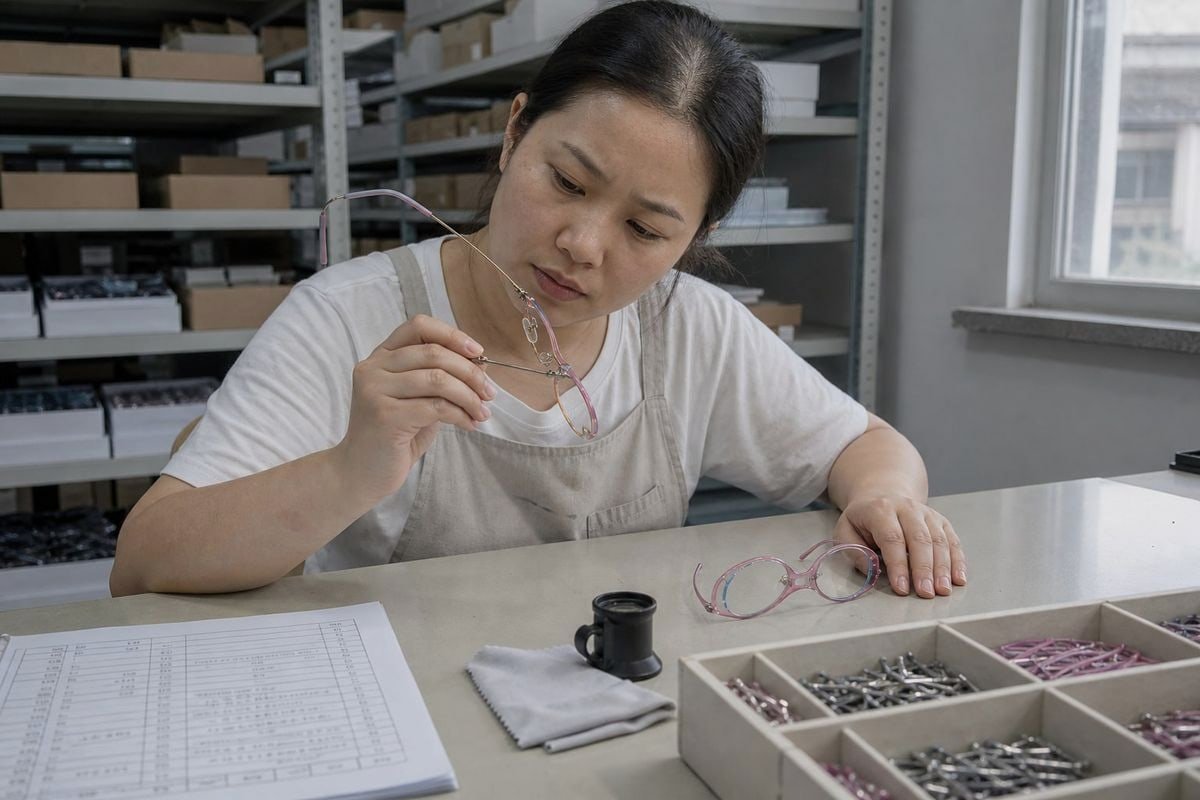
Neither option is maintenance-free. The question for a brand or importer is which maintenance burden your end customer will actually accept.
How silicone ages
Silicone is slightly porous. Over months of daily wear, it absorbs sweat, skin oils 4, and sunscreen. The material can discolor, harden, and lose its grip. For hygiene, the practical guidance is nose pad replacement roughly every six months. Silicone can also harbor bacteria that cause localized breakouts on a child's nose, so a simple bio-film routine helps: a daily wipe with a diluted, non-abrasive solution keeps the pads clean and keeps small acne spots off the bridge.
There is one bright spot in newer designs. Ribbed and multi-contoured silicone pads give a degree of self-adjusting fit. They flex to accommodate subtle growth spurts between professional fittings, which reduces how often parents need an optician visit.
How metal hardware ages
Metal pad arms rarely wear out, but they drift. Active play bends the arms out of position. Screws loosen. The mounting style matters here: screw-in pads are secure but need a tiny screwdriver to service, while push-in pads snap out for fast replacement but can pop loose if a child picks at them. For kids' frames, we generally favor screw-in mounting on metal pad arms, precisely because small fingers find push-in pads irresistible.
| Maintenance factor | Silicone pads | Adjustable metal pad arms |
|---|---|---|
| Typical service interval | Replace pads ~every 6 months | Tighten and re-align as needed |
| Common failure mode | Yellowing, hardening, grime | Bent arms, loose screws |
| Who does the work | Parent can swap pads | Optician re-adjustment preferred |
| Hidden cost | Replacement pad sets | Repeat fitting visits |
| Hygiene routine | Daily gentle wipe-down | Occasional cleaning around stems |
In our QC process, we cycle-test pad arms and bridge components before a style ships. But no factory test replaces honest guidance to your customers: check the fit whenever comfort or slippage changes, and budget for small consumable parts.
Can I offer both nose pad options without complicating my custom frame order?
Last year, a European kids' brand asked us this exact question during an ODM project. They wanted one hero style with two bridge variants. We built both from a shared front mold, and the program stayed on schedule. So yes — it is very doable with the right planning.
Yes. Most factories, including ours, can run one frame style with silicone and adjustable metal pad variants using shared tooling. Plan it at the design stage, set a reasonable minimum per variant, and treat pads as interchangeable components rather than separate products.
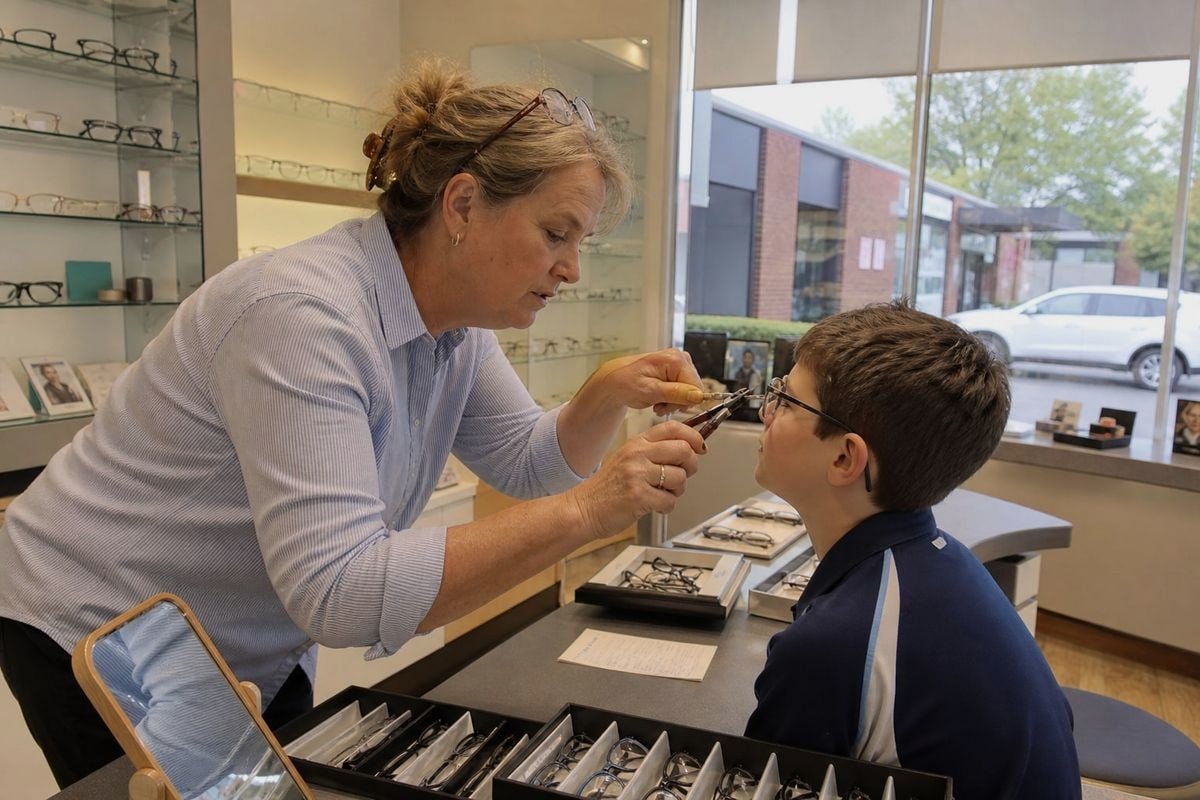
Offering both options is smart merchandising. Different children have different bridge shapes, and one SKU rarely fits every face. The key is structuring the order so variety does not create chaos.
How we structure a two-variant program
At our factory in Taizhou, a typical dual-option project looks like this:
- Pick a base style. With around 800 existing styles, most buyers find a TR90 frame that suits both bridge configurations without new mold investment. That keeps launch risk low.
- Define the two variants. Variant A uses a molded silicone or saddle-bridge contact. Variant B uses metal pad arms with screw-in silicone pads — you still get soft-touch silicone at the skin, mounted on adjustable hardware.
- Set MOQs per variant, not per project. Splitting one order across two bridge types is normal. We help buyers balance quantities based on their market's typical face shapes; for example, markets with more flat nose bridge wearers usually weight toward the adjustable variant.
- Unify branding and packaging. Same logo, same case, same retail-ready presentation. Only the bridge differs. This keeps your catalog clean and your customer's choice simple.
- Include spare parts. We can pack replacement pad sets with each frame. It is a small cost that signals quality and solves the six-month silicone replacement need before parents even ask.
What this means for your catalog
You do not need two product lines. You need one well-designed pediatric eyewear fit story with two bridge answers. Retailers and opticians appreciate that, because they can match the frame to the child in front of them instead of turning a sale away. Clear communication with your factory at the quotation stage — bridge type, pad mounting, spare parts, packaging — is what keeps a dual-variant order simple.
Schlussfolgerung
Silicone pads solve comfort, grip, and skin sensitivity. Adjustable metal pads solve fit precision. Match the pad to the child's bridge and activity level — and partner with a factory that supports both.
Fußnoten
1. Provides anatomical context for the development of the nose in children. ↩︎
2. Authoritative medical information on skin reactions to materials like nickel. ↩︎
3. Authoritative source for clinical standards in pediatric vision and frame fitting. ↩︎
4. Explains how skin oils interact with materials and hygiene. ↩︎
Weitere Artikel, die Ihnen gefallen könnten

August 2026
Bio-Based vs Regular Cellulose Acetate: What's the Difference for Kids' Frames?

August 2026
How Recyclable Are Kids' Optical Frame Materials, and What Eco-Friendly Alternatives Exist?

August 2026
Bleichen Kinderbrillengestelle im Lager aus oder altern sie, und wie kontrolliert man die Lagerbedingungen?
Auf der Suche nach einem zuverlässigen Partner für Kinderbrillen?
Entdecken Sie über 800 sofort verfügbare Modelle und umfassenden OEM/ODM-Support, der auf Ihre Marke zugeschnitten ist.
Kontakt aufnehmen English
  Español de México
  Deutsch
  Français
  日本語
日本語  العربية
  Português do Brasil