Can Broken Temples on Kids’ Sunglasses Be Repaired or Must They Be Replaced?
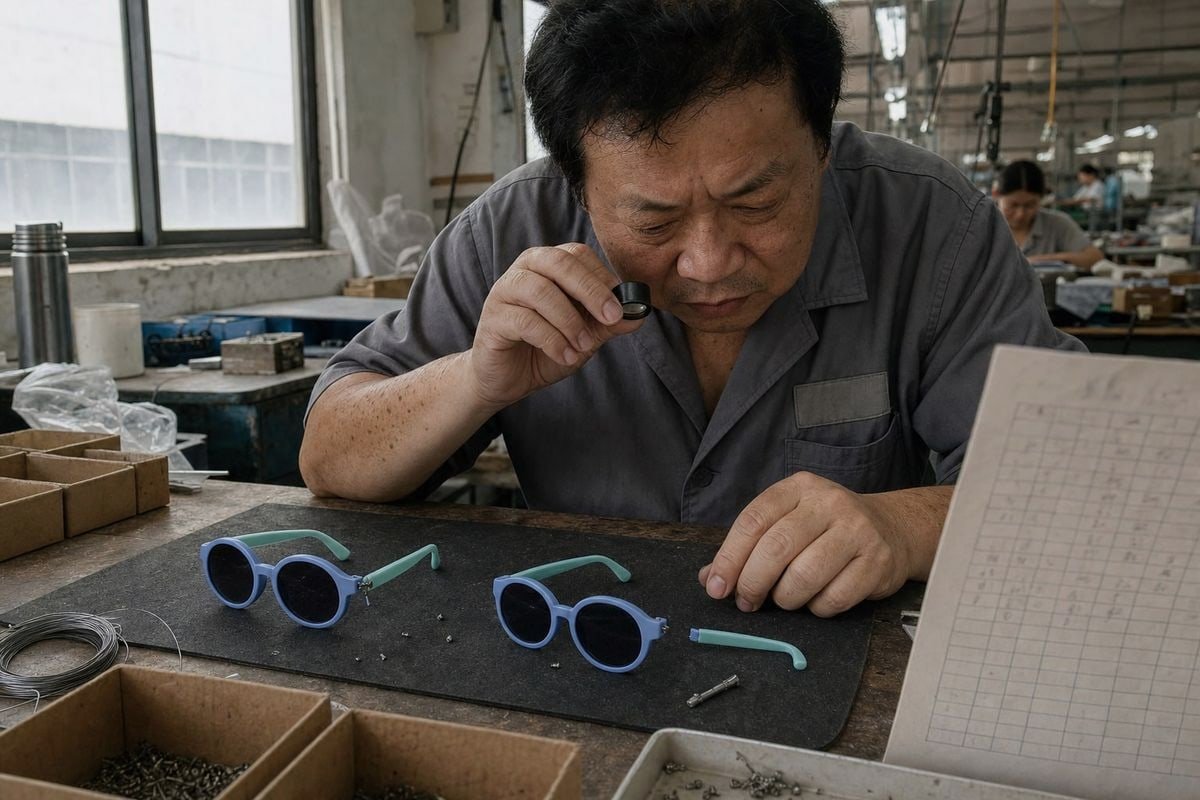
Broken temples on kids’ sunglasses land on my desk almost weekly — buyers send photos, parents complain, returns pile up. It hurts margins, damages brand trust, and frustrates families. After fifteen years running our Taizhou eyewear factory, I can tell you exactly when a repair works and when it never will.
Broken temples on kids’ sunglasses can be repaired when the problem is a loose screw, a worn hinge barrel, or a replaceable hinge insert. However, if the temple itself is snapped — especially on rigid plastic frames — replacement is usually the safer, more durable choice for active children.
The right answer depends on what actually broke, what the frame is made of, and how the child uses the glasses. Let me walk you through each part of that decision.
What Causes Kids' Sunglasses Temples to Break in the First Place?
Last year, one of our European buyers shipped us a box of returned kids' frames for failure analysis. Our QC team laid them out on the workbench, and the pattern was obvious within an hour.
Kids' sunglasses temples break because of over-flexing beyond the hinge's design limit, brittle or low-grade plastics, sitting or stepping on the frame, weak hinge construction, and heat or UV degradation that makes aging plastic snap under everyday twisting and pulling by active children.
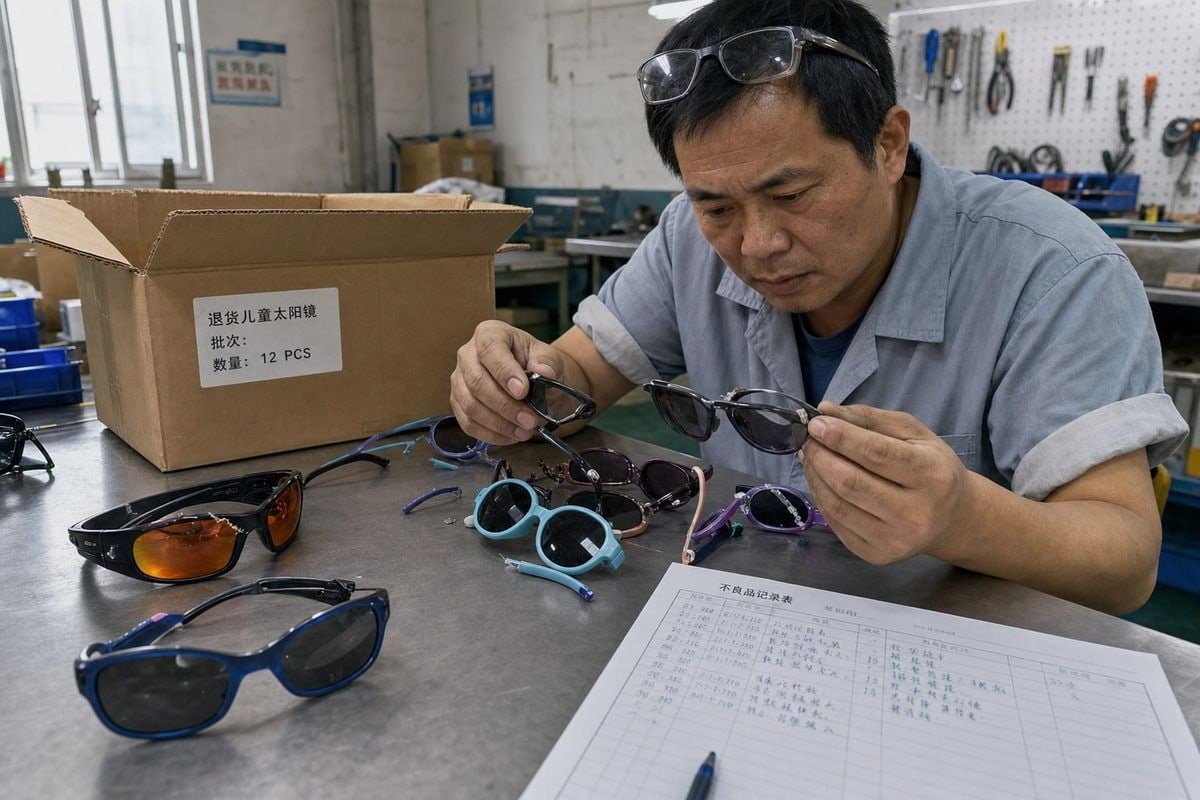
Children do not treat eyewear gently, and honestly, they should not have to. When we analyze failed frames at our factory, the breaks almost always trace back to one of a handful of root causes. Understanding them helps you judge whether a repair will hold — or whether the same failure will simply repeat.
The Five Most Common Failure Modes
Kids pull sunglasses off with one hand. That twists one temple far past its intended opening angle. They shove glasses into backpacks unprotected. They leave them on a hot car dashboard, where heat slowly embrittles cheap plastic. And they sit on them. Every parent knows this story.
| Cause of Breakage | Where It Fails | Typical Frame Material Affected |
|---|---|---|
| One-handed removal (twisting) | Hinge or mid-temple | Rigid plastic, acetate |
| Sitting or stepping on frame | Mid-temple snap, bridge crack | All rigid materials |
| Heat and UV degradation | Brittle cracks near hinge | Low-grade PC and cheap plastics |
| Weak or undersized hinge | Screw loss, barrel deformation | Frames with tiny metal hinges |
| Repeated over-flexing at play | Stress-whitening, then fracture | Non-flexible plastics |
Why Material Choice Sits Behind Most Breaks
Here is the honest truth from our production line: many "temple failures" are really material failures. A rigid polycarbonate 1 temple has almost no forgiveness. A flexible TPEE 2 temple, by contrast, bends 180 degrees and springs back. Same child, same behavior, completely different outcome. That is why the cause of the break matters so much before you decide on repair versus replacement — a repaired rigid temple faces the exact same forces that broke it the first time.
Should I Repair a Broken Temple or Replace the Whole Frame?
A procurement manager from Australia once asked me whether her brand should offer a repair kit or a replacement policy. We sat down and mapped out every break type before answering.
Repair the frame when the issue is a loose or missing hinge screw, a bendable metal temple, or a swappable hinge insert. Replace the frame when the temple is snapped mid-shaft, the plastic is cracked at the hinge, or a glue repair would face repeated flexing from daily play.
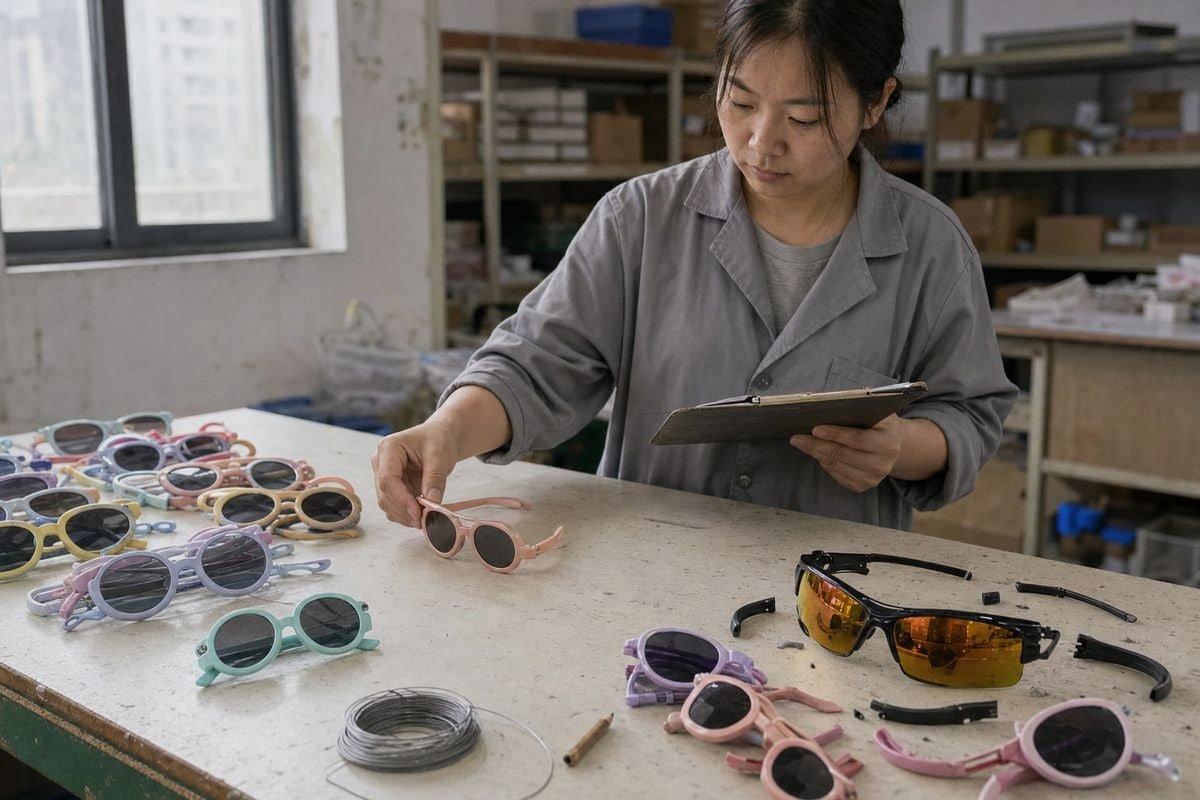
The fastest way to decide is to diagnose the break correctly. In our experience handling warranty claims for brands in over twenty countries, most "broken temples" fall into one of four categories — and each one has a different best answer.
| Type of Damage | Realistic Fix | Durability for Kids | Our Recommendation |
|---|---|---|---|
| Loose or missing hinge screw | Replace screw with mini repair kit | Excellent | Repair at home |
| Loose hinge barrel | Tighten or reshape barrel | Good | Repair (optician or careful DIY) |
| Bent metal temple | Gently bend back into shape | Fair to good | Repair, then monitor |
| Snapped plastic temple | Glue (temporary) or plastic welding | Poor with glue | Replace or professional repair |
When a Repair Genuinely Makes Sense
Screw replacement is the clear winner. A mini eyeglass repair kit costs very little, and the fix restores full strength because nothing structural failed. Some children's frames — including several of our modular designs — use replaceable hinge inserts, so a "broken temple" is really a five-minute part swap. Metal temples that are bent, not cracked, can often be reshaped at home as well.
When Replacement Is the Smarter Call
A snapped plastic temple is a different animal. Super glue or epoxy can hold a clean break for a while, and clamping the joint for 24 hours helps. But adhesive joints fail under repeated flexing, which is exactly what a child's daily use delivers. Optical repair specialists consistently say glue is not a durable solution for structural breaks; they prefer soldering for metal and welding or proper joining for plastic. For prescription kids’ sunglasses, there is another risk: a home repair that shifts temple alignment can distort lens positioning and cause eye strain 4. Check the warranty first, too — many children's eyewear brands cover accidental breakage within 6–12 months, which makes a DIY glue job the worst possible move.
How Can I Choose Temple Materials That Resist Breaking During Play?
During a material trial two seasons ago, our engineers ran the same twist test 5 on five temple materials side by side. The TPEE samples were still springing back long after the rigid plastics had cracked.
Choose flexible, memory-retaining materials such as TPEE and TR90 for kids' temples, ideally TR90 frame fronts paired with TPEE temples. These bend far past normal opening angles and return to shape, while rigid PC or cheap acrylic snaps under the same twisting forces.
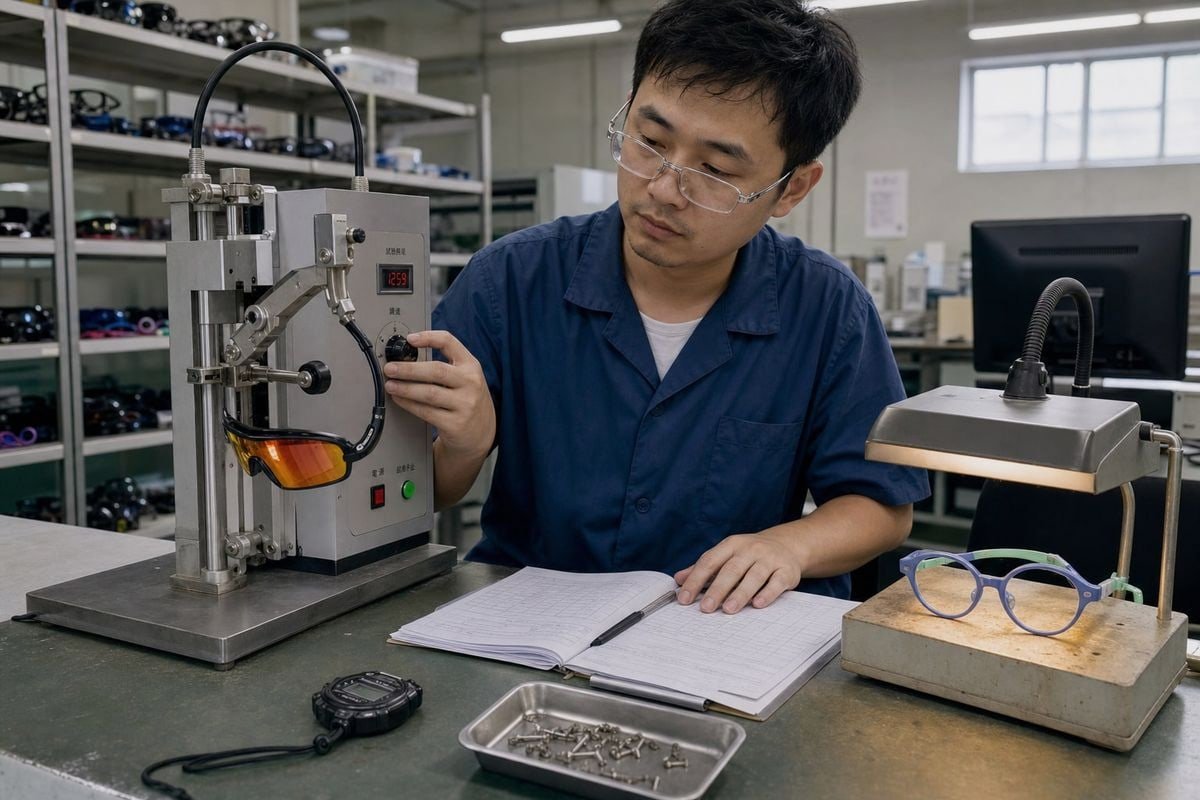
Material selection is the single biggest lever you have against temple breakage. Our factory specializes in flexible children's eyewear, so we test these materials constantly, and the differences are not subtle.
Comparing the Main Temple Materials
| Material | Flexibility | Break Resistance | Weight | Best Use for Kids |
|---|---|---|---|---|
| TPEE | Extremely high, rubber-like memory | Excellent — bends 180° and recovers | Very light | Temples for toddlers and active kids |
| TR90 6 | High, springs back to shape | Very good | Very light | Frame fronts and full frames |
| Standard PC | Low | Fair — cracks under twist | Light | Budget adult frames, not ideal for kids |
| Acetate | Low to moderate | Fair — brittle when cold or aged | Heavier | Fashion frames, older children |
| Metal with spring hinge | Rigid temple, flexible hinge | Good at hinge, bendable shaft | Moderate | Older kids with careful habits |
Why the TR90-Plus-TPEE Combination Works
We build many of our styles with a TR90 front and TPEE temples for a specific reason. The front needs enough stiffness to hold lenses securely and keep optical alignment. The temples take all the twisting abuse, so they need maximum flexibility. TPEE delivers that — a child can pull the temples completely sideways and they return to shape without stress-whitening. TPEE and TR90 are also lightweight and skin-friendly, which matters for comfort on small faces, and both fit environmentally conscious sourcing requirements that European and Japanese buyers increasingly ask us about.
Spring hinges 7 add another layer of protection on styles where they fit. They absorb over-extension instead of transferring the force into the temple shaft. And for frames already in the field, silicone sleeve covers or flexible temple grips can reinforce weak spots after a repair. But the honest hierarchy is simple: flexible material first, forgiving hinge second, accessories third.
What Should I Look for in a Manufacturer to Reduce Temple Failure Rates?
The hardest lesson I have learned in fifteen years of eyewear production came from a hinge supplier change that looked identical on paper — and doubled a client's return rate. We now qualify every hinge component ourselves.
Look for a manufacturer with proven flexible-material expertise, documented hinge and flex testing, tight QC processes, modular repairable designs, and a broad existing style library. These factors reduce temple failure rates far more than a low unit price ever will.
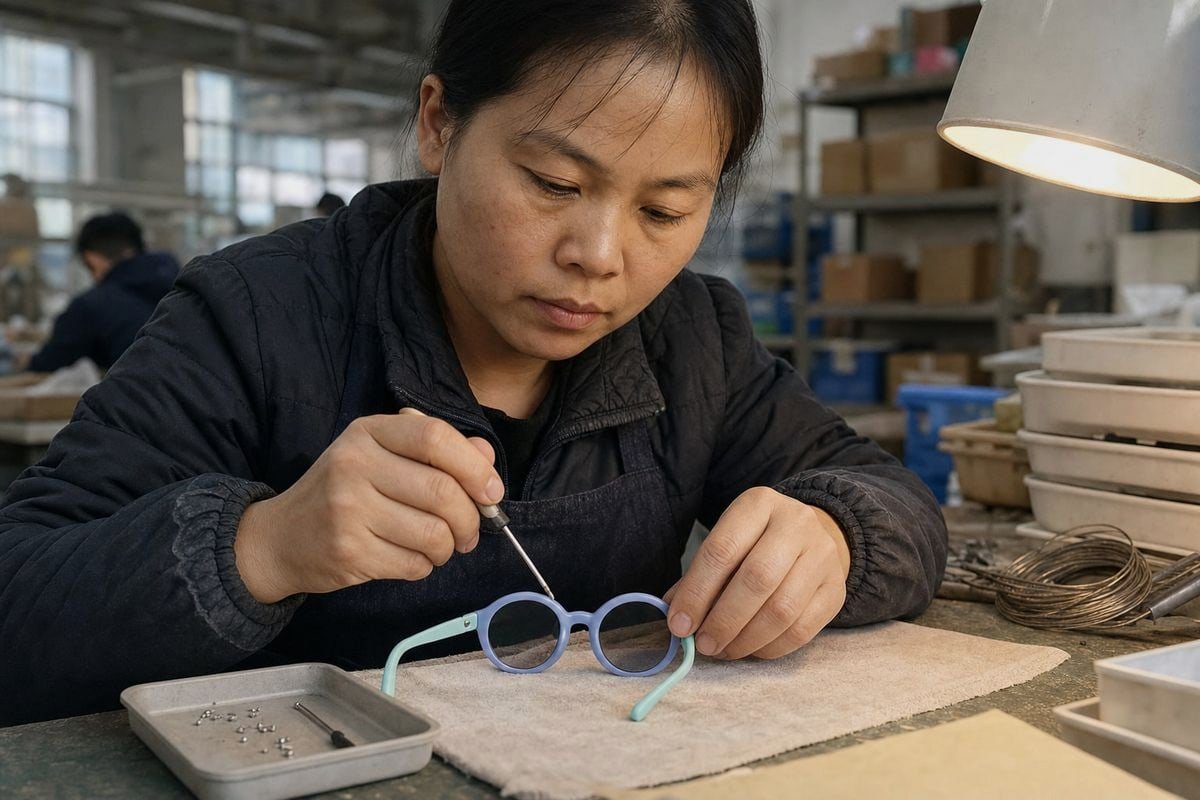
If you run a children's brand, temple failures are not just a product problem. They are a warranty cost, a review-score problem, and a trust problem. The manufacturer you choose determines most of your failure rate before a single pair ships. Here is what I would verify, in order of importance.
A Practical Supplier Checklist
- Material expertise, not just material claims. Anyone can write "TR90" on a spec sheet. Ask how the factory formulates and molds TPEE temples, and request flex-cycle samples you can twist yourself. Genuine flexible-material capability is the foundation of low breakage.
- Hinge and temple testing in the QC process. Ask what the factory actually tests: temple opening cycles, screw torque retention, pull strength at the hinge. At our 5S-managed workshop, hinge checks are a standard inspection point, because hinges are where most field failures start.
- Modular, repairable construction. Frames with standard screws and replaceable hinge parts let your customers fix minor issues at home instead of returning the product. That design choice alone cuts your warranty burden.
- A deep existing style library. Testing the market across roughly 800 proven styles — as our buyers do — means you launch on designs whose temples have already survived real-world use, without gambling on new tooling.
- Full OEM/ODM support with consistent QC. Custom colors, logos, lenses, and retail-ready packaging matter, but only if quality stays consistent across reorders. Ask how the factory controls material batches and hinge component sourcing over time.
- Clear communication on trade-offs. A good partner will tell you when a requested design or material choice will raise breakage risk. A cheap supplier will just quote the price.
Around 120 workers on our production floor build children's frames every day, and the pattern we see is consistent: brands that select for material quality and testing discipline have quiet warranty inboxes. Brands that select on price alone spend the savings on returns.
Conclusion
Broken temples frustrate families and cost brands money. Fix loose screws and hinge parts; replace snapped temples. Better still, prevent breaks upfront with flexible TPEE and TR90 materials and a manufacturer who tests what they build.
Footnotes
1. Background on polycarbonate’s rigidity and brittleness relevant to temple breakage. ↩︎
2. Explains thermoplastic elastomer flexibility properties that make TPEE break-resistant. ↩︎
3. EPA explains how UV radiation accelerates plastic degradation and embrittlement over time. ↩︎
4. AAO explains how misaligned lenses from poor repairs can trigger eye strain in children. ↩︎
5. ASTM sets recognized standards for materials flex and durability testing methods. ↩︎
6. TR90 is a nylon-based polymer; background clarifies its structural properties. ↩︎
7. ISO standards govern eyewear component durability and testing referenced by manufacturers. ↩︎
More Articles You Might Like
August 1, 2026
Should Factory Handle Kids Sunglasses Packaging & Labeling, or Use a Designated Supplier?
August 1, 2026
Own Warehouse vs Supplier Direct Fulfillment: Which Cuts Return Costs for Kids Sunglasses Brands?

August 1, 2026
Direct-to-Port Warehouse or Overseas Staging: Which Saves More on Kids Sunglasses Shipping?
Looking for a Reliable Kids Eyewear Partner?
Explore 800+ ready styles and full OEM/ODM support tailored to your brand.
Get in Touch English
  Español de México
  Deutsch
  Français
  日本語
日本語  العربية
  Português do Brasil