Who Issues the CPC for Kids Optical Frames Sourced From China?

Buyers ask us who issues the CPC for kids optical frames sourced from China almost weekly مستورد السجل في الولايات المتحدة 1. Get this wrong, and customs can detain your entire shipment — a costly, brand-damaging mistake.
The CPC for kids optical frames sourced from China is issued by the US importer of record, not the Chinese factory or a lab. The importer self-certifies the Children’s Product Certificate based on passing test reports from a CPSC-accepted third-party laboratory.
That surprises many first-time importers. Let me walk you through how the process really works, and what role your factory in China actually plays.
How can I confirm my kids optical frames supplier holds a valid CPC before placing an order?
A procurement manager from Australia once asked me to email her "our CPC" before signing a purchase order total lead in substrates 2. I had to explain gently why that question was framed the wrong way.
A Chinese supplier cannot hold your CPC, because the certificate belongs to the US importer. What you can verify instead is whether the supplier has recent passing test reports from a CPSC-accepted lab for the exact frame model and materials you plan to buy.
This distinction matters more than it seems. A CPC is a self-declaration document. It is not a government license, and it is not something a factory can stockpile and hand out. It must name the importer or US manufacturer as the certifying party. So when a supplier says, "Yes, we have CPC," you should dig deeper. What they usually mean is one of three things: they have test reports from a past customer's project, they have CE or RoHS documents, or they have a factory audit certificate. None of those is your CPC.
What you can actually verify before ordering
Here is what I tell buyers to request from any children's eyewear supplier, including us:
| وثيقة | ما تثبته | What it does NOT prove |
|---|---|---|
| Third-party lab test report (CPSIA scope) | The tested sample passed lead, phthalate, and safety limits | That your specific order will pass |
| Bill of materials (BOM) | Material transparency for each component | Chemical compliance by itself |
| Factory audit report | Production capability and quality systems | Product-level children's product safety |
| CE / RoHS documents | EU-market orientation | US CPSC regulations compliance |
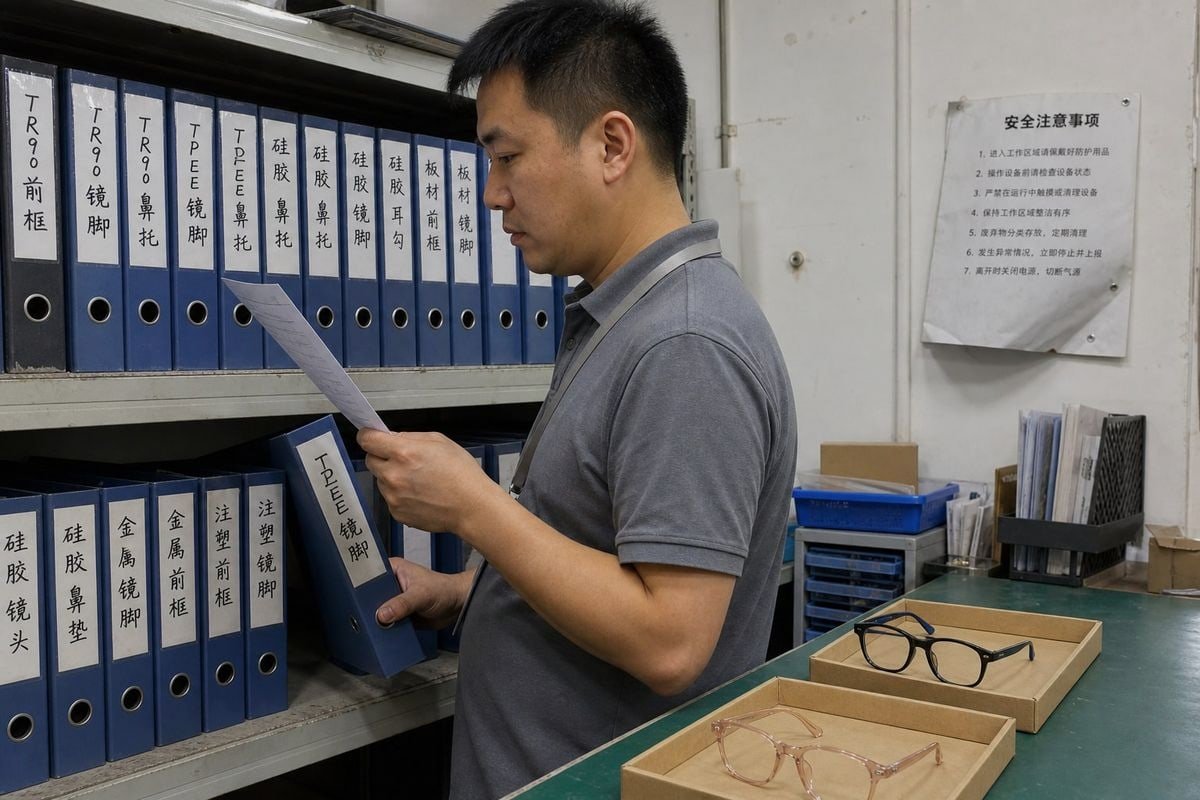
At our Taizhou workshop, we keep test reports organized by material batch — TR90 fronts, TPEE temples, silicone tips, demo lenses. When a buyer asks, we can show which report covers which component. That is the level of traceability you should demand. Also confirm the report date. Labs and retailers generally expect recent testing, and material formulas can change between production runs. Finally, check that the lab named on the report appears on the CPSC's list of accepted laboratories. A report from a non-accepted lab cannot support a valid CPC, no matter how professional it looks. معتمدًا من لجنة سلامة المنتجات الاستهلاكية 3
What testing and documentation do I need from my China manufacturer to obtain a CPC?
During a recent OEM project for a European kids' brand entering the US, we spent two weeks just aligning the documentation package before a single frame was molded. That upfront work saved the buyer a failed test cycle.
You need passing third-party lab tests for total lead in substrates and surface coatings, phthalates in plasticized parts, and applicable children's product safety rules. Your manufacturer supports this with samples, a bill of materials, material declarations, and tracking label information.
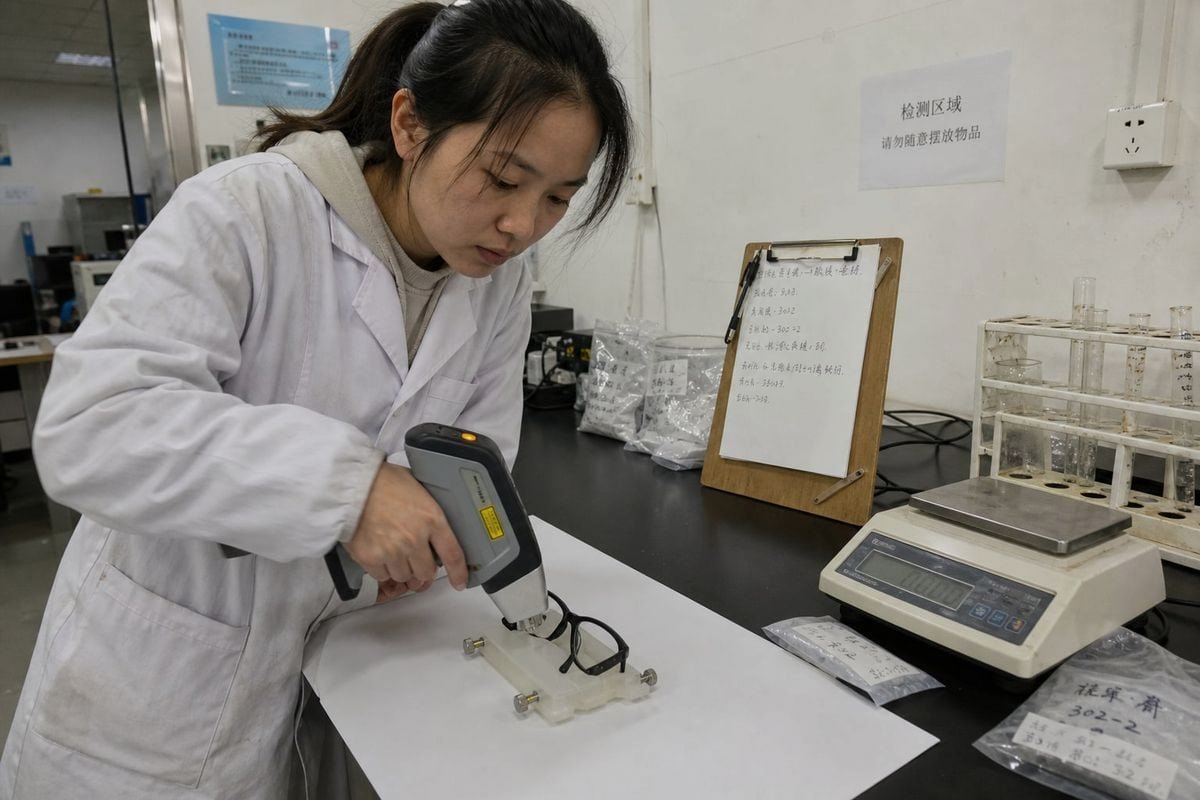
The testing scope depends on how your product is classified. Kids optical frames are treated as children's products when they are designed or intended primarily for children 12 years of age or younger. Our frames — compact TR90 fronts with flexible TPEE temples and silicone tips — clearly fall in that category, so we plan for الامتثال لـ CPSIA 5 from the design stage.
Core tests for children's optical frames
| المتطلب | What is tested | Typical components affected |
|---|---|---|
| Lead in substrate | Total lead content in base materials | TR90 front, TPEE temples, metal hinges |
| Lead in surface coatings | Paint and coating lead limits | Glossy finishes, printed logos, decorative patterns |
| الفثالات | Restricted phthalate content | Soft plastics, silicone tips, rubberized temple sleeves |
| ملصق التتبع | Permanent traceability marking | Inner temple engraving or printing |
Lead and phthalate limits apply per accessible component, not per product. That is why a complete BOM matters. A two-tone temple with embossed dot patterns, a silicone hinge connector, and a cable-style ear hook — like one of our sporty black-and-navy kids' styles — can involve four or five distinct materials. Each accessible one needs coverage in the test plan.
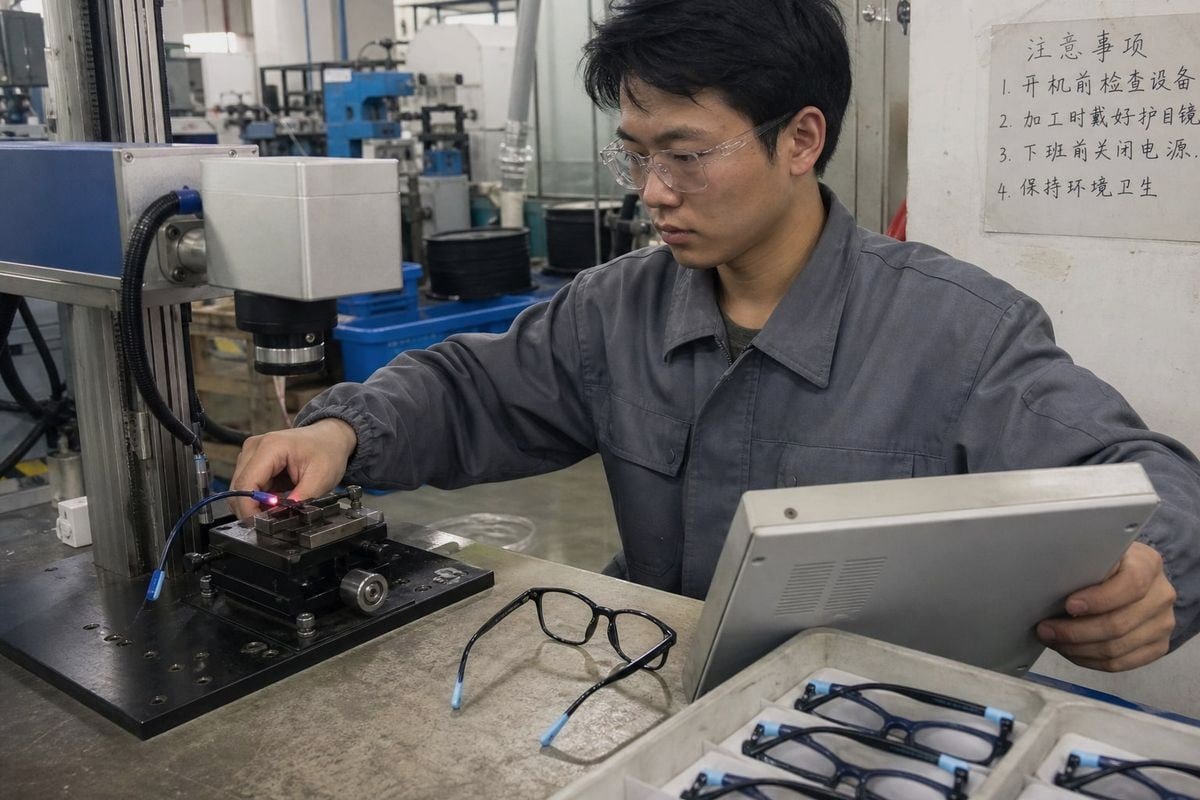
Your manufacturer should also provide the date and place of manufacture, because your CPC must state both. And do not overlook tracking label requirements: children's products need a permanent mark identifying the manufacturer or private labeler, production date, and batch information. We engrave this on the inner temple arms during molding, which is why buyers sometimes notice faint text there on our translucent acetate-style frames.
Beyond CPSC regulations, remember two adjacent obligations. FDA eyewear standards require impact-resistant lenses with drop-ball testing documentation for optical frames sold with lenses. And California Proposition 65 6 may call for additional chemical screening or warning labels. Neither replaces the CPC — they stack on top of it.
Which accredited labs or agencies should I work with to issue a CPC for children's eyewear?
There is a trade-off we discuss with buyers on nearly every US-bound project: testing at a global lab's China branch before shipment, or testing after arrival in the US. Testing at origin almost always wins on speed and risk.
No lab or agency issues the CPC itself — the importer does. But the CPC must rest on tests performed by a CPSC-accepted laboratory. SGS, Intertek, Bureau Veritas, and TÜV all operate accepted labs in China convenient to eyewear production hubs.

This is the single biggest misconception I encounter. Buyers imagine a certificate arriving from SGS with a stamp that says "CPC." That document does not exist. The lab issues a test report. You, as the importer, then draft and sign the CPC yourself, referencing that report. The lab's role is essential but limited: it generates the qualifying data.
How to choose and use a lab
- Confirm CPSC acceptance. Check the lab's specific location and test scope on the CPSC's public database. Acceptance is per-lab, per-test, not per-brand-name.
- Test near the factory. Chinese eyewear production concentrates in hubs like Wenzhou, Danyang, and our own Zhejiang region around Taizhou. Major labs have branches nearby, which cuts sample logistics from weeks to days.
- Pull samples correctly. Test units should come from actual production materials, ideally selected during an inspection, not hand-picked "golden samples."
- Scope the quote carefully. Ask the lab to quote CPSIA lead, phthalates, and tracking label review together, and add FDA drop-ball testing if lenses ship installed.
- Keep the report accessible. Your CPC must list the lab's name, address, and contact details, plus the date and place of testing. Store everything digitally.
That last point is becoming urgent. The CPSC eFiling mandate 7 takes effect on July 8, 2026, requiring electronic submission of certificate data to US Customs and Border Protection for imported children's products. Importers filing eFiling certificates will need clean, structured records — product identifiers, lab details, test dates — ready in digital form. In our experience exporting to 20+ countries, the buyers who organize compliance data early handle new mandates without disruption. The ones who keep test reports buried in old email threads scramble.
Why does my brand need a CPC when importing kids optical frames into the US market?
A lesson from fifteen years in children's eyewear: compliance failures rarely announce themselves at the factory. They surface months later — at a port, on a retail platform audit, or worst of all, after a customer complaint.
Your brand needs a CPC because US law makes the importer legally responsible for certifying children's product safety. Without a valid CPC, kids optical frames face customs detention, platform delisting, recalls, and civil penalties — regardless of how well the factory built them.
Some suppliers will tell you their documents are "enough for export." Technically true — and dangerously incomplete. China sourcing compliance gets the goods out of China. The CPC gets them lawfully into US commerce. Those are different gates, and US importer responsibility means the second gate is entirely yours. A factory in China cannot replace your compliance obligation, no matter how good its paperwork looks.
What the CPC must contain
| CPC element | Practical source |
|---|---|
| Product description and identification | Your SKU, model, and description |
| Each applicable CPSC safety rule cited | Your compliance review or consultant |
| Importer/manufacturer name and address | Your company details |
| Contact for test records | A real person at your company |
| Date and place of manufacture | Provided by your factory |
| Date and place of testing | From the lab report |
| CPSC-accepted lab name, address, contact | From the lab report |
The real cost of skipping it
Consider what non-compliance actually triggers. Customs can detain or refuse entry. Amazon and major retailers routinely demand the CPC and supporting reports before listing children's products — no document, no listing. Civil penalties for knowing violations run into significant sums per violation. And a recall destroys the one asset a kids' brand cannot rebuild quickly: parental trust.
There is also a positive framing I share with the founders we work with. A clean compliance file is a sales asset. When our OEM buyers pitch retailers, showing organized test reports, tracking labels molded into every temple, and a ready-to-sign CPC template shortens the vendor onboarding conversation dramatically. We design for this from day one — environmentally friendly TPEE and TR90 materials chosen partly because they test cleanly and consistently — so our buyers certify with confidence rather than crossed fingers. Keep every CPC and report in a digital repository for years after the product sells; regulators and retailers can ask long after the last unit ships.
الخلاصة
The CPC is yours to issue, backed by accredited testing and factory documentation. Partner with a supplier who prepares that foundation properly, and US market entry becomes routine, not risky.
ملاحظات ختامية
1. HTTP unknown ↩︎
2. CPSC guidance on federal requirements for total lead content in children’s products. ↩︎
3. Official CPSC search tool for accepted testing laboratories. ↩︎
4. Official CPSC guidance on the Children’s Product Certificate. ↩︎
5. Official CPSC page detailing the Consumer Product Safety Improvement Act. ↩︎
6. Official California OEHHA page explaining Proposition 65 requirements. ↩︎
7. Official CPSC page on the upcoming electronic filing requirement for certificates. ↩︎
مقالات أخرى قد تعجبك
أغسطس 5, 2026
Bio-Based vs Regular Cellulose Acetate: What's the Difference for Kids' Frames?
أغسطس 5, 2026
How Recyclable Are Kids' Optical Frame Materials, and What Eco-Friendly Alternatives Exist?
أغسطس 5, 2026
Do Kids Optical Frames Whiten or Age in Storage, and How to Control Warehouse Conditions?
هل تبحث عن شريك موثوق به للنظارات للأطفال؟
استكشف أكثر من 800 نمط جاهز ودعم OEM/ODM كامل مصمم خصيصًا لعلامتك التجارية.
اتصل بنا English
  Español de México
  Deutsch
  Français
  日本語
日本語  العربية
  Português do Brasil