Which Return Reasons for Kids’ Sunglasses Are Design Defects vs Misuse?
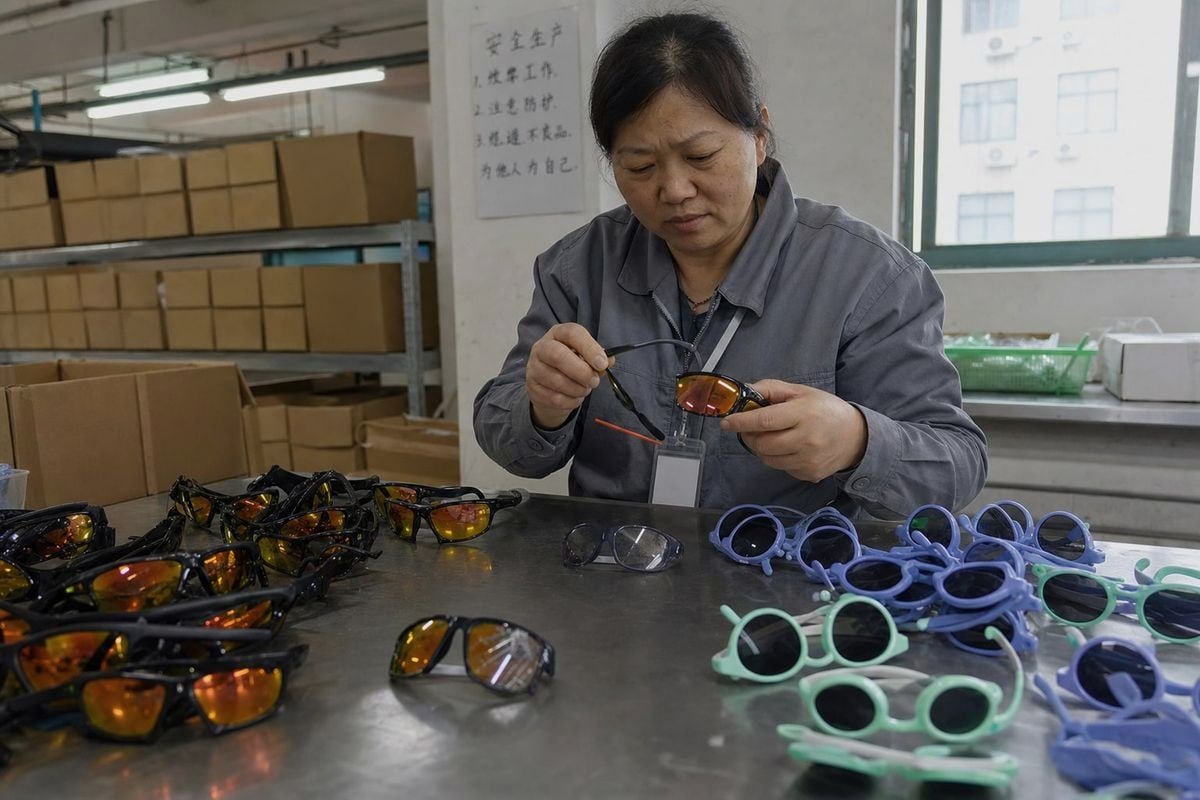
Sorting kids’ sunglasses return reasons into design defects vs misuse is a question our Taizhou production team faces weekly. Get it wrong, and refunds quietly drain your margin.
Design defects in kids’ sunglasses include crooked frames, peeling lens coatings, loose hinges out of the box, and failed UV400 or shatterproof claims. Misuse covers scratches from play, frames bent until snapped, heat warping, and damage from rough storage or drops after purchase.
The line between the two is not always obvious. In this guide, I will show you how we separate them, what data to track, and how to prevent defect-driven returns before mass production.
How can I tell if a return is caused by a design flaw or by a child misusing the sunglasses?
A buyer from Australia once sent us photos of thirty returned pairs, convinced they were all factory faults. After inspection, only nine were. The rest told a different story.
A design flaw exists before the child ever wears the sunglasses: misaligned temples, peeling coatings, weak hinges, or failed safety claims. Misuse damage appears after purchase and shows impact marks, localized scratches, heat warping, or stress breaks caused by bending, sitting on, or crushing the frame.
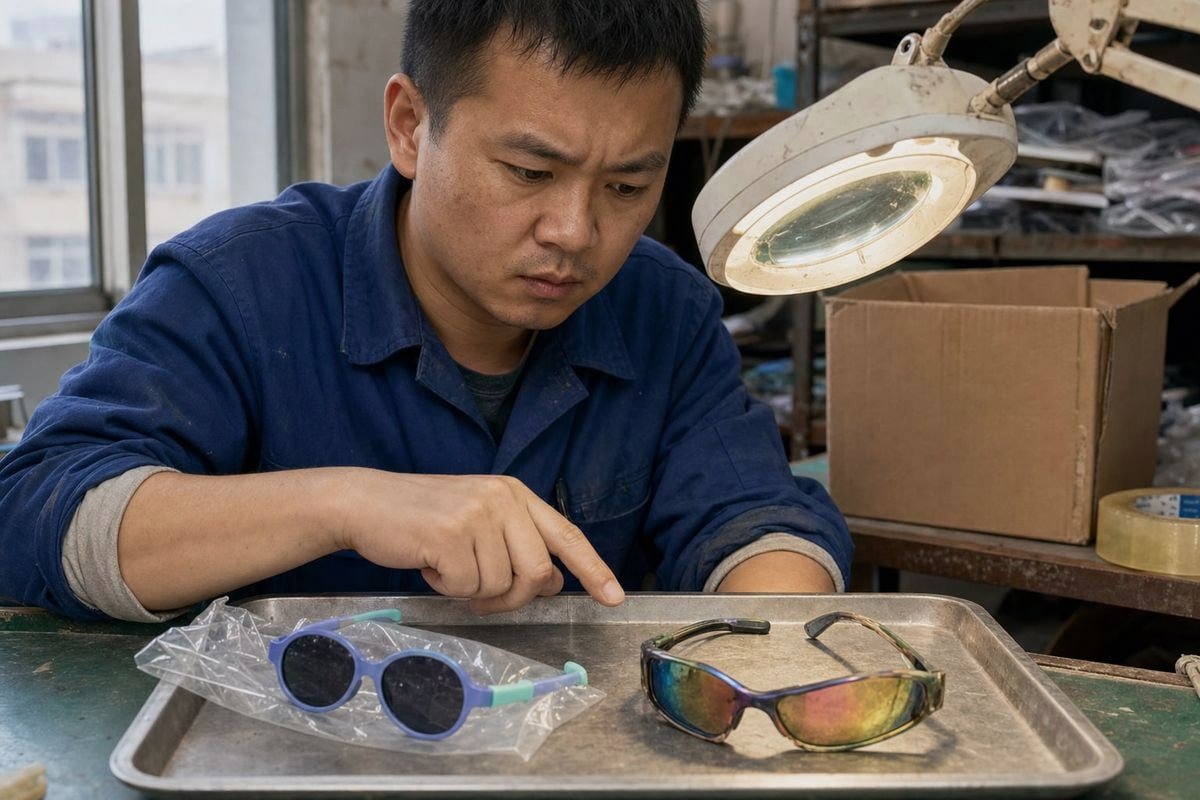
The fastest way to make this call is to look at the pattern of the damage, not just the damage itself. In our QC room, we ask three questions. Was the problem present at first use? Is the damage uniform or localized? Does it match a known failure mode of the material?
The three-bucket rule
Every return falls into one of three buckets: a manufacturing defect 1, normal wear and tear, or customer-caused damage. Only the first bucket should trigger manufacturing warranty coverage. The other two are excluded by almost every retailer's policy, and for good reason.
| Return Symptom | Likely Cause | Bucket |
|---|---|---|
| One temple sits higher than the other out of the box | Assembly error | Design/manufacturing defect |
| Lens coating peels uniformly within days | Coating process fault | Design/manufacturing defect |
| Screw falls out on first normal use | Spring hinge failure at factory | Design/manufacturing defect |
| Frame snaps under minimal pressure, no impact | Material brittleness | Design/manufacturing defect |
| Localized lens scratches after playground use | Abrasion during play | Misuse / wear and tear |
| Frame warped after sitting on a car dashboard | Heat exposure | Misuse |
| Cracked frame after being sat on or dropped | Impact damage | Misuse |
| Faded coating after a full summer of daily wear | Normal wear and tear | Wear, not a defect |
Here is a useful physical clue. Coating delamination shows uniform bubbling or peeling across the lens — that is a defect. Scratches and scuffs are localized and directional — that is misuse. Similarly, a frame that does not sit flat on a level table left the factory misaligned. A frame warped into a twist after a hot car ride is consumer damage.
One nuance matters. Not every break is misuse. A crack at a stress point after minimal use can still be a defect if the قولبة بالحقن 2 left the polymer weak. That is why we always ask buyers for photos plus a short usage history before we rule.
What return data should I track to identify recurring design defects in kids' eyewear?
Fifteen years of running an eyewear factory taught us one lesson early: a single return is noise, but a pattern of returns is a message from your product.
Track the return reason code, failure location on the frame, days from purchase to failure, batch or PO number, and photo evidence for every return. Recurring failures at the same component, in the same batch, within short timeframes signal a design or production defect — not misuse.
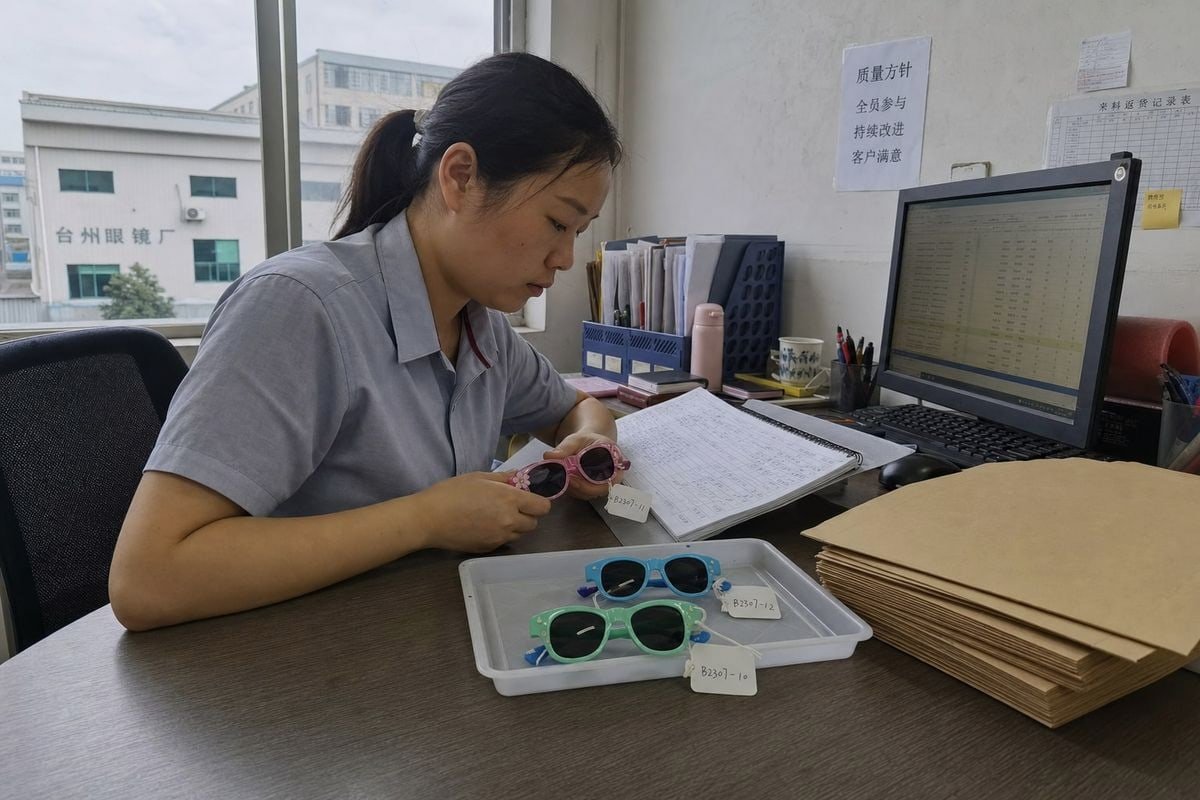
Most brands log returns as one vague line: "broken." That data is useless. To separate design defects from misuse at scale, you need structured fields that let patterns surface on their own.
The minimum data set
We advise every buyer who works with us to capture these fields for each return:
- Standardized reason code — hinge, lens coating, frame crack, temple, nose bridge, fit, or non-fault return (wrong size, changed mind).
- موقع الفشل — left hinge, right temple, bridge, lens center, lens edge.
- Time to failure — days between delivery and complaint.
- Batch and PO number — so a bad injection run or coating lot can be isolated.
- Photo evidence — required within the claim window, ideally against a flat surface.
- Usage context — a one-line note from the customer about what happened.
Reading the signals
| Data Pattern | ما يشير إليه |
|---|---|
| Same hinge fails across many units in one batch | Factory assembly or spring hinge failure — defect |
| Failures spread randomly across batches and locations | Misuse or normal wear and tear |
| High "slips off constantly" returns on one model | Possible bridge design mismatch for young faces — design flaw |
| Coating complaints cluster within 14 days of delivery | Coating process defect in that lot |
| Breakage complaints spike after summer holidays | Heat exposure and rough play — misuse pattern |
Watch the "wrong size" code carefully. A biomechanical bridge mismatch — frames that ignore the flatter, underdeveloped nasal bridges 3 of young children — causes chronic slipping that customers blame on sizing. That is actually a design defect hiding inside a non-fault return code. When one of our optical frame styles showed this pattern, we redesigned the bridge curve and the "size" returns dropped sharply.
Time-to-failure is your strongest single indicator. Defects cluster early. Misuse spreads out over months. Plot it, and the two populations usually separate on their own.
Which common misuse patterns should I expect when children wear sunglasses daily?
Before we ever specified flexible TPEE frames 4 for our children's lines, we watched how kids actually treat eyewear. The short version: nothing like adults do.
Expect lenses scratched on playgrounds and in backpacks, frames bent past their limit, temples stretched from one-handed removal, nose bridges snapped by rough handling, heat warping from car dashboards, and chemical crazing from sunscreen — all typical misuse, not manufacturing defects.
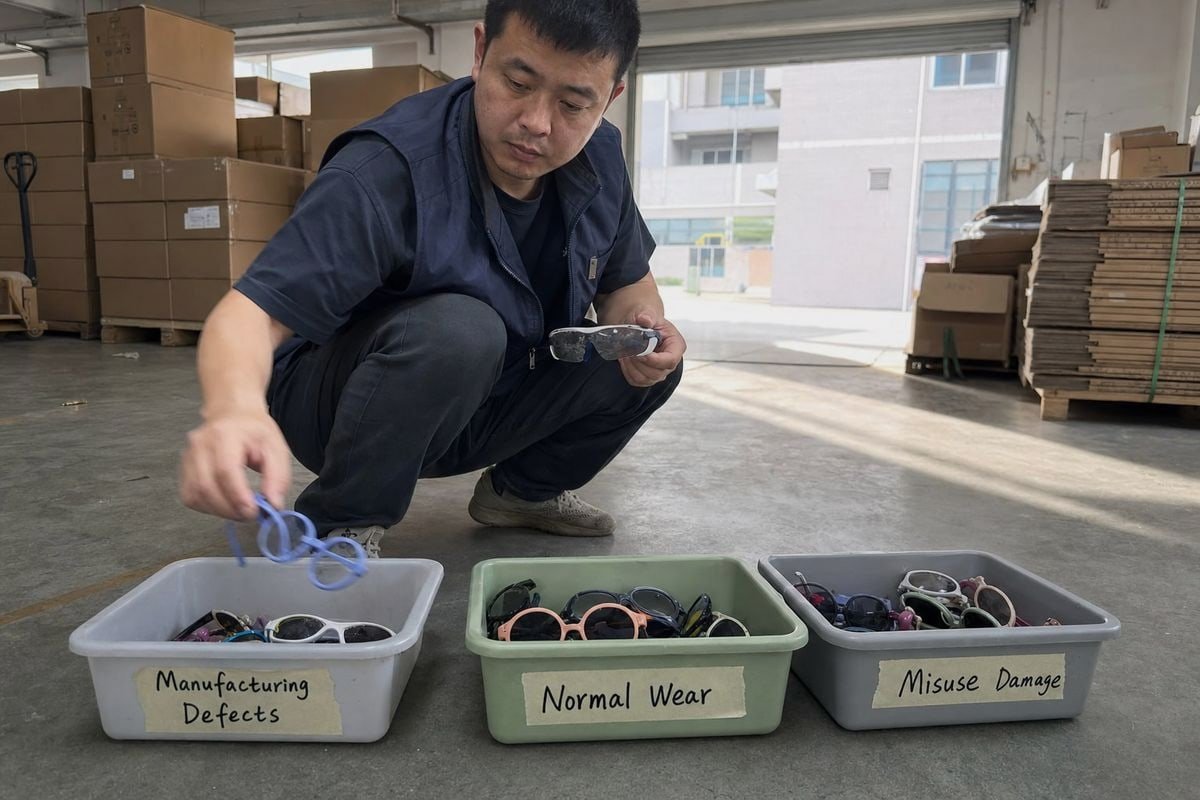
Children are the harshest product testers in the world. They sit on sunglasses, throw them into sandy bags, chew the temple tips, and pull them off with one hand while running. If you sell kids' eyewear, misuse returns are not a possibility — they are a certainty. Your job is to know which patterns are coming so your policy and product both absorb them.
The predictable misuse list
- Impact breakage. Drops on concrete, being stepped on, or crushed in a school bag. Localized cracks and impact marks give this away.
- Over-flexing. Kids bend temples outward past the design limit. Snapped hinges and stretched-out temples follow. This is why we build spring-back flexibility into TPEE temples — the material forgives what a rigid frame cannot.
- Abrasion. Lenses tossed lens-down on tables or cleaned with a shirt hem. Localized scratches are wear and tear, and blurry vision from abrasive cleaning is misuse, not optical distortion from a lens defect.
- Heat exposure. A dashboard in summer can warp a plastic frame in under an hour. Warping caused by heat is consumer damage; warping out of the box is ours.
- Chemical crazing. Sunscreen and insect repellent attack lens coatings and create a spiderweb haze. Parents often report this as polarized lens peeling, but it is maintenance-related misuse.
- Thermal shock. Running from hot sun into cold pool water can pop a lens as the lens and frame expand at different rates.
- Aggressive home cleaning. Ultrasonic cleaners can fatigue low-grade polymer frames and cause "spontaneous" breaks that mimic material flaws.
The design takeaway is simple. You cannot warranty misuse away, but you can engineer around it. Shatterproof polycarbonate lenses 5, wraparound sport shields with strong impact resistance, and flexible frame materials 6 turn many would-be breaks into non-events. That is exactly why our sport-style shield models and soft two-tone round frames use forgiving materials rather than brittle acetate.
A European baby-brand buyer once asked us to skip the pre-production sample stage to save two weeks. We pushed back, and the twist test on that sample caught a weak hinge boss that would have shipped in ten thousand units.
Reduce design-related returns by agreeing on written quality control standards, running pre-production samples through flex, drop, and coating-adhesion tests, verifying UV400 protection standards and material safety with third-party reports, and reviewing your return data with the factory before every reorder.
Design-related returns are the cheapest returns to prevent, because prevention happens before tooling and mass production lock everything in. Here is the process we run with brand buyers, and the one I recommend you demand from any supplier.
A pre-production defect-prevention checklist
| المرحلة | What to Do | Defects It Prevents |
|---|---|---|
| Design review | Check bridge fit against real children's face data by age group | Slipping, "wrong size" returns, bridge mismatch |
| Material selection | Specify flexible TR90 frames with TPEE temples; confirm shatterproof polycarbonate lenses | Brittleness breaks, impact failures |
| Sample testing | Flex temples repeatedly, drop-test, tape-test lens coatings, torque hinge screws | Spring hinge failure, coating delamination, loose screws |
| Compliance verification | Third-party reports for UV400 protection standards and heavy-metal / paint safety | Safety-claim failures, product liability exposure, recalls |
| Golden sample & AQL | Sign a golden sample; define AQL inspection levels in writing | Batch-level assembly drift, misalignment |
| Post-launch loop | Share return data with the factory quarterly | Recurring defects surviving into reorders |
Why safety claims deserve extra attention
For children's products, a defect is not just cosmetic. If your packaging says "shatterproof" or "UV400" and the product does not meet the claim, regulators can treat it as a safety defect 7 — children's sunglasses have been recalled for exactly this. That shifts the conversation from returns to product liability. Insist on lens transmission test reports, not verbal assurances, and keep them on file per batch.
Finally, treat your factory as a partner in the return loop, not just a supplier. When buyers send us their return breakdowns, we adjust hinge screws, coating suppliers, or mold gates on the next run. With around 800 existing styles already field-proven, we can also steer new brands toward frame geometries that have historically low defect rates — which lowers risk before the first purchase order is even placed.
الخلاصة
Defects show up early, uniformly, and in batches; misuse shows up late, locally, and randomly. Track structured return data, test before production, and partner closely with your factory.
ملاحظات ختامية
1. Defines manufacturing defects in the context of product liability and quality control. ↩︎
2. Explains the injection molding process, relevant to material weaknesses in eyewear frames. ↩︎
3. Provides anatomical context for nasal bridge development in children, affecting eyewear fit. ↩︎
4. Authoritative eyewear industry source detailing Hytrel (TPEE) properties like resilience and impact resistance. ↩︎
5. Details the benefits and impact resistance of polycarbonate lenses for children’s safety. ↩︎
6. Official guidance from the American Academy of Ophthalmology on various flexible and durable frame materials.
مقالات أخرى قد تعجبك

August 1, 2026
هل يجب على المصنع التعامل مع تغليف ووضع ملصقات نظارات الأطفال الشمسية، أم استخدام مورد مخصص؟

August 1, 2026
مستودع خاص مقابل الوفاء المباشر من المورد: أيهما يقلل تكاليف الإرجاع لعلامات نظارات الأطفال الشمسية؟

August 1, 2026
مباشر إلى ميناء المستودع أو التخزين الخارجي: أيهما يوفر أكثر على شحن نظارات الأطفال الشمسية؟
هل تبحث عن شريك موثوق به للنظارات للأطفال؟
استكشف أكثر من 800 نمط جاهز ودعم OEM/ODM كامل مصمم خصيصًا لعلامتك التجارية.
اتصل بنا English
  Español de México
  Deutsch
  Français
  日本語
日本語  العربية
  Português do Brasil