What’s the Difference Between Myopia Control Lenses and Single-Vision Kids Eyewear?
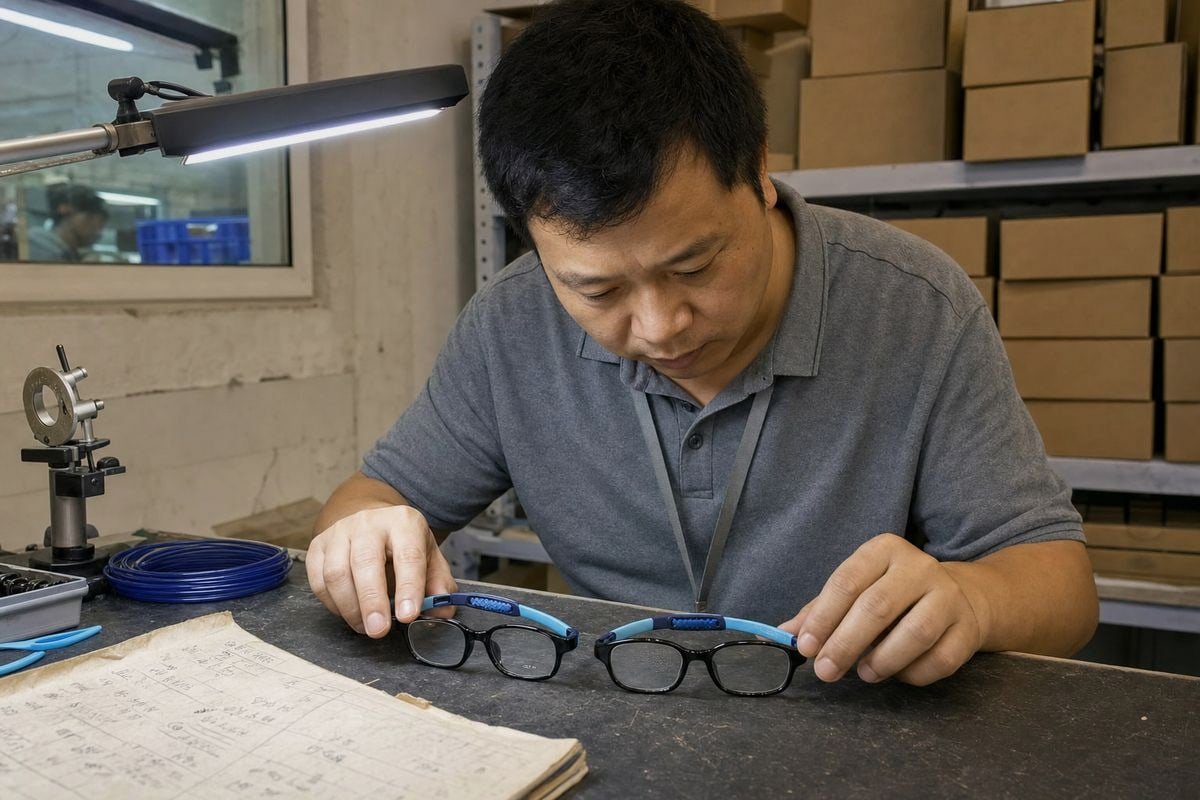
Buyers ask me about myopia control lenses and single-vision kids eyewear almost weekly now, ever since our Taizhou factory started fielding requests for frames built around these newer lens designs.
Single-vision kids eyewear only corrects blurry distance vision, while myopia control lenses correct vision and actively slow myopia progression. Control lenses use peripheral defocus zones or lenslets to signal the eye to slow its growth, reducing progression by roughly 30% to 60% in studies.
That difference sounds technical. But it changes what your brand can offer parents. Let me walk you through both lens types, the evidence behind them, and what it means for sourcing.
How do myopia control lenses actually slow down my child's prescription progression?
A pediatric optical chain in Europe once asked our engineers why their frame spec sheet suddenly required tighter lens-groove tolerances refractive error correction 1. The answer was myopia control lenses, and it taught us plenty.
Myopia control lenses keep central vision sharp while placing microscopic lenslets or defocus zones in the periphery. These zones focus light slightly in front of the retina, creating a stop signal that slows axial length elongation, the physical eye growth that drives worsening myopia.
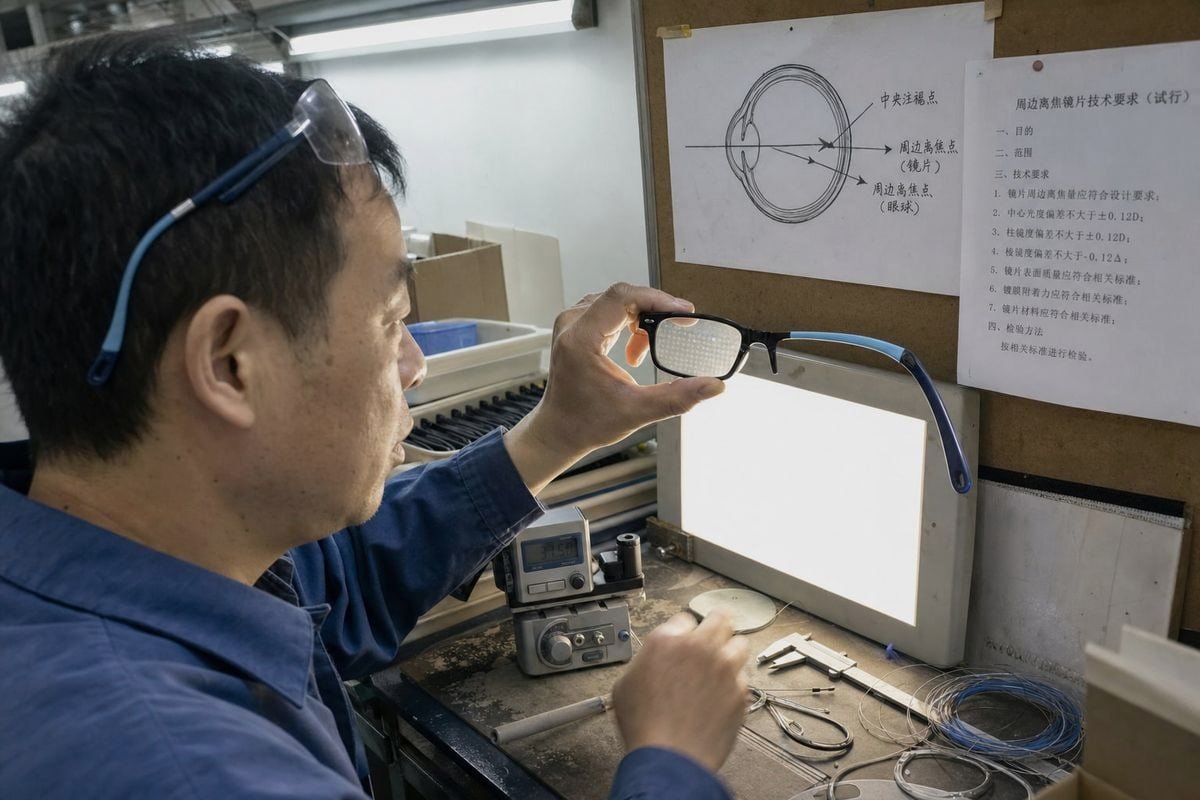
To understand why this works, you first need to understand why standard glasses do not. A conventional single-vision lens 2 focuses light perfectly on the central retina. That gives the child clear visual acuity. But the same lens often lets peripheral light land behind the retina. This is called peripheral hyperopic defocus. Researchers believe it acts as a growth trigger. The eye keeps elongating to chase that focal point, and the prescription keeps climbing.
Myopia control designs flip this signal. Technologies like DIMS technology 3 (Defocus Incorporated Multiple Segments) embed hundreds of tiny lenslets across the lens surface. The child sees clearly through the central zone. Meanwhile, the lenslets bathe the peripheral retina in myopic defocus, telling the eye to slow down.
The main optical strategies
Here is how the common approaches compare:
| النهج | كيف تعمل | Wear pattern |
|---|---|---|
| Defocus spectacle lenses (e.g., DIMS) | Lenslets create peripheral myopic defocus | All day, like normal glasses |
| Soft multifocal contact lenses 4 | Concentric treatment zones alter peripheral focus | Daytime wear |
| Orthokeratology | Rigid lens reshapes the cornea overnight | Overnight only |
Some designs also reduce accommodative lag 5, the eye's tendency to under-focus during near work, which is another suspected trigger for eye growth. In pediatric optometry, practitioners now track axial length 6 in millimeters as a visual vital sign, not just prescription strength. That shift matters: no source claims any option stops myopia completely, but slowing it meaningfully lowers lifetime risk of retinal detachment, glaucoma, and myopic macular degeneration.
Should I offer single-vision or myopia control options to my brand's customers?
There is a real trade-off we help buyers weigh: single-vision programs are simple and affordable, while myopia control positioning demands more education but commands premium margins and stronger parent loyalty.
Most kids' eyewear brands should offer both. Single-vision eyewear serves everyday refractive error correction at accessible prices, while myopia control options position your brand as a myopia management partner. Offering both captures the full market and builds credibility with optometrists and parents.
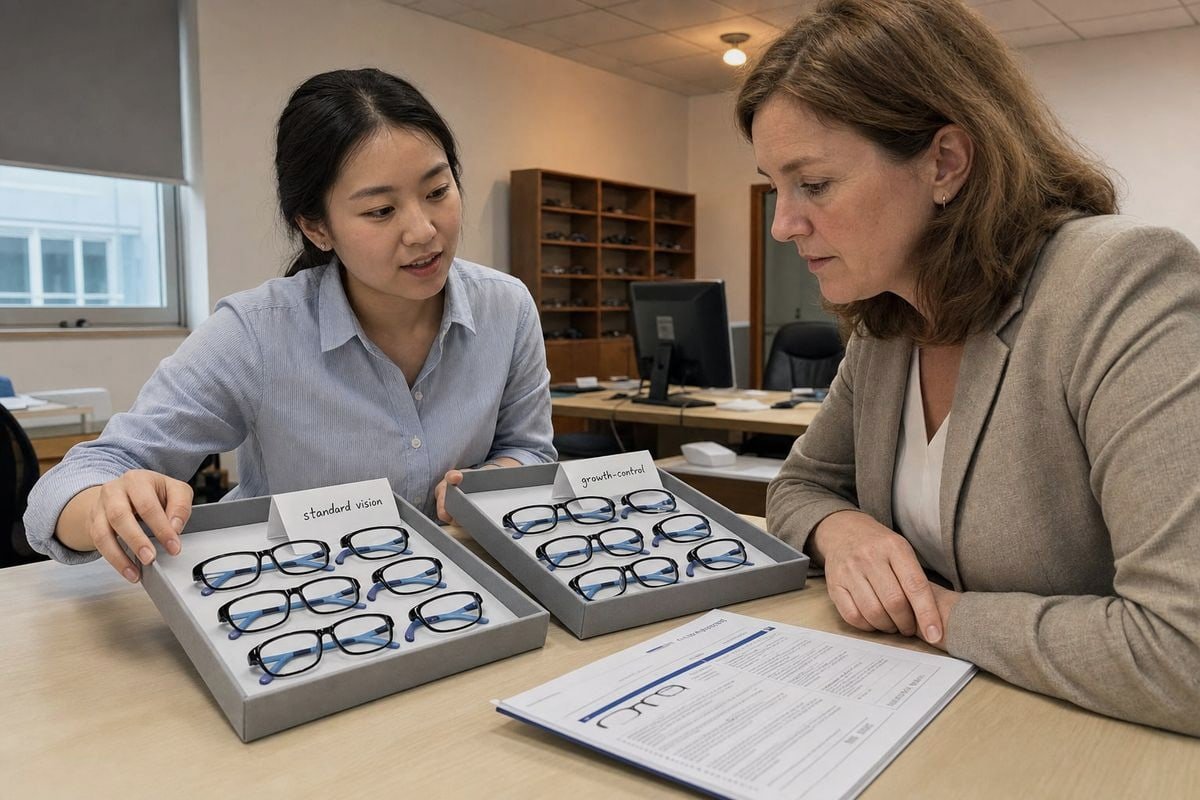
Let me put the decision into a scannable format first, because this is how I walk buyers through it on calls:
| العامل | Single-vision kids eyewear | Myopia control lenses |
|---|---|---|
| Primary purpose | Clear vision only | Clear vision plus slowed progression |
| Effect on myopia progression | None demonstrated | Roughly 30–60% slowing in studies |
| Retail price point | Entry to mid | ممتاز |
| Parent education needed | Minimal | Significant |
| Channel fit | Retail, e-commerce, promo | Optical shops, clinics, specialist brands |
| Frame requirements | معيار | Precise fit, stable centration |
Now, the objection I hear most: "If a child can already see fine with normal glasses, why would parents pay more?" It is a fair question. Here is the resolution. Standard lenses fix the symptom, blurry distance vision. They do nothing about the underlying axial growth. A U.S. NIH-reported study found multifocal contact lenses slowed progression by about 43% over three years compared with single-vision lenses. Several spectacle designs show slowing of about half. Parents increasingly know this. Once they do, a brand that only offers single-vision looks incomplete.
Match the option to your channel
If you sell through pharmacies or general retail, single-vision and quality sunglasses remain your volume drivers. If you sell into optical chains 7 or work with eye-care professionals, myopia management SKUs open doors. In our experience exporting to buyers in 20+ countries, the brands growing fastest run a tiered range: durable single-vision frames as the base, and a premium line specified for control lenses on top. One diopter of prevented progression also saves families real money over a lifetime, in thinner high-index lenses and fewer medical interventions. That is a story your marketing can tell honestly.
What sourcing and manufacturing factors should I check before ordering myopia control lenses?
During a 5S audit walk-through of our workshop last year, a visiting procurement manager from Japan asked what changes when a frame must carry a control lens. My honest answer: almost everything about fit tolerance.
Check five things: lens compatibility and glazing precision, frame fit stability so treatment zones stay centered, child-safe flexible materials like TR90 and TPEE, the supplier's QC process and tolerances, and whether the factory offers OEM/ODM support for your prescription range and packaging.
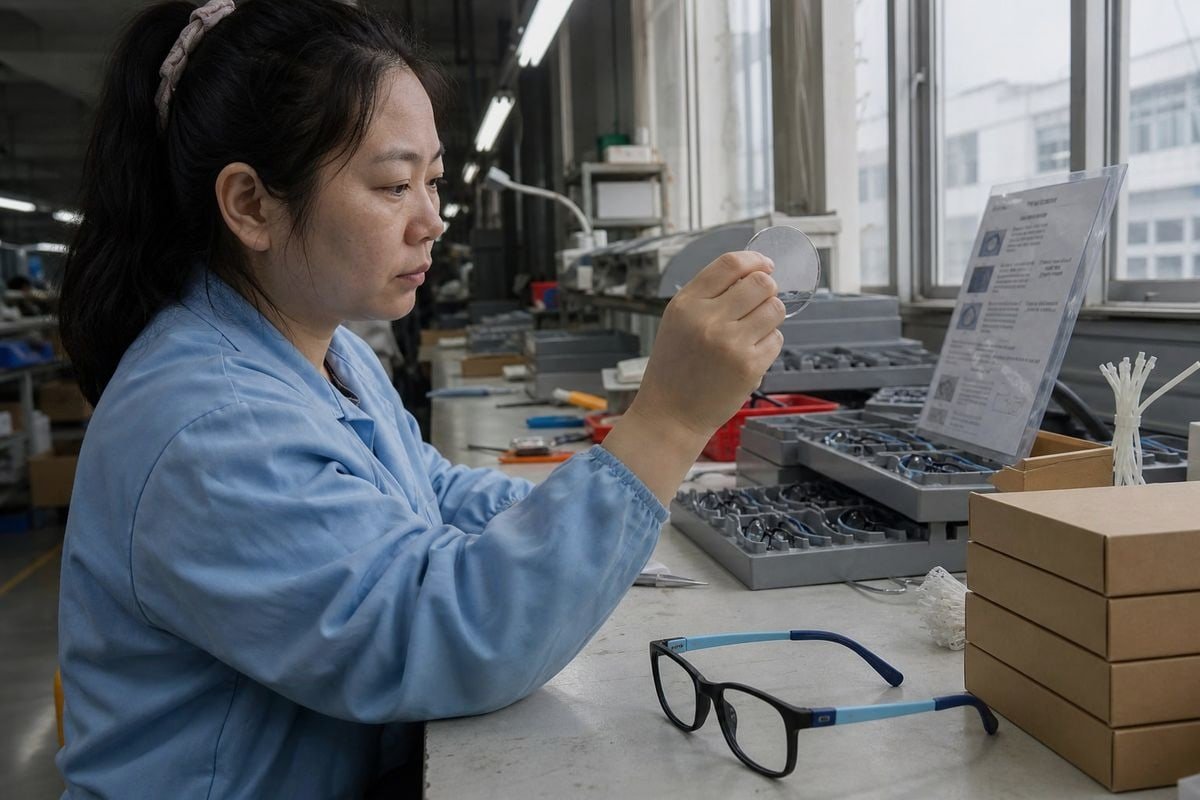
Myopia control lenses only work when the treatment zone sits in the right position in front of the pupil. If the frame slides down a child's nose, the child looks through the wrong part of the lens and the peripheral defocus effect weakens. So the frame is not an afterthought. It is part of the treatment system. That is why our engineers spend so much time on temple flex, nose-bridge geometry, and weight distribution for growing faces.
قائمة مرجعية عملية للمصادر
- Frame stability and fit. Ask for adjustable or well-contoured nose pads and temples that hold position during play. Our TR90 frames with TPEE temples flex without losing their set shape, which keeps optical centration consistent.
- Material safety and comfort. Children wear these lenses all day, every day. Lightweight, flexible, environmentally friendly materials reduce pressure points and breakage risk. A frame a child refuses to wear defeats the lens entirely.
- Glazing and groove tolerances. Control lenses can be thicker or have specific edge requirements. Confirm your frame supplier's lens-groove specs match your lens lab's needs before mass production.
- Prescription range limits. Some soft control contact lenses correct effectively only under about 6 diopters, and astigmatism compatibility varies by modality. Know your target prescription range before finalizing SKUs.
- Development risk. New molds are expensive. We keep roughly 800 existing styles precisely so brands can test a myopia management line without heavy tooling investment, then customize colors, logos, lenses, and retail-ready packaging once the concept proves out.
One more point from 15 years of production experience: consistency matters more here than in fashion eyewear. A batch with drifting bridge dimensions is a cosmetic issue on sunglasses. On a myopia management frame, it is a clinical issue. Ask any supplier how they control dimensional tolerance from first article to final shipment.
How can I educate my customers on choosing between these two lens types?
Early on, we learned a hard lesson: a distributor returned samples not because of quality, but because their retail staff could not explain the product. Education is now part of every launch package we discuss.
Teach one simple message: single-vision glasses fix sight; myopia control lenses fix sight and slow worsening. Then support it with plain-language materials covering how the lenses work, the evidence, honest limits, and when parents should consult an eye-care professional.
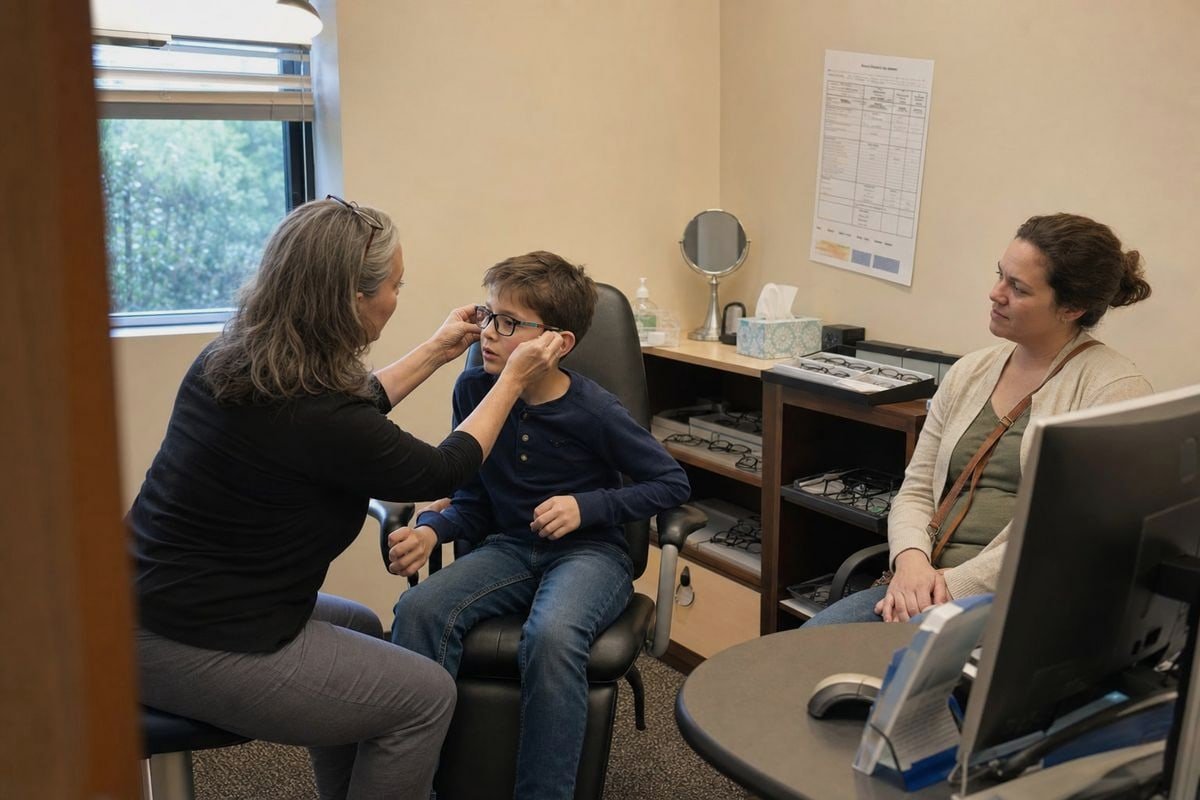
Parents do not need optics lectures. They need clear answers to the questions they actually ask. Build your education content around those questions, in the order parents raise them.
Answer the questions parents actually ask
| Parent question | The honest answer |
|---|---|
| Are control lenses worth it if my child already sees fine? | Regular glasses do not slow progression; control lenses can slow it by roughly half in many studies. |
| Do they replace normal glasses? | Yes for spectacle versions; they look and wear like regular glasses. |
| Are they safe for kids? | Spectacle versions are non-invasive; contact lens and orthokeratology options need professional fitting and hygiene routines. |
| Will my child adapt? | Children usually adapt quickly; their neuroplasticity helps them filter out the peripheral defocus zones. |
| Do they stop myopia completely? | No. No current therapy is 100% effective. The goal is meaningful slowing, not a cure. |
That last row matters most. Never let your marketing promise a cure. The clinical literature is clear that no treatment fully stops childhood nearsightedness, and overpromising destroys trust with both parents and prescribing optometrists.
Practical education tools that work
From what our brand customers report back, three formats perform well. First, a one-page comparison card at the point of sale, using the "fix sight vs. fix sight and slow worsening" framing. Second, a short lifestyle guide covering daily wear time, sports, and comfort, since active kids need frames and lenses that survive playgrounds. Third, a clear referral message: the final lens decision belongs with a pediatric optometry professional, and your brand supports that process rather than replacing it. When we develop custom packaging for buyers, we often build space for exactly this kind of insert. It turns a box into an education tool, and it positions your brand as a knowledgeable partner in myopia management rather than just another frame seller.
الخلاصة
Single-vision eyewear corrects sight; myopia control lenses also slow eye growth. Offer both tiers, source frames built for fit precision, and educate honestly. We are glad to help you build that range.
ملاحظات ختامية
1. Global health authority’s data on vision correction and common refractive conditions. ↩︎
2. Explains the basic optical function of standard lenses mentioned in the text. ↩︎
3. Authoritative NIH/PubMed source providing the foundational clinical study results for DIMS technology. ↩︎
4. Government resource defining various contact lens types, including multifocal designs for myopia. ↩︎
5. Provides a technical definition of the eye’s focusing mechanism and related lag issues. ↩︎
6. Clinical reference for the measurement of the eye’s front-to-back diameter in myopia. ↩︎
7. General overview of the professional eye care retail and clinical environment. ↩︎
مقالات أخرى قد تعجبك
هل تبحث عن شريك موثوق به للنظارات للأطفال؟
استكشف أكثر من 800 نمط جاهز ودعم OEM/ODM كامل مصمم خصيصًا لعلامتك التجارية.
اتصل بنا English
  Español de México
  Deutsch
  Français
  日本語
日本語  العربية
  Português do Brasil