What Are Common Kids’ Sunglasses Problems in Sports, and How to Avoid Them When Sourcing?
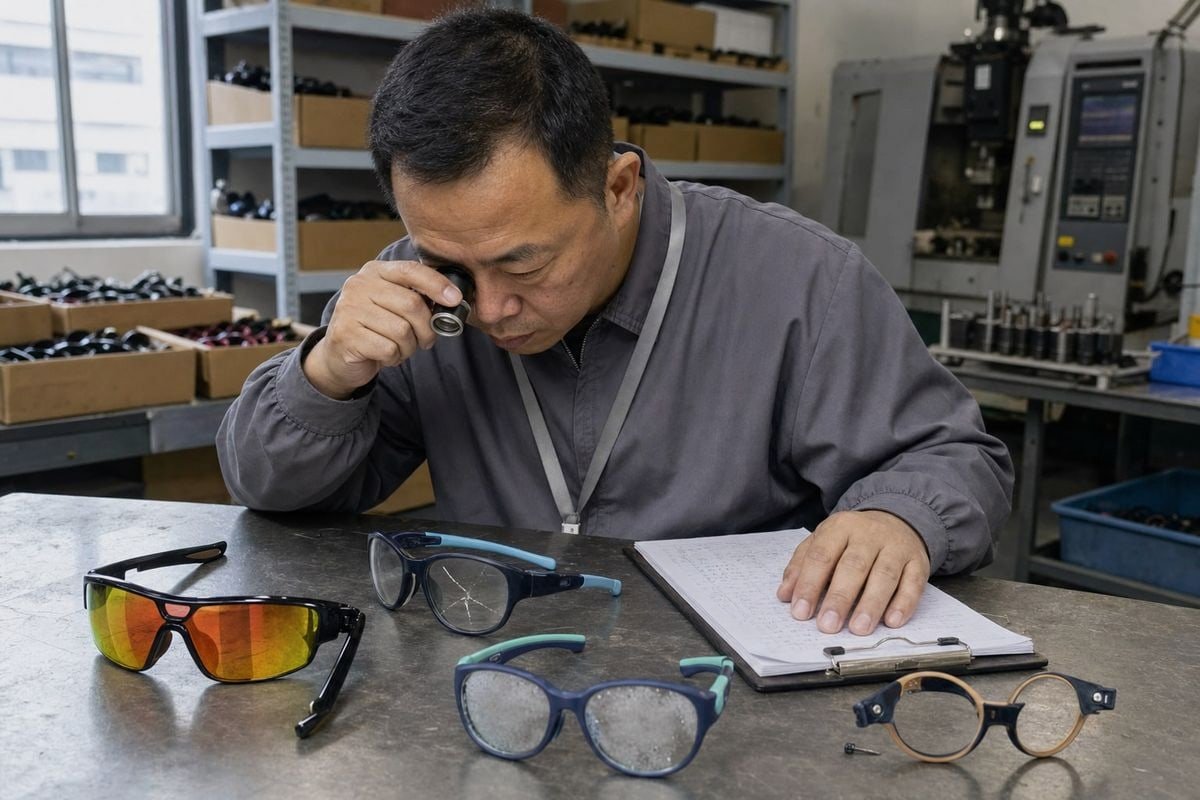
Common kids’ sunglasses problems in sports keep showing up in the return reports buyers share with me. Slipping frames, cracked lenses, fogged vision — after 15 years on our production line, I know each one is avoidable.
Common kids’ sunglasses problems in sports include slipping during movement, frame breakage, lens fogging, weak UV protection, and poor impact resistance. Buyers avoid them by sourcing flexible TPEE or TR90 frames, polycarbonate lenses with UV400 protection, secure retention features, and verified quality assurance testing.
Each of these problems has a clear cause and a clear sourcing fix. Let me walk you through them one by one, the same way I do with new buyers.
How can I prevent kids' sunglasses from slipping or falling off during sports?
A buyer from Australia once mailed me a competitor's sample with a note: "Kids take these off after five minutes." When I put it on a child head form, the problem was obvious — zero grip, wrong bridge.
Prevent slipping by sourcing frames with child-specific bridge widths, rubberized or co-molded nose pads, textured temple grips, and an adjustable head strap option. A wrap-around design that follows the curve of a child's face distributes contact evenly and keeps the eyewear stable during running and jumping.

Slipping is the number one reason children stop wearing sports eyewear. A child will not push glasses back up their nose twenty times during a soccer match. They will simply take them off, and then the product delivers zero protection. So fit is not a comfort detail. Fit is the feature that decides whether the product works at all.
Why kids' faces need different geometry
Children have flatter nasal bridges 1 than adults, especially under age eight. A frame scaled down from an adult mold will still sit too low and slide forward. In our workshop, we build child head forms in several age bands and test every new style against them before tooling is finalized. When we review buyer samples, the most common flaw we find is an adult bridge shape shrunk to kid size.
Retention features that actually work
| الميزة | What it does | الدفع الآمن عبر المنصة |
|---|---|---|
| Co-molded rubber nose pads | Grip increases slightly with sweat | Ages 5–12, all sports |
| Adjustable head strap | Locks eyewear to the head | Ball sports, cycling, toddlers |
| Textured temple tips | Anchor behind the ears | Everyday active wear |
| Wrap-around design | Spreads contact across the face | Running, skiing, field sports |
| Flexible TPEE temples | Bend to hug the head without pinching | Sensitive or smaller heads |
One more point from experience: grip must never come from clamping pressure. Frames that pinch leave marks on the temples, and kids reject them just as fast as frames that slip. Flexible materials let us create light, even tension instead of two hard pressure points. That balance — secure but soft — is what we tune during sampling, and it is worth checking with real wear trials before you place a bulk order.
Which materials should I choose to avoid frames breaking during active play?
There is a trade-off I weigh on every new kids' project: stiffness gives a frame that crisp, premium click, but flexibility is what survives a seven-year-old sitting on it. For sports, I always argue for flexibility.
Choose TR90 or TPEE frame material for children's sports sunglasses. Both flex under stress instead of snapping, are lightweight on small faces, and return to shape after bending. Avoid brittle standard plastics like ordinary polystyrene or low-grade acetate, which crack and create sharp fragments.
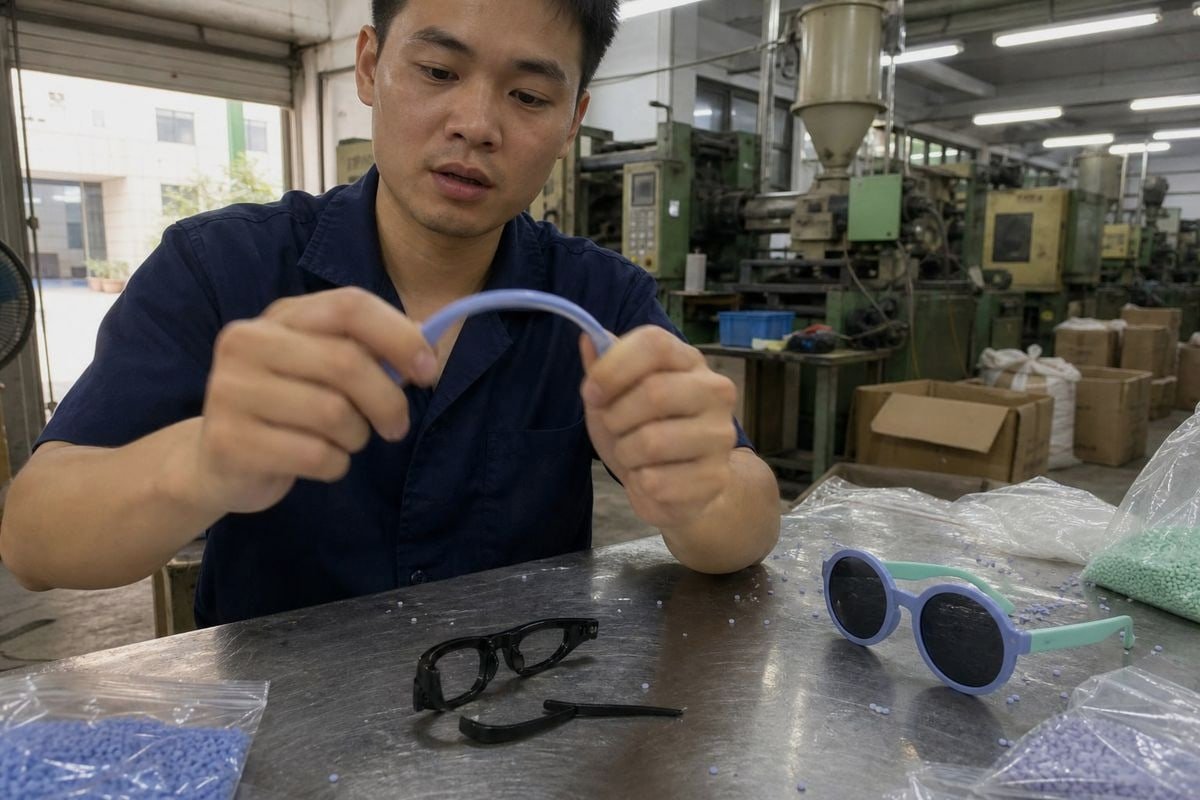
Frame breakage in sports is not just a warranty cost. A snapped frame near a child's eye creates sharp edges at the worst possible moment. That is why the material decision matters more in the kids' category than anywhere else in eyewear.
How the main frame materials compare
| المواد | المرونة | الوزن | Breakage risk | Suitability for kids' sports |
|---|---|---|---|---|
| TPEE frame 2 material | Very high, rubber-like | خفيف جدا | منخفض جدًا | Excellent, ideal for younger kids |
| TR90 | High, springs back | خفيف | منخفض | Excellent, ideal for active wear |
| إطار قياسي من البولي كربونات | متوسط | متوسط | متوسط | Acceptable with thick walls |
| Cheap injection plastic | Low, brittle | خفيف | مرتفع | Not recommended |
| Traditional acetate | منخفض إلى متوسط | أثقل | متوسط–مرتفع | Not recommended for sports |
At our Taizhou factory, most of our roughly 800 existing styles use TR90 fronts, TPEE construction, or a TR90 frame with TPEE temples. That last combination is one our engineers refined over many seasons. The TR90 front holds the lens shape and optical alignment. The TPEE temples flex a full range without stress-whitening, so a child can twist them, sit on them, or stuff them in a kit bag and the frame recovers.
What to check beyond the material name
A material name on a spec sheet is not proof. Resin grade, wall thickness, and injection quality all change real-world durability. In our own quality assurance testing 3, we flex temples repeatedly, twist the frame front, and cold-check samples, because flexible materials can stiffen in low temperatures. Ask any supplier to demonstrate a bend test on camera or in person. A genuine TR90 or TPEE frame will fold and recover. A brittle copy will snap — better on a video call than on a playground.
How do I ensure the lenses provide enough UV and impact protection for sports use?
During a factory audit last year, a European buyer asked me a sharp question: "Your catalog says UV400 — how do I know this batch is UV400?" I liked that question, because it separates real protection from a printed sticker.
Ensure protection by specifying polycarbonate lenses with verified UV400 protection blocking 100% of UVA and UVB rays, and requesting batch-specific lab test reports. For higher-impact sports, require eyewear tested to the ASTM F803 standard rather than relying on generic "sports" labels.
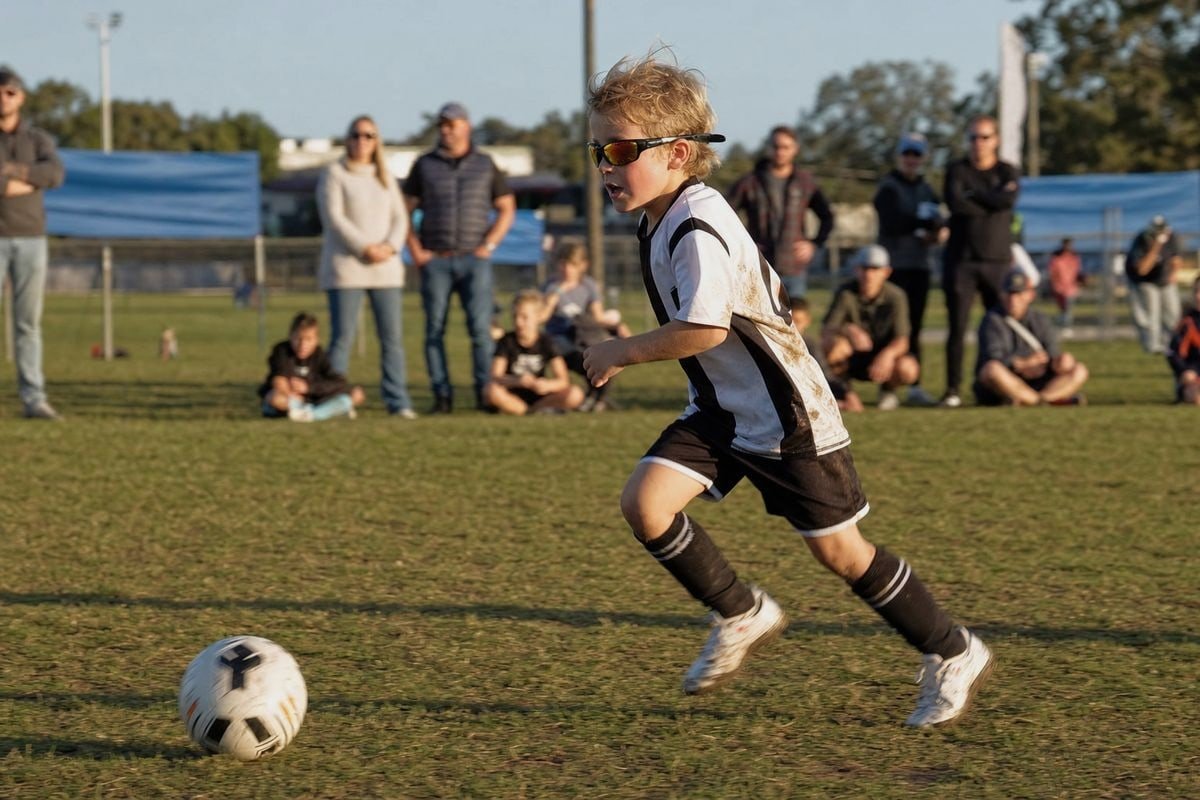
The stakes here are real. Tens of thousands of children are treated for sports-related eye injuries 4 every year, including corneal abrasions, hyphema, and orbital fractures, and health sources consistently note that the large majority are preventable with proper protective eyewear. Meanwhile, children's eyes admit more UV than adult eyes, so cumulative sun damage starts early. A lens for kids' sports must handle both threats at once.
Impact resistance starts with polycarbonate
Polycarbonate lenses 5 are the baseline for children's sports eyewear. They resist impact far better than standard acrylic or glass, and they will not shatter into fragments near the eye. Trivex is a strong alternative at a higher cost. What you should avoid is the cheap acrylic lens common in fashion sunglasses — it looks identical in a product photo and behaves completely differently when a ball arrives at speed.
A dark tint is not UV protection
This is the misconception I correct most often. Tint controls visible light; UV protection comes from the lens material and its treatment. A dark lens without real حماية UV400 6 is arguably worse than no lens, because the pupil dilates behind the tint and admits more unfiltered UV. That is why we test lenses with a UV meter on our line and can support batch documentation, and why I tell buyers to demand the same from any supplier.
Match lens features to the sport
- Ball sports: polycarbonate, moderate tint that preserves contrast for ball tracking, ASTM F803 standard 7 testing where the market requires it.
- Cycling and skiing: wrap-around design shield lenses, mirrored coatings for glare, secure retention.
- Water and beach sports: polarized lens technology to cut horizontal glare off water and sand.
- General outdoor play: UV400 protection as the non-negotiable minimum, with regional compliance such as CE marking for Europe verified.
One nuance on polarization: polarized lens technology is excellent for glare, but for some fast ball sports, a well-chosen contrast tint matters more than glare elimination. We help buyers pick the tint per end use rather than defaulting to one lens across a whole range.
What should I look for in a manufacturer to avoid quality issues in sports eyewear sourcing?
Fifteen years of exporting kids' eyewear to buyers in more than twenty countries has taught me one blunt lesson: most quality disasters are visible in the factory long before they appear in a container.
Look for a factory with real children's eyewear experience, in-house quality assurance testing, verifiable material specs, batch UV test reports, and organized production management. Prioritize suppliers offering existing tooling, sample wear trials, and full OEM/ODM support over traders reselling generic stock.
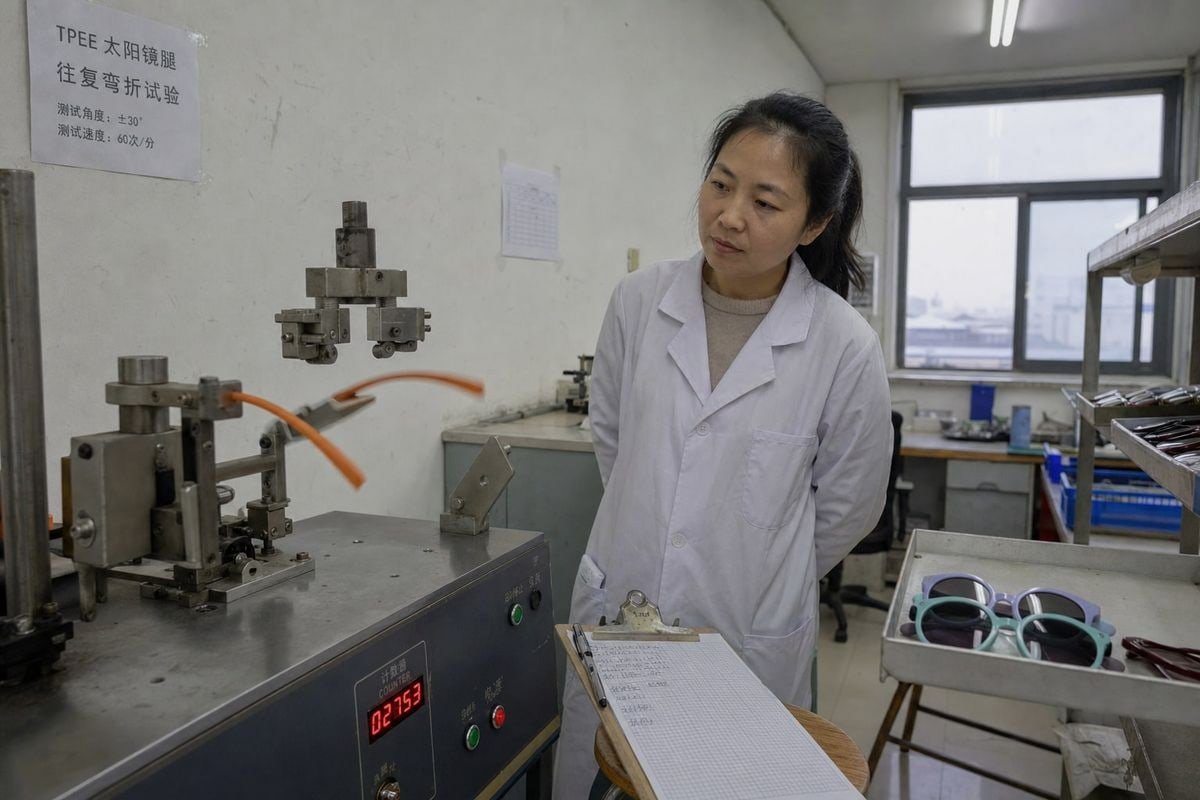
The supplier decision is where every earlier point either holds together or falls apart. A perfect spec sheet means nothing if the factory substitutes resin grades in month three or skips the anti-fog coating 8 on a rushed reorder. So evaluate the partner, not just the sample.
A practical supplier evaluation checklist
| What to verify | لماذا هو مهم | How to check |
|---|---|---|
| المصنع مقابل التاجر | Traders cannot control resin, coatings, or corrective action | Video audit, business license, workshop tour |
| خبرة خاصة بالأطفال | Child sizing and flexible materials are specialized skills | Review their existing kids' range and molds |
| Material verification | "TR90" and "TPEE" claims are often loose | Bend tests, material data sheets |
| Lens testing | UV400 and impact claims need proof per batch | Batch test reports, in-house UV meters |
| Compliance knowledge | Standards differ by market — ASTM F803, EN ISO 12312-1, CE | Ask which standard applies to your market and sport |
| Consistency systems | Reorders must match the golden sample | 5S management, documented QC steps, AQL inspection |
| OEM/ODM depth | You need custom colors, logos, packaging, straps | Review past custom projects and packaging options |
Why existing styles reduce your risk
Here is something newer brands underestimate. Opening custom molds for a kids' sports range is expensive and slow, and it locks you in before the market has voted. Our own approach — around 800 existing styles across wrap-around shields, round youth frames, and optical shapes — lets a brand test several models with custom colors, lenses, an adjustable head strap accessory, and retail-ready packaging, all without mold investment. Once sell-through data comes in, invest in tooling for the winners. That sequencing has saved more than one buyer from a warehouse of unsold inventory.
Test wearability before bulk
Finally, insist on sample wear trials with real children before confirming a bulk order. Specs confirm safety; kids confirm compliance. If a sample pinches, fogs during exertion because it lacks ventilation or an anti-fog coating, or slides during a sprint, you want that feedback at the sampling stage — not in your review section. A good factory will welcome that loop and adjust nose pads, temple tension, or lens tint before production. That willingness to iterate is, honestly, the clearest signal of a long-term partner.
الخلاصة
Kids' sports sunglasses fail through slipping, breakage, fogging, and weak protection — all preventable. Source flexible TR90/TPEE frames, tested UV400 polycarbonate lenses, and a proven factory partner, and those problems disappear.
ملاحظات ختامية
1. Explains child craniofacial anatomy referenced when discussing bridge fit differences. ↩︎
2. Background on the polymer class TPEE belongs to, supporting flexibility claims. ↩︎
3. Reliable Wikipedia overview of quality assurance processes and standards. ↩︎
4. NIH’s National Eye Institute provides authoritative data on pediatric sports eye injuries. ↩︎
5. Authoritative medical explanation of polycarbonate lens benefits for eye safety. ↩︎
6. FDA consumer guide explaining U
مقالات أخرى قد تعجبك
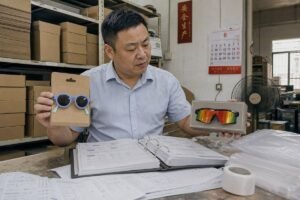
August 1, 2026
هل يجب على المصنع التعامل مع تغليف ووضع ملصقات نظارات الأطفال الشمسية، أم استخدام مورد مخصص؟
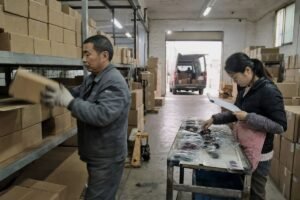
August 1, 2026
مستودع خاص مقابل الوفاء المباشر من المورد: أيهما يقلل تكاليف الإرجاع لعلامات نظارات الأطفال الشمسية؟
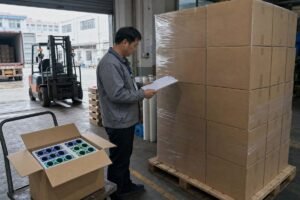
August 1, 2026
مباشر إلى ميناء المستودع أو التخزين الخارجي: أيهما يوفر أكثر على شحن نظارات الأطفال الشمسية؟
هل تبحث عن شريك موثوق به للنظارات للأطفال؟
استكشف أكثر من 800 نمط جاهز ودعم OEM/ODM كامل مصمم خصيصًا لعلامتك التجارية.
اتصل بنا English
  Español de México
  Deutsch
  Français
  日本語
日本語  العربية
  Português do Brasil