US Eyewear Distributor: Issue My Own CPC or Verify Supplier’s for Kids’ Sunglasses?
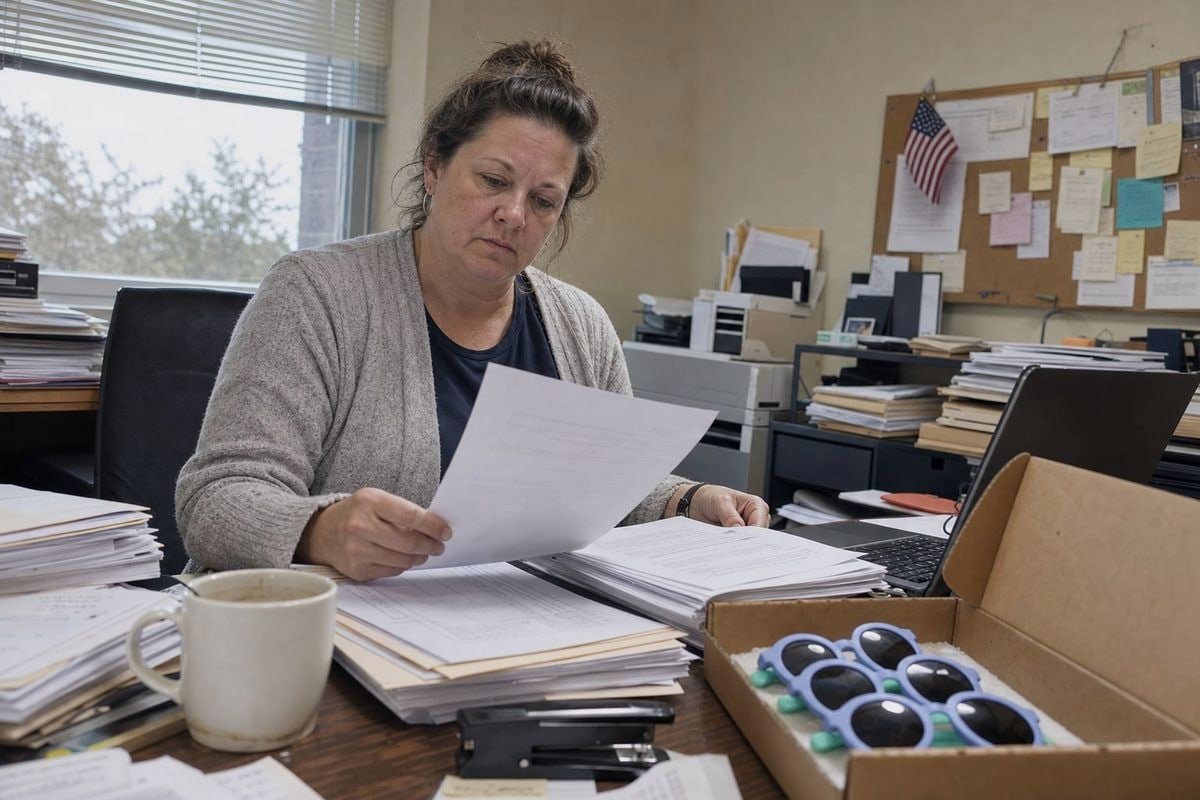
Whether a US eyewear distributor should issue their own CPC comes up in almost every quote request our Taizhou factory receives from American buyers of kids’ sunglasses.
If you are the importer of record, US law treats you as the certifier, so you must issue your own CPC for kids’ sunglasses based on CPSC-accepted lab reports. If you buy domestically as a pure distributor, verify the importer’s CPC instead of issuing one yourself.
That short answer hides real complexity. Your role in the supply chain decides everything. So does the quality of the paperwork your supplier hands you. Let me walk you through how I explain this to our own B2B buyers, step by step.
How do I decide whether to issue my own CPC or rely on my supplier's for kids' sunglasses?
A buyer from Texas once asked me to simply "put your factory CPC in the carton" for a container of our TR90 kids' frames. I had to explain why that document alone would not protect her at customs.
Decide based on your import role. If your company is the importer of record, you must issue the CPC yourself, even if you reuse your supplier's valid test reports. If someone else imports the goods, you only need to obtain and verify that party's CPC before resale.
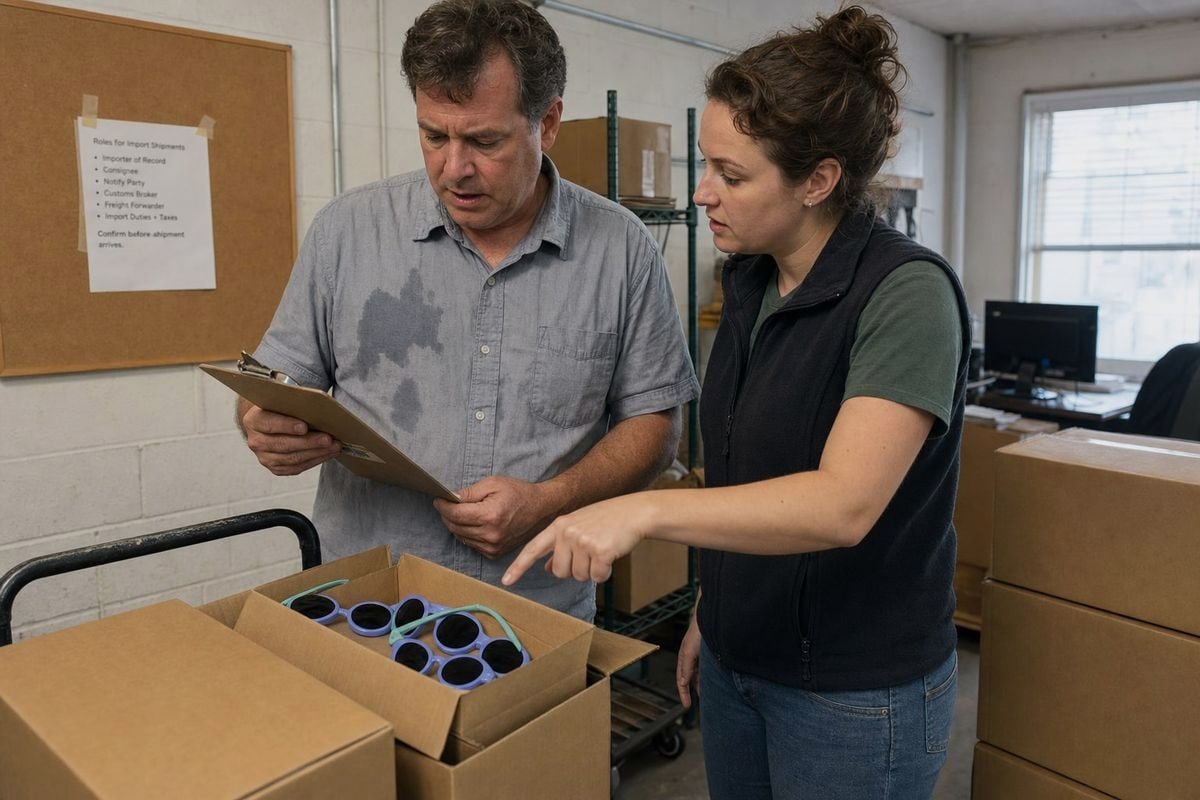
The Consumer Product Safety Commission draws a hard line here. For products made overseas, the US importer is legally treated as the certifying party. That means a Chinese factory like ours can prepare test reports, sample documents, and a draft certificate. But we cannot legally issue the final CPC for your import entry. Only you can.
This surprises many distributors. They assume a certificate is a certificate, no matter who signs it. In reality, the CPC must name the correct certifying firm. If it names our factory in Taizhou instead of your US company, and you are the مستورد مسجل 1, the document does not match your legal role. CPSC or Customs can treat your shipment as uncertified.
A simple decision framework
Here is the framework I share with buyers during onboarding:
| Your situation | Who issues the CPC | What you must do |
|---|---|---|
| You import directly from the overseas factory | You (the importer) | Issue your own CPC using CPSC-accepted lab reports |
| A US wholesaler imports; you buy domestically | The importer/wholesaler | Obtain, review, and file their CPC before selling |
| You are the brand and the importer | You | Issue the CPC and keep test records available |
| Your supplier claims their CPC "covers everything" | Still you, if you import | Reject the assumption; verify reports, issue your own |
Note one important nuance. Issuing your own CPC does not mean self-testing. The certificate must rest on third-party testing from a CPSC accepted lab 2. The real choice is not "my CPC versus supplier CPC." It is "importer-issued CPC backed by valid reports versus paperwork that may not fit your import role." When our customers understand that, the decision becomes easy. If you import, you certify. Full stop.
What CPSIA and CPC requirements should I understand before importing kids' sunglasses into the US?
When we developed our first TPEE-temple sunglasses line for the American market, our team spent weeks mapping which children's product safety rules actually applied to a pair of flexible frames and tinted lenses.
CPSIA treats sunglasses designed primarily for children 12 and under as children's products. They require third-party testing at a CPSC accepted lab, an English-language CPC with seven data elements, permanent tracking labels, and compliance with lead and phthalates limits, plus FDA impact resistance rules.
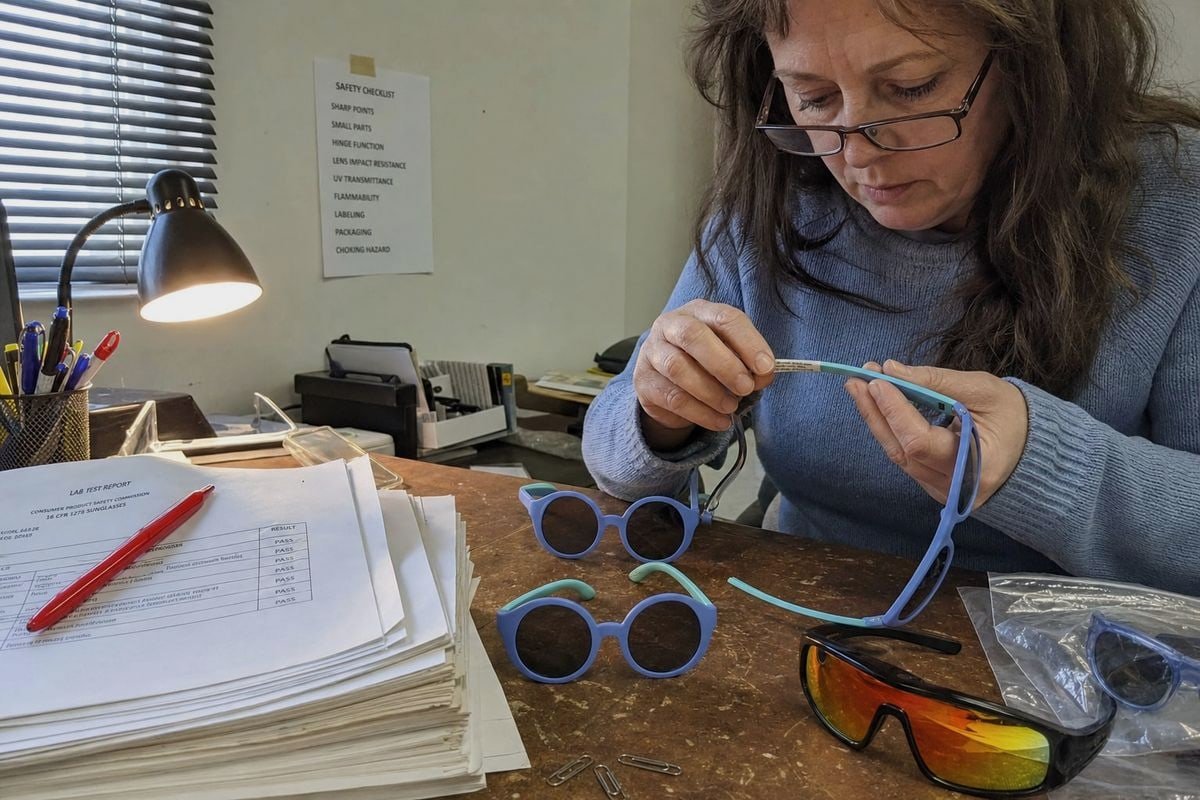
The first question is always classification. Are your sunglasses truly a children's product? Look at the size, the marketing, the packaging, and the intended user. Our compact round frames in periwinkle-blue with mint-teal temples are clearly designed for small faces. No one would argue they are general-use products. That classification triggers the full set of قانون تحسين سلامة المنتجات الاستهلاكية 3 requirements.
The dual-agency reality
Here is what many buyers miss: kids' sunglasses are a compliance hybrid. CPSC compliance covers the children's product side. But the FDA also regulates sunglasses, because lenses must be certified as impact resistant under 21 CFR 801.410 4. Impact resistance testing is a separate obligation from CPSIA testing. Many importers also need to register with the FDA as an initial importer and list the product as a Class I medical device to avoid shipment detention at the border.
| المتطلب | Agency | ما تغطيه |
|---|---|---|
| Lead content and lead in paint | CPSC | Frame materials, coatings, decorations |
| Phthalates limits 5 | CPSC | Plasticized components accessible to children |
| Third-party testing and CPC | CPSC | Certification by a CPSC-accepted laboratory |
| Tracking label requirements | CPSC | Permanent marks on product and packaging |
| Impact resistance (21 CFR 801.410) | FDA | Lens drop-ball or equivalent certification |
| Initial importer registration | FDA | Distributor's import status for eyewear |
Two more points deserve attention. First, the tracking label. CPSIA requires a permanent label on the product and packaging identifying the manufacturer or importer, the production location, and the date. We mold or print this on our frames during production, but the details must match your records. Second, the eFiling trend. Starting July 2026, the CPSC eFiling mandate will require certificate data to be submitted electronically at the time of entry. Paper-only compliance is becoming obsolete, so build a digital documentation system now.
While ASTM F963 standards apply mainly to toys rather than functional eyewear, some buyers request toy-standard testing when sunglasses are sold in playful, toy-adjacent packaging. Discuss this with your lab before booking tests.
How can I verify that my supplier's CPC and testing reports are accurate and reliable?
I once reviewed a competitor's "CPC" that a prospective buyer forwarded to us for a second opinion. The document listed no lab name, no test dates, and described the product only as "plastic sunglasses." It was worthless.
Verify five things: the lab appears on the CPSC accepted lab list, the report matches your exact SKU and materials, the test dates align with production, all seven required CPC data elements are present, and the cited rules actually apply to children's eyewear.

Treat a supplier CPC as a document to audit, not a document to collect. In our fifteen years of eyewear production, the gap between a valid file and a decorative one usually shows up in five predictable places.
The ten-minute audit checklist
- Check the laboratory. Search the lab's name and ID on the CPSC website. Only a CPSC-accepted third-party testing laboratory can support a valid CPC. If the lab is not on the list, the certificate fails immediately.
- Match the product identification. The report should name your exact model, colorway, lens type, and frame material. A report for last year's version, or a different lens coating, does not cover your order. When we change a temple material from TR90 to TPEE, we advise buyers to retest, because the substrate changed.
- Confirm the cited rules. For children's sunglasses, expect lead content, lead in surface coatings 6, and phthalates limits at minimum. Vague references to "US standards" are a red flag.
- Verify the seven data elements. A CPC must be a standalone English document listing the product, each applicable rule, the certifying firm's name and address, the records custodian's contact information, the manufacturing date and place, the testing date and place, and the third-party lab's identity.
- Check the certifier's role. If you import, the CPC must eventually carry your company's name. A factory-issued draft is a starting point, not the finish line.
Also confirm the factory named in the report matches the factory actually producing your goods. Report-swapping between facilities is one of the more damaging shortcuts in this industry. We invite buyers to trace our lab reports back to our own workshop records precisely because this abuse is common. One more safeguard: keep an undue influence policy on file. Certifiers are expected to ensure no one pressures a laboratory to alter test results, and documented staff training on this point strengthens your compliance posture.
What documentation should I request from my manufacturer to protect my brand as a US distributor?
Before any US-bound order leaves our 5S-managed workshop, we assemble a document pack for the buyer. Over time, that pack has grown into a fairly standard checklist that I now recommend every distributor demand upfront.
Request third-party test reports from a CPSC accepted lab, a draft CPC template, material declarations for frames and lenses, FDA impact resistance certification records, tracking label proofs, production date records, and written confirmation of the factory's identity and location.
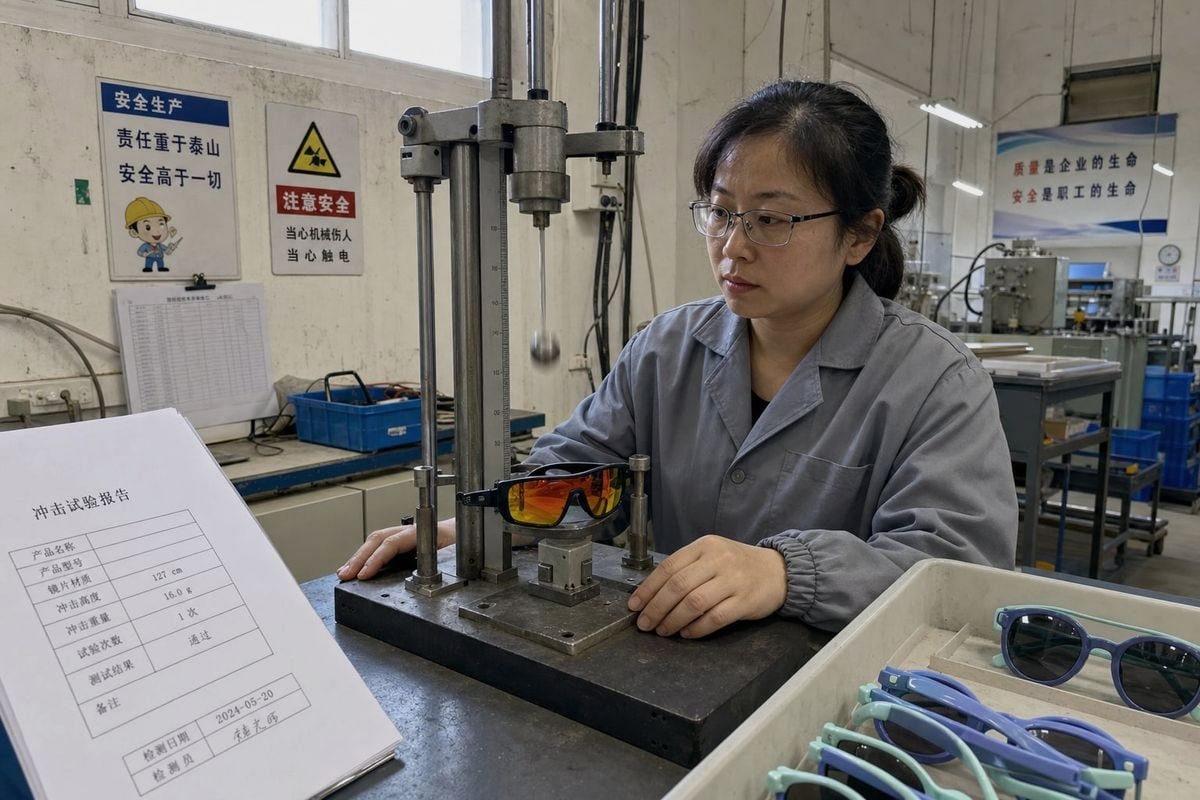
Good documentation is not bureaucracy. It is brand insurance. If a recall, a customs hold, or a marketplace audit ever hits, the distributor with a complete file survives; the one with a single PDF from an unknown lab does not.
The full document pack
| وثيقة | Why you need it | Common gaps to watch |
|---|---|---|
| Third-party test reports | Foundation of your CPC | Wrong lab, expired scope, wrong SKU |
| Draft CPC template | Speeds your own certificate issuance | Missing data elements, wrong certifier |
| Material declarations | Confirms lead and phthalates compliance inputs | Vague "plastic" descriptions |
| Impact resistance records | Satisfies 21 CFR 801.410 for lenses | Drop-ball records not retained per lot |
| Tracking label artwork proofs | Meets tracking label requirements | Label on packaging only, not product |
| Batch and date records | Links certificates to actual production | No lot traceability |
| Factory identity confirmation | Ensures reports match the real producer | Trading company masking the factory |
Two cost-saving mechanisms are worth asking about. First, component part testing under 16 CFR Part 1109 7. If several of your SKUs share the same TR90 frame material and the same lens supplier, one component-level report can support multiple certificates. That materially cuts per-unit testing costs across a range. Because we offer roughly 800 existing styles built on a shared set of TPEE and TR90 materials, our buyers often leverage shared-material reports across their whole launch collection.
Second, if you are a small brand, look into the Small Batch Manufacturer registry 8. Qualifying SBMs can gain relief from some third-party testing burdens for certain requirements, though core rules like lead limits still demand accredited testing.
Finally, put documentation duties into your purchase agreement. Specify who pays for testing, when retesting triggers apply, and how records will be delivered digitally. A supplier who resists these terms is telling you something important about how they will behave when a problem appears.
الخلاصة
Skipping certification risks detained shipments, fines, and a damaged brand. If you import kids' sunglasses, issue your own CPC on verified lab reports; if you only distribute, audit the importer's file rigorously.
ملاحظات ختامية
1. Background concept explaining the legal role that triggers CPC certification duties. ↩︎
2. Official CPSC page listing accepted third-party testing laboratories referenced throughout the article. ↩︎
3. Background on the core US law governing children’s product safety requirements discussed in the article. ↩︎
4. FDA regulatory page on impact resistance certification requirements for sunglass lenses. ↩︎
5. CPSC official resource explaining phthalates restrictions relevant to children’s eyewear materials. ↩︎
6. CPSC guidance on lead content and coating limits central to children’s product compliance. ↩︎
7. Federal regulation text on component part testing cited for shared-material lab reports. ↩︎
8. Official CPSC registry page explaining testing relief for qualifying small batch manufacturers. ↩︎
مقالات أخرى قد تعجبك

August 1, 2026
هل يجب على المصنع التعامل مع تغليف ووضع ملصقات نظارات الأطفال الشمسية، أم استخدام مورد مخصص؟

August 1, 2026
مستودع خاص مقابل الوفاء المباشر من المورد: أيهما يقلل تكاليف الإرجاع لعلامات نظارات الأطفال الشمسية؟

August 1, 2026
مباشر إلى ميناء المستودع أو التخزين الخارجي: أيهما يوفر أكثر على شحن نظارات الأطفال الشمسية؟
هل تبحث عن شريك موثوق به للنظارات للأطفال؟
استكشف أكثر من 800 نمط جاهز ودعم OEM/ODM كامل مصمم خصيصًا لعلامتك التجارية.
اتصل بنا English
  Español de México
  Deutsch
  Français
  日本語
日本語  العربية
  Português do Brasil