Do Licensed Kids’ Sunglasses Outsell Unbranded Styles in Optical Stores?
Buyers ask me whether licensed kids’ sunglasses outsell unbranded styles almost every trade season. After fifteen years running our Taizhou factory, my honest answer surprises them.
Licensed kids’ sunglasses do not universally outsell unbranded styles in optical stores. Licensed frames win on revenue per pair and now represent about 30% of children’s frame sales, but unbranded, value-priced styles still dominate unit volume in most optical retail settings.
That short answer hides a lot of nuance. The real question is what you measure, who your customers are, and how you build your assortment. Let me walk you through what I have seen from both sides of the سلاسل التوريد الخاصة بهم 1.
How do I decide between licensed character designs and unbranded frames for my optical store's kids' section?
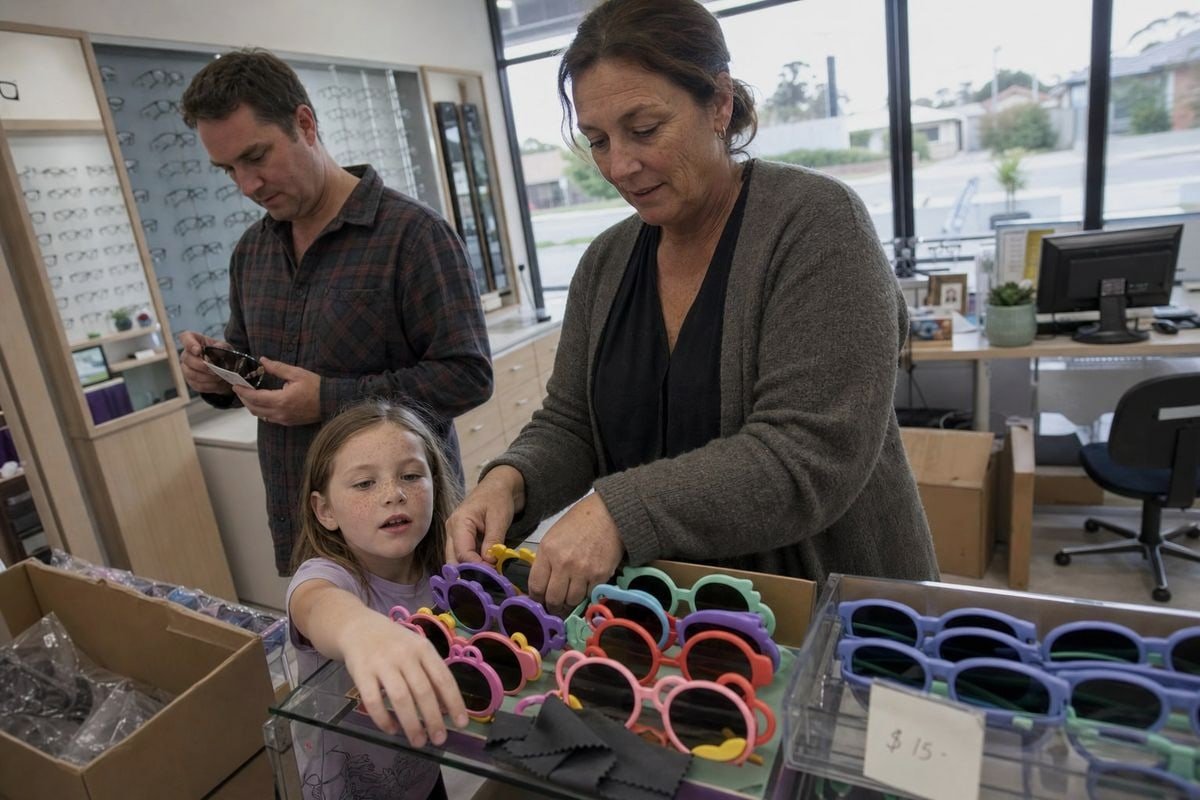
A distributor from Australia once told me his character frames flew off the wall while his plain frames gathered dust — until he changed one thing: his point-of-sale displays. Placement changed everything.
Choose based on your store's customer profile, not industry hype. Licensed character designs drive kid-led demand and higher price points, while unbranded frames serve price-sensitive parents and backup-pair purchases. Most optical stores perform best with a deliberate mix weighted toward their dominant shopper type.
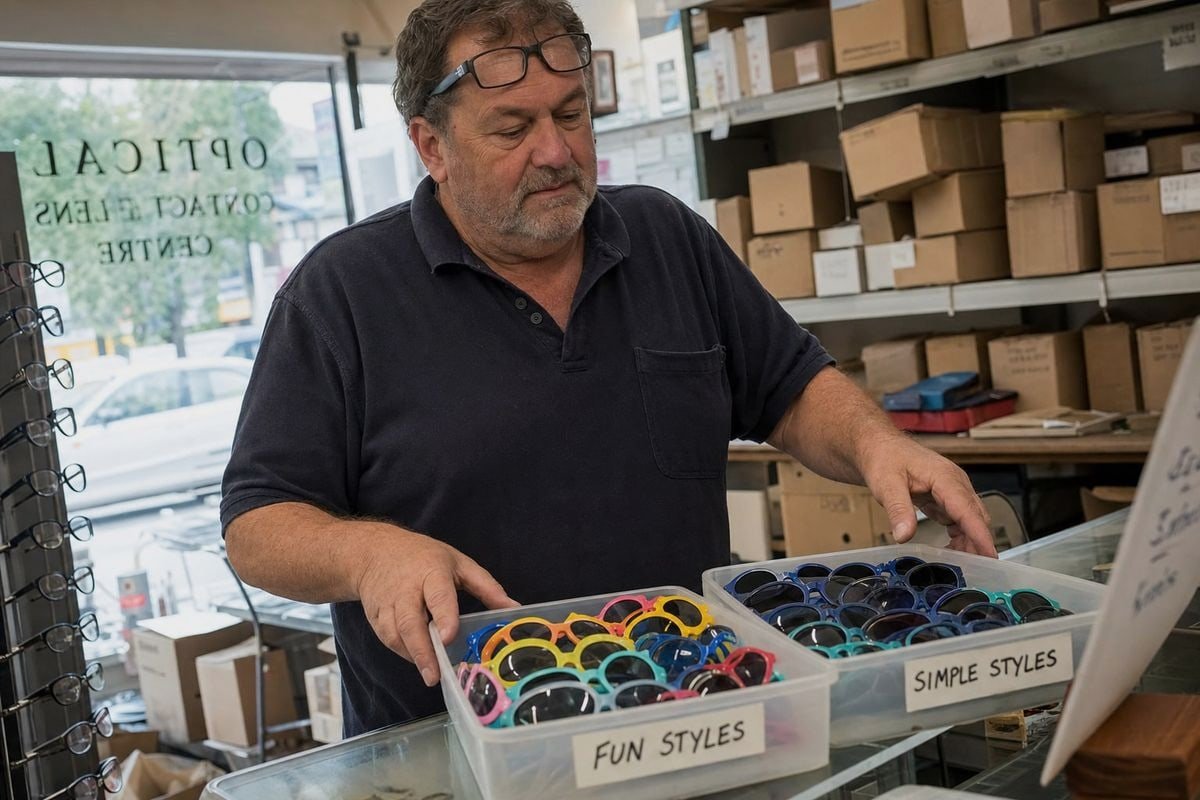
The decision starts with understanding who actually makes the purchase decision in your store. Industry survey data shows that 44% of respondents said name brands were very important to their child patients, and another 44% said they were somewhat important. That is real demand. Kids recognize characters instantly, and that brand recognition creates an emotional pull that gets a reluctant child to actually wear sunglasses. Any parent will tell you that a pair worn daily beats a pair left in a drawer.
But here is the counterargument I hear from high-volume family practices: brand awareness does not automatically translate into unit sales. Children's sunglasses remain a price-sensitive category. Non-polarized, value-oriented products held roughly 66.71% of the children's sunglasses market 2 in 2025. Parents buying a second pair for the beach, or a rough-and-tumble pair for the playground, reach for the affordable option.
A quick decision framework
| Store profile | Lean toward | لماذا |
|---|---|---|
| Fashion-forward optical boutique | Licensed / branded | Shoppers expect names and pay premiums |
| High-volume family practice | Unbranded core + licensed accents | Volume comes from value tiers |
| Pediatric specialty practice | Mixed ladder | Prescription compatibility matters most |
| Tourist or seasonal location | Unbranded impulse styles | Fast turns, low price resistance |
From our side of the business, we see both strategies succeed. Our ~800 existing styles exist precisely because many optical buyers want shelf appeal without character licensing 3 fees. Others come to us for OEM work that sits beside licensed lines. Neither path is wrong — but choosing blindly is.
What margins can I expect when comparing licensed versus unbranded kids' sunglasses?
The trade-off I weigh with buyers constantly is this: a higher ticket price does not always mean higher profit. Royalty fees quietly eat the difference, and many first-time importers miss that.
Licensed kids' sunglasses typically carry a 30–50% retail price premium but pay 10–20% in royalty fees, compressing margins. Unbranded styles sell for less yet often deliver higher gross margin percentages and faster inventory turnover, making them the stronger contributor to overall retail profit margins.
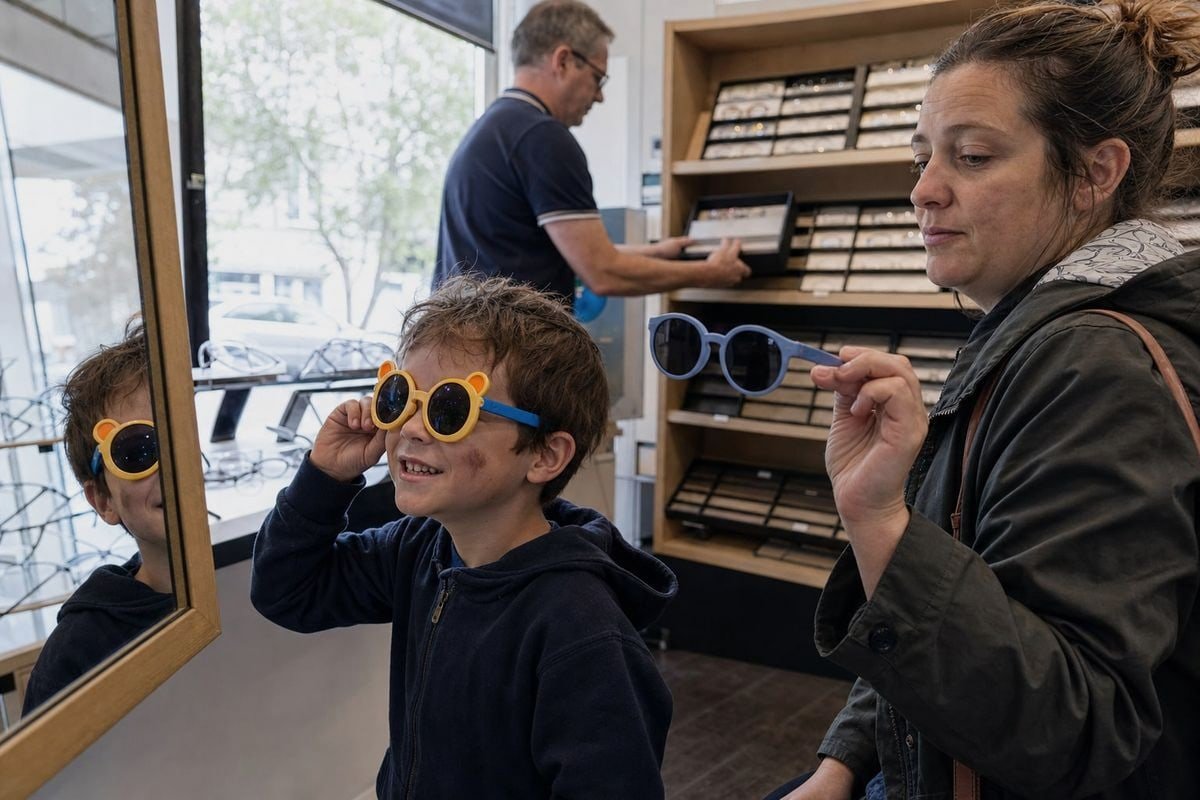
Let me break the economics down the way I do when a procurement manager visits our factory. Licensed products look attractive on paper. The character on the temple justifies a higher shelf price, and parents often accept it because they associate the license with perceived quality and safety compliance. So your average selling price climbs.
However, the licensor takes a cut. Royalty fees of 10% to 20% are standard in character licensing, and those costs flow through the wholesale eyewear pricing you pay. Minimum order commitments are often higher too. If a licensed style underperforms, you are stuck with slow-moving stock at a high landed cost.
Unbranded styles work differently. Your buy-in cost is lower. Your markup percentage is usually higher. And your inventory turnover rate tends to be faster because the retail price sits inside impulse purchase behavior territory — a parent adds a pair to a checkup visit without deliberating.
Illustrative margin comparison
| العامل | Licensed style | Unbranded style |
|---|---|---|
| Retail price point | Premium (30–50% higher) | Value tier |
| Royalty burden | 10–20% built into cost | لا شيء |
| Typical gross margin % | معتدل | أعلى |
| Inventory turns | Slower, seasonal risk | Faster |
| Revenue per unit | مرتفع | أقل |
| مخاطر تخفيض الأسعار | Higher if license fades | أقل |
The honest conclusion: licensed lines can lift your revenue per transaction, but unbranded lines usually protect your blended margin. In our export experience across 20+ countries, the healthiest optical accounts run both — and they know exactly which job each line does.
How do I source quality unbranded frames that can compete with licensed brands on shelf appeal?
A lesson I learned early in our workshop: a child does not read a hang tag. A child grabs the frame that looks fun and feels good on the face. Design does the selling.
Source unbranded frames with licensed-level shelf appeal by prioritizing flexible, child-safe materials like TPEE and TR90, vivid two-tone colorways, mirrored or gradient lenses, verified UV400 protection, and retail-ready packaging. Work directly with an experienced factory offering existing styles to avoid mold investment.
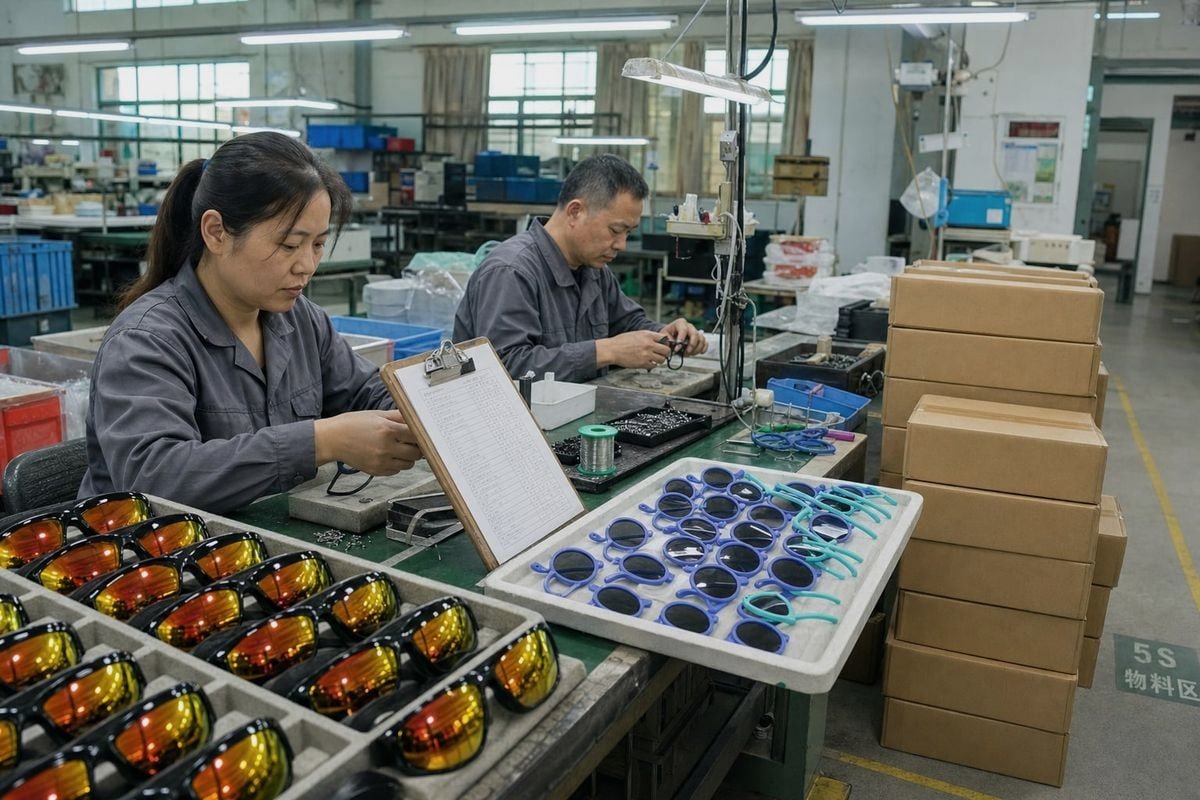
Shelf appeal without a license comes from three things: color, material, and finish. Consider two styles from our own catalog. One is a sport wraparound with a single-shield mirrored lens in an orange-to-yellow gradient — it looks like miniature performance eyewear, and older kids gravitate to it because it mirrors what athletes wear. The other is a soft two-tone round frame in periwinkle blue and mint teal, made in flexible material that bends without snapping. Neither carries a character. Both stop parents in the aisle.
This matters because the "Mini-Me" effect — kids' styles echoing adult sport and fashion eyewear — is now outpacing traditional character licensing in revenue growth. Aesthetic-led unbranded designs that reference viral trends appeal strongly to tweens who consider cartoon characters babyish.
What to demand from your supplier
- Safety first. Insist on UV400 protection and impact-resistant lenses 4 on every SKU. Parents act as safety gatekeepers, and they check these features before they check any logo.
- Flexible materials. TR90 5 frames with TPEE temples survive twisting, sitting-on, and backpack abuse. In our 5S-managed workshop, flexibility testing is a standard QC step, because a broken frame means a lost repeat customer.
- Existing style depth. A factory with a large ready catalog — we maintain around 800 styles — lets you test the market without paying for tooling.
- عرض جاهز للبيع بالتجزئة. Custom colors, cases, and packaging give unbranded frames a branded feel at the point of sale.
- Lens options. Offer both standard and polarized lenses so you can build a price ladder within your unbranded range.
Choose a factory partner, not just a price. Consistency across reorders is what keeps unbranded frames competing season after season.
Can I combine licensed and unbranded styles in my inventory to maximize sales across different price points?
One of our longest-standing optical clients in Europe runs what she calls a "ladder wall" — and her reorder pattern taught me more about assortment strategy than any market report.
Yes — a mixed assortment is the highest-performing strategy for most optical stores. Position licensed kids' sunglasses as premium traffic drivers at the top of your price ladder, and unbranded styles as accessible core volume, capturing both brand-motivated and value-motivated shoppers in one section.
الـ mixed-ladder approach works because it respects how families actually shop. Sunglasses remain an overwhelmingly offline category — offline retail 6 accounted for roughly 76.52% of children's sunglasses distribution in 2025. That means the in-store try-on experience is your biggest advantage. A child tries the character frame. The parent checks the price. Then the optician shows a comparable unbranded frame at a friendlier price with the same UV400 protection. Somebody buys something. Without the ladder, that sale walks out the door.
Building the price ladder
| Tier | نوع المنتج | Role in your assortment |
|---|---|---|
| Entry | Unbranded flexible basics | Backup pairs, impulse adds, fast turns |
| Mid | Design-led unbranded (mirrored, polarized, sport shield) | Core volume with healthy margin |
| ممتاز | Licensed characters and Mini-Me fashion brands | Traffic drivers, gift purchases, higher tickets |
| Prescription | Licensed or unbranded Rx-compatible frames | Functional necessity for vision-correction patients |
A few practical rules make this work. First, keep the licensed tier tight — a few strong properties beat a wide spread of fading ones, because character popularity turns over fast. Second, give unbranded mid-tier styles equal display real estate; strong point-of-sale displays and eye-level placement close the perception gap with licensed lines. Third, consider adding a lost-or-broken replacement guarantee. Modern parents respond to risk reduction, and it often converts better than a character ever could. Finally, use OEM support to put your own store brand on the unbranded tier — custom temples, logos, and packaging turn generic stock into a house line customers ask for by name.
الخلاصة
Licensed kids' sunglasses earn their shelf space, but they rarely win alone. Build a mixed ladder, demand safe flexible materials, and let both tiers do their distinct jobs.
ملاحظات ختامية
1. Wikipedia overview of supply chain concepts supports the factory sourcing perspective discussed throughout. ↩︎
2. Provides background on sunglasses market segmentation supporting the value-tier statistic cited. ↩︎
3. WTO intellectual property framework underpins how character licensing and royalty fees function in trade. ↩︎
4. Wikipedia background on impact resistance clarifies the material property referenced for child safety. ↩︎
5. Wikipedia entry on nylon-based polymers explains TR90 material composition used in flexible eyewear frames. ↩︎
6. Explains brick-and-mortar retail context behind the cited offline distribution share. ↩︎
مقالات أخرى قد تعجبك
August 1, 2026
هل يجب على المصنع التعامل مع تغليف ووضع ملصقات نظارات الأطفال الشمسية، أم استخدام مورد مخصص؟
August 1, 2026
مستودع خاص مقابل الوفاء المباشر من المورد: أيهما يقلل تكاليف الإرجاع لعلامات نظارات الأطفال الشمسية؟

August 1, 2026
مباشر إلى ميناء المستودع أو التخزين الخارجي: أيهما يوفر أكثر على شحن نظارات الأطفال الشمسية؟
هل تبحث عن شريك موثوق به للنظارات للأطفال؟
استكشف أكثر من 800 نمط جاهز ودعم OEM/ODM كامل مصمم خصيصًا لعلامتك التجارية.
اتصل بنا English
  Español de México
  Deutsch
  Français
  日本語
日本語  العربية
  Português do Brasil