هل يمكن لمادة عدسة نظارات الأطفال أن تسبب تفاعلات جلدية تحسسية؟
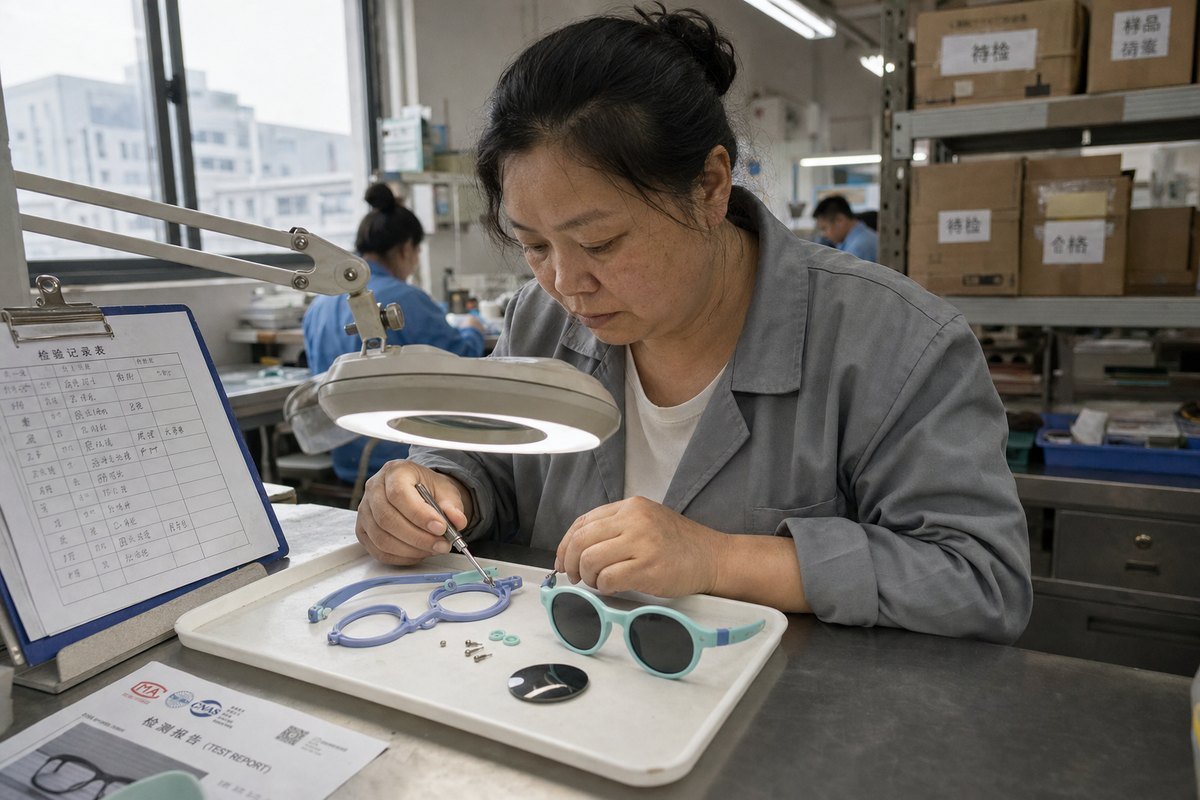
في الربيع الماضي، أرسلت مشترية بريدًا إلكترونيًا إلى مصنعنا في تايتشو في حالة ذعر: أصيب طفل بطفح جلدي، واتهم الوالدان مادة عدسة نظارات الأطفال الفثالات وإطلاق النيكل 1. هل كانت العدسة مذنبة حقًا؟ كان من الممكن أن يؤدي هذا الشكوى الوحيدة إلى إفلاس علامتها التجارية الناشئة. لقد حققنا في كل مكون قبل الإجابة.
نادرًا ما تسبب مادة عدسة نظارات الأطفال تفاعلات جلدية تحسسية بحد ذاتها. عدسات البولي كربونات والتريفكس خاملة إلى حد كبير. معظم التفاعلات هي التهاب الجلد التماسي الذي تسببه الإطارات، ومفصلات النيكل، ووسادات الأنف، والملدنات، ومثبتات الأشعة فوق البنفسجية، والأصباغ، أو طلاءات العدسات - وليس مادة العدسة الأساسية.
هذه الإجابة المختصرة تخفي الكثير من التفاصيل. أدناه، سأفصل المواد التي تسبب مشاكل بالفعل، وكيفية فحص الموردين، والشهادات التي تحمي علامتك التجارية.
ما هي المواد الأكثر احتمالاً لتسبب ردود فعل تحسسية في العدسات والإطارات لدى الأطفال؟
على مدار خمسة عشر عامًا من بناء نظارات الأطفال، تتبع فريق مراقبة الجودة لدينا تقريبًا كل شكوى طفح جلدي إلى جزء من الإطار أو طلاء - ونادرًا ما يكون إلى نواة العدسة نفسها.
النيكل في المفصلات والبراغي هو أكثر مسببات الحساسية شيوعًا في النظارات، يليه الملدنات ومثبتات الأشعة فوق البنفسجية والأصباغ الآزوية وPVC منخفض الدرجة في الإطارات. يمكن أن تسبب طلاءات العدسات والمونومرات المتبقية على العدسات الرخيصة تهيجًا للجلد أيضًا، بينما نادرًا ما تسبب نوى البولي كربونات والترايفكس حساسية حقيقية.
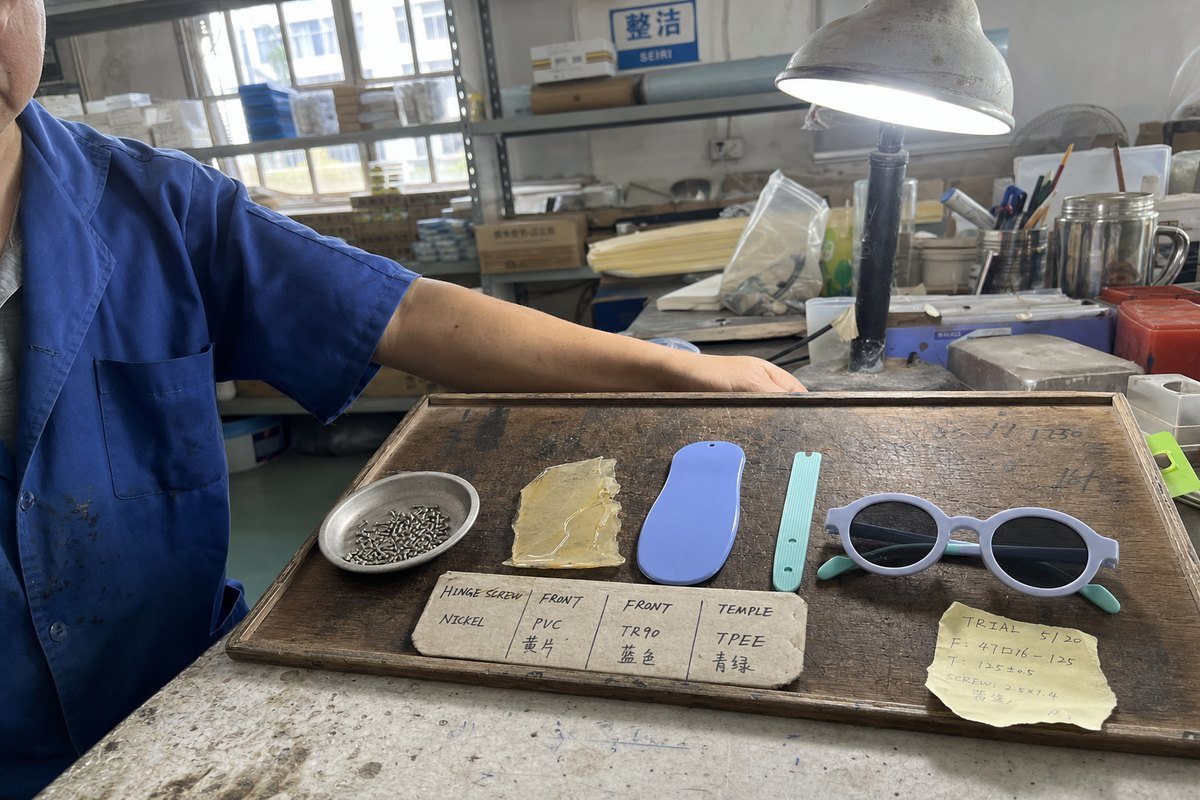
دعني أفصل هذا المكون تلو الآخر، لأن زوجًا من النظارات هو في الواقع تجميع صغير لكيمياء مختلفة جدًا.
العدسة: عادة ما تكون بريئة، ولكن ليس دائمًا
عدسات البولي كربونات 2 والتريفكس هي المعايير الصناعية للأطفال لأنها مقاومة للصدمات وخفيفة الوزن. البوليمرات نفسها مستقرة وتقع أمام العينين، بالكاد تلامس الجلد. لذا فإن سلامة عدسات التريفكس وسلامة البولي كربونات نادرًا ما تكون المشكلة. يأتي الخطر مما هو موجود على العدسة: طلاءات مقاومة للخدش، وطلاءات مرآة، وأصباغ تلوين، وعلى العدسات الرخيصة جدًا - "مونومرات حرة" متبقية بسبب المعالجة غير المكتملة. يمكن للعرق وواقي الشمس تنشيط هذه المخلفات حيث يلتقي حافة العدسة بخد الطفل.
الإطار: حيث تبدأ معظم المشاكل
لدى الأطفال طبقة قرنية أرق الطبقة القرنية 3 من البالغين. يمتص جلدهم المواد الكيميائية المتسربة بسهولة أكبر، ويسرع العرق والاحتكاك عند جسر الأنف وخلف الأذنين من التسرب. إليك كيف تتصنيف المواد الشائعة في تجربتنا:
| المكون | المادة النموذجية | خطر الحساسية | لماذا |
|---|---|---|---|
| المفصلات، البراغي | سبائك النيكل | مرتفع | حساسية النيكل 4 هي المحفز الكلاسيكي للنظارات |
| الإطارات الرخيصة | PVC مع الفثالات | مرتفع | تنتقل الملدنات إلى الجلد المتعرّق |
| ألوان الإطار | أصباغ الآزو، والدهانات | معتدل | يمكن أن تسبب الأصباغ والمذيبات حساسية |
| وسادات الأنف | سيليكون أو مطاط منخفض الجودة | معتدل | قد تسبب مسرعات المطاط تهيجًا |
| الإطارات عالية الجودة | TR90، TPEE، أسيتات السليلوز | منخفض | بوليمرات مستقرة، إضافات أقل |
| نواة العدسة | البولي كربونات، التريفكس | منخفض جدًا | خاملة؛ الطلاءات هي المتغير الحقيقي |
لاحظ أن النظارات الشمسية "البلاستيكية" غالبًا ما تخفي برغي مفصلة معدني صغير - مثل البرغي المرئي على إطاراتنا المستديرة الباستيل. إذا كان هذا البرغي يحتوي على النيكل ويلامس جلد الصدغ، فقد يسبب أعراض تهيج الجلد 5 على الرغم من أن الإطار آمن بخلاف ذلك.
كيف يمكنني تحديد ما إذا كان المورد الخاص بي يستخدم مواد آمنة وغير مسببة للحساسية للنظارات؟
طلب مني مدير مشتريات من أستراليا ذات مرة إثبات - وليس وعدًا - بأن إطاراتنا آمنة. غيّر هذا الحديث كيفية توثيقنا للمواد على خط الإنتاج الخاص بنا.
اطلب من الموردين إعلانات المواد التي تسمي البوليمر الدقيق، وتقارير اختبار الطرف الثالث لإطلاق النيكل، والفثالات، والمعادن الثقيلة، بالإضافة إلى أدلة تدقيق المصنع. يقدم الشركاء الحقيقيون وثائق لكل دفعة؛ الإجابات الغامضة مثل "بلاستيك صديق للبيئة" أو الادعاءات غير المؤكدة "مضادة للحساسية" هي علامات حمراء.
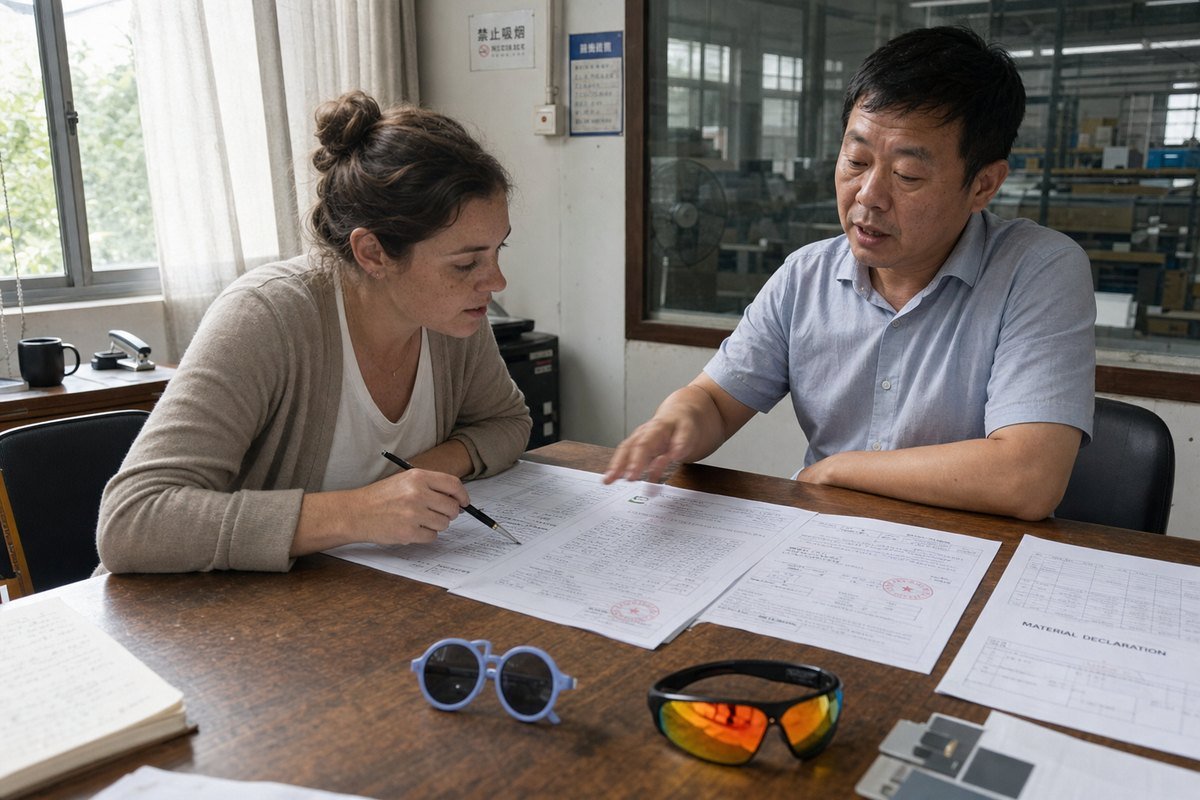
"مضاد للحساسية" هي كلمة تسويقية، وليست معيارًا منظمًا. يمكن لأي شخص طباعتها على بطاقة تعليق. لذلك يجب أن تتجاوز عملية التحقق الخاصة بك الملصق. إليك التسلسل الذي أوصي به للمشترين، لأنه يعكس ما يمكن للمصانع الجادة الإجابة عليه بالفعل.
عملية فحص الموردين بخمس خطوات
- اطلب اسم المادة الدقيق. ليس "بلاستيك ناعم"، بل TR90 (بولي أميد)، TPEE، أو أسيتات السليلوز، مع ورقة درجة مورد الراتنج. يجب ذكر المواد الخالية من BPA والبلاستيك الخالي من الفثالات كتابيًا.
- اسأل عن كل جزء يلامس الجلد على حدة. للإطار، أطراف الصدغ، وسادات الأنف المصنوعة من السيليكون، ومعدن المفصلات، والطلاء، وطلاء العدسة لكل منها كيمياء خاصة به. الإطار الآمن ببرغي نيكل لا يزال يمثل خطرًا.
- اطلب تقارير اختبار على مستوى الدفعة. يجب أن تأتي التقارير من مختبرات معترف بها وأن تكون حديثة - شهادة عمرها ثلاث سنوات لا تخبرك شيئًا عن الإنتاج الحالي.
- تحقق من التحكم في العمليات. اسأل كيف يمنعون بقايا إطلاق القوالب وتأكد من المعالجة الكاملة للعدسة. البلمرة غير المكتملة على العدسات منخفضة التكلفة تترك بقايا تفاعلية على السطح.
- قم بتدقيق المصنع أو قم بجولة فيديو فيه. ورشة عمل مُدارة بنظام 5S مع دفعات مواد قابلة للتتبع تتصرف بشكل مختلف تمامًا عن ورشة عمل تشتري راتنجًا معاد تدويره مختلطًا.
تحذير واحد من جانبنا: البلاستيك المعاد تدويره أو "المتجه إلى المحيط" عصري، ولكن الملوثات النزرة فيه تختلف من دفعة إلى أخرى. إذا كنت تريد قصة بيئية، فأصر على اختبار مكافئ للمواد البكر لكل دفعة، أو استخدم بوليمرات بكر معتمدة صديقة للبيئة بدلاً من ذلك.
هل يعتبر TPEE و TR90 بدائل أكثر أمانًا للأطفال ذوي البشرة الحساسة؟
هناك مفاضلة نزنها في كل مشروع جديد: مدى مرونة إطار الطفل مقابل مقدار الهيكل الذي يحتاجه. هذا السؤال هو بالضبط سبب توحيدنا على TPEE و TR90.
نعم. TR90 و TPEE من بين أكثر خيارات الإطارات أمانًا للأطفال الحساسين. كلاهما بوليمرات مستقرة لا تحتاج إلى ملدنات الفثالات، ولا تحتوي على النيكل، وتقاوم العرق، وتبقى مرنة بدون إضافات هشة - مما يقلل بشكل كبير من مسببات التهاب الجلد التماسي الموجودة في إطارات PVC أو المعدنية.
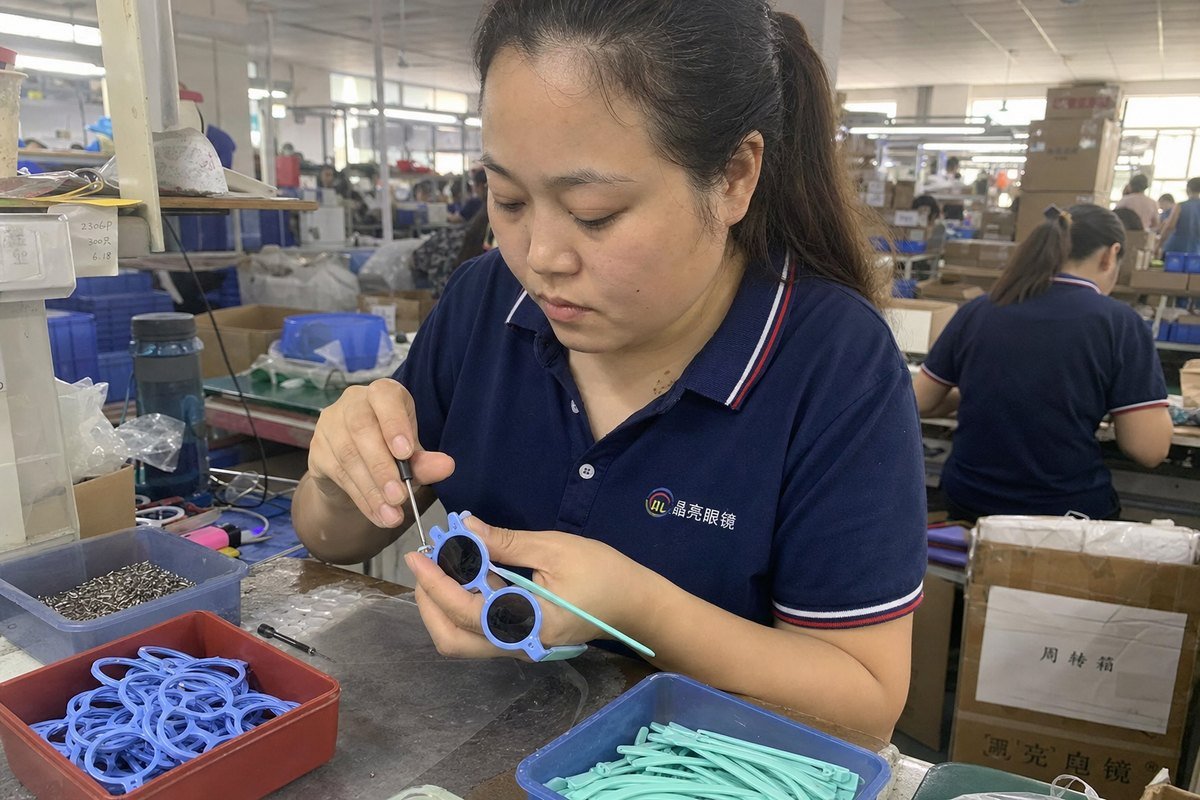
لماذا هذان المادتان مهمتان جدًا لخطر الحساسية؟ الإجابة تكمن في كيميائهما. تأتي العديد من ردود الفعل الجلدية من الإضافات التي تهاجر من البوليمر - الملدنات والمثبتات والملينات. TR90، وهو بوليمر حراري بولي أميد 6, ، مرن بطبيعته ومقاوم للصدمات، لذلك لا يحتاج إلى تحميل ثقيل بالملدنات. TPEE، وهو مطاط بوليستر حراري، مطاطي بطبيعته. يمنح شعورًا ناعمًا وقبضة على الصدغين بدون مسرعات المطاط التي تجعل بعض المطاطات مسببة للحساسية.
كيف تقارن المواد الرائدة الآمنة للأطفال
| خاصية | TR90 | TPEE | ممتاز - عودة الذاكرة | PVC (إطارات رخيصة) |
|---|---|---|---|---|
| المرونة | مرتفع | عالي جداً | منخفض - متوسط | يختلف |
| يحتاج إلى ملدنات | لا | لا | بعض | نعم، بكثافة |
| بناء خالٍ من النيكل ممكن | نعم | نعم | نعم | نعم، ولكن غالبًا ما يتم تجاهله |
| مقاومة العرق | ممتازة | ممتازة | جيد | ضعيفة بمرور الوقت |
| سلامة التأثير للأطفال | ممتازة | ممتازة | معتدل | ضعيف |
| خطر الحساسية النسبي | منخفض | منخفض | منخفض | مرتفع |
أفضل بناء للأطفال لدينا يجمع بين واجهة TR90 وصدغين TPEE. واجهة TR90 تحمل عدسات البولي كربونات بأمان، بينما تنحني أذرع TPEE خلف الأذنين الصغيرتين دون نقاط ضغط. ضغط أقل يعني احتكاكًا أقل، وتجمعًا أقل للعرق، وردود فعل أقل تهيجًا قد يخطئها الآباء على أنها حساسية. في الأنماط ذات المفصلات، نحدد أجهزة خالية من النيكل أو محمية، ونحافظ على الحد الأدنى من الطلاءات الزخرفية على التشطيبات غير اللامعة الباستيلية. يظل أسيتات السليلوز خيارًا محترمًا أيضًا، خاصة للإطارات البصرية، ولكن بالنسبة للأطفال الصغار النشطين، فإن TR90 و TPEE المرنين يتحملان المزيد من الإساءة.
ما هي الشهادات التي يجب أن أطلبها للتأكد من أن نظارات أطفالي الشمسية تم اختبارها ضد الحساسية؟
أدى إعداد وثائق التصدير لأكثر من عشرين دولة إلى تعليم فريقنا درسًا قاسيًا: الشهادة التي ينسى المشتري طلبها هي دائمًا الشهادة التي يطلبها الجمارك أو العميل في النهاية.
اطلب EN ISO 12312-1 أو ANSI Z80.3 لأداء النظارات الشمسية، و EN 71-3 أو CPSIA للمعادن الثقيلة والرصاص، والامتثال للائحة REACH التي تغطي الفثالات وإطلاق النيكل، بالإضافة إلى تقارير المختبر لـ BPA والكادميوم. معًا، تؤكد هذه الأمور سلامة ملامسة الجلد وحماية UV400.
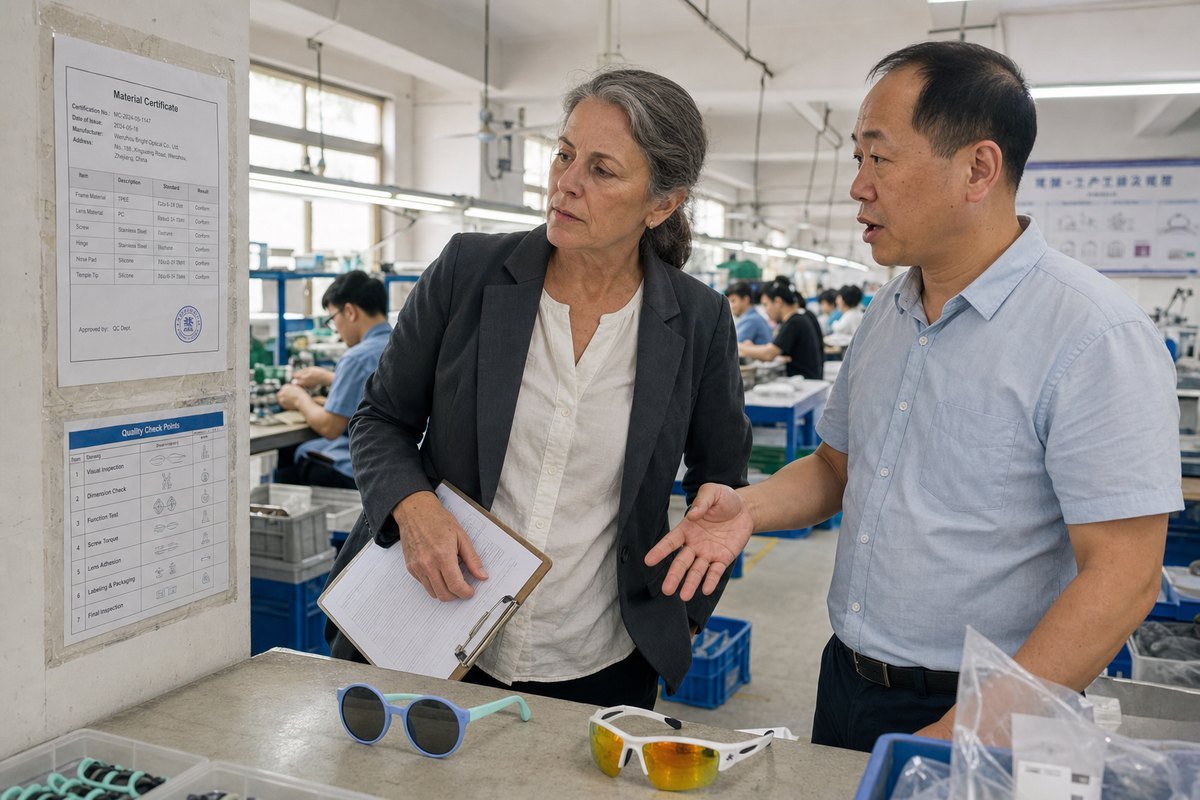
لا توجد شهادة واحدة تقول "تم اختباره للحساسية"، لأن خطر الحساسية يمتد عبر عدة لوائح. تحتاج إلى تجميع مجموعة صغيرة من المستندات التي تغطي المعادن والمواد الكيميائية والأداء البصري معًا. إليك قائمة التحقق التي نعدها لعملاء العلامات التجارية، منظمة حسب ما يثبته كل مستند بالفعل.
شرح مجموعة الشهادات
| الشهادة / الاختبار | المنطقة | ما تغطيه لخطر الحساسية |
|---|---|---|
| EN ISO 12312-1 | الاتحاد الأوروبي | سلامة النظارات الشمسية وأداء ترشيح UV400 |
| ANSI Z80.3 7 | الولايات المتحدة الأمريكية | متطلبات النظارات الشمسية غير الطبية |
| EN 71-3 (قريب من الألعاب) | الاتحاد الأوروبي | هجرة المعادن الثقيلة من المواد التي يلمسها الأطفال |
| قانون تحسين سلامة المنتجات الاستهلاكية | الولايات المتحدة الأمريكية | حدود الرصاص والفثالات في منتجات الأطفال |
| REACH (بما في ذلك إطلاق النيكل، SVHC) | الاتحاد الأوروبي | المواد الكيميائية المقيدة، الملدنات، هجرة النيكل |
| AS/NZS 1067 | أستراليا/نيوزيلندا | معيار النظارات الشمسية الإلزامي لهذا السوق |
| تقارير المختبر: BPA، الكادميوم، أصباغ الآزو | عالمي | يؤكد المواد الخالية من BPA والملونات الآمنة |
بعض الملاحظات العملية. أولاً، طابق المجموعة مع سوقك - تحتاج علامة تجارية أسترالية إلى AS/NZS 1067، بينما يعتمد المشتري الأوروبي على EN ISO 12312-1 و REACH. ثانيًا، اطلب أن تذكر التقارير رمز SKU المحدد ودفعة الإنتاج، وليس مجرد عينة مادة عامة. ثالثًا، تذكر أن الشهادات لا تحل محل الحكم الطبي. إذا أصيب طفل بـ أعراض تهيج الجلد المستمر, ، يجب على الآباء التوقف عن الاستخدام، وغسل المنطقة، واستشارة طبيب أمراض جلدية أو أخصائي طب عيون الأطفال. اختبار الرقعة هو الطريقة الوحيدة لتأكيد حساسية النيكل الحقيقية أو حساسية الإضافات. عندما يكون منتجك موصى به من قبل طبيب الأمراض الجلدية في الروح - مواد نظيفة، وثائق نظيفة - تنتهي هذه المحادثات بشكل جيد لعلامتك التجارية.
الخلاصة
نوى العدسات نادراً ما تسبب تفاعلات؛ الإطارات، وأجزاء النيكل، والطلاءات تفعل ذلك. اختر TR90 و TPEE، تحقق من المستندات لكل دفعة، وشارك مصنعًا يثبت - لا يعد - السلامة.
ملاحظات ختامية
نظرة عامة على لائحة REACH تغطي المواد المقيدة مثل الفثالات والنيكل. ↩︎
نظرة عامة شاملة على خصائص البولي كربونات، بما في ذلك مقاومتها العالية للصدمات واستخداماتها البصرية. ↩︎
وصف علمي للطبقة الخارجية
مقالات أخرى قد تعجبك


هل تبحث عن شريك موثوق به للنظارات للأطفال؟
استكشف أكثر من 800 نمط جاهز ودعم OEM/ODM كامل مصمم خصيصًا لعلامتك التجارية.
اتصل بنا English
  Español de México
  Deutsch
  Français
  日本語
日本語  العربية
  Português do Brasil