How to Verify CPSIA Phthalate Compliance for Kids’ Sunglasses Parts from China?
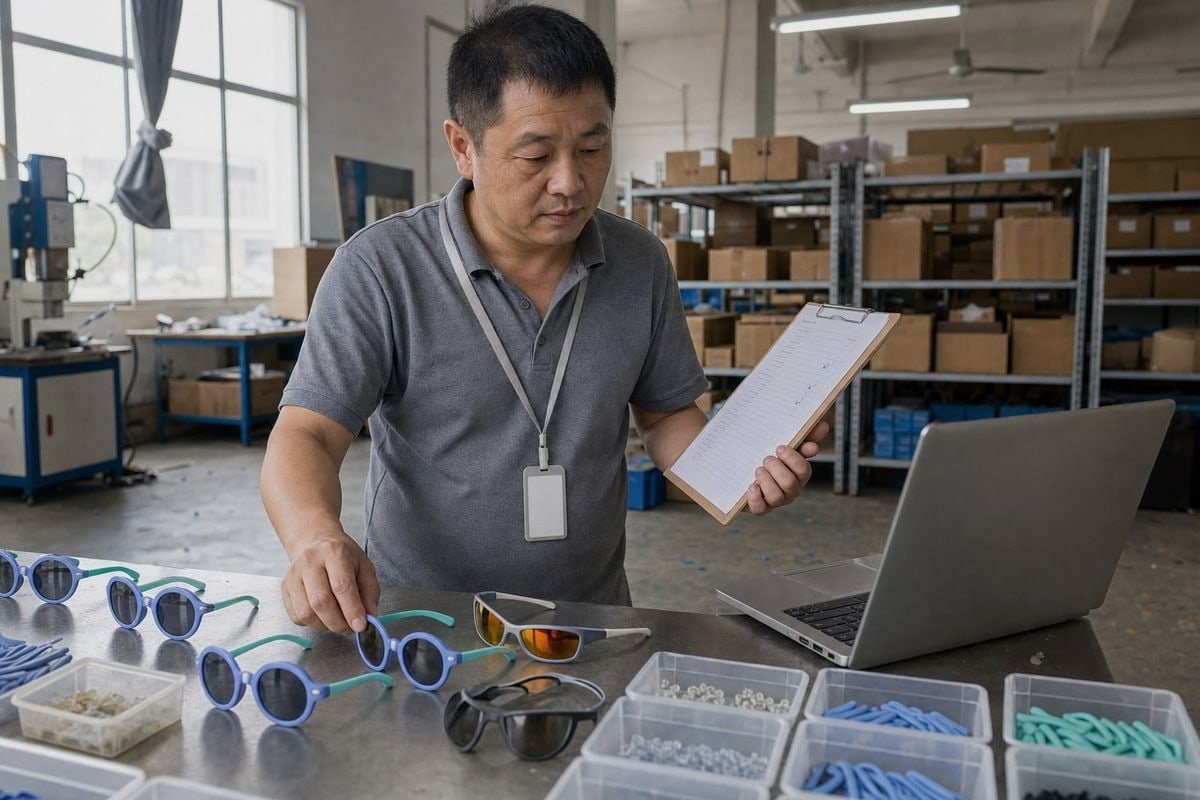
Verifying CPSIA phthalate compliance for kids’ sunglasses parts feels overwhelming when your supplier is thousands of miles away. On our Taizhou production line, we see that anxiety in almost every new buyer inquiry.
To verify CPSIA phthalate compliance for kids’ sunglasses parts from China, request a full bill of materials, identify all accessible plasticized components, test them at a CPSC-accepted laboratory against the 0.1% (1,000 ppm) limit for eight restricted phthalates, then issue a Children’s Product Certificate.
That is the short answer. Now let me walk you through exactly how to do it, step by step, based on what actually works with China-based factories.
What documents should I request from my China supplier to confirm CPSIA phthalate compliance?
Last year, a buyer from Australia asked our team for "the CPSIA certificate" for a TR90 kids frame. We had to explain gently: compliance is a file, not a single paper.
Request a complete bill of materials with resin declarations, a third-party testing report from a CPSC-accepted laboratory referencing 16 CFR Part 1307, component-level material data sheets, tracking label details, and factory records supporting a supplier compliance audit. The importer then issues the Children's Product Certificate (CPC).
The biggest mistake I see is treating one PDF as proof. A defensible compliance file is a chain of evidence. Each document supports the next one. If any link is missing, U.S. Customs or the CPSC can challenge the whole shipment.
مجموعة المستندات الأساسية
Here is the document package we prepare for our own B2B customers, and what each item proves:
| وثيقة | ما تثبته | Who provides it |
|---|---|---|
| Bill of materials (BOM) | Every part, resin type, colorant, and coating is identified | Factory |
| Material declarations / RSL statements | Each material is screened against a Restricted Substances List (RSL) | Factory + resin supplier |
| Third-party testing report | Accessible parts meet the 1,000 ppm phthalate limits in 16 CFR Part 1307 1 | معتمدًا من لجنة سلامة المنتجات الاستهلاكية |
| Lead and heavy metals results | Lead in substrate materials and surface coatings is within limits | معتمدًا من لجنة سلامة المنتجات الاستهلاكية |
| Tracking label confirmation | Product and packaging meet tracking label requirements | Factory + importer |
| شهادة منتجات الأطفال 2 (CPC) | Legal certification tying everything together | U.S. importer of record |
One point buyers often get wrong: the CPC must be issued by the U.S. importer of record, not by us in China. The law holds you, the importer, liable. We supply the test evidence and BOM data, but you certify. We also remind customers that CPC data now needs to flow into the U.S. Customs ACE eFiling 3 system at entry, so your certificate details must be accurate and ready before the shipment sails, not after.
Finally, ask for the supporting documents behind the report. A serious factory can show which production batch the tested samples came from. If a supplier cannot connect the report to your actual order, treat that as a warning sign.
Which sunglasses components do I need to test for phthalates under CPSIA rules?
When we break down a kids' sunglasses design in our 5S workshop, we count parts the way a lab does: frame front, temples, temple tips, nose pads, hinges, lenses, coatings, prints, and any strap.
Test all accessible component parts made from plasticized or soft materials — nose pads, soft temple tips, rubberized coatings, straps, and flexible decorative inserts. Hard parts made from CPSC-exempt plastics like polypropylene or ABS generally do not require third-party phthalate testing, but confirm the actual resin used.
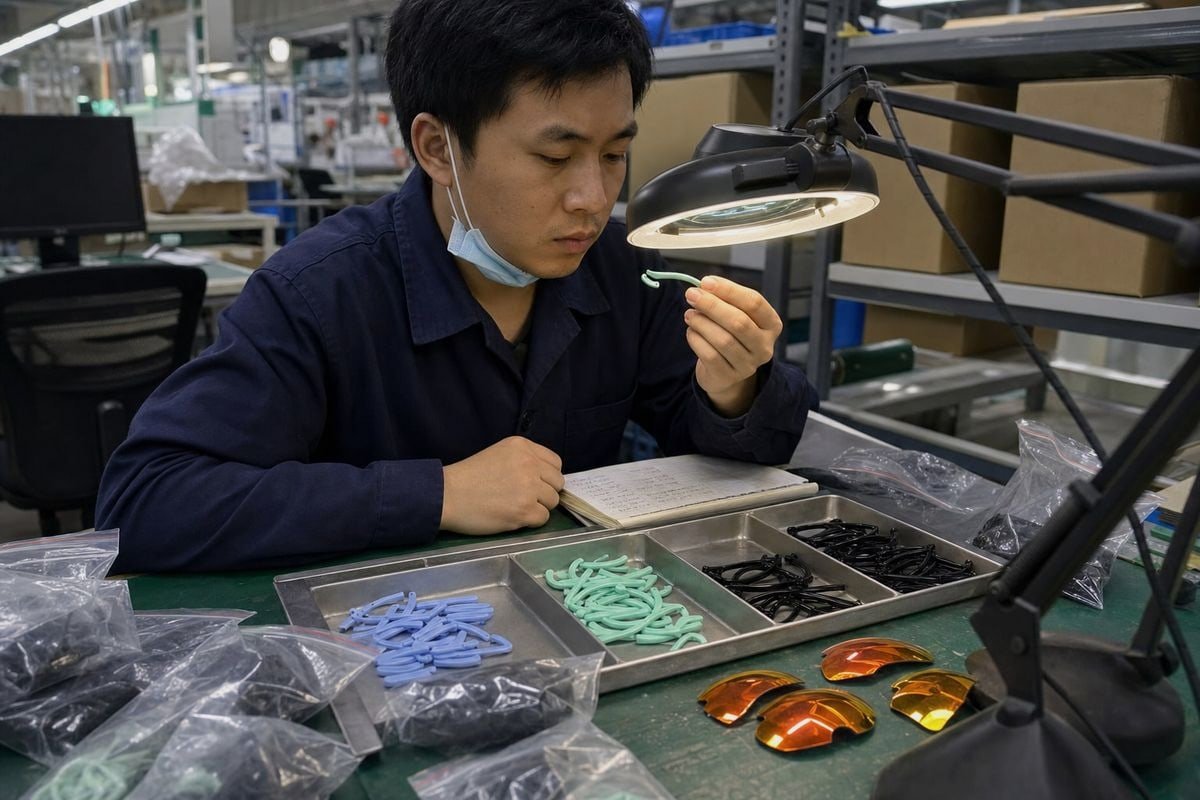
Phthalate compliance is not a single pass/fail for the whole product. CPSIA Section 108 and 16 CFR Part 1307 restrict eight الفثالات 4 — DEHP, DBP, BBP, DINP, DIBP, DPENP, DHEXP, and DCHP — to 0.1% in accessible component parts of covered children’s products. The word "accessible" matters. Accessibility is judged on the finished product, including foreseeable use and abuse by a child, not on a loose part in a bin.
Risk levels by component
Think of a kids' sunglasses design in three risk tiers. Take a typical children's style like our round two-tone frames with soft-touch temples: the soft parts carry nearly all the phthalate risk.
| Risk level | Typical components | لماذا |
|---|---|---|
| Higher risk | Soft nose pads, rubberized temple tips, PVC/vinyl straps, soft-touch inserts, imitation leather trim | Plasticizers are added intentionally to make these parts flexible |
| Borderline | Coatings, printed logos, adhesives, flexible hinge covers | May contain plasticizers depending on formulation; needs material-specific review |
| Lower risk | Hard frames in exempt plastics (PP, PE, ABS, GPPS, HIPS), metal hinge screws, rigid lenses | CPSC has determined certain plastics do not require third-party phthalate testing |
Here is the nuance buyers miss: an exempt resin does not make the whole product exempt. If your frame is genuine TR90 but the temple tips are soft PVC, the tips still need testing. In our own designs, we favor TPEE for flexible temples precisely because it gives child-safe softness without relying on phthalate plasticizers — but we still test, because the rule follows the material actually molded, not the material on the spec sheet.
Also remember phthalates are only one lane. A children's product file usually covers lead in substrate materials, lead in paint, and where applicable ASTM F963-17 5 toy safety points, so plan your lab quote around the full scope.
How can I verify my supplier's test reports are accurate and not falsified?
A distributor once forwarded us a competitor's report to "match." The report listed a resin the factory did not even stock. That taught me: verification beats trust, every time.
Verify the laboratory appears on the CPSC's accepted laboratory list, confirm the report directly with the lab using its report number, check the tested sample matches your exact part and color, confirm the method is CPSC-CH-C1001-09.4, and cross-check results against your BOM.
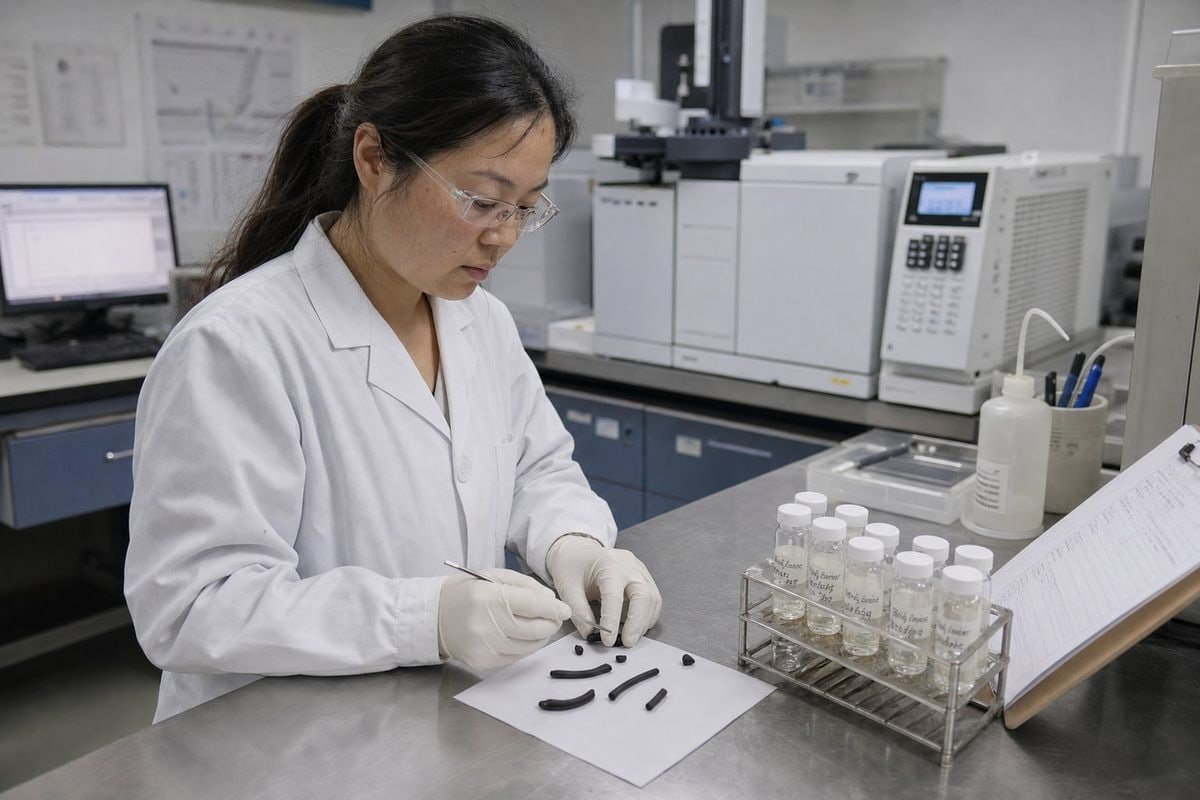
A factory's internal test result — even from a good in-house lab — cannot support your CPC. Certification must rest on a third-party testing report from a CPSC-accepted laboratory. So your first check is simple: search the lab's name on the CPSC's public list of accepted labs CPSC-accepted laboratory list 6 and confirm its accreditation scope covers phthalate testing.
A practical verification workflow
- Confirm the lab is CPSC-accepted for the specific test, not just ISO 17025 7 accredited in general.
- Contact the lab directly. Reputable labs will confirm whether a report number, date, and applicant name are genuine. Falsified reports usually fail this step.
- Match the sample description. The report should name the exact component, material, and color — "blue TPEE temple tip" — not just "plastic sunglasses."
- Check the method and limits. Look for CPSC-CH-C1001-09.4 and results reported against 0.1% (1,000 ppm) for each of the eight phthalates individually.
- Cross-check the BOM. Every accessible soft part on your BOM should map to a tested material or a documented exemption.
- Watch the dates. A report older than your material or design change may no longer represent your product. Component samples must be identical in all material respects to what ships.
Under 16 CFR 1109, component part testing lets you reuse one material's result across multiple models — a real cost saver when a factory like ours runs the same TPEE temple compound across dozens of our ~800 styles. But the certification paperwork must include the information 16 CFR 1109.5(g) requires, so the reused report still traces to your product.
For high-volume programs, some buyers add extra layers: random re-testing of production batches, on-site IR spectroscopy to fingerprint incoming resin against the tested master sample, and risk-based screening that focuses lab spend on the highest-risk material-supplier combinations. A supplier compliance audit at the factory — checking resin storage, batch records, and change control — closes the loop between paper and production.
What steps should I take if a batch fails CPSIA phthalate testing?
Early in our export history, a decorative soft insert from a sub-supplier failed a customer's pre-shipment screen. We quarantined the lot the same day. What we learned then still shapes our incoming-material controls now.
Stop the shipment immediately, quarantine the affected batch, identify the failing component and its material source, re-test suspect parts at a CPSC-accepted laboratory, replace or reformulate the material, verify the corrected batch with new testing, and update your CPC before any goods move.

A failure is bad news, but an unmanaged failure is far worse. If non-compliant kids' sunglasses reach U.S. commerce, you face potential recalls, CPSC penalties, and customs seizures — all under the importer's name, not the factory's. So treat a failed result as a controlled incident with a clear sequence.
Containment, root cause, and correction
| Phase | إجراء | Goal |
|---|---|---|
| Contain | Hold the batch at the factory or warehouse; flag related lots and shared molds | Prevent non-compliant goods from entering commerce |
| Diagnose | Trace the failing part to its resin lot, masterbatch, coating, or sub-supplier | Find where the phthalate entered the supply chain |
| Correct | Swap the material, change the sub-supplier, or reformulate; update the BOM | Remove the root cause, not just the symptom |
| Verify | Re-test the corrected component at a CPSC-accepted lab; consider testing a second sample set | Prove the fix works in real production |
| وثيقة | Record the failure, the corrective action, and the new report in your compliance file; refresh the CPC | Keep the certification tied to the shipped configuration |
Two points deserve emphasis. First, do not "test until it passes." Re-testing the same suspect batch at different labs, hoping for a pass, destroys your legal position if the product is later challenged. Fix the material, then test the fix. Second, dig into cross-contamination. In our experience, failures often come from a sub-supplier's recycled regrind, a colorant carrier, or a shared mixing line — not the primary resin. That is why we lock approved material sources for children's product orders and require change notification from every sub-supplier.
Also negotiate the commercial side before the crisis. Your purchase agreement should state who pays for re-testing, rework, and delays after a failure. Serious factories accept this; it aligns everyone on getting the material right the first time.
الخلاصة
CPSIA phthalate compliance for kids' sunglasses is a chain: full BOM, accessibility analysis, CPSC-accepted lab testing, and a solid CPC. Build that chain with your factory, and every shipment clears with confidence.
ملاحظات ختامية
1. Official eCFR legal text for phthalate regulations. ↩︎
2. CPSC’s official guidance page explaining certification requirements for children’s products. ↩︎
3. CBP’s official page on the Automated Commercial Environment system for import filings. ↩︎
4. EPA overview of phthalate chemicals, their uses, and health considerations. ↩︎
5. Background on the standards organization behind the referenced toy safety standard. ↩︎
6. Official CPSC database buyers use to verify testing laboratory accreditation status. ↩︎
7. Stable, authoritative overview of the laboratory standard. ↩︎
مقالات أخرى قد تعجبك
August 1, 2026
هل يجب على المصنع التعامل مع تغليف ووضع ملصقات نظارات الأطفال الشمسية، أم استخدام مورد مخصص؟
August 1, 2026
مستودع خاص مقابل الوفاء المباشر من المورد: أيهما يقلل تكاليف الإرجاع لعلامات نظارات الأطفال الشمسية؟
August 1, 2026
مباشر إلى ميناء المستودع أو التخزين الخارجي: أيهما يوفر أكثر على شحن نظارات الأطفال الشمسية؟
هل تبحث عن شريك موثوق به للنظارات للأطفال؟
استكشف أكثر من 800 نمط جاهز ودعم OEM/ODM كامل مصمم خصيصًا لعلامتك التجارية.
اتصل بنا English
  Español de México
  Deutsch
  Français
  日本語
日本語  العربية
  Português do Brasil