How Can Try-On Videos Reduce D2C Returns for Kids’ Sunglasses Fit Issues?
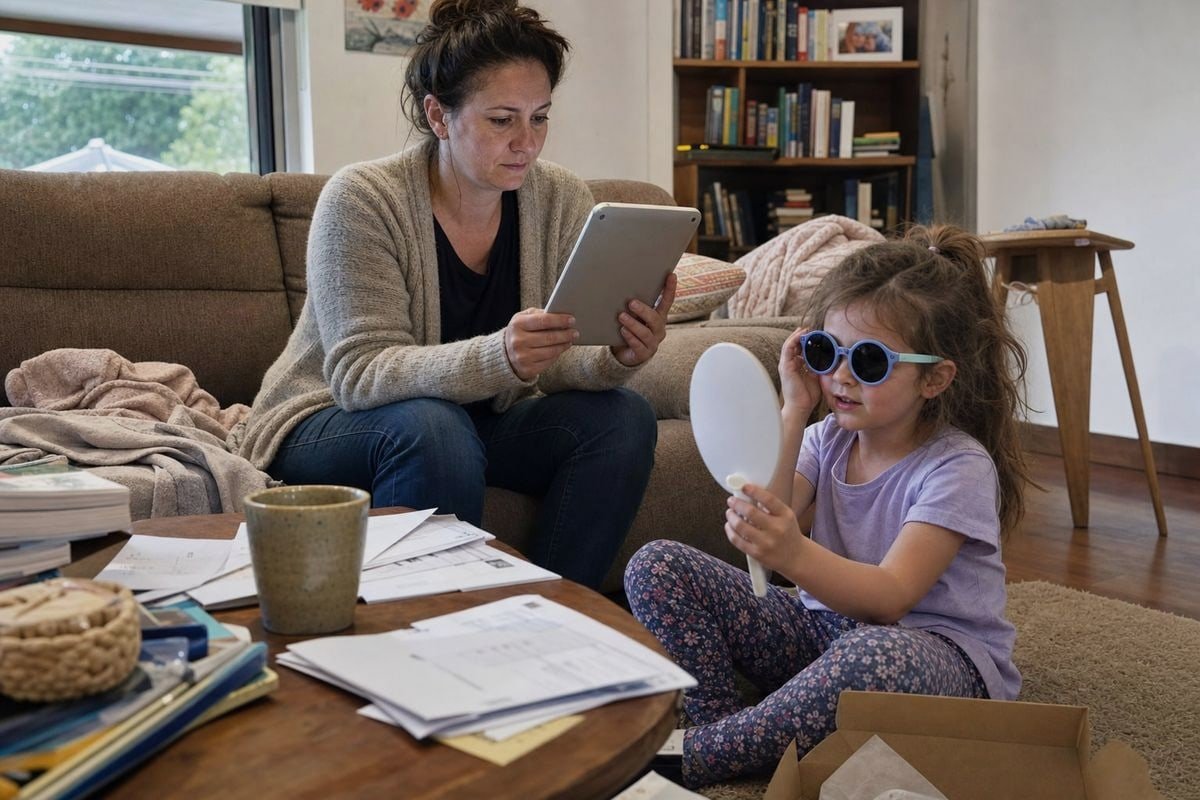
Try-on videos reduce D2C returns for kids’ sunglasses because parents finally see real fit before buying. On our production line in Taizhou, we hear this pain from D2C brands constantly.
Try-on videos reduce D2C returns for kids’ sunglasses by showing fit, scale, and coverage on a real child’s face before checkout. Multi-angle clips with movement, paired with frame measurements and age guidance, cut uncertainty-driven returns — often by 25–30% in fit-sensitive eyewear categories.
Static photos hide proportions. Parents guess, buy, and return. Below, I break down how to use try-on videos properly, what to film, and how to work with your factory to produce them.
How Can I Use Try-On Videos to Show Parents Accurate Fit Before They Buy?
A buyer from Australia once told me her top return reason was simply "too big for my daughter's face." Our samples were fine. Her product page was the problem.
Show the sunglasses on child models in narrow age brackets, film front, side, and three-quarter views with head movement, and place the video beside your size chart. This lets parents judge bridge fit, temple length, and lens coverage accurately before they buy, which directly improves sizing accuracy.
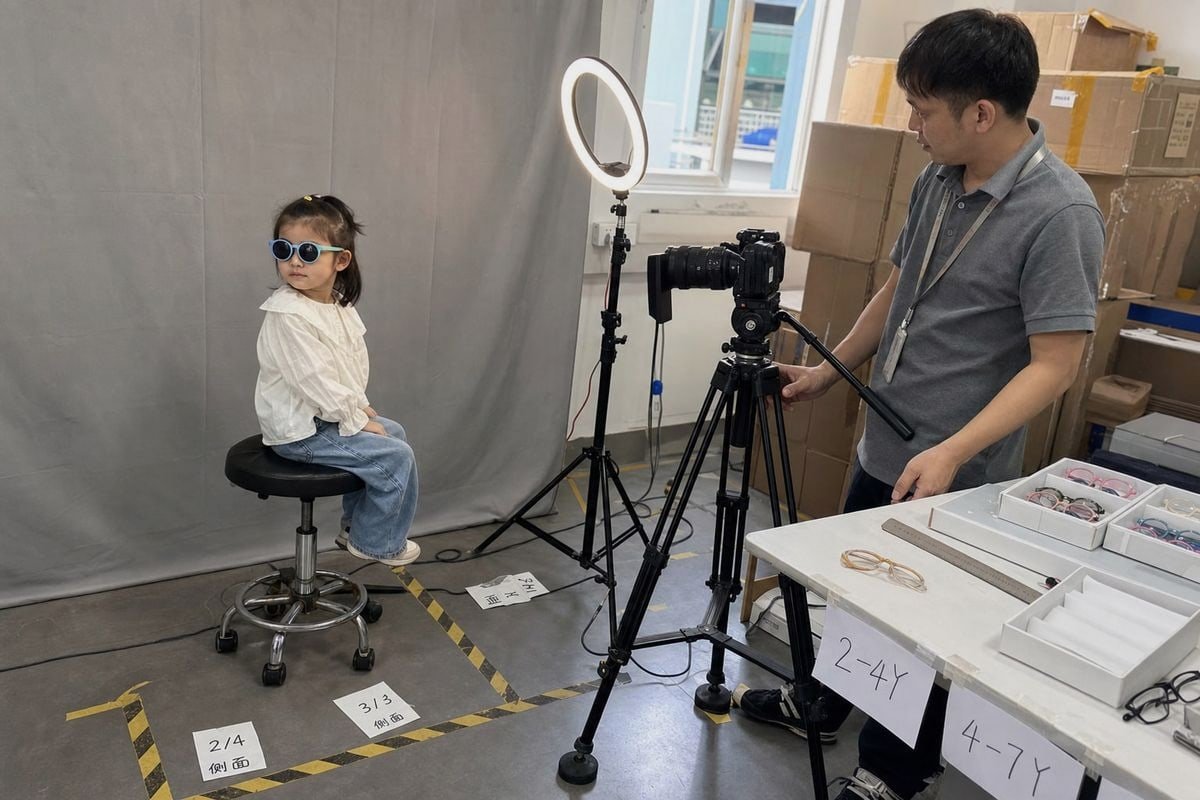
The core problem is that a child's face is not a scaled-down adult face. Kids often have flatter nose bridges, shorter temples-to-ear distances, and wider variation between ages. A photo on a white background tells a parent nothing about any of that. In our fifteen years making children's frames, we have measured thousands of samples, and I can tell you that a frame for a two-year-old and a frame for a seven-year-old are completely different products, even if they look similar in a catalog photo.
Match Video Assets to Age Brackets
Age-appropriate sizing only works when parents can self-select. So film separate try-on clips for granular brackets, not one generic "kids" video.
| Age Bracket | What the Video Should Prove | Key Frame Measurements to Display |
|---|---|---|
| 6–24 months | Soft, flexible frame; strap option stays on | Lens width, bridge width |
| 2–4 years | Frame does not slide on a flat nose bridge | Bridge width, temple length |
| 4–7 years | Coverage protects eyes at play angles | Lens height, total frame width |
| 8–12 years | Style looks age-appropriate, not babyish | Total frame width, temple length |
Use Scale References
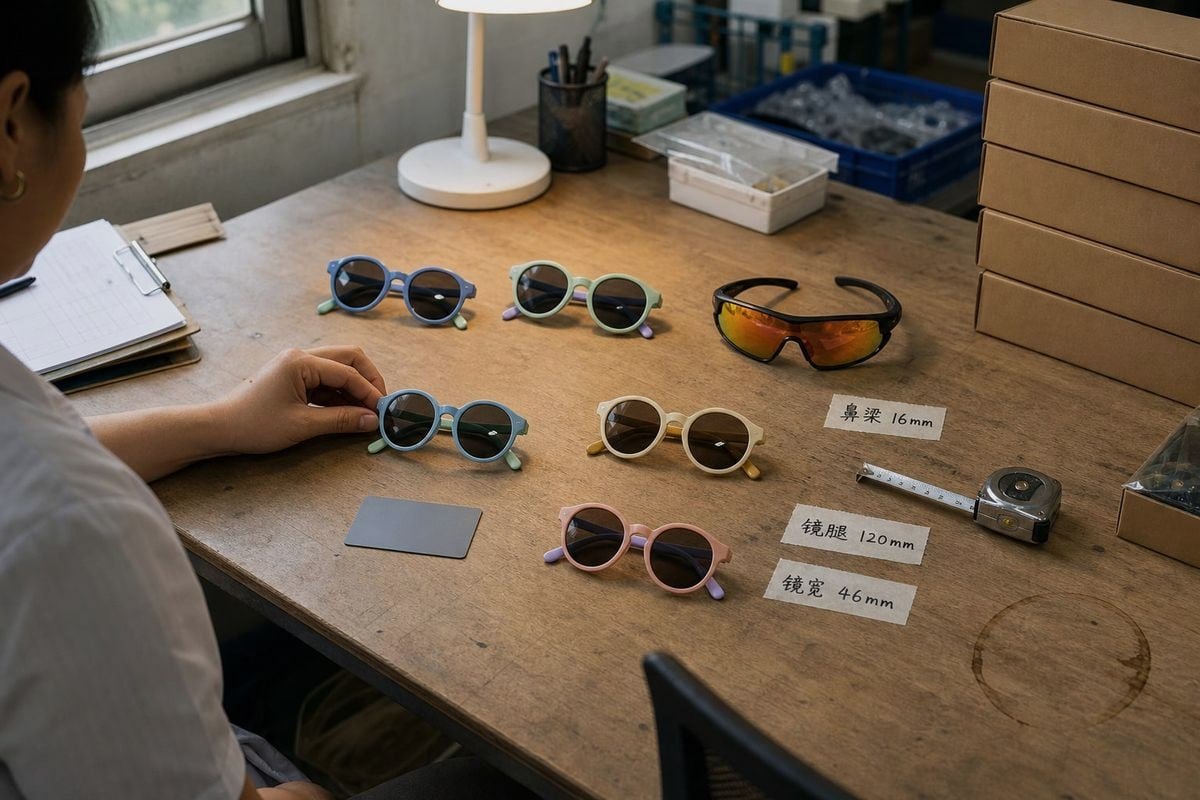
One trick that works well is comparative scale benchmarking. Place a familiar object — a credit card works — in the opening frame. It gives parents an undeniable physical reference. Combine that with on-screen frame measurements, and you remove the "misleading scale" problem that static photos create. Then add rotation shots. A 360-degree view shows frame wrap and bridge contact in a way no 2D image can. This is where customer purchase confidence is actually built: not through claims, but through visible proof.
What Should I Include in a Try-On Video to Highlight Flexible TPEE and TR90 Comfort?
There is a trade-off I weigh in every project: flexibility versus structure. معابد TPEE 2 bend safely; TR90 fronts hold shape. Your video needs to demonstrate both, on camera.
Include a flex demonstration where hands twist and bend the frame, close-ups of TPEE temples and TR90 material texture, an active-play stress test with jumping and head shaking, and a parent easily fitting the glasses on a moving child. Show comfort, safety, and grip visually.
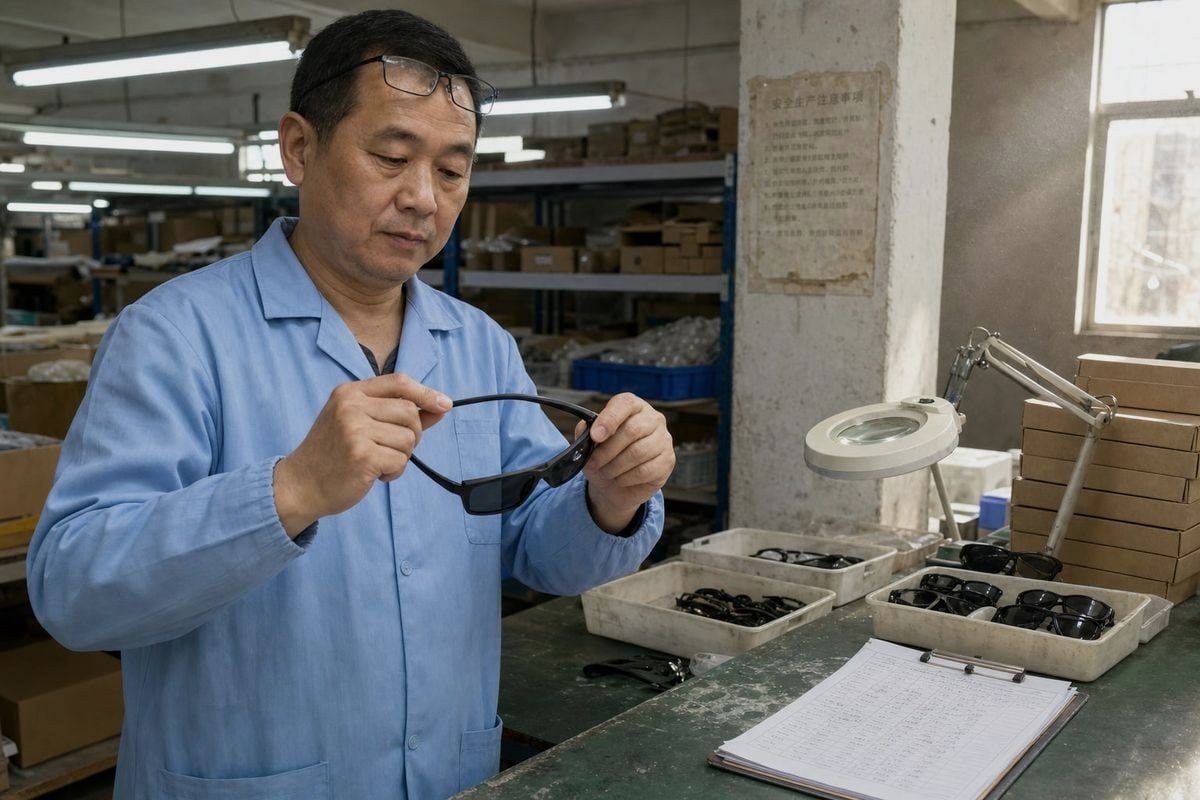
When we developed our TR90 frames with TPEE temples, the whole point was that a child could sit on them, twist them, or yank them off sideways without the frame snapping or hurting the face. But parents cannot feel that through a screen. Video is the only medium that proves material behavior. A photo of a bent frame looks broken. A video of a frame bending and springing back looks safe.
The Four Shots That Sell Flexible Materials
- The twist test. Hands twist the frame 90 degrees and release it. The frame returns to shape. This one clip answers the durability question that triggers many pre-emptive returns.
- The macro close-up. High-definition footage of the matte TPEE surface and hinge area shows there are no sharp edges or exposed metal near the skin. Think of our round two-tone frames — periwinkle front, mint temples — where the soft-touch finish is a selling point you can only see up close.
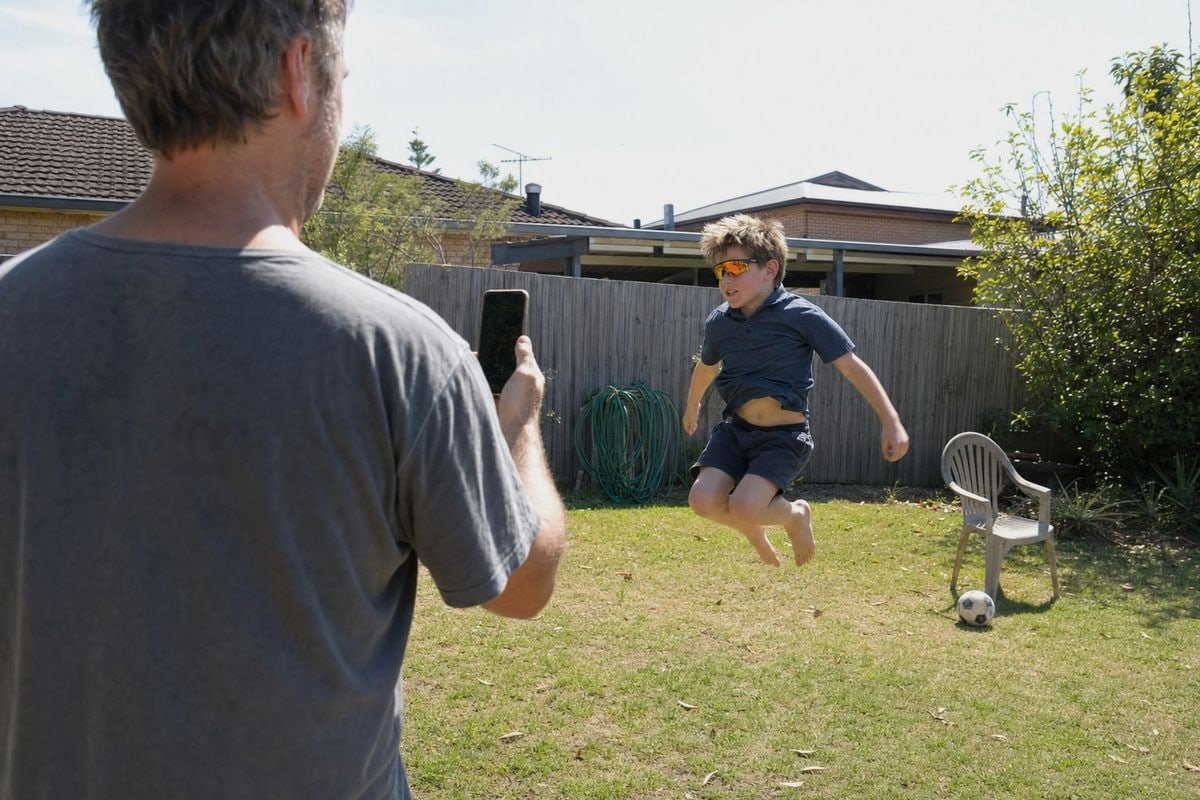
- The active-play stress test. A child jumps, runs, and shakes their head. The frame stays put. For our sport wraparound styles with mirrored gradient shield lenses, this clip also shows how the contoured temple tips and nose bridge cutout keep coverage stable during activity.
- The parental ergonomic demo. A parent slides the glasses onto a squirming toddler in two seconds. Ease of use prevents post-purchase frustration, which is a quiet driver of returns.
| Material Feature | How to Show It on Video | Return Reason It Prevents |
|---|---|---|
| TPEE temple flexibility | Twist-and-release demo | "Worried it will break" |
| TR90 lightweight front | On-face wear during long play | "Uncomfortable, child refuses to wear" |
| Wraparound lens coverage | Side-angle sun exposure shot | "Not enough UV protection" |
| Soft temple tips and grip | Head-shake stability test | "Keeps sliding off" |
Always end these clips with the UV400 or polarized lens spec 3 on screen. Comfort gets the child to wear them; protection gets the parent to keep them.
Can Try-On Videos Help Me Lower Return Rates Without Adding Extra Production Costs?
A lesson I learned early in exporting to Europe: brands overspend on studio content before validating what actually moves the needle. Return rate reduction does not require a film crew.
Yes. Start with smartphone-shot try-on clips on your top three SKUs, reuse footage across product pages, ads, and social channels, and encourage user-generated content from customers. Measure return rates over 60–90 days against control SKUs before spending on advanced virtual try-on technology.
Let me address the skeptical view head-on, because I hear it from procurement managers: "Try-on content is overhyped as a return fix." That objection is half right. Video will not fix bad sizing, defects, or shipping damage. It reduces only the uncertainty-driven share of returns. But in kids' eyewear, that share is usually the biggest slice. Reported results in eyewear range from 20–40% return reduction with try-on assets, and even the cautious estimate — 10–25% of fit-driven returns avoided — often pays for itself once you count reverse logistics costs, repackaging, and lost margin on each returned pair.
Run a Lightweight 90-Day Pilot
The current best practice is not catalog-wide deployment. It is a pilot on top sellers with clear KPIs.
| KPI | What It Tells You |
|---|---|
| Return rate: video SKUs vs. control SKUs | Direct measure of return rate reduction |
| Return reason mix (fit/style share) | Whether uncertainty returns specifically dropped |
| Add-to-cart and conversion rate | Conversion rate optimization impact |
| Video engagement rate | Whether shoppers actually watch the asset |
| Net margin after content costs | The real ROI answer |
Stack Free Multipliers
User-generated content 4 is the cheapest asset you will ever get. Real children with diverse face shapes validate fit better than professional models do. Ask for video reviews in your post-purchase email, and feature the best clips on product pages. Some brands go further with AI-matched video libraries or a virtual fitting room 5 that overlays frames on an uploaded photo. Those tools are powerful, but they belong in phase two — after your pilot proves that fit content changes buyer behavior on your traffic.
One vendor case reported returns dropping from 35% to 19% with conversion rising from 2.1% to 2.8%. Treat numbers like that as illustrative, not guaranteed. Your own A/B test is the only number that matters.
How Do I Work With My Manufacturer to Create Try-On Content for a New Kids' Sunglasses Line?
Last spring, a Japanese kids' brand asked us for pre-shipment samples in every colorway two months early — specifically to film launch content. That request changed how we plan sampling timelines.
Request early physical samples in final colors, ask your factory for frame measurements, material specs, and flex-test footage, align on age-bracket sizing data, and schedule content production before your launch inventory ships. A capable OEM/ODM partner supplies the technical inputs your videos need.
At our factory, we support this in a few concrete ways, and any experienced supplier should do the same. First, styles. We keep roughly 800 existing frames buyers can choose from, which means a new D2C brand can pick five styles, get samples fast, and start filming try-on content without waiting for mold development 6. That lowers both launch risk and content lead time. Second, data. Every style has documented frame measurements — lens width, bridge width, temple length — and recommended age brackets. Put those numbers on screen in your videos and next to your size chart. Sizing accuracy in your content starts with sizing accuracy from your factory.
A Practical Collaboration Sequence
- Select styles and confirm target ages. Decide which SKUs get video first — usually your hero styles, like a sport wraparound shield for active kids and a soft round frame for toddlers.
- Order salesman samples in final colors and finishes. Custom colors, logos, and lenses should match production exactly, or your video will mislead buyers and cause the very returns you are trying to prevent.
- Request factory-side technical footage. We regularly shoot flex tests and QC checks in our ورشة عمل مدارة بنظام 5S 7 for clients. This behind-the-scenes material builds trust content for free.
- Film try-on content during the production window. Your bulk order takes weeks to produce and ship. Use that window to shoot, edit, and build product pages, so videos go live the day inventory lands.
- Feed learnings back to the factory. Share your return-reason data with your supplier. If temples run long for your market, a good OEM partner adjusts on the next run.
Virtual try-on technology can layer on top later, but it depends on accurate 3D-ready product data — another reason to work with a factory that documents specs properly rather than a trader reselling unknown goods.
الخلاصة
Fit uncertainty quietly drains D2C margin. Try-on videos make kids' sunglasses fit visible before checkout, and paired with accurate factory data, they turn returns into repeat customers.
ملاحظات ختامية
1. CPSC oversees safety standards relevant to children’s products including protective eyewear. ↩︎
2. Explains the flexible polymer class used in kids’ frame temples for safety and comfort. ↩︎
3. Official FDA consumer update providing guidance on sunglasses safety and UV protection standards. ↩︎
4. Background on why customer-created content builds trust and lowers marketing costs. ↩︎
5. Virtual fitting rooms rely on augmented reality overlays to simulate product try-on. ↩︎
6. Alibaba connects brands to manufacturers for tooling and mold development sourcing. ↩︎
7. Authoritative government resource explaining the 5S methodology for lean manufacturing and workplace organization. ↩︎
مقالات أخرى قد تعجبك
August 1, 2026
هل يجب على المصنع التعامل مع تغليف ووضع ملصقات نظارات الأطفال الشمسية، أم استخدام مورد مخصص؟

August 1, 2026
مستودع خاص مقابل الوفاء المباشر من المورد: أيهما يقلل تكاليف الإرجاع لعلامات نظارات الأطفال الشمسية؟

August 1, 2026
مباشر إلى ميناء المستودع أو التخزين الخارجي: أيهما يوفر أكثر على شحن نظارات الأطفال الشمسية؟
هل تبحث عن شريك موثوق به للنظارات للأطفال؟
استكشف أكثر من 800 نمط جاهز ودعم OEM/ODM كامل مصمم خصيصًا لعلامتك التجارية.
اتصل بنا English
  Español de México
  Deutsch
  Français
  日本語
日本語  العربية
  Português do Brasil