How to Schedule Kids’ Sunglasses Production Lead Times for Weekly Restocking?
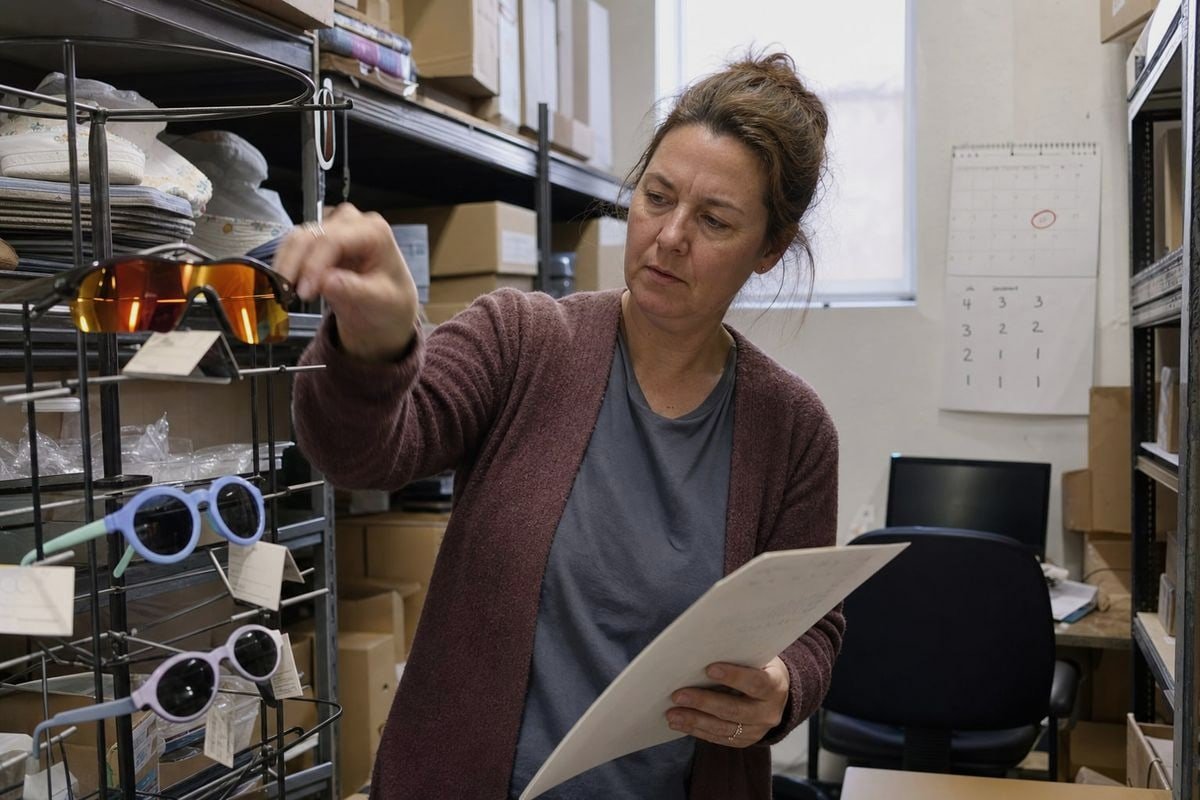
Scheduling kids’ sunglasses production lead times for weekly restocking trips up many buyers who work with our Taizhou factory TR90 and TPEE 1. Orders arrive late, shelves sit empty, and summer sales vanish fast.
To schedule kids’ sunglasses production lead times for weekly restocking, work backward from your shelf date: subtract shipping, QC, and production time, then set SKU-level reorder points based on weekly sales velocity plus safety stock. Weekly restocking is an inventory strategy, not a manufacturing promise.
That sounds simple, but the details matter. Let me walk you through each step, using real numbers from our production floor.
How can I calculate accurate lead times for weekly kids' sunglasses restocking orders?
A buyer from Australia once asked me why her "30-day lead time" turned into 52 days. The answer was hiding in the stages nobody had broken down for her.
Calculate total lead time by adding four stages: material sourcing, production, quality inspection, and shipping with customs. Ready stock takes 3–15 days, semi-custom 20–35 days, and full OEM orders 30–90 days. Never accept a single vague number from a supplier.
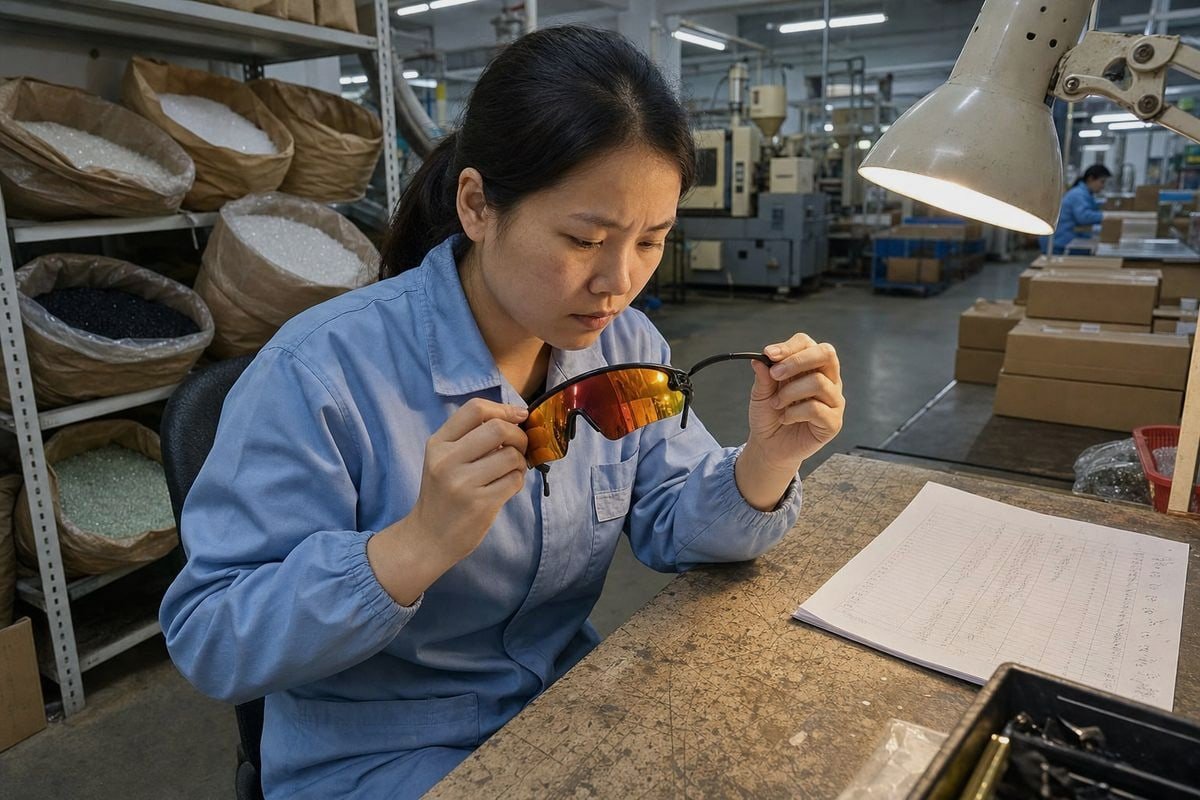
The biggest mistake I see is treating lead time as one number. It is actually a chain of stages, and each stage can slip on its own. When buyers ask us for "30 days," we always break it into pieces. That way, both sides know exactly where an order sits at any moment.
The four stages of a real lead time
Every kids' sunglasses order moves through the same sequence. First, materials. TR90 pellets and TPEE for temples are usually available, but special lens coatings, like the mirrored gradient shields on our sport wraparound styles, can add sourcing days. Second, production itself. Third, مراقبة الجودة 2, which we never rush because these frames sit on children's faces. Fourth, packaging and shipping.
Here is how the timelines actually break down by production model:
| Production model | Typical lead time | الدفع الآمن عبر المنصة |
|---|---|---|
| Ready stock (existing styles) | 3–15 days | Fast replenishment, testing new markets |
| Semi-custom (existing molds, new colors) | 20-35 يومًا | Brands adding their own palette |
| Private label / standard OEM | 30-60 يومًا | Logos, custom packaging, custom lenses |
| Fully custom (new molds, complex specs) | 60–90+ days | Unique frame shapes, licensed designs |
Because we keep around 800 existing styles on hand, many of our buyers restock weekly from the ready-stock or semi-custom bands. That is the practical secret. If every order required new molds, weekly restocking would be nearly impossible.
One more point. Count production time only after sample approval, deposit receipt, and final spec sign-off. The clock does not start when you send the email. It starts when everything is confirmed.
What production schedule should I set with my manufacturer to avoid stockouts?
Every January, our workshop calendar fills up fast. Buyers who booked capacity in autumn get their summer stock on time. Buyers who call in March often do not.
Set a rolling production schedule with staggered purchase orders released every two to four weeks, booked against reserved factory capacity. Place summer orders three to four months early, and add a four to six week buffer around Chinese New Year to protect weekly restocking.
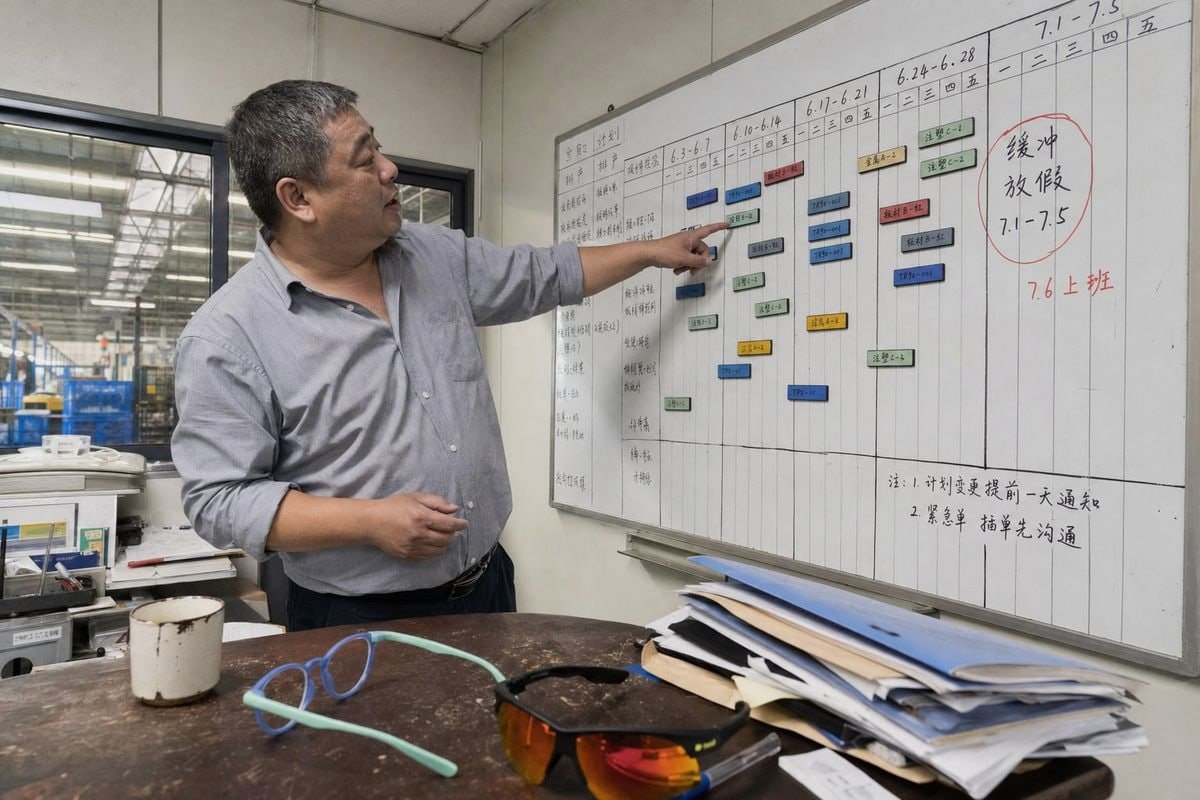
Weekly restocking does not mean the factory produces every week. It means goods arrive at your warehouse every week. Those are different problems. The factory side is solved with a rolling schedule; the warehouse side is solved with buffer inventory. You need both.
Staggered orders beat one giant order
Instead of one massive seasonal order, we encourage buyers to split volume into staggered releases. For example, a European kids' brand ordering 20,000 pieces for summer might release four orders of 5,000, spaced three weeks apart. Each batch enters our line as the previous one ships. The buyer receives a steady inbound flow instead of one risky shipment.
This approach has three benefits. It smooths cash flow. It lets you adjust color and size mix between batches based on real sales. And it reduces the damage if any single shipment is delayed at customs.
Respect the seasonal calendar
Kids' sunglasses demand is brutally seasonal. Factories get heavily booked before summer and holiday periods. عيد رأس السنة الصيني 3 alone can add one to three weeks of delay, and we advise our long-term partners to plan a four to six week buffer around it. Align your restocking calendar with local school holidays and summer camp seasons in your specific market, not a generic global season. Australian summer peaks in December; European summer peaks in June. Your production schedule should reflect your geography.
A simple annual rhythm works well: forecast in autumn, reserve capacity before winter, approve samples early, then release staggered orders through spring.
How do I balance MOQ requirements with frequent restocking cycles for children's eyewear?
The trade-off I discuss most often with new brands is this: small frequent orders keep inventory lean, but MOQs and per-shipment costs push the other way.
Balance MOQ and weekly restocking by consolidating SKUs into fewer, larger production orders, then drawing weekly shipments from that stock. Use existing styles to lower MOQ pressure, and negotiate blanket orders with scheduled releases instead of many tiny separate orders.
Children's eyewear multiplies SKU complexity fast. Take our own catalog: a sport wraparound shield in glossy black with an orange-to-gold mirrored lens, the same shield in white with an orange-to-teal gradient, and a pastel round frame in periwinkle-blue with mint-green temples. Now add toddler, kids, and tween sizes. Three styles quickly become nine or more SKUs, and each size tier may run on different mold tooling 4 and batch cycles. If every SKU has its own MOQ, small brands drown.
Three practical ways to make MOQ work for you
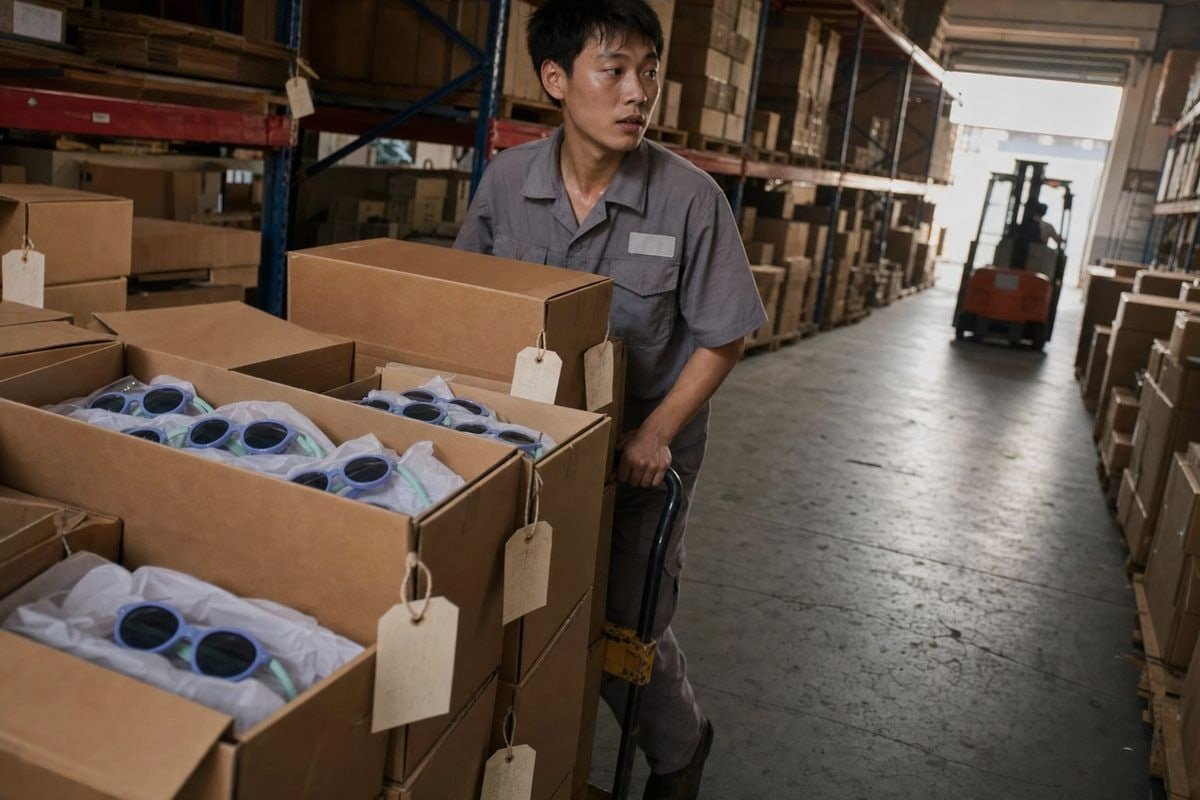
- Order the MOQ once, ship it weekly. Produce one consolidated batch that meets MOQ, hold it as pipeline stock, and release weekly shipments to stores or your 3PL 5. The MOQ constrains production, not delivery.
- Use existing styles to shrink MOQ pressure. Choosing from a large existing-style catalog means no mold investment and lower minimums per color. This is exactly why we maintain roughly 800 ready styles — new brands can test the market with less risk.
- Negotiate a blanket order. Commit to a season's total volume, then schedule releases. The factory gets planning certainty; you get flexible timing.
Here is how the models compare for a brand needing steady weekly supply:
| النهج | MOQ pressure | Restocking flexibility | Cash tied up |
|---|---|---|---|
| Many small separate orders | مرتفع | مرتفع | Low per order |
| One large seasonal order | Met easily | منخفض | مرتفع |
| Blanket order with releases | Met easily | مرتفع | معتدل |
| Existing styles, mixed SKUs | منخفض | مرتفع | منخفض |
For most kids' brands, the blanket order combined with existing styles is the sweet spot. Also, resist the urge to launch too many colors at once. A tight range of proven sellers restocks far more reliably than a sprawling one.
What buffer time should I build in for quality control and shipping delays?
I once held a full container for three extra days because one lens batch failed our drop-ball impact check. The buyer was frustrated — until I explained the alternative was shipping unsafe kids' eyewear.
Build in a buffer of 10–25% of your planned production time, plus 3–5 days for quality control and 5–10 days for shipping variability. For kids' sunglasses, also carry extra safety stock, since children's eyewear sees higher breakage and replacement demand than adult lines.
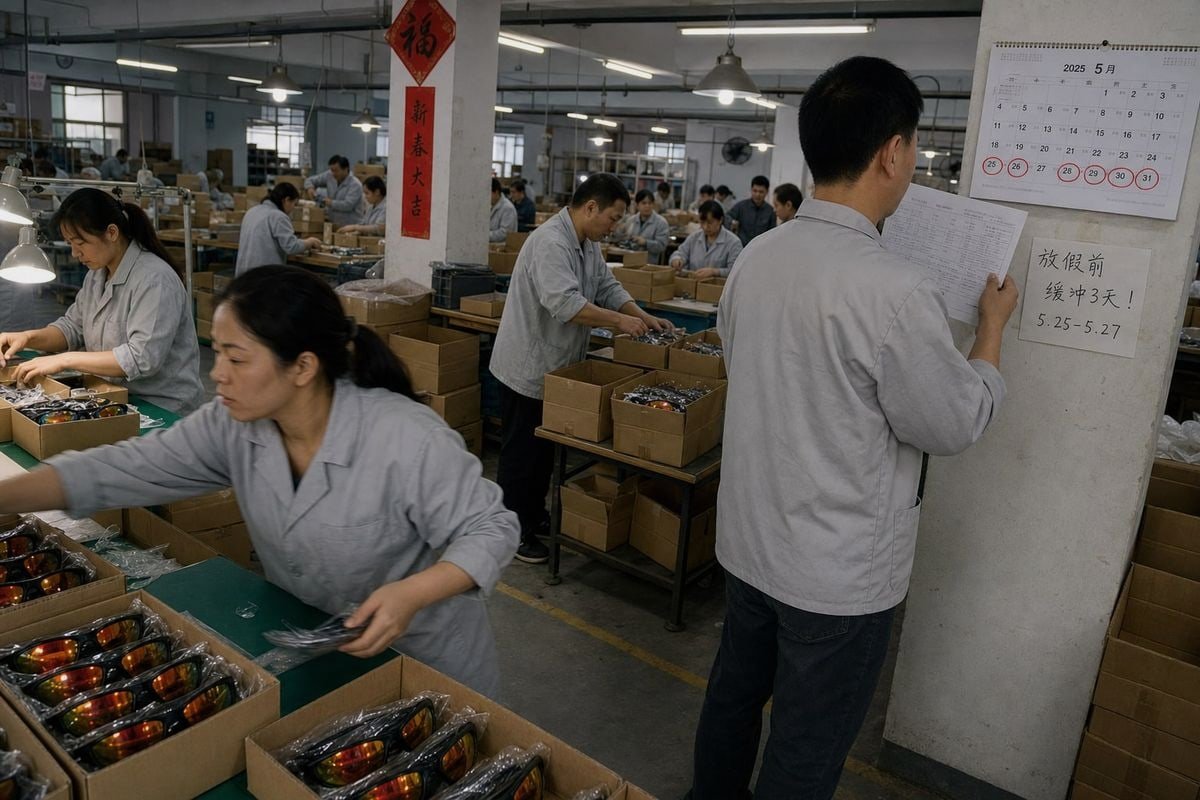
Buffers feel like wasted time until the day you need them. Then they are the only thing standing between you and an empty shelf in peak season. The right question is not whether to buffer, but where and how much.
Where delays actually happen
In our experience exporting to twenty-plus countries, delays cluster in predictable places. QC failures on lenses or hinges. Material shortages for special coatings. Port congestion before major holidays. Customs inspections 6 that pick your container at random. None of these are daily events, but across a year of weekly restocking, several will hit you.
| Risk point | Typical delay | Recommended buffer |
|---|---|---|
| QC re-inspection or rework | 2–5 days | 3–5 days |
| Material or coating shortage | 3–10 days | Lock materials early |
| Sea freight variability | 3–7 days | 5-10 أيام |
| Customs clearance | 1–5 days | 2–3 days |
| Chinese New Year congestion | 7–21 days | 4–6 weeks in Q1 planning |
Why kids' products need bigger buffers than adult eyewear
Children lose sunglasses. They sit on them, drop them, and leave them at the beach. Replacement purchases spike mid-season, which means demand forecasts for kids' eyewear are less stable than adult benchmarks suggest. We build our frames from flexible TR90 and TPEE 7 precisely to survive rough handling, but even durable frames get lost. Carry more safety stock than an adult sunglasses planner would recommend — enough to cover your full lead time plus at least one extra restocking cycle during summer.
One final tip: never let a supplier compress QC time to hit a date. Safety checks on children's products are the one stage where speed is the wrong goal.
الخلاصة
Weekly restocking of kids' sunglasses fails when buyers chase faster production. It succeeds when they plan backward: staged lead times, staggered orders, smart MOQ consolidation, and honest buffers. Build the pipeline, and the shelves stay full.
ملاحظات ختامية
1. Background on the flexible nylon-based materials used for durable children’s eyewear frames. ↩︎
2. ISO standards guide manufacturing quality control practices referenced in inspection stage. ↩︎
3. Explains the holiday causing predictable manufacturing delays mentioned in the article. ↩︎
4. Alibaba.com is a major sourcing platform for mold tooling and batch manuf
مقالات أخرى قد تعجبك
August 1, 2026
هل يجب على المصنع التعامل مع تغليف ووضع ملصقات نظارات الأطفال الشمسية، أم استخدام مورد مخصص؟
August 1, 2026
مستودع خاص مقابل الوفاء المباشر من المورد: أيهما يقلل تكاليف الإرجاع لعلامات نظارات الأطفال الشمسية؟

August 1, 2026
مباشر إلى ميناء المستودع أو التخزين الخارجي: أيهما يوفر أكثر على شحن نظارات الأطفال الشمسية؟
هل تبحث عن شريك موثوق به للنظارات للأطفال؟
استكشف أكثر من 800 نمط جاهز ودعم OEM/ODM كامل مصمم خصيصًا لعلامتك التجارية.
اتصل بنا English
  Español de México
  Deutsch
  Français
  日本語
日本語  العربية
  Português do Brasil