How to Require Suppliers to Notify You Before Discontinuing Kids’ Sunglasses Styles?

Requiring suppliers to notify you before discontinuing kids’ sunglasses styles is a real pain point I hear about weekly on our production line in Taizhou. One silent phase-out can strand your whole listing.
To require suppliers to notify you before discontinuing kids’ sunglasses styles, add a written discontinuation notice clause to your supply agreement or PO terms. Specify a 90-day to 12-month notice period, last-time-buy rights, required disclosure details, replacement style options, and remedies if the supplier fails to notify you.
That is the short answer. Below, I will walk you through the exact clause language, the right lead times, how to pick a manufacturer with deep style options, and the questions that reveal whether a factory will actually communicate.
How can I add a discontinuation notice clause to my supplier agreement?
A buyer from Australia once told me her previous factory dropped a best-selling frame with zero warning. Her retail planogram collapsed mid-season. At our workshop, we now treat notice clauses as standard.
Add a discontinuation notice clause to your master supply agreement, wholesale purchase agreement, or PO terms. Define what counts as discontinuation, set a minimum written notice period, list the details the supplier must disclose, grant last-time-buy rights, and state that failure to notify is a material breach.
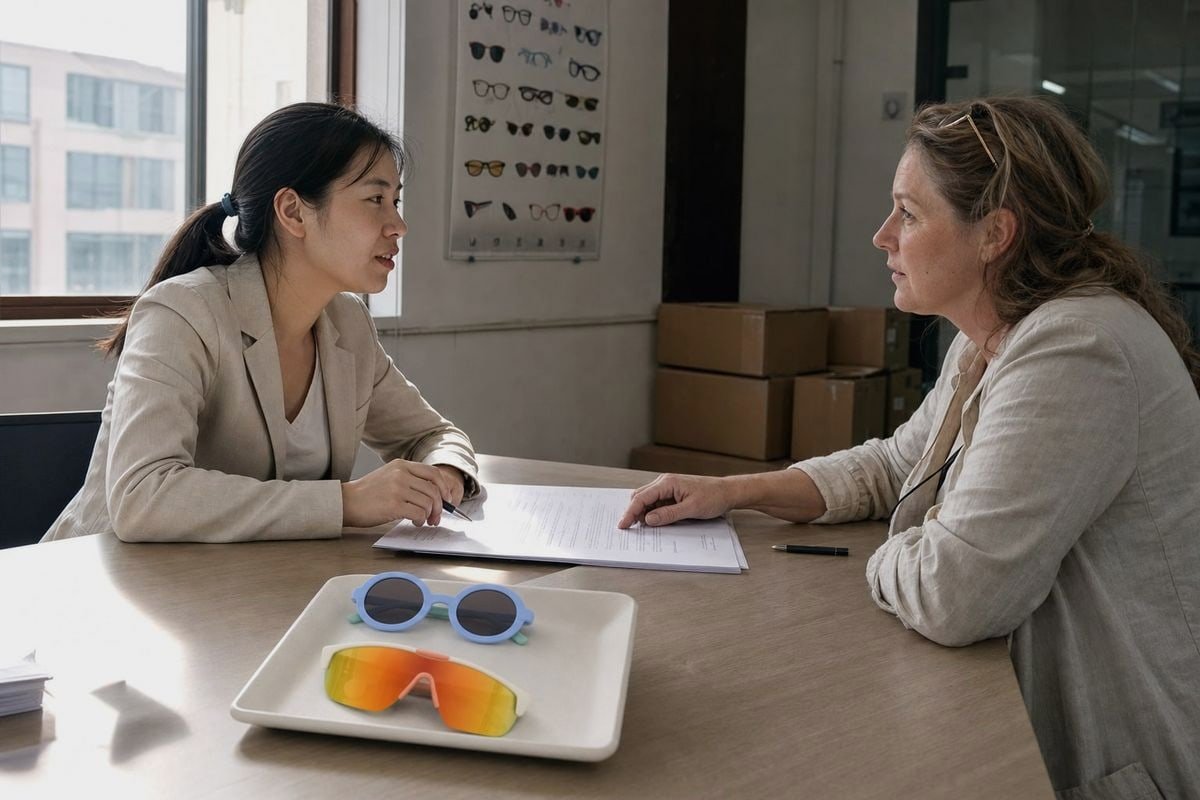
Here is the key nuance most buyers miss: you cannot simply "require" advance notice unless you make it contractual. A friendly verbal promise from a sales rep is not a product discontinuation policy. It is a hope. The clause must live in a signed document — a master supply agreement, a supplier service level agreement, private-label terms, or even your standard purchase order footer if that is all you have.
Define the trigger events precisely
A vague promise to "give advance warning" is weak. In our experience supplying children's brands in 20+ countries, the clause should name every event that counts as discontinuation:
- Permanent discontinuance of a style, SKU, or colorway
- Temporary suspension expected to exceed a set period (for example, 60 days)
- A last-time-buy announcement
- A tooling or mold change that makes the style unavailable
- A component or lens end-of-life that affects the specific kids' model
- Factory relocation that would phase out the style
What the notice itself must contain
Effective supply chain communication 1 depends on structured information, not just an email saying "this one is finished." Require these fields in every notice:
| Required Field | لماذا هو مهم |
|---|---|
| Style/SKU number and colorway | Confirms exactly which listings are affected |
| Reason for discontinuation | Reveals if it is commercial, material, or compliance-driven |
| Effective date | Anchors your inventory replenishment planning |
| Last order date and last shipment date | Defines your last-time-buy window |
| Remaining inventory on hand | Tells you how much buffer stock exists |
| Proposed replacement styles | Starts your substitute validation early |
| Tooling or material changes | Flags re-testing needs for children's products |
State the remedies
Finally, write down what happens if the supplier stays silent. Typical remedies include the right to place a final order at existing pricing, continued manufacture through a transition period, or termination for cause. Some buyers negotiate a transition credit that offsets catalog re-shooting and marketing update costs. When we sign these terms with brand clients, both sides know the rules, and vendor relationship management gets easier, not harder.
What lead time should I ask for before a style is phased out?
There is a trade-off I weigh constantly at our factory: keeping slow styles alive costs us mold storage and material commitments, while retiring them too fast hurts loyal buyers. Lead time bridges both sides.
Ask for a minimum of 90 days' written notice for ordinary, easily replaced styles. Request 6 months for core sellers, seasonal, or private-label styles, and 12 months for high-volume evergreen items that require new tooling, safety testing, or compliance work to replace.

The right end-of-life notification period depends on how hard the style is to replace. Kids' sunglasses are not interchangeable widgets. A soft, flexible TPEE frame that fits a three-year-old's face took real development work. If it disappears, you need time to validate a substitute for fit, lens performance, durability, and any child-product requirements such as CPSIA compliance standards 2 for the US market.
Match the notice window to the style's role
Here is the tiered structure I recommend to buyers, and the one we can support on our side:
| Style Type | Recommended Notice | لماذا |
|---|---|---|
| Low-volume, easily replaced style | 90 days minimum | Enough time for a last-time buy and a like-for-like swap |
| Seasonal, private-label, or planogram-committed style | 6 months | Covers retail commitments, packaging reprints, and photography |
| Core evergreen or high-volume seller | 12 months | Allows tooling, sampling, safety re-testing, and a full sell-through plan |
Pair the notice with a last-time-buy window
Notice alone is not enough. The clause should also require the supplier to accept last-time-buy orders for 30–60 days after the notice, subject to material availability. That gives your team a concrete deadline for lead time management and lets you build a bridge stock while the replacement is validated. Some sophisticated buyers add a continuity-of-supply provision requiring 90 days of component safety stock during the transition.
What to do when a supplier resists
Smaller or fashion-driven eyewear suppliers may push back on 12-month commitments. That is a fair objection — nobody can promise a colorway will trend forever. The negotiation fallback is simple: accept shorter notice on trend colorways, but hold firm on 6–12 months for your core frames. In our export experience, factories that refuse even 90 days on any SKU are telling you something about their SKU management discipline.
How do I choose a manufacturer with enough styles to offer a replacement option?
A lesson we learned early in our 15 years of eyewear work: a deep style library is discontinuation insurance. When one of our ~800 existing styles retires, buyers almost always find a close cousin already tooled.
Choose a manufacturer with a broad existing style library — several hundred tooled designs — covering multiple age ranges, materials, and shapes. Depth in catalog means a discontinued kids' sunglasses style can usually be replaced with a form-fit-function alternative without new mold investment or long delays.
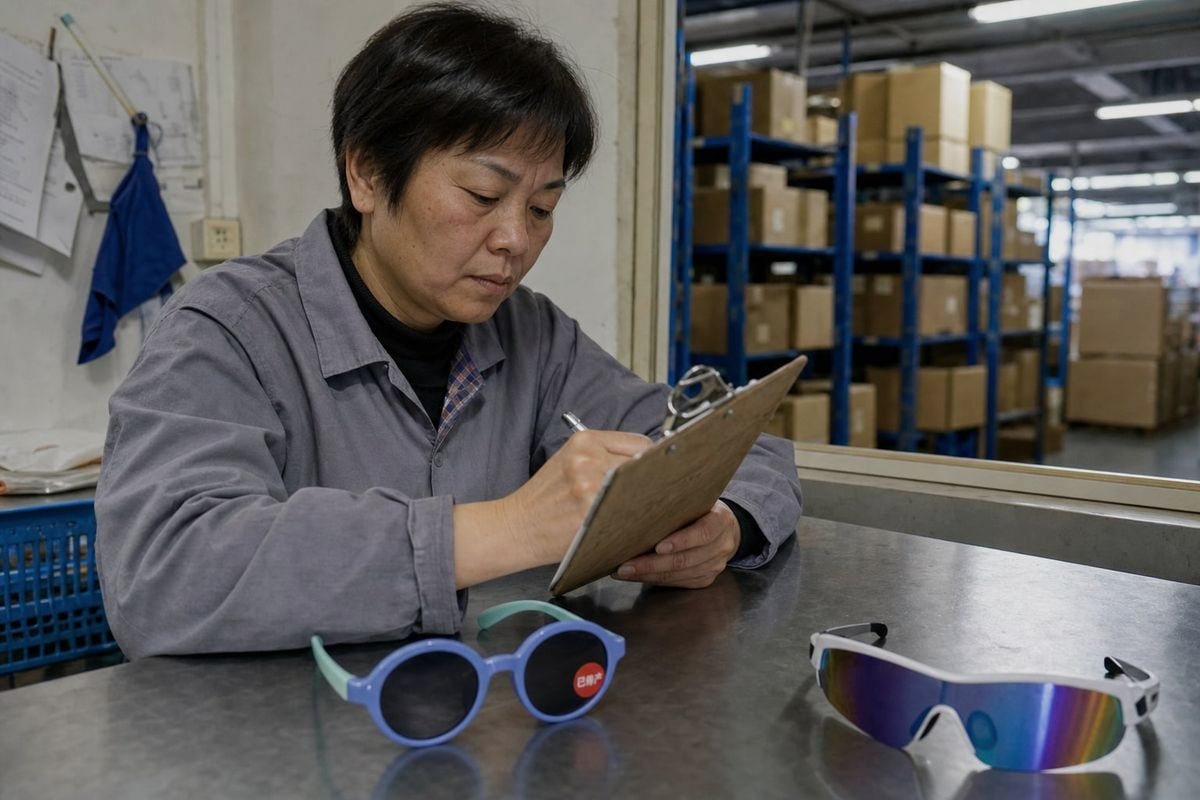
Why does catalog depth matter so much here? Because when a style ends, your fastest recovery path is a form, fit, and function 3 (FFF) alternative — a frame with the same sizing, similar materials, and equivalent safety profile. A factory with only 40 molds cannot offer that. A factory with hundreds of tooled styles across sport wraparound shields, playful round two-tone frames, and flexible optical designs almost always can.
What to evaluate in a supplier's catalog
- Style breadth. Does the range cover toddlers through older kids, plus sport and casual shapes? Our own library spans everything from mirrored single-shield wraparound designs to soft rounded two-tone frames in flexible material.
- Material consistency. If your discontinued style was flexible TPEE or TR90 4, the replacement should be too. Material continuity protects the safety and comfort story you sell to parents.
- Lens options. يو في 400 5 and polarized options should exist across the catalog, so a replacement does not downgrade protection.
- Colorway flexibility. Full دعم OEM/ODM 6 — custom colors, logos, lenses, and packaging — means a "replacement" can be re-skinned to match your discontinued style closely.
Depth versus dependence
Here is a comparison worth thinking through:
| العامل | Shallow Catalog Supplier | Deep Catalog Supplier |
|---|---|---|
| Replacement speed | Weeks to months (new tooling) | Days (existing mold, new colorway) |
| Mold investment for the buyer | Often required | Usually avoided |
| FFF alternative availability | نادر | شائع |
| Risk of orphaned listings | مرتفع | منخفض |
One honest objection buyers raise: does a huge catalog mean the factory discontinues styles more often? In practice, the opposite tends to be true. A factory built around a large permanent library treats molds as long-term assets, while a factory chasing only this season's trend retires tooling aggressively. Ask how long their top 20 styles have been in continuous production. The answer tells you more than any brochure.
What questions should I ask a factory to confirm they will communicate style changes early?
During a video audit last year, a European baby-brand buyer asked me point-blank: "Who emails me if a style dies?" I could name the person. That question filtered out two other factories she was considering.
Ask the factory who owns product change notifications, how notices are delivered and tracked, what their standard end-of-life notification period is, whether they share a product roadmap, and how they handled their last discontinuation. Vague answers signal poor supply chain communication.
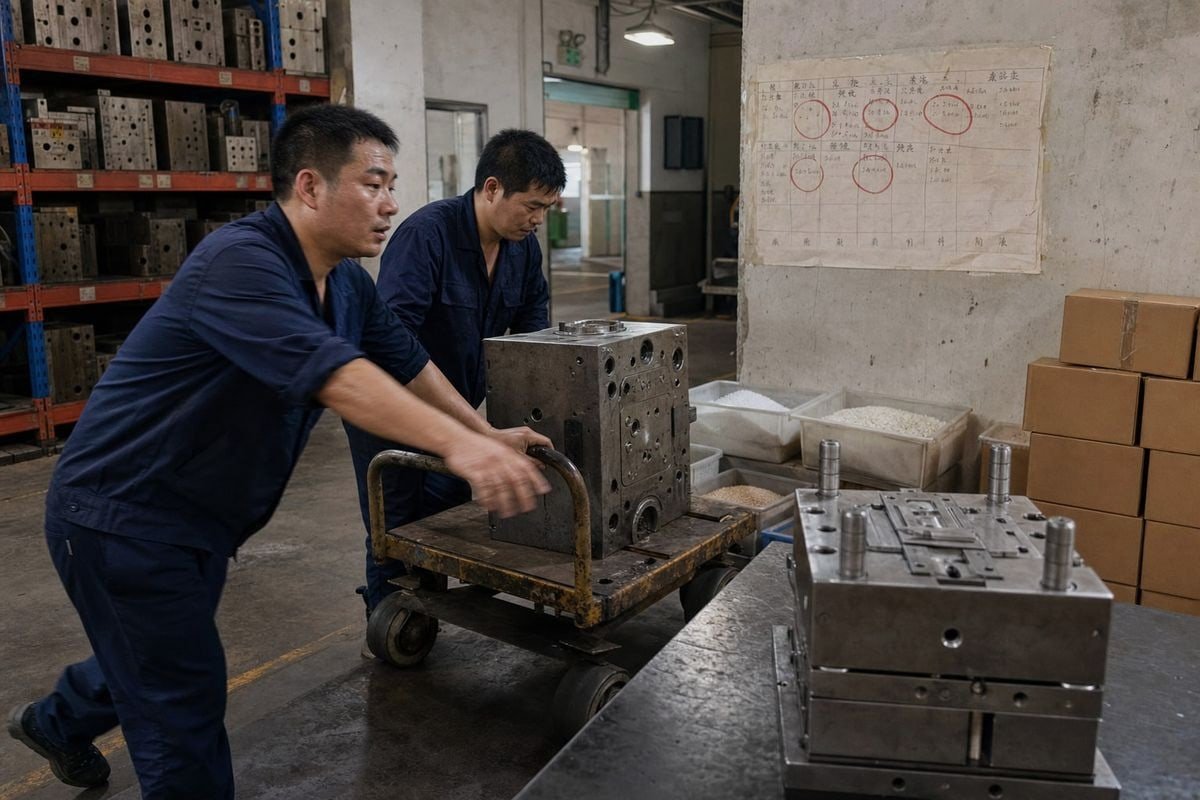
Contracts set the obligation, but process determines whether the notice actually arrives. The best suppliers already run a product change notification 7 (PCN) workflow: a formal document identifying affected part numbers, effective dates, and last-time-buy milestones, sent months before final shipment. Your job during sourcing is to test whether that workflow exists or whether "we will tell you" means one overworked sales rep's memory.
The question checklist
- Who is the named contact for product change notifications? You want a role and a backup, not just "your salesperson."
- How are notices delivered? Email plus a tracked channel — a supplier portal, a shared system, or confirmed written acknowledgment — creates an audit trail and prevents missed messages.
- What is your standard notice period before a style is phased out? Compare their answer to the 90-day / 6-month / 12-month tiers above.
- Do you share a rolling product roadmap? Suppliers who flag "at-risk" styles during quarterly business reviews rarely surprise you. We review style status with key accounts regularly for exactly this reason.
- Can you show me your last discontinuation notice? A real, dated document is the strongest proof.
- Do you issue material change notifications? For kids' eyewear, discontinuations are sometimes triggered by material or compliance shifts, such as new restrictions on plasticizers 8. An MCN process catches these before they become emergencies.
- What happens to the mold if you retire a style for commercial reasons? Some buyers negotiate a tooling transfer right so proprietary frame molds can move to a second factory.
Watch how they answer, not just what they say
A factory with a 5S-managed workshop and disciplined documentation will answer these questions with specifics: names, timeframes, form templates. A factory without process will improvise. In our experience exporting kids' eyewear worldwide, communication quality during sourcing predicts communication quality during a crisis. If they are slow and vague before you have placed an order, they will be silent when a style quietly ends.
الخلاصة
Silent discontinuations strand listings and break retail commitments. Put notice clauses in writing, tier your lead times, choose deep-catalog partners, and test communication before you commit.
ملاحظات ختامية
1. Provides background on supply chain management concepts referenced throughout the article. ↩︎
2. Official US regulation governing safety requirements for children’s products like sunglasses. ↩︎
3. Explains the engineering concept of form, fit, and function used for replacement parts. ↩︎
4. Background on polyamide-family materials used in flexible eyewear frames like TR90. ↩︎
5. WHO explains UV radiation risks, supporting the need for UV400 lens protection. ↩︎
6. Leading B2B manufacturing platform illustrating OEM/ODM sourcing practices discussed in article. ↩︎
7. Comprehensive overview of the industry-standard process for notifying buyers of product modifications. ↩︎
8. CDC fact sheet on plasticizers/phthalates relevant to material compliance changes discussed. ↩︎
مقالات أخرى قد تعجبك

August 1, 2026
هل يجب على المصنع التعامل مع تغليف ووضع ملصقات نظارات الأطفال الشمسية، أم استخدام مورد مخصص؟

August 1, 2026
مستودع خاص مقابل الوفاء المباشر من المورد: أيهما يقلل تكاليف الإرجاع لعلامات نظارات الأطفال الشمسية؟

August 1, 2026
مباشر إلى ميناء المستودع أو التخزين الخارجي: أيهما يوفر أكثر على شحن نظارات الأطفال الشمسية؟
هل تبحث عن شريك موثوق به للنظارات للأطفال؟
استكشف أكثر من 800 نمط جاهز ودعم OEM/ODM كامل مصمم خصيصًا لعلامتك التجارية.
اتصل بنا English
  Español de México
  Deutsch
  Français
  日本語
日本語  العربية
  Português do Brasil