How Can I Require Suppliers Not to Sell Kids’ Sunglasses in My Region?
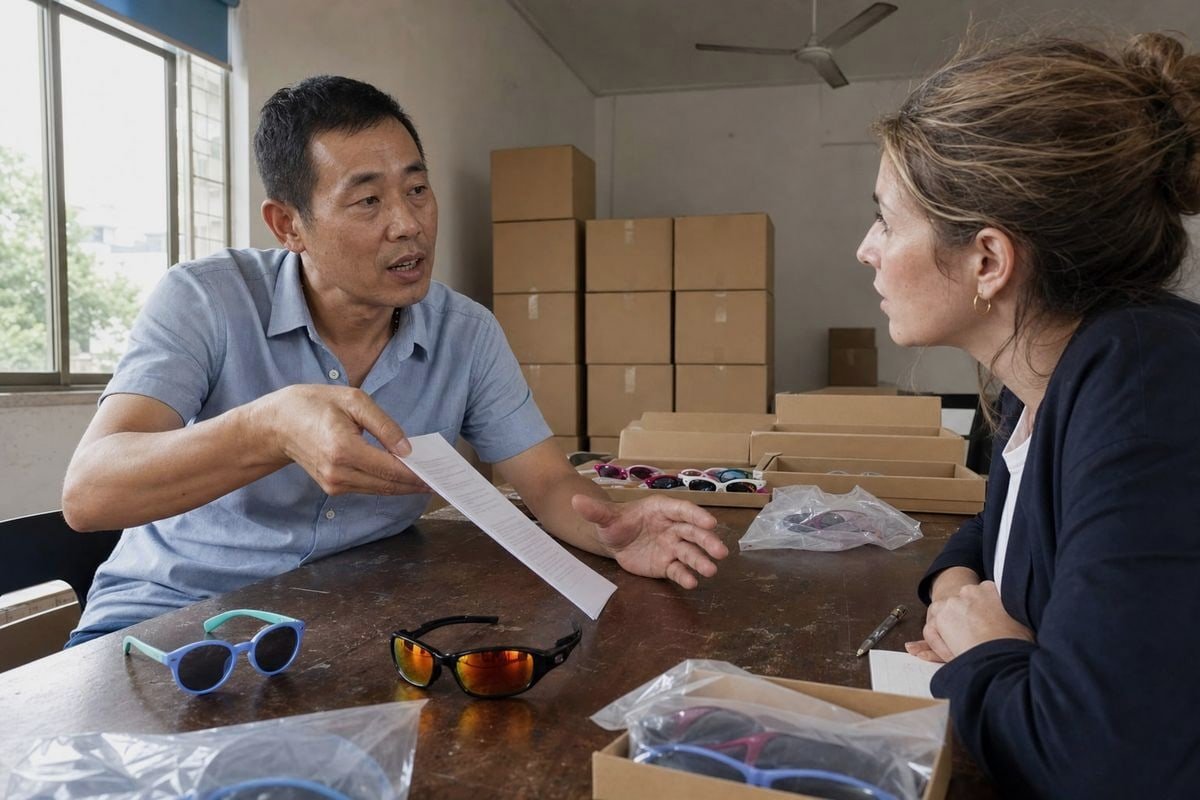
Requiring suppliers not to sell kids’ sunglasses in your region sounds simple until a duplicate listing appears in your market. On our production line, we see how fast that erodes a brand’s pricing power — and how a clear agreement prevents it.
To require suppliers not to sell kids’ sunglasses in your region, sign an exclusive distribution agreement with a territorial exclusivity clause, define the restricted products and geography precisely, demand destination-market compliance documents, and add audit, rejection, and termination rights to enforce the restriction.
That answer has four moving parts. Below, I walk through each one: setting up the agreement, drafting the contract, verifying compliance, and handling breaches. Let’s start with the agreement itself.
How Do I Set Up Regional Exclusivity Agreements With My Sunglasses Manufacturer?
A few years back, a distributor in Australia asked us to block a style from other buyers in his market. That conversation taught me how these agreements really work in practice.
Set up a regional exclusivity agreement by negotiating a written exclusive distribution agreement that names your territory, lists the exact kids' sunglasses SKUs covered, sets minimum order commitments in exchange for exclusivity, and states that the manufacturer will refuse active sales into your region.
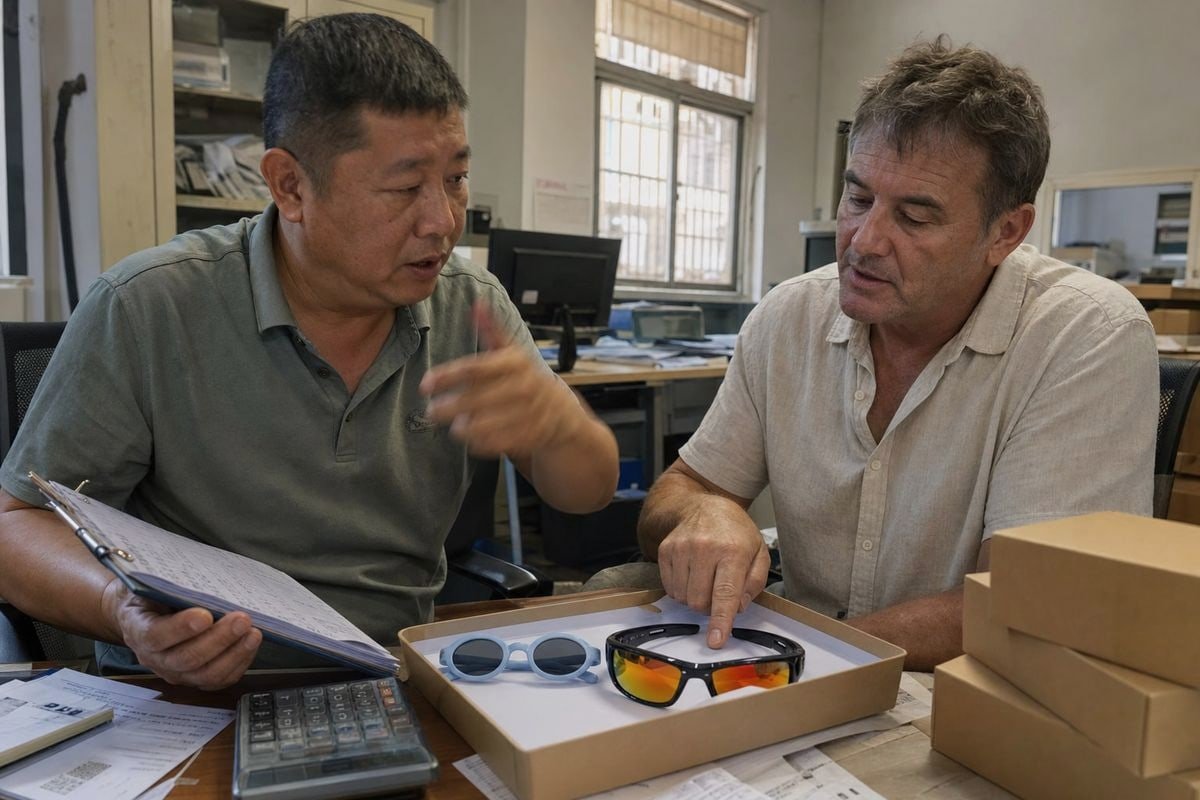
An exclusivity deal is a trade, not a favor. Your manufacturer gives up potential customers in your territory. In return, you give them predictable volume. At our Taizhou factory, we grant regional exclusivity when a buyer commits to reasonable annual quantities on specific styles. Without that commitment, no serious factory will lock out an entire market forever.
Start With the Right Scope
Decide what "exclusive" means before you negotiate. There are three common levels, and each one costs the supplier something different.
| Exclusivity Level | ما يغطيه | Typical Buyer Commitment |
|---|---|---|
| SKU-level | Only your custom styles or colorways | Low to medium MOQ per style |
| Category-level | All kids' sunglasses from that factory | High annual volume commitment |
| Full territorial | Every product, your region only | Very high volume plus marketing duties |
Most kids' eyewear brands only need SKU-level or category-level protection. Full territorial exclusivity is expensive and hard to justify for a new brand. When buyers choose custom colors, logos, and packaging from our OEM/ODM program, exclusivity becomes easier to grant because the product is already unique to them.
Distinguish Active From Passive Sales
Antitrust rules in many regions, especially Europe, treat vertical restraints 1 carefully. You can usually ban active sales — the supplier marketing into your territory. You often cannot ban passive sales, where a customer in your region approaches the supplier unprompted. Structure your geographic sales restrictions around active sales to keep the agreement enforceable. A lawyer familiar with vertical restraints in your market should review the final language.
Also confirm whether your goal is exclusivity or compliance. In Australia, children's sunglasses fall under a mandatory standard. In the US, they trigger CPSIA compliance duties 2. Sometimes a supplier "can't sell" in your region simply because they lack the paperwork — a different problem from a commercial exclusivity deal.
What Should I Include in My Contract to Protect My Territory Rights?
When we draft OEM agreements with baby-product brands in Europe and Japan, the weakest contracts share one flaw: vague territory definitions. Precision is everything here.
Your contract should include a territorial exclusivity clause defining the region by country, an exact product definition for kids' sunglasses, an authorized-SKU list, anti-circumvention language covering sub-distributors, destination-market compliance obligations such as CPSIA testing, audit rights, and clear remedies including termination for breach.

A territory clause fails when definitions are loose. "Kids' sunglasses" can mean anything from toy glasses to UV400 polarized eyewear 3 for children aged three to twelve. Your authorized dealer contract must pin down every term the supplier could later argue about.
The Core Clauses, in Priority Order
- Territory definition. Name the countries or regions explicitly. Do not write "my market."
- Product definition. Define kids' sunglasses by age band, frame size range, and lens type. Note whether items labeled as toys are included or excluded.
- Authorized-SKU list. Attach an appendix listing every item code the supplier may sell, and to whom.
- Anti-circumvention clause. Prohibit the supplier from selling through affiliates, trading companies, or sub-distributors into your territory. This is where most gray market protection failures start.
- Compliance obligations. Require region-specific proof before shipment — third-party test reports, a شهادة منتجات الأطفال 4 for the US, tracking labels, and conformity markings where required.
- Marketplace restrictions. Bar the supplier from listing your protected SKUs on platforms visible to buyers in your region.
- Remedies. Spell out rejection rights, penalties, and termination triggers.
Compliance Requirements by Region
| Region | Key Requirement for Kids' Sunglasses | Contract Proof to Demand |
|---|---|---|
| الولايات المتحدة | FDA Class I device rules plus CPSIA compliance | Third-party test report, CPC, tracking label photos |
| أستراليا | Mandatory standard covering children's sunglasses | Test certificate against the applicable standard |
| UK / EU | Conformity markings and safety information | CE or UKCA documentation and labeled samples |
Suppliers focus on manufacturing, not destination-market product safety regulations 5. Our team learned to ask buyers up front which markets they serve, because a lens or frame that passes one standard may need different documentation elsewhere. Write the destination into the contract, and make compliant documentation a condition of payment or shipment. That single step blocks most accidental cross-border sales, because a supplier without your region's paperwork cannot legally list the product there anyway.
How Can I Verify My Supplier Isn't Selling to Other Buyers in My Market?
One lesson from fifteen years of exporting kids' eyewear: trust the paperwork, then verify the marketplace. Contracts deter breaches; monitoring detects them.
Verify compliance by monitoring marketplaces and wholesale directories for your protected SKUs, using reverse image searches on product photos, requesting shipment and customer records under your audit rights, adding traceable markings to your units, and commissioning third-party inspections before mass import.
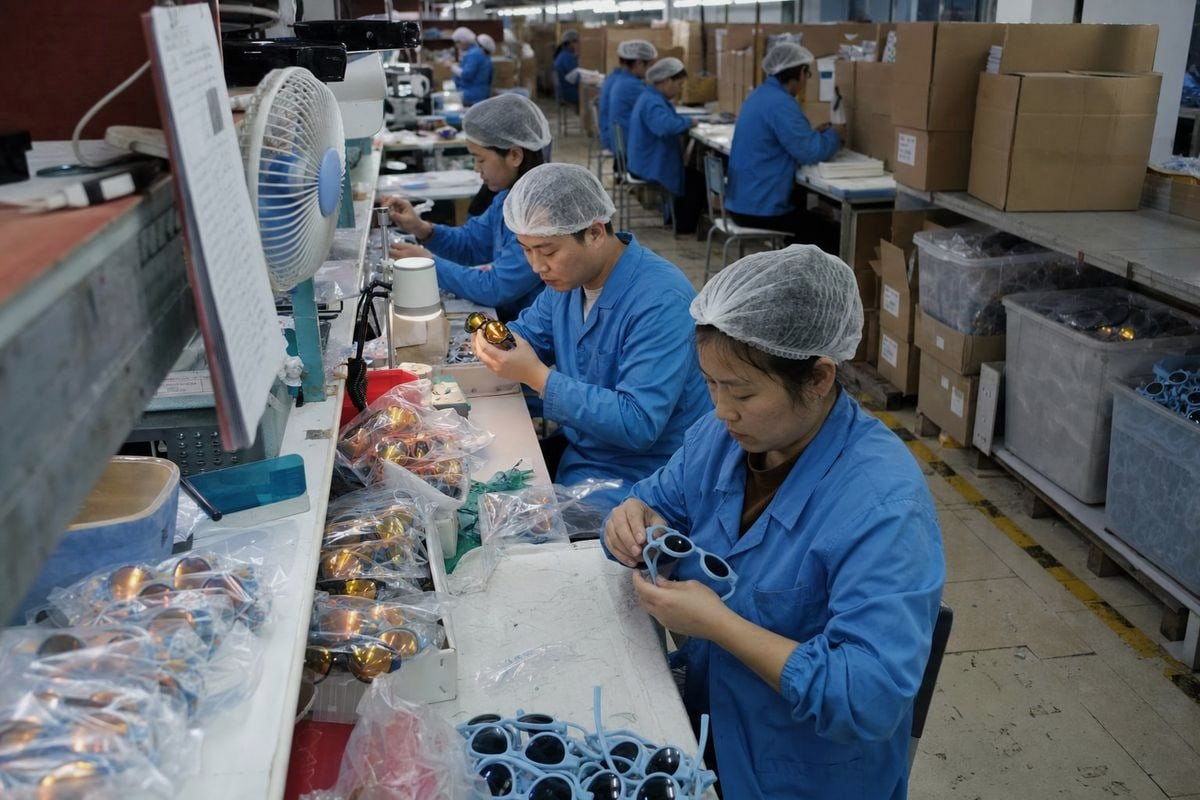
Verification works in layers. No single method catches everything, so combine passive monitoring with active audits. Children's sunglasses are listed widely across wholesale directories and mass-market e-commerce sites, which makes accidental cross-border selling easy even for well-meaning suppliers.
Layer One: Marketplace Monitoring
Search major platforms in your region monthly for your SKU names, style numbers, and product photos. Reverse image search 6 is powerful here — a supplier reusing your product photography is an immediate red flag. Some brands go further with region-coded digital watermarks on marketing assets, so any leaked image traces back to its source. Marketplace operators increasingly run their own automated monitoring and takedown systems for noncompliant listings, and UK enforcement has shown that children's sunglasses lacking required markings can be removed quickly. Use those takedown procedures alongside your contract.
Layer Two: Product Traceability
Make your units identifiable. Options range from simple to sophisticated.
| الطريقة | Cost | ما يثبته |
|---|---|---|
| Custom colorway or logo | منخفض | Whether a listed product is yours or a copy |
| Batch codes inside temples | منخفض | Which production run leaked |
| Region-specific packaging | متوسط | Whether inventory was diverted |
| Blockchain-backed serialization | مرتفع | The exact unit and buyer responsible |
At our factory, buyers who order custom colors and molded logos through our ODM program get built-in traceability. A unique frame color paired with your logo makes parallel imports instantly visible — and harder to sell, because the product looks unofficial without your packaging.
Layer Three: Audits and Inspections
Exercise your contractual audit rights annually. Ask for shipment records for your protected SKUs. Pair this with pre-shipment inspections by a third-party lab, which verifies both compliance and quantities. A supplier who welcomes audits is usually a supplier worth keeping.
What Happens If My Supplier Breaks the Exclusivity Agreement?
A buyer once forwarded me a screenshot of "his" frames on a marketplace in his own country. The listing came from a trading company, not the factory — a distinction that shaped his entire response.
If your supplier breaks the exclusivity agreement, document the breach, invoke your contract remedies — rejection of inventory, penalties, withheld payments, or termination — file marketplace takedown requests against the infringing listings, and pursue arbitration or legal action if the supplier refuses to correct the violation.
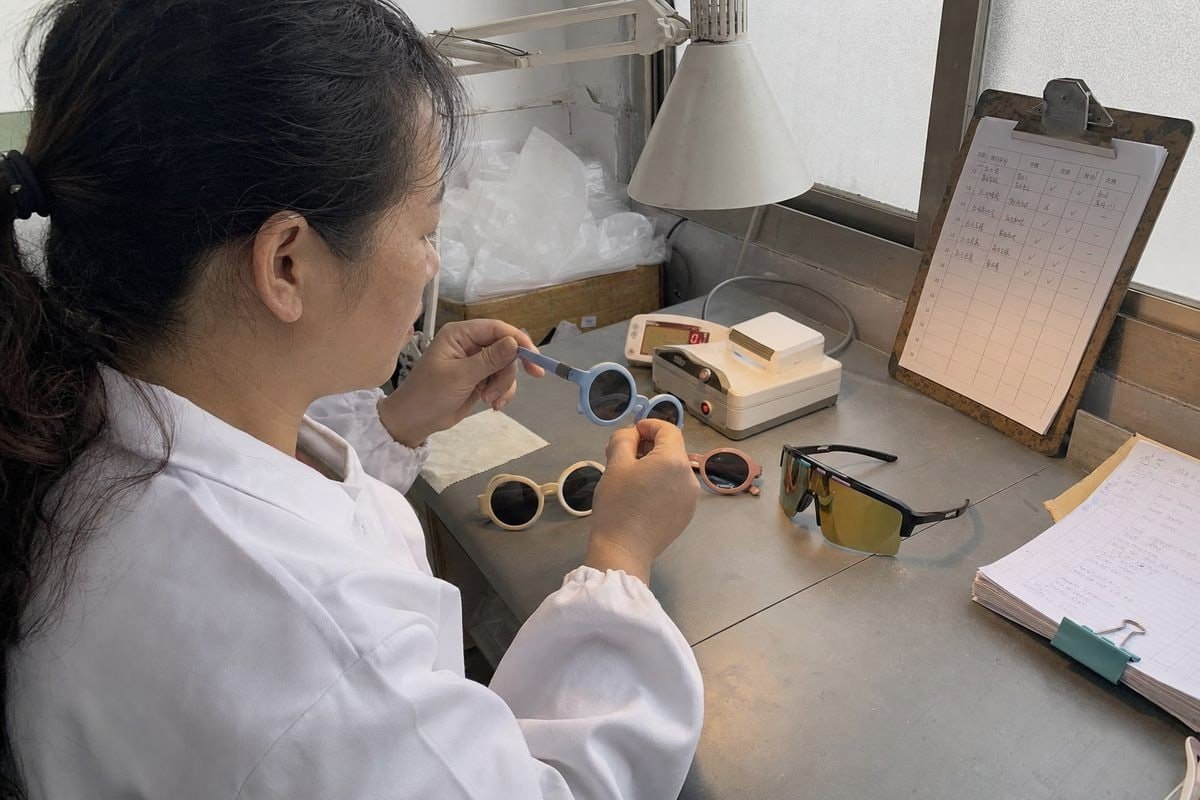
Not every breach deserves the same response. Your first job is diagnosis. Was this a deliberate sale into your territory, a passive sale you cannot legally block, or a leak through a sub-distributor the supplier did not control? Each scenario calls for a different tool from your contract.
A Graduated Response Process
- Document everything. Screenshot listings with dates, URLs, prices, and seller names. Save order confirmations if you make a test purchase.
- Trace the source. Use batch codes or serialization to confirm the units came from your supplier, not a copycat factory.
- Send formal notice. Reference the specific territorial exclusivity clause breached, and demand correction within a set deadline.
- Apply contract remedies. Depending on your terms, reject pending inventory, withhold payments, claim penalties, or suspend orders.
- Use platform enforcement. File takedowns for listings that lack required conformity marks or safety documentation. Noncompliant children's eyewear is often removable on product safety regulations grounds alone, faster than any contract dispute.
- Escalate if needed. Arbitration clauses with a neutral venue usually resolve cross-border disputes faster than courts.
Prevention Beats Punishment
The healthiest supplier relationships rarely reach step six. Some contracts include territory integrity rebates — bonuses for suppliers who keep distribution channels clean — which align incentives instead of relying only on threats. A selective distribution system 7, where the supplier sells only to vetted, authorized dealers, also reduces leak points before they form. In our experience, factories break exclusivity mostly through carelessness with trading-company orders, not malice. A supplier who screens buyers, flags suspicious orders, and communicates openly is worth more than any penalty clause. Choose partners who treat your territory as part of the specification, just like lens tint or frame flexibility.
الخلاصة
Protecting your region takes a signed exclusivity agreement, precise contract clauses, layered verification, and graduated enforcement. Combine all four, choose a transparent factory partner, and your territory stays yours.
ملاحظات ختامية
1. Explains the antitrust concept governing active vs. passive sales restrictions in distribution contracts. ↩︎
2. Official US statute governing children’s product safety requirements referenced for kids’ sunglasses. ↩︎
3. Current WHO Q&A page covering UV radiation protection and the UV400 standard for sunglasses. ↩︎
4. Official CPSC guidance on the certificate required to legally import and sell children’s products. ↩︎
5. Official regulatory framework suppliers must meet for destination-market product safety compliance. ↩︎
6. Background on the technical method used to detect unauthorized product photo reuse online. ↩︎
7. Direct section link to the verified Wikipedia entry for selective distribution strategies. ↩︎
مقالات أخرى قد تعجبك
August 1, 2026
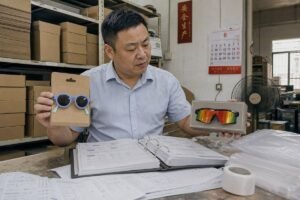
هل يجب على المصنع التعامل مع تغليف ووضع ملصقات نظارات الأطفال الشمسية، أم استخدام مورد مخصص؟
August 1, 2026
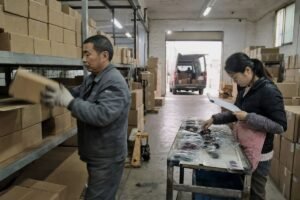
مستودع خاص مقابل الوفاء المباشر من المورد: أيهما يقلل تكاليف الإرجاع لعلامات نظارات الأطفال الشمسية؟

August 1, 2026
مباشر إلى ميناء المستودع أو التخزين الخارجي: أيهما يوفر أكثر على شحن نظارات الأطفال الشمسية؟
هل تبحث عن شريك موثوق به للنظارات للأطفال؟
استكشف أكثر من 800 نمط جاهز ودعم OEM/ODM كامل مصمم خصيصًا لعلامتك التجارية.
اتصل بنا English
  Español de México
  Deutsch
  Français
  日本語
日本語  العربية
  Português do Brasil