How to Request Publicly Displayable Test Reports When Sourcing Kids’ Sunglasses?
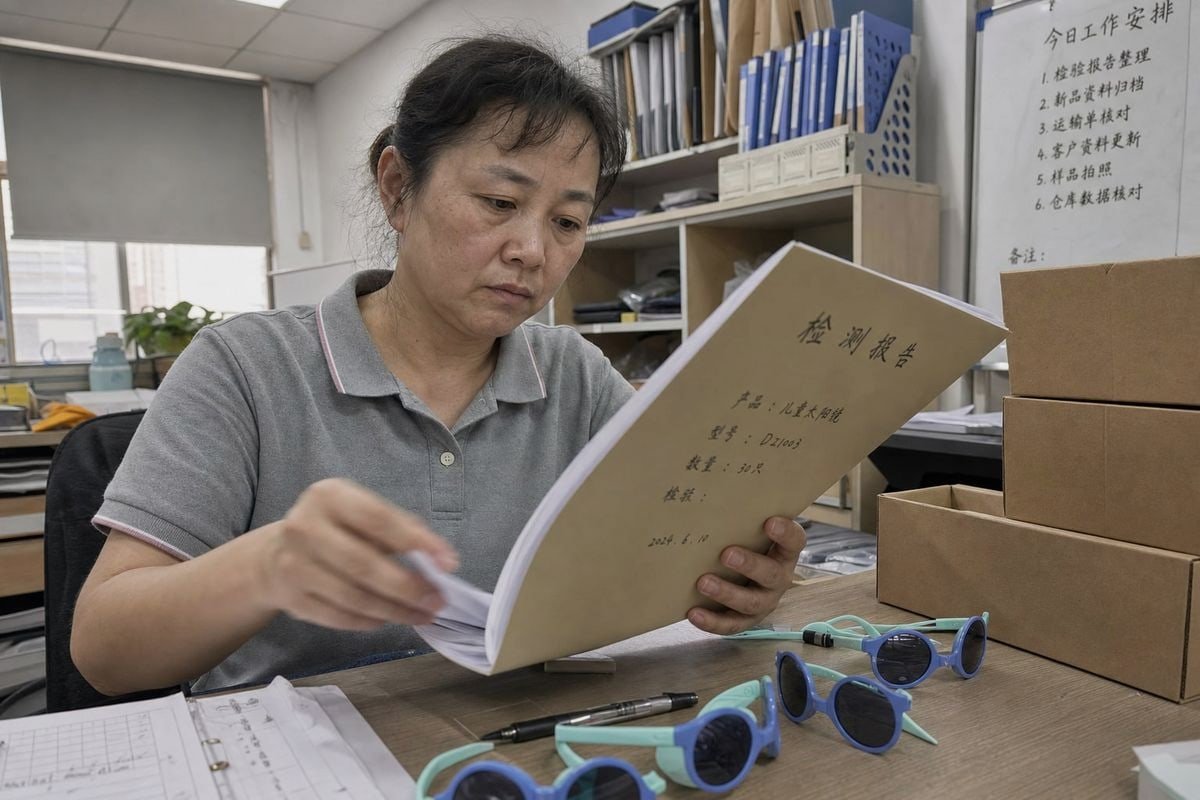
Requesting publicly displayable test reports should be simple, yet buyers who visit our Taizhou factory tell me the same story: suppliers say “compliant,” then send a blurry screenshot. That screenshot gets rejected by the marketplace, the retailer, or customs. The shipment sits. The launch slips. The fix is asking for the right document package before you ever place an order.
Request a publicly displayable test report package before ordering kids’ sunglasses: a full report or redacted summary from a CPSC accredited laboratory, showing the exact SKU, test standard, lab name, issue date, sample photos, and a clear pass result, plus a Children’s Product Certificate where required.
That is the short answer. Below, I will break down exactly which reports to request, how to verify them, which certifications support your marketing, and when in the sourcing timeline to ask.
What test reports should I ask my kids' sunglasses supplier to provide?
One of our long-term Australian buyers once forwarded me a competitor's "compliance file" — a single-page certificate with no report number, no lab name, and no SKU. Our team keeps a very different standard, and yours should too.
Ask for a full third-party lab report covering lead and phthalates testing, an FDA drop ball impact resistance test, UV400 protection verification, and ASTM F963-17 items where applicable, plus a Children's Product Certificate — each tied to your exact model number, with lab name, issue date, and pass results.
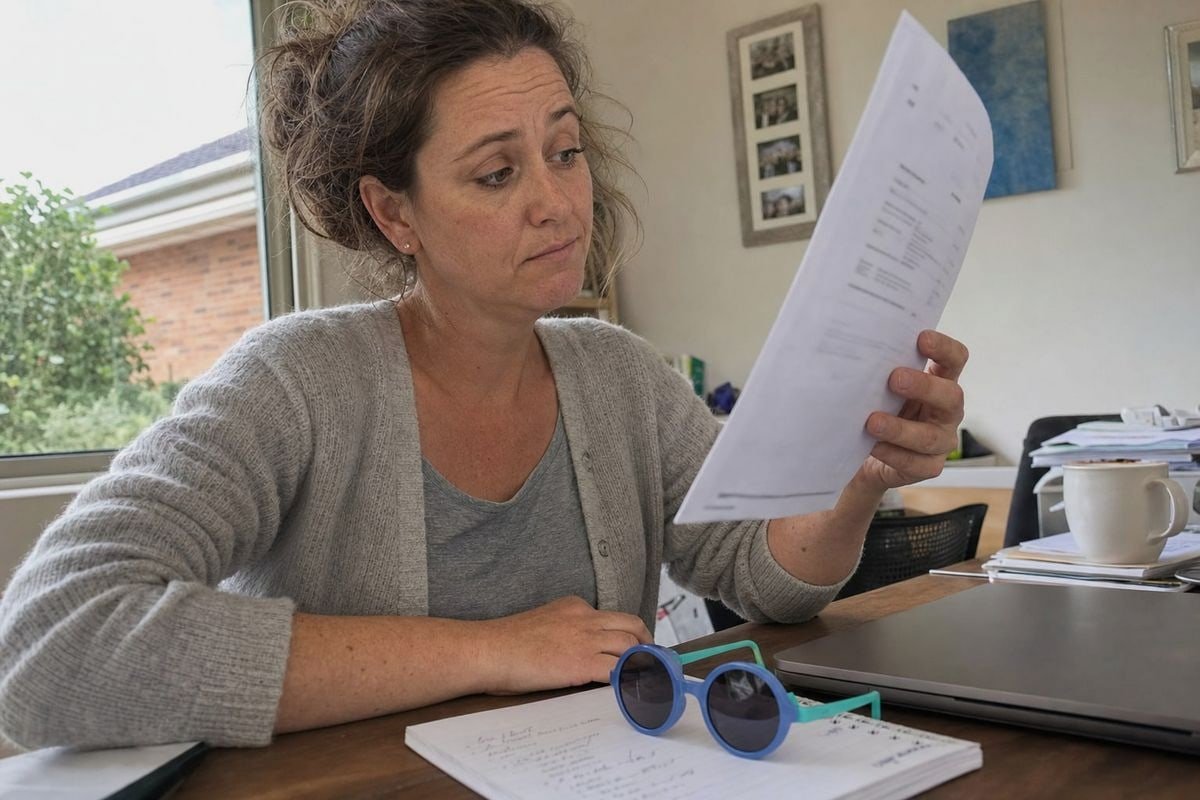
Children's sunglasses are not just a fashion accessory. In the United States, they are treated as a children's product, which triggers CPSIA compliance obligations 1, and as sunglasses they also fall under FDA lens rules. So one document is never enough. You need a package.
The core documents in a displayable package
At our factory, when a brand asks us for compliance paperwork, we prepare documents in layers. Each layer serves a different audience:
| وثيقة | ما تثبته | Who asks for it |
|---|---|---|
| Full lab test report | Detailed data, methods, and results per standard | Compliance teams, customs audits |
| شهادة منتجات الأطفال 2 | Manufacturer's certification of CPSIA compliance | US importers, marketplaces |
| Redacted public-facing summary | Pass results with lab credentials, supply chain details hidden | Retail onboarding, e-commerce pages |
| QR-coded verification sheet | Consumer-scannable link to the testing summary | Retailers, end consumers |
The full report matters most. Summary certificates alone will not survive a customs audit, because the detailed data is what substantiates your safety claims. So always request the complete PDF, not a certificate alone.
The tests that must appear inside the reports
For US-bound kids' sunglasses, the report set should cover:
- Lead in substrates and surface coatings under CPSIA Section 101.
- Phthalates in plasticized parts under 16 CFR Part 1307 3 — this matters for our flexible TPEE temples and rubberized frames, which is exactly why we chose environmentally friendly materials that pass cleanly.
- Drop ball impact resistance test under 21 CFR 801.410 4 for the lenses.
- UV400 protection verification, so your "UV protection" claim is a tested fact, not a marketing phrase.
- Relevant ASTM F963-17 5 standards items if the product could be treated as a toy-adjacent children's article.
One practical tip from our export experience: ask whether the supplier uses component part testing 6 under 16 CFR 1109. Because we run around 800 existing styles, shared raw materials — the same TR90 pellets, the same lens blanks — can be certified once, letting one high-value report legitimately cover multiple frame colors and styles. That saves you money without cutting corners.
How can I verify a test report is genuine and not fabricated?
A procurement manager from Japan once emailed me a report she had received from another vendor and asked, "Does this look right to you?" The model number on the report did not match the sample in her photo. That mismatch told us everything.
Verify a test report by matching the model number and sample photos to your exact product, confirming the lab is a CPSC accredited laboratory, contacting the lab directly with the report number, and checking for a verifiable QR code or digital signature on the PDF.
Forged and altered PDFs exist in this industry. I will not pretend otherwise. But verification does not need to slow down your procurement. It needs a short, repeatable checklist.
The five-point verification checklist
First, match the product identity. The report must name the exact SKU or model, not a "similar" or "family" model. Compare the sample description, construction details, and photos in the report against the physical sample on your desk. A report for a rigid PC frame does not cover a flexible TPEE frame, even if they look alike.
Second, check the lab. Third-party lab verification starts with confirming the lab appears on the CPSC's list of accepted laboratories for the relevant children's product rules. A lab competent for textiles is not automatically competent for eyewear.
Third, check the date. Some markets require recency. Taiwan's sunglasses conformity rules, for example, require an original test report completed within one year before signing the declaration. A five-year-old report is a liability, not an asset.
Fourth, verify traceability. The report should reference the same batch or lot numbers found on the product's mandatory permanent tracking labels. This closes the gap between "a sample passed once" and "my current production run is compliant."
Fifth, go to the source. Ask the lab to confirm the report number, or scan the QR code if one is embedded. Testing agencies like SGS now issue reports with QR codes that resolve to a stable testing summary — a system we like, because it lets our buyers show verification directly to retailers and even end consumers.
| علامة حمراء | What it usually means | Your response |
|---|---|---|
| Screenshot or cropped image only | Original may not exist or may not match | Demand the original PDF and report number |
| Report for a "similar" model | Your SKU was never tested | Require testing on your exact variant |
| No lab contact details | Verification is being blocked | Ask the lab to reissue a verification letter |
| Report older than market rules allow | Documentation has lapsed | Request retesting before PO placement |
| Results in local language only | Unusable for onboarding | Request an English report with clear pass results |
Which certifications matter most for marketing my kids' sunglasses as safe?
There is a trade-off we discuss with nearly every new brand: a clean one-page summary gets you through retail onboarding fast, while a full technical file keeps your compliance team audit-ready. In our experience exporting to more than 20 countries, you need both — but the certifications behind them are not all equal.
The Children's Product Certificate backed by CPSC-accepted lab testing matters most for the US market, followed by FDA impact resistance documentation, UV400 protection verification, and lead and phthalates test results; emerging PFAS-free declarations add value for environmentally focused retailers.
Marketing claims must trace back to documents. When you print "حماية UV400 7" or "impact-tested lenses" on retail-ready packaging — something we produce for many of our OEM clients — a retailer or regulator can ask you to prove it. Here is how I would rank the documents by marketing weight.
Certification priority by market and claim
| Certification or report | السوق | Supports the claim |
|---|---|---|
| Children's Product Certificate + CPSIA reports | الولايات المتحدة | "Tested safe for children" |
| FDA drop ball test (21 CFR 801.410) | الولايات المتحدة | "Impact-resistant lenses" |
| UV400 protection verification | Global | "100% UVA/UVB protection" |
| EN ISO 12312-1 report | Europe, UK | "Meets EU sunglasses standard" |
| AS/NZS 1067 report | Australia, New Zealand | "Compliant with Australian standard" |
| PFAS-free coating declaration | US state-level, EU | "Free from forever chemicals" |
A few notes from the factory floor. UV400 protection verification deserves more respect than it usually gets. Many suppliers claim UV protection based on the lens vendor's word alone. We test lens batches because children's developing eyes are the entire reason this product category exists — a kids' brand cannot afford a hollow UV claim.
FDA registration for eyewear and the impact resistance test go together for US imports. The drop ball test data is the substance behind the "impact-resistant" language buyers want on packaging.
Finally, watch the emerging edge. PFAS-free certification for frame coatings goes beyond standard CPSIA mandates, but state-level environmental regulations are moving fast. Buyers who request it now will not scramble later. Because our TPEE and TR90 material systems were selected for environmental friendliness from the start, this is a request we welcome rather than resist.
Some buyers push back: "My compliance team wants the full report, but my retail partner only wants a summary — which do I ask for?" Ask for both. The redacted public-facing version protects the supplier's supply chain details while retaining lab credentials for display; the full report stays in your technical file.
When during the sourcing process should I request these reports from my manufacturer?
Early in my time working with a European baby-products brand, they placed their first order elsewhere, received goods, and only then requested documentation. The reports never came. When they switched to us, we built the document request into the RFQ stage — and the difference in stress level was night and day.
Request test reports at the RFQ stage, before sample approval and purchase order placement. Confirm existing reports match your chosen SKU during sampling, commission any missing tests before mass production, and receive the final package — reports, CPC, and tracking-label linkage — before shipment.
Timing is the difference between compliance as a checkbox and compliance as leverage. Once your deposit is paid, your negotiating power drops. Here is the sequence that works.
A four-stage document request timeline
-
RFQ stage. Include a document request template in your RFQ. Ask: which standards has this model already been tested to, by which lab, and when? Suppliers with real files answer in a day. Suppliers who stall are telling you something. Because we maintain roughly 800 existing styles, many already carry current reports — which is exactly why new brands can launch with us without heavy mold investment or fresh testing costs on every SKU.
-
Sampling stage. Match the report to the sample in your hand. Check model number, materials, lens type, and colorway. If you are customizing — different lens tint, custom colors, new logo printing — ask directly whether the existing report still applies or whether component part testing covers the change.
-
Pre-production stage. Commission any missing tests now, not after goods are made. Agree in writing on who pays, which CPSC accredited laboratory 8 will test, and the turnaround. Reputable labs typically return sunglasses results within about two weeks, so this rarely delays a normal production schedule.
-
Pre-shipment stage. Receive the final package: full reports, the Children's Product Certificate, the redacted public summary, and confirmation that batch or lot numbers on tracking labels match the documentation. Only then should goods ship.
Supplier transparency at stage one predicts everything that follows. In fifteen years of eyewear production, I have never seen a factory that hides documents early and communicates well later.
الخلاصة
Incomplete paperwork stalls launches and invites recalls. Request a full, verifiable, publicly displayable report package early, verify it against your exact SKU, and partner with factories that document safety as carefully as they build it.
ملاحظات ختامية
1. Official CPSC page explaining the children’s product law referenced in the article. ↩︎
2. CPSC’s official guidance on the certificate required for US children’s product imports. ↩︎
3. Direct regulatory text for the phthalates rule cited in the sunglasses testing list. ↩︎
4. eCFR source for the FDA drop ball impact resistance regulation referenced. ↩︎
5. Official ASTM standard page for the toy safety standard mentioned for children’s articles. ↩︎
6. CPSC rule explaining how shared-material testing can cover multiple product variants. ↩︎
7. Wikipedia section explaining UV400 and protection categories. ↩︎
8. CPSC’s official testing and certification hub verifies accredited laboratory status. ↩︎
مقالات أخرى قد تعجبك

August 1, 2026
هل يجب على المصنع التعامل مع تغليف ووضع ملصقات نظارات الأطفال الشمسية، أم استخدام مورد مخصص؟

August 1, 2026
مستودع خاص مقابل الوفاء المباشر من المورد: أيهما يقلل تكاليف الإرجاع لعلامات نظارات الأطفال الشمسية؟

August 1, 2026
مباشر إلى ميناء المستودع أو التخزين الخارجي: أيهما يوفر أكثر على شحن نظارات الأطفال الشمسية؟
هل تبحث عن شريك موثوق به للنظارات للأطفال؟
استكشف أكثر من 800 نمط جاهز ودعم OEM/ODM كامل مصمم خصيصًا لعلامتك التجارية.
اتصل بنا English
  Español de México
  Deutsch
  Français
  日本語
日本語  العربية
  Português do Brasil