How to Plan Order Ratios Between Bundle and Individual Kids Sunglasses Quantities?

Getting the order ratio between bundle and individual kids sunglasses wrong ties up cash fast sell-through analysis 1. I have watched buyers over-commit to bundles, then sit on deadstock all winter. Our factory floor in Taizhou sees the aftermath every season, and it is avoidable.
Plan order ratios between bundle and individual kids sunglasses by starting with 70–80% individual pairs and 20–30% bundles at launch, then rebalancing monthly using sell-through analysis, attach rate, and contribution margin data. Increase bundle share only when proven bestsellers and healthy margins support it.
That short answer hides real nuance. Your channel, your margins, your MOQ constraints, and your customers’ buying habits all shift the right split. Let me walk you through each decision, step by step.
How do I decide what percentage of my order should be bundles versus individual pairs?
Last spring, a buyer from Australia asked me to pack half her first order as two-pair bundles. We talked her down to 25%, and her sell-through data later proved that caution right.
Decide your bundle percentage by weighing demand certainty, contribution margin after packaging and fees, and inventory risk. New brands should allocate 20–30% of units to bundles; established brands with proven SKU performance tracking data can safely push toward 40–50%.

The core mistake I see is treating the ratio as a marketing choice. It is actually an inventory risk decision first. A bundle locks two or more units together. If one style in the bundle flops, the whole pack slows down. An individual pair, by contrast, can be repriced, re-photographed, or moved to another channel on its own.
Match the ratio to your business phase
Your phase matters more than any industry average. Here is the framework we suggest to buyers who order from our 800 ready-stock styles:
| Business phase | Individual pairs | Bundles | Why this split works |
|---|---|---|---|
| Launch (no sales data) | 70–80% | 20–30% | Bundles are a test offer only; singles let you learn |
| Growth (6+ months of data) | 55–65% | 35–45% | Attach rate and margin data justify more bundle stock |
| Mature (multi-season data) | 45–60% | 40–55% | Set SKU-level ratios and replenish by channel |
Protect margin before you chase volume
Product bundling psychology tells us shoppers respond to perceived savings. But you must judge bundle profitability 2 on contribution margin 3 after all costs, not on the visual gap between crossed-out prices. Subtract wholesale unit cost, packaging, pick-and-pack, marketplace fees, shipping, and a returns allowance. A common starting discount is 10–20% when margins are strong, and only 5–10% when margins are tighter. If the bundle still cannot hit your target margin, keep more units as singles until your costs improve.
What factors should I consider when forecasting demand for bundle packs versus single kids sunglasses?
One trade-off I weigh constantly with clients is style breadth versus depth. Kids sunglasses demand splits across age tiers, colors, and use cases, and each split changes how bundles will actually sell.
Forecast bundle versus single demand by analyzing age-tier distribution, seasonal demand forecasting for peaks like back-to-school, customer purchase behavior around gifting and loss-replacement, colorway risk, and MOQ constraints. Trend-driven colors should skew roughly 70% individual to limit seasonal deadstock.
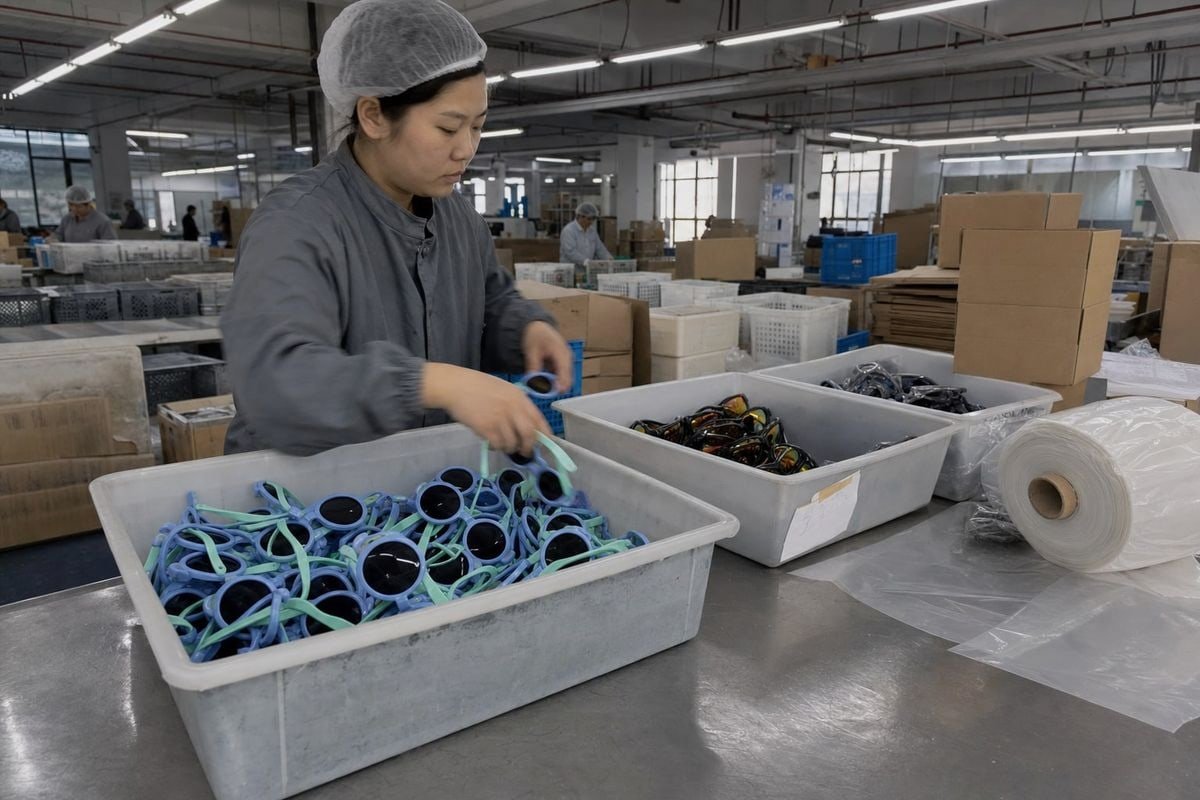
Kids eyewear is a special forecasting case. Children lose glasses, sit on them, and outgrow them. That behavior creates genuine bundle demand that most product categories never see. Parents actively want a backup pair. Our flexible TPEE and TR90 frames 4 survive rough handling, but even durable frames get left at the beach. So bundles built around loss-insurance and growth are not gimmicks. They match real customer purchase behavior.
Segment demand by age tier and bundle type
A practical starting point is a standard age distribution: roughly 15% baby, 30% toddler, 40% kids, and 15% youth. Then layer bundle types on top:
| Bundle type | Suggested allocation | Target buyer motive |
|---|---|---|
| Duplicate bundles (two identical pairs) | ~25% of toddler inventory | Loss-insurance for the most drop-prone age group |
| Sibling-sync bundles (same style, different sizes) | ~10% of total volume | Multi-child households buying once |
| Growth-stage bundles (current size + next size up) | Small test allocation | Retention through developmental transitions |
| Mixed bundles (bestseller + slower colorway) | ~20% of total volume | Value seekers; accelerates slow-mover turnover |
Respect color risk and MOQ math
Trend-driven colors — think our mirrored orange-gradient sport shields — should stay mostly individual, around a 70% single ratio, because fashion colors can die between seasons. Safe classics like our periwinkle-and-mint rounds tolerate bundling better. Also calculate total commitments honestly: multiply per-colorway Minimum Order Quantity by your age-size tiers. Custom OEM kids frames often start at 300–500 pieces per style, while ready stock can be ordered from a single piece. Add a 5–10% buffer for destructive safety testing 5 under CPSIA and CE. These constraints shape a feasible ratio before marketing preferences even enter the discussion.
Can I adjust my bundle-to-individual ratio after seeing initial sales data or market feedback?
A lesson our team learned over fifteen years of eyewear production is that the first order is never the final answer. Buyers who treat ratios as fixed usually reorder the wrong mix.
Yes, and you should. Review sell-through analysis, attach rate, margin, and return rate every 30 days, then rebalance your next order accordingly. Virtual SKU mapping lets you shift units between bundles and singles without physically repacking existing stock.

The smartest structural decision you can make is to keep bundles virtual. Instead of shrink-wrapping two pairs together at the factory, map the bundle as a virtual SKU in your inventory system. The bundle then draws from individual component stock 6 in real time. When bundle demand spikes, availability adjusts automatically. When it fades, every unit is still sellable as a single. This one choice makes your ratio almost infinitely adjustable and dramatically improves your أول طلب آمن دائمًا هو أصغر طلب يقبله المورد.
A monthly rebalancing process
Here is the simple loop we recommend to brands we supply:
- Pull SKU performance tracking data for singles and bundle components.
- Calculate attach rate: what share of orders included a bundle?
- Check contribution margin per bundle order against your target.
- Compare return rates between bundle orders and single orders.
- Shift 5–10 percentage points of your next order toward whichever format is winning. Avoid big swings on thin data.
Know which signals justify a change
Not every signal deserves a reaction. One strong gifting week in December does not mean bundles should jump to 50% of your March order. Look for patterns that repeat across at least two ordering cycles. Also watch for the quiet failure mode: bundles that sell but drag Average Order Value profit down through over-discounting. If margin per order falls while units rise, pull the bundle share back and revisit your discount depth. And because our ready-stock catalog ships from one piece, replenishing a corrected ratio takes weeks, not a full custom production cycle — which is exactly why we tell new brands to test before they tool.
How does my sales channel affect the right order ratio between bundle and individual sunglasses quantities?
A distributor in Japan once told me his optical-shop clients wanted zero bundles, while his online store sold two-packs constantly. That conversation reshaped how we advise on channel-based assortment planning strategy.
Your channel sets your ratio. DTC e-commerce supports 35–50% bundles because shoppers respond to value packs and free-shipping thresholds. Marketplaces suit 25–35%. Wholesale to boutiques and optical shops should stay 80–90% individual, since retailers prefer building their own assortments.
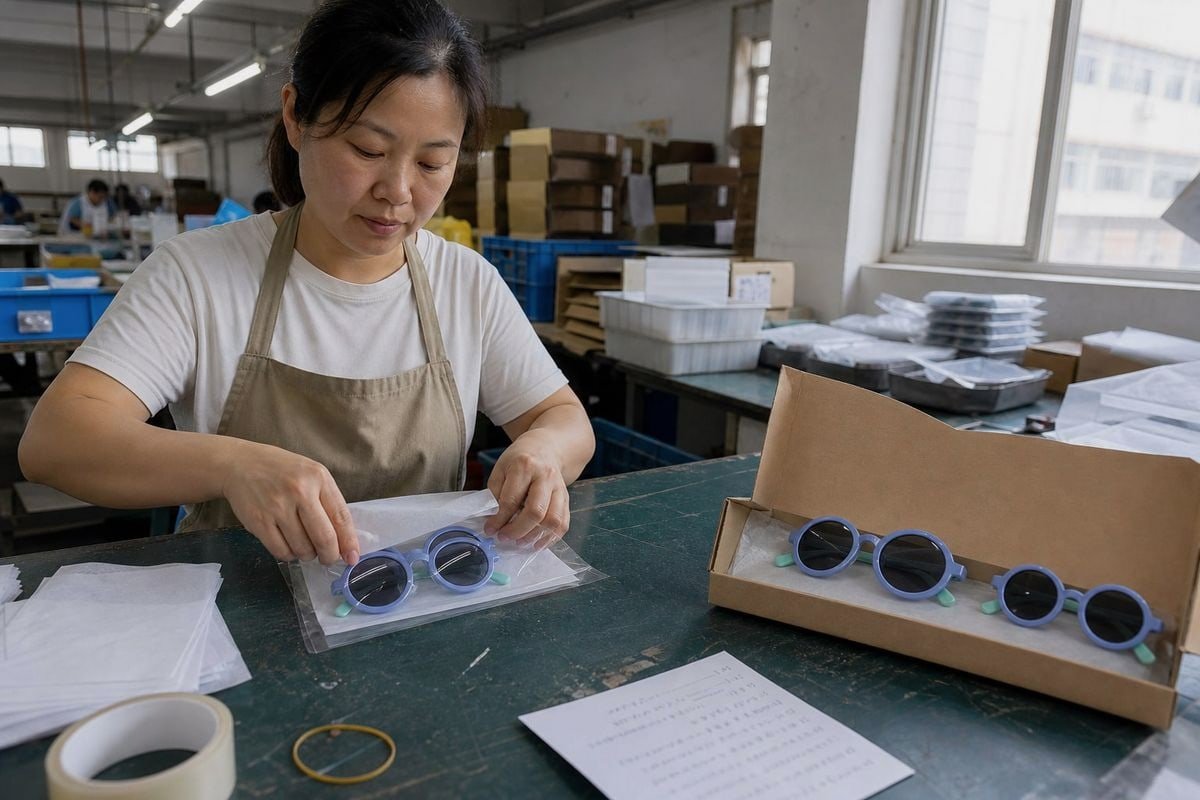
Each channel has different economics, different shopper psychology 7, and different packaging needs. A ratio that thrives on your own website can fail badly in a physical store. So plan your order by channel first, then sum the totals into one purchase order.
Channel-by-channel ratio guide
| Sales channel | Suggested bundle share | Key reasoning |
|---|---|---|
| Own DTC website | 35–50% | Full control of merchandising; bundles lift AOV past shipping thresholds |
| Marketplaces (Amazon, etc.) | 25–35% | Fees eat margin; multipacks work but discount depth must stay shallow |
| Wholesale to boutiques | 10–20% | Retailers curate their own shelf; singles preserve their flexibility |
| Optical shops / pharmacies | ~10% | Fitting-driven purchases; individual pairs dominate |
| Promotional / corporate | Varies by project | Often full-custom runs where the bundle question rarely applies |
Packaging follows the channel decision
Your ratio decision also drives packaging orders, and packaging has its own lead times. E-commerce bundles need protective multipacks that survive parcel networks. Retail singles need hangtags, display-ready cases, and barcode placement that scans at the till. Our OEM/ODM team builds branded, retail-ready packaging alongside the frames, and we always ask buyers to confirm the channel split before we quote packaging. Deciding the bundle-to-single mix after production is finished forces expensive repacking. Deciding it before the order means every unit leaves the 5S-managed workshop already matched to where it will sell. That sequencing alone protects both margin and delivery dates.
الخلاصة
Wrong ratios drain cash and bury margin in deadstock. The fix is simple: start singles-heavy, test bundles small, review data monthly, and rebalance by channel. We help brands do exactly that.
ملاحظات ختامية
1. Authoritative financial resource defining sell-through metrics for inventory management. ↩︎
2. Provides background on the marketing strategy of offering several products as one combined unit. ↩︎
3. Authoritative financial guide explaining contribution margin calculation and business application. ↩︎
4. Comprehensive Wikipedia entry explaining the properties of TPEE materials. ↩︎
5. Authoritative summary of the CPSIA regulations governing children’s product safety. ↩︎
6. Defines the management of raw materials and finished goods within a supply chain. ↩︎
7. Explains the study of individuals and processes used to select and use products. ↩︎
مقالات أخرى قد تعجبك

August 1, 2026
هل يجب على المصنع التعامل مع تغليف ووضع ملصقات نظارات الأطفال الشمسية، أم استخدام مورد مخصص؟

August 1, 2026
مستودع خاص مقابل الوفاء المباشر من المورد: أيهما يقلل تكاليف الإرجاع لعلامات نظارات الأطفال الشمسية؟

August 1, 2026
مباشر إلى ميناء المستودع أو التخزين الخارجي: أيهما يوفر أكثر على شحن نظارات الأطفال الشمسية؟
هل تبحث عن شريك موثوق به للنظارات للأطفال؟
استكشف أكثر من 800 نمط جاهز ودعم OEM/ODM كامل مصمم خصيصًا لعلامتك التجارية.
اتصل بنا English
  Español de México
  Deutsch
  Français
  日本語
日本語  العربية
  Português do Brasil