What Do the Three Numbers on Kids’ Eyewear Temples Mean, and How Should Parents and Staff Use Them?
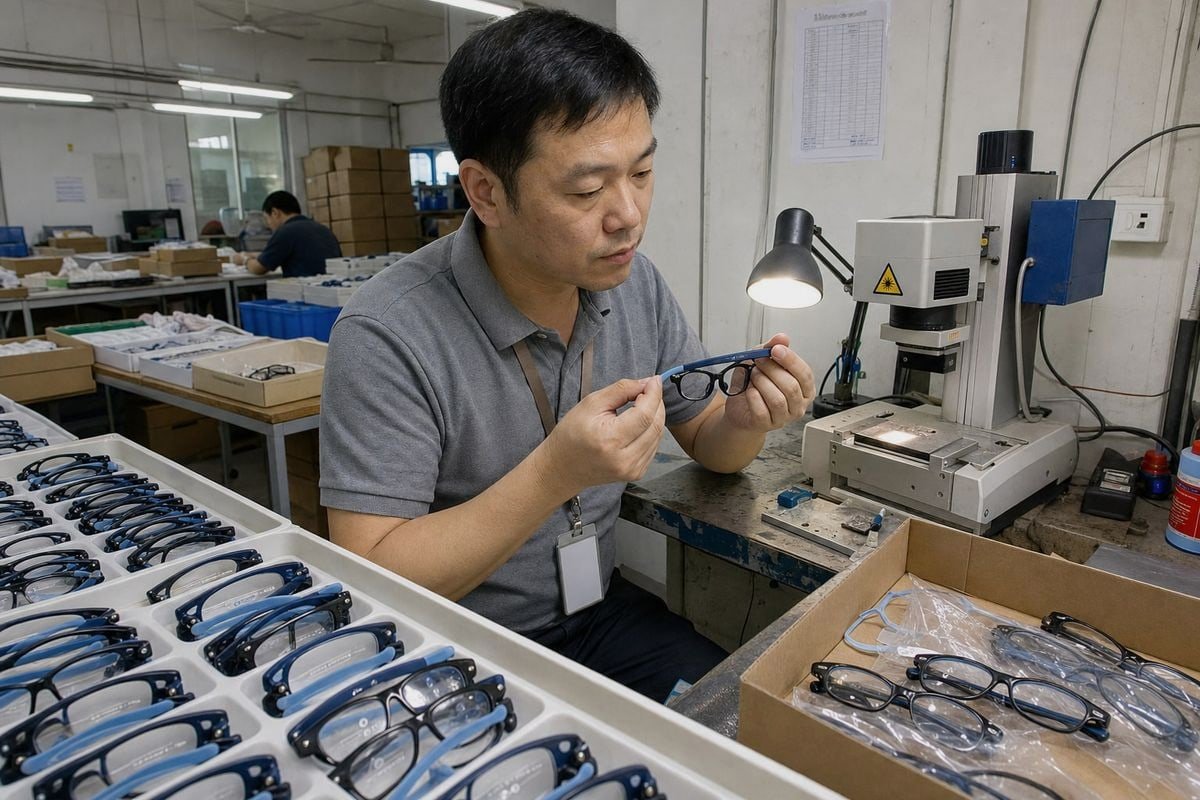
The three numbers on kids’ eyewear temples confuse many parents. On our Taizhou production line, we laser-mark them daily. Ignore them, and a child’s glasses slip, pinch, or sit crooked.
The three numbers on kids’ eyewear temples are the lens width, bridge width, and temple length, all in millimeters. A code like 48-18-130 means each lens is 48 mm wide, the bridge is 18 mm, and each temple arm is 130 mm long.
Those numbers look simple. But knowing what they mean is only step one. Let me walk you through how to actually use them, whether you are a parent or work behind an optical counter.
What Do Each of the Three Numbers on the Temple Actually Represent?
During final QC at our factory, every temple marking 1 gets checked against the mold spec. I have seen buyers confuse these numbers with color codes, so let me clarify what each one measures.
The first number is the lens width, the horizontal width of one lens. The second is the bridge width, the gap between the lenses over the nose. The third is the temple length, from the hinge to the tip behind the ear. All are millimeter measurements.

These are eyeglass frame dimensions, not prescription values. That distinction matters. A parent once asked one of our export clients why the "prescription" was printed on the arm. It was not. The prescription lives on the lens order; the temple marking only describes the physical frame.
Reading a Sample Code
Take a common kids' size like 48-20-140. Some brands print it as 48□20 140, where the small square symbol simply separates lens width from bridge width. Both formats mean the same thing.
| Number | Medição | What It Affects |
|---|---|---|
| 48 | Largura da lente | Field of view, pupil centering, face proportion |
| 20 | Largura da ponte | How the frame sits and grips on the nose |
| 140 | Comprimento da haste | Grip behind the ears, side pressure |
What Else Might Be Printed There
Temples often carry more than the size code. On our armações TR90 2, buyers may also request a style number, a color code, or their own logo. A style code like "K-8032" or a color code like "C3" is not a measurement. If a number is not in millimeters and does not fit the typical range, it is probably an identifier, not a size. Some frames also add a fourth figure, such as lens height, sometimes called the B-measurement. That number matters for progressive or thick prescription lenses, but the core sizing reference is still the classic three-number code.
How Can I Use These Numbers to Fit Glasses Correctly on My Child's Face?
A distributor in Australia once told me her best-selling reorder trick: parents photograph the temple code of the pair their child already loves. That habit works, and here is why.
Start with a pair that already fits well and match its numbers when buying new frames. Prioritize bridge width for stability on the nose, check temple length for comfortable grip behind the ears, and treat lens width as a proportion guide, not the deciding factor.
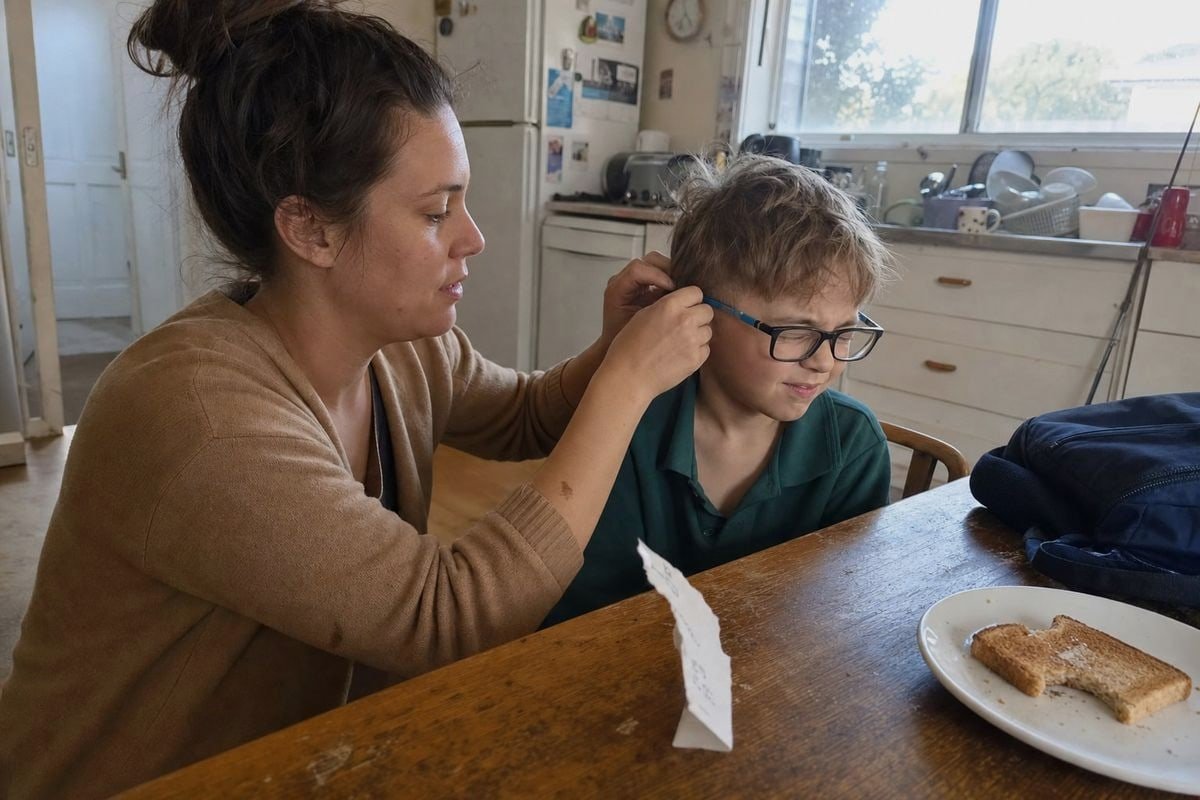
The numbers are a screening tool, not a guarantee. Two frames with identical codes can still fit differently because of frame curve, nose pad shape, and material flex. So use the code to shortlist, then confirm on the face.
Typical Kids' Size Ranges by Age
Children's ranges run narrower than adult ranges. Here is a practical guide we share with buyers when they plan their assortments:
| Faixa Etária | Largura da Lente | Largura da Ponte | Comprimento da Haste |
|---|---|---|---|
| Ages 3–7 | 40–46 mm | 13–16 mm | 110–125 mm |
| Ages 8–12 | 44–48 mm | 14–17 mm | 120–130 mm |
| Teens / small adult | 48–52 mm | 16–20 mm | 130–140 mm |
Treat these as guides, not rules. Face shape and nasal bridge development 3 vary a lot between children of the same age. Buying by measurement always beats buying by age alone.
A Quick Parent Checklist
- Copy the code from the current comfortable pair before shopping online.
- If glasses slip down the nose, look for a smaller bridge width first.
- If the arms poke outward or press behind the ears, adjust the temple length.
- Check that the child's pupils sit near the center of each lens; this relates to pupillary distance (PD) 4, which the optician measures.
- Ask the child to shake their head gently. The frame should stay put without leaving red marks.
One caution: flexible spring hinges change the feel. A frame with spring hinges gives an effective temple fit that is slightly looser than the printed number suggests, so a snug in-person check still matters.
Why Do These Measurements Matter for Comfort and Safety in Kids' Eyewear?
We chose flexible TPEE and TR90 for our children's frames fifteen years ago for one reason: kids do not sit still. Materials can absorb impact, but the wrong size defeats even the safest material.
Correct measurements keep lenses centered over the pupils for clear vision, keep the frame stable during play, and prevent pressure points that make children refuse to wear glasses. A poor fit causes slipping, skin irritation, distorted vision, and frames that break sooner.

Think about what each measurement controls, and the safety logic becomes clear. Pediatric eyewear fitting is not about looks alone. It is about optics, skin, and durability all at once.
Bridge Width Matters More for Kids Than Most Parents Realize
Children's nasal bridges are still developing. They are lower and softer than adult bridges. So an adult-style bridge width leaves a gap, and the frame slides down with every head movement. When glasses slide, the child looks over the lenses instead of through them. For a prescription pair, that means the child is effectively not wearing the correction. This is why our design team spends more time on bridge geometry than on any other part of a kids' frame.
Temple Length and the Growing Ear
A temple that is too short presses behind the ear and leaves marks within an hour. A temple that is too long pushes the frame forward, changing the distância do vértice 5, the gap between the lens and the eye. If lenses sit too close, eyelashes brush the surface and lenses fog faster. If lenses sit too far, the effective prescription shifts. Skilled staff also adjust the bend point on each arm separately, because slightly asymmetric ear heights are very common in growing children.
Lens Width and Optical Centering
Lens width helps position the optical center in front of the pupil. If the lens is far too wide for a small face, the pupils sit toward the inner edges of the lenses. That increases peripheral distortion and can strain young eyes. Lens height, the B-measurement, plays a similar role vertically, especially for stronger prescriptions.
| Wrong Measurement | Common Symptom | Risk for the Child |
|---|---|---|
| Bridge too wide | Frame slides down constantly | Child looks over lenses, correction lost |
| Bridge too narrow | Pinching, red marks on nose | Child removes glasses, skin irritation |
| Temples too short | Pressure behind ears | Headaches, refusal to wear |
| Temples too long | Frame slips forward | Fogging, altered distância do vértice 6 |
| Lens far too wide | Pupils off-center | Peripheral distortion, eye strain |
How Should Retail Staff Use These Numbers to Help Parents Choose the Right Fit?
Buyers from optical chains often ask us to print size codes in larger, clearer type. Their floor staff rely on that marking dozens of times a day, and I understand why.
Staff should use the three-number code as a fast first-pass filter to pull frames in the right size family, then confirm proper frame fit on the child in person by checking pupil centering, bridge contact, temple grip, and overall stability during movement.
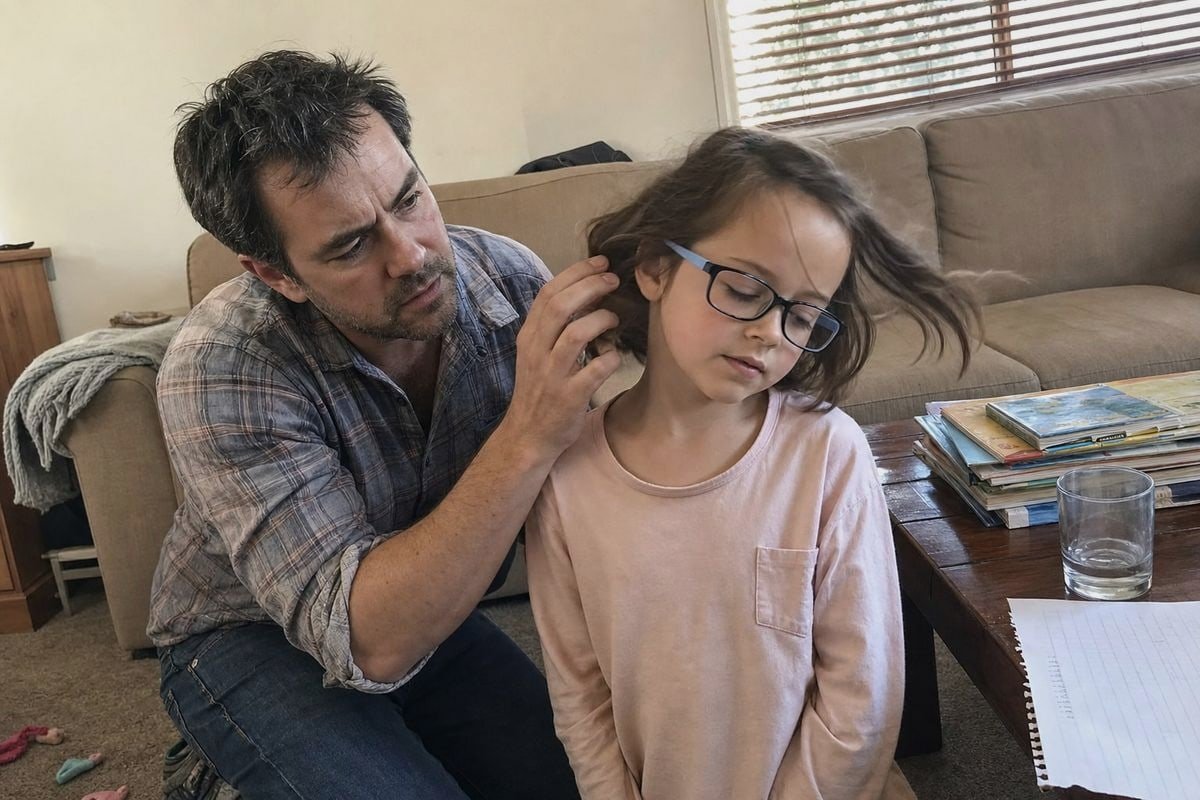
The code turns a wall of frames into a shortlist in seconds. But the code alone never closes the fitting. Here is a workflow we see the best retailers use, and it doubles as a parent-friendly conversation script.
A Five-Step Fitting Workflow
- Read the current pair. Verify you are reading the size code, not a style or color code printed nearby.
- Pull three to five frames within a couple of millimeters of that code.
- Fit on the face. Check that pupils sit near the lens centers and the bridge makes even contact with no gaps.
- Fine-tune the temples. Adjust bend points for each ear separately, and tighten slightly for frames with flexible spring hinges, since their effective length runs a little longer than printed.
- Do a movement test. Ask the child to look down, shake their head, and jump. The frame should stay stable.
Explaining Differences to Parents
When two frames seem similar, use bridge width and temple arm length to explain why one stays put and the other slips. Parents respond well to concrete numbers. Saying "this bridge is 2 mm narrower, so it hugs her nose better" builds trust faster than "this one just fits better."
Staff can also use the fit to set a slight pantoscopic tilt 7, angling the lenses so the optical center aligns with a child's typical downward gaze toward books and screens. For children between sizes, the smaller bridge with the longer temple usually wins, because a stable nose fit matters more than a few millimeters at the ear, where the bend can be customized.
Conclusão
Confusing temple markings lead to slipping, pinching frames and frustrated kids. Read the three numbers as lens width, bridge width, and temple length, match a proven fit, then confirm on the face.
Notas de rodapé
1. Authoritative guide on understanding frame measurements and markings on the temple arm. ↩︎
2. Technical information on high-performance thermoplastic materials used in the eyewear industry. ↩︎
3. Medical research regarding the development of facial structures in children for proper frame fitting. ↩︎
4. Defines PD, a core measurement opticians use to confirm lens centering matches temple code fitting. ↩︎
5. Optical definition of the distance between the eye and the lens surface. ↩︎
6. Explains vertex distance concept referenced when temple length changes lens-to-eye positioning. ↩︎
7. Background on pantoscopic tilt, the lens angling technique staff use for children’s downward gaze. ↩︎
Mais Artigos que Você Pode Gostar



Procurando um Parceiro Confiável em Óculos Infantis?
Explore mais de 800 estilos prontos e suporte completo OEM/ODM adaptado à sua marca.
Entre em Contato English
  Español de México
  Deutsch
  Français
  日本語
日本語  العربية
  Português do Brasil