年齢層別の子供用光学フレームのサイズマトリックスをデザインする方法
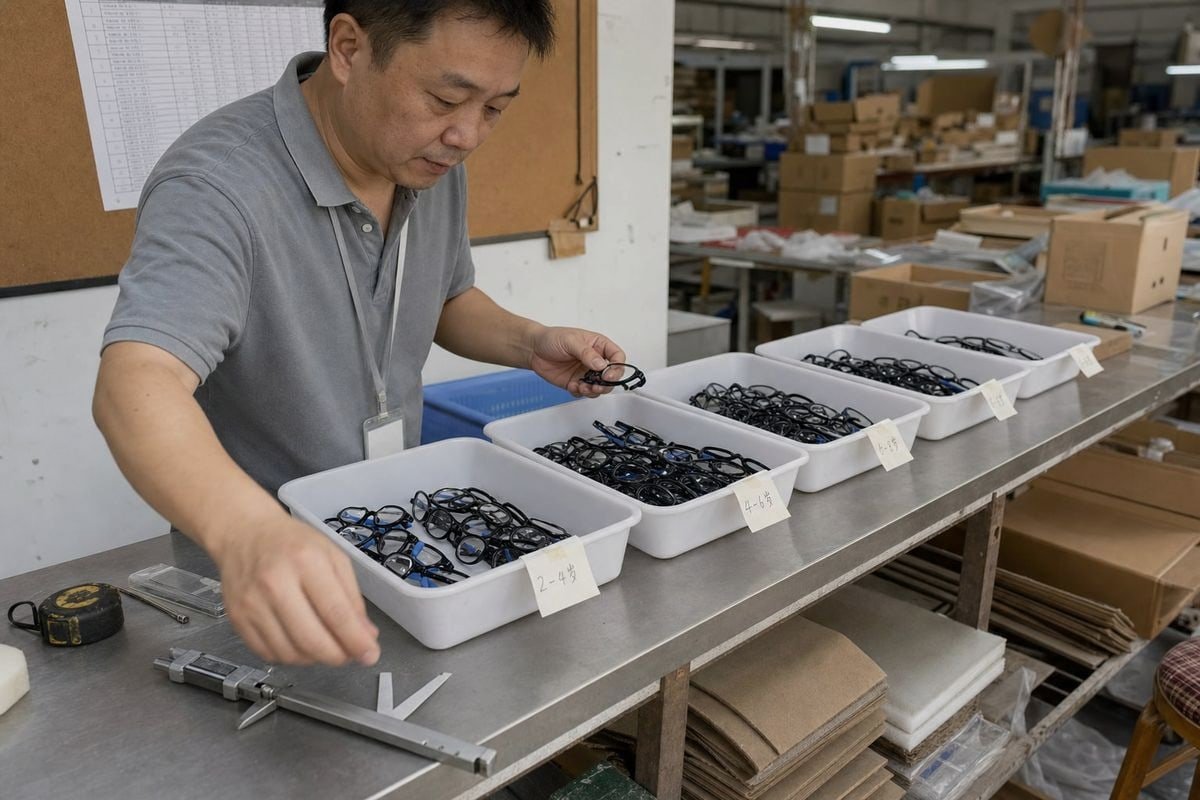
子供用光学フレームのサイズマトリックスを作成することは、返品が積み重なるまでは簡単そうに聞こえます。私たちの台州のワークショップでは、バイヤーが間違ったサイジングの仮定のためにシーズン全体を失うのを見てきました。.
年齢をバンド(0〜2、2〜5、5〜8、8〜12、13+)に分割し、各バンドにレンズ幅、ブリッジ幅、テンプル長の範囲ベースの測定値を割り当て、年齢だけでは代理にすぎないため、フィットチェックルールを追加して、子供用光学フレームのサイズマトリックスをデザインします。.
それが簡単な答えです。しかし、各ステップには、快適さ、安全性、返品率に影響を与える決定が隠されています。B2Bクライアントとこれらのマトリックスをどのように構築するかを説明します。.
年齢層ごとに適切なフレームのサイズをどのように決めますか?
去年の春、ヨーロッパのベビーブランドのバイヤーが、大人のアイウェアからコピーして縮小したサイズチャートを送ってきました。私たちのエンジニアはすぐにそれを指摘しました。小児の顔の解剖学は線形にスケールされません。.
年齢層ごとにレンズ径(乳児の約35mmからティーンエイジャーの52mmまで)、ブリッジ幅、テンプル長(110〜155mm)、瞳孔間距離(40〜54mm)のバンドを次元の束にマッピングして測定値を決定します。単一の値ではなく範囲を使用し、実際の顔の測定値に対して検証します。.
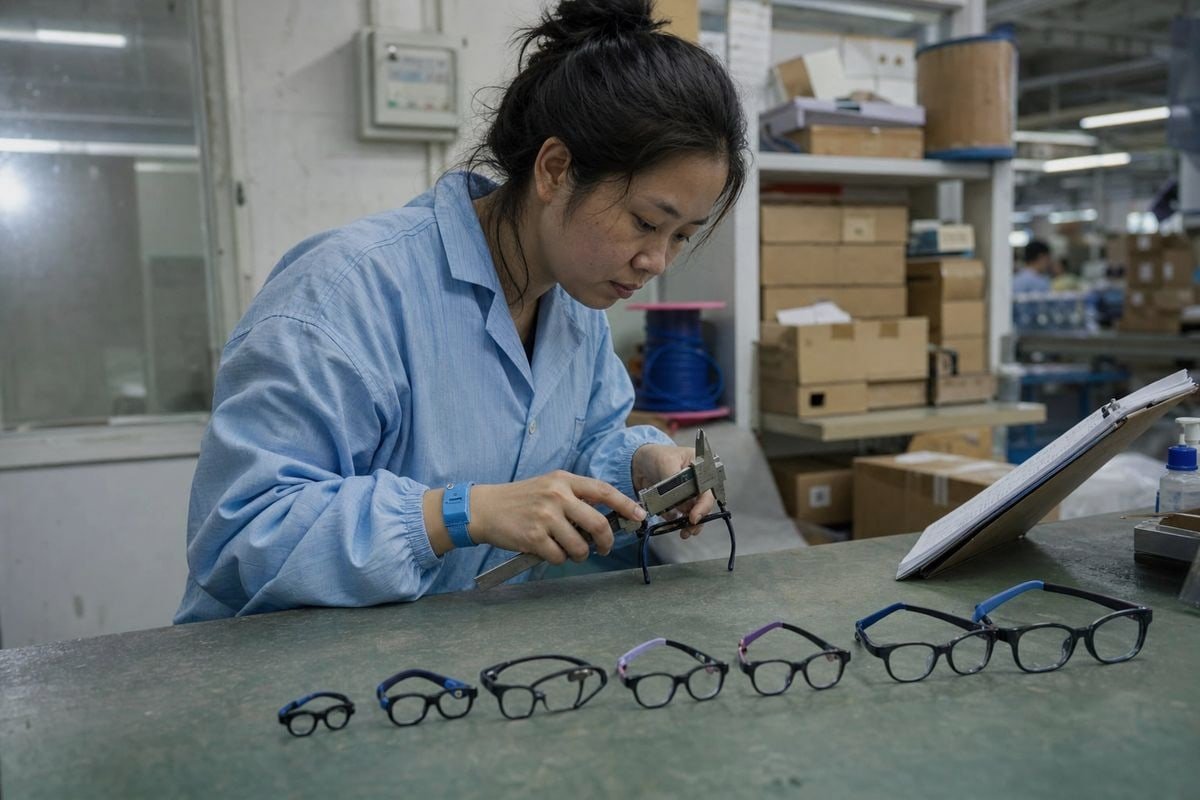
年齢は出発点であり、最終的な答えではありません。同じ6歳の子供でも、2サイズ離れたフレームが必要になる場合があります。そのため、クライアントが構築するすべてのマトリックスは、年齢を バンドル 測定値の、単一の数値ではなく、マッピングします。正しいレンズ幅のフレームでも、ブリッジが狭すぎたり、テンプルが長すぎたりすると、うまくフィットしない可能性があります。.
コア測定バンドル
ここに、ゼロから始めるバイヤーに推奨するベースラインマトリックスがあります。各セルを範囲として扱い、隣接するバンド間のオーバーラップを期待してください。.
| 年齢層別の一般的なサイズコード | レンズ直径 | ブリッジ幅(DBL) | テンプル長 | 通常のPD |
|---|---|---|---|---|
| 乳児(0〜2) | 33–37 mm | 12~14 mm | 37〜40 mm | 40~44 mm |
| 幼児(2〜5歳) | 37–42 mm | 13~15 mm | 4〜6歳 | 42~46 mm |
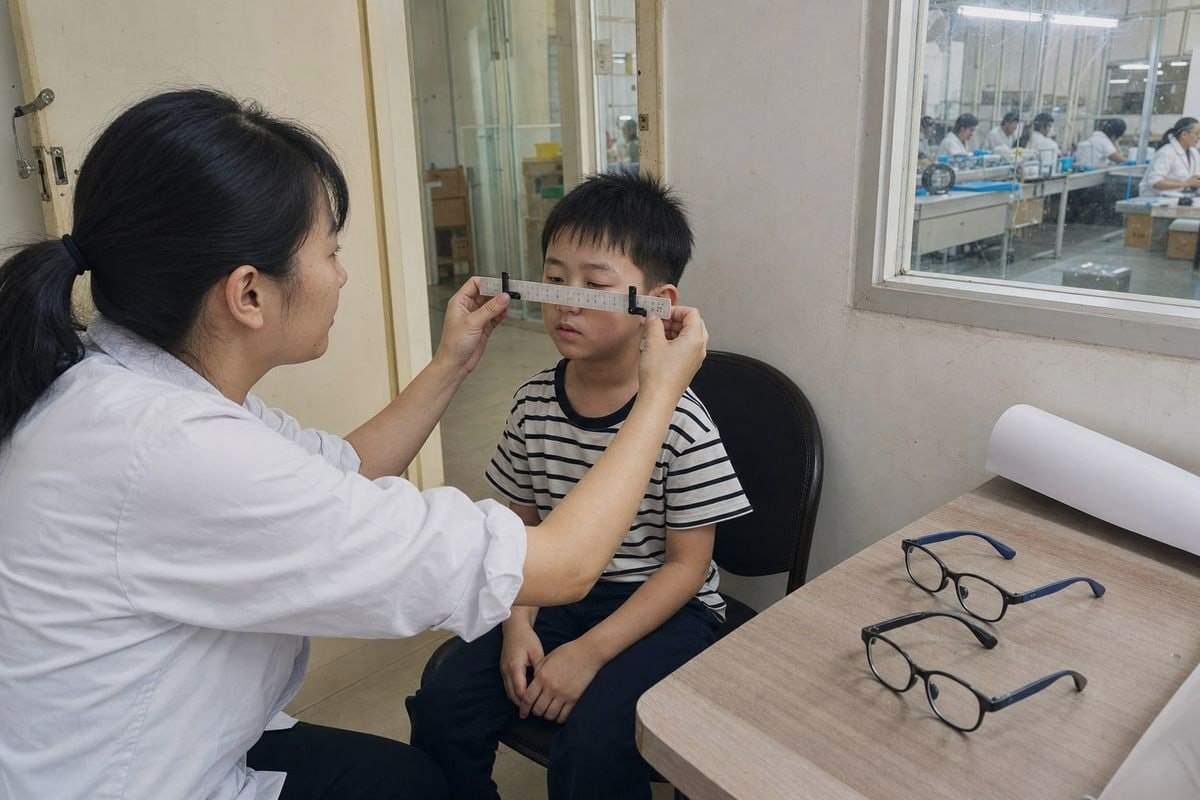
| 幼児(5〜8) | 41–46 mm | 115〜120 mm | 120~130 mm | まず、子供の顔の幅を測定します。次に、それを総フレーム幅と比較します。総フレーム幅は、おおよそレンズ幅の2倍にブリッジを加えたものです。便利なルール:フレームは顔よりもわずかに広く、約5〜10 mm程度広くてもかまいませんが、狭くなることはありません。わずかに広いフレームでも快適にフィットします。狭いフレームは締め付けられ、1日以内に拒否されます。 |
| 小学生(8〜12) | まず、子供の顔の幅を測定します。次に、それを総フレーム幅と比較します。総フレーム幅は、おおよそレンズ幅の2倍にブリッジを加えたものです。便利なルール:フレームは顔よりもわずかに広く、約5〜10 mm程度広くてもかまいませんが、狭くなることはありません。わずかに広いフレームでも快適にフィットします。狭いフレームは締め付けられ、1日以内に拒否されます。 | 120〜128 mm | 10〜14歳 | 48~52 mm |
| ティーンエイジャー(13+) | 48–53 mm | 16~18 mm | 140~150 mm | 56–66 mm |
瞳孔間距離がすべてを固定する理由
各レンズの光学中心は、子供の瞳孔の前に配置する必要があります。もし 瞳孔間距離 1 レンズの配置がずれると、処方箋の性能が悪くなります。したがって、PDはアンカーです。レンズ直径とDBL測定値は連携して機能します。それらの合計は 子供のPDにほぼ一致するはずです 目がレンズの中心に留まるように小さなマージンを追加します。.
オーバーラップを意図的に処理する
Notice how a 4–6 range (41–46mm) and a 7–9 range (46–48mm) nearly touch. That overlap is a feature, not a flaw. It lets your retail team recommend flexibly instead of forcing a rigid rule. We tell buyers: build the overlap in, then let a フレームフィットガイド 対面でのチェックで最終決定を下すように伝えます。.
若い子供とティーンエイジャーを比較した場合、どのような適切な機能を優先すべきですか?
生産ラインで常に検討しているトレードオフの1つは、グリップと圧力です。幼児用フレームは滑ってはなりませんが、食い込んでもなりませんが、バランスポイントは各年齢バンドで変化します。.
小さなお子様には、平らな鼻梁に合ったブリッジフィット、TPEEのような柔らかい柔軟な素材、シリコンケーブルテンプル、調節可能なストラップを優先してください。ティーンエイジャーには、スタイル、スプリングヒンジ、大人に近いサイズ、調節可能なノーズパッドを優先して、よりオーダーメイドで大人っぽいフィット感にします。.
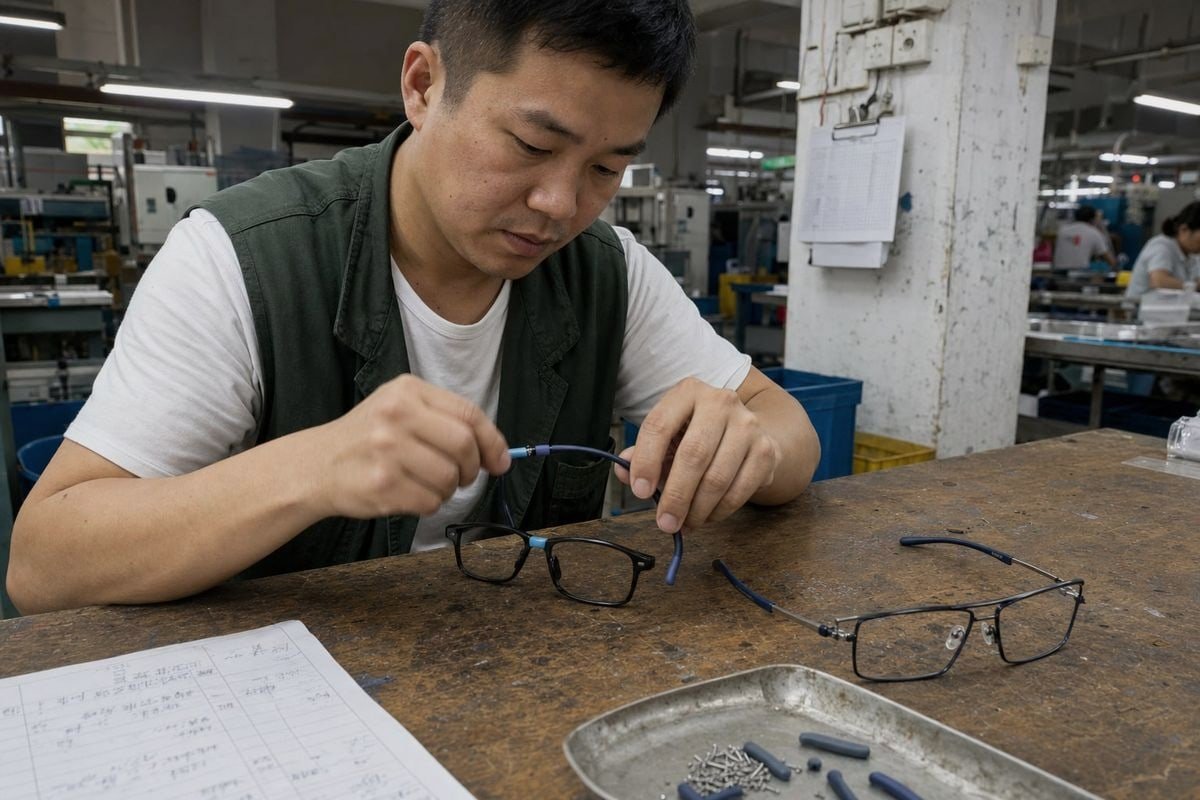
小児期を通じて、フィッティングの優先順位は同じではありません。2歳児と12歳児を同じ着用者の小さいバージョンと大きいバージョンとして扱うマトリックスは、どちらも失敗します。.
未就学児:まず保持力と柔らかさ
乳児や幼児は、鼻梁が平らで未発達です。標準的なブリッジはすぐに滑り落ちます。そのため、0〜5歳のバンドでは、次のように設計しています。 低く幅広のサドルブリッジ 鼻全体に接触を広げます。ここで真の素材の専門知識が重要になります。私たちの TR90 2 TPEEテンプル付きのフロントは、ねじれに対して柔軟に曲がり、元に戻ります。小さな子供は常にメガネを引っ張るからです。私たちが製造するスタイルの1つは、光沢のあるフロントとツートンカラーのゴムのようなテンプル、軽量のシリコンヒンジコネクタ、下向きに湾曲したイヤーフックを組み合わせています。リテンションシステム全体が、癇癪を起こしている間でも機能します。シリコンケーブルテンプルまたは伸縮性のあるヘッドストラップは、これらのバンドの、特にアクティブな着用者のためのマトリックスノートに含めるべきです。.
学童:遊びの中での耐久性
For the 5–8 and 8–12 bands, physical stress peaks. Playground impacts, backpack crushing, sports. テンプルが頭に対して剛性に押し付けられるのではなく、外側に曲がるようにすることで快適さを向上させます。TPEEは、1つのヒンジポイントではなく、アーム全体にわたって素材自体を通じて同様の効果を達成します。一部のスタイルでは、両方を組み合わせています。その結果、座られたり、片手で引っ張られたり、バックパックに詰め込まれたりしても耐えられる、ぴったりとした、許容範囲の広いグリップが得られます。 3 ここでコストに見合う価値があり、耐衝撃性の柔軟なプラスチックは、学年を通してフレームを長持ちさせます。触覚過敏症の子供たちにとって、ソフトタッチエラストマーや圧力拡散接点などの感覚に優しいタッチも重要であり、それらを要求するバイヤーが増えています。.
ティーンエイジャー:アイデンティティとフィット感を両立
ティーンエイジャーは、子供っぽく見えるものを拒否します。13歳以上では、大人のスタイリングを借用します。半透明の アセテート 4 外観、ミニマリストな形状—小ぶりの大人サイズ。ティーンエイジャーのブリッジは成人の発達に近いので、調整可能なノーズパッドが役立ちます。もう1つの現代的なポイントは、パンタスコピックチルトを考慮することです。デジタル姿勢のために、タブレット使用時の下向きの視線に合わせてレンズをわずかに傾けます。.
| 必須 | Ages 0–5 | Ages 5–12 | Ages 13+ |
|---|---|---|---|
| Bridge design | Flat saddle bridge | Molded or keyhole bridge | 調節可能なノーズパッド |
| 保管 | Cable temples, straps | Curved rubber tips | 標準テンプル |
| ヒンジ | Flexible/hingeless | テンプルが頭に対して剛性に押し付けられるのではなく、外側に曲がるようにすることで快適さを向上させます。TPEEは、1つのヒンジポイントではなく、アーム全体にわたって素材自体を通じて同様の効果を達成します。一部のスタイルでは、両方を組み合わせています。その結果、座られたり、片手で引っ張られたり、バックパックに詰め込まれたりしても耐えられる、ぴったりとした、許容範囲の広いグリップが得られます。 | テンプルが頭に対して剛性に押し付けられるのではなく、外側に曲がるようにすることで快適さを向上させます。TPEEは、1つのヒンジポイントではなく、アーム全体にわたって素材自体を通じて同様の効果を達成します。一部のスタイルでは、両方を組み合わせています。その結果、座られたり、片手で引っ張られたり、バックパックに詰め込まれたりしても耐えられる、ぴったりとした、許容範囲の広いグリップが得られます。 |
| 素材 | TPEE, soft flex | TR90 + TPEE テンプル | TR90, acetate looks |
| Style weight | 低 | 中程度 | 高い |
メーカーの既存のサイズ範囲を、より早くマトリックスを構築するためにどのように使用できますか?
A procurement manager from Australia once asked me how long a full custom size run would take. My honest answer changed her whole launch plan: months for new molds, or weeks if she built on our existing catalog.
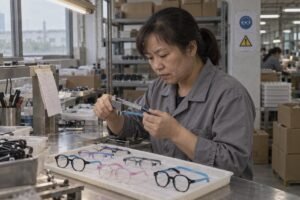
メーカーの既存のスタイルライブラリから始め、それらのフレームを実際のレンズ、ブリッジ、テンプル測定値で年齢層別に並べ替え、ターゲットを絞った追加でギャップを埋めます。これにより、実証済みのツールに対してマトリックスが検証され、市場テスト前の重い金型投資が回避されます。.
New frame molds are expensive and slow. If you build your matrix in the abstract first and then hunt for products to match it, you will find gaps everywhere. The faster path runs the other way. Here is the process we walk our clients through:
- Request the full spec sheet. We maintain around 800 existing styles, each with recorded lens diameter, DBL measurement, and temple length. Ask any factory for the same data before you design anything.
- Sort styles into your age bands. Drop each frame into the band whose measurement ranges it fits. Most catalogs cluster naturally around the 5–8 and 8–12 bands, because those are the biggest prescription markets.
- Identify the gaps. Maybe you have plenty of 44–46mm options but nothing under 38mm for toddlers. Now you know exactly what to source or develop.
- Test the market before tooling up. Launch with existing styles in custom colors and branding. Our 真剣な子供向けブランドは、ベビーサイズ、幼児サイズ、子供サイズ、ユースサイズという旅を販売しています。1つの製造パートナーがすべてを生産する場合、素材、 5 process covers custom colors, logos, lenses, and retail-ready packaging, so an existing mold can still look fully proprietary.
- Invest in molds only where sales prove demand. After one or two seasons of data, you know which bands and shapes deserve custom development.
Some buyers worry this approach makes their range look generic. In practice, the opposite risk is bigger: sinking tooling budget into unproven sizes. Custom colorways, temple graphics, and packaging differentiate the product; the mold geometry is invisible to the parent. Modular thinking helps too — some designs allow interchangeable temples or bridge variants, effectively letting one front serve adjacent age bands.
サイズチャートを確定する前に、どのような品質と快適性の要素を確認すべきですか?
A lesson I learned early in our fifteen years of eyewear production: a size chart that is dimensionally correct can still fail on comfort. Numbers on paper do not feel pressure points.
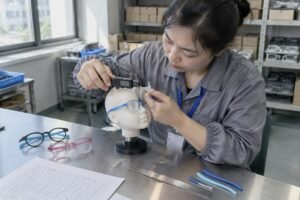
Before finalizing, confirm material safety and flexibility, hinge durability, bridge comfort under real wear, temple retention during activity, lens centering against PD, and weight per band. Run physical fit checks on real children, then add a "verify fit before purchase" note to every band.

The size chart is a promise to parents. Quality control is how you keep it. In our 5S-managed workshop, size verification is a standard checkpoint, because a frame that leaves tolerance by even a couple of millimeters at the bridge behaves like a different size on a small face.
The four-point fit check
Train your retail or e-commerce team on this final filter, and print it beside your chart:
- The frame sits stable on the nose without sliding when the child looks down.
- Lenses are centered on the pupils, matching the pupillary distance.
- The lower rim does not touch the cheeks when the child smiles.
- Temple tips curve behind the ears without digging in or leaving red marks.
Confirm before you print
| 要因 | 確認すること | なぜ重要なのか |
|---|---|---|
| 材料安全性 | BPAフリー 6, skin-safe, eco-friendly compounds | Children chew and handle frames constantly |
| 柔軟性 | Frame twists and recovers without cracking | Prevents breakage injuries during play |
| Hinge durability | Spring hinges survive repeated cycling | ヒンジは最も一般的な故障箇所です |
| Weight per band | Lighter frames for smaller bands | Heavy frames slide and cause pressure |
| Tolerance control | Bridge and temple dimensions held consistently | A chart is useless if production drifts |
| Retention parts | Silicone ear hooks and grips stay attached | Loose small parts are a safety hazard |
Keep the chart honest
Finally, add one sentence to every band of your published frame fit guide: "Sizes are a starting point — always check fit on your child." Opticians will trust your brand more for it, and looking forward, 3D biometric scanning 7 and statistical face modeling will make range-based, fit-checked matrices even more precise. Building yours around ranges now positions you for that shift.
結論
An age-only chart invites returns and frustrated parents. A range-based size matrix — built on real measurements, proven styles, and fit checks — protects your brand and every small face wearing it.
脚注
1. Defines the key optical measurement anchoring frame lens centering for children. ↩︎
2. Explains the thermoplastic material class used in flexible pediatric frame construction. ↩︎
3. Background on hinge mechanisms relevant to durability discussion in eyewear design. ↩︎
4. Background on the eyewear material referenced for teen frame styling choices. ↩︎
5. Clarifies manufacturing model referenced for custom branding on existing frame molds. ↩︎
6. FDA guidance on BPA safety supports the material safety confirmation step for kids’ products. ↩︎
7. Authoritative source on biometric scanning technology mentioned as a future fitting method. ↩︎

 English
 Español de México
 Deutsch
 Français
 日本語
 العربية
 Português do Brasil