Which Slip Less: Ear-Hook or Straight Temples on Kids Sunglasses?
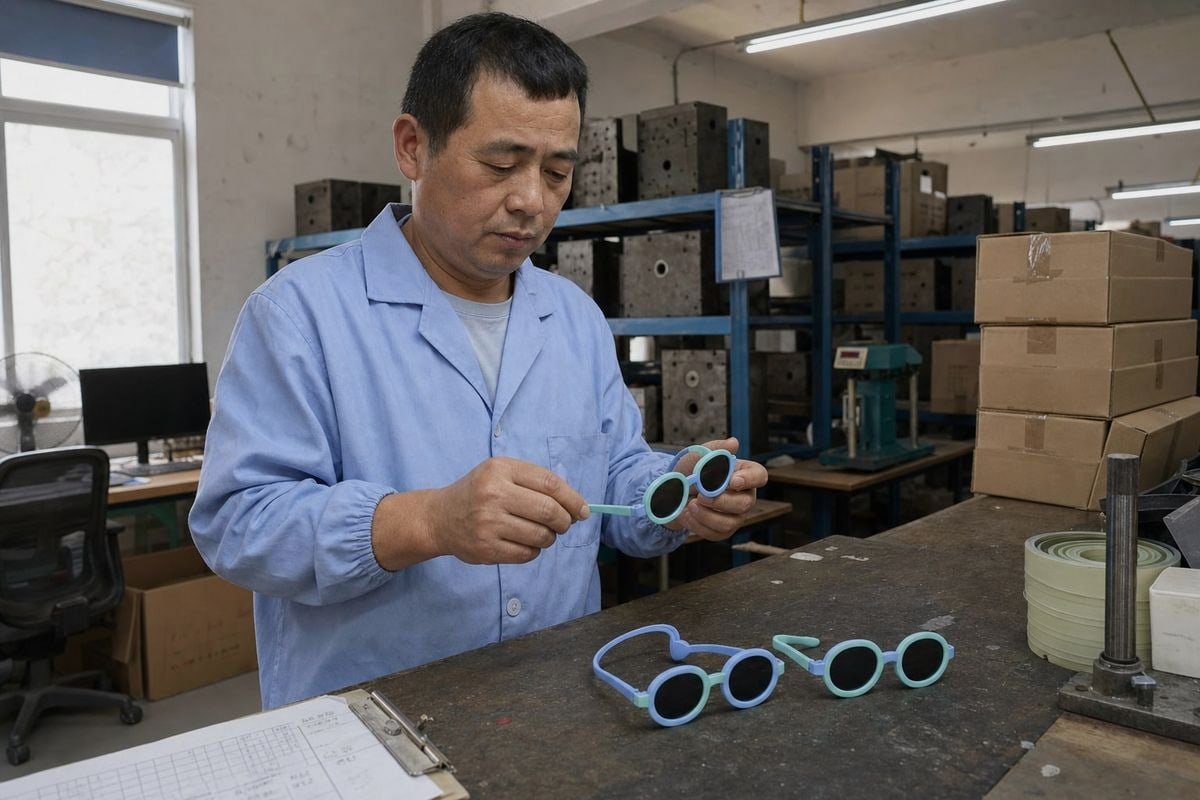
Choosing between ear-hook or straight temples on kids sunglasses is a question our factory hears from buyers constantly BPA-safe 1. Pick wrong, and returns pile up. Kids yank off frames that pinch. Parents complain about sunglasses sliding off at the playground. Your brand takes the blame, not the temple design. After fifteen years building children’s frames in Taizhou, we have learned the answer is simpler than most buyers expect.
Ear-hook temples slip less than straight temples on kids sunglasses because they wrap behind the ear and add mechanical retention, not just friction. Straight temples can stay secure too, but only with precise sizing, a correct ear bend, and grippy tips like soft TPEE or silicone.
That is the short answer. But the right choice for your product line depends on age group, activity level, materials, and how the frame will actually be used. Let me walk you through each factor the way we do with our B2B customers.
How do I decide between ear-hook and straight temples for active kids who won't stop moving?
A buyer from Australia once told me her biggest complaint category was sunglasses falling off scooters. We reviewed her line together, and every style used straight temples with hard tips. That conversation shaped how we now advise on active-use frames.
For high-movement kids, choose ear-hook or cable-style temples because they curve around the ear and resist forward pull during running, jumping, and bending. Straight temples rely mostly on friction, so they slide more easily when a child sweats, looks down, or plays hard.
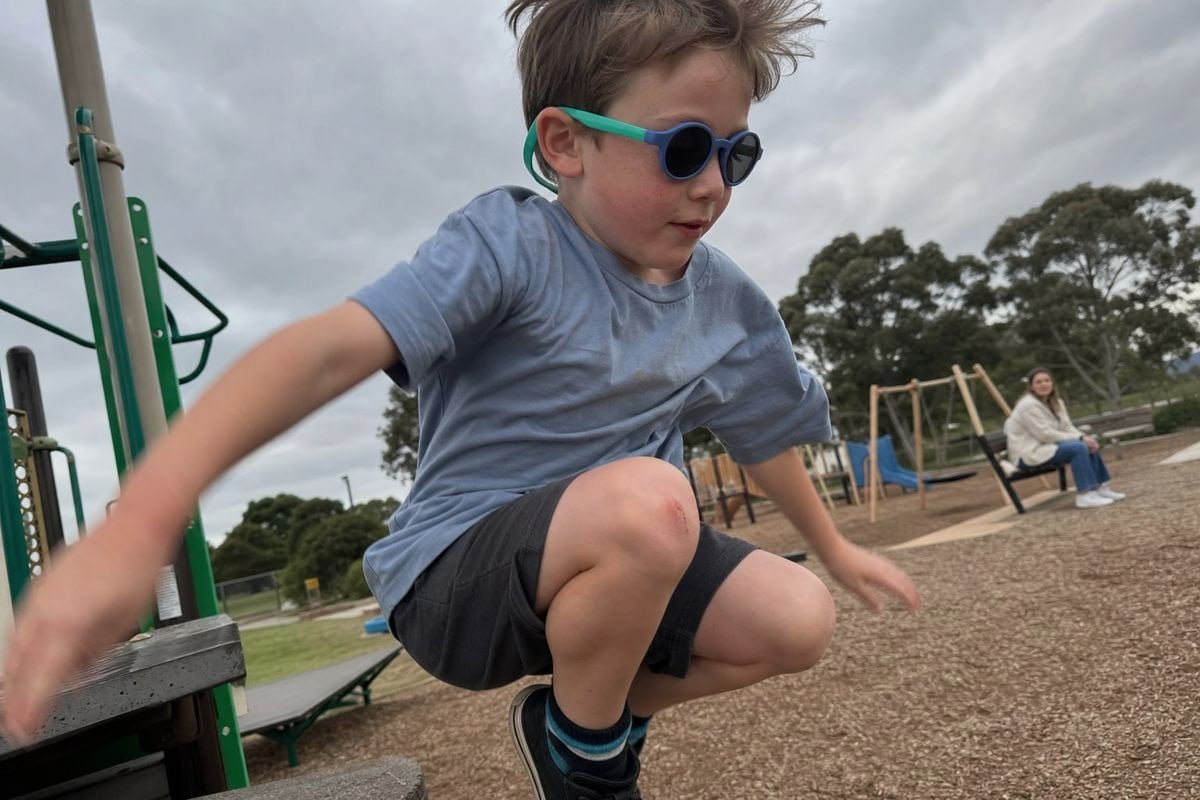
The physics here is easy to explain to your customers. A straight temple grips the side of the head and rests over the ear. It holds through friction 2 and light pressure. An ear-hook temple adds a mechanical stop. The curve wraps behind the ear, so the frame cannot slide forward without the hook lifting first. That is why sports styles and toddler frames so often use hooks, cables, or deep ear bends.
Here is a surprising detail we confirmed in our own fit testing: the temple, not the nose bridge, is the main factor in slipping. Many parents blame the bridge when glasses slide as a child looks down. In reality, the temple tip provides most of the retention in that position. If your frame slips, fix the temple first.
Quick comparison for buyers
| 要因 | Ear-hook / cable temples | Straight temples |
|---|---|---|
| Slip resistance | Better; wraps behind ear, resists pull-off | Good only when fit is precise |
| Best use cases | Toddlers, sports, playgrounds, heavy activity | Older kids, everyday wear, frequent on/off |
| Comfort risk | Can pinch if hook is too tight | Can slide if too long or bent too early |
| Ease of use | Slightly harder to put on and take off | Easy for independent kids |
| Sweat performance | Depends on tip material | Soft rubberized tips hold well when wet |
One caveat we always share: an ear-hook is not automatically better. A poorly sized hook pinches, and a pinched child removes the sunglasses. Then retention drops to zero. Fit geometry beats the style label every time.
Can flexible TR90 or TPEE materials help either temple style stay put without pinching?
Material selection is where our engineering team spends most of its development time. When we pair a TR90 3 front with TPEE temples, we are solving the exact tension in this question: grip without pressure.
Yes. Flexible TR90 and soft TPEE let both temple styles hold securely without pinching. TPEE temples flex around the head and ears, spreading pressure evenly, while soft-touch tips add friction. This improves retention for straight temples and makes ear-hooks gentler for growing children.
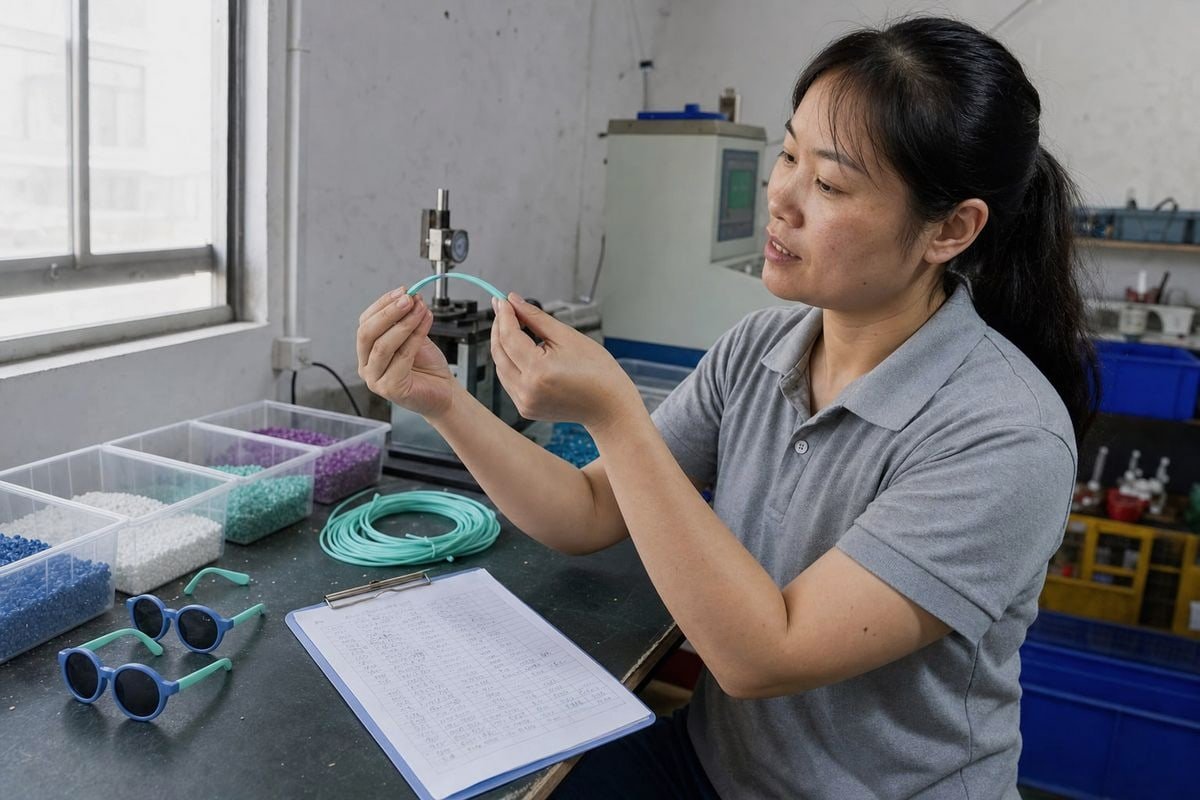
Hard plastic forces a trade-off. Make the temple tight, and it presses painfully behind the ear. Make it loose, and it slides. Flexible materials break that trade-off. TPEE 4 is a soft, rubber-like elastomer. It bends, twists, and returns to shape. On a straight temple, TPEE tips grip the skin gently and hold their friction even when a child sweats. On an ear-hook, TPEE lets the curve flex open as the frame goes on, then settle snugly without a pressure point.
TR90 plays a different role. It is a lightweight, memory-flexible nylon. A TR90 temple arm can bow outward during rough play and spring back instead of snapping or loosening. Less frame weight also means less downward force pulling the sunglasses off the nose in the first place.
How materials change the slip equation
| Material setup | Retention effect | Comfort effect |
|---|---|---|
| Hard plastic straight temple | Low grip, slides when wet | Rigid, pressure points if tight |
| TR90 straight temple, TPEE tips | Good grip, friction holds in sweat | Light, flexes with movement |
| Hard plastic ear-hook | Strong retention, but slick when sweaty | Can dig in behind ear |
| TPEE ear-hook or full TPEE temple | Strong retention plus soft wrap | Gentle even during long wear |
One point worth noting for wet conditions: soft rubberized tips often outperform hard plastic hooks in sweat and humidity, because rubber keeps its friction while smooth plastic gets slicker. So a straight TPEE-tipped temple can rival a hard ear-hook at the beach or pool. That is why we rarely recommend hard-material hooks for kids at all.
Which temple design should I choose for younger toddlers versus older kids in my product line?
Age segmentation is the most common mistake we see in new buyers' assortments. Last year, a European kids' brand asked us to quote one temple style across their entire 0–12 range. We talked them into splitting it, and their sell-through improved on both ends.
Use ear-hook or wraparound temples for babies and toddlers, since they resist pulling and constant movement. For school-age kids, offer sport hooks or grippy straight temples. For older children who remove sunglasses often, straight temples with soft tips balance comfort, independence, and retention.
Toddlers are the hardest use case in eyewear. They grab their frames, roll around, look down constantly, and cannot tell you when something pinches. Retention has to be mechanical, not behavioral. That is why cable temples, deep ear wraps, and strap-compatible designs dominate the 1–4 age band. In our own catalog of roughly 800 existing styles, nearly all toddler frames use flexible full-wrap or hook geometry, often molded in soft TPEE so the wrap cannot hurt.
School-age kids shift the priorities. They play sports, but they also want to put sunglasses on and take them off by themselves. A full cable temple is fiddly for small hands. Here, a sporty frame with a pronounced ear bend, or a straight temple plus a removable strap, gives you flexibility. Buyers should also remember growth: ear-hooks fit a narrower head-size window, so hooked toddler styles need tighter size grading, while straight temples with add-on grips adapt more economically to growth spurts.
Older kids and tweens value comfort and style. They wear frames longer, including during reading or screen time, where constant hook tension can irritate. Straight temples win here. They are also better for children with sensory sensitivities, who often cannot tolerate the steady pressure a hook puts behind the ear.
Suggested age-based lineup
| Age group | Recommended temple style | Why it works |
|---|---|---|
| 0–3 years | Full ear-wrap or cable, soft TPEE, strap option | Resists pulling; safe flexible material |
| 4–7 years | Sport hook or deep ear-bend straight temple | Playground retention, easier handling |
| 8–12 years | Straight temple with soft grippy tips | Comfort, independence, all-day wear |
| Sports lines, all ages | Wraparound sport frame plus retainer strap | Maximum retention during impact activity |
What should I ask my manufacturer to ensure the temple style I pick meets safety and comfort standards?
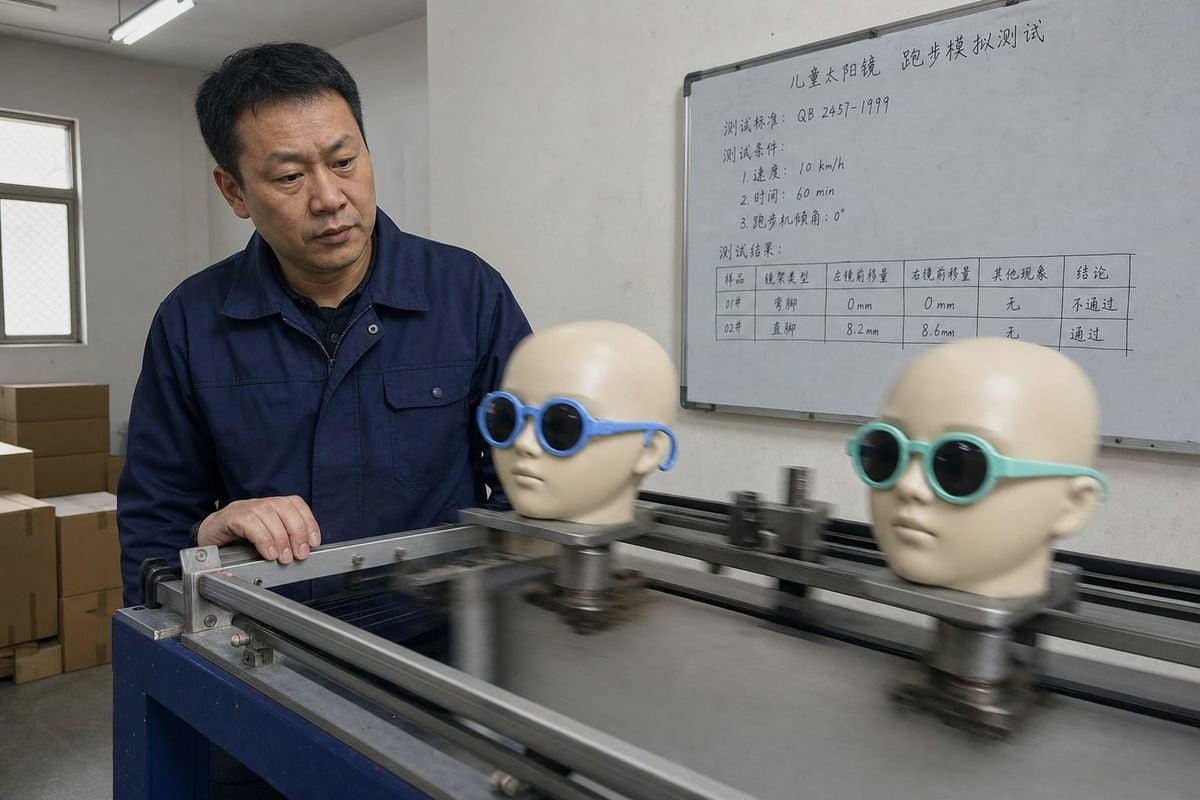
Quality questions are the fastest way to separate a real factory from a trader. In our 5S管理ワークショップ 5, we run flex, pull, and hinge-cycle checks on every temple design before it ships, and serious buyers ask about exactly those steps.
Ask your manufacturer about temple material composition, flex and pull-test procedures, hinge durability, temple length grading by age, tip softness, and compliance with children's product safety standards in your market. Also confirm they can adjust temple geometry, bend point, and tip length for your target head sizes.
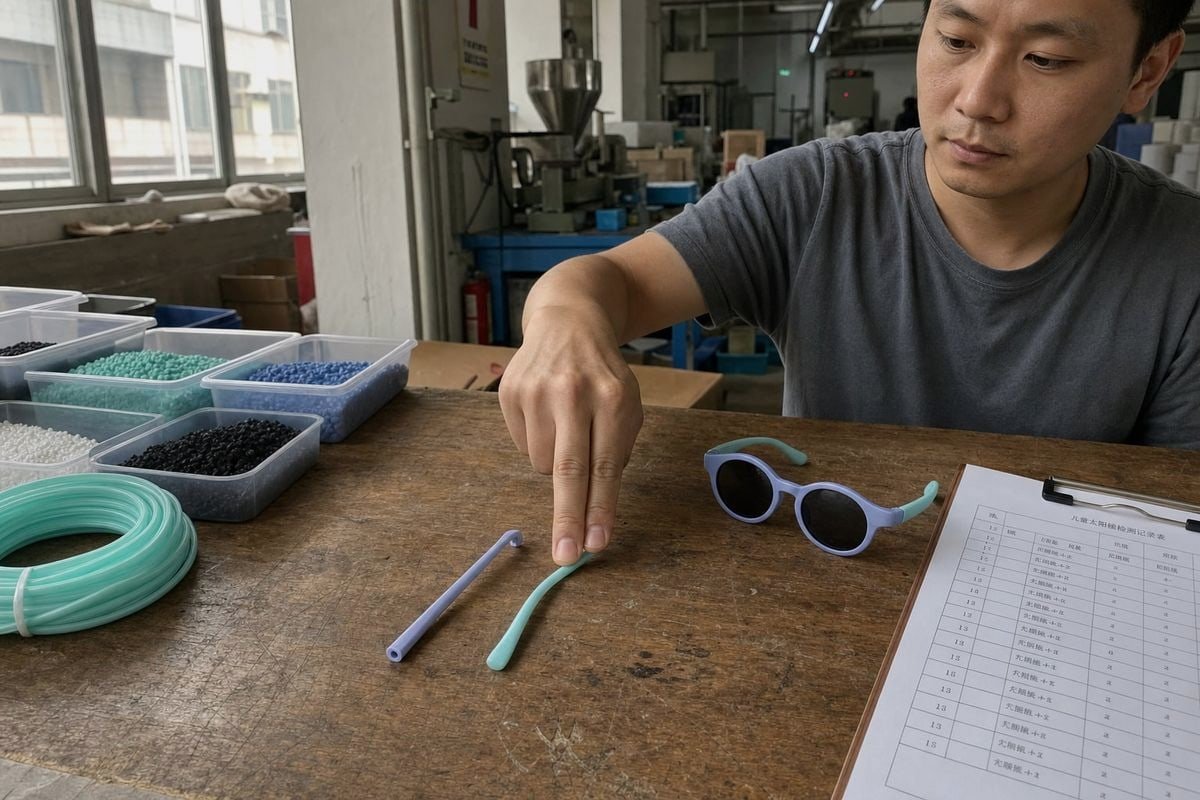
A temple that slips is annoying. A temple that breaks or pinches is a safety and liability issue. So your supplier conversation should cover both retention and protection. Here is the checklist we encourage our own customers to use, because a factory that answers these questions clearly is a factory you can trust with a children's brand.
The questions worth asking
- What exact material is the temple and tip? Ask for TR90 or TPEE by name, not vague terms like "soft plastic." Confirm the material is BPA-safe 6 and environmentally responsible.
- How do you test flexibility? A kids' temple should bend well past normal wear angles and spring back without whitening or cracking.
- Where is the ear bend positioned, and can it be adjusted for my market? Temples should run straight back and curve only near the ear. A bend that starts too early causes drift; a temple that runs too long past the ear means the frame is oversized.
- What temple lengths do you grade across age sizes? One length across a 0–12 range is a red flag.
- How do hinges perform over repeated cycles? Kids fold and unfold frames roughly. Ask about hinge-cycle testing or flexible hinge-free designs for toddlers.
- Which safety standards and lens specs do you support? Confirm UV400 protection and impact-appropriate lenses, plus documentation for your destination market.
- Can you customize the temple? Full OEM/ODM support should include custom colors, logo placement on the temple arm, tip hardness, and add-on accessories like straps or silicone ear grips 7.
That last point matters more than buyers expect. Sometimes the best anti-slip solution is not switching styles at all. If a frame shape sells well but slides, adding silicone ear grips or a removable strap can fix retention without new tooling. A capable factory should offer that path, and it lets you test the market from existing molds before investing in custom geometry.
結論
Slipping sunglasses frustrate kids, anger parents, and hurt your brand. Ear-hooks win on retention, straight temples on comfort and independence. Match temple style, flexible materials, and age grading, and slippage disappears.
脚注
1. FDA information on BPA safety helps buyers verify material safety claims for children’s products. ↩︎
2. Background physics concept explaining how straight temples hold via surface friction. ↩︎
3. Background on nylon-based engineering plastics used for flexible temple frames. ↩︎
4. Explains the elastomer class behind soft, grip-enhancing temple tip materials.



 English
  Español de México
  Deutsch
  Français
  日本語
日本語  العربية
  Português do Brasil