What Frame Shapes Suit TR90 Kids Optical Frames for Different Vision Conditions?
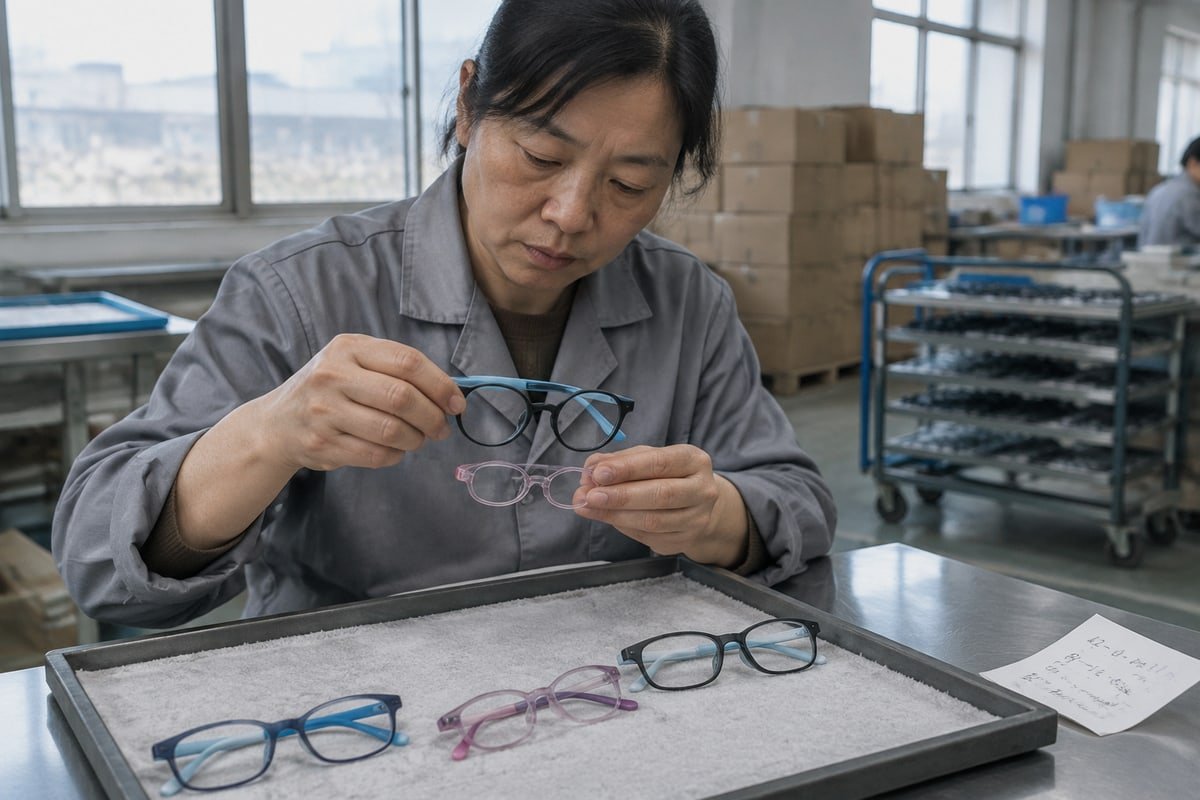
Parents buy TR90 kids optical frames for toughness, then watch the glasses slide, pinch, or show thick lens edges. On our Taizhou production line, we see shape fix that daily.
TR90 kids optical frames suit different vision conditions best when shape follows prescription: small round or oval frames for high myopia, compact oval frames for hyperopia, rounded rectangular frames for astigmatism and school wear, taller rectangles for progressives, and wrap-around styles for active kids.
The material gets the credit. The shape does much of the work. Below, I walk through prescription strength, astigmatism and high power, face shape, and daily comfort. Each section ends with a clear recommendation.
How Do I Choose the Right TR90 Frame Shape for My Child's Prescription Strength?
Our QC team once mounted a strong minus lens into an oversized sample and the edges stood out like a step. Now we start every shape discussion there.
Choose the TR90 frame shape by prescription strength: strong minus prescriptions need smaller round, oval, or rounded-rectangular lenses to cut edge thickness; plus prescriptions suit compact ovals that stay centered; mild prescriptions allow any well-fitted shape, as long as the pupil sits near the lens center.
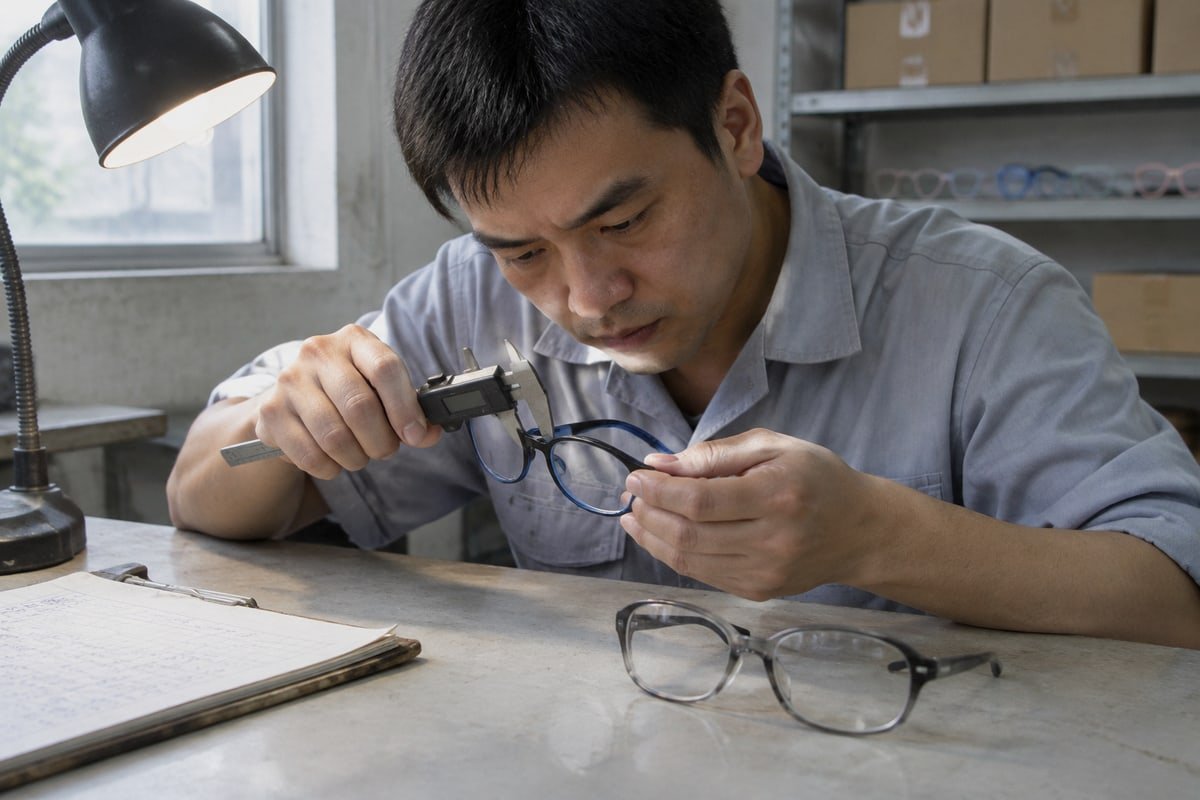
TR90 is a thermoplastic material. It bends, it weighs very little, and it returns to shape. None of that changes optics. A lens is ground the same way whether the frame is TR90 or metal. So the frame shape decides how much lens the child carries in front of each eye.
Why lens size drives lens thickness
A minus lens is thin in the middle and thick at the edge. The farther the edge sits from the 光学中心, the thicker it gets. A large frame pushes that edge outward. A small frame trims it away. That is why opticians in 小児眼科 1 often recommend smaller lens diameters for high prescription lenses. The old "coke-bottle" look is mostly a lens-size problem, not a lens-quality problem.
A plus lens works the other way. It is thick in the center and thin at the edge. Size matters less for bulk, but weight and balance still matter. A compact oval keeps the heavier center close to the bridge, so the frame does not tip forward.
| Prescription strength | Recommended TR90 shape | 主な理由 |
|---|---|---|
| Mild myopia 2 (low minus) | Any well-fitted shape, rounded rectangle or oval | Edge thickness is small, so fit and comfort lead |
| Moderate myopia | Rounded rectangle or oval, compact | Keeps edges tidy and pupil near lens center |
| High myopia (strong minus) | Small round or oval | Smallest lens diameter, least edge thickness |
| Hyperopia (plus) | Compact oval or round | Balances center weight, resists tipping |
| Progressive or multifocal | Taller rectangle or rounded rectangle | Needs vertical lens height for the corridor |
サイズ番号を読む
Kids’ TR90 frame widths commonly sit around 40–48 mm per lens. A typical spec looks like 45-16-128: 45 mm lens width, 16 mm bridge, 128 mm temple length. On our sample table, we check 瞳孔間距離 3 alignment against that first number. If the child's pupils sit far inside the lens center, the optical center shifts and the lens grows thicker on one side. That is where a smaller lens saves both weight and clarity. One listing we studied puts a full TR90 kids frame at about 10 g, and that low weight only stays low when the lens stays compact.
So my rule for buyers is simple. Ask the prescription first. Then choose the smallest shape that still gives a comfortable field of view.
Which Frame Shapes Work Best for Kids with Astigmatism or High Prescriptions?
An optical distributor in Europe asked us last spring whether astigmatism needs a special frame shape. The honest answer surprised her: stability matters more than shape.
For astigmatism, rounded rectangular or oval TR90 frames work best because they hold cylinder-corrected lenses centered and stable. For high prescriptions, small round or oval frames minimize edge thickness and peripheral distortion, and a secure saddle bridge keeps the optical center aligned with the pupil.
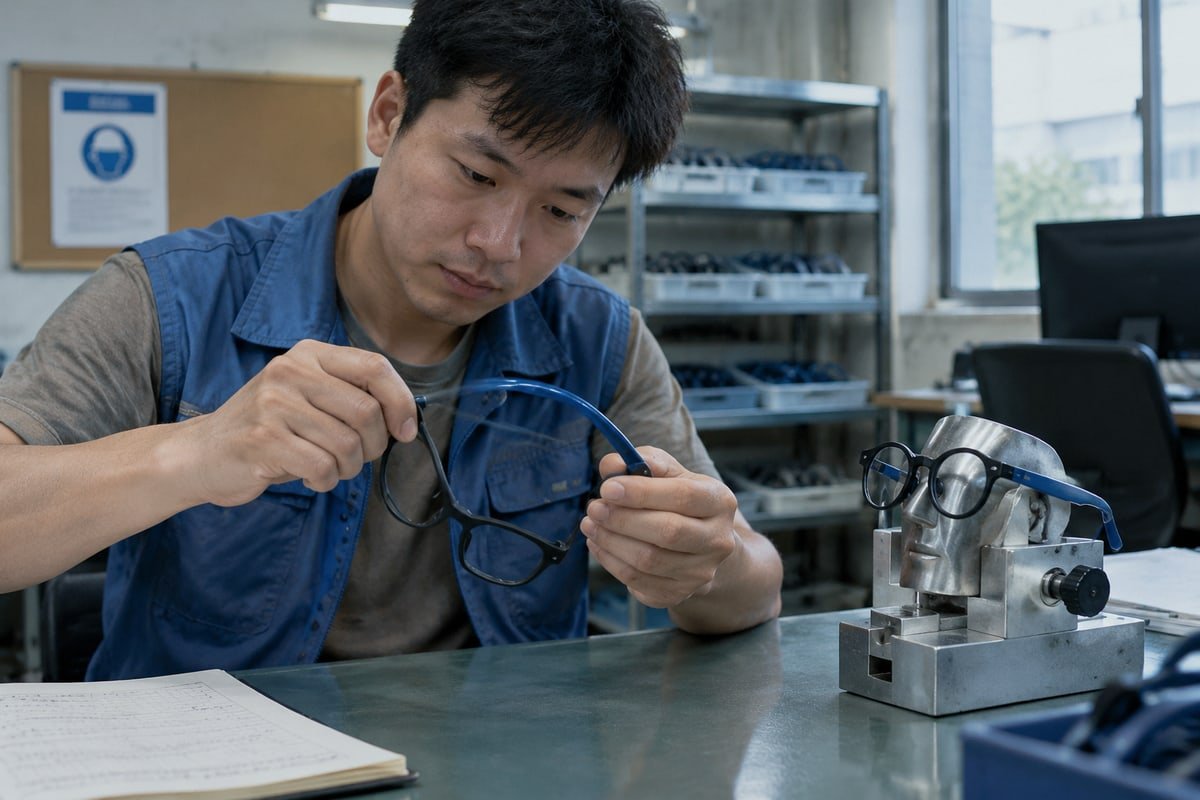
Here is the short version, ranked by how often we see it work:
- Small round or oval for high minus prescriptions.
- Rounded rectangular for astigmatism in daily school wear.
- Oval for a safe all-around choice with either condition.
- Taller rectangular when progressive or myopia control lenses 4 need vertical space.
Astigmatism: the axis must not move
An astigmatism lens has a cylinder set at a specific axis. If the frame twists on the face, the axis rotates and the correction blurs. A child will not notice why. They will just say the glasses feel "wrong." That is why the frame's job here is to stay put. Rounded rectangular frame geometry gives the front rim a little structure, so the lens sits square. TR90 helps because it acts as a memory polymer. When a child sits on the frame, it flexes and snaps back instead of holding a twist.
High prescriptions: smaller is kinder
Many sellers push larger, fashion-forward shapes because they photograph well. For strong minus prescriptions I would push back on that. Larger lenses mean thicker edges, more weight, and more distortion at the sides. Round and oval shapes with a small diameter keep the edge close to the optical center. That reduces peripheral distortion and keeps the front of the frame light enough for a small nose.
| 形状 | Edge thickness (high minus) | Field of view | Stability on face |
|---|---|---|---|
| 丸みを帯びた四角形(コンパクト) | 一般的な価格帯 | 中程度 | Good with saddle bridge |
| 楕円 | 低 | 接触点に集中 | 接触点に集中 |
| 丸みを帯びた長方形 | 中程度 | 非常に良い | 非常に良い |
| Full square/rectangle | 最高 | 最も広い | 非常に良い |
Myopia control and progressive lenses
Advanced myopia control lenses, such as DIMS or H.A.L.T. designs, depend on precise centration. The treatment zones only work when the pupil sits where the lens designer intended. A frame that flexes but returns to shape gives that stability. A frame that stretches and stays stretched does not. When we build TR90 fronts for these lenses, we hold the rim tolerance tight so the optician's fitting cross lands where it should. Progressive lenses need vertical height as well, and one TR90 kids rectangle we benchmarked was marked progressive-compatible for exactly that reason.
Can Face Shape and Vision Needs Both Guide My TR90 Frame Selection?
Every time we refine a style in our 800-style catalogue, we weigh two things: how it flatters a small face, and how it holds a lens. The lens usually wins.
Yes, face shape and vision needs can both guide TR90 frame selection, but vision needs come first. Match lens size and height to the prescription, then pick the softest style that flatters the face: rounded rectangles add definition to round faces, while round or oval frames soften angular features.
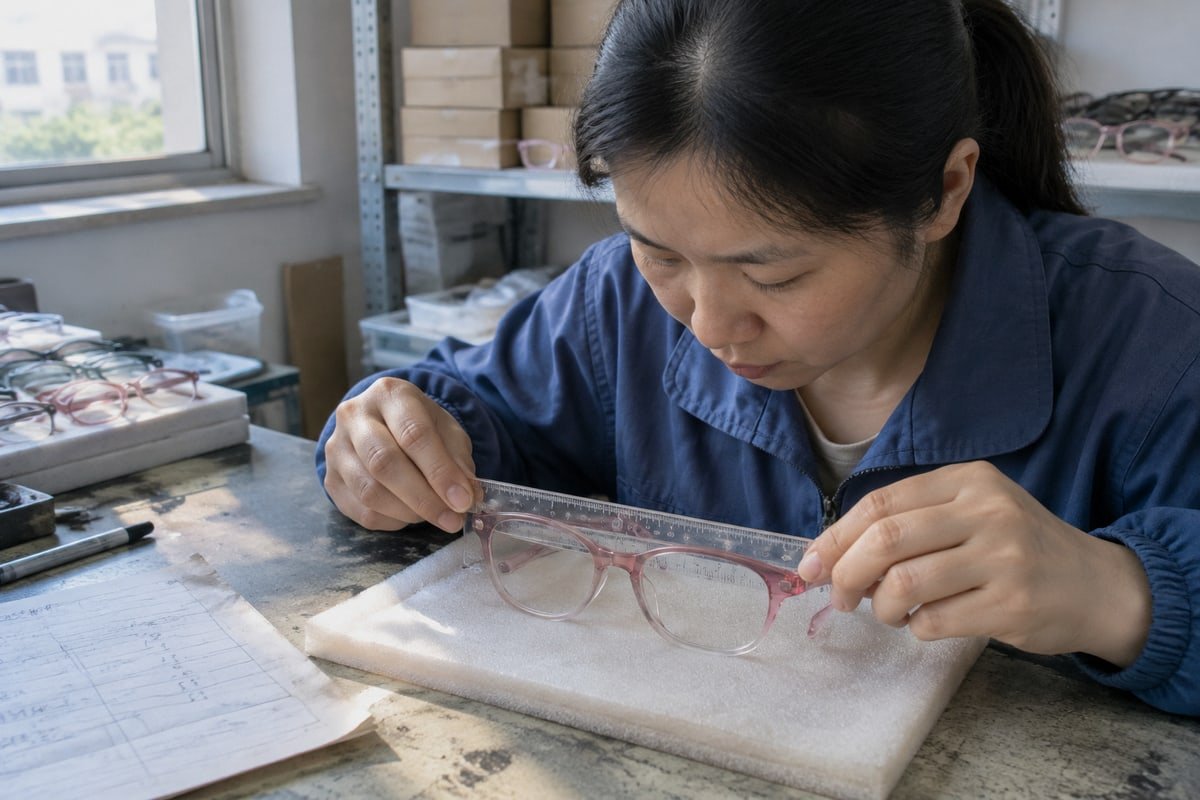
Adult face-shape rules are strict. Kids' rules are not. Children's faces are rounder, their noses are flatter, and their proportions change every year. So I treat face shape as the second filter, not the first.
A simple two-step process
- Fix the optics. Decide lens width and height from the prescription. A strong minus needs a small lens. A progressive needs a tall lens, often called a larger B-dimension. A child who switches between a tablet and a classroom board also benefits from a bit more vertical height, because the eye travels down through the lens more often.
- Choose the outline. Within that size, pick the shape that suits the face and the child's taste. Kids wear what they like. A frame they chose is a frame they keep on.
| 子供の顔の形 | Flattering TR90 outline | Vision note to keep in mind |
|---|---|---|
| 丸い | 丸みを帯びた長方形 | Keep the lens compact if the prescription is strong |
| 楕円 | Almost any shape | Let prescription decide the size |
| Square or angular | 丸顔または楕円顔 | Naturally good for high minus lenses |
| Small or narrow | Small round or oval, 40–44 mm | Avoid width that pushes the optical center inward |
What our current styles show
Two of our TR90 styles illustrate the balance. One is a classic round-oval with a matte black front and glossy sky-blue temples. The keyhole nose bridge sits low and wide, which suits the flatter nasal profile of a young child, and the small lens keeps thickness down for a strong minus. The other is a rounded-square front in translucent crystal fading to soft pink along the brow and temples. The rounded-square outline gives a little structure to a rounder face and offers more lens height, so it works for moderate myopia or an early progressive.
Nose bridge fit is where face shape and vision meet. Many TR90 kids frames use a saddle bridge that spreads weight across the nose instead of resting on two pads. On a child with a low bridge, that stops slipping. If the frame slides down, the optical center drops below the pupil and every condition, from mild myopia to astigmatism, gets worse. So when a buyer asks me about face shape, I always ask about the bridge first.
Do Certain Frame Shapes Improve Comfort and Compliance for Kids Wearing Glasses Daily?
Fifteen years of building children's frames taught us one thing: a child will not wear glasses that hurt, no matter how tough the material is.
Yes. Compact round, oval, and rounded-rectangular shapes improve comfort and compliance because they weigh less, stay centered, and avoid pressure points. Pairing them with flexible temple arms, spring hinges, silicone tips, and a saddle bridge keeps TR90 glasses on all day without slipping.
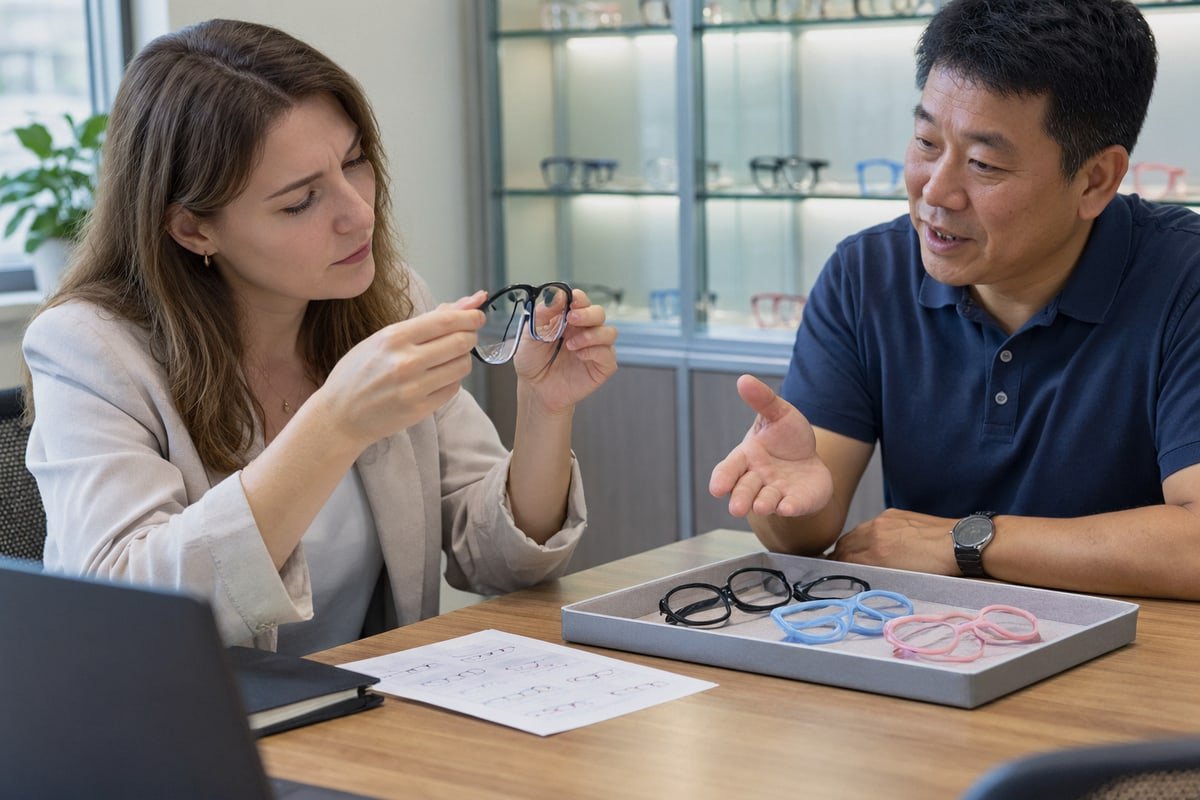
Compliance is a quiet word for a loud problem. If the glasses come off at recess and stay in a backpack, the prescription does nothing. Shape plays a bigger role here than most parents expect.
Weight, balance, and pressure
A small lens weighs less. A compact front keeps the weight close to the nose. Sharp corners on a full square can dig into cheeks when a child smiles, so we soften every corner on our kids' rectangles. Round and oval fronts have no corners to press. That is one reason younger children tend to accept them faster.
Temple design finishes the job. Our TR90 fronts are often paired with TPEE temples, because TPEE is even softer and wraps the ear without clamping. Spring hinges let the arms open past ninety degrees when a child pulls the glasses off with one hand. Silicone or matte soft-touch tips add grip. That matte finish also gives a gentle, non-slip feel that some children with sensory sensitivities find easier to tolerate than glossy acetate.
Active kids and outdoor use
For sport-heavy kids, a slightly wrapped rectangular front or a cable-temple style holds better during running. TR90 already gives impact resistance, and it keeps its stiffness in heat and cold, so lenses stay seated during winter and summer sports. Shape then handles retention. TR90 is also BPA-free and hypoallergenic, which makes it a safe base for hypoallergenic eyewear for children whose skin reacts to metal or acetate.
回答する価値のあるバイヤーの反論
Some buyers tell us the material alone is enough. "It's flexible, so it fits." I disagree, and I say so. A flexible frame that is too wide still slides. A soft frame with a high bridge still pinches. Flexibility protects against breakage. It does not replace sizing, hinge quality, or a bridge that matches a small nose.
| Fit checkpoint | 確認すべき点 | Why it matters for compliance |
|---|---|---|
| フレーム幅 | Roughly 40–48 mm lens, matches face width | Prevents sliding and keeps optical centers aligned |
| ブリッジのフィット感 | Saddle or keyhole, sits flat on the nose | Stops slipping and pressure marks |
| テンプルの柔軟性 | TR90 or TPEE arms that bend and recover | Survives one-hand removal and rough play |
| ヒンジタイプ | スプリングヒンジ | Absorbs over-opening without loosening |
| レンズの高さ | Enough vertical space for the lens design | Supports progressives and screen-to-board viewing |
| Centering during movement | 子供が下を向いたときにフレームが所定の位置にとどまる | Keeps prescription effective all day |
結論
Durable material solves breakage, not fit. Match shape to prescription, keep lenses centered, and comfort follows. Our TR90 kids optical frames are built on that principle.
この記事で言及されている製品の調達に興味がありますか?詳細を表示し、ここから見積もりをリクエストしてください。
脚注
1. Authoritative guidelines from the American Optometric Association regarding children’s eye health and vision care. ↩︎
2. Updated authoritative NEI source for myopia information. ↩︎
3. Clinical explanation of pupillary distance and its role in ensuring correct lens alignment and vision. ↩︎
4. Professional overview of specialized lens technologies used to manage myopia progression in pediatric patients. ↩︎


 English
 Español de México
 Deutsch
 Français
 日本語
 العربية
 Português do Brasil