What’s the Difference Between Medical-Grade and Regular Kids Sunglasses?
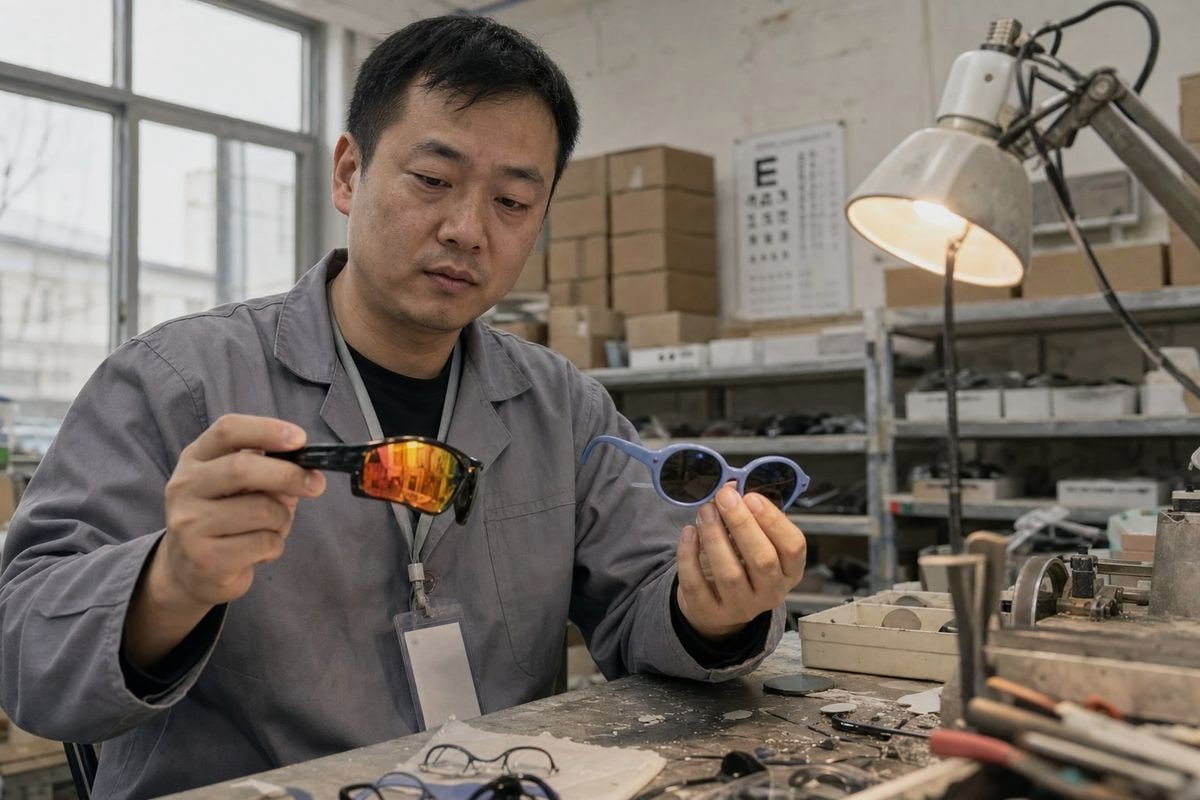
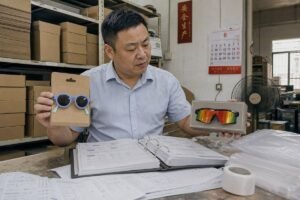
Every week, buyers ask me the same question about medical-grade and regular kids sunglasses. On our production line in Taizhou, the difference is obvious. On a store shelf, it is invisible — and that hidden gap can put a child’s developing eyes at real risk.
Medical-grade kids sunglasses provide verified UV400 protection, impact-resistant polycarbonate lenses, distortion-free optics, and hypoallergenic, BPA-free frames built to safety standards like ANSI Z80.3. Regular kids sunglasses may only offer tinted lenses and style, with no guaranteed UV or impact protection unless the label proves it.
The two products can look identical in a photo. The difference sits in the materials, the testing, and the paperwork behind them. Let me break down each layer so you can source with confidence.
What materials define medical-grade safety in children's sunglasses?
During a recent factory audit, a European buyer picked up two frames from our sample wall and asked why one cost more. I bent both 180 degrees. Only one came back to shape. That moment explained materials better than any spec sheet.
**Medical-grade children's sunglasses use impact-resistant polycarbonate or Trivex lenses, flexible TPEE or TR90 frames that bend without snapping, and BPA-free, hypoallergenic materials free of toxic paints. Regular sunglasses often use brittle acrylic lenses and rigid plastic frames with no biocompatibility testing.
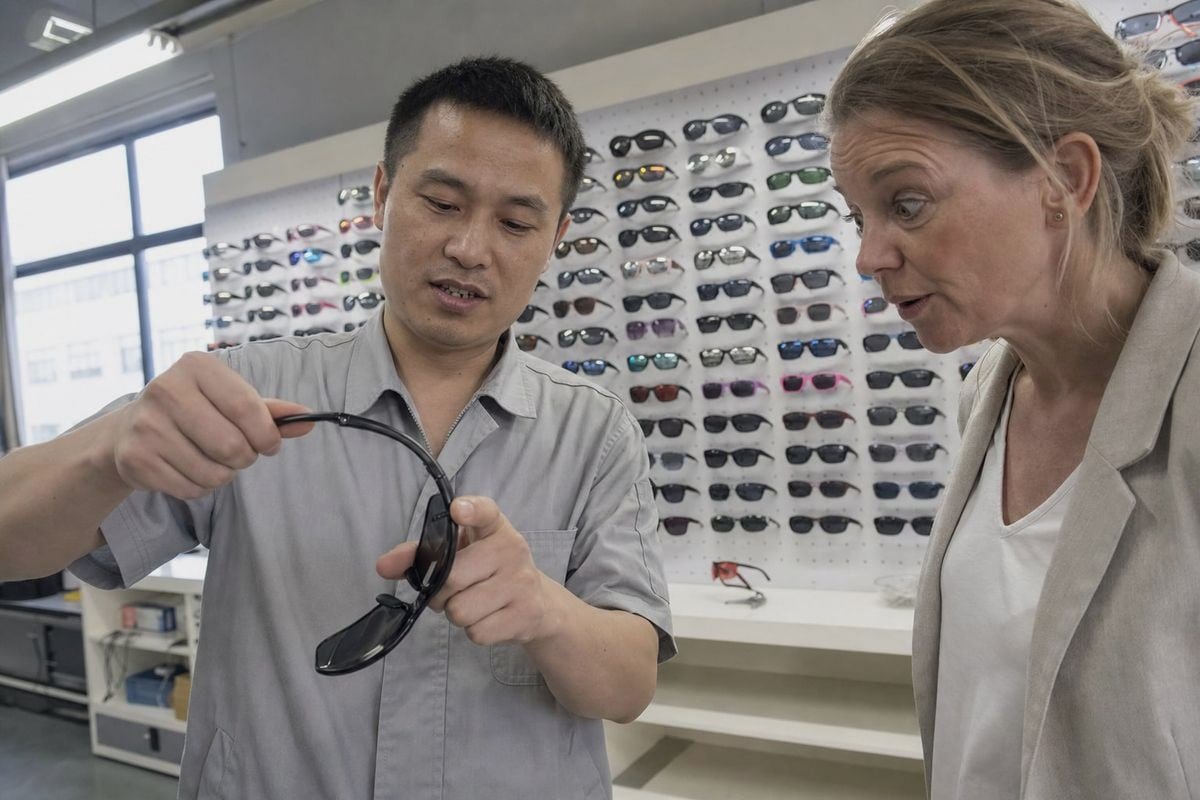
Materials are where the real safety story begins. A child's sunglasses face abuse that adult eyewear never sees. Kids sit on them, chew them, drop them on concrete, and take a soccer ball to the face while wearing them. So every material choice matters.
Lens materials: the first line of defense
ポリカーボネートレンズ 1 are the benchmark for pediatric eye health. They are shatterproof, lightweight, and naturally block UV rays. Cheap acrylic lenses, by contrast, can crack into sharp fragments on impact. They also often produce a "wavy" visual field. That distortion causes squinting, eye strain, and headaches — and low-quality peripheral blur may even interfere with a child's natural visual development.
Frame materials: flexibility equals safety
Our engineers spent years refining flexible TPEE frames precisely because rigid plastic is the enemy of active kids. A frame that bends absorbs energy from a fall. A frame that snaps creates sharp edges near the eye. TR90 fronts paired with TPEE temples give ophthalmic quality frames that flex, recover, and stay comfortable on small faces.
| コンポーネント | Medical-Grade Choice | Regular / Novelty Choice |
|---|---|---|
| レンズ | Polycarbonate or Trivex, UV400 | Tinted acrylic, unverified UV |
| Frame front | TR90, flexible and durable | Rigid injection plastic |
| Temples | TPEE, bends 180° without breaking | Brittle plastic, snaps under stress |
| Surface finish | Hypoallergenic, BPAフリー 2, lead-free | Untested paints and coatings |
| Optics | Distortion-free, tested | Wavy, uncontrolled quality |
Biocompatibility: the overlooked layer
Children put frames in their mouths. That is why medical-grade products demand BPA-free materials and coatings free of lead and toxic paints. Mass-produced novelty frames are rarely tested for this. When we develop a new style, material safety documentation comes before color and design — not after.
How do I verify UV400 and impact resistance claims from my supplier?
A procurement manager from Australia once told me she had been burned by a supplier whose "UV protection" label failed lab testing after her first container arrived. Since then, our QC team shows every buyer how to verify claims before shipment, not after.
**Verify UV400 claims by requesting third-party lab test reports, testing samples with a UV transmittance meter, and demanding drop-ball impact test documentation. Reliable suppliers provide batch-level reports referencing standards like ANSI Z80.3 and welcome independent inspection before shipment.
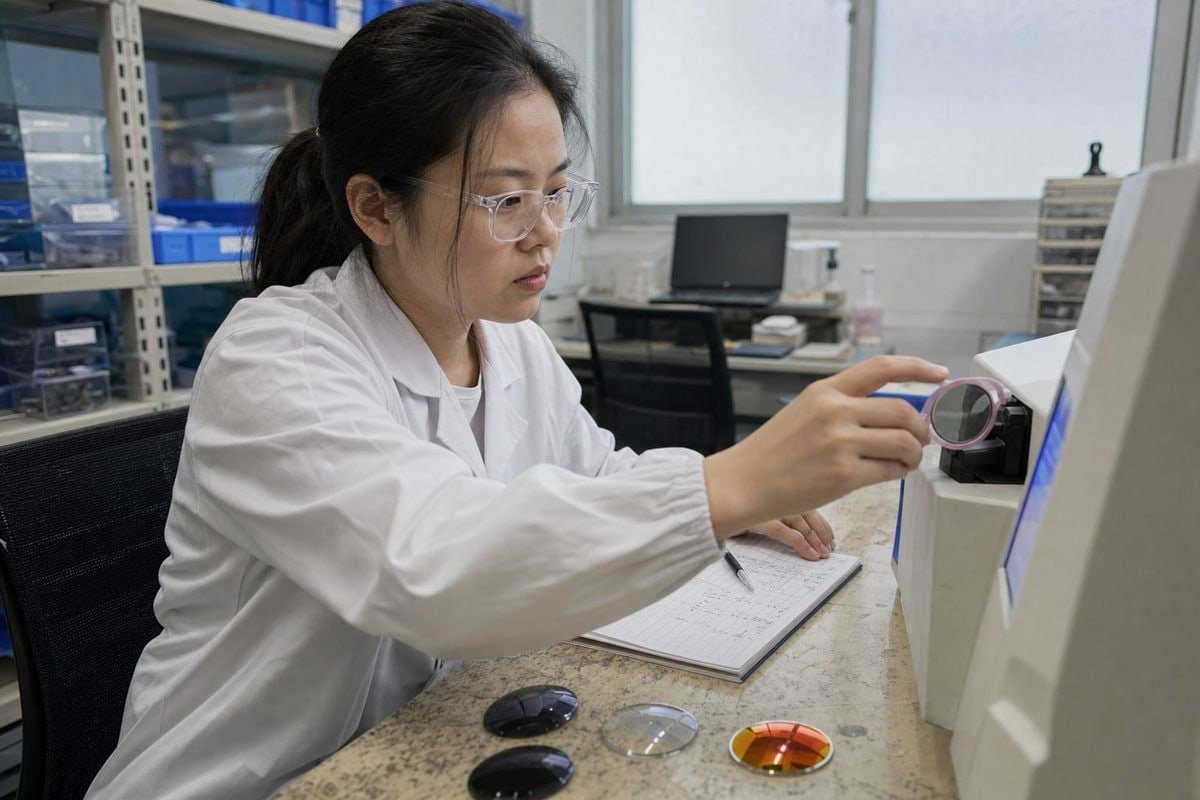
Verification is where professional buyers separate themselves from hopeful ones. UV400保護 3 means the lens blocks all light wavelengths up to 400 nanometers, covering the full UVA and UVB range. But a printed sticker proves nothing. Here is the process we recommend to every new buyer.
A step-by-step verification workflow
- Request lab reports before ordering. Ask for recent third-party test reports on UV transmittance. Check that the report matches the exact lens material and model, not a generic document.
- Test samples yourself. A benchtop UV transmittance meter costs little and gives instant readings. Many optical shops will test a sample for free.
- Ask for impact test evidence. The drop-ball test is the classic check for impact resistance. Sports-focused styles should reference ASTM F803 4 as well.
- Verify batch consistency. One good sample means little. Ask how the factory controls lens sourcing across production runs. In our 5S-managed workshop, lens batches are logged and traceable.
- Arrange pre-shipment inspection. Any factory that resists third-party inspection is telling you something important.
Red flags in supplier claims
Be cautious with vague language. "Blocks harmful UV" without a number is marketing, not a specification. "UV protective coating" can mean a thin surface layer that wears off, unlike polycarbonate where protection is built into the material itself. Also watch for back-surface reflection: advanced coatings target the inside of the lens so UV rays cannot bounce off the back surface into a child's eye. Ask whether your supplier addresses this — most low-end producers have never considered it.
Is it worth paying more for medical-grade quality when sourcing kids sunglasses?
Pricing conversations reveal a buyer's real strategy. When importers push us hard on a few cents per unit, I walk them through the total cost of one recall, one injured child, or one viral negative review. The math changes quickly.
**Yes — medical-grade quality is worth the premium for kids sunglasses. Children's eyes admit up to 70% more UV to the retina than adults' eyes, and the liability, recall risk, and brand damage from unsafe products far exceed the modest per-unit cost difference.

Let me be honest about the numbers first. Price alone does not predict safety. Some inexpensive sunglasses do pass UV testing. But when you build a children's brand, you are not buying one lucky sample — you are buying consistency across thousands of units and multiple seasons. That is what the premium actually pays for.
The real cost equation for B2B buyers
| 要因 | Regular / Cheap Sourcing | Medical-Grade Sourcing |
|---|---|---|
| Unit cost | Lower upfront | Moderately higher |
| Batch consistency | Unpredictable | Controlled and documented |
| Breakage returns | Higher rate, brittle frames | Low rate, flexible TPEE frames |
| Liability exposure | Significant | Minimized with test records |
| Retail positioning | Novelty / impulse shelf | Premium, optometrist recommended tier |
| Repeat purchase | Weak — product fails fast | Strong — parents trust the brand |
Why children's eyes raise the stakes
A child's crystalline lens is more transparent than an adult's. More UV and high-energy visible light reach 5 the developing retina. This is why premium kids' eyewear increasingly adds blue light 6 filtration alongside UV400保護 — the concern is cumulative retinal UV exposure over childhood years spent outdoors, not just comfort on one sunny day. Parents who understand this will pay more at retail, which protects your margin.
Where the premium actually goes
In our experience exporting to 20+ countries over 15 years, the price difference funds specific things: virgin-grade TPEE and TR90 instead of recycled mystery plastic, verified polycarbonate lenses instead of tinted acrylic, distortion testing, safe coatings, and stable QC. It also funds features buyers rarely see on a spec sheet, like proper wrap geometry and pantoscopic tilt that reduce peripheral light leakage — a channel that can account for a meaningful share of a child's total UV dose. None of that exists at rock-bottom prices.
What certifications should I request to confirm medical-grade compliance?
One lesson from years of OEM work stands out: the buyers who succeed long-term always ask for documents in their first email, not their last. Our sales team now prepares a compliance pack before samples even ship.
**Request UV transmittance test reports confirming UV400, impact resistance results referencing ANSI Z80.3 or ASTM F803, EN ISO 12312-1 for Europe, AS/NZS 1067 for Australia, plus material safety documentation covering BPA-free, lead-free, and phthalate-free compliance for your target market.
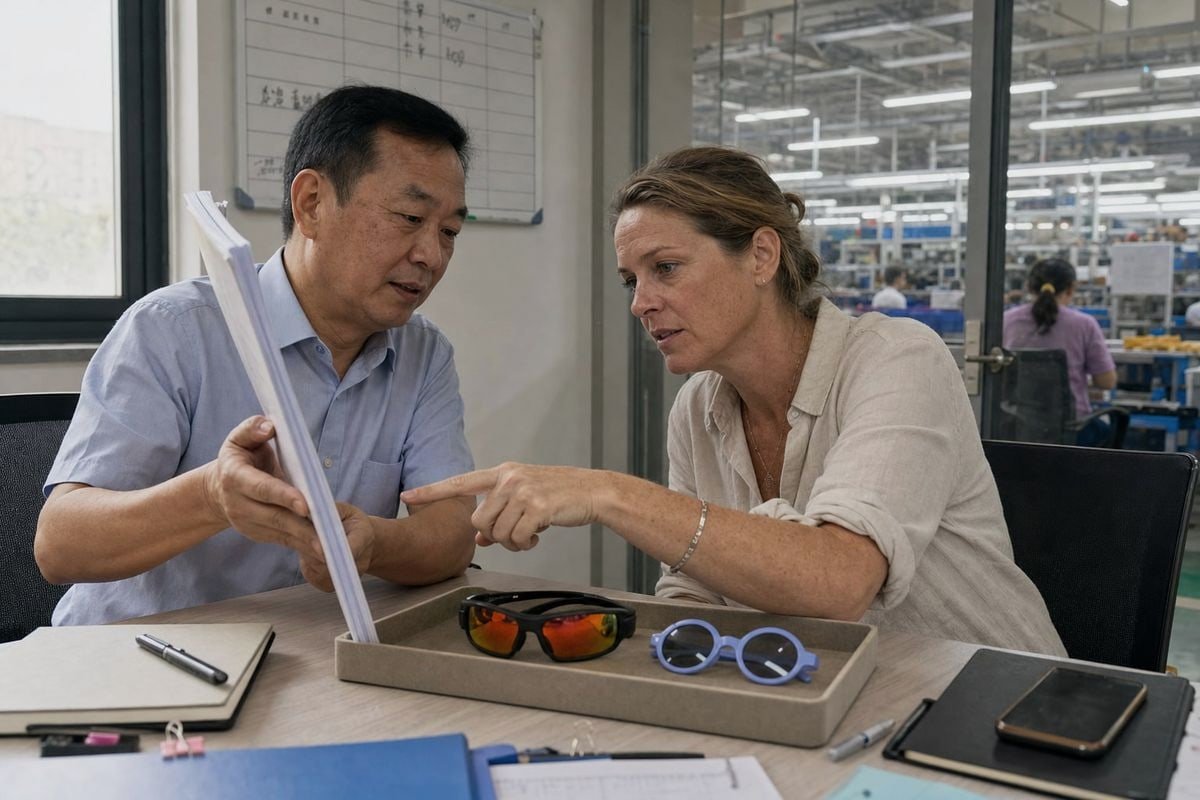
Certifications are your legal shield and your marketing asset at the same time. But requirements differ by market, and many buyers only discover gaps after goods land at customs. Here is how to structure your requests.
Match certifications to your destination market
| 市場 | Key Standards to Request | Covers |
|---|---|---|
| アメリカ合衆国 | ANSI Z80.3 7, FDA drop-ball, ASTM F803 (sports) | UV, optics, impact resistance |
| 欧州連合 | EN ISO 12312-1, CE marking, EN 71 (if toy-classified) | UV categories, safety, materials |
| オーストラリア / ニュージーランド | AS/NZS 1067 | Mandatory sunglass performance |
| 材料安全性 | CPSIA, REACH, Prop 65 documentation | Lead, BPA, phthalates, coatings |
Documents beyond the certificate
A certificate is a snapshot. Ask for three additional layers. First, batch-level test reports, so protection is verified for your production run, not a sample from two years ago. Second, material declarations confirming BPA-free materials and safe surface treatments — critical because children mouth their frames. Third, factory quality records showing incoming lens inspection and finished-goods checks.
One warning about the term itself
Be precise in your own product claims. In some regulatory frameworks, sunglasses sit under medical-device oversight while novelty eyewear is regulated only as a toy. But "medical-grade" is not one universal legal category worldwide. The defensible position for your brand is to market verified performance — UV400 protection, tested impact resistance, distortion-free polarized lenses where offered, and documented material safety — rather than leaning on a vague label you cannot substantiate.
結論
The difference between medical-grade and regular kids sunglasses is not style — it is verified UV400 protection, impact resistance, safe materials, and documentation. Source the proof, not the sticker, and your brand earns lasting parent trust.
脚注
1. Explains material properties behind impact-resistant lens technology. ↩︎
2. FDA guidance on bisphenol A safety relevant to children’s product materials. ↩︎
3. Background reference on UV protection standards for eyewear. ↩︎
4. Official ASTM International page for the current active standard for sports eye protectors. ↩︎
5. EU chemical safety regulation relevant to material safety compliance. ↩︎
6. Background on blue light exposure relevant to children’s eye protection. ↩︎
7. Official standard referenced for sunglass impact and UV performance. ↩︎


 English
  Español de México
  Deutsch
  Français
  日本語
日本語  العربية
  Português do Brasil