UV400保護とは、子供用サングラスにとって何を意味するのでしょうか?
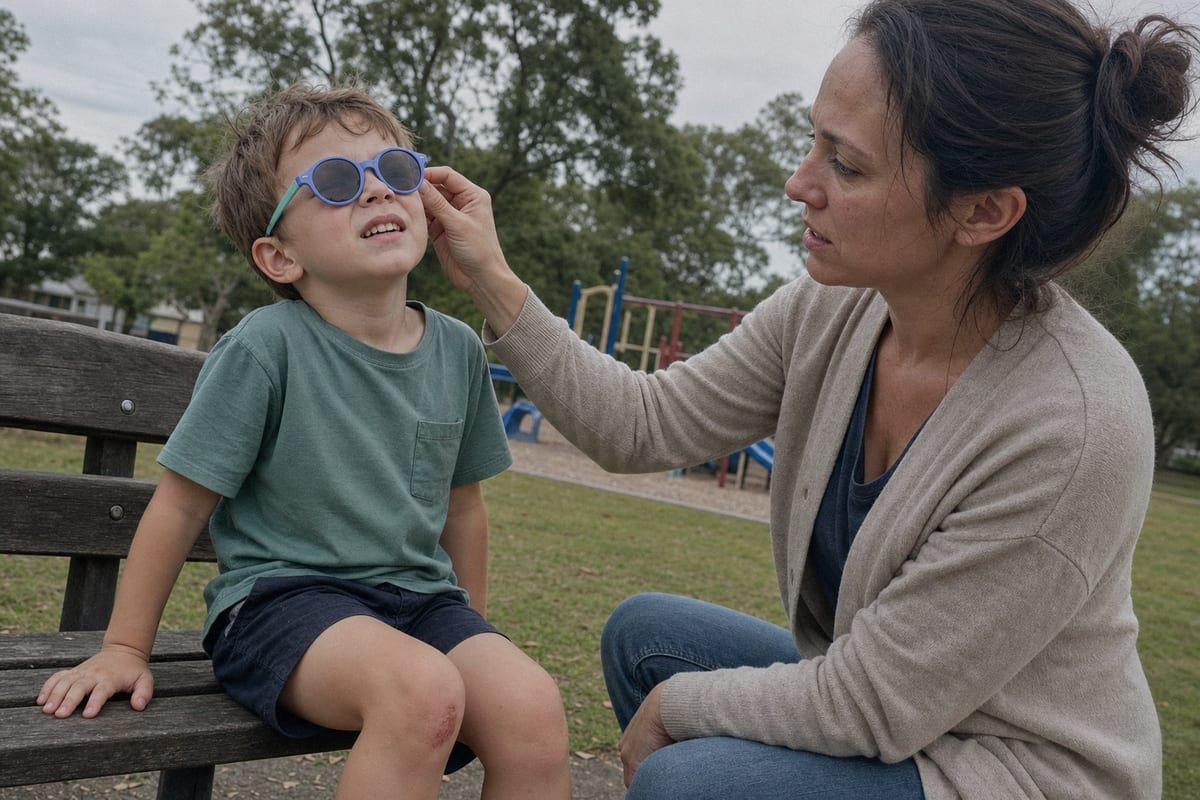
毎週、バイヤーから子供用サングラスのUV400保護について質問されます 早期の白内障形成 1. レンズは暗く見えるが、子供たちの目を静かに保護しないものを輸入するのではないかと心配しています。.
UV400保護とは、レンズが波長400ナノメートルまでの紫外線を遮断し、UVAとUVBの両方の紫外線を100%カバーすることを意味します。子供用サングラスの場合、UV400は不可欠な安全基準です。なぜなら、子供の成長中の目は、大人の目よりもはるかに多くの紫外線を取り込むからです。.
それが簡単な答えです。しかし、子供用アイウェアラインを構築している場合は、より詳細な情報が必要です。ラベルが実際に何を保証しているのか、それをどのように検証するのか、そしてそれがあなたの注文にとって何を意味するのかを説明します。.
UV400レーティングは、子供用アイウェアラインにどのような保証を与えるのか?
昨年の春の製品開発コール中、オーストラリアのバイヤーから簡単な質問がありました。UV400は色合いやレンズ素材に関するものですか?それは素晴らしい質問であり、私たちのラボの答えは彼女を驚かせました。.
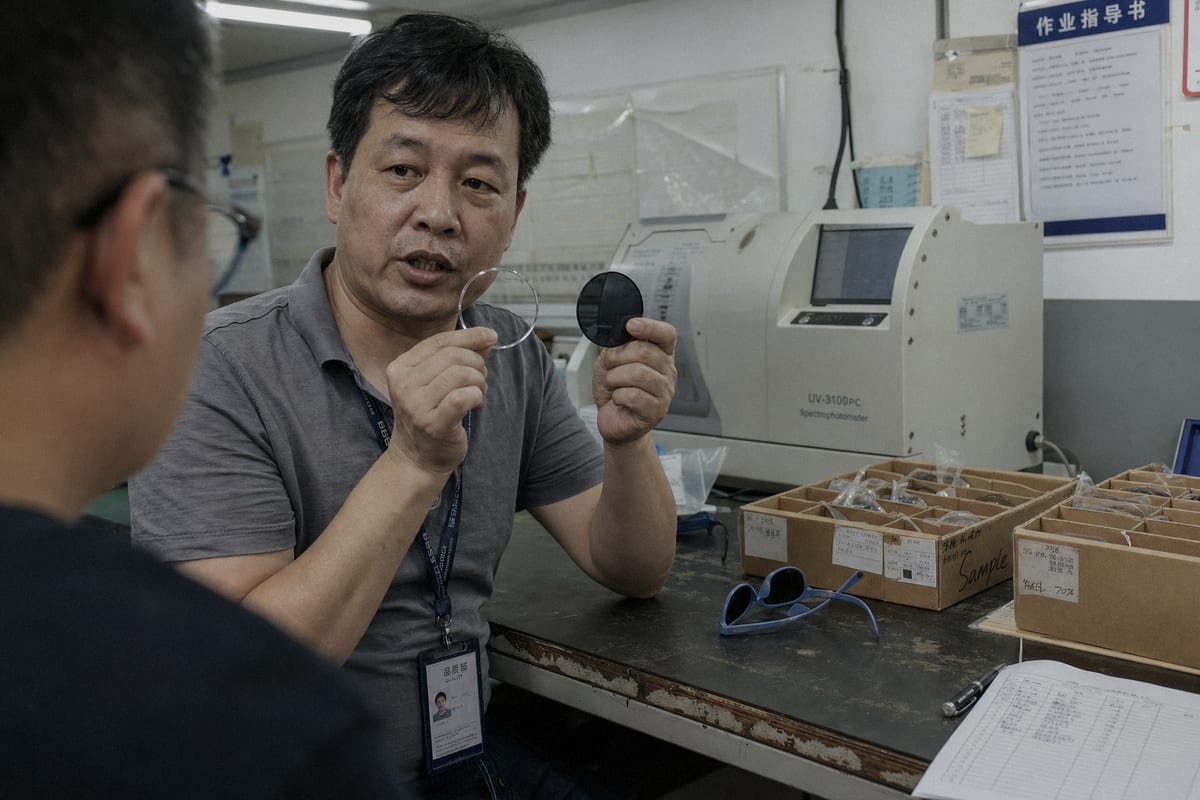
UV400定格は、レンズが400ナノメートルまでのすべての紫外線をフィルターすることを保証し、UVAおよびUVBスペクトル全体を捉えます。これは、レンズの素材とコーティングに関連付けられた健康保護基準であり、レンズの外観の暗さ、ミラー加工、または偏光とは関係ありません。.
紫外線は、約100から400ナノメートルの範囲に及びます。UVBは約280〜315 nm、UVAは約315〜400 nmです。UV400レンズは、その400ナノメートルの波長上限までのすべてを遮断するように設計されています。そのため、業界はUV400をフルスペクトル消費者保護として扱っています。.
これが私がすべての新しいバイヤーに強調する点です。UV400は外観ではなく、保護を表します。私たちのワークショップでは、UVを完全に遮断する透明な光学レンズを製造しており、他のソースから入手した暗いノベルティレンズをテストしたところ、ほとんど遮断しないことがわかりました。暗さは明るさを制御します。. UV遮断は分子レベルで行われます, レンズ素材自体または適用された処理によって行われます。.
UV400 vs. 偏光 vs. ティント — それぞれが実際に何をするか
親や一部の小売業者でさえ、これらの3つの用語を混同しています。あなたの製品ページでは、それらを明確に区別する必要があります。.
| 特徴 | それがすること | UV保護ですか? |
|---|---|---|
| UV400 | 最大400 nmまでのUVAおよびUVB紫外線を遮断します | はい — 中核となる安全基準 |
| 偏光レンズ | 水、道路、雪からの反射まぶしさをカットします | いいえ — 快適性機能のみ |
| ダークティント | 可視光の明るさを軽減します | いいえ — 外観のみ |
| ミラーコーティング | 可視光を反射し、スタイルを追加します | いいえ — 化粧品機能 |
「最大400 nm」が重要な理由
一部の地域基準では、最大380 nmまでの遮断のみが要求されています。これにより、少量のUVAがろ過されずに残ります。わずかなことのように聞こえますが、子供たちは屋外で何年も過ごし、暴露は累積的です。そのため、私たちはすべての子供用レンズ — 当社の 偏光レンズオプション を含む — を完全なUV400レベルまで製造しており、バイヤーが品質文書で ANSI Z80.3 2 のような基準を参照することを推奨しています。380 nmに定格されたレンズは良いものです。400 nmに定格されたレンズは完全です。子供向けブランドの場合、完全であることが唯一の正当な立場です。.
サプライヤーのUV400レンズが有害な紫外線を本当にブロックするかどうかを確認するにはどうすればよいですか?
アイウェア業界で15年間働いてきた経験から、チームは一つの厳しい教訓を学びました。決してUV保護の主張を鵜呑みにしないことです。初期の頃、私たちはトレーダーがUV400とラベルを付けた競合他社のサンプルをテストしました。いくつかは385 nmで失敗しました。.
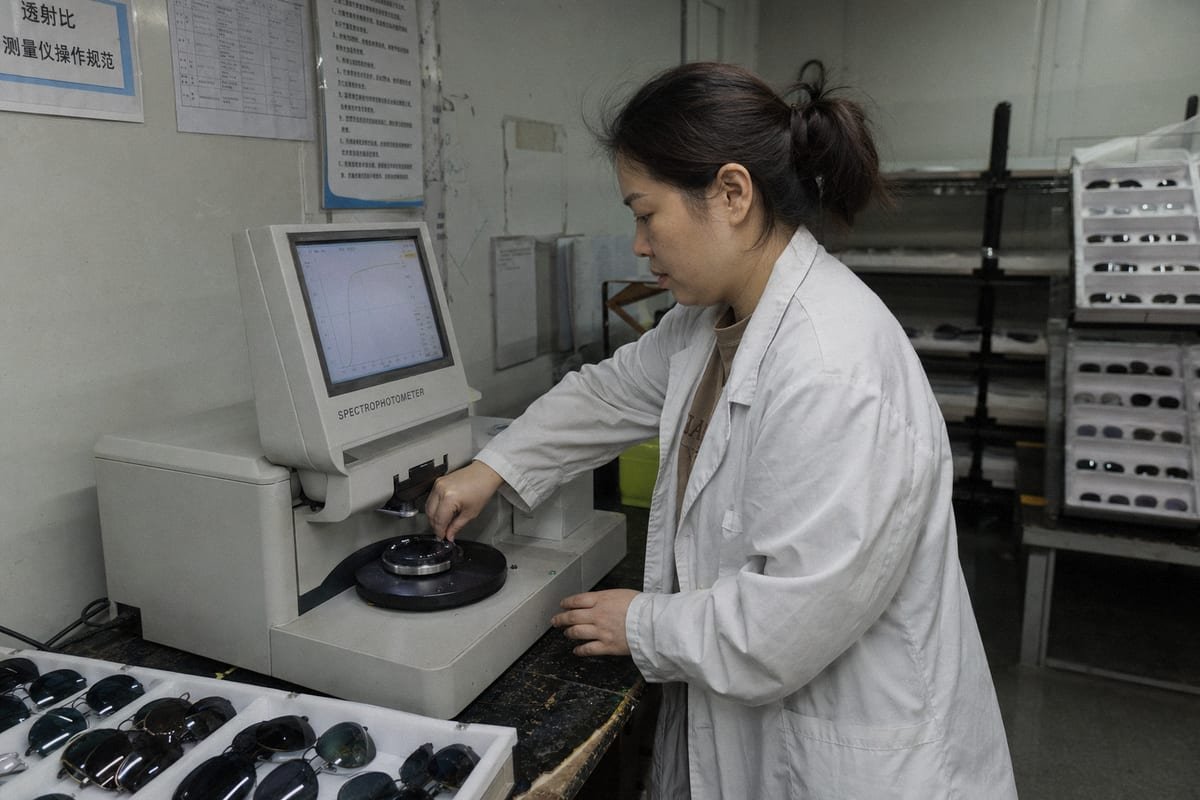
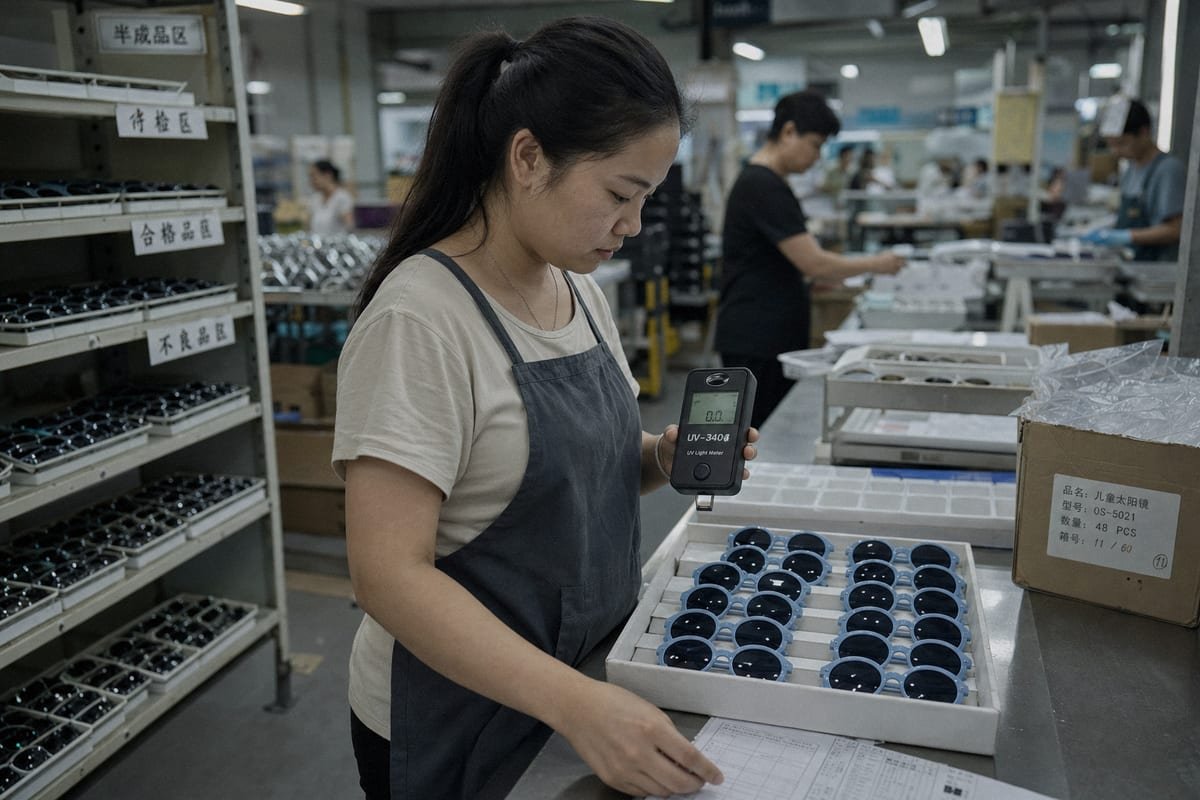
第三者機関の実験レポート、400 nm 未満の透過率がゼロであることを示す分光光度計の透過曲線、およびお住まいの市場の適合証明書を要求することにより、UV400 の主張を検証します。評判の良い工場は、出荷前検査も歓迎し、現場で UV メーターを使用したレンズテストを実演できます。.
目でUV保護を見ることはできません。だからこそ、B2Bソーシングでは検証が非常に重要になるのです。安価な 色付きレンズ 3 と本物のUV400レンズは、製品写真では同じように見えます。違いは、テスト — そして子供の長期的な目の太陽光線からの安全性 — でのみ現れます。.
バイヤー向けの実際的な検証チェックリスト
私たちは、すべての輸入業者やブランドと協力する際に推奨しているプロセスです。
- 透過曲線を入手してください。. 分光光度計のレポートは、280〜400 nmの範囲でUV透過率がほぼゼロであることを示すはずです。サプライヤーがそれを提供できない場合は、取引をやめてください。.
- 市場固有のコンプライアンス文書を要求してください。. 米国では、ANSI Z80.3規格を参照してください。ヨーロッパでは、CEマーキングとEN ISO 12312-1テストレポートを確認してください。オーストラリアとニュージーランドはAS/NZS 1067を使用します。.
- 入荷サンプルを独立してテストしてください。. 製造前サンプルの第三者ラボテストは、リコールと比較すると費用はほとんどかかりません。.
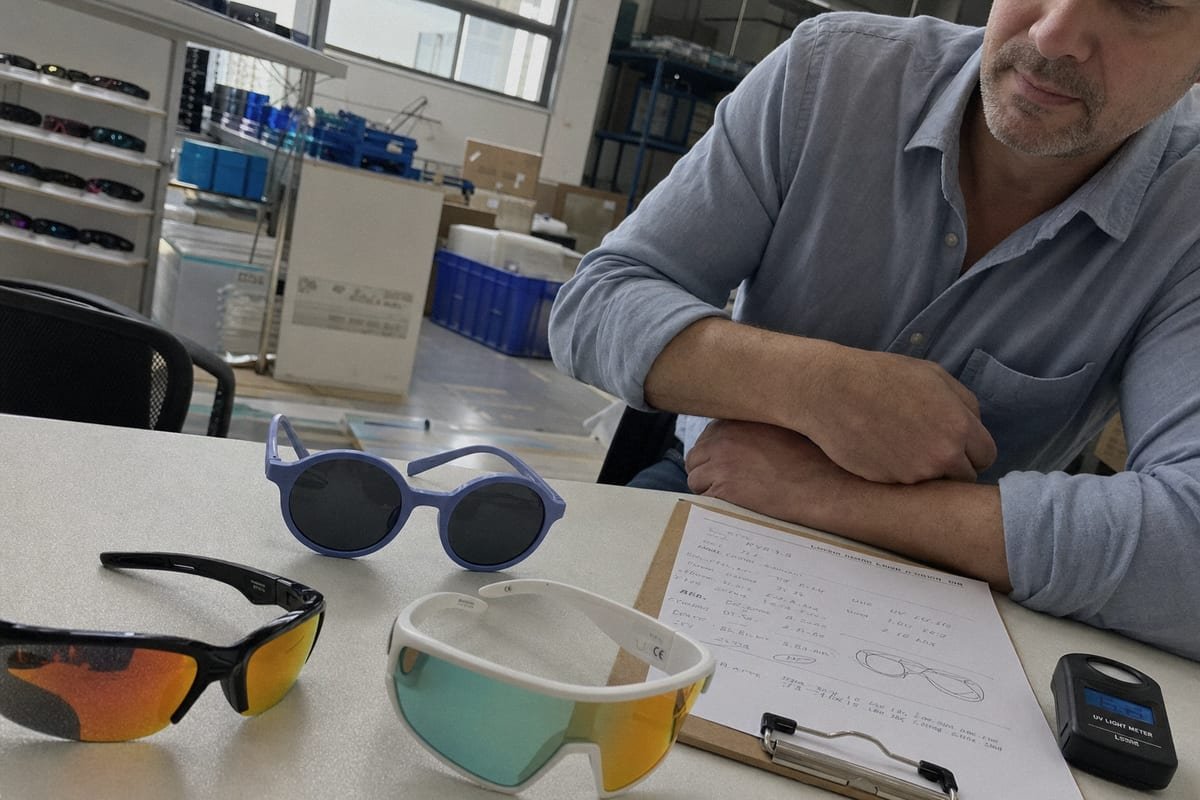
- UVライトメーターを使用してスポットチェックを行ってください。. 当社のQCルームでは、組み立て前にレンズバッチのクイックUVメーターチェックを実行します。サプライヤーにビデオ通話でこのステップを示すように依頼してください。.
- Audit consistency, not just one sample. One golden sample proves nothing. Batch-level testing proves a process.
UV保護の主張が弱いことを示唆する警告サイン
| 警告サイン | なぜ重要なのか |
|---|---|
| テストレポートが利用できない | サプライヤーはレンズをテストしたことがない可能性が高い |
| "「UV保護」という数字がない | Vague wording often hides 380 nm or lower blocking |
| Price far below market | UV-treated polycarbonate lens 4es have a real cost floor |
| Trader cannot name the lens factory | No traceability means no accountability |
When buyers visit our 5S-managed workshop in Taizhou, we show them the testing station first. In my experience exporting to 20+ countries, the buyers who ask the hardest verification questions build the strongest brands. Documentation is not bureaucracy. It is your legal and reputational shield when a parent asks whether your product truly protects their child.
なぜUV400保護は、成長期の子供たちの発達中の目にそれほど重要なのでしょうか?
One trade-off we refuse to make in our factory is protection versus comfort — because with children, if sunglasses feel bad, they come off, and the protection disappears with them.
子供の目は、瞳孔が大きく、水晶体がより透明であるため、紫外線によるダメージを受けやすくなっています。これにより、より多くの放射線が網膜に到達します。紫外線によるダメージは累積的であり、生涯の曝露の多くは18歳未満で発生するため、子供時代のUV400保護は非常に重要です。.
Pediatric eye health specialists agree on the biology here. A young child's 水晶体 5 has not yet developed the natural yellowing that filters some UV in adults. Their pupils are larger and constrict more slowly when moving from shade into bright light. The result is simple and sobering: more UVA and UVB radiation reaches the internal structures of a child's eye than an adult's under identical sunlight.
Cumulative Exposure Starts Early
UV damage to the eye does not reset. It accumulates over a lifetime, and a significant portion of total lifetime exposure happens before age 18. Long-term risks linked to unprotected exposure include 網膜損傷 6, early cataract formation, and growths on the eye's surface. None of these appear overnight, which is exactly why parents underestimate the risk — and why your brand messaging can genuinely educate.
Protection Only Works If Kids Wear It
This is where design meets health. In developing our TPEE and TR90 frames, we learned that comfort drives compliance. Key factors we engineer for:
- Lightweight, flexible materials so frames do not pinch active kids during play.
- Wrap-around frames that reduce peripheral leakage, where UV sneaks in from the sides and top.
- 耐衝撃性 through polycarbonate lenses, because kids fall, throw, and sit on their glasses.
- Snug, soft-touch temple grips that stay put during running and cycling.
There are practical performance benefits too. Consistent UV400 wear reduces the squint reflex in bright environments, which eases 目の疲れ 7 during outdoor play. Filtering the blue haze at the edge of the UV spectrum also helps children see contrast and judge depth more accurately outdoors. For a kids' outdoor or sports brand, these are honest, meaningful selling points — protection first, better vision as the bonus.
UV400保護は私のサングラスの注文の費用または品質に影響しますか?
A procurement manager from Japan once challenged our quote, pointing to a supplier offering kids' sunglasses at nearly half the price. We tested that supplier's sample together. The lenses stopped blocking at 375 nm.
本物のUV400保護機能を追加しても、レンズのコストはわずかに増加するだけで、通常は単価のほんの一部です。光学品質を低下させることはありません。実際、検証済みのUV400レンズは、通常、適切な材料、試験装置、品質管理を備えた、より高品質のサプライヤーを示しています。.
Let me be direct about the economics, because this is where many new brands make their biggest mistake. The raw cost difference between an untreated tinted lens and a true UV400 polycarbonate lens is small at factory scale. When a quote seems impossibly cheap, the savings almost never come from clever efficiency. They come from skipped UV treatment, skipped testing, brittle recycled plastics, or all three.
Where the Cost Actually Sits
| コスト要因 | Impact on Unit Price | Impact on Child Safety |
|---|---|---|
| UV400 lens treatment | 低 | Critical — the core protection |
| ポリカーボネートレンズ素材 | 低〜中程度 | High — impact resistance for active kids |
| TR90/TPEE flexible frames | 中程度 | High — comfort drives daily wear |
| Batch UV testing and QC | 低 | High — guarantees consistency |
| 小売対応パッケージ | 中程度 | Indirect — builds parent trust |
Quality Is a System, Not a Sticker
In our production line, UV400 is not an add-on. It is a specification checked at incoming lens inspection, during assembly, and at pre-shipment QC. Suppliers who take UV blocking seriously tend to take everything seriously — hinge durability, frame flexibility, coating adhesion. The reverse is also true.
For brands testing the market, there is a smarter path than cutting lens quality. We maintain around 800 existing styles, from pastel round frames for toddlers to wrap-around sport shields with mirrored gradient lenses. Choosing from existing molds avoids heavy tooling investment, so you can allocate budget to what parents actually judge you on: verified protection, comfortable materials, and professional packaging. Full OEM/ODM support — custom colors, logos, lens options, and branded packaging — layers on top of that proven base. In fifteen years, I have never seen a children's brand regret paying for real UV400. I have seen several regret not doing so.
結論
UV400 protection blocks all UVA and UVB rays up to 400 nanometers — the non-negotiable standard for children’s developing eyes. Verify it with test data, pair it with comfortable wrap-around frames, and your kids' eyewear line earns lasting parent trust.
脚注
1. Government health resource linking ultraviolet radiation exposure to the development of cataracts. ↩︎
2. Reliable overview of the American national standard for nonprescription sunglasses and fashion eyewear. ↩︎
3. Expert medical advice explaining the difference between lens tint and actual UV protection. ↩︎
4. Technical details on polycarbonate, the standard material for impact-resistant and UV-blocking eyewear. ↩︎
5. Technical overview of the eye’s crystalline lens and its role in filtering light. ↩︎
6. Professional medical guidance on how UV exposure can lead to long-term retinal damage in children. ↩︎
7. Authoritative medical source explaining the causes and symptoms of eye strain from bright light. ↩︎

 English
 Español de México
 Deutsch
 Français
 日本語
 العربية
 Português do Brasil