TR90 vs PC vs Silicone Kids Sunglasses: Which Frame Is Best?
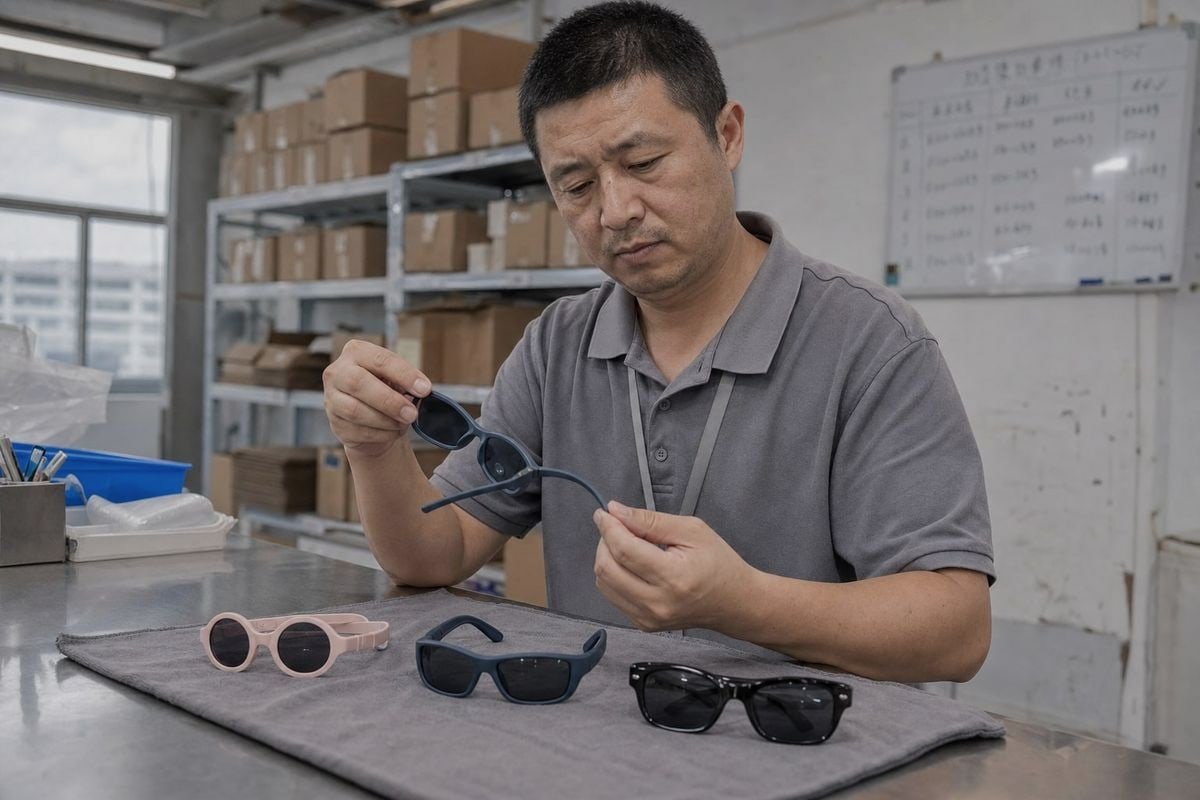
Choosing between TR90 vs PC vs silicone kids sunglasses stalls many buyers. On our Taizhou production line, I’ve seen brands pick the wrong frame material and pay for it in returns.
There is no single best frame material for kids sunglasses. Silicone suits babies and toddlers needing soft, chew-safe frames. TR90 offers the best flexibility, lightweight comfort, and durability for active kids. PC delivers rigid impact resistance and low cost for structured, fashion-driven styles.
The right answer depends on the age group you sell to, how rough the wear will be, and your brand’s price position. Let me break each factor down for you.
How do I know which frame material is safest for my youngest customers?
A buyer from Australia once asked me to twist a toddler frame flat against my desk during a video call. That single test told her more than any spec sheet ever could.
Silicone and TPEE are the safest frame materials for children under three because they are soft, hypoallergenic materials with no rigid edges, no metal hinges, and no small breakable parts. TR90 is safe for ages three and up, while rigid PC suits older children.

Safety for young children comes down to three things: what happens when the frame breaks, what happens when the child falls on it, and what touches the skin all day. Each material answers these questions differently.
Break behavior matters more than break resistance
A frame that never breaks does not exist. What matters is how it fails. Rigid PC can snap and leave a sharp edge if the frame wall is thin or the polymer has degraded. TR90 is a memory polymer 1, so it bends far past its normal shape and springs back instead of snapping. Silicone and TPEE almost never fracture at all. They simply fold. For a baby who chews everything, that is the behavior you want.
Skin contact and hygiene
Children wear sunglasses in heat and sweat. Silicone has low surface energy 2, so it resists absorbing sweat and skin oils that can trigger contact dermatitis 3. Our TPEE compounds are BPAフリー 4 frames by formulation, and we test each batch for skin-contact compliance before shipment. That paperwork matters when your retail market is the EU or Japan.
| Safety factor | Silicone / TPEE | TR90 | PC |
|---|---|---|---|
| 破損モード | Folds, no sharp edges | Bends, springs back | Can snap when brittle |
| Metal hinges needed | いいえ | Optional flexible hinges | 通常ははい |
| Skin friendliness | Hypoallergenic, non-absorbent | 非常に良い | 接触点に集中 |
| Best starting age | 0–3 years | 3+ years | 6+ years |
One more point: frame safety is only half the story. Every frame we ship pairs with UV400 protection lenses, because a soft frame with weak lenses still fails the child.
Will TR90 or silicone hold up better under rough, everyday play?
Our QC team runs a simple abuse routine on every new mold: drop it, sit on it, twist the temples 180 degrees, and leave it on a hot dashboard mock-up. The results shaped how I answer this question.
TR90 holds up better for rough school-age play because its memory polymer structure twists, bends, and returns to shape while keeping lenses locked in the rim. Silicone survives abuse too, but it can deform under heat and holds lenses less firmly than TR90.
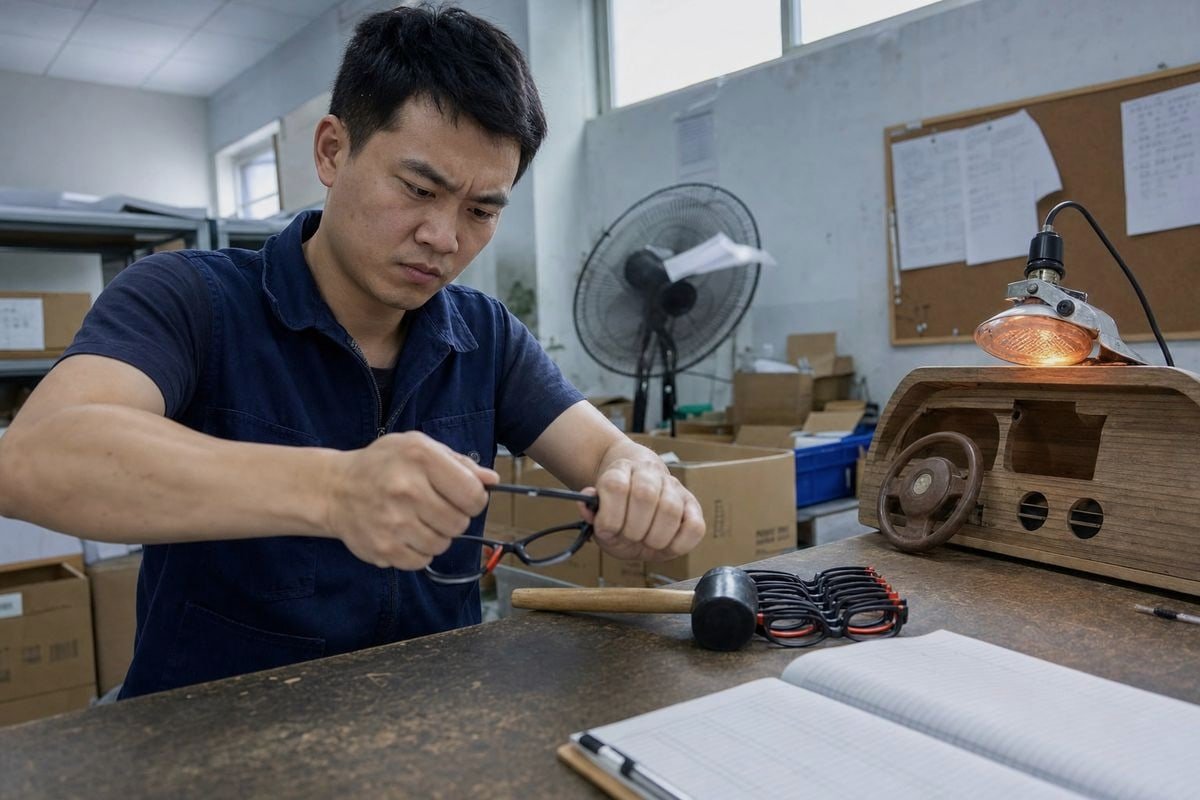
Durability for kids is not one property. It is a mix of flex recovery, impact resistance, heat stability, and lens retention. Here is how the two flexible champions compare in real use.
Flex recovery and shape memory
TR90 is a thermoplastic material with genuine shape memory. A child can sit on it, stuff it in a backpack, or yank it off by one temple, and the frame recovers. Silicone flexes even further, but it has no rigid skeleton. Over months of stretching, some silicone frames slowly lose their fit tension, so the sunglasses start sliding down the nose.
Heat and lens retention
Summer is the stress test nobody talks about. A car dashboard can exceed 70°C. TR90 has a low thermal expansion coefficient, so lenses stay locked in the rim even in a heatwave. Soft silicone rims expand more, and we have seen shatterproof lenses 5 pop out of poorly engineered silicone frames in hot-climate markets. That is why we reinforce the lens groove on every silicone-style design we produce.
| Stress test | TR90 | Silicone / TPEE |
|---|---|---|
| Twist 180° and release | Full recovery | Full recovery |
| Sat on / backpack crush | Springs back | Folds, may need reshaping |
| Hot car dashboard | Stable lens retention | Rim may loosen |
| Long-term fit tension | 素晴らしい | Can relax over time |
| Grip during sport | Good with rubber tips | Excellent, naturally non-slip |
The practical verdict: silicone wins on grip and soft-contact abuse, TR90 wins on structure and heat. For preschool through early grade school, TR90 frames with TPEE temples give you both — a stable front with flexible, grippy arms.
Can I get the same stylish designs no matter which material I choose?
Style is where I have to talk buyers out of assumptions. A Japanese brand once sent us a sharp, angular wraparound sketch and asked for it in pure silicone. We had to explain why that combination fights physics.
Not exactly. Each material favors different design languages. PC supports crisp, glossy, fashion-forward shapes and vivid colors. TR90 suits sporty wraparounds and slim performance silhouettes. Silicone works best for soft, rounded toddler shapes, though dual-injection now blends styles across materials.

Material choice quietly limits what a designer can draw. Rigid polymers hold sharp lines and high-gloss finishes. Soft polymers want rounded, chunky forms. Here is what that means for your catalog.
What each material does best on the shelf
PC molds beautifully into structured, glossy frames. Think of a bold black sport shield with a mirrored orange-to-gold gradient lens, or a glossy white wraparound with an iridescent multicolor lens. Those aerodynamic, angular silhouettes need a rigid front to keep the single-shield lens taut and optically true. PC also takes vibrant pigments cheaply, which is why fast-fashion kids' lines lean on it.
TR90 sits in the middle. It handles sleek, sporty shapes with slim temples and integrated flexible hinges. Matte finishes and two-tone molding look excellent on it. It cannot hold razor-sharp edges quite like PC, but for performance styling it is more than enough.
Silicone and TPEE favor soft geometry. Our round two-tone frames — a periwinkle-blue front with mint-teal temples — show what the material loves: smooth curves, gentle temple tips, playful color blocking, and a compact youth fit.
The dual-injection breakthrough
The newest option in our workshop is dual-injection molding: a rigid TR90 skeleton over-molded with soft TPEE or silicone. You get sport-frame structure with pinch-free toddler softness in one piece. From our library of roughly 800 existing styles, buyers can now match almost any design direction to almost any age group. Lens options — dark gray UV400, polarized lenses, or mirrored gradients — carry across all three materials, so optics never limit your styling.
Which frame material offers the best value for my brand's OEM production?
Fifteen years of quoting eyewear projects taught me one lesson: the cheapest unit price rarely produces the cheapest brand. Return rates, mold costs, and repeat orders decide real value.
PC offers the lowest unit cost and fastest color variety, making it best for entry-level lines. TR90 costs more per frame but delivers lower return rates and stronger reviews, giving the best long-term value. Silicone commands premium pricing in the baby segment.
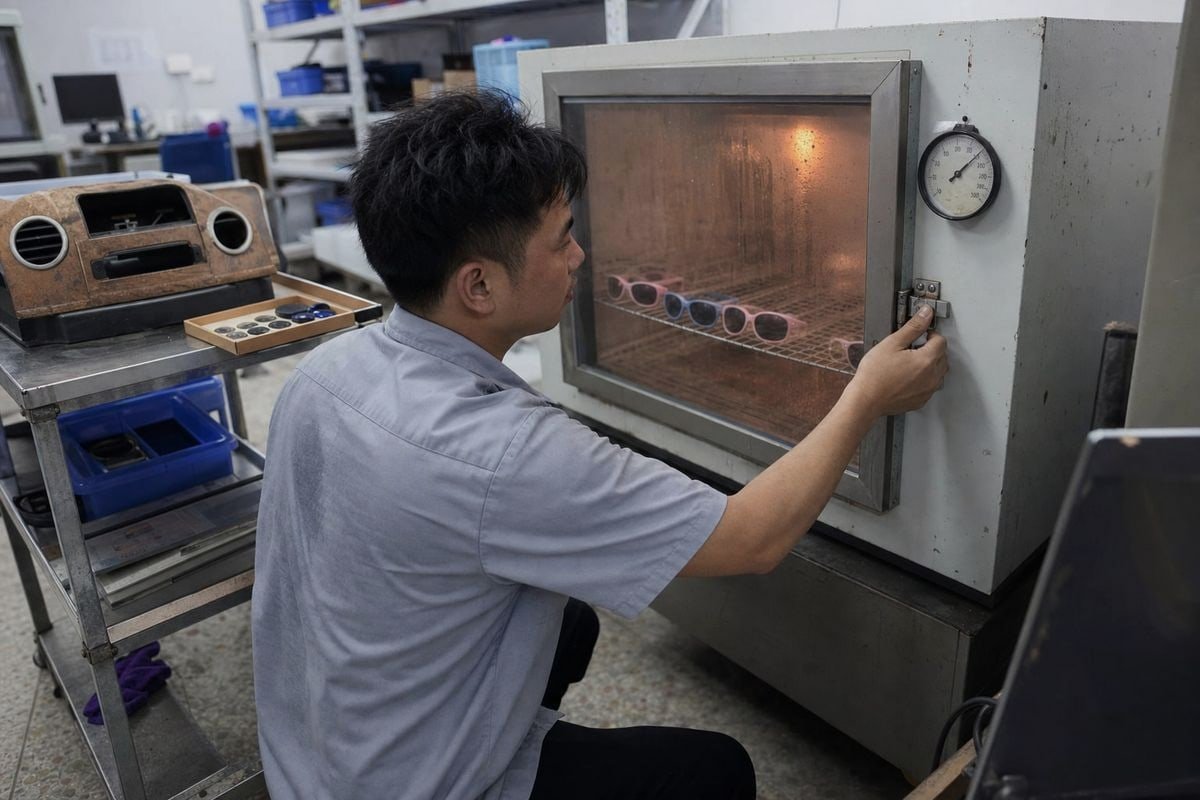
Value in OEM production 6 is a full-lifecycle calculation. Let me walk through the numbers the way I do with new buyers, without pushing you toward any single answer.
The cost structure behind each material
PC resin is cheap and cycles fast through injection machines. That is why it dominates promotional and impulse-buy sunglasses. But PC has a hidden cost: photo-degradation. Prolonged 紫外線暴露 7 breaks down its polymer chains, and budget PC frames can turn brittle within one hard season. If your brand promises multi-season durability, that becomes a warranty problem.
TR90 raw material costs more, and it demands tighter injection control — temperature windows are narrower, and we scrap any shot with flow marks. In exchange, you get roughly 30% lighter frames than PC, better lightweight comfort on small nose bridges, and a product that survives the abuse photos parents post in reviews.
Silicone and TPEE require different tooling and often pin-free hinge engineering, which raises mold complexity. But baby eyewear carries the highest retail margins in the category, so the math usually works.
| OEM factor | PC | TR90 | Silicone / TPEE |
|---|---|---|---|
| Relative unit cost | Lowest | Medium-high | Medium-high |
| Typical retail tier | Entry / promo | 中間からプレミアム | Premium baby |
| Return-rate risk | Higher (brittleness) | 低 | 低 |
| Color/style variety | Widest, fastest | Wide | 中程度 |
| Mold investment | 低 | 中程度 | Medium-high |
| UV aging resistance | Weak long-term | Strong | Strong |
How to lower your launch risk
You do not need custom molds on day one. Picking from an existing style library — we hold around 800 open designs — lets you test three or four SKUs per material with custom colors, logos, lens tints, and retail-ready packaging. Once sell-through data comes in, invest mold money only where the market voted. That is how most of our long-term brand partners across 20+ countries started.
結論
No single frame wins everything. Match silicone to toddlers, TR90 to active kids, PC to budget fashion — and we can help you build all three lines confidently.
脚注
1. Explains the shape-memory polymer science behind TR90’s flex-and-recover behavior. ↩︎
2. Background on surface energy explains why silicone resists sweat and skin oils. ↩︎
3. Official MedlinePlus medical encyclopedia entry providing clinical details on contact dermatitis. ↩︎
4. Authoritative FDA resource explaining BPA safety and regulatory status for consumer materials. ↩︎
5. Polycarbonate is the common material used for shatterproof, impact-resistant lenses. ↩︎
6. ISO sets quality management standards relevant to OEM manufacturing value discussed here. ↩︎
7. EPA resource on UV exposure supports the claim about polymer photo-degradation risk. ↩︎


 English
  Español de México
  Deutsch
  Français
  日本語
日本語  العربية
  Português do Brasil