OEM vs ODM for Kids Optical Frames: Differences in Cycle, MOQ & IP?
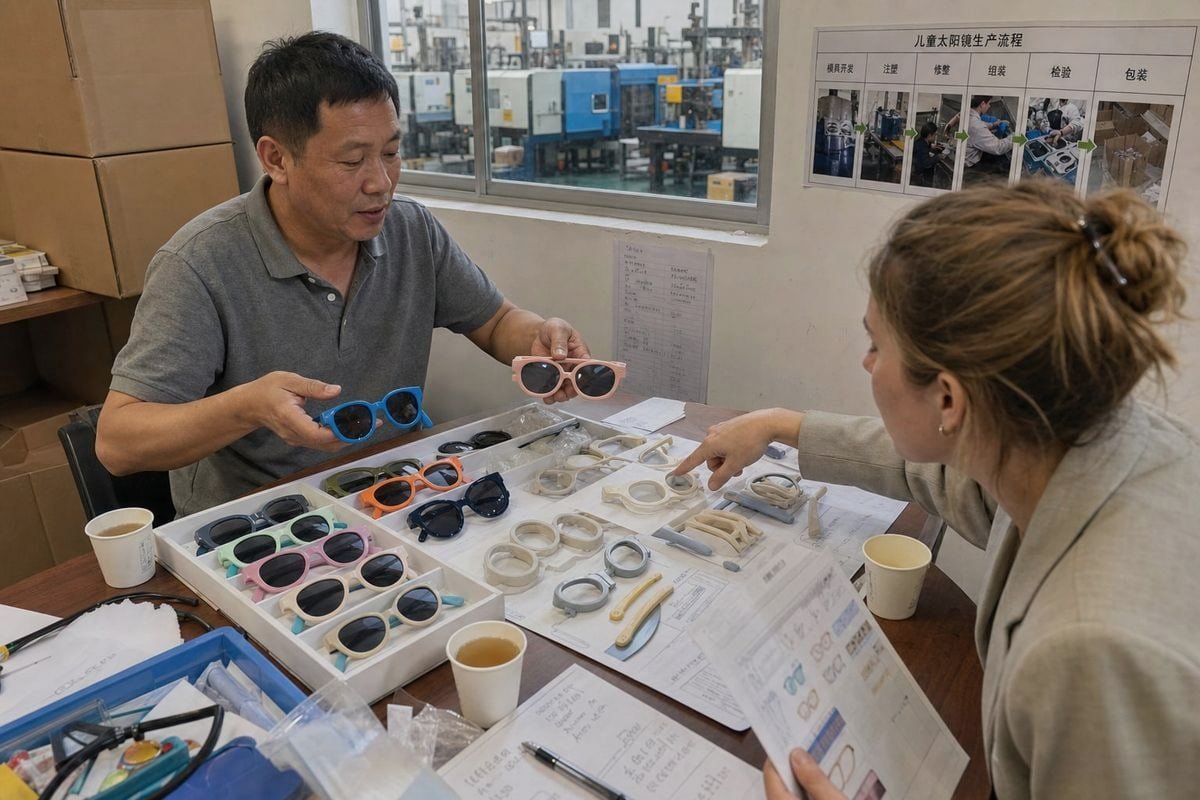
Choosing [OEM vs ODM for kids optical frames](https://okayeyewear.com/kids-sunglasses-oem-vs-odm-how-to-balance-timeline-moq-and-differentiation/) confuses many buyers who visit our Taizhou factory design ownership and IP 1. Pick wrong, and you burn months and mold money. Pick right, and you launch smoothly.
OEM vs ODM for kids optical frames differs in three ways: OEM gives you full design ownership and IP but needs higher MOQs (often 300–1,000+ pieces) and 90–150 day cycles. ODM uses factory-owned designs, offers lower MOQs (100–500 pieces), and ships in roughly 45–60 days.
Those numbers are the short version. Below, I break down how each model actually works for children’s frames, and how to decide which one fits your business stage.
How do I choose between OEM and ODM when I want to launch kids optical frames quickly?
Last spring, a buyer from Australia asked our team to build a fully custom frame for a back-to-school launch just ten weeks away. We had to give her honest advice: choose ODM.
Choose ODM when speed matters most. An ODM launch of kids optical frames typically takes 45–60 days from sample approval, because the base design, custom eyewear molds, and tooling already exist. OEM adds concept work, prototyping, and mold creation, stretching the timeline to 90–150 days or more.
Speed is usually the deciding factor for first-time buyers. So let me explain where the time actually goes in each eyewear manufacturing process.
Where OEM time is spent
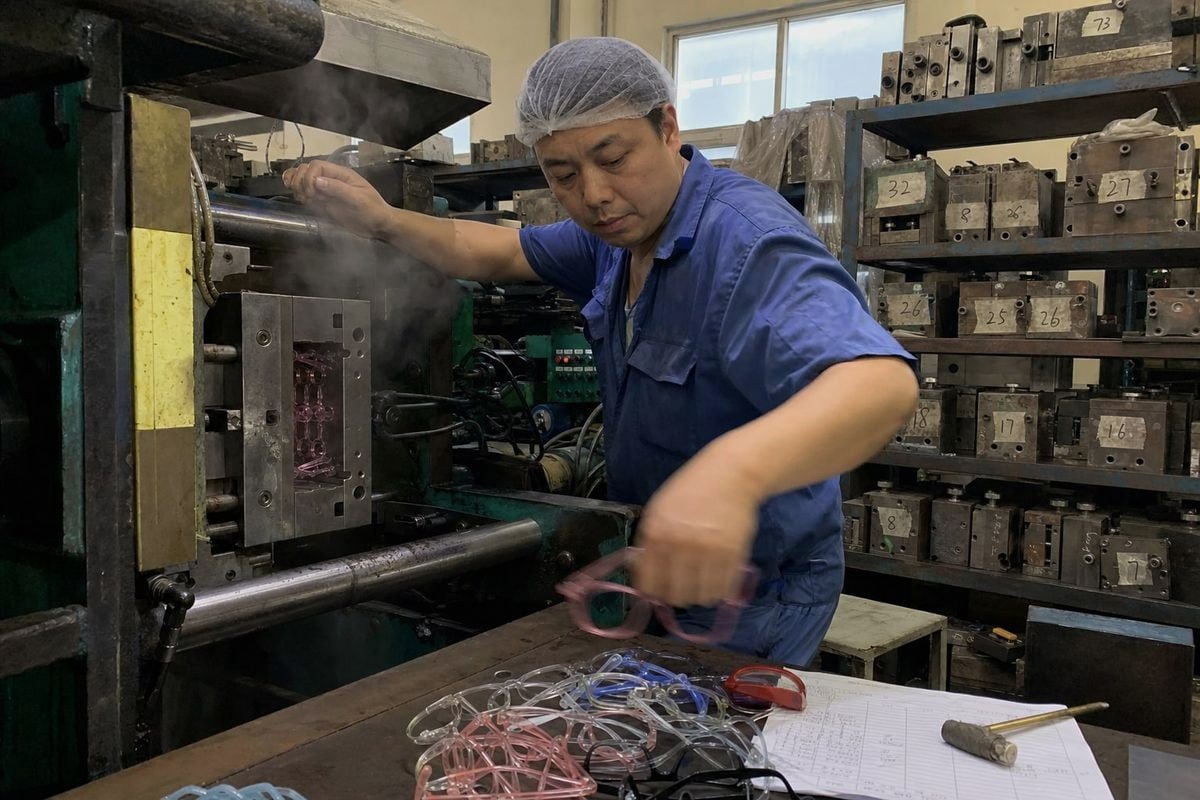
An OEM project starts from your brief. Our engineers turn sketches into CAD files, cut prototypes, and revise them with you. Then we build custom eyewear molds. For injection materials like TR90 or TPEE, tooling alone can take several weeks. Only after a pilot run do we start mass production 2. Each step adds real value, but each step also adds days.
Where ODM time is saved
An ODM project skips almost all of that. You pick a base model from an existing catalog — in our case, around 800 styles built for children's faces. You customize colors, temple prints, logos, lenses, and packaging. Samples are often ready in 7–20 days because the mold already exists. That is why ODM works so well for private label eyewear 3 launches.
Here is a quick side-by-side view:
| ステージ | OEM | ODM |
|---|---|---|
| Design & CAD | 2–4 weeks | Already done |
| First sample | 45–60 days | 7–20 days |
| Mold/tooling | Required, weeks + cost | Existing |
| Bulk production | 60–90 days | 30–60 days |
| Total typical cycle | 90–150 days | 45–60 days |
Kids eyewear has hard seasonal deadlines. Back-to-school and holiday windows do not move. If your launch date is fixed and close, ODM is almost always the safer path. If your launch is six months out and your design is your brand, OEM becomes realistic.
What MOQ should I expect from an OEM order versus an ODM order for children's frames?
MOQ negotiations take up more of my week than any other topic. Buyers often assume one universal minimum exists. In reality, MOQ depends on the model, the material, and the tooling economics behind it.
Expect OEM MOQs of roughly 300–1,000+ pieces per style for kids optical frames, because custom molds must be amortized. ODM MOQs are lower, commonly 100–500 pieces per style, since tooling already exists. Material choice, such as TR90 versus acetate frames, also shifts the minimum.
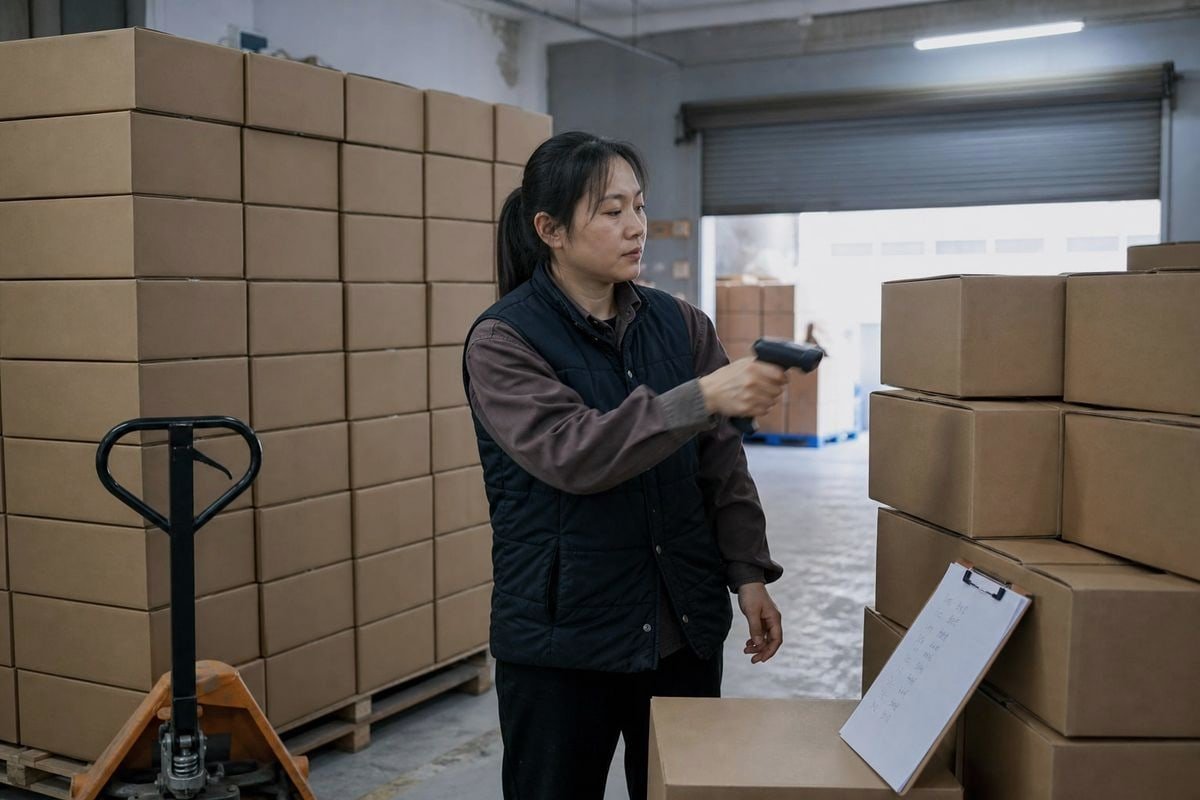
Why the gap? It comes down to who pays for development. In OEM, you fund the mold — often $1,000–$3,000+ per design for injection plastic frames — plus engineering hours. A factory needs volume to justify setting up a dedicated line for your design. In ODM, those costs were absorbed long ago, so smaller runs still make commercial sense.
How material changes the math
Material matters more than many buyers expect. Injection styles like TR90 need a mold per size and shape, so minimums per color can be modest once the mold runs. Handmade acetate frames involve more labor steps, so factories often quote different minimums there. Flexible frames for toddlers, with TPEE temples and strap loops, sit in the injection category and suit ODM color testing very well.
| 要因 | OEM impact on MOQ | ODM impact on MOQ |
|---|---|---|
| Mold cost | Buyer funds it, pushes MOQ up | Already amortized |
| Per-color minimums | Often 300+ per colorway | Often 100–300 per colorway |
| Material (TR90/TPEE injection) | Mold per size needed | Existing sizes available |
| Material (acetate) | Higher labor, higher MOQ | Varies by catalog depth |
MOQ as an inventory strategy
For children's frames, low MOQ is not just about cash. Fit and style preferences vary by age group and by region. A shape that sells in Japan may fail in Germany. ODM lets you test four or five SKUs in small quantities, learn which sizes and colors move, and reorder winners. That is smarter than betting a 1,000-piece OEM run on an unproven shape. Treat all MOQ figures here as typical ranges, not guarantees — every factory and every program differs.
How do OEM and ODM differ in who owns the design and IP for my optical frames?
A European brand once asked us for exclusivity on one of our catalog frames after their competitor sourced a similar style. That conversation taught me how badly IP expectations can go wrong when they are not written down early.
In OEM, the buyer owns the frame design and IP, because the product is built from the buyer's original specifications. In ODM, the factory retains ownership of the base design and may sell similar styles to other buyers; you own only your branding, unless a contract states otherwise.
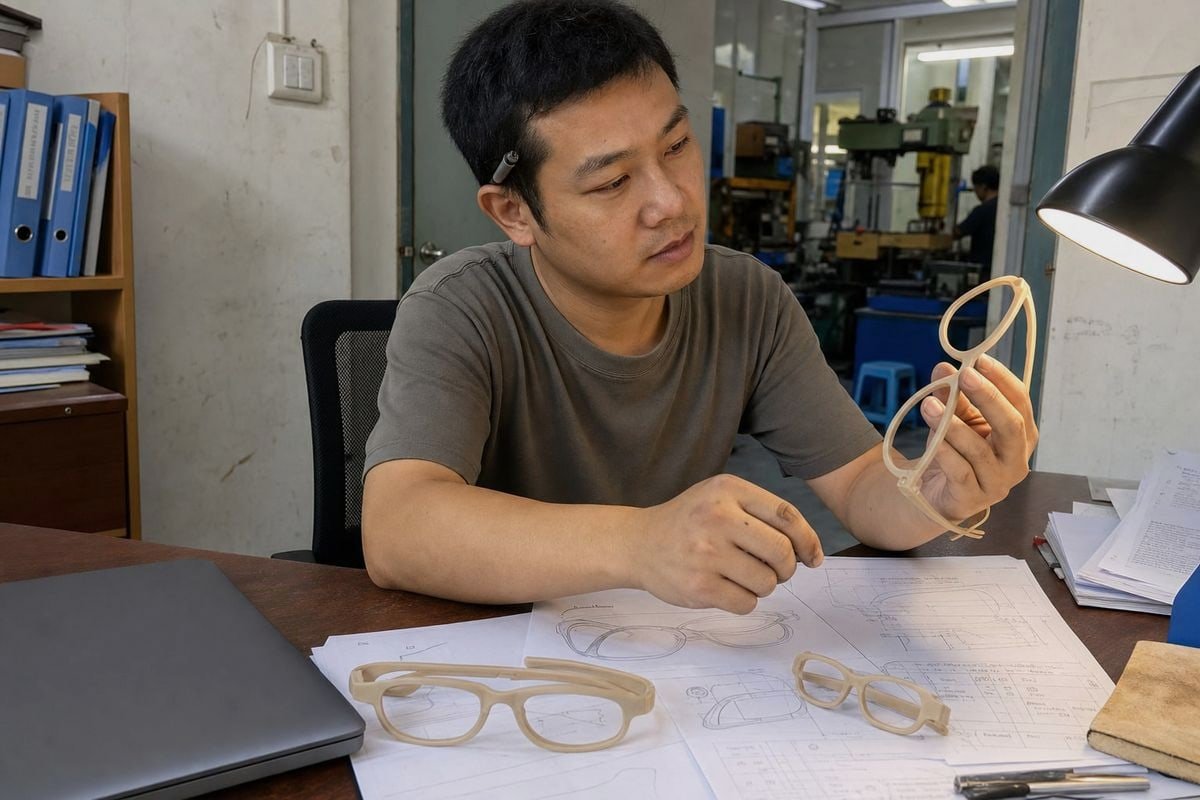
This is the deepest structural difference between the two models, and it deserves careful thought before you sign anything.
Three layers of ownership
Buyers often blur three separate things. First, design ownership: who legally owns the shape, features, and drawings. Second, mold ownership: who paid for and controls the physical tooling. Third, exclusivity: whether the factory may produce that style for anyone else. In a standard OEM deal, all three sit with you. In a standard ODM deal, all three sit with the factory — you control only your logo, your colorways, and your packaging.
Contracts can change the defaults
None of this is fixed in stone. In our export work across 20+ countries, we have signed NDAs before sharing development files, agreed to design assignment clauses on OEM projects, and negotiated territory exclusivity on specific ODM colorways. If IP matters to you, put these items in writing: an NDA before sampling, a tooling ownership clause stating who holds the mold, a design assignment for OEM work, and any exclusivity terms with clear scope and duration.
For a brand where signature styling drives brand differentiation, OEM design ownership is worth the investment. For a private label eyewear line built on solid, proven shapes, standard ODM terms are usually acceptable — as long as you understand that similar frames may appear elsewhere.
Which option, OEM or ODM, gives me a shorter production cycle for my first order?
The trade-off I weigh most often with first-time buyers is this: exclusivity later versus shelf presence now. A first order rarely needs to do both, and pretending it does is how launches slip.
ODM gives a clearly shorter production cycle for a first order of kids optical frames. Samples arrive in about 7–20 days and bulk goods in 30–60 days. OEM first orders commonly need 90–150 days end to end, because design, sampling, and tooling all happen before production starts.
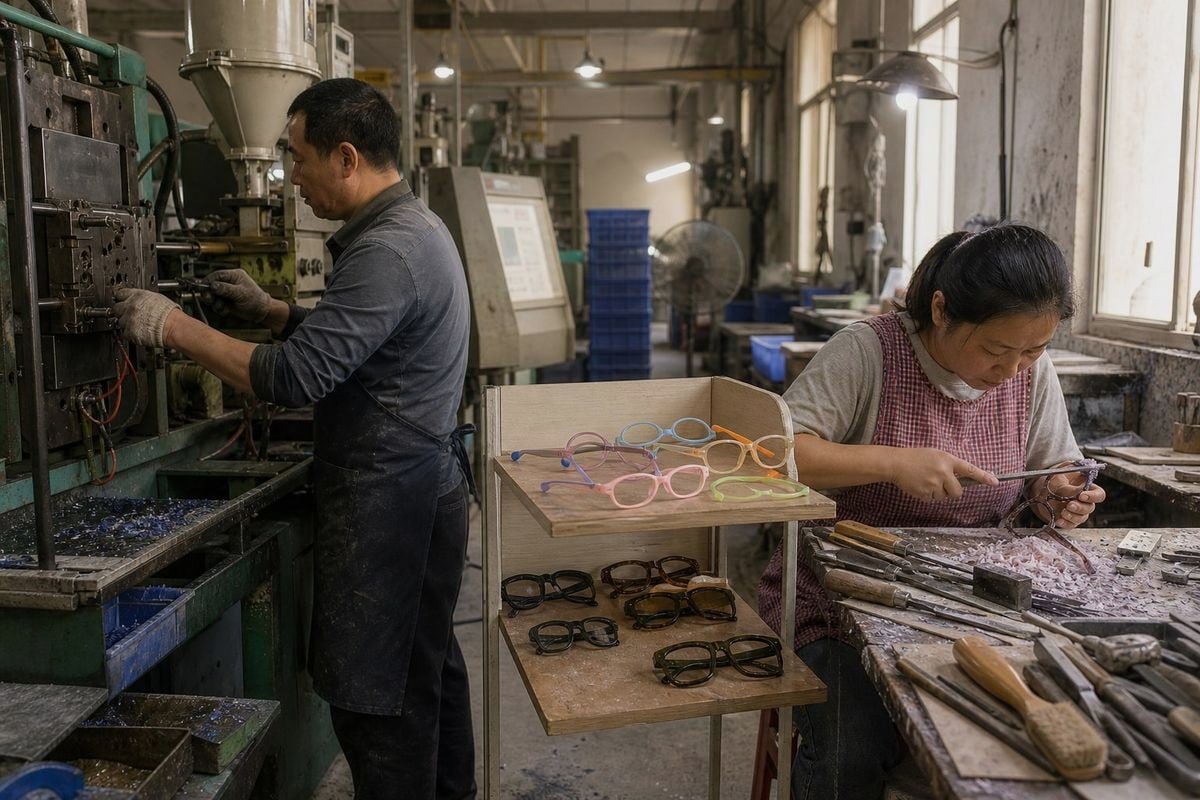
For a first order, the product development timeline is not just longer under OEM — it is also less predictable. Let me show why, step by step.
The first-order timeline, honestly
- Design and engineering. OEM: 2–4 weeks of briefing, sketching, and CAD. ODM: zero, you select a base model.
- Sampling. OEM: 45–60 days including revisions. ODM: 7–20 days for a color and logo sample.
- Tooling. OEM: mold creation and trial shots. ODM: none.
- Compliance and testing. Both models need this for children's products — verify safety compliance against standards like EN71 or CPSIA for your market before shipping.
- Bulk production and quality control eyewear checks. OEM: 60–90 days. ODM: 30–60 days.
Notice that steps four and five apply to both models. What OEM adds is everything before them. Also note the wildcards: color matching, custom packaging, and lab testing can stretch either timeline, so build buffer weeks into any launch plan.
Kids frames raise the stakes on getting this right
Children's frames are not adult frames scaled down. They need lightweight construction, flexible temples, impact resistance, age-specific bridge fit, and hypoallergenic, skin-safe materials. On our production line, that is why we build in TR90 and TPEE 4 — materials that bend without snapping and stay comfortable through a full school day. The good news for first orders: a mature ODM catalog has already engineered those details. You inherit years of fit refinement without paying for the learning curve. Once your first ODM order proves which shapes, sizes, and colors sell, an OEM project becomes a far safer second step — and many of our strongest long-term partners followed exactly that hybrid path.
結論
OEM buys design ownership and differentiation but costs time and volume. ODM buys speed and low risk. Test with ODM first, then invest in OEM once demand is proven.
脚注
1. Explains the legal concept of design ownership and intellectual property. ↩︎
2. Defines the industrial process of mass production in manufacturing. ↩︎
3. Clarifies the concept and market of private label products in the eyewear industry. ↩︎
4. Found a working, highly relevant page on the original domain directly comparing TR90 and TPEE for kids’ sunglasses. ↩︎
 English
  Español de México
  Deutsch
  Français
  日本語
日本語  العربية
  Português do Brasil