ODM vs Custom OEM Kids Optical Frames: Which Offers Better ROI for Chain Retailers?
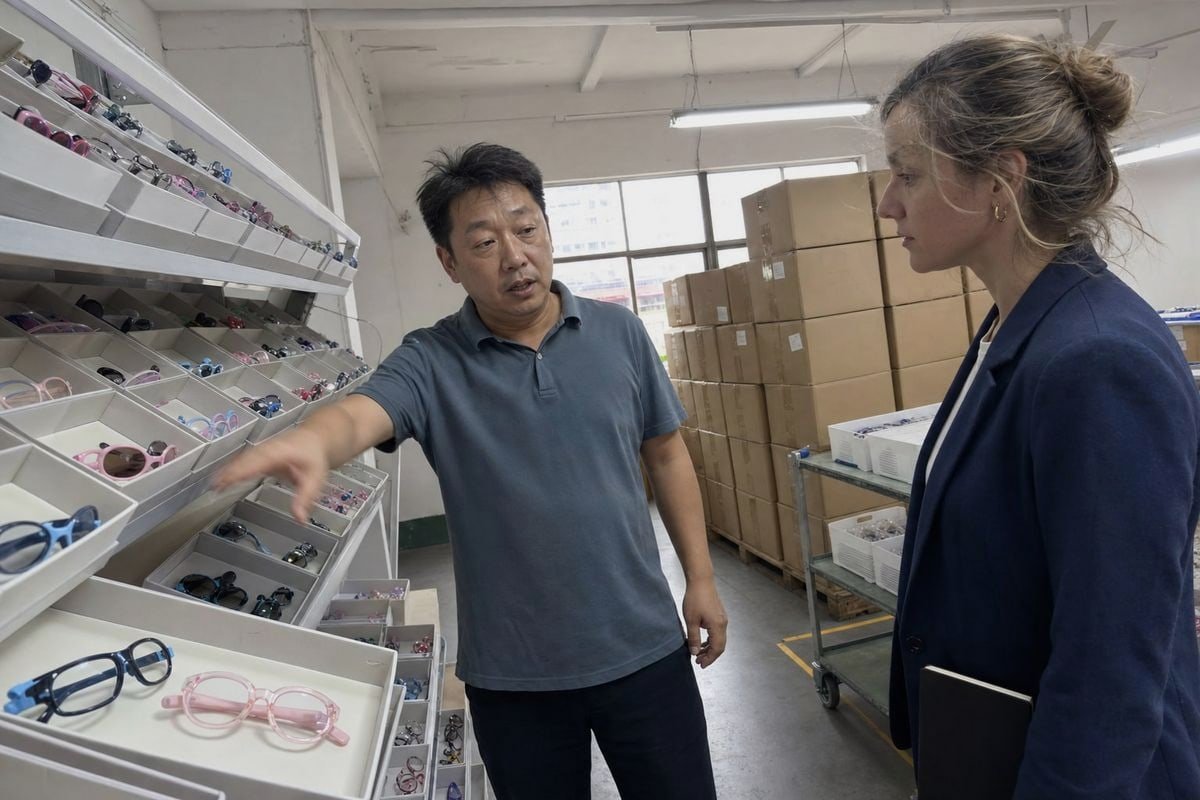
Choosing between ODM and custom OEM kids optical frames keeps procurement managers awake at night — I hear it constantly from buyers visiting our Taizhou factory floor.
ODM kids optical frames deliver better initial ROI for chain retailers through lower MOQs, no tooling costs, and faster launches. Custom OEM wins on lifetime ROI only when proven sell-through data lets you amortize $800–$8,000 mold costs across steady, high-volume reorders.
That short answer hides a lot of detail. Let me walk you through the numbers, the risks, and the strategy that actually works for multi-store chains.
How do I calculate the real ROI difference between ODM and OEM kids optical frames for my chain stores?
Last year, a European optical chain asked our team to model both sourcing paths side by side before committing initial ROI 1. The exercise changed how they budget every season.
Calculate ROI on total economics, not unit cost: gross margin minus development fees, tooling amortization, inventory holding cost, and markdown risk. ODM avoids $800–$8,000 mold fees and $1,000–$10,000 design costs, so OEM only wins after enough repeat volume recovers that upfront investment.
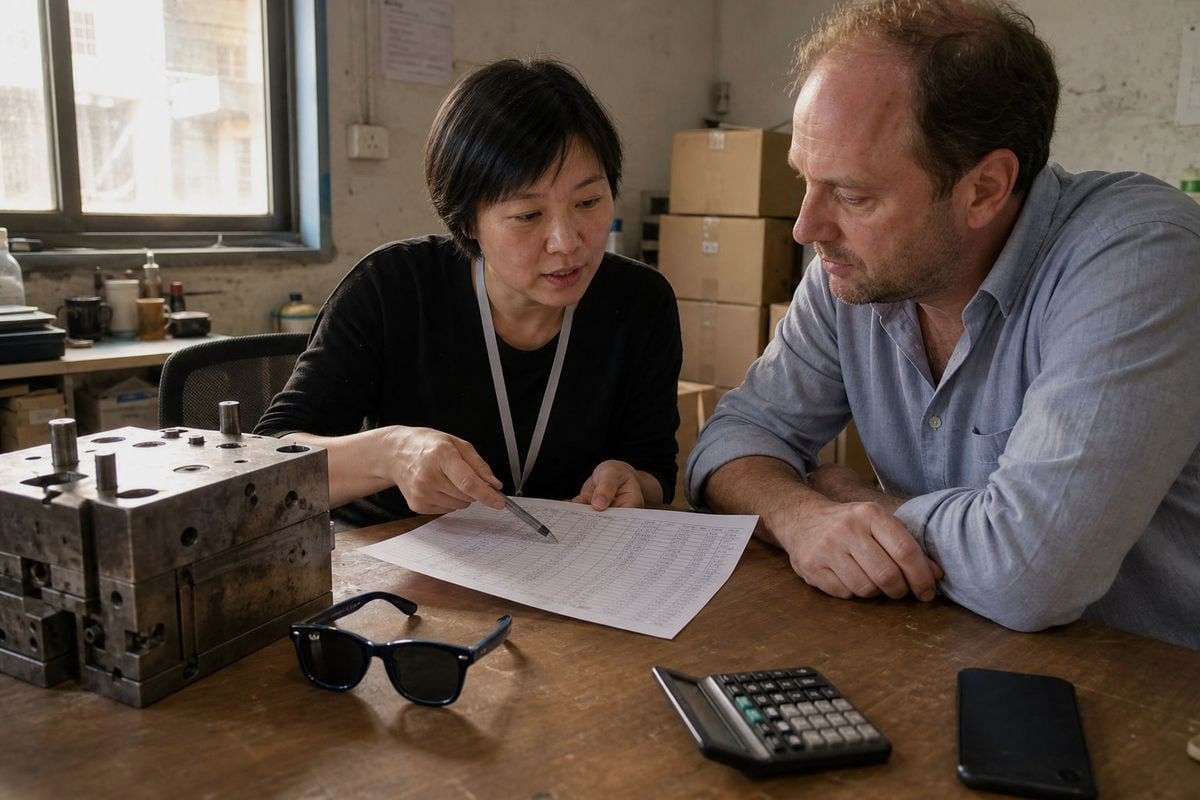
The biggest mistake I see chain buyers make is comparing only the per-unit price. A proper cost analysis in manufacturing looks at the full cash cycle. When we quote both paths for the same buyer, the picture usually looks like this.
The numbers that actually move ROI
Industry-style ranges, based on what we and our peers commonly quote, look like this:
| Cost factor | ODM (existing molds) | Custom OEM |
|---|---|---|
| Mold / tooling fee | Often $0 (existing molds) | $800–$8,000+ per design |
| Design cost | $500–$3,000 (light customization) | $1,000–$10,000+ if outsourced |
| Per-unit cost | Roughly $12–$30 | Roughly $15–$50+ |
| Sampling cycles | 1–2 rounds | 3–5 rounds typical |
| Capital at risk before first sale | 低 | 高い |
These are ranges, not universal standards. Actual figures vary by supplier, eyewear materials, region, and volume. But the shape of the equation stays the same.
A simple break-even lens
Say a custom frame lands at $25 and wholesales at $75. That margin looks great on paper. But if you spent $5,000 on tooling and $4,000 on design, you need real sell-through before the first dollar of true profit appears. Divide your total development spend by your incremental margin per unit. That tells you how many pairs you must sell just to break even on the OEM decision. For a chain with 10 stores and uncertain kids' demand, that number often takes two or three seasons to reach.
Do not forget the hidden costs
Inventory holding cost 2, markdown risk on slow SKUs, and the working capital tied up in higher MOQs all subtract from ROI. ODM keeps all three lower. That is why capital-light sourcing usually wins the first-year comparison, even at a slightly higher unit price.
Should I choose ODM's ~800 ready styles or invest in custom OEM molds for my retail locations?
A trade-off I weigh with buyers every week: our catalog holds roughly 800 existing kids' styles, yet some chains still push straight for custom molds before selling a single frame.
Start with ODM ready styles to test demand across your stores, then invest in custom OEM molds only for validated winners. Ready styles launch in weeks with your branding; custom molds deliver brand exclusivity but demand upfront capital and proven, repeatable volume.
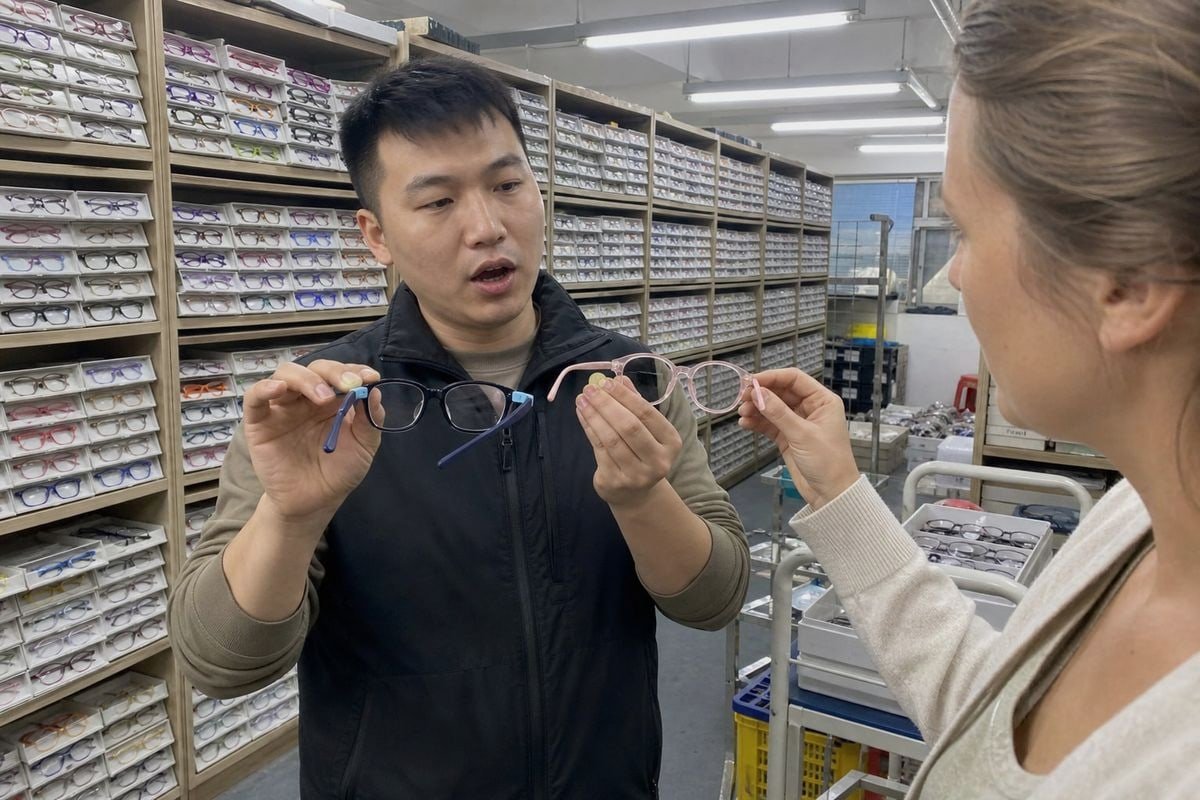
Here is how I frame the decision when a founder or product manager visits our showroom. Ready styles are not generic leftovers. They are proven shapes, built on molds we have refined over 15 years, in TR90 and TPEE — the flexible, impact-resistant eyewear materials that parents actually trust for active kids. You customize colors, logos, lens options, and packaging. The result is a private label eyewear line that looks retail-ready without a single mold fee.
What ready ODM styles give a chain
- Fast assortment breadth across age groups and face sizes
- Low capital exposure per SKU, so you can test more styles per store cluster
- Retail-ready presentation through custom packaging and branding
- Proven fit platforms already tested on children's faces
What custom OEM molds give a chain
- Full design control and true product differentiation
- Protection against copycat wholesale optical frames from competitors
- A proprietary fit system, which matters more in kids' eyewear than adult fashion frames — bridge fit, temple flexibility, and durability are purchase drivers for parents
- Long-run margin defense once volume is stable
The honest answer is that these are not opposites. The strongest brands we serve use our ODM catalog as a discovery funnel. They watch which shapes, colors, and sizes actually sell in which locations. Then they convert one or two winners into exclusive OEM designs. Their data analytics from ODM sales de-risk the OEM investment, because the custom design is pre-validated by real market performance. That sequencing — ODM to discover demand, OEM to defend it — consistently produces the best return we see across 20+ export markets.
What minimum order quantities and lead times can I expect from ODM versus custom OEM production?
An Australian importer once told me his previous supplier quoted 180 days for a custom kids' line — and back-to-school season came and went before delivery.
ODM typically requires 50–300 pieces per style with 30–90 day lead times. Custom OEM demands 500–1,200+ pieces per style and 120–180 days including mold creation and sampling. ODM's shorter cycle protects seasonal windows like back-to-school launches.
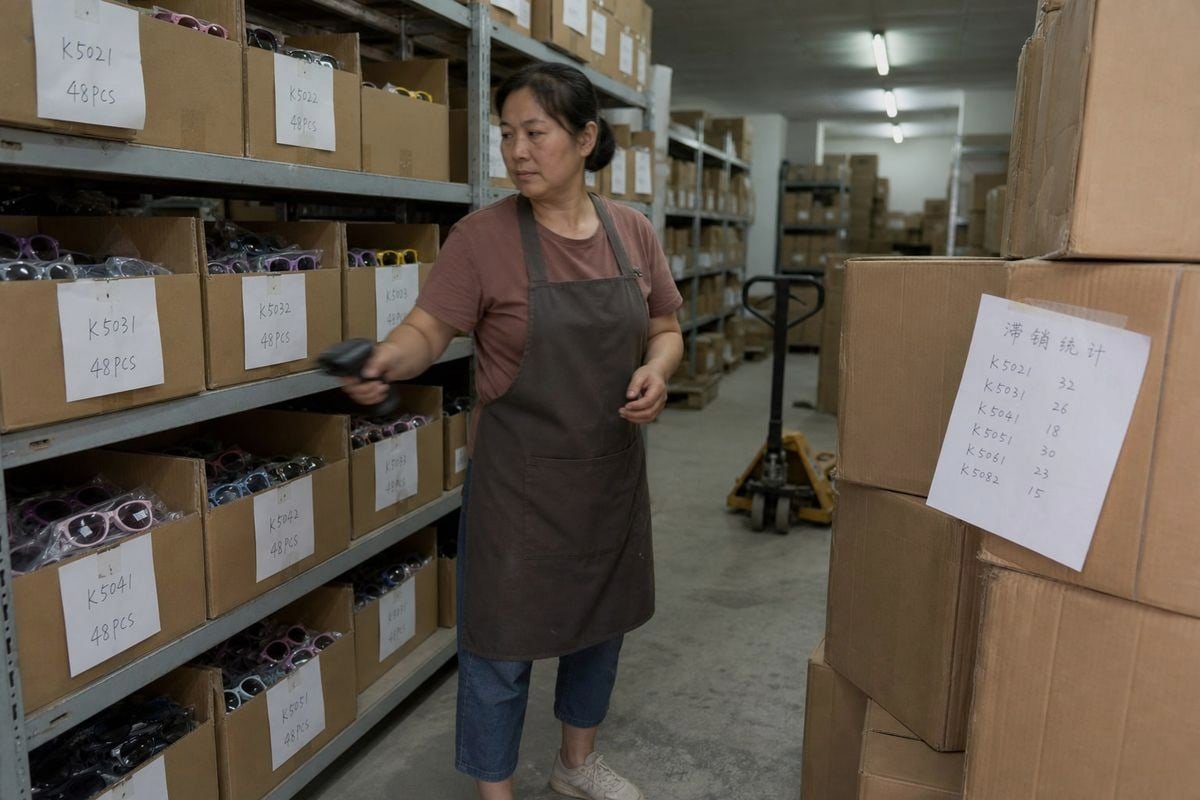
Minimum order quantity (MOQ) and production lead time are where the two models diverge most sharply. The gap exists for a structural reason, not a pricing one. The eyewear manufacturing process for OEM includes stages that ODM simply skips.
Why the timelines differ
| ステージ | ODM | Custom OEM |
|---|---|---|
| Design and engineering | Skipped or light modification | 2–6 weeks |
| Mold creation | Not needed | 4–8 weeks |
| Sampling and approval | 1–2 weeks | 4–8 weeks (multiple rounds) |
| 量産 | 3–6 weeks | 4–8 weeks |
| Typical total | 30–90 days | 120–180 days |
At our factory, an ODM order with custom colors and logo printing usually ships within 45–60 days, because the molds already exist and the production line already knows the style. A full OEM project needs new tooling, injection trials, fit checks on children's head forms, and safety verification before mass production even starts.
Why MOQ differs too
Mold economics drive OEM minimums. A factory cannot justify dedicating a new mold and a production changeover to a few hundred pieces. So OEM MOQs commonly sit at 500–1,200 pieces per style, sometimes higher. ODM spreads mold costs across many buyers, which is why 50–300 pieces per style is workable.
For a chain retailer, this changes assortment math completely. With ODM, a 3,000-piece budget can test ten styles. With OEM, the same budget covers three styles at best — and they are unproven. If your calendar depends on seasonal peaks, the shorter ODM cycle is not a convenience. It is the difference between hitting back-to-school shelves and missing the year's biggest kids' eyewear window.
How do I know which sourcing model reduces my inventory risk across multiple store locations?
Watching a distributor mark down 4,000 unsold custom frames taught me a lesson I now share with every new chain buyer: exclusivity means nothing if the style does not sell.
ODM reduces inventory risk for chains because low MOQs let you stock fewer units per style, test demand by store cluster, and reorder winners fast. OEM concentrates risk in fewer, larger, unproven SKU bets that are harder to liquidate.
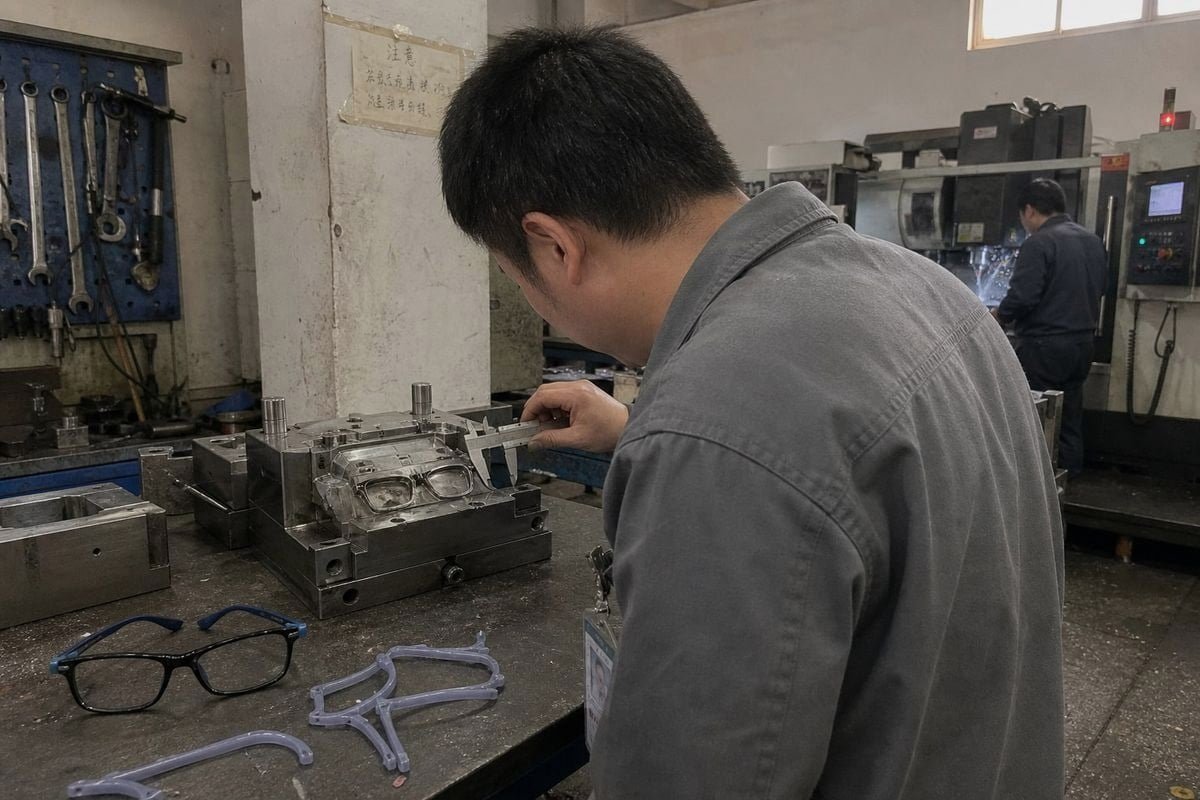
Inventory risk in a multi-store chain is not one number. It is the sum of every SKU-location combination you commit capital to. The sourcing model shapes that risk profile from day one, and smart supply chain optimization 3 starts with the purchase order, not the warehouse.
A practical risk checklist
Ask these four questions before choosing a model:
- Do I have sell-through history for this style or fit in kids' sizes? No history means ODM.
- Can every store absorb its share of the MOQ within one season? If not, OEM stock will sit and age.
- How fast can I replenish a winner? ODM reorders on existing molds turn around quickly; OEM reorders are fast too, but only after the slow first run.
- What happens if the style fails? Custom OEM frames are harder to liquidate because no other buyer sells that exact design.
The kids-specific risk factors
Children's eyewear adds its own variables. Kids break, lose, and outgrow frames, so replacement demand is real — but it clusters around styles that fit well and survive playground abuse. Children's eyewear safety and durability drive parental repurchase, which is why we build our frames in flexible TR90 with soft TPEE temples. Hypoallergenic, impact-resistant construction lowers warranty claims and returns, and that quietly improves ROI in both models. Fit consistency across a size range matters more than in adult fashion frames, and a chain needs multiple sizes per style, which multiplies SKU count and inventory exposure.
| Risk factor | ODM impact | OEM impact |
|---|---|---|
| Units committed per style | Low (50–300) | High (500–1,200+) |
| Number of styles testable per budget | 高い | 低 |
| Liquidation of failed styles | Easier | Harder (exclusive design) |
| Replenishment speed for winners | Fast | Fast after first run |
| Demand-testing across store clusters | 実用的 | Expensive |
The pattern is clear. ODM lowers the cost of experimentation. OEM lowers the risk of commoditization once a product proves itself. A chain that respects that sequence rarely gets stuck with dead stock.
結論
Chasing the lowest unit cost is how chains lose money in kids' eyewear. Unproven OEM bets tie up capital; endless ODM-only sourcing caps differentiation.
The fix is sequencing, not choosing sides. Use ODM ready styles — like our ~800-style catalog in flexible TR90 and TPEE — to launch fast, test demand across store clusters, and preserve working capital. Then convert your proven best-sellers into custom OEM designs, where brand exclusivity and proprietary fit justify the tooling spend. ODM discovers demand. OEM defends it. Match the sourcing model to your demand certainty, and the ROI question answers itself.
脚注
1. Defines Return on Investment (ROI) and its calculation. ↩︎
2. Explains what inventory holding costs are and their components. ↩︎
3. Explains the concept and benefits of supply chain optimization. ↩︎
 English
  Español de México
  Deutsch
  Français
  日本語
日本語  العربية
  Português do Brasil