How to Verify Kids’ Optical Frame Suppliers from China Without a Visit?

Choosing kids’ optical frame suppliers from China without visiting feels risky Bureau Veritas 1. On our production line in Taizhou, I’ve seen buyers burned by polished websites hiding weak factories.
Verify kids’ optical frame suppliers from China remotely by checking the business license on GSXT, validating ISO and safety certificates with issuing bodies, requesting live production video calls, hiring a third-party factory audit, testing physical samples, and calling two to three buyer references directly.
No single check is enough on its own. Below, I walk you through each verification layer step by step, based on what I see working from the supplier side every week.
How can I check if a Chinese kids' optical frame factory is legitimate before placing an order?
A buyer from Australia once told me she almost wired a deposit to a "factory" that turned out to be a two-person trading office. Our team helped her spot the mismatch in ten minutes.
Check legitimacy by requesting the supplier's full Chinese business license, verifying the 18-digit Unified Social Credit Code on the GSXT government database, confirming the business scope includes eyewear manufacturing, and asking for a VAT invoice that only real factories can issue.
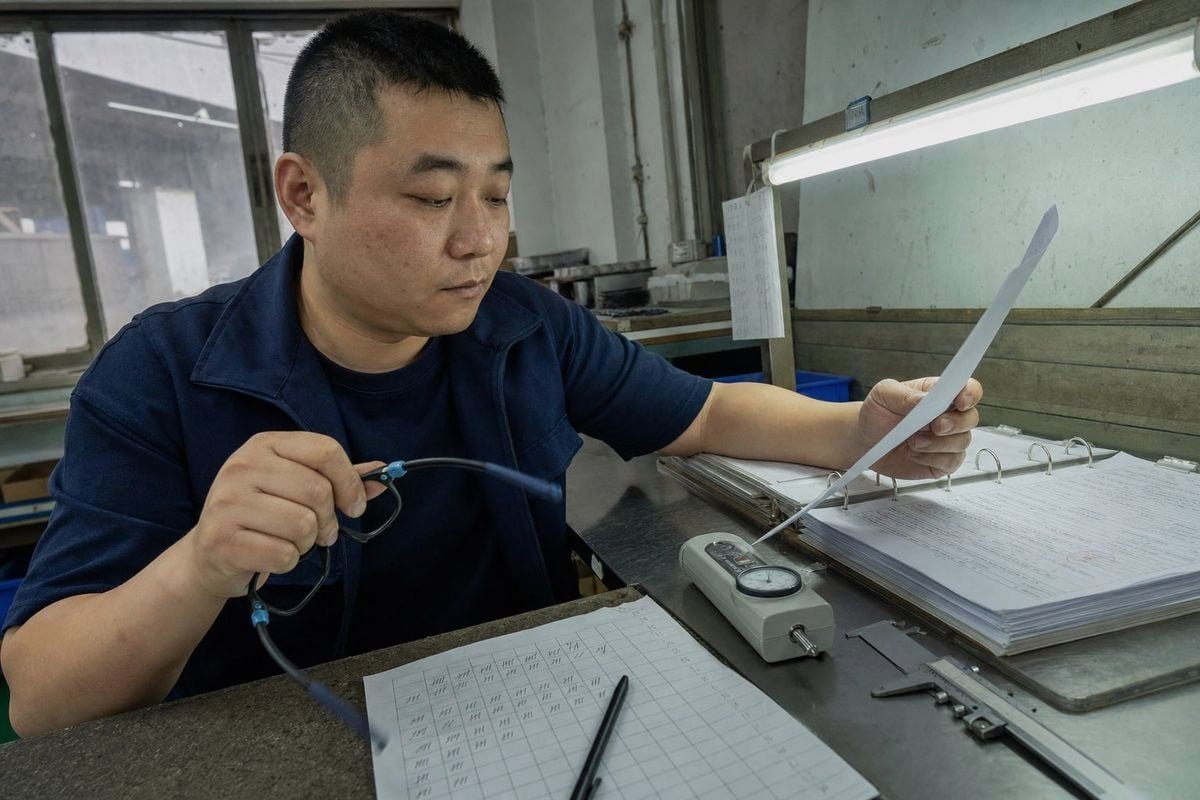
Legitimacy checks come first because everything else builds on them. If the legal entity is fake or mismatched, certificates and samples mean nothing. Here is how I recommend structuring this first phase.
Start with the business license and GSXT
Every legal Chinese company holds a business license with an 18-digit Unified Social Credit Code 2. Ask for a clear scan. Then look up that code on the National Enterprise Credit Information Publicity System 3 (GSXT). This is a free, official government database. Cross-check five things: the exact company name, the legal representative, the registered capital, the annual report status, and the business scope. For kids' frames, the scope should mention eyewear, optical frames, or glasses manufacturing. A vague scope like "general trading" is a warning sign.
Separate factories from trading companies
Trading companies are not always bad, but you should know who you are dealing with. A practical test is the VAT invoice. Only genuine manufacturing entities in China can issue the manufacturer-level VAT invoice used for export tax rebates. Ask directly. A real factory answers without hesitation. Also compare the claimed staff count and facility size against what the license and video evidence show. Our factory runs about 120 workers across a 5S-managed workshop, and we expect buyers to check that our claims match reality.
| 検証項目 | Where to check | What confirms legitimacy |
|---|---|---|
| Unified Social Credit Code | GSXT database | Active status, matching company name |
| Business scope | GSXT / license scan | Explicitly includes eyewear or optical frames |
| 工場対トレーダー | VAT invoice request | Manufacturer-level VAT invoice available |
| Claimed scale | Video call + license data | Staff count and facility match registered capital |
| Platform standing | Alibaba, 1688.com | Trade Assurance record, high re-purchase rate |
One extra tip: check the supplier's profile on 1688.com, Alibaba's domestic Chinese platform. A high re-purchase rate from Chinese buyers signals real manufacturing consistency, because domestic buyers rarely tolerate weak factories.
What documents and certifications should I ask for to confirm child safety compliance?
The trade-off I weigh constantly on our side is paperwork versus performance. Certificates matter, but I have seen suppliers with beautiful PDFs and terrible hinges. You need to verify both.
Request the supplier's ISO 9001 certificate with a scope covering ophthalmic frames, plus market-specific documents such as CE certification for Europe, FDA registration for the US, and CPSIA compliance test reports for children's products. Then validate every certificate number directly with the issuing body's database.
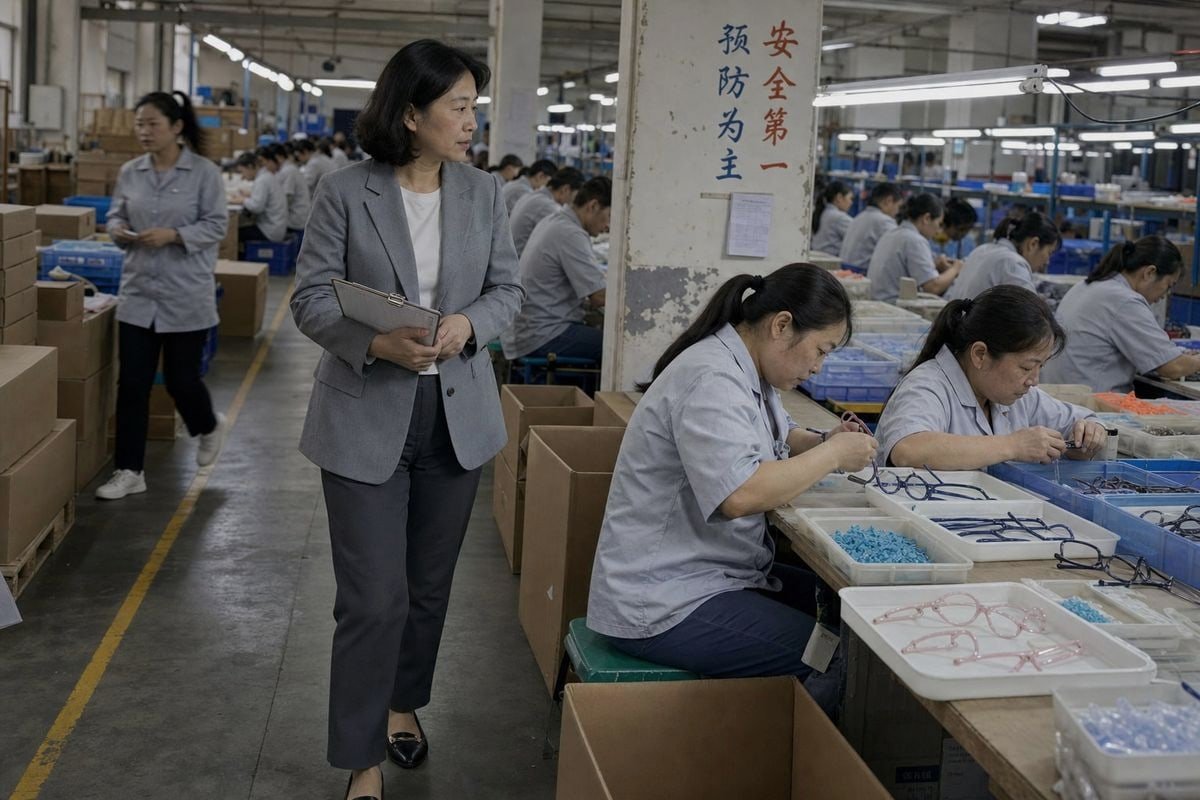
A PDF is not proof. The issuing body's database is. That single sentence should guide your entire document review. Suppliers can edit PDFs in minutes. Certificate databases cannot be edited by them.
Match the certificate to your market
Different destination markets demand different compliance documents. Children's products face stricter rules than adult eyewear almost everywhere, because regulators treat kids as a vulnerable group. Here is a simple mapping.
| 市場 | Key document | What it covers for kids' frames |
|---|---|---|
| アメリカ合衆国 | FDA registration + CPSIA compliance | Impact safety, lead and phthalate limits in children's products |
| 欧州連合 | CE certification + REACH | Material safety, restricted substances, nickel release |
| Global quality system | ISO 9001 standards | Quality management, process consistency |
| Any market | SGS inspection report or similar | Independent product testing evidence |
Verify scope, not just existence
An ISO 9001 certificate 4 is only meaningful if the scope document explicitly lists ophthalmic frames or eyewear. A certificate issued for "plastic injection parts" does not validate kids' optical frames. The same logic applies to test reports. Confirm three things with the issuing laboratory: the report number, the exact product model tested, and the applicant name. If the applicant is a different company, the report may have been borrowed from another supplier. When buyers ask us for TR90 material safety documentation, we expect them to check that the tested resin batch matches what will go into their frames. Good factories welcome this scrutiny. Weak ones deflect it.
For children's frames specifically, ask about nickel release testing 5 on any metal parts and coating adhesion reports. Kids' skin is more sensitive, and plating that flakes becomes both a comfort and a safety problem.
How can I evaluate product quality and material safety through samples and video calls?
During a video call last year, a European buyer asked me to walk to our injection machines and pick up a random TR90 frame mid-production. That unscripted moment told her more than fifty catalog photos.
Evaluate quality by scheduling live, unscripted video calls of the production line, ordering physical samples shipped on your own courier account, and testing hinge torque, temple flex recovery, plating adhesion, and frame symmetry across multiple units — not judging from one perfect sample or photos.
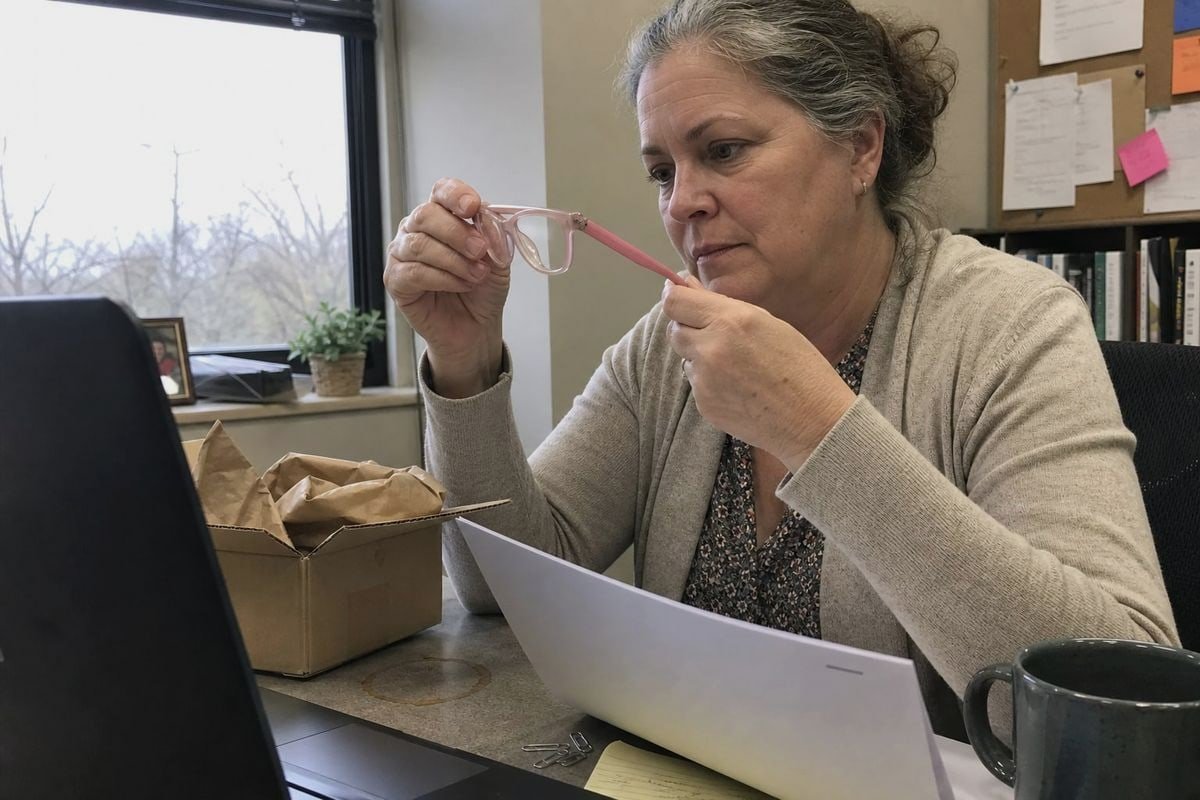
Photos can be borrowed. Pre-recorded videos can be staged. Live evidence and physical samples are much harder to fake. Treat this phase as your remote substitute for walking the factory floor.
Run the video call like a spot-check
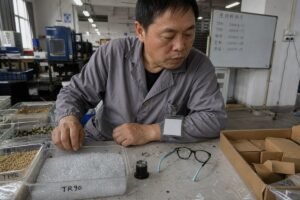
Schedule the call, but do not share a script. During the call, ask the representative to show specific things in real time: raw material batches with labels, the assembly of a random frame currently in progress, the machine list, and the QC station. Compare what you see against the claimed staff count and facility size. A real kids' eyewear factory will show TR90 pellets, flexible TPEEテンプル 6 on the line, and dedicated small-size tooling. If the supplier only offers pre-recorded clips or keeps rescheduling, treat that as data.
Test samples the right way
Order physical samples under your own courier account so the supplier cannot substitute or delay. Then test them systematically. For children's frames, I recommend checking these points at minimum:
- Hinge torque and resilience after repeated opening cycles
- Temple flex recovery — the frame should return to shape after twisting
- Gloss consistency and coating adhesion across the surface
- Frame symmetry when placed on a flat table
- Nose-pad comfort and absence of sharp edges
- A drop ball test for impact resistance on demo lenses
- Nickel release behavior on any metal components
One more step separates serious buyers from casual ones: move from a single sample to a small prototype batch with full QC reporting, and use batch testing samples to check consistency across units. One perfect sample proves the factory can make one good frame. Five consistent frames prove they have a process. On our line, flexible silicone hinge connectors and adjustable ear hooks get individual pull checks, because a hinge that fails on a child's face is not a cosmetic issue.
What red flags should I watch for when communicating with a supplier remotely?
A lesson I learned early in our fifteen years of eyewear work: how a supplier communicates before payment predicts how they behave after payment. The warning signs are usually visible from the first week.
Watch for mismatched business scope, refusal to do live video calls, vague answers about QC procedures, certificates that cannot be validated, unavailable buyer references, pressure to skip Trade Assurance or third-party inspection, and catalogs full of unrelated products instead of eyewear specialization.
Red flags rarely appear alone. One weak signal might be innocent. Three together almost never are. The table below summarizes the patterns I would act on immediately.
| 赤信号 | なぜそれが重要なのか | What to do |
|---|---|---|
| Business scope doesn't mention eyewear | Likely a trader or shell company | Re-check GSXT; ask for VAT invoice |
| No live video, only recorded clips | Production reality may not exist | Insist on a scheduled unscripted call |
| Vague QC answers | No real quality system behind the talk | Ask for written QC flow and AQL levels |
| Certificates fail database validation | Borrowed or forged documents | Walk away or demand fresh testing |
| References "unavailable" | No satisfied repeat buyers to show | Request 2–3 references in your category |
| Pressure to pay outside Trade Assurance | Removes your payment protection | Keep payment inside protected channels |
| Catalog mixes toys, phone cases, eyewear | No specialization in kids' frames | Prefer focused TR90/TPEE specialists |
Test their depth with technical questions
Specialization is easy to test. Ask which brand of hinges and screws they use and who supplies their raw resin. A factory with deep supply chain integration answers with specific sub-supplier names and material grades. Ask why they chose TR90 over ポリカーボネート 7 for a kids' frame, or how TPEE temples behave in cold weather. Real engineers answer naturally. Middlemen stall or copy-paste marketing text. You can also search for the company's technical directors on LinkedIn to confirm an in-house R&D team exists.
Call references and use inspections as a backstop
Ask for two or three direct buyer references, ideally brands buying similar kids' products, and call them. Ask three questions: was delivery on time, how were quality deviations handled, and did communication stay reliable after payment. Finally, for a first order, book both a third-party factory audit and a pre-shipment inspection through an ISO 17020-accredited agency 8 such as SGS or Bureau Veritas. Some buyers ask me whether remote verification can ever fully replace a visit. My honest answer: for screening and most first orders, yes — the layered process above gets you most of the confidence of a trip. For large strategic programs, a visit later still adds value. But you should never need to board a plane just to find out whether a supplier is real. Suppliers in established clusters — whether the Wenzhou eyewear hub or our own Taizhou base — should expect and welcome every check on this list.
結論
Remote verification works when you layer checks: GSXT license, validated certificates, live video, third-party audits, tested samples, and reference calls. No single badge or PDF is proof — the combination is.
脚注
1. Globally recognized inspection company cited as a trusted verification option. ↩︎
2. Explains China’s official business identifier used to verify factory legitimacy. ↩︎
3. Official Chinese government database for verifying business registration details. ↩︎
4. Official ISO reference explaining the quality management standard cited for compliance. ↩︎
5. EU REACH regulation restricts nickel release, relevant to children’s product safety testing. ↩︎
 English
  Español de México
  Deutsch
  Français
  日本語
日本語  العربية
  Português do Brasil