How to Stock Kids Optical Frames Across Price Tiers for Insurance and Self-Pay Buyers?
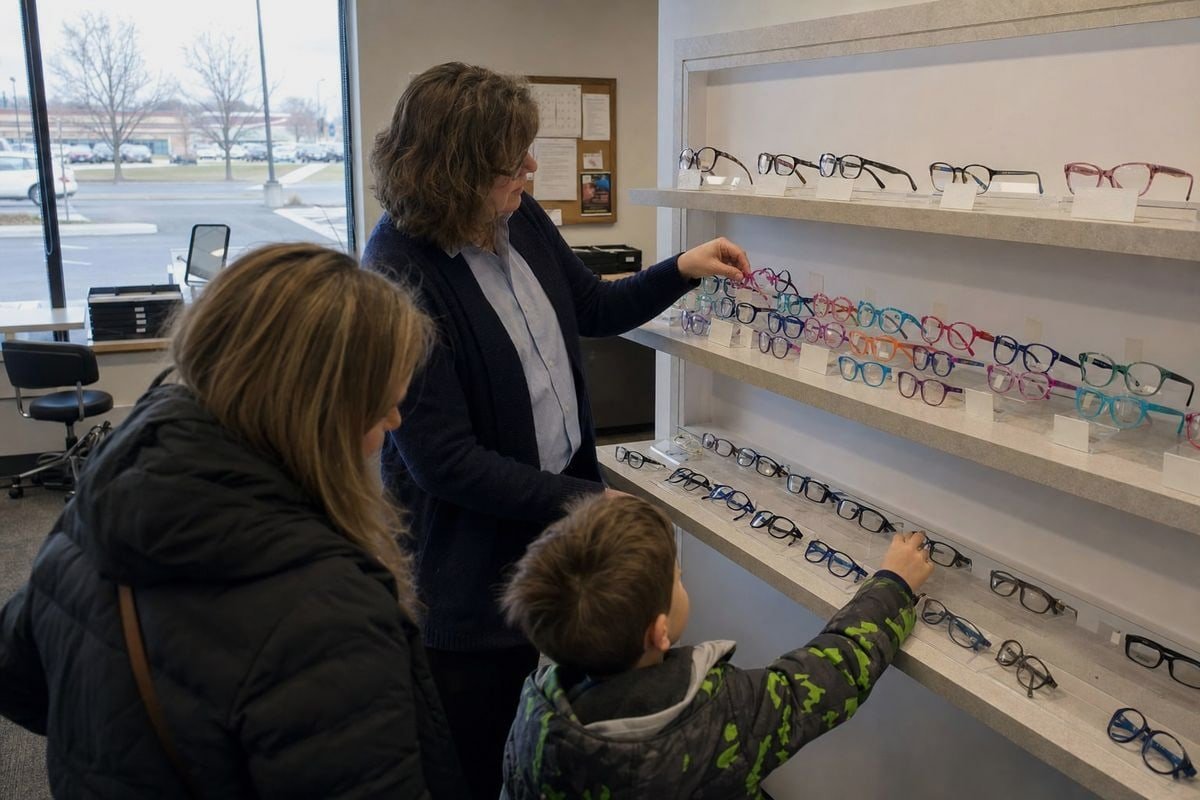
Stocking kids optical frames 1 across price tiers trips up even experienced buyers. On our production line, I have seen orders fail simply because the tier mix ignored who actually pays.
Stock kids optical frames in three clear price tiers: an entry tier that fits common insurance frame allowances, a mid tier with better materials and fit, and a small premium tier for self-pay upgrades. Weight the mix roughly 25% entry, 50% mid, 20–25% premium.
That short answer hides a lot of moving parts. Below, I break down how to build each tier, which materials to choose, and how to source it all without heavy minimums.
How do I choose the right price tiers to cover both insurance and self-pay customers?
A buyer from Australia once told me her board had beautiful frames but nothing a plan parent could take home at zero cost impact resistance 2. Our factory helped her rebuild it around payer mix.
Choose three tiers anchored to your payer data: an entry tier priced within typical vision insurance reimbursement and frame allowance levels, a mid tier as your core volume seller, and a premium tier for self-pay families. Adjust the split using your own sell-through history, not intuition.

The starting point is honest data. Look at your last twelve months of sales. If kids' frames are 5% of your revenue but 20% of your board, your mix is out of balance. Most general practices land at 10–15% of total stock for children, while pediatric-heavy practices go higher. The point is proportionality, not a universal number.
Anchor the entry tier to allowances
Managed vision care plans 3 usually give parents a fixed frame allowance. ACA-compliant plans often include one pair of glasses per year for children under 19. So your entry tier exists for one job: let a covered parent walk out with a good frame and zero out-of-pocket surprise. If that option is missing, parents walk out with nothing.
Build the mid and premium tiers deliberately
The mid tier is your workhorse. It should hold about half your kids' slots and carry the best balance of fit, color, and durability. The premium tier does not need depth. It needs credibility — a handful of designer children's glasses or performance styles that give staff a real "best" to present.
| Tier | Share of kids' board | Who it serves | What it must deliver |
|---|---|---|---|
| Entry | ~25% | Insurance-only, budget families | Fits frame allowance, durable basics |
| Mid | ~50% | Mainstream families, partial-pay | Better fit, color variety, stronger materials |
| プレミアム | ~20–25% | Self-pay upgraders | Performance materials, aspirational styling |
One tension worth naming: some consultants push a wide board for maximum choice, while others push tight, data-driven stock. For kids, I side with breadth in fit and color, and discipline in duplication. Track your inventory turnover rate monthly and reorder by sell-through, not by guesswork.
What frame materials should I prioritize to balance affordability with safety and comfort?
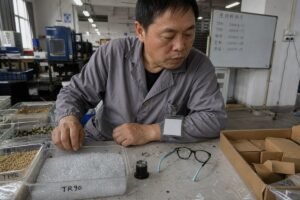
Material choice is the trade-off I weigh most often in our Taizhou workshop: a few cents saved on rigid plastic almost always returns as breakage claims and warranty repairs.
Prioritize TR90 for frame fronts and TPEE for temples across all tiers. Both are lightweight, flexible, and hypoallergenic, so they survive active kids and reduce non-billable repairs. Reserve premium acetates for the top tier, and pair every frame with polycarbonate lenses.
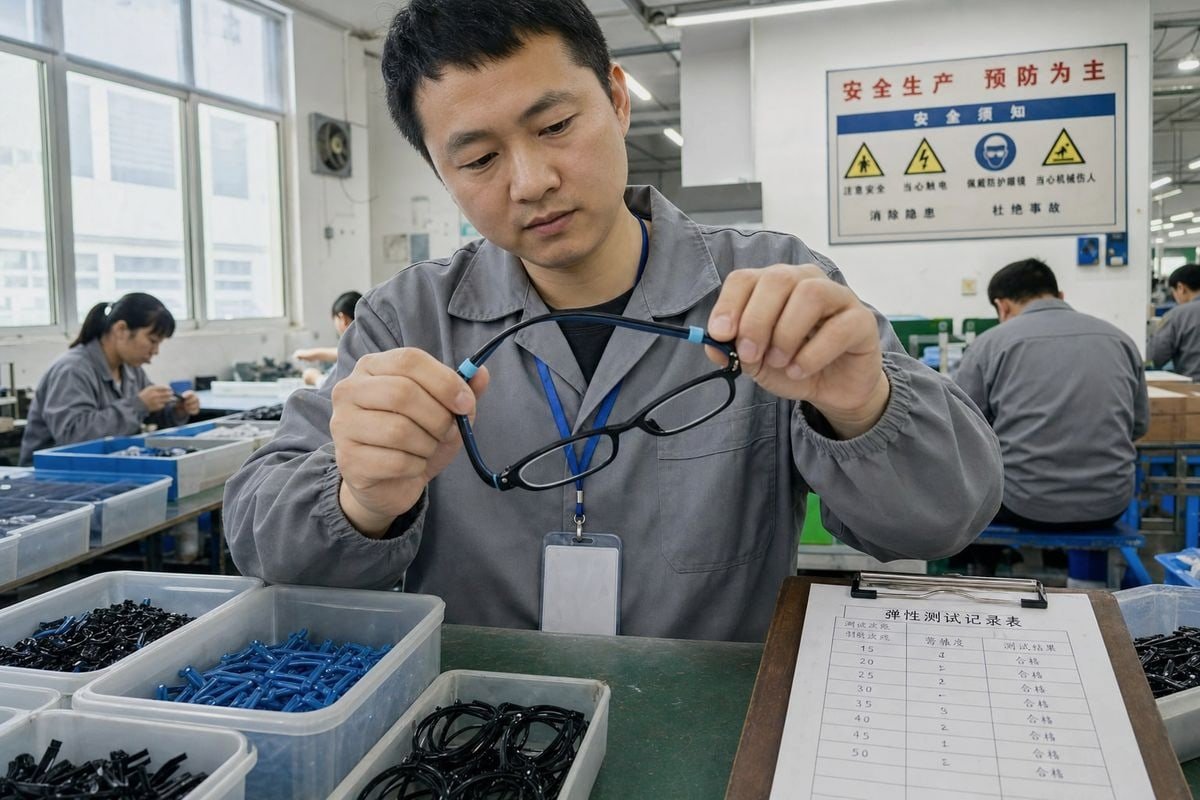
Kids' frames are a performance category, not just a price category. A frame that snaps in month two costs you a remake, a chair visit, and a parent's trust. That is why I tell buyers to treat material spec as the foundation of every tier, even the cheapest one.
Why flexibility matters more than price
TR90 is a thermoplastic with memory. It bends, twists, and returns to shape. TPEE goes further — it is soft enough that a temple can flex flat against the head without stressing the hinge. In our fifteen years making children's eyewear, this combination has produced the fewest returns of anything we have built. Both are also hypoallergenic frame materials, which matters for young skin that sits in contact with the frame all day.
Match materials to tiers
| 素材 | Best tier | Key benefit | Watch-outs |
|---|---|---|---|
| TPEE (full or temples) | Entry + mid | Extreme flexibility, safe for toddlers | Softer look, fewer sharp fashion lines |
| TR90フロント + TPEEテンプル | Mid | Durability plus comfort, adjustable fit | Slightly higher unit cost |
| TR90 full frame | Mid + premium | Light, strong, holds color finishes well | Needs quality hinges |
| Premium acetate | Premium only | Fashion depth, translucent colors | Heavier, less impact-flexible |
Add flexible spring hinges or silicone hinge connectors 4 where the design allows, plus adjustable ear hooks for a slip-resistant fit on small heads. And never skip ポリカーボネートレンズ 5 for children — impact resistance is the baseline, not an upgrade. For self-pay buyers, bundle those lenses with a one-year replacement promise. It turns durability into a selling story.
How can I use a factory's existing style range to build a tiered collection without high MOQs?
A lesson I learned early in exporting: the buyers who stall are rarely short on ambition — they are blocked by mold costs and minimums that force overcommitment before any sales data exists.
Select from a factory's existing catalog instead of opening new molds. Our range of roughly 800 ready styles lets you build a full three-tier kids' collection with low per-style quantities, test sell-through first, and reinvest in proven winners without heavy upfront tooling risk.
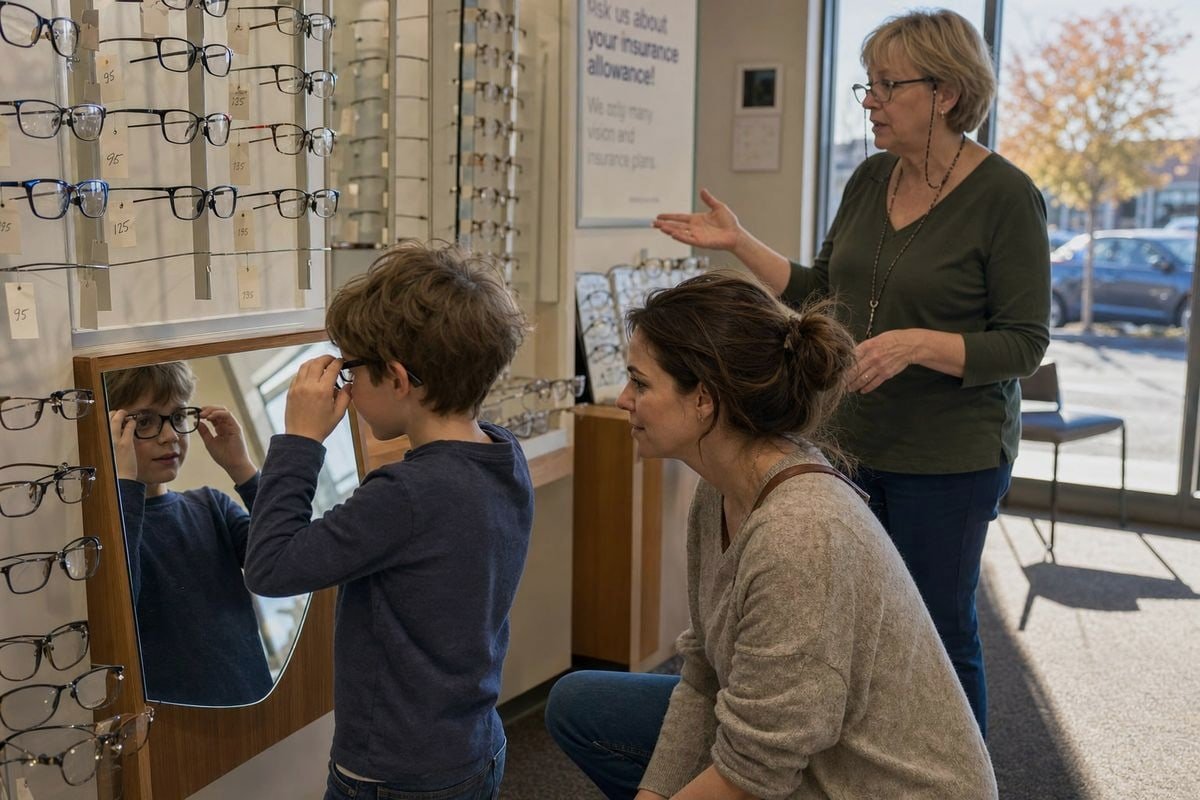
New tooling for a single frame can cost thousands of dollars and months of lead time. For a brand or practice building its first tiered assortment, that math kills momentum. The smarter route is curation: pick existing shapes, then differentiate through color, finish, and packaging.
A practical curation process
- Map your gaps first. List the sizes, bridge fits, and price points your board is missing. Small bridges and adjustable temples matter more than adding a tenth rectangle shape.
- Assign styles to tiers. From an existing catalog, choose simple TPEE basics for entry, TR90-front combinations for mid, and translucent acetate-look or two-tone designs for premium.
- Order shallow, order wide. Take modest quantities across more SKUs. Your goal is signal, not stockpile.
- Read sell-through monthly. Track by size, shape, and tier. Set reorder triggers with your supplier so fast movers never gap out.
- Deepen the winners. Once data proves a style, increase depth and consider custom colorways for that specific frame.
This approach also protects your frame board management discipline. Fashion-forward and licensed looks date quickly, so keep them shallow. Basic entry-tier frames move steadily, so hold a small safety stock. When buyers from Europe or Japan work with us this way, their second orders are almost always sharper than their first — because the market, not a catalog page, chose the assortment.
When we developed a two-tone TR90 frame with textured TPEE temple tips for a kids' brand, the buyer's biggest surprise was how much perceived value came from finishing, not the base frame.
Differentiate tiers through OEM/ODM finishing: custom colors, matte or glossy textures, temple logos, lens upgrades, and packaging. Keep entry frames clean and simple; give premium frames two-tone designs, etched details, UV400 or specialty lenses, and branded retail-ready presentation.

The same factory platform can produce both ends of your tier structure. The difference is in specification. An entry frame should be a solid-color TR90 or TPEE piece with your logo pad-printed on the temple and simple polybag packaging. It hits the allowance price and still carries your brand. A premium frame earns its markup through visible and tactile upgrades.
Where customization creates tier separation
| カスタマイズ | Entry tier | Premium tier |
|---|---|---|
| Color | Solid classics (black, navy) | Translucent, two-tone, pastel gradients |
| Finish | Standard glossy | Matte textures, etched hinge details |
| ハードウェア | Molded flex temples | Silicone connectors, screwless designs |
| レンズ | Polycarbonate demo/Rx-ready | Blue-light, photochromic-ready options |
| パッケージング | Polybag + basic case | Branded case, cloth, retail-ready box |
Premium customization also lets you serve niches the mass market misses. A sensory-safe capsule 6 — matte textures, screwless hinges, ultra-light bridges — speaks to families of neurodivergent children. Small round geometries with minimal decentration suit myopia-management lenses 7, an area growing fast among self-pay parents. These niches justify healthy optical retail markup because the value is functional, not just cosmetic.
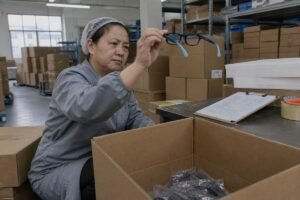
One caution from our QC floor: differentiation must never compromise safety consistency. We run the same inspection standards on a plain entry frame as on a fully customized premium piece. Your entry buyer becomes your premium buyer at the next visit only if the first frame performed. Design the tiers to look different, but hold the quality floor identical.
結論
Weak tier planning leaves covered parents walking out and premium stock gathering dust. Structure kids optical frames into three data-driven tiers, build them on flexible safe materials, and source smart — that protects both margin and trust.
脚注
1. Provides a comprehensive overview of the components and terminology related to eyeglass frame construction and materials. ↩︎
2. Official FDA guidance on the safety requirements and testing for impact resistance in eyeglass lenses. ↩︎
3. Explains the structure and function of vision insurance and managed care plans within the healthcare industry. ↩︎
4. Technical details on silicone, a material used for flexible, hypoallergenic connectors and components in children’s eyewear. ↩︎
5. Professional medical guidance from ophthalmologists on the safety benefits of polycarbonate lenses for children’s eye protection. ↩︎
6. Provides context on sensory sensitivities, which informs the design of specialized sensory-safe eyewear for neurodivergent children. ↩︎
7. Authoritative medical source from the AAO explaining myopia control treatments for children. ↩︎
 English
  Español de México
  Deutsch
  Français
  日本語
日本語  العربية
  Português do Brasil