How Does Reimbursement Pricing Affect Wholesale Margins for Kids’ Optical Frames?

Reimbursement pricing 1 quietly decides whether kids’ optical frames make money. At our Taizhou factory, buyers tell me the same story: allowances stay flat while costs climb, and margins vanish before anyone notices.
Reimbursement pricing affects wholesale margins for kids’ optical frames by capping what a practice or brand can collect, regardless of acquisition cost. Profit lives in the gap between wholesale cost and the plan’s frame allowance, so disciplined sourcing matters more than aggressive retail markup.
That gap sounds simple. In practice, it hides several moving parts. Let me walk through each one, using the numbers and sourcing lessons I see from our buyers every week.
How does reimbursement pricing actually influence what I can charge for kids' optical frames?
A distributor in Europe once asked me why two identical kids' frames earned totally different profits in two shops. The answer was not retail price. It was the plan behind each sale.
Reimbursement pricing sets a ceiling on collectible revenue per frame. Whether a plan uses a wholesale-based or retail-based frame allowance, any frame priced near or above that allowance leaves little room. Your realized charge is the allowance plus what parents will pay out of pocket.

The key point is that you do not fully control your own price. Managed care organizations 2 write the rules, and those rules decide how much of your retail price ever turns into cash.
Two allowance structures, two outcomes
Most vision plans use one of two structures, and they behave very differently:
| Structure | How it works | Margin effect |
|---|---|---|
| Wholesale-based allowance | Plan reimburses based on the frame's wholesale cost, up to a set allowance | Frames under the allowance must be sourced very cheaply to leave profit |
| Retail-based allowance | Patient gets a fixed retail allowance (often cited around $130); patient pays the difference above it | Practice keeps the allowance plus overage, but reimbursement may only be $45–$50 on some plans |
Notice what both structures share. Neither one cares what you actually paid for the frame. If your cost of goods sold rises because of shipping, tariffs, or supplier increases, the plan does not adjust. The ceiling stays fixed while your floor rises.
Why this matters more for kids
Pediatric vision care leans heavily on insurance. Parents expect coverage, and many children are on Medicaid vision benefits 3, where reimbursement schedules are often tighter still. Some buyers raise a fair objection here: doesn't insurance make frames easier to sell? Yes, it does. A fixed allowance helps close the sale because families feel covered. But conversion and margin are separate things. Reimbursement buys volume. It does not buy profit. Both statements can be true at once, and your assortment has to be built knowing that.
What margin should I build in when insurance reimbursement caps my wholesale pricing?
Every quarter, I sit down with our costing sheets and weigh the same trade-off for buyers: shave the wholesale price and risk quality, or hold quality and protect the buyer's math another way.
Build your margin from landed cost upward, not retail price downward. A common industry guideline reimburses roughly 40% of the patient's allowance at wholesale, so kids' frames generally need landed costs well below one-third of the expected allowance to leave healthy gross profit.

Traditional retail markup strategies, like a flat 3x multiplier, break down under managed care. If reimbursement is fixed, the multiplier is decoration. What matters is one equation: reimbursement collected, plus patient out-of-pocket, minus total 到着原価 4. That is your realized margin. Nothing else counts.
A worked example
Here is the kind of math I run with importers before they place a first order. Assume a plan with a $130 retail allowance and roughly $50 actual reimbursement to the provider:
| シナリオ | Landed cost | Retail price | Collected | Gross margin |
|---|---|---|---|---|
| Value kids' frame under allowance | $12 | $110 | ~$50 reimbursement | ~$38 |
| Mid-tier kids' frame under allowance | $28 | $128 | ~$50 reimbursement | ~$22 |
| Tiered upgrade frame above allowance | $28 | $180 | ~$50 + $50 patient overage | ~$72 |
The lesson jumps out. The same $28 frame is mediocre or excellent depending on where it sits in your pricing architecture. This is why I tell buyers that in kids' eyewear, the profit is often won before the frame ever reaches the board.
Practical margin rules
A few disciplines protect optical profitability under caps:
- Set a minimum list price that covers overhead, not just cost of goods sold.
- Do not apply one markup rule across value, mid, and premium tiers.
- Keep under-allowance frames at aggressively low acquisition costs.
- Reserve at least one clear upgrade tier that creates patient out-of-pocket revenue.
Some sources warn that pricing frames too low means reimbursement fails to cover goods plus overhead. I have seen that happen. A fixed reimbursement system rewards disciplined buying more than aggressive markup, and the numbers above show why.
How do I choose a manufacturer that helps me protect margins under strict reimbursement limits?
A procurement manager from Australia once visited our 5S-managed workshop and asked a blunt question: how do you help me survive a frozen allowance? I appreciated the honesty, because that is the real sourcing question.
Choose a manufacturer with a broad ready-made catalog, genuine flexible-material expertise, and full OEM/ODM support. Existing styles remove mold investment, consistent quality reduces warranty losses, and controlled cost bands let you build assortment tiers that fit each plan's frame allowance.
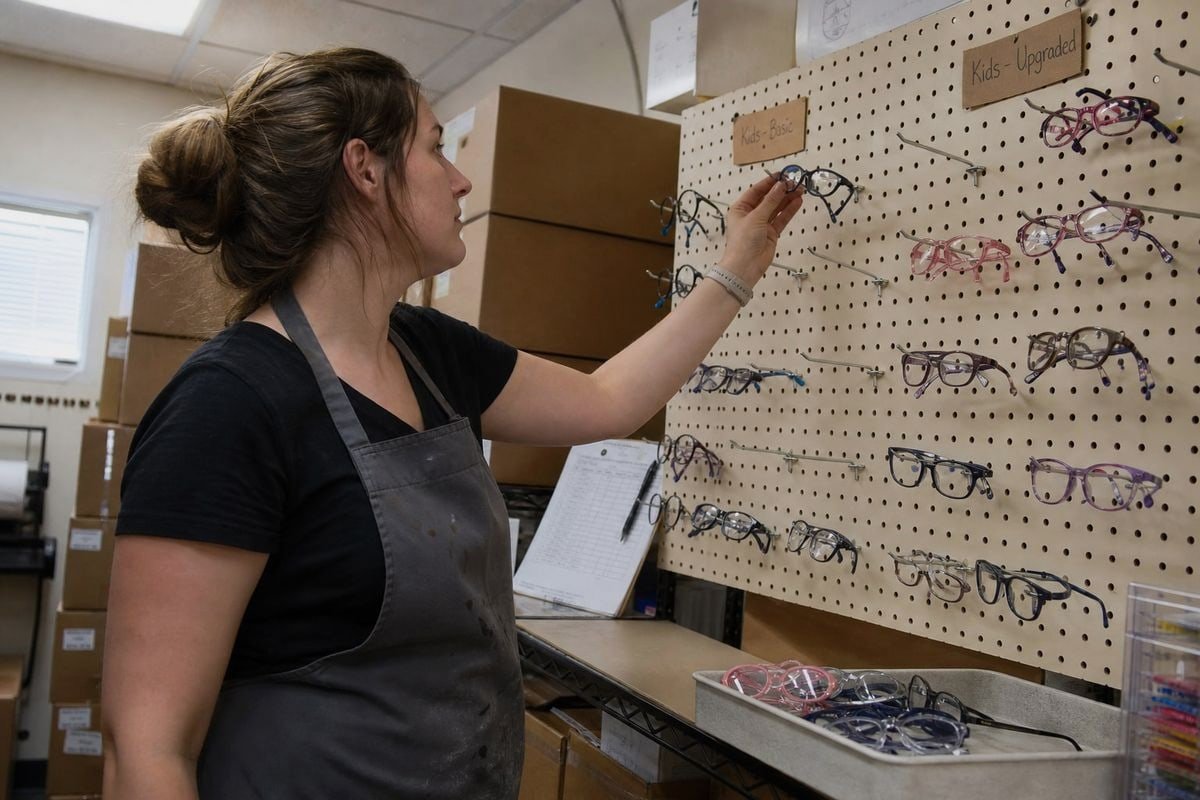
Under reimbursement caps, your supplier is not just a vendor. Your supplier is half of your margin equation. The eyewear supply chain determines your landed cost floor, and the allowance determines your revenue ceiling. You only control one of those.
What actually moves the margin needle
From fifteen years of running our production lines, these are the supplier factors that change buyer economics most:
- No mold investment. We keep around 800 existing styles buyers can choose from. A new kids' brand can launch and test the market without tooling costs of thousands of dollars per model. That saved capital is margin you never had to spend.
- Low defect and return rates. Every broken frame under warranty is a full margin loss plus shipping. Durable frame materials and reliable QC quietly protect profit better than a small unit-price discount.
- Retail-ready presentation. Custom colors, logos, lenses, packaging, and accessories from one factory mean fewer handoffs, fewer errors, and lower total landed cost than assembling those pieces from three suppliers.
- Honest cost banding. We help buyers place styles into clear cost bands, so their value tier stays under wholesale allowances and their upgrade tier justifies patient overage.
A quick objection, answered
Some buyers assume the lowest quoted price protects margin best. In my experience, it usually does the opposite. Cheap frames that snap on a child's face generate remakes, refunds, and lost families. We position ourselves as a long-term manufacturing partner, not a low-price supplier, precisely because total cost, not unit price, decides realized margin under fixed reimbursement. Leveraging demand data helps too: matching frame sizes and styles to your local demographics and dominant plans reduces dead stock, which is one of the most overlooked drains on wholesale margins.
Can flexible materials like TR90 help me balance quality and cost within reimbursement pricing constraints?
During a drop-test session in our lab last year, our engineers bent a TR90 kids' frame with TPEE temples nearly flat, and it sprang back. That resilience is exactly what reimbursement math rewards.
Yes. TR90 and TPEE deliver premium durability, flexibility, and child safety at a moderate wholesale cost. That lets a frame sit comfortably under common allowances while still justifying an upgrade story, protecting margin at both the value tier and the premium tier.

Material choice is where quality and cost stop being opposites. Under fixed reimbursement, you cannot raise the ceiling. But the right material lowers your effective cost per successful, undamaged, unreturned frame.
How TR90 and TPEE fit the reimbursement equation
| Material approach | Typical cost band | Durability for kids | Fit under allowance caps |
|---|---|---|---|
| Basic injected plastic | Lowest | Prone to snapping at hinges | Fits, but breakage eats the margin |
| Standard acetate | Mid to high | Good, but rigid and heavier | Often pushes near the allowance ceiling |
| TR90 frame + TPEE temples | Low to mid | Flexible, memory-retaining, impact-resistant | Strong margin under allowance, credible upgrade story above it |
Take the sporty style we produce with a glossy black TR90 front, two-tone navy flexible temples, and silicone cable-style ear hooks. It survives playground abuse, stays put on active kids, and still lands in a wholesale band that works under tight frame allowances. Or take our translucent blush-pink frame with pastel silicone tips: it gives parents a style-forward, hypoallergenic option that supports a premium value proposition without premium acetate costs. Both materials are environmentally friendly, which increasingly matters to the kids' brands we serve across twenty-plus countries.
There is also a forward-looking angle. As myopia management lenses 5 become more common in pediatric vision care, parents invest more in the lens and wear the frame longer. A frame that flexes instead of breaking protects that lens investment, which strengthens your case for a modest patient upgrade even when the plan allowance is fixed. Durable, comfortable, lightweight frames reduce remakes, reduce complaints, and keep families returning through each school-year purchasing cycle. That repeat behavior stabilizes revenue in a way no single reimbursement check can.
結論
Reimbursement caps your ceiling; sourcing sets your floor. Build tiered assortments, control landed cost with flexible materials, and choose a factory partner that protects margin from the first frame onward.
脚注
1. Defines the concept of pricing and reimbursement in healthcare. ↩︎
2. Explains what managed care organizations are and their role in healthcare. ↩︎
3. Provides official information on Medicaid vision benefits for children. ↩︎
4. Defines landed cost and its components in supply chain management. ↩︎
5. Provides authoritative information on myopia management lenses for children. ↩︎


 English
  Español de México
  Deutsch
  Français
  日本語
日本語  العربية
  Português do Brasil