How Can I Reduce Returns from Incorrect Kids’ Optical Frame Sizing?
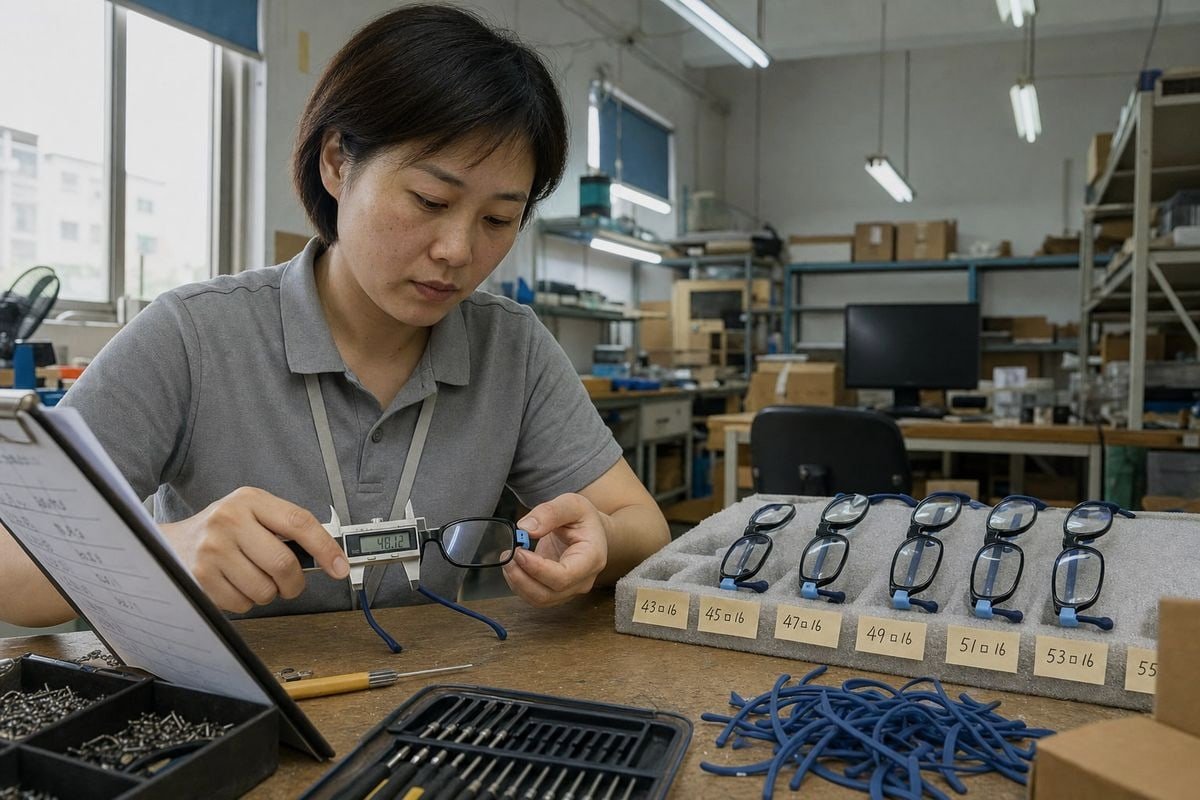
Incorrect kids’ optical frame sizing is the return reason I hear most from buyers who visit our Taizhou factory. It quietly drains margin from otherwise healthy eyewear brands.
To reduce returns from incorrect kids’ optical frame sizing, design frames around child-specific bridge width, temple length, and lens width data, verify fit with wear trials and pre-production samples, publish clear frame measurements online, and choose a manufacturer with proven pediatric fit expertise.
Each of those levers deserves a closer look. Below, I walk through the sizing standards, manufacturer selection, fit features, and testing steps that actually cut returns.
What Sizing Standards Should I Use When Designing Kids' Optical Frames?
A buyer from Australia once sent us a returns report showing one SKU failing badly. The culprit was an adult-style bridge on a frame marketed to six-year-olds. Our engineers redesigned it in two weeks.
Use lens width ranges matched to age bands as a starting point: roughly 39–43 mm for ages 2–4, 44–46 mm for 5–8, 47–50 mm for 9–12, and 50–54 mm for teens. Then refine bridge width and temple length against real facial data, never age alone.
Age charts are useful, but they are only a first filter. Children's facial characteristics vary widely at the same age. Two seven-year-olds can need bridges that differ by 3–4 mm. That is why we tell our brand customers to treat age-based lens width as a shortlist tool, not a final answer.
Start with the Three Numbers
Every frame carries three core frame measurements: lens width, bridge width, and temple length. For kids, the bridge matters most. Children have lower, flatter nose bridges than adults, so an adult-proportioned bridge causes glasses slipping almost immediately. When we develop a new child style, we prototype the bridge first and the front shape second.
| 年齢範囲 | Lens Width | Typical Bridge Width | 一般的なテンプルの長さ |
|---|---|---|---|
| 2–4 years | 39–43 mm | 14–16 mm | 115–120 mm |
| 5–8 years | 44–46 mm | 15–17 mm | 120–125 mm |
| 9–12 years | 47–50 mm | 16–18 mm | 125–130 mm |
| 13+ years | 50–54 mm | 17–19 mm | 130–140 mm |
Design for Pupil Position
Lens centers must align with the child's pupils. Pediatric dispensing guidance 1 is clear on this: pupillary distance (PD) drives lens placement, and frame position affects where the optical center sits. If your frame front is too wide, the pupils sit inward of the lens centers, and parents notice their child squinting. We size our fronts so a typical PD for each age band lands near the geometric center of each lens.
One more objection I often hear: "Parents want frames the child can grow into." Resist that. Oversized frames slide, decenter the lenses, and get abandoned in a drawer. Fit the child today; plan the assortment for growth spurts instead.
How Can I Choose a Manufacturer That Gets Kids' Frame Sizing Right the First Time?
There is a trade-off I weigh with every new client: launch fast from existing tooling, or invest in custom molds. After 15 years running our eyewear factory, I can say sizing accuracy depends on the partner's pediatric depth, not the tooling route.
Choose a manufacturer with a proven children's eyewear catalog, documented size specifications per style, flexible-material expertise like TR90 and TPEE, in-house QC that measures every dimension against tolerance, and sample programs that let you verify fit before mass production.
A generalist eyewear factory can copy a kids' shape. Very few can explain why a 15 mm bridge suits a four-year-old but fails a nine-year-old. That gap shows up later as your returns problem, not theirs. So vet suppliers on pediatric knowledge, not just unit price.
Questions That Reveal Real Sizing Competence
Ask the supplier for the full size specification sheet of any kids' style. If they only quote lens width, walk away. A serious partner documents bridge width, temple length, total frame width, lens height, and pantoscopic tilt. At our workshop, every one of our roughly 800 existing styles carries a complete spec, which is also why importers can test the market without heavy mold investment.
| Vetting Criterion | Weak Supplier Signal | Strong Supplier Signal |
|---|---|---|
| Size documentation | Lens width only | Full spec sheet per SKU |
| Material knowledge | Generic "plastic" answers | TR90/TPEE flexibility data |
| Catalog depth | A few kids' styles | Hundreds of child-specific designs |
| QC process | Final visual check only | Dimensional checks against tolerance |
| Sampling | Photos only | Physical pre-production samples |
Why Material Expertise Equals Sizing Accuracy
Flexible materials behave differently in molding. TR90 and TPEE shrink and flex in ways rigid acetate does not. If a factory does not control that, a frame specified at 16 mm bridge can ship at 17 mm. Our 5S-managed production line measures dimensional consistency batch by batch, because one millimeter on a child's bridge is the difference between a keeper and a return. Frame durability testing matters here too: a temple that loses its bend after a month effectively changes its own temple length in use.
What Fit Features Reduce Sizing Complaints from Parents and Retailers?
A distributor in Japan taught me a lesson years ago. His parents' top complaint was not style or price. It was glasses slipping during school sports. We rebuilt his range around grip features, and his fit complaints dropped noticeably within two seasons.
The fit features that cut complaints most are wraparound or looped silicone temple tips, low-profile flexible bridges shaped for flat pediatric noses, spring-free flexible TPEE temples that self-adjust, lightweight TR90 fronts, and adjustable head straps for toddlers and very active children.
Fit features are your insurance policy. Even with perfect frame measurements, children move, sweat, and grow. Features that keep the frame stable through all of that are what parents actually judge. Retailers judge the same thing indirectly, through their exchange counters.
The Four-Point Fit Check, Built into the Product
Opticians and dispensers assess fit at four points: bridge, temples, lens position, and overall width. Good design answers each point before the child ever tries the frame on:
- Bridge: a soft, low, wide-contact bridge spreads pressure so nothing pinches or slides.
- Temples: flexible TPEE arms with curved or looped tips hug the ear without pressure behind it. One of our popular styles pairs a glossy TR90 front with two-tone rubber temples and a looped tip precisely for this secure grip.
- Lens position: frame proportions sized so a typical child's PD centers the pupils in the lenses.
- Overall width: the front should end at the temples of the face — no squeeze, no overhang.
Comfort Drives Compliance, and Compliance Prevents Returns
Eyewear comfort is not a luxury for kids; it decides whether the glasses get worn at all. A frame that pinches gets refused, and a refused frame comes back "wrong size" even when the numbers were right. Lightweight, flexible, environmentally friendly materials solve half the complaint list before sizing even enters the conversation. That is why we default to TR90 fronts with TPEE temples across our children's range, and why we advise brands to state these comfort features plainly on product pages alongside the size data.
How Can I Test Frame Fit Before Committing to a Full Production Run?
Early in my career, we skipped a wear trial to hit a delivery date. The batch shipped on time, and the temple curve sat 5 mm too far back on smaller heads. I have never skipped that step since.
Test fit by ordering physical samples in every planned size, running wear trials with real children across your target age bands, checking the four fit points after adjustment, comparing dimensions against a known well-fitting reference frame, and validating with a small pilot order before scaling.
Testing is cheap. Returns are expensive. Every dollar spent on samples and wear trials saves multiples in reverse shipping, restocking labor, and lost customer trust. Here is the process we recommend to the brands we supply.
A Five-Step Pre-Production Fit Protocol
| 子供用アイウェアの5段階QC計画 | What to Do | What It Catches |
|---|---|---|
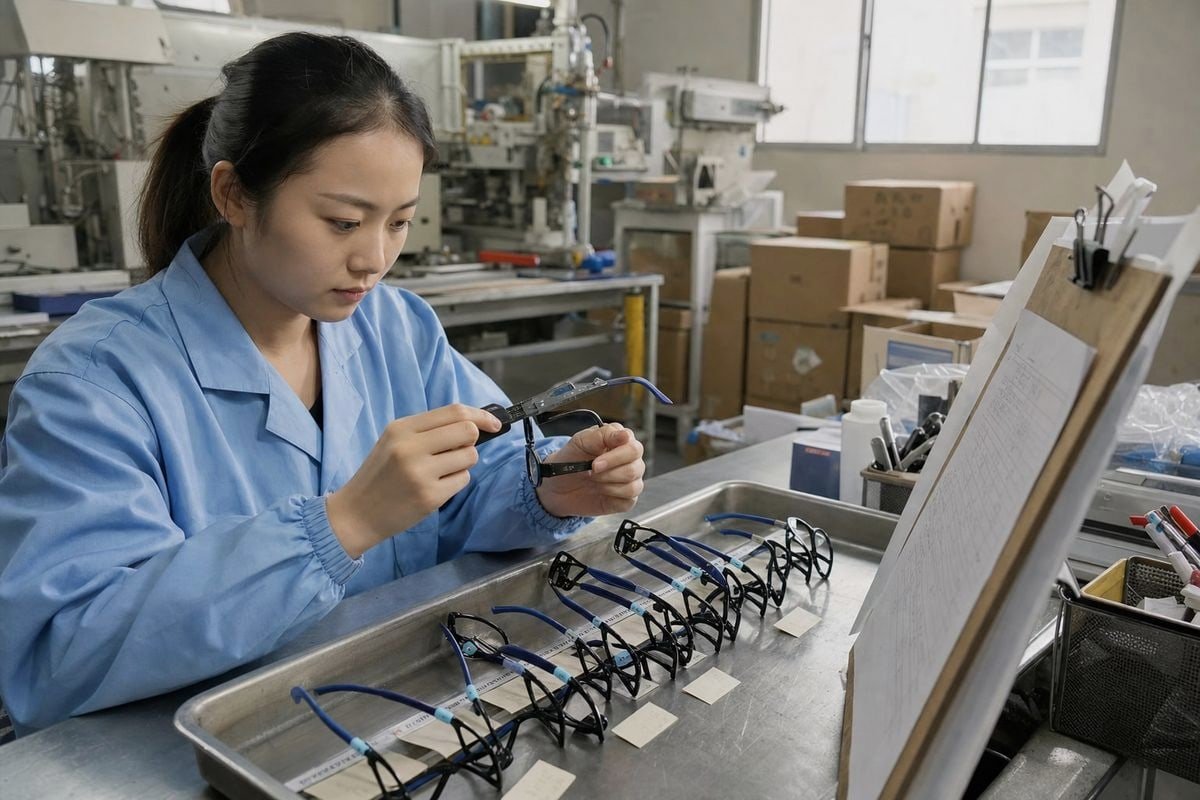
| 1. Spec verification | Measure samples with calipers against the spec sheet | Molding shrinkage, tolerance drift |
| 2. Reference comparison | Compare total width and bridge to a proven well-fitting frame | Systematic sizing errors |
| 3. Child wear trials | Have children in each age band wear frames during play | Slipping, pinching, red marks |
| 4. Dispensing review | Ask an optician to check pupil centering after adjustment | PD and lens-position mismatches |
| 5. Pilot order | Ship a small batch, track fit-related return reasons by SKU | Real-world failures before scale |
Combine Physical Testing with Digital Tools
Virtual try-on and AR sizing tools help parents judge scale and appearance online, and a fit kit of non-prescription demo frames lets families confirm fit at home before ordering lenses. But treat these as supplements. Digital previews cannot feel a pinching temple or a sliding bridge, so physical wear trials remain the foundation. Some brands we work with also invest in optician training content for their retail partners, so store staff can adjust temples correctly before blaming the frame size.
Finally, keep learning after launch. Track return reasons by SKU. If one style keeps coming back for slipping, revisit its bridge before reordering. Because most of our clients start from existing styles rather than new molds, this revision loop is fast: we can often swap them to a better-fitting alternative from stock tooling within one sampling cycle.
結論
Sizing returns are preventable, not inevitable. Design to pediatric data, vet your factory hard, build in fit features, and test before scaling. I am always glad to compare notes on your range.
脚注
1. Provides guidelines for fitting glasses for children, covering lens type, frame size, and optical shop selection. ↩︎


 English
  Español de México
  Deutsch
  Français
  日本語
日本語  العربية
  Português do Brasil