How to Negotiate Try-On Demo Lens Solutions and Low-Cost Pairing Ratios for Kids Optical Frames?

Try-on demo lens solutions and low-cost pairing ratios for kids optical frames are questions I hear weekly at our Taizhou factory. Many buyers get this negotiation wrong, and it quietly drains margin.
Negotiate try-on demo lens solutions by asking suppliers to include free demo lenses on catalog styles, bundle frame and lens packages at volume pricing, and set a pairing ratio near one demo unit per eight to ten sellable frames, confirmed in a written supplier agreement.
That is the short answer. But the real savings come from how you structure each request. Let me walk you through what actually works at the factory level, step by step.
How can I request try-on demo lenses without paying full sample costs upfront?
A buyer from Australia once asked me why her sample invoice listed demo lenses as a separate charge. Our answer changed how she sourced from every pediatric eyewear supplier afterward.
Request demo lenses as part of the standard frame quotation, not as an add-on. Most factories already fit demo lenses on catalog styles for display, so ask for sample cost deduction against your first bulk order and free demo lenses on all stock designs.
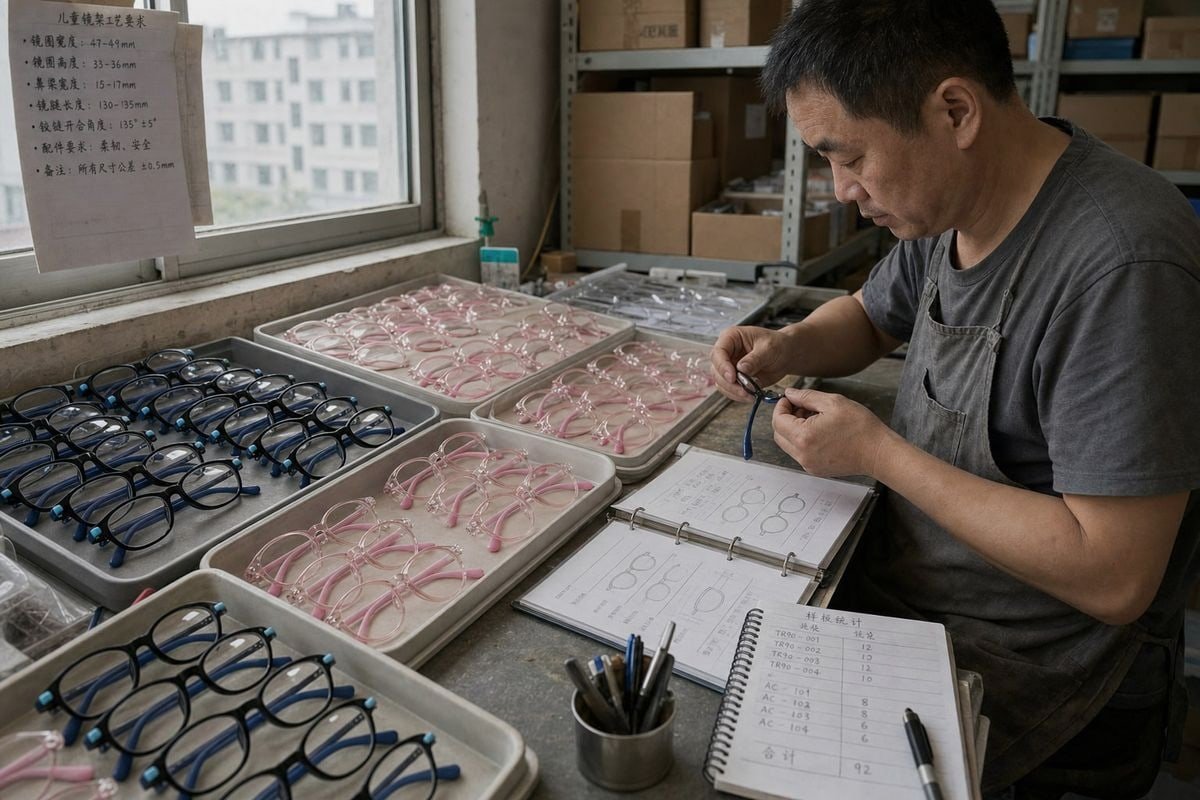
At our workshop, every one of our roughly 800 existing styles ships with demo lenses fitted as standard. That is not generosity. It is how optical frames are displayed, measured, and protected in transit. So the first thing to understand is this: for catalog or open-mold styles, demo lenses usually cost the factory very little. If a supplier bills them as a premium line item on samples, you have room to push back.
Here is the practical sequence I recommend to buyers.
A simple four-step request process
- Ask whether demo lenses are included in the unit price. For wholesale children's glasses from stock molds, the answer should be yes. Get it in writing.
- Request sample-fee deduction. Most reasonable factories, ours included, will credit sample charges against your first production order. This turns your sample cost into a deposit, not an expense.
- Limit your first sample round. Pick five to eight styles, not twenty. Use catalog photos, spec sheets, and virtual try-on solutions to narrow the shortlist before physical samples ship. Fewer samples means less to negotiate away.
- Separate demo lenses from prescription-ready specs. Demo lenses are placeholders. If you need optical-grade polycarbonate lenses or coated demo lenses for retail display, quote that separately so you can compare real numbers.
One more point from our export experience across 20+ countries: shipping is often the hidden sample cost, not the lenses. Ask the supplier to consolidate samples with another shipment or use their courier account rate. That single request often saves more than the demo lenses themselves.
What pairing ratio between frames and lenses gives me the best cost-to-quality balance?
There is a trade-off we weigh every time we quote frame and lens packages: a lower demo ratio cuts cost, but too few try-on units hurts conversion at retail.
A ratio of one demo-fitted frame per eight to ten sellable frames balances cost and quality for most kids optical programs. Concentrate demo units on your top five styles, use basic clear demo lenses for trials, and reserve coated lenses for retail display models.
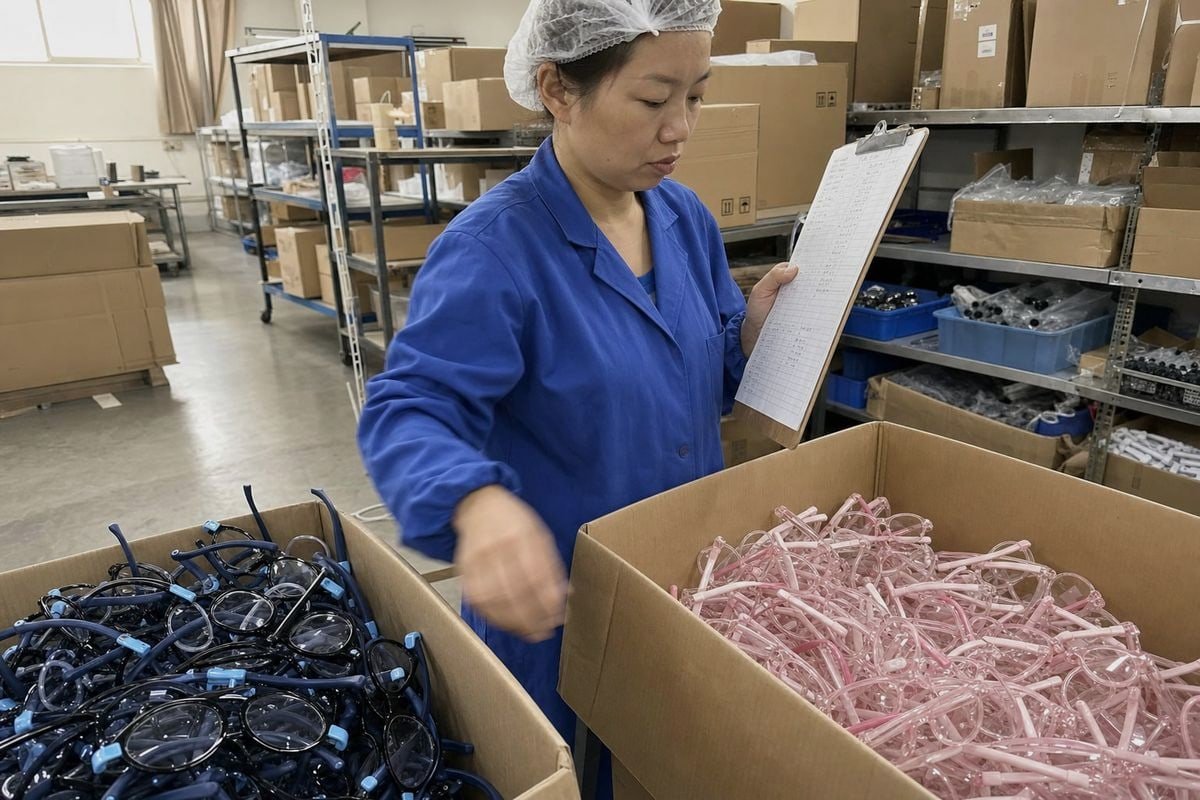
Pairing ratio is not a standard consumer term, so let me define it the way we use it with distributors. It is the number of demo or try-on units you support for every sellable pair in your program. It drives your cost of goods sold in optical retail more than most buyers realize, because every demo frame is inventory that may never generate revenue directly.
Kids eyewear pushes this ratio in two directions at once. Children need physical try-on more than adults do. Virtual try-on solutions help narrow style choices, but a child's bridge fit, temple pressure, and behavior in motion can only be confirmed on the face. At the same time, kids' frames sell at lower price points, so each demo unit eats a larger share of margin. That tension is exactly why the ratio matters.
Recommended ratios by channel
| Sales channel | Suggested demo-to-sellable ratio | Demo lens spec | Why it works |
|---|---|---|---|
| Optical shops / dispensaries | 1:8 to 1:10 | Clear demo lens, standard | Staff fit in person; demos see heavy handling |
| Kids brand retail stores | 1:10 to 1:12 | Demo lens with light AR-look coating | Display appeal matters; parents self-browse |
| E-commerce with home try-on | 1:15 to 1:20 | Basic clear demo lens | Virtual try-on filters choices first |
| Distributor / wholesale demo kits | 1 kit per territory | Mixed demo specs | Kits rotate; not tied to unit sales |
Two refinements improve any ratio. First, apply optical inventory management logic: track which demo styles convert, then rebalance quarterly. Popular flexible TR90 styles deserve more demo depth; slow movers deserve none. Second, negotiate demo replenishment into your supplier agreements. We offer buyers replacement demo units at reduced cost when frames are scuffed by handling, which keeps the trial experience fresh without a full repurchase. That single clause often saves more than squeezing another few cents off the unit price.
How do I negotiate MOQ and pricing when testing multiple frame styles with demo lenses?
Early in my career, I watched a European importer commit to three custom molds before testing a single style at retail. Two failed. That lesson shaped how we structure trial orders today.
Negotiate a mixed-style trial order: choose open-mold catalog designs, ask for a combined MOQ across styles rather than per style, anchor with a realistic annual volume forecast, and secure a written reorder price that rewards consistency over one-time discounts.
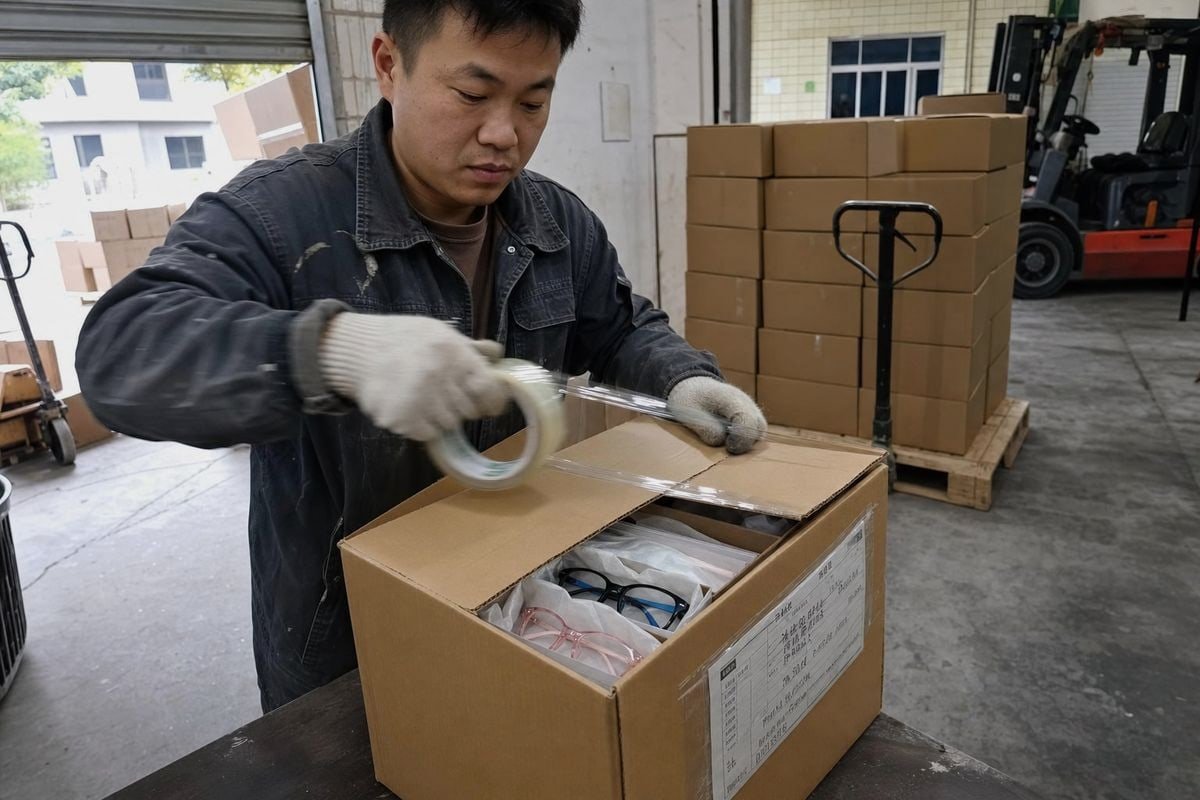
The biggest MOQ lever is one many buyers overlook: existing styles versus custom molds. When you select from a factory's catalog, there is no tooling cost and no mold amortization to recover. That is why we built a library of about 800 existing styles, so new brands can test the market without heavy mold investment. On catalog styles, a factory can reasonably accept a combined MOQ split across colors and models. On custom molds, it cannot, because tooling costs are fixed.
Vendor negotiation tactics that actually work at the factory level
| Tactic | How to phrase it | Why the factory says yes |
|---|---|---|
| 組み合わせMOQ | "Can we split 1,200 pcs across 6 styles?" | Same production planning effort, catalog molds already exist |
| Volume anchoring | "Our 12-month forecast is X pieces" | Forecasts justify better pricing tiers than one-off orders |
| Bundled packages | "Quote frames with demo lenses and cases as one package" | Bundles simplify quoting and protect factory margin elsewhere |
| Milestone payments | "30% deposit, balance after pre-shipment inspection 1" | Standard terms; inspection protects both sides |
| Reorder pricing | "Lock this price for reorders within 12 months" | Signals partnership; factories value repeat business over margin spikes |
A few cautions from our side of the table. Do not open by demanding the lowest price on everything. Factories quietly recover impossible frame prices through lens quality, packaging shortcuts, or slower service. Instead, anchor on total package value: frames, demo lenses, packaging, and QC together. Also, define your specifications in detail before asking for numbers. Material grade, hinge type, demo lens clarity, and logo method all move the quote. Vague specs produce padded quotes, and padded quotes make every negotiation harder.
Finally, put the trial-to-production path in the supplier agreement itself. State the trial quantity, the reorder trigger, and the confirmed reorder price. Eyewear merchandising strategies only work when supply terms are predictable.
What should I ask my supplier to ensure demo lens quality matches the final production batch?
During a pre-shipment inspection last year, our QC team rejected a batch of demo lenses from a sub-supplier because the tint drifted from the approved sample. Buyers rarely see that step, but they should demand it.
Ask for a signed golden sample, written demo lens specifications covering material, clarity, coating, and thickness, batch-level pre-shipment inspection reports with photos, and a remake policy in the supplier agreement so production demo lenses match approved trial units.
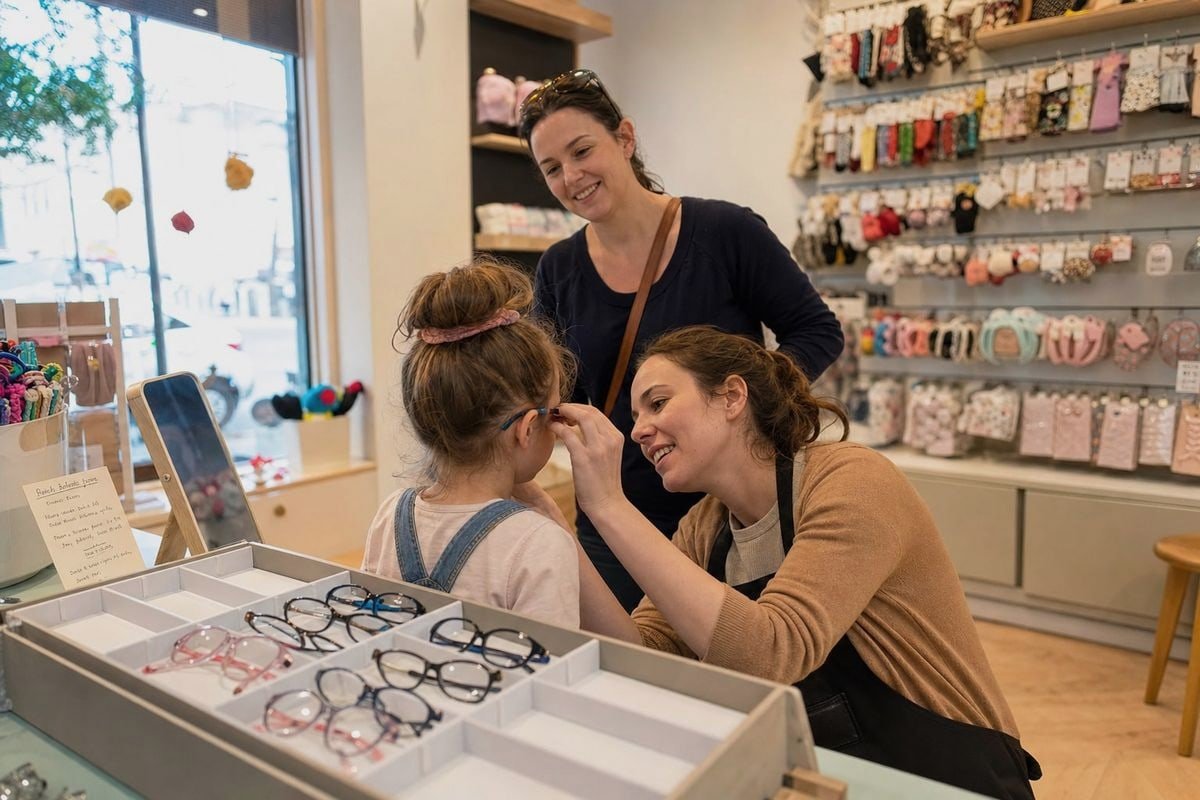
Demo lenses look simple, but inconsistency between your approved sample and the production batch damages trust fast. A parent picking up a display frame with hazy, scratched, or mismatched-tint lenses assumes the whole product is cheap. For children's eyewear, where safety perception drives the purchase, that impression is expensive.
Here is what to lock down, in plain terms.
Your quality assurance checklist
| 依頼内容 | Specific detail to confirm |
|---|---|
| Golden sample | One signed and sealed reference unit held by you, one by the factory |
| Lens material spec | PC or CP demo lens; polycarbonate lenses for any child-contact display use |
| Clarity and coating | Optical clarity grade, scratch resistance, and any anti-glare-style coating tint |
| Thickness and fit | Lens thickness tolerance and secure seating in the frame groove |
| Batch inspection | Pre-shipment QC report with photos comparing production units to the golden sample |
| Remake policy | Defect threshold, replacement timeline, and who pays freight on remakes |
Two objections come up often, so let me address them directly. Some buyers say demo lenses are just packaging, so quality does not matter. That is too simplistic. Opticians mark pupil positions on demo lenses during fitting, and a warped or loose demo lens undermines that measurement work. Others assume virtual try-on solutions will soon replace physical demos entirely. For kids, they will not. Many children cannot sit still for camera-based fitting, and no screen confirms temple pressure or how a flexible TPEE arm behaves when a child runs.
One last practical tip from our 5S-managed workshop: ask your supplier whether demo lenses and frames come from the same production line or a sub-supplier. Same-source production makes batch consistency far easier to guarantee, and it tells you a lot about how seriously the factory treats quality control.
結論
Cheap demo solutions are not the goal. Negotiate included demo lenses, a sensible pairing ratio, combined MOQs on catalog styles, and documented quality controls. That combination protects margin and parent trust.
脚注
1. Describes a critical step in quality control for manufactured goods. ↩︎
 English
  Español de México
  Deutsch
  Français
  日本語
日本語  العربية
  Português do Brasil