How to Negotiate Reorder Terms With Suppliers to Shorten Lead Times for Kids’ Sunglasses?

On our production floor in Taizhou, I see it every May: buyers who never negotiated reorder terms to shorten lead times for kids’ sunglasses suddenly need stock yesterday. Summer demand spikes, shelves empty, and margins evaporate while goods sit in a queue. The fix is not begging for speed — it is negotiating the right terms before you need them.
To shorten lead times for kids’ sunglasses reorders, negotiate written reorder terms: a guaranteed reorder lead time, reserved production capacity, an expedited option with a set fee, milestone dates with a change-lock date, and pre-stocked materials — traded against predictable order cadence, forecasts, and faster payment.
Below, I will walk through exactly what to ask for, how to protect quality while compressing timelines, how to handle pricing and MOQs, and which questions expose whether a factory can actually deliver.
What Reorder Terms Should I Ask My Kids' Sunglasses Supplier to Guarantee?
Last season, a buyer from Australia asked me a question I wish more clients asked: "What exactly does your quoted lead time include?" That one question changed our whole agreement.
Ask your supplier to guarantee five reorder terms in writing: a fixed reorder lead time separate from first-order lead time, reserved monthly capacity for your SKUs, pre-stocked frames and lens materials, milestone dates with a change-lock date, and a defined expedited option with its fee.
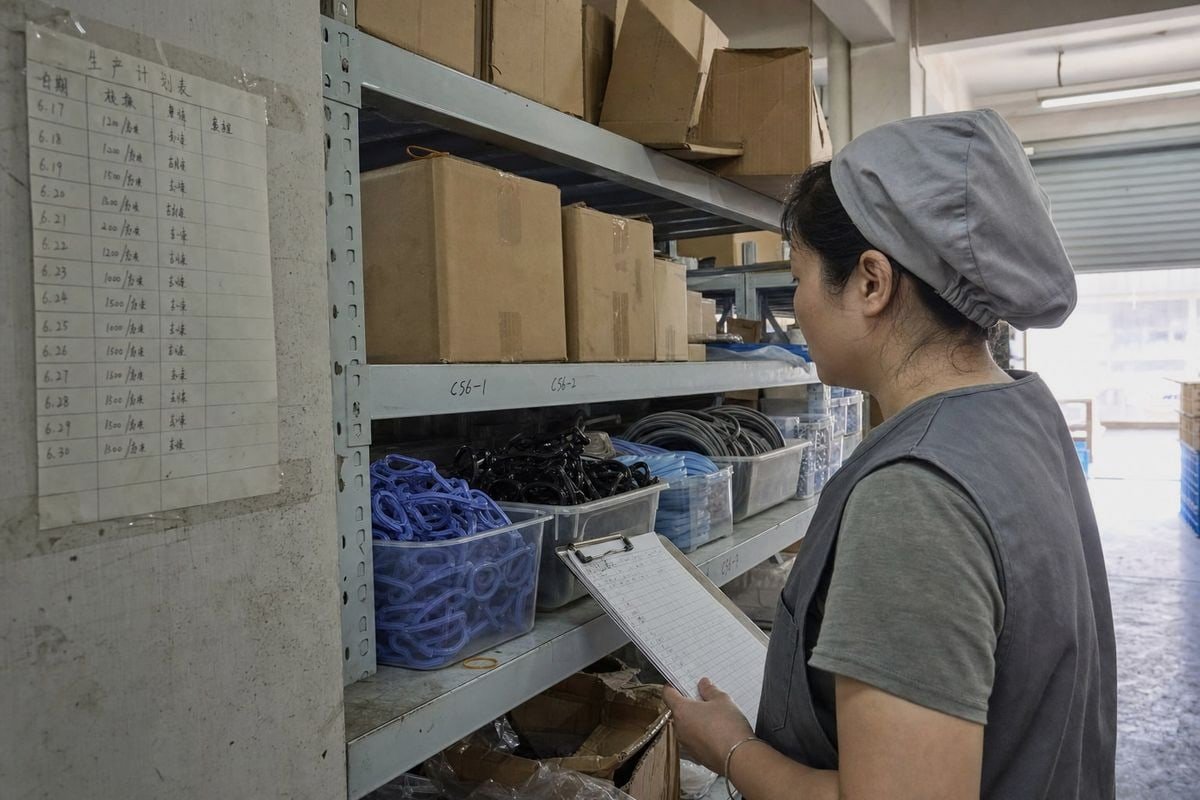
Most buyers negotiate price and ignore terms. Then they discover their "30-day lead time" quietly includes sample re-approval, material sourcing, custom printing, and sea freight. For kids' sunglasses, this hurts more than in other categories because demand is seasonal and burst-driven. Miss a two-week window in June and you may lose the whole summer.
Separate the Timeline Into Parts
Before you negotiate anything, force the timeline apart. A reorder should never take as long as a first order. Molds exist. Colors are approved. Packaging artwork is locked. So ask your supplier to quote reorders as a distinct service level.
Here is the breakdown I recommend putting into every reorder agreement:
| Reorder Term | What to Ask For | Why It Shortens Lead Time |
|---|---|---|
| 再注文リードタイム | A fixed number of days for repeat POs of approved SKUs | Removes sampling and approval steps from the clock |
| Capacity reservation | A monthly unit allocation held for your brand | Your PO does not wait behind new customers |
| Material pre-stock | Blank frames, lenses, and hinge parts held for your top styles | Cuts material sourcing time, often the biggest delay |
| Milestone dates | Production start, inspection, ex-factory dates on the PO | Delays become visible early, not at shipment |
| Change-lock date | A cutoff after which artwork or packaging changes reset the timeline | Prevents last-minute edits from restarting production |
| Expedited menu | A published rush lead time and its fee | You buy speed transparently instead of pleading |
In our factory, when a client commits to a set of repeat styles from our existing range, we can pre-stock TPEE and TR90 components 1 for those SKUs. That single step regularly removes one to two weeks from a reorder. The lesson: the guarantee you want is not "faster." It is a written definition of what a reorder is, what it includes, and when each step happens.
How Can I Shorten Lead Times Without Sacrificing Quality Control on Repeat Orders?
The trade-off I weigh most often on rush orders is simple: which steps can compress, and which must never compress? After fifteen years making children's eyewear, my answer has not changed — inspection never compresses.
Shorten lead times by compressing waiting steps — material sourcing, queue time, approvals — not quality steps. Use pre-approved golden samples, pre-stocked tested materials, locked specifications, and in-line inspections during production, so final QC confirms quality instead of discovering problems at the end.
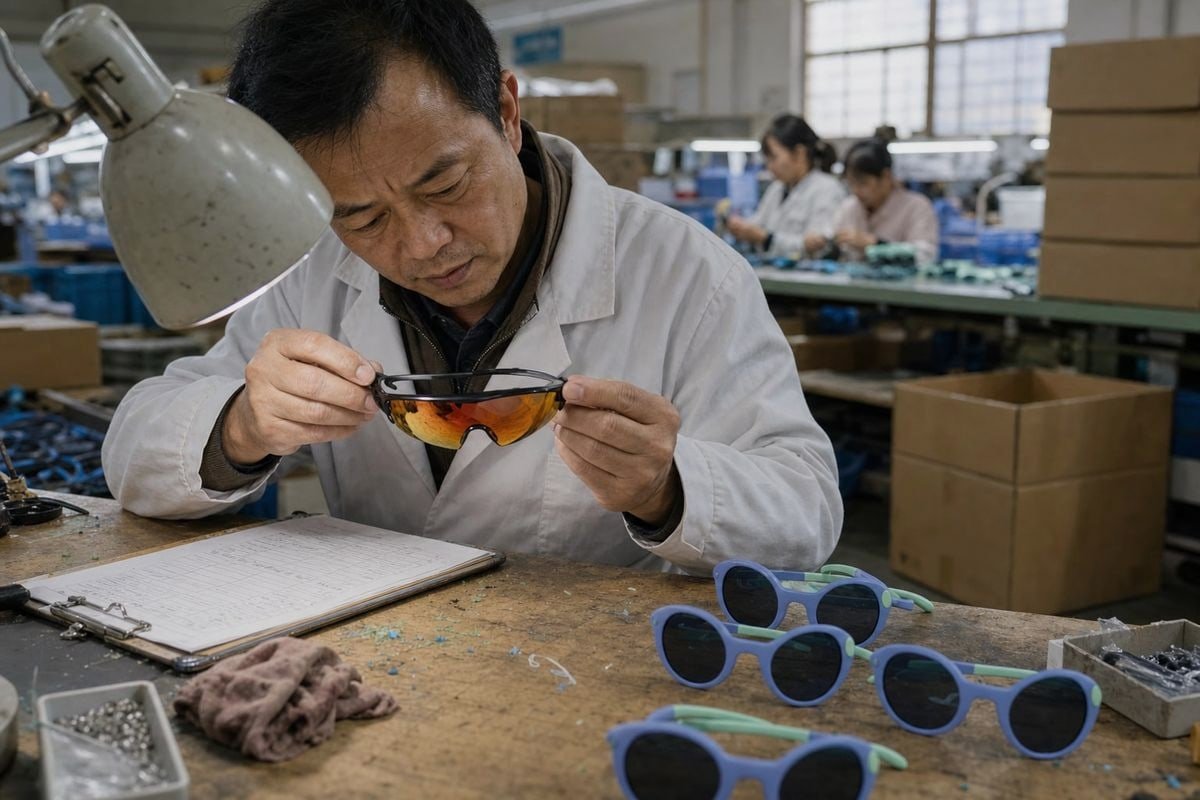
Speed and quality only conflict when a factory takes shortcuts through the wrong steps. The trick is knowing where time actually hides in a kids' sunglasses reorder. In my experience, most of it hides in waiting, not in working.
Compress Waiting, Not Checking
Think of your reorder as two kinds of time. Working time covers injection, assembly, lens fitting, printing, and packing. Waiting time covers material lead times 2, queue position, approval loops, and idle days between steps. For a typical repeat order, waiting time is often larger than working time. That is where negotiation belongs.
Here is how I separate what can safely be compressed from what cannot:
| Timeline Step | Safe to Compress? | How |
|---|---|---|
| Material sourcing | はい | Pre-stock lenses, TPEE/TR90 pellets, and hardware for repeat SKUs |
| Production queue | はい | Reserved capacity or a paid priority slot |
| Sample re-approval | はい | Use a signed golden sample; skip re-sampling for unchanged SKUs |
| Artwork confirmation | はい | Lock artwork before the PO; enforce a change-lock date |
| UV400 lens verification | いいえ | Keep standard lens testing on every batch |
| In-line and final inspection | いいえ | Run in-line checks during production so final QC is faster, not skipped |
| Safety-relevant assembly checks | いいえ | Hinge strength and flexibility checks stay mandatory for children's frames |
Move Quality Earlier, Not Away
The smartest move is shifting QC upstream. When our 5S管理ワークショップ 3 runs in-line inspections at injection and assembly, defects surface within hours, not at the final gate. That means the final inspection becomes a confirmation, which is fast, rather than a discovery process, which is slow and sometimes triggers rework.
One more point specific to children's products: never let a rush order squeeze safety testing 4 or documentation. Ask whether your supplier already holds current test reports for the exact materials and lenses in your SKUs. A factory that pre-tests its standard materials does not need to add testing days to your reorder clock. That is speed through preparation, not through risk.
Should I Negotiate Fixed Pricing or Flexible MOQs for My Reorders?
A European distributor once told me he would happily pay a bit more per unit if he could reorder 1,500 pieces instead of 5,000. We said yes — because his forecast made planning easy for us.
Negotiate both, but prioritize flexible MOQs with tiered pricing over a single fixed price. Lock pricing for a defined window (six to twelve months) with a materials clause, and trade smaller, more frequent reorders against a committed annual volume or reorder schedule.
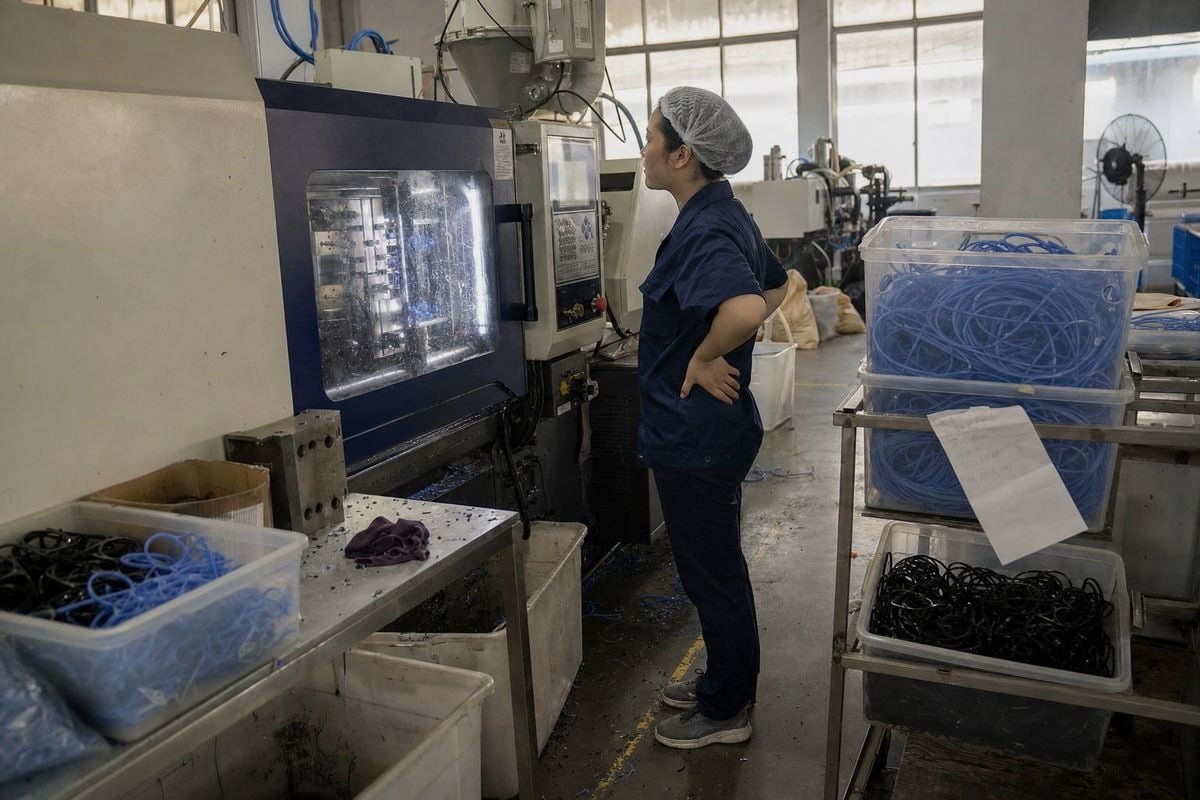
This question is really about cash flow versus unit cost. Fixed pricing protects your margin math. Flexible MOQs protect your inventory risk. For seasonal, variant-heavy products like kids' sunglasses — where you may carry one style in four pastel colorways and two lens options — inventory risk usually matters more than a few cents per unit.
How the Two Levers Compare
| 要因 | Fixed Pricing | Flexible MOQs |
|---|---|---|
| Protects | Margin predictability | Cash flow and stock risk |
| Best when | Material costs are volatile | Demand by colorway is uncertain |
| Supplier's concern | Raw material price swings | Small runs cost more to set up |
| Fair trade | Price locked for 6–12 months with a review clause | Slightly higher unit price or committed annual volume 5 |
| Risk to you | Overpaying if costs fall | Speed premium baked into small runs |
Structure a Tiered Deal
Instead of choosing one lever, combine them. A structure I see work well: commit to a realistic annual volume across all SKUs, then let each reorder draw against it in smaller lots. The supplier gets visible demand. You get small, fast, frequent reorders. Pricing tiers by cumulative annual volume, not by individual PO size, so a 1,500-piece reorder still earns your real volume price.
Two cautions from our side of the table. First, a fixed price with no materials clause 6 pushes all risk onto the factory, and factories quietly recover that risk somewhere — often in scheduling priority. A fair review clause keeps your orders wanted. Second, if you demand tiny MOQs with zero commitment, expect the speed premium to appear in the unit price. Give the factory a forecast, and both numbers improve. Because we hold around 800 existing styles, buyers who reorder from our standard range can often access lower MOQs than fully custom molds would ever allow — another reason to standardize your core assortment.
What Questions Reveal Whether a Factory Can Reliably Support Long-Term Reorder Partnerships?
Years of hosting factory audits taught me something useful: the buyers who later become long-term partners never ask "what's your best price?" first. They ask about capacity, bottlenecks, and what happens when something goes wrong.
Ask about monthly capacity and peak-season load, the split between production and shipping time, actual versus quoted lead-time performance, material pre-stocking ability, in-house versus outsourced processes, expedited options and fees, and whether they will commit milestone dates in writing.

Any supplier can promise a lead time. Only some can explain it. The questions below are designed to separate the two — and to give you the raw data you need for the negotiation itself.
The Questions That Matter
- What is your standard reorder lead time for an approved SKU, and what does it include? A vague answer here predicts vague delivery later.
- How much of that is production versus packing versus freight? You cannot negotiate a number you cannot decompose.
- What is your monthly output, and what percentage is booked in March through June? Kids' sunglasses factories peak before summer. If they are at capacity, no discount buys you speed.
- What usually causes delays — materials, labor, printing, testing, or freight? An honest factory names its bottleneck instantly.
- Can you pre-stock frames and lenses for my top five SKUs? This tests both willingness and warehouse discipline.
- What would move my reorder from eight weeks to five? Asking for a specific improvement forces a concrete answer instead of a polite deflection.
- What is your expedited lead time, and what does it cost? A factory with a rush menu 7 has actually managed rush orders before.
- Will you put production start, inspection, and ex-factory dates on the PO? Refusal to commit milestones is a warning sign.
- Can we run a trial period on new reorder terms before a longer commitment? Reasonable factories say yes; it protects both sides.
Then verify. Track actual delivery dates against quoted dates for two or three reorders. Real performance data beats every promise. And keep a qualified second supplier in your file even if you never use it — visible alternatives keep your primary factory honest, and any confident factory will accept that. When buyers visit our workshop, I encourage exactly this scrutiny, because a factory with roughly 120 workers, organized processes, and in-house control over molding and assembly 8 has nothing to hide behind. Traders reselling from unknown workshops usually cannot answer question four at all.
結論
Slow reorders quietly kill seasonal kids' sunglasses sales. Negotiate written reorder terms — reserved capacity, pre-stocked materials, milestone dates, tiered MOQs — trading predictability for speed, never quality.
脚注
1. Explains the polymer material class used for pre-stocked kids’ sunglasses frame components. ↩︎
2. International trade rules and customs procedures directly affect material sourcing and shipment lead times.



 English
  Español de México
  Deutsch
  Français
  日本語
日本語  العربية
  Português do Brasil