How to Negotiate In-Store Merchandising and Price Tag Support for Kids’ Sunglasses?
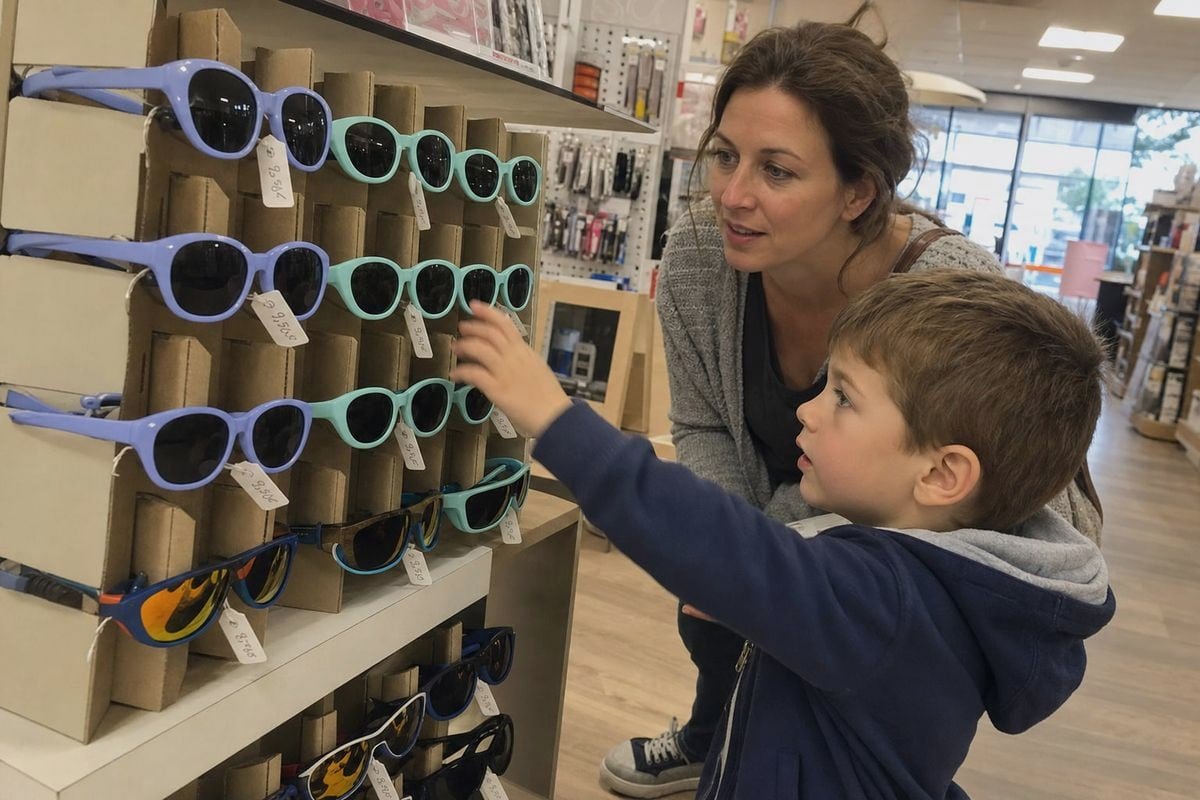
In-store merchandising and price tag support for kids’ sunglasses is where many good retail deals quietly die point-of-sale displays 1. Our factory has watched brands win the buyer, then lose the shelf.
To negotiate in-store merchandising and price tag support for kids’ sunglasses, request retail-ready POP displays, child-height placement, pre-ticketed merchandise with UV400 safety messaging, and parent-friendly price points under $50 — framing everything as a low-risk, high-margin impulse category the retailer can maintain easily.
That is the short answer. The rest of this guide breaks the negotiation into four practical conversations, with the exact asks, trade-offs, and scripts I recommend to our own buyers.
What kind of in-store merchandising support can I request from my kids' sunglasses supplier?
During a packaging review at our Taizhou workshop last spring, a European buyer asked me a blunt question: why do some of your customers sell through in eight weeks while others sit on stock 耐衝撃性レンズ 2? The honest answer was merchandising support — not the frames.
You can request Point of Purchase (POP) displays, counter spinners, pre-stocked PDQ trays, branded header cards, mirrors, planogram guides, pre-ticketed merchandise, seasonal refresh kits, and co-op advertising funds. A capable kids' eyewear factory should offer most of these as part of an OEM/ODM program.
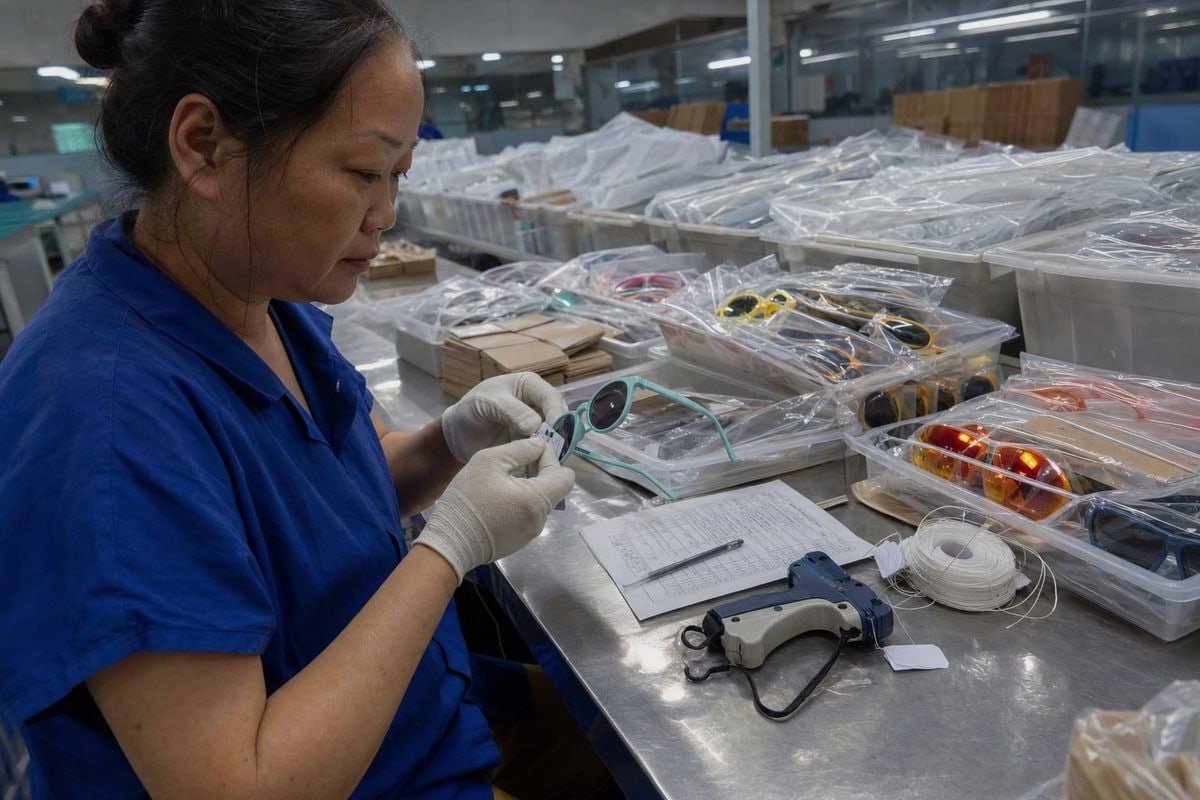
Most buyers only ask for the product. In our fifteen years of building children's eyewear for brands in over twenty countries, the buyers who ask for the full merchandising package almost always outperform the ones who negotiate price alone. So before you talk numbers, build your request list.
The core merchandising asks
Here is the support menu I suggest you bring to your supplier conversation, ranked by impact:
| Support Item | それがすること | Typical Negotiation Difficulty |
|---|---|---|
| Pre-stocked PDQ tray or sidekick | Ships retail-ready; cuts store labor to near zero | Low — most factories can do this |
| Counter or floor spinner | Creates a compact "sunglass destination" | Medium — may need a minimum order |
| Pre-ticketed merchandise | Frames arrive with price tags and barcodes applied | Low — a line-side process, not a redesign |
| Planogram 3 guide | Shows staff exactly how to face and restock | Low — ask for it in every program |
| Seasonal refresh kit | New header cards and tags for summer and back-to-school | Medium — tie it to reorder commitments |
| Co-op advertising funds | Shared cost for retailer flyers or window graphics | High — usually reserved for larger programs |
Why factories say yes
A supplier's cost for a printed header card or a tethered try-on strap is small. Our production line applies hang tags and swing tickets as part of final QC anyway, so pre-ticketing adds minutes, not days. The leverage you have is simple: merchandising support drives sell-through data, and sell-through data drives your reorders. Say that out loud in the negotiation. A factory that wants a long-term partner — rather than a one-time PO — will treat display support as an investment, not a favor. If your current supplier treats it as an exotic request, that tells you something about their retail experience.
One trade-off we weigh constantly on our line is tag content versus tag clutter. A price tag for children's sunglasses has to carry a number, a safety claim, and a brand story — in about four square inches.
Negotiate pre-ticketed merchandise as a standard service: supply your barcode files and MAP guidelines, then request value-added price tags that state UV400 protection, impact resistance, and flexible-frame safety. Agree on tag placement, retail-ready packaging format, and seasonal tag updates before production starts.
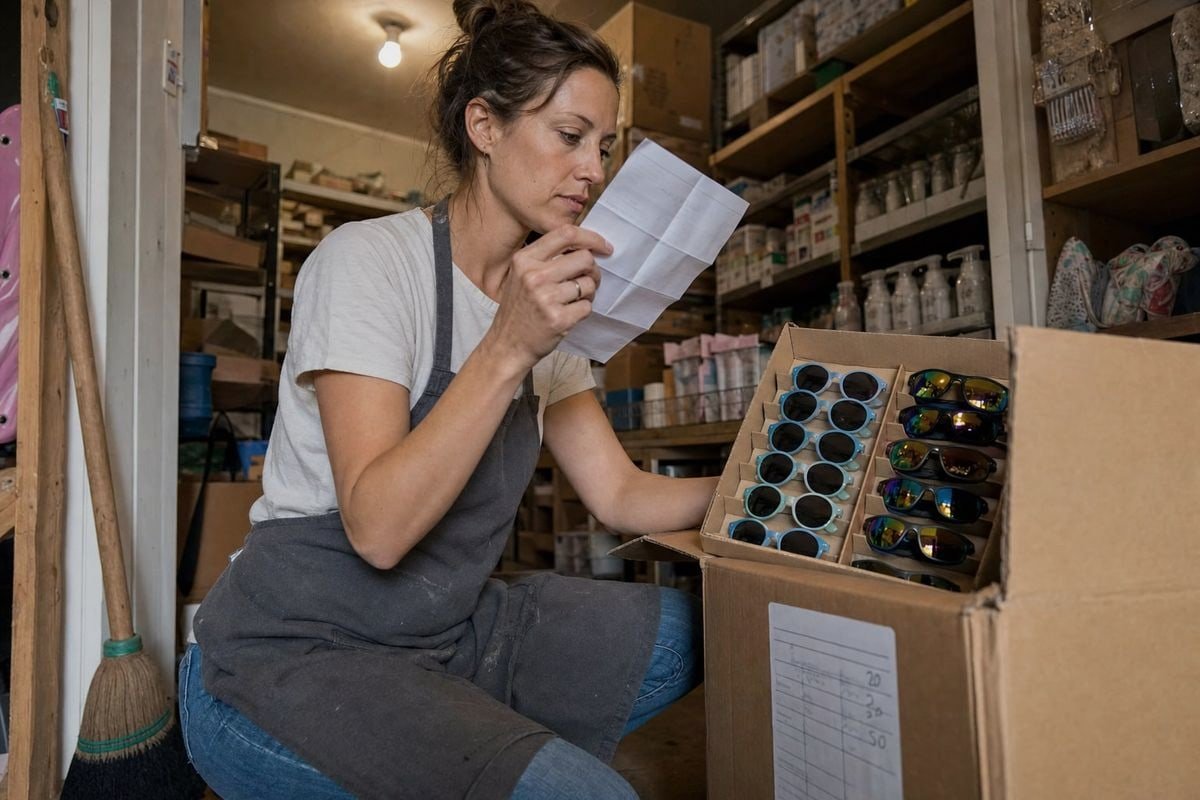
Price tags do more work in the kids' category than almost anywhere else in eyewear. A parent standing at the shelf makes a thirty-second risk assessment. The tag either resolves their doubts or it does not. So negotiate the tag like it is marketing real estate — because it is.
What a value-added price tag should carry
In our OEM programs, we print and apply custom swing tags with the buyer's branding. The tags that convert best follow a clear hierarchy:
- The safety claim first. UV400保護 4 in large type. Parents buy protection, not fashion.
- The durability claim second. Flexible TPEE or TR90 material 5, impact-resistant lenses. This answers the "kids break everything" fear at the point of sale.
- The price third. Keep it comfortable. Industry experience is consistent: once children's sunglasses cross roughly $50, parents start backing off, especially for younger kids.
- A QR code last. Link it to a warranty registration or a "lost or broken" replacement offer. This turns a paper tag into a direct-to-consumer data bridge.
The commercial terms to lock down
Pre-ticketing raises three contract questions. First, who owns errors? If a barcode misprints, the factory should re-ticket at its cost — put that in writing. Second, how are Minimum Advertised Price 6 (MAP) rules handled? Your supplier prints the ticket, but you set the pricing policy; give them a clear MAP document so tags never undercut your channel partners. Third, who pays for seasonal updates? A fair split is common: the factory covers tag printing on reorders, while the brand covers new artwork. We also recommend agreeing on retail-ready packaging format early — hang-card, polybag with header, or box — because it changes carton dimensions, freight cost, and how fast staff can restock the display. Small details, real money.
What should I ask for when requesting point-of-sale displays for children's sunglasses?
A distributor from Australia once returned one of our floor spinners with photos of what six weeks in a busy surf shop does to a display. Bent pegs, missing frames, tags torn off. That feedback reshaped how we build POP hardware — and what we tell buyers to demand.
Ask for a compact display set at child eye level, around 30 to 40 inches, with a mirror, tethered try-on samples, secure but easy-restock holders, colorful thematic graphics, and clear price tiering. Request both a primary placement fixture and a smaller secondary cross-merchandising unit.

A display for kids' sunglasses succeeds or fails on details that never appear in a catalog photo. Break your request into three layers: physical design, placement strategy, and maintainability.
Physical design specs to put in writing
| Spec | What to Request | なぜ重要なのか |
|---|---|---|
| Height | Product faces at 30–40 inches | Child eye level triggers engagement and "pester power" |
| Mirror | Shatter-resistant, mounted on the unit | Try-on is the single biggest conversion driver |
| Sample security | Tethered try-on pairs, stocked pairs behind | Lets kids "torture test" flexible frames safely |
| Frame presentation | Straight seating, visible temples, spacing | Cluttered pegs read as cheap and get ignored |
| Graphics | Bright, playful, seasonal-swappable header | Kids' sunwear sells on visual fun, not luxury cues |
| Footprint | Under 2 square feet for counter units | Answers the retailer's "we have no space" objection |
One detail worth a special mention: a tethered demo pair of flexible TPEE frames is a durability demonstration station. When a child bends the temple and it springs back, a skeptical parent watches the value proposition prove itself. We build demo pairs into display programs for exactly this reason. Some buyers go further with UV-reactive display cards that change color in sunlight — a live demonstration of lens efficacy that both kids and parents understand instantly.
Placement strategy: primary plus secondary
Negotiate two placements, not one. The primary spot is your destination — the kids' section, the optical wall, or an endcap placement near the entrance. The secondary spot uses cross-merchandising strategies: a small sidekick clipped into the sunscreen, swimwear, or outdoor toy aisle, where seasonal shopping intent is already high. Basket analysis makes this pitch easy: a parent buying sunscreen has already decided the family will be in the sun. A $19.90 pair of sunglasses beside that decision is a natural add-on, not a new purchase decision. Also ask your supplier for extra pegs, spare tags, and a restock guide, so the display survives real store life — not just the launch photo.
How can I ensure my supplier's merchandising support fits my retail branding and pricing strategy?
The hardest lesson I learned in this business came from a well-designed display that failed. The buyer's brand was premium-minimalist; our stock spinner was bright and busy. The product was right, but the presentation contradicted the brand — and shoppers felt the mismatch.
Send your supplier a brand guideline, a MAP policy, and your planned price tiers before display design begins. Require artwork approval on all POP materials and tags, verify planogram compliance with photo reports, and align display refresh schedules with your seasonal pricing calendar.
Merchandising support only works when it looks and prices like your brand, not like your factory's generic template. Getting there is a process, not a purchase. Here is the alignment workflow we run with our own OEM clients:
- Share the brand kit first. Logos, colors, fonts, tone. Our design team adapts display graphics from this kit; a supplier that skips this step will hand you a display that fights your brand.
- Define price tiers before tag printing. Retail display guidance is clear that distinct price-point zones sell better. Consider developmental tiering — "Toddler Tough" and "Junior Sport" instead of bare age numbers — with a small price step between tiers, since parents will spend more for older kids.
- Approve everything on paper, then in a pre-production sample. Tags, header cards, packaging. A physical sample catches color drift that a PDF never will.
- Set the compliance loop. Ask retailers or your reps for photo reports, and check planogram compliance quarterly. If you offer the retailer trade promotion management support — markdown funds or seasonal promotion tags — tie those funds to compliance photos.
- Plan the refresh calendar. Summer launch, back-to-school refresh, holiday gift angle. Managed inventory agreements, where your brand or supplier takes responsibility for display refreshes and tag updates, keep the fixture selling all year and protect a never-out-of-stock position.
Watch the money mechanics
Two commercial terms deserve extra care. First, slotting allowances 7: some larger retailers will ask for payment to carry a new kids' line. Before paying cash, offer value instead — a free loaded display, co-op advertising funds, or sale-or-return on the first fill. That protects your margin while giving the buyer a low-risk yes. Second, MAP enforcement: your pre-ticketed tags become your enforcement tool, because the printed price is the advertised price. Keep tag pricing, MAP policy, and promotional tags synchronized, and channel conflict largely takes care of itself.
結論
Weak merchandising kills strong products. Negotiate placement, presentation, and pricing support together — POP displays, child-height fixtures, value-added pre-ticketed tags — and your kids' sunglasses become the retailer's easiest yes.
脚注
1. Background concept on retail point-of-sale systems referenced throughout the article. ↩︎
2. FDA guidance on sunglasses safety supports impact-resistance and lens protection claims. ↩︎
3. Wikipedia background on planogram concept central to merchandising compliance. ↩︎
4. Explains UV radiation science behind the UV400 safety claim on tags. ↩︎
5. Authoritative Wikipedia entry explaining the properties of Nylon 12, the polymer used in TR90 frames. ↩︎
6. Defines the MAP pricing policy concept discussed in commercial terms. ↩︎
7. Explains the retail slotting fee mechanism mentioned in money mechanics section. ↩︎


 English
  Español de México
  Deutsch
  Français
  日本語
日本語  العربية
  Português do Brasil