How to Negotiate After-Sales Compensation for Quality Issues on Kids’ Optical Frames?
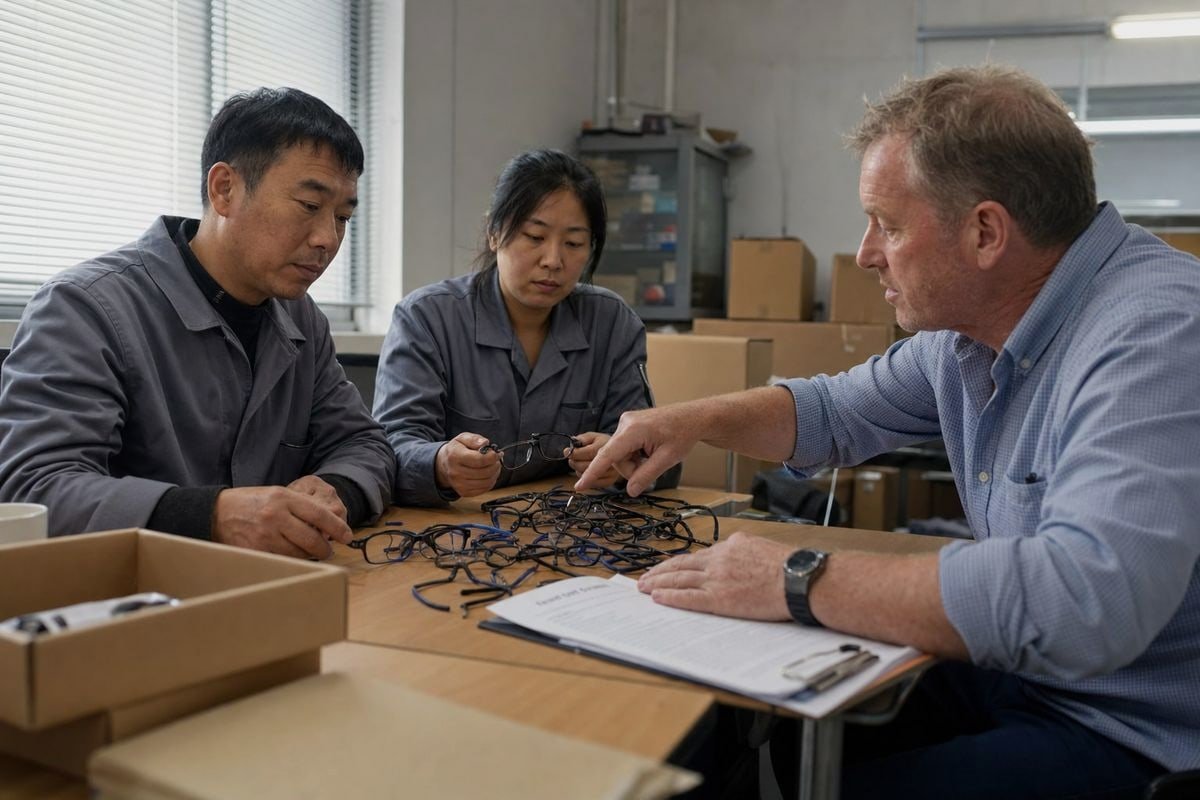
After-sales compensation for quality issues on kids’ optical frames can drain your margins fast. On our production line, I have seen how one bad batch destroys a buyer’s whole season. There is a better way to handle it.
To negotiate after-sales compensation for kids’ optical frames, document each defect with photos and dates, separate manufacturing defects from wear and tear, request a specific remedy such as replacement, credit note, or refund, and escalate in writing using your Quality Assurance Agreement terms.
That is the short version. Below, I will walk through each step in detail. I will cover what qualifies as a defect, how to document it, what compensation to expect, and how to prevent the problem entirely.
What quality issues on kids' optical frames actually qualify me for compensation?
A distributor in Australia once sent me photos of thirty frames with snapped temples, convinced our factory was at fault. Half turned out to be genuine hinge defects. The other half showed clear bite marks.
Compensation-worthy quality issues include hinge failure without impact, frame cracking at stress points, coating that peels early, warped fronts that cannot be adjusted, unstable temple arms, and material brittleness. Damage from drops, bending abuse, or chewing counts as wear and tear, not a manufacturing defect.

The line between a defect and normal damage is the heart of every negotiation. Kids' frames take heavy abuse. Suppliers know this. So they will often blame "rough play" unless your claim clearly points to a production fault. That is why your Quality Assurance Agreement 1 should define manufacturing defects specifically for children's eyewear before you ever place an order.
Defect vs. wear and tear: the practical test
Ask one question: did the failure happen in a way normal child use should not cause? A TR90 2 frame is designed to flex. If it cracks during a gentle bend within the first month, that points to a material or molding problem. If it snaps after being sat on, that is use damage.
| Issue | Likely Cause | Compensation Claim Strength |
|---|---|---|
| Hinge loosens or breaks within weeks, no impact marks | Faulty hinge assembly or torque inconsistency | Strong |
| Cracks at the same stress point across many units | Molding or material defect | Very strong |
| Coating or paint peeling within 1–3 months | Surface treatment failure | Strong |
| Frame warping in normal storage conditions | Improper curing or cheap material | Strong |
| Snapped bridge after a visible drop | Impact damage | Weak |
| Scratched lenses, chewed temple tips | Normal child use | Very weak |
The safety dimension changes everything
For children's products, safety defects sit in a category of their own. Sharp edges after breakage, small parts that detach and become choking hazards 3, or paint that fails material compliance certification are not negotiable "minor issues." They can trigger product recall procedures 4 and even trade bans for the factory. When we develop frames with TPEE temples and silicone hinge connectors, we test flexibility precisely because a frame that shatters near a child's eye is a liability, not just a defect. If your issue touches safety, say so early. It raises the stakes for the supplier immediately, and any responsible factory will prioritize your claim.
How do I document defects properly so my compensation claim is taken seriously?
In our fifteen years of exporting kids' eyewear, the claims we settled fastest all shared one trait: the buyer sent organized evidence, not angry emails. Documentation quality decides negotiation speed.
Document every defect with dated photos of the failure point, the affected unit count, batch and PO numbers, receipts or invoices, and a written timeline of when the issue appeared. Report within days of discovery and keep a record of every conversation with names and dates.
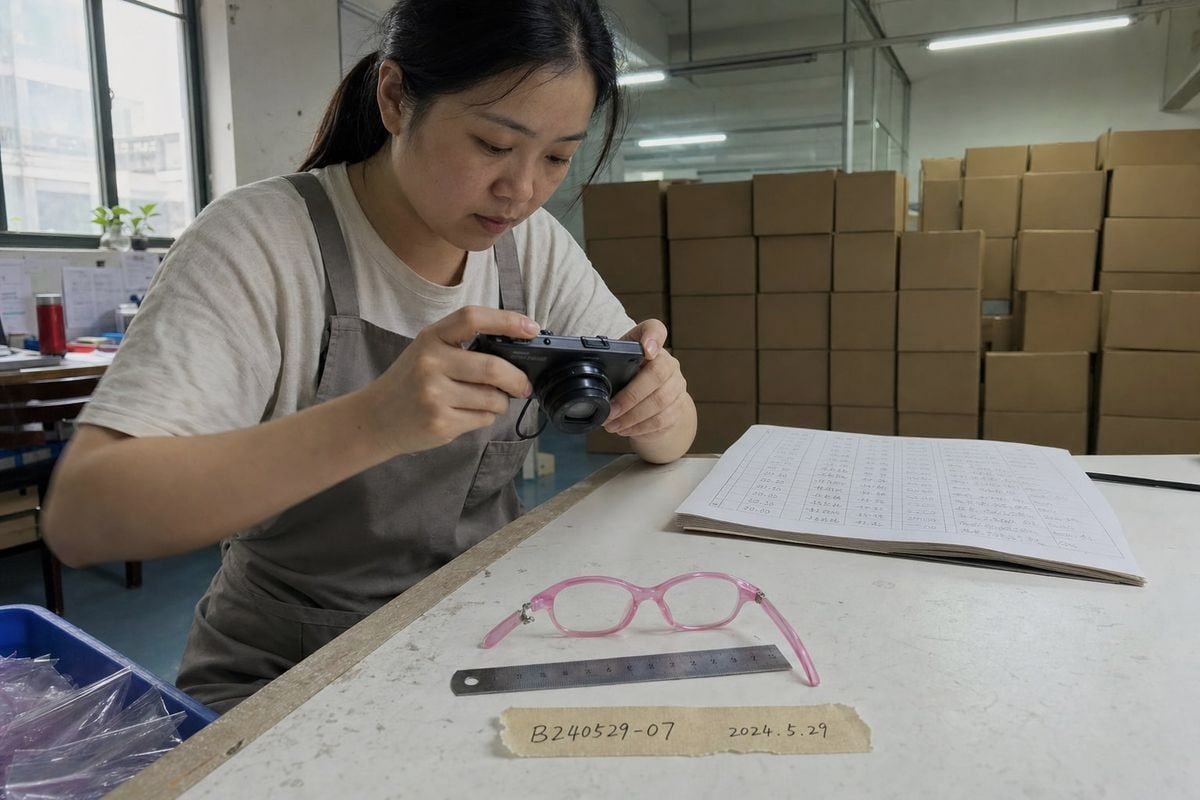
A weak claim says "many frames broke." A strong claim says "42 units from PO-2481, batch 7, show hinge separation at the left temple, first reported by retail customers on March 3." The second version gets paid. Here is the process I recommend to every buyer, because it mirrors the RMA process our own factory follows internally.
The five-step documentation protocol
- Photograph immediately. Shoot the defect close-up, the whole frame, and the batch label. Include a ruler or coin for scale. Good photos let most disputes settle without shipping frames back, which saves both sides money.
- Count and quantify. Record how many units are affected out of the total shipment. This number matters because it determines whether you have isolated defects or a batch failure threshold breach.
- Build the timeline. Note the delivery date, first defect discovery, and every complaint from your own customers. Speed strengthens claims. A defect reported in week two is far more credible than one reported in month six.
- Gather the paper trail. Pull the invoice, packing list, Quality Assurance Agreement, any third-party inspection results, and prior email threads about specifications. Keep originals and send copies.
- Log every exchange. After each call or message with the supplier, write a one-paragraph summary with the date and the name of the person you spoke with. If negotiation stalls, this log becomes your escalation file.
Agree on a response window in advance
The best practice we see from professional buyers is a photo-based claim protocol written into the supplier contract, with a pre-agreed 48–72 hour response window. This forces a fast first reply and stops claims from drifting into silence. We honor this at our own workshop because a fast, clarifying response is cheaper than a damaged relationship.
What compensation options should I expect from my optical frame supplier?
One trade-off I discuss with buyers constantly: a full refund feels satisfying, but a fast replacement shipment usually protects your retail season better. Compensation is a menu, not a single dish.
Expect a remedy proportionate to severity: free repair or replacement parts for minor faults, replacement units or credit note issuance for functional defects, and a full refund or whole-shipment replacement when defects exceed the batch failure threshold or involve safety non-compliance.
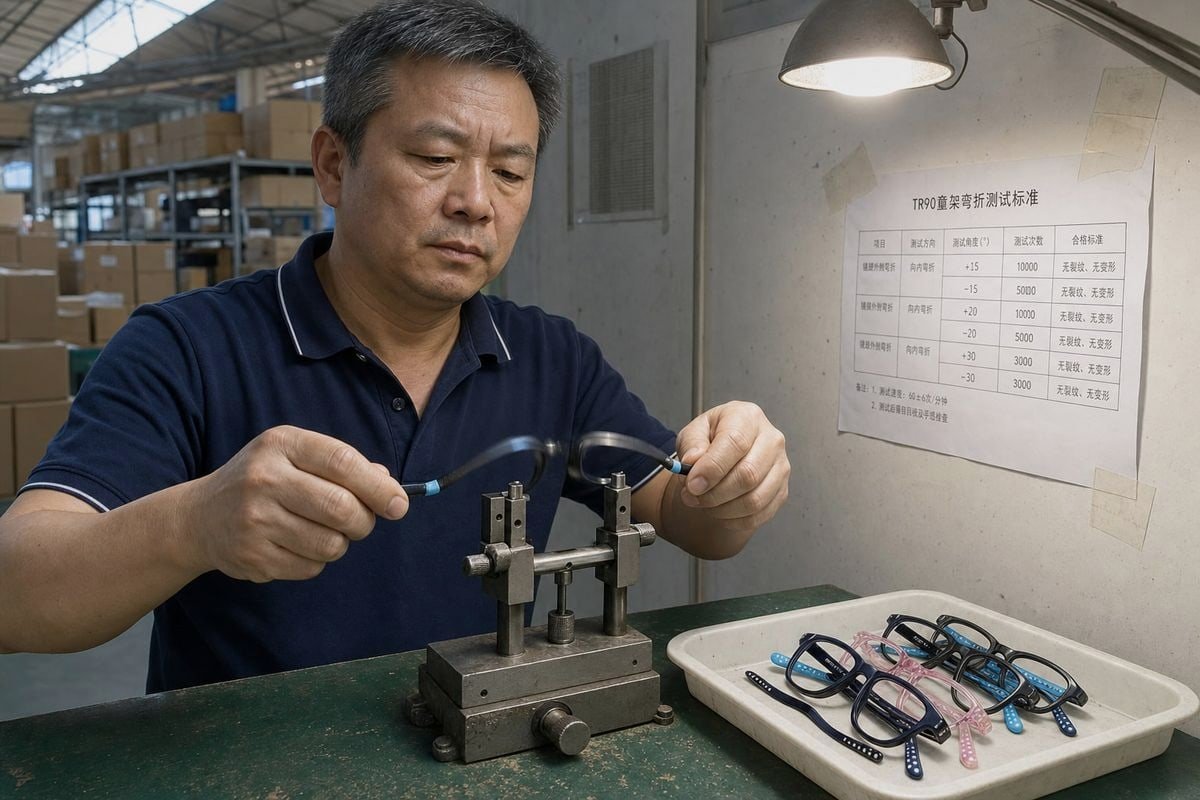
Many buyers only ask for refunds because that is the only remedy they know. But experienced importers negotiate a wider range of outcomes, and often walk away with more total value. Match the remedy to the defect, and always name a specific ask instead of saying you are "unhappy with quality."
| Defect Severity | Typical Examples | Reasonable Compensation |
|---|---|---|
| Minor cosmetic | Slight color variance, small surface marks | Discount on this order, seasonal swap, or credit toward the next order |
| Functional, limited units | Loose hinges, misaligned temples on a small percentage | Replacement units or spare parts plus a partial credit note |
| Batch-level failure | Defect rate exceeding 5–10% of shipment | Full replacement of affected batch or refund for that batch |
| Safety non-compliance | Failed material compliance certification 5, choking hazard | Full refund, recall cost coverage, and corrective action report |
Creative remedies that protect both sides
Some of the most effective settlements I have negotiated with our own B2B clients never involved cash. A supplier may offer tooling amortization credits, waiving or reducing mold costs on your next exclusive design to offset quality losses. For B-grade stock that is sellable but off-spec, a brand damage marketing subsidy can fund the discounting needed to move it without hurting your main line. These options often exceed the wholesale value of a simple refund.
Anchor your ask in real business impact
The strongest lever is not the unit cost. It is the downstream loss. A pediatric patient or retail customer who gets a broken frame may not come back for five to seven years of repeat purchases. Present that customer lifetime value 6 impact when the defect is serious, and your requested compensation stops looking inflated. It starts looking conservative. A good supplier's post-purchase support policy should already anticipate this logic; if yours dismisses it, that tells you something about the partnership.
How can I avoid repeated quality disputes by choosing the right manufacturing partner?
A brand founder from Japan once told me she chose our Taizhou factory not for price, but because we showed her our defect logs before she asked. That transparency is the real dispute prevention.
Prevent repeated disputes by choosing a factory with documented quality control, signing a Quality Assurance Agreement with defined AQL limits, tying final payment to pre-shipment inspection, and confirming supplier liability terms, claim windows, and batch failure clauses before your first order ships.
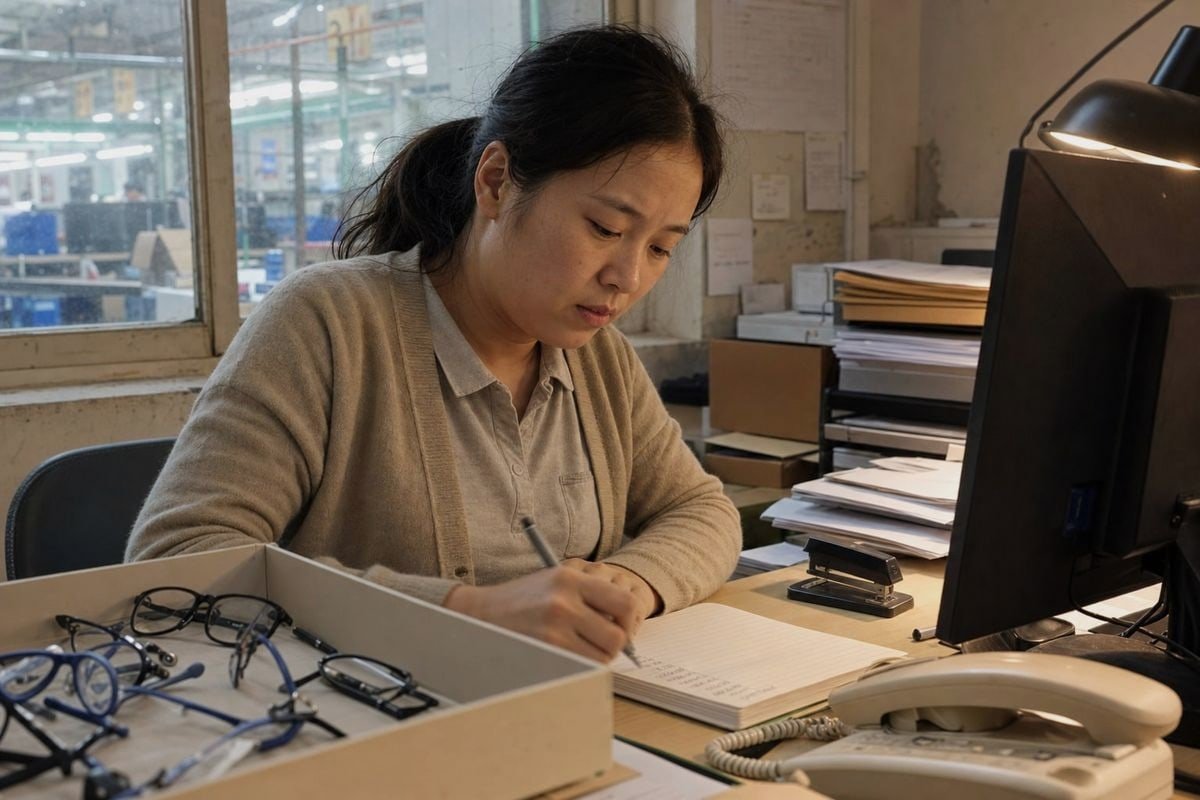
The cheapest cure for a compensation battle is never needing one. After fifteen years running an eyewear factory with about 120 workers and a 5S-managed workshop, I can tell you exactly where disputes are born: vague contracts, skipped inspections, and suppliers chosen on price alone. Here is how to close those gaps.
Put the numbers in writing before production
Your contract should define an Acceptable Quality Level 7 up front. The common standard for children's products is 0% tolerance for critical safety defects and around 2.5% for major functional issues. Add a batch failure clause: if the manufacturing defect rate exceeds an agreed threshold, typically 5–10%, the supplier automatically replaces or refunds the entire shipment. No debate, no negotiation fatigue.
| Contract Term | What It Should Specify | Why It Prevents Disputes |
|---|---|---|
| AQL limits | 0% critical, ~2.5% major defects | Removes ambiguity about "acceptable" quality |
| Payment structure | Final 70% released after passed inspection | Keeps financial leverage until quality is verified |
| Claim protocol | Photo-based claims, 48–72 hour response | Guarantees fast handling without return shipping |
| Defect definitions | Hinge torque consistency, TR90/TPEE flexibility specs | Stops suppliers from blaming rough play |
| Liability terms | Who pays for recalls, re-dispensing, rush reorders | Pre-agrees the cost split before a crisis |
Judge the factory, not the quote
Ask for third-party inspection results from recent shipments. Ask how their RMA process works and how long claims take to close. Ask whether they can show material compliance certification for the exact TR90 and TPEE grades they use, since children's frames must meet stricter safety expectations than adult eyewear. A factory that answers these questions quickly and specifically will also handle a future claim quickly and specifically. One reason we keep roughly 800 existing styles available is that proven, repeatedly-produced designs carry far fewer surprise defects than a rushed new mold. Lower risk starts at product selection, not at the complaint stage.
結論
Quality disputes cost money, time, and trust. Document defects fast, request specific remedies, escalate in writing, and choose partners with clear agreements. Prevention beats compensation every time.
脚注
1. Background on formal quality assurance documentation referenced in supplier contracts. ↩︎
2. Background on nylon-based polymers used in flexible children’s eyewear frames. ↩︎
3. Official government safety guidance on choking hazards relevant to children’s product defects. ↩︎
4.

 English
  Español de México
  Deutsch
  Français
  日本語
日本語  العربية
  Português do Brasil