How to Meet U.S. Customs Country-of-Origin Marking Rules for Kids Optical Frames from China?
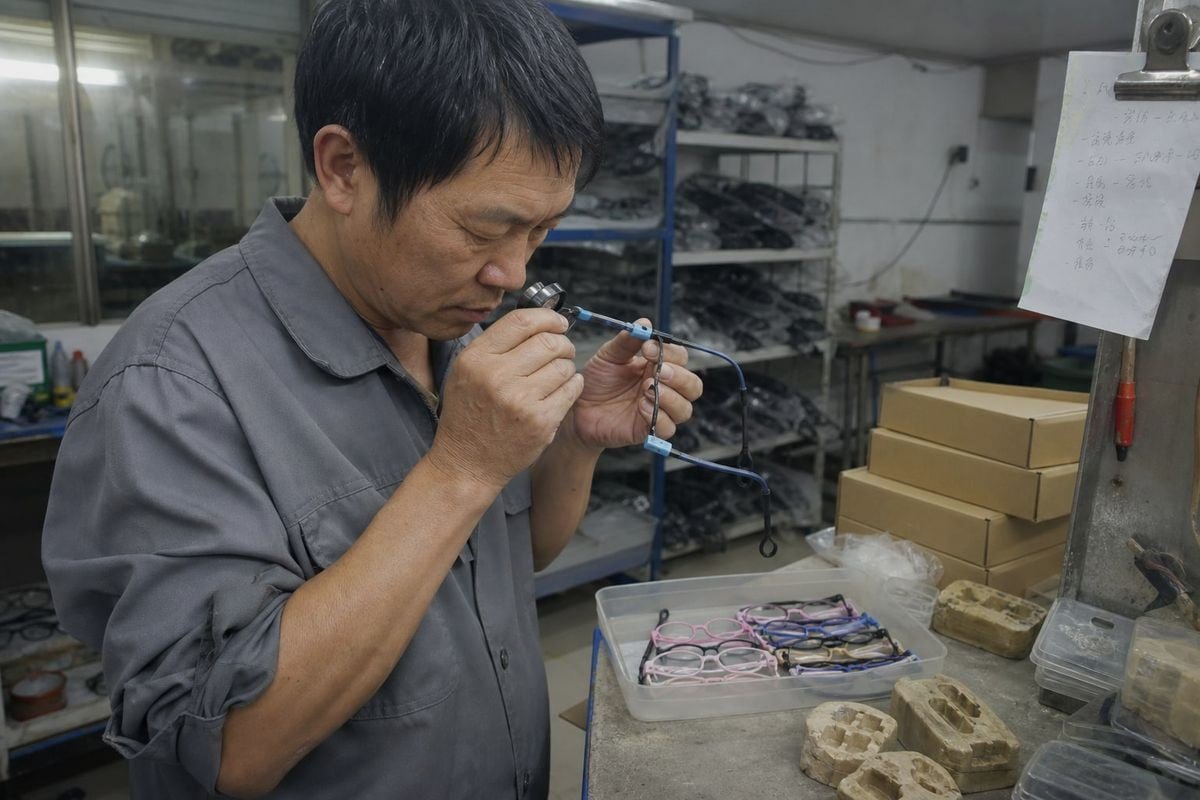
Country-of-origin marking rules for kids optical frames trip up more importers than tariffs do. On our production line, we mark every temple before a single frame ships to the U.S.
To meet U.S. Customs country-of-origin marking rules, kids optical frames from China must carry a permanent, legible, conspicuous “China” or “Made in China” mark, applied by die stamping, engraving, molding, or raised lettering, placed on the temple or temple tip, visible to the ultimate purchaser.
That single sentence covers the legal core. But the practical questions are harder. Which method survives a child bending the temples? Where does the mark go on a tiny frame? What if CBP disagrees? Let me walk you through each one.
What Country-of-Origin Marking Requirements Should I Know Before Importing Kids Optical Frames from China?
A few years back, a European buyer asked our team to skip temple marking and "just print China on the box." We refused, and that decision saved his first U.S. shipment.
Under 19 U.S.C. § 1304 and 19 CFR Part 134, every imported article of foreign origin must be marked in English with its country of origin. For eyewear, U.S. Customs and Border Protection (CBP) expects a permanent, conspicuous mark such as "Frame China" directly on the frame itself.
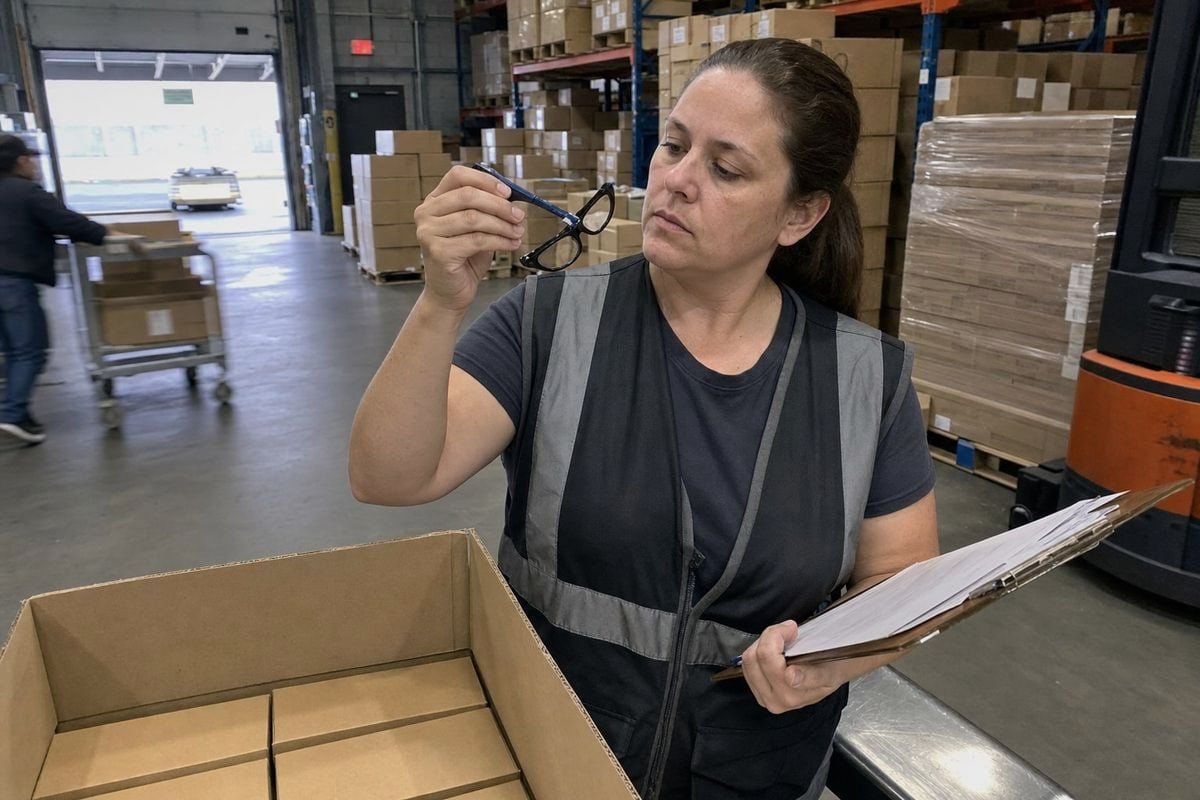
The legal framework is short, but the interpretation matters. The statute says the marking must reach the ultimate purchaser. The Ultimate Purchaser Definition 1 is the last person in the United States who receives the article in the form in which it was imported. For retail kids frames, that person is the parent buying glasses for their child. So the mark must survive shipping, shelf display, and handling — and still be readable at the point of sale.
The Four Tests Every Marking Must Pass
CBP applies four consistent standards. In our fifteen years of eyewear production, every rejected marking we have seen failed at least one of them.
| CBP Standard | 意味 | Common Failure on Kids Frames |
|---|---|---|
| Legible | Readable without magnification | Font too small on a narrow child-size temple |
| Indelible | Cannot be rubbed or washed off | Ink pad printing that wears off soft TPEE |
| Permanent | Lasts the life of the product | Adhesive stickers that peel in transit |
| Conspicuous | Easy to find in normal handling | Mark hidden under the temple tip sleeve |
Origin Is Not the Shipping Country
Here is a point many first-time buyers miss. The country of origin is where the frame was manufactured, or where the last substantial transformation occurred — not where it shipped from. The Substantial Transformation Rule 2 means minor finishing, coloring, or packing in a third country does not erase China origin. CBP has ruled that partially finished eyeglasses sent for coloring and assembly elsewhere were still Chinese-origin goods. Routing frames through another country without real manufacturing does not change the required mark; it only creates risk.
One more thing an Optical Importers Guide should always flag: marking rules sit alongside other obligations. Kids optical frames are children's products under CPSIA Compliance rules and Class I devices under FDA Medical Device Regulations. The country-of-origin mark is one layer of a larger import labeling requirements stack, not the whole job.
How Can I Ensure My Supplier Marks Each Frame Correctly to Avoid Customs Delays?
The trade-off we weigh most often at our Taizhou factory is mark durability versus aesthetics. A deep-molded mark lasts forever, but it must be planned before tooling, not after.
Ensure correct marking by specifying the exact wording, location, method, and font size in your purchase order, requesting a marked pre-production sample, requiring photos of the mark during final inspection, and confirming the marking method suits the frame material before mass production begins.
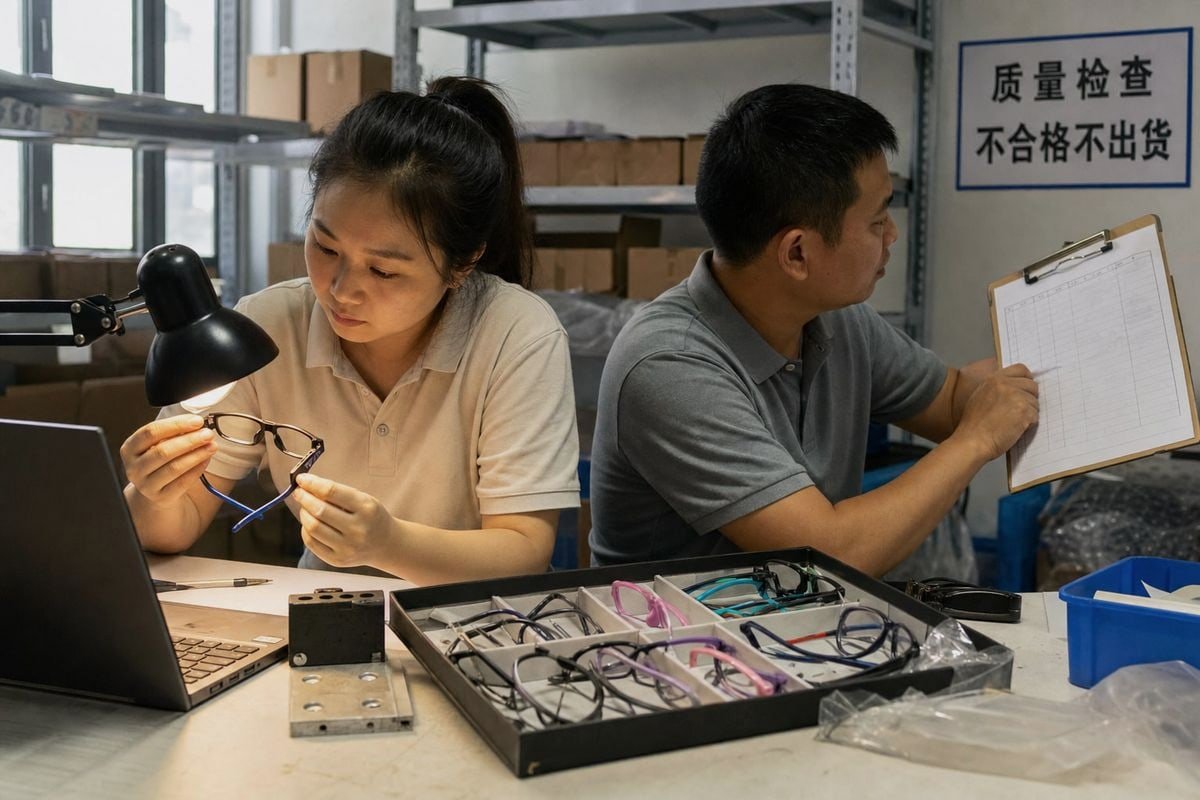
Suppliers do not fail marking rules out of bad intent. They fail because the buyer never specified anything, so the factory chose the cheapest method. Pad-printed ink on a flexible TPEE temple can crack and flake within weeks. On our lines, we learned early that flexible materials need molded-in or laser-engraved marks, because those move with the material instead of sitting on top of it.
Match the Marking Method to the Frame Material
Kids frames flex, twist, and get chewed on. The marking method must survive all of that. Here is how the common methods compare for children's eyewear.
| Marking Method | Durability on Kids Frames | Works on TR90/TPEE? | CBP Risk Level |
|---|---|---|---|
| Molded-in (in-mold) lettering | Excellent — part of the material | Yes, ideal | 非常に低い |
| レーザー彫刻 | Excellent — permanent etch | はい | 非常に低い |
| Die stamping in contrasting color | 非常に良い | Yes, with correct depth | 低 |
| Raised lettering | 非常に良い | はい | 低 |
| Pad printing (ink) | Poor on flexible temples | リスクが高い | 中程度から高程度 |
| Adhesive sticker on frame | Poor — peels easily | いいえ | 高い |
Build Marking Into Your Purchase Order
We recommend a simple five-step process, and we run it with every U.S.-bound client:
- Write the exact wording into the PO — "Frame China" or "Made in China," in English, no abbreviations.
- Specify the location — inner temple or temple tip — and a minimum font size readable without magnification.
- Approve a marked pre-production sample, not just a design drawing.
- Add marking verification to the final inspection checklist, with close-up photos.
- Keep the sample and photos on file in case CBP or your customs broker services team asks for evidence.
Because we hold around 800 existing styles, most of our molds already include origin marking positions. That means a new brand can order a compliant frame without paying for mold changes — the mark is already engineered in.
Where Should the "Made in China" Marking Be Placed on Kids Optical Frames and Packaging?
A Japanese client once sent us a competitor's frame where the origin mark hid under the silicone temple sleeve. Invisible mark, failed conspicuousness test. Placement matters as much as permanence.
Place the "Made in China" or "Frame China" marking on the temple or temple tip, on the inner surface, in contrasting permanent lettering readable without disassembly. Retail packaging may also carry the mark, but packaging alone cannot replace marking on the frame itself.
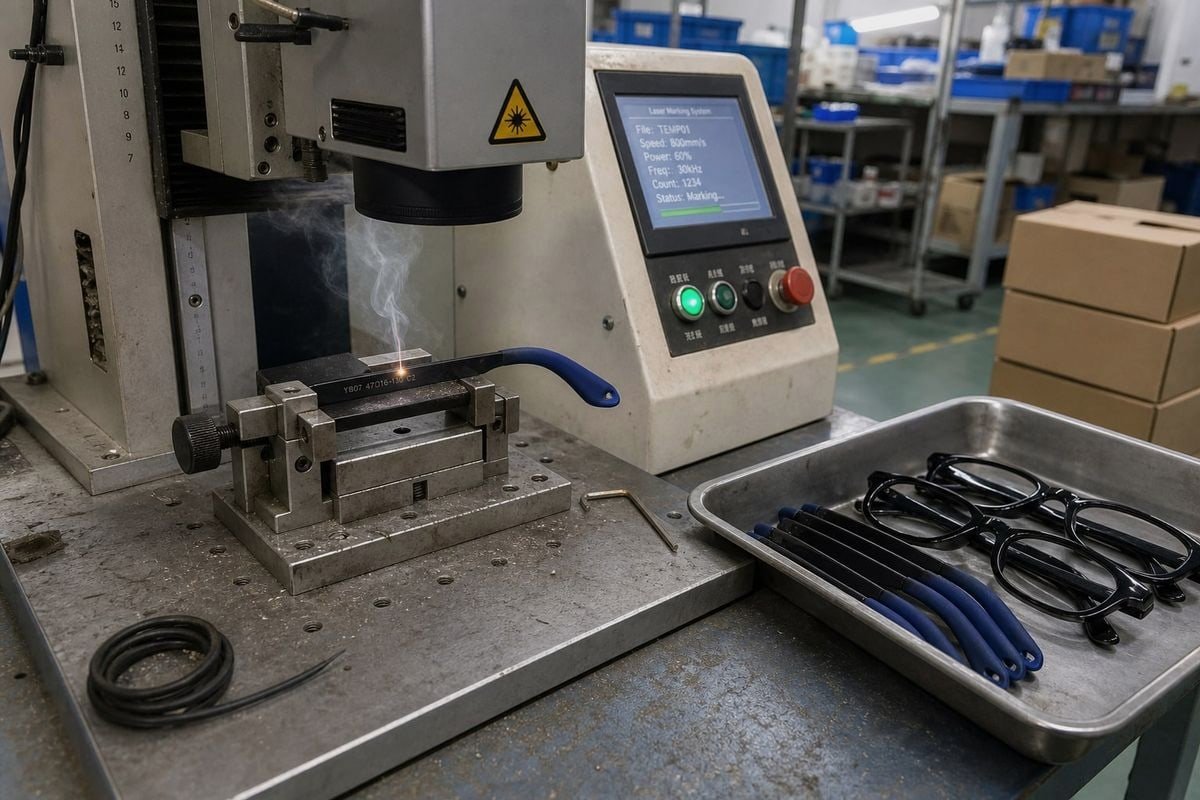
The temple is the industry-standard location, and both CBP eyewear guidance and Vision Council guidance point to the temple or temple tip. On adult frames this is easy. On kids frames, the temple is shorter and narrower, so we have to balance three things: font size large enough to read, contrast strong enough to see, and placement that does not clash with your brand logo or required tracking label.
Placement Rules That Keep You Safe
The mark must be findable during normal handling. A parent picking up the glasses should be able to read it without pulling off a temple tip, removing a sleeve, or using a magnifier. On our two-tone designs — for example, a glossy black front with navy TPEE temples and light blue silicone tips — we engrave or mold the origin mark on the inner temple arm in a contrasting tone, away from the flexible tip section that bends the most.
What Packaging Can and Cannot Do
Packaging is a supplement, not a substitute — with one narrow exception. If the frames are excepted from individual marking because a U.S. optical lab is the ultimate purchaser (for instance, frames imported in bulk for prescription lens insertion), CBP has in specific rulings allowed marking on outermost containers or resealable bags instead. That is a B2B exception path under the marking statute. For retail-ready kids frames headed to store shelves, do not rely on it.
| シナリオ | Frame Must Be Marked? | Packaging Marking Role |
|---|---|---|
| Retail-ready frames sold to consumers | Yes, always | Supplementary; also required under general import labeling requirements |
| Bulk frames sold to U.S. optical labs | Possibly excepted, ruling-dependent | Outermost container marking may satisfy CBP |
| Frame parts for U.S. assembly | Depends on Substantial Transformation Rule analysis | Container marking may apply if assembler is ultimate purchaser |
| Frames with U.S. finishing only (coloring, packing) | Yes — origin unchanged | Cannot substitute for article marking |
One practical note: children's products also need a CPSIA tracking label with manufacturer identity, production date, facility, and batch number. We coordinate the origin mark, tracking label, and client logo placement together at the design stage, so the small real estate on a child's frame is used cleanly rather than crowded at the last minute.
What Happens If My Shipment Fails U.S. Customs Marking Inspection, and How Can I Prevent It?
Early in our export history, we watched a client's competitor lose six weeks of selling season over a sticker that peeled in transit. That lesson shaped our QC checklist permanently.
If frames fail CBP marking inspection, the shipment can be detained, and the importer must re-mark the goods under customs supervision, export them, or destroy them — often with marking duties and delays. Prevention means permanent temple marks verified on samples and at final inspection.
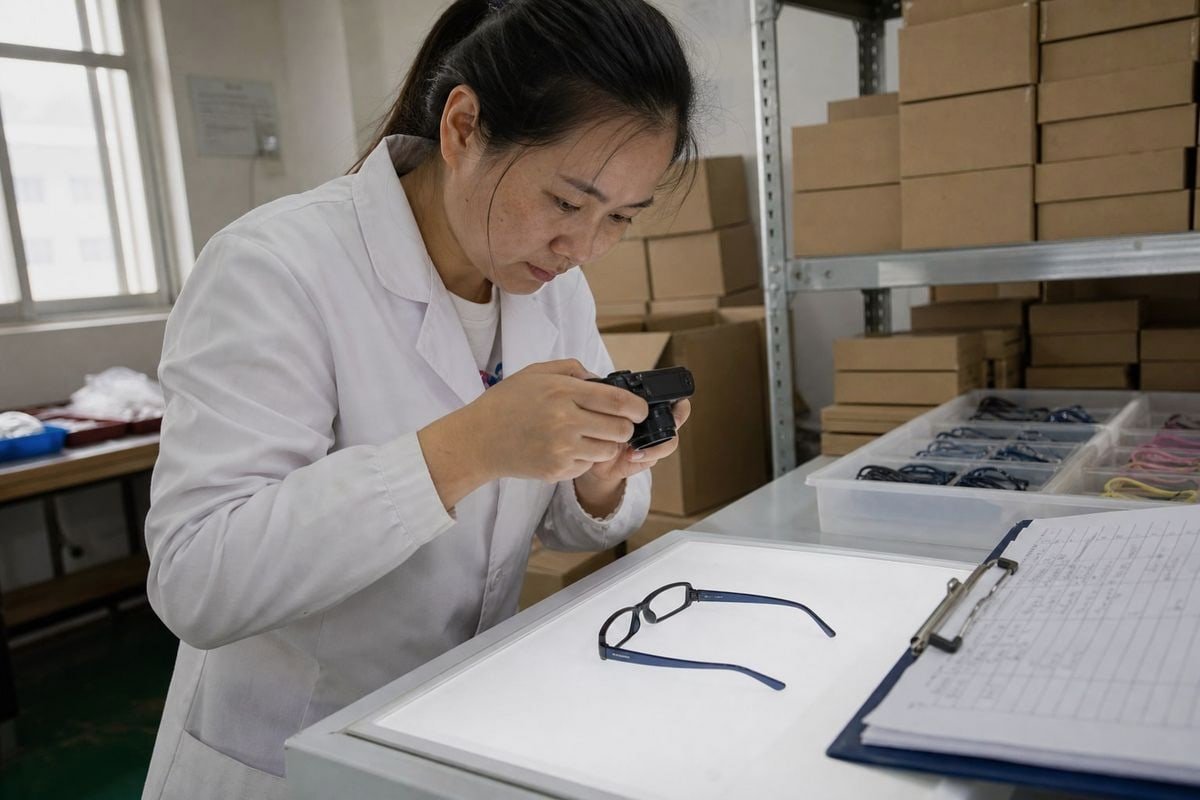
A marking failure rarely stays a small problem. CBP issues a notice to re-deliver or re-mark, and the goods sit in a bonded warehouse while you arrange corrective labeling under supervision. That costs storage fees, broker fees, and — worst of all for a kids brand — missed retail windows like back-to-school season. Repeat violations can bring an additional marking duty of ten percent of the goods' value. And because kids optical frames also fall under Eyewear Safety Standards, CPSIA rules, and FDA device listing, a marking hold often invites broader scrutiny of your Children's Product Certificate (CPC) 3 and test reports at the same time.
The Prevention Checklist We Use
Prevention is cheap. Here is the sequence we follow for every U.S.-bound order:
- Confirm true origin first. Apply the Substantial Transformation Rule honestly. If frames are fully made in China, mark China — no shortcuts through third countries.
- Classify correctly. Verify the Harmonized Tariff Schedule (HTSUS) code 4 with your customs broker services provider, since classification and origin drive both duty and marking review.
- Lock the marking spec. Wording, method, temple location, font size, and contrast go into the PO and the mold plan.
- Approve a physical marked sample. Photos are not enough; flex the temple and rub the mark.
- Inspect before shipment. Our 5S-managed workshop includes marking checks in final QC, with documented photos per batch.
- Assemble the paper trail. Keep the CPC, third-party test reports for lead and phthalates, tracking label records, and marking evidence in one compliance file, ready for random CBP or CPSC inspection.
Why the Importer Carries the Risk
Some buyers assume the factory bears the penalty if marking fails. It does not. CBP holds the importer of record responsible. That is exactly why choosing a factory that already exports children's eyewear to regulated markets matters more than saving a few cents per unit. When we onboard a new U.S. client, we review their marking and labeling plan before tooling — because fixing a mark at the mold stage costs nothing, and fixing it in a bonded warehouse costs weeks.
結論
Compliant marking is simple when planned early: mark China permanently on the temple, verify samples, document everything. We build that discipline into every kids frame we export.
Meeting U.S. Customs country-of-origin marking rules 5 for kids optical frames comes down to four decisions made before production, not after arrival. First, confirm the true origin under the Substantial Transformation Rule — minor finishing elsewhere does not erase China origin. Second, choose a permanent method that suits flexible children's materials: molded-in lettering or laser engraving on TR90 and TPEE beats ink or stickers every time. Third, place the mark on the temple or temple tip where the ultimate purchaser can read it without effort, and treat packaging marks as a supplement unless a genuine B2B exception applies. Fourth, verify — on the pre-production sample, at final inspection, and in your compliance file alongside your CPC and CPSIA documentation. Get those four right, and CBP marking inspection becomes a non-event instead of a six-week detention. If you are developing children's optical frames and want a partner who engineers compliance into the mold rather than patching it at the port, that is exactly the kind of project our team handles every week.
脚注
1. Replaced with the official eCFR definition of ‘Ultimate purchaser’. ↩︎
2. Replaced with the official eCFR definition of ‘Country of origin’, which includes the substantial transformation rule. ↩︎
3. Official CPSC guidance on the Children’s Product Certificate requirements. ↩︎
4. Official source for the Harmonized Tariff Schedule of the United States. ↩︎
5. Replaced with the official eCFR section for Country of Origin Marking requirements. ↩︎
 English
  Español de México
  Deutsch
  Français
  日本語
日本語  العربية
  Português do Brasil