How to Identify Authentic vs. Fake Kids Sunglasses Brands?
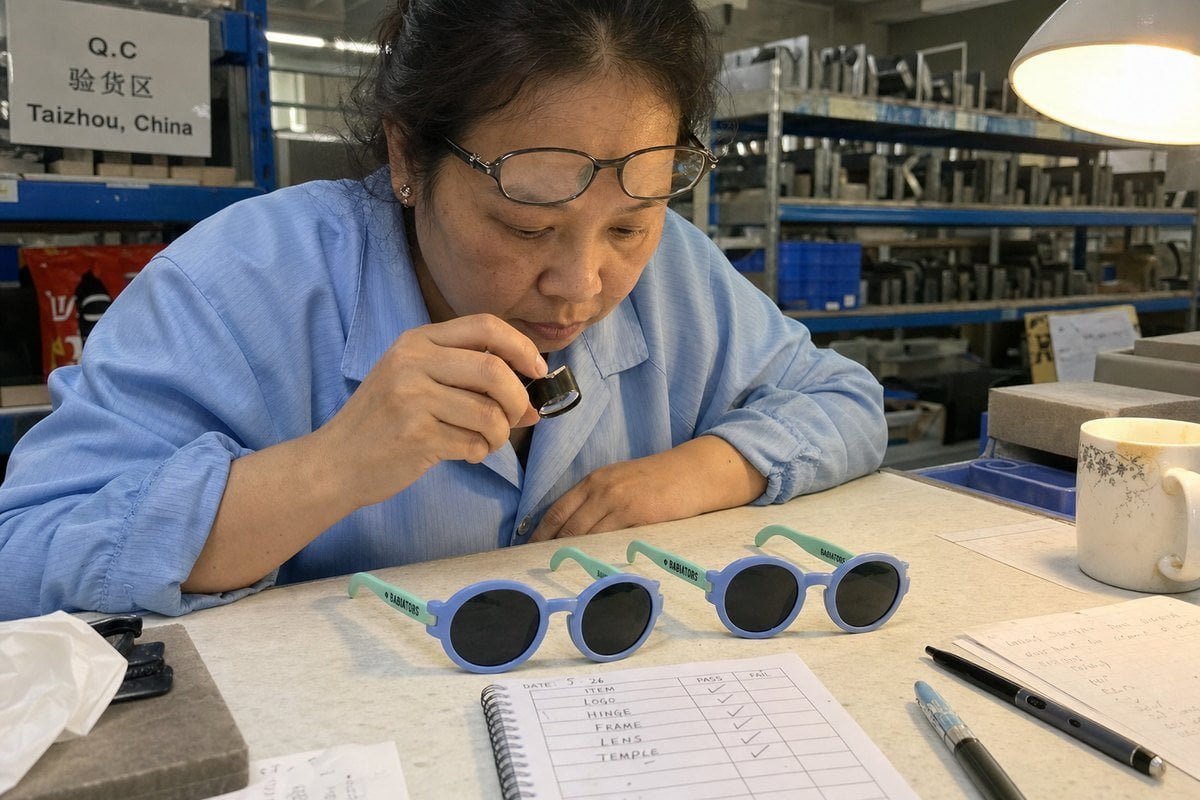
Authentic vs. fake kids sunglasses brands look nearly identical online. On our production line in Taizhou, I have seen counterfeit samples that copy logos perfectly yet fail every safety check. Children’s eyes pay the price. That is why verification matters.
Identify authentic kids sunglasses brands by checking multiple factors together: verified seller status, complete branded packaging, crisp engraved SKU and serial numbers, valid UV400 protection rating and CE certification mark, sturdy hinges, non-toxic materials, and distortion-free lenses. Never rely on the logo or price alone.
Let me walk you through each checkpoint in order. I will show you exactly what we look for during quality control, and how you can apply the same checks yourself.
What Should I Check on Packaging and Labels to Spot Fake Kids Sunglasses?
Last year, a buyer sent me photos of "our" sunglasses bought from a third-party marketplace. The box looked close, but the labels gave the fake away in seconds.
Check packaging for a sturdy branded box, a quality microfiber cleaning cloth, printed model and SKU details, explicit UV400 protection rating claims, a CE certification mark on both product and box, and manufacturer warranty documentation. Fakes typically use flimsy boxes, vague labels, and missing paperwork.
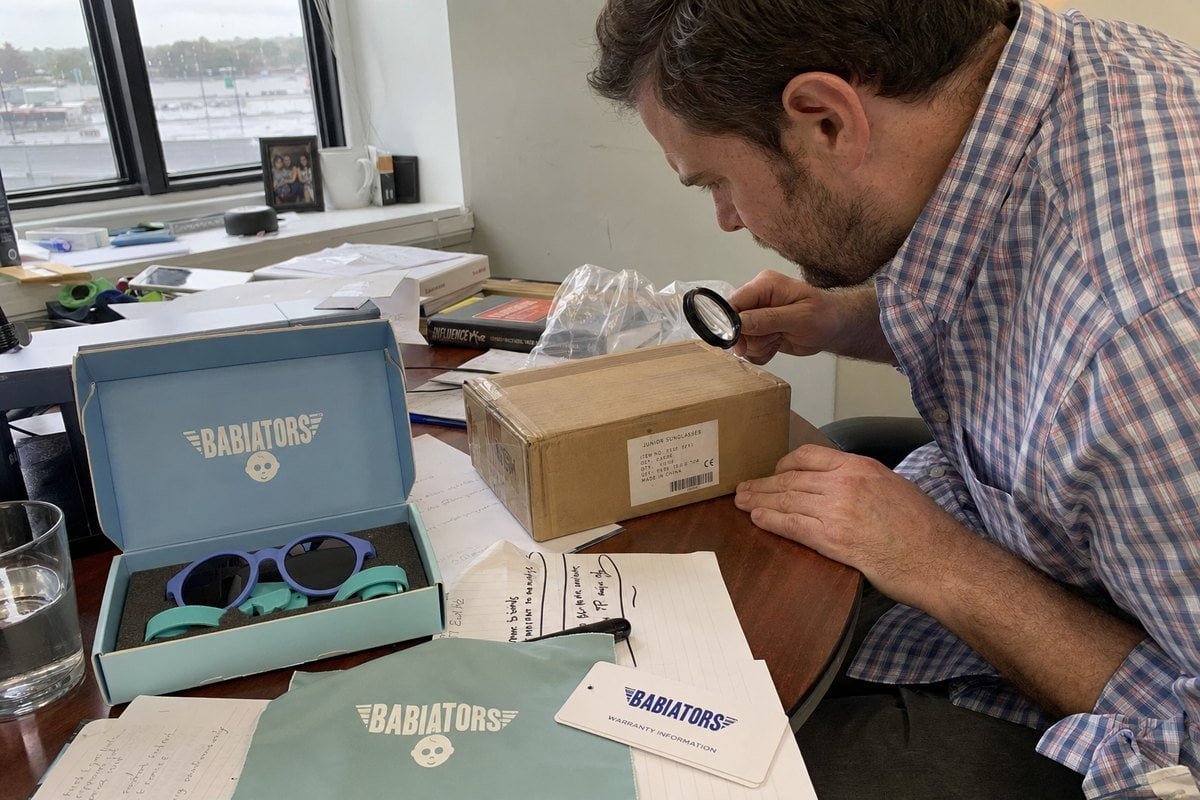
Packaging is the first physical evidence you can inspect, and it tells you a lot. In our workshop, retail-ready packaging is part of the product spec, not an afterthought. Genuine brands invest in it because their retail partners demand it. Counterfeiters cut corners here because packaging costs money and most buyers never look closely.
The Packaging Ecosystem Test
Authentic kids sunglasses rarely arrive as a bare product in a plastic bag. Look for the full ecosystem: a rigid box with sharp printing, a protective hard case or pouch, a microfiber cloth with a clean high-definition logo, and packaging and authenticity cards that state the model name, lens specification, and care instructions.
| Packaging Element | Authentic Product | Likely Counterfeit |
|---|---|---|
| Box | Rigid, sharp print, correct colors | Thin card, blurry print, off-tone colors |
| UV label | Explicit "UV400" or "100% UV protection" | Vague "UV protected" or no claim |
| Compliance mark | CE or UKCA on product and packaging | Missing, or printed only on the box |
| Cloth and case | Branded microfiber cloth, fitted case | Generic cloth or nothing at all |
| Paperwork | Warranty card, model/SKU insert | No documents, or generic leaflets |
Read the Labels Word by Word
Misspellings, inconsistent fonts, and mismatched model numbers 1 between the box and the frame are classic red flags. Also compare the SKU on the label against the brand's official product listing. If the number does not exist on the brand's site, treat the item as suspect. One caution I always give buyers: printed marks can be faked too. Packaging is strong supporting evidence, not final proof, so combine it with the other checks below.
How Can I Verify a Kids Sunglasses Supplier's Certifications and Test Reports?
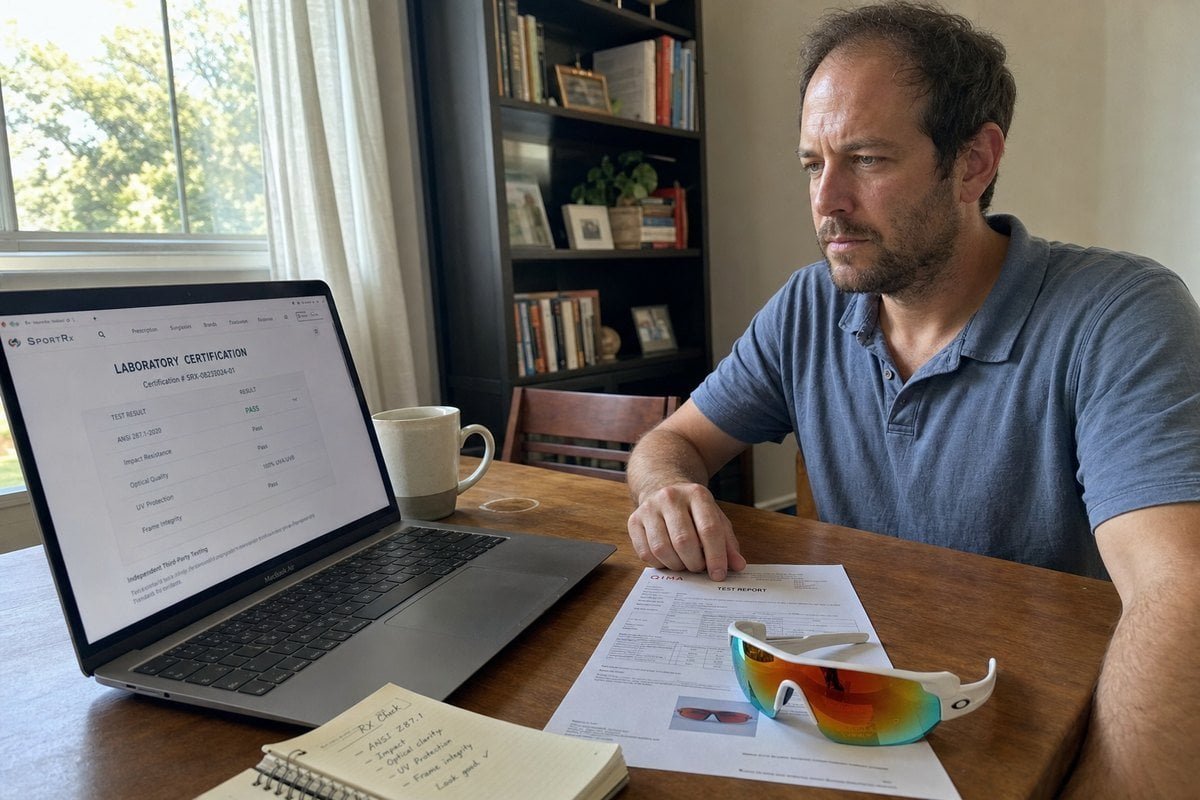
Buyers from Europe and Australia regularly ask us for lens test reports 2 before they even discuss pricing. In fifteen years of eyewear exporting, I have learned that serious brands always ask, and serious factories always answer.
Verify certifications by requesting original test reports from recognized labs, matching the report's product description and date to your actual model, confirming the CE certification mark and impact resistance standards apply to children's eyewear, and cross-checking the lab's name independently. Refuse blurry scans or generic documents.
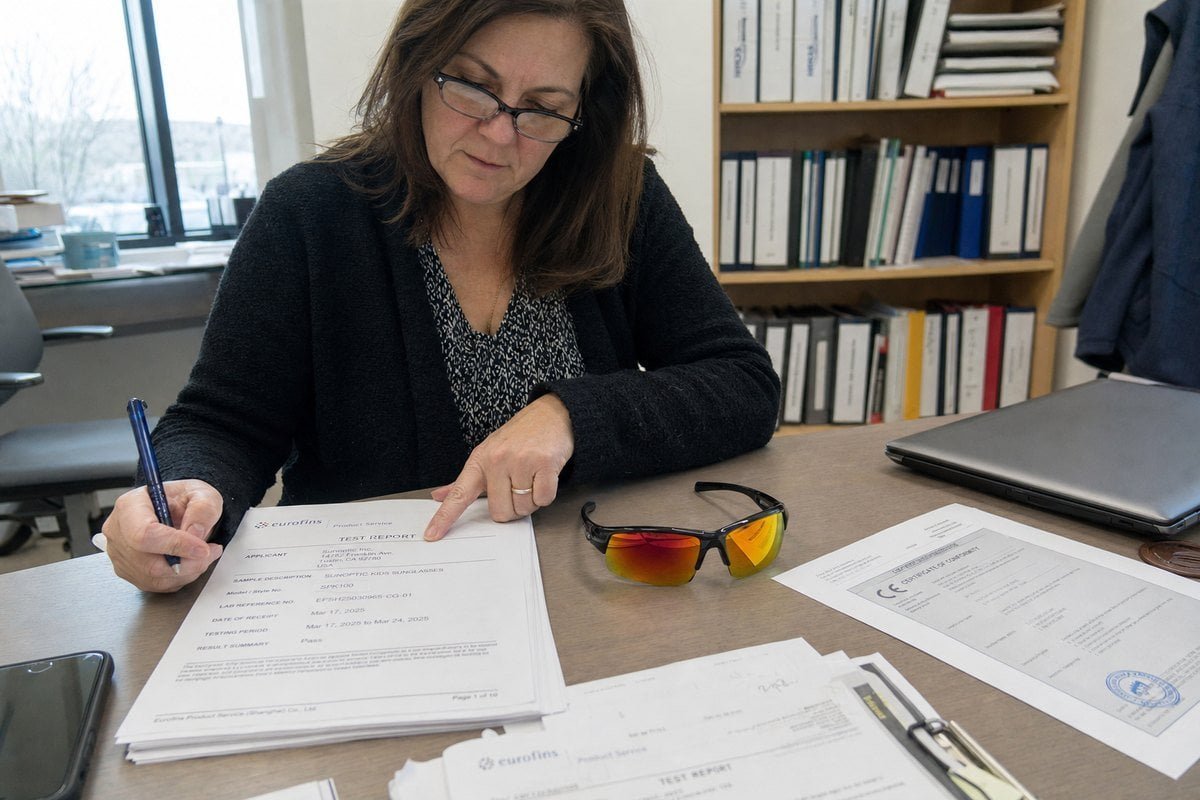
Certificates are the area with the biggest trust gap in our industry. Documents are easy to forge, edit, or recycle from another product. So the goal is not to collect PDFs. The goal is to confirm the documents describe the exact sunglasses you are buying.
5段階の検証プロセス
- Request the full report, not a summary page. A real lab report includes the test method, sample photos, and the lab's contact details.
- Match the details. The model number, frame material 3, and lens type on the report must match your sample. A report for an adult TR90 frame does not cover a toddler style.
- Check the standards cited. For kids sunglasses, look for UV400 protection rating tests, relevant impact resistance standards such as ANSI Z80.3 for the US market, and EN ISO standards behind the CE certification mark in Europe.
- Confirm the lab exists. Search the lab name independently. Reputable labs can verify a report number if you contact them.
- Check the date. Materials and suppliers change. A five-year-old report on a discontinued colorway tells you little about today's production.
Material Safety Documents Matter Too
For children's products, chemical safety 4 is as important as optical performance. Ask for documentation showing the frame material is BPA-free and phthalate-free. When we develop TPEE and TR90 frames, environmentally friendly, skin-safe material is a starting requirement, and we expect buyers to ask for evidence. A supplier who gets defensive about test reports is telling you something important.
If you also order polarized styles, ask how the factory performs polarized lens verification 5 during QC, and whether polarization efficiency appears in the lens supplier's data. Vague answers here usually mean the "polarized" claim is just a sticker.
What Material and Build Quality Signs Reveal a Genuine Kids Eyewear Manufacturer?
There is a trade-off we weigh on every new style: flexibility versus structure. A frame soft enough to twist safely on a toddler's face must still hold its shape for years. Counterfeiters never solve this balance, and it shows in the product.
Genuine kids eyewear uses flexible, non-toxic materials like TPEE or TR90 with smooth seams, balanced weight, and firm smooth hinges. Fakes reveal themselves through brittle plastic, glue residue, squeaky or loose pin hinges, sharp mold lines, and logos that scratch off easily.
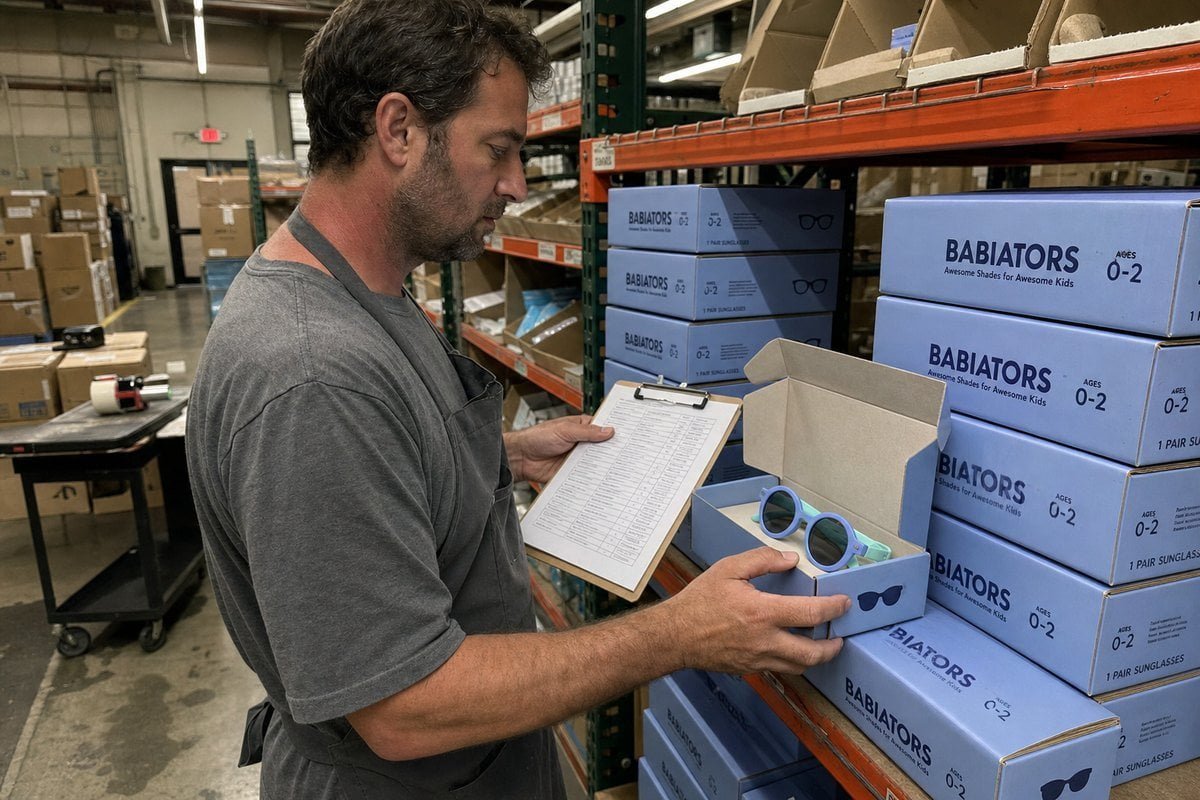
Hold the sunglasses in your hands and slow down. Build quality is the hardest thing for a counterfeiter to copy because it depends on material cost, mold precision, and process control — the exact things fakes cut to hit their low price.
The Flex Test
Gently twist the frame. Genuine kids frames in TPEE or TR90 bend and return to shape without stress marks 6 or cracking sounds. This flexibility is a safety feature: a rigid frame can snap and create sharp edges near a child's eye. Cheap replica plastic feels stiff, waxy, or brittle. On our two-tone rounded styles — the kind with a soft matte finish and slightly rubberized feel — that flex-and-return behavior is exactly what buyers test first at trade shows.
Hinges, Seams, and Surface Finish
| Checkpoint | Genuine Sign | Counterfeit Sign |
|---|---|---|
| Hinge feel | Weighted, smooth resistance | Gritty, loose, or squeaky pin hinge |
| Hinge screw | Clean metal, seated flush | Misaligned, stripped, or glued |
| Seams | Smooth joins, no flash lines | Rough edges, visible mold flash |
| Surface | Even matte or gloss finish | Glue residue, orange-peel texture |
| Logo | Laser-etched logo details, crisp and durable | Fuzzy, "burned-looking," or rubs off |
| 中程度から重い | Balanced, light on the nose | Front-heavy or oddly hollow |
Lens Quality and the Straight-Line Test
Frame material durability means little if the lenses distort vision. Do a simple optical clarity test: hold the sunglasses at arm's length and look at a door frame or tiled wall through each lens. Move the glasses slowly. Straight lines should stay straight. Warping, waviness, or a swimming effect signals cheap cast lenses that can strain a child's developing eyes. For sport shield styles with mirrored gradient coatings, also check the coating for pinholes and uneven tint — genuine mirrored lenses are uniform edge to edge.
How Do I Confirm a Brand's Factory and Production Credentials Before Placing an Order?
A procurement manager from Japan once spent forty minutes on a video call just walking through our 5S-managed workshop before ordering samples. I respected that. It is the single smartest step a buyer can take.
Confirm factory credentials by requesting a live video audit or third-party inspection, verifying business licenses and export history, checking the brand's authorized retailer list, reviewing sample quality against the SKU and serial numbers on official listings, and confirming who actually owns the production line.
Many "brands" and "factories" you meet online are trading companies 7 reselling generic stock. That is not always bad, but it breaks traceability. When something goes wrong — a failed UV test, a chemical compliance issue, a late shipment — you need to know who actually made the product.
Factory or Trader? Questions That Expose the Difference
Ask these directly, and watch how confidently they answer:
- Can I do a live video walkthrough of your injection molding and assembly lines this week?
- How many workers do you have, and how many years have you produced eyewear specifically?
- Can you show your existing style library? A real factory with, say, hundreds of open molds can prove it instantly. Our own catalog of roughly 800 existing styles exists precisely so new brands can launch without heavy mold investment — and a genuine factory can demonstrate that depth on camera.
- What is your in-house QC process for hinge torque, lens fitment, and polarized lens verification?
- Who issues your test reports, and can I contact the lab?
Cross-Check the Distribution Side
If you are verifying a retail brand rather than a supplier, use the brand's official authorized retailer list. Premium kids eyewear brands control distribution tightly. A seller absent from that list, offering prices far below the official store, is the classic counterfeit channel. Also confirm the manufacturer warranty documentation: authentic brands honor warranties only through authorized sellers, which is itself a useful verification tool.
A Simple Pre-Order Scorecard
| Credential Check | 中程度から重い | Pass Criteria |
|---|---|---|
| Live video factory tour | 高い | Real production floor, active lines |
| Business license and export records | 高い | Name matches invoices and reports |
| Sample vs. official SKU and serial numbers | 高い | Exact match, clean engraving |
| Third-party audit or inspection | 中程度 | Recent report, verifiable inspector |
| Communication quality | 中程度 | Clear, prompt, technically specific |
| Price positioning | 中程度 | Realistic; not "too good to be true" |
If a supplier fails two high-weight checks, walk away. The market has enough genuine partners that you never need to gamble on children's safety products.
結論
Fake kids sunglasses risk children's eyesight, not just your money. Verify sellers, packaging, engravings, certifications, materials, and factories together — and when several details feel wrong, walk away.
脚注
1. Explains the role of model and SKU numbers in product identification and inventory management. ↩︎
2. Links to the international ISO 12312-1 standard governing safety and quality requirements for sunglasses. ↩︎
3. Provides a technical overview of common materials used in eyewear production like TR90 and TPEE. ↩︎
4. Authoritative WHO resource defining chemical safety, relevant to non-toxic material requirements in children’s products. ↩︎
5. Expert medical guidance from the American Academy of Ophthalmology on how polarized lenses work for eye health. ↩︎
6. Scientific explanation of how material stress leads to visible marks or structural failure in plastics. ↩︎
7. Defines the role of trading companies in global supply chains versus direct manufacturers. ↩︎
 English
  Español de México
  Deutsch
  Français
  日本語
日本語  العربية
  Português do Brasil