How to Handle Returned Try-On Samples and Unpacked Kids Sunglasses Frames?
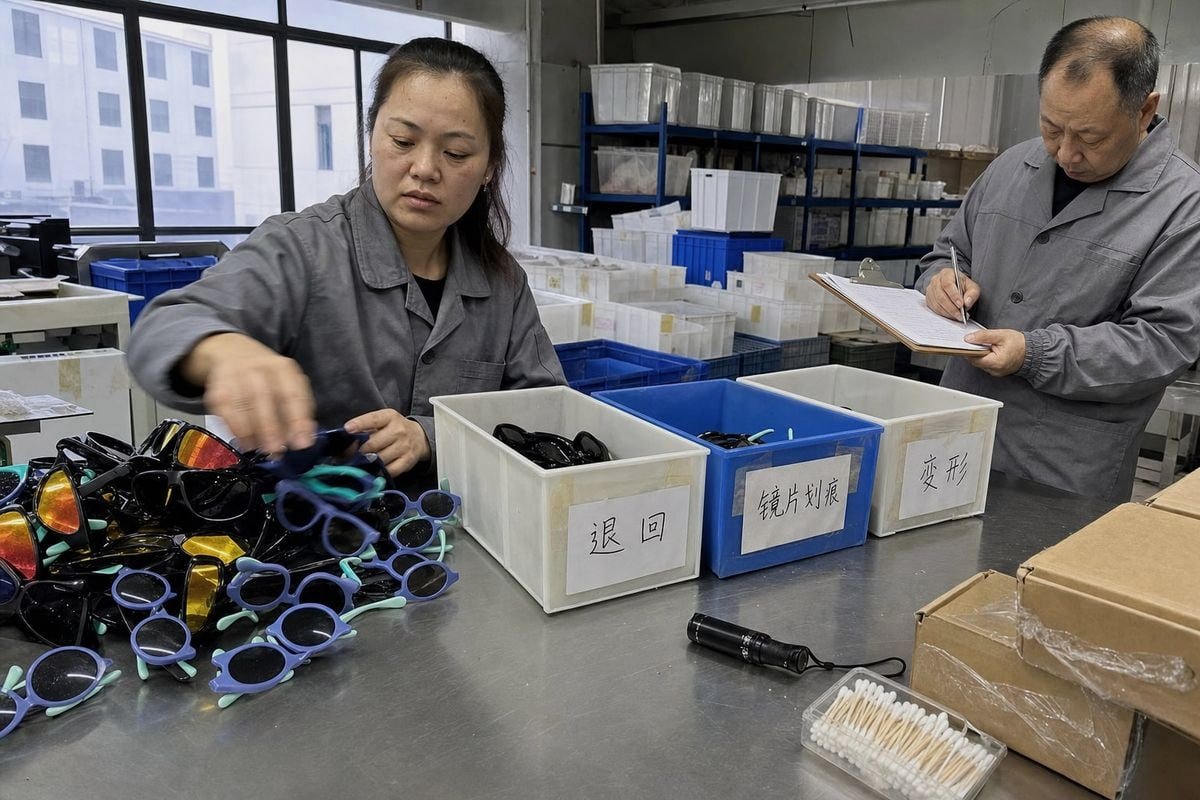
Returned try-on sample 1s and unpacked kids sunglasses frames pile up fast, and at our Taizhou factory we’ve watched buyers lose real margin — and customer trust — by guessing instead of following a workflow.
Handle returned try-on samples and unpacked kids sunglasses frames through a structured workflow: log every return, inspect condition and completeness, run hygiene checks, then grade each frame for restocking as new, open-box resale, refurbishment, donation, or destruction. Kids frames need stricter safety review.
That single sentence hides a lot of operational detail lens damage 2. Let me walk you through each stage, from policy design to hygiene checks to working with your factory to prevent the problem entirely.
How can I set clear policies for handling returned try-on samples before they reach my customers again?
A buyer from Australia once asked me why her try-on kits kept coming back with missing cases and scuffed lenses. Her policy never told customers how to repack anything. That gap cost her every month.
Set a short return window of about 7 days, require original packaging and protective films, use prepaid trackable labels, and inspect every item before finalizing refunds. State condition standards, restocking fees, and consequences for late or incomplete returns clearly at checkout.
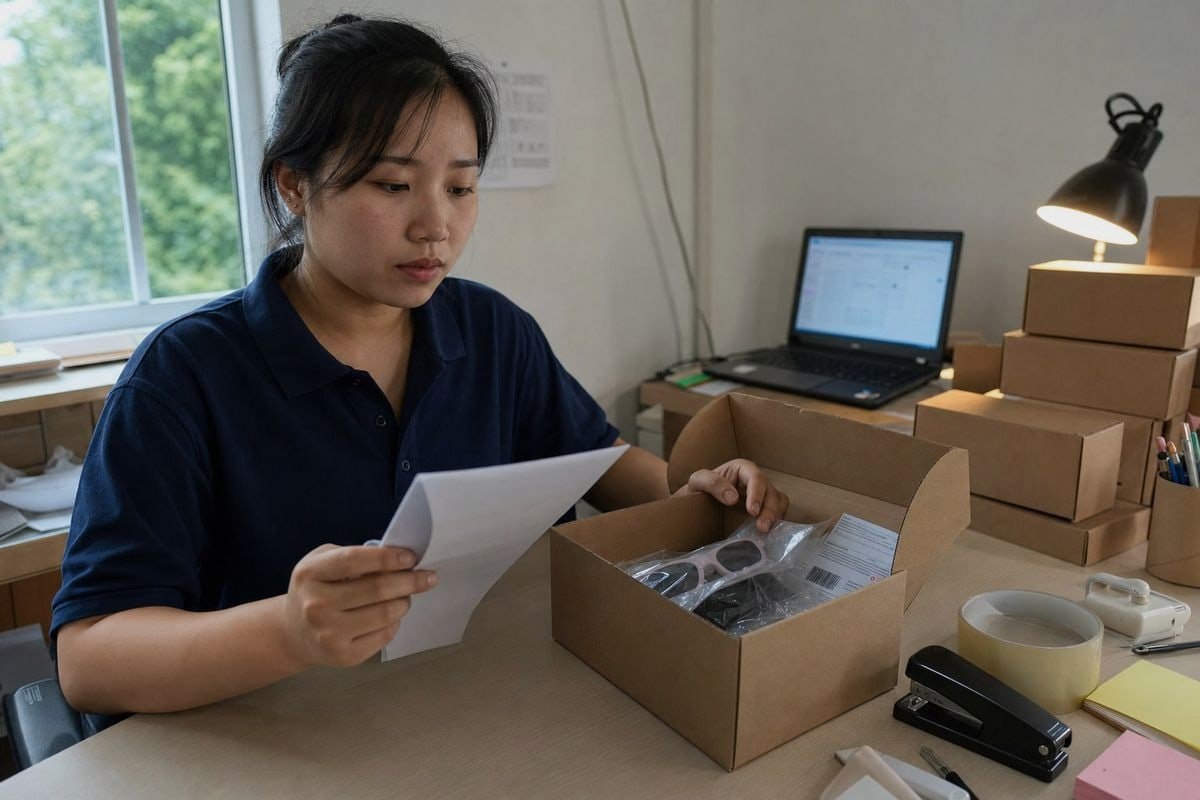
A returned try-on sample is not a normal return. You are effectively lending inventory to a customer's home. So your policy has to work harder than a standard refund policy. In our experience supplying children's brands in 20+ countries, the brands that struggle least all write their rules before the first kit ships, not after the first dispute.
The core elements every try-on policy needs
Your policy should answer four questions in plain language. How long does the customer have? What condition must the frames arrive in? What packaging must come back? What happens if something is late, damaged, or missing?
| Policy Element | Recommended Standard | なぜ重要なのか |
|---|---|---|
| Return window | About 7 days from delivery | Keeps popular kids styles turning over |
| Packaging condition | Original polybags and protective films intact | Qualifies frames for full restocking |
| Shipping method | Prepaid, trackable return label | Removes excuses and proves timelines |
| Payment security | Credit card authorization hold for retail value | Incentivizes prompt, complete returns |
| Refund timing | Only after inspection and grading | Protects you from condition disputes |
Make consequences visible upfront
Customers accept rules they can see. Hidden fees create complaints. So tell people at checkout exactly how to repack frames, and warn that missing items or late returns can trigger charges up to full retail value. An authorization hold on the card is a fair middle ground — the customer feels the commitment without actually paying twice.
Build reverse logistics management into the policy
Good reverse logistics management starts with logging. Every returned kit should get a return authorization number 3 before it ships back. Photo documentation at both ends — before dispatch and at receiving — settles almost every "it was already scratched" argument. Some of our clients use serial numbers or NFC sample life-cycle tags on try-on stock, which automatically flags a frame for retirement after roughly ten try-on cycles. That turns a fuzzy judgment call into a simple counter.
Finally, capture the return reason on every single item. Fit problems, color expectations, and sizing confusion are all data. Fix the product page, and the return never happens again.
What hygiene and safety checks should I run on unpacked kids sunglasses frames before restocking them?
During a 5S audit in our workshop last year, we tightened our own re-inspection bench for returned samples — and the biggest lesson was that hygiene checks and safety checks are two separate jobs, not one.
Run a multi-point inspection covering hinge tension, bridge alignment, cracked temples, loose screws, sharp edges, lens damage, and missing nose pads. Then sanitize with UV-C chambers or ultrasonic cleaning, and verify UV400 protection before restocking any kids frame.
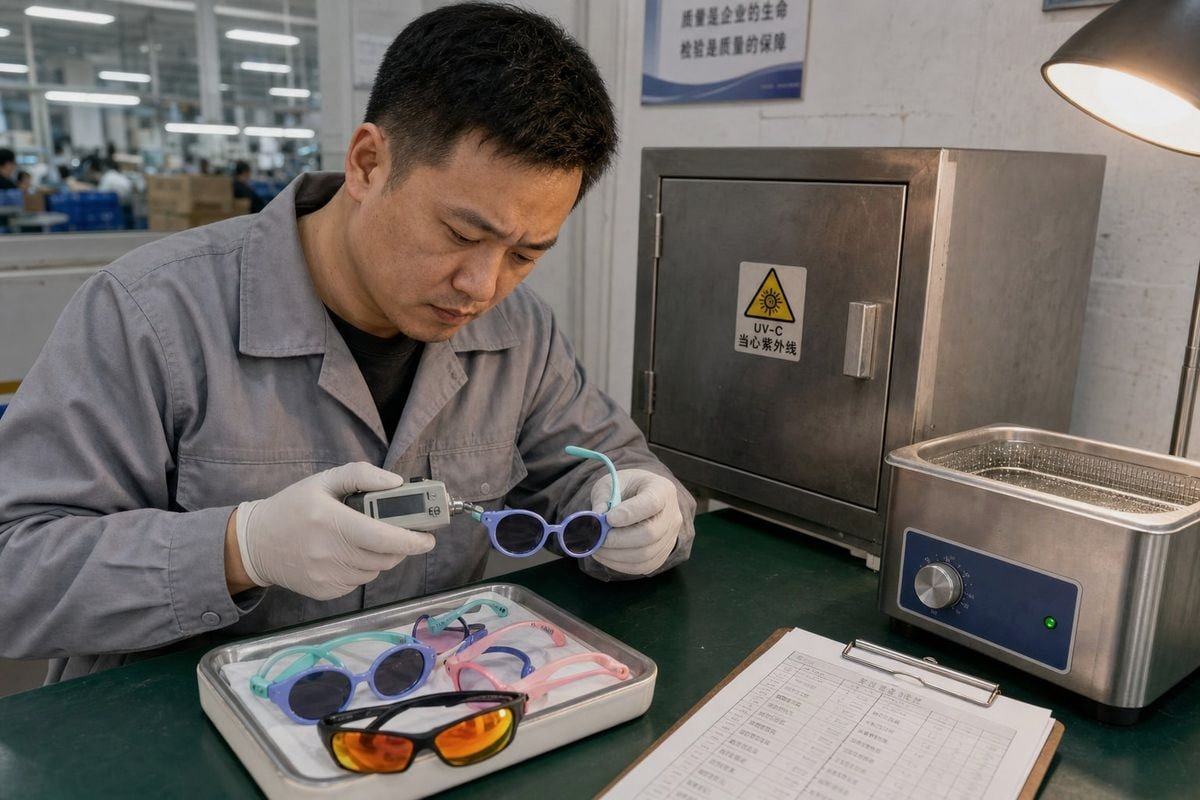
Children's eyewear is a regulated consumer product, not a fashion accessory. A scuffed adult frame is a cosmetic problem. A cracked temple on a kids frame is a safety problem. That is why "opened" and "used" must be judged against a stricter standard for children's products, and why our own QC team treats every returned kids frame as suspect until proven safe.
The open-box inspection checklist
Work through a fixed sequence every time. Consistency matters more than speed. Here is the open-box inspection checklist we recommend to our brand clients:
- Confirm the frame matches the original order and SKU.
- Check hinge tension — temples should open smoothly with no wobble or grinding.
- Verify bridge alignment on a flat surface; twisted frames fail immediately.
- Inspect for cracks, stress-whitening, chew marks, and sharp edges. Kids bite temples. It happens constantly.
- Test screws for tightness; a loose screw is fixable, a stripped one is not.
- Examine lenses for scratches, delamination, or peeling coatings.
- Confirm nose pads, cases, cleaning cloths, and packaging inserts are all present.
- Run UV400 protection verification with a UV meter — never assume a returned lens still performs, especially if it looks abraded.
Sanitization protocols for children's skin
Hygiene standards for eyewear worn by children should exceed adult norms because kids' skin is more sensitive. Two methods dominate serious operations. Medical-grade UV-C sanitization chambers 4 give a rapid, chemical-free, hypoallergenic clean. Ultrasonic cleaning with mild solution reaches hinge crevices where wipes cannot. Avoid harsh solvents entirely — they can degrade flexible materials 5 like TPEE and TR90 and leave residue against a child's face. After cleaning, frames should air-dry fully before repacking in fresh polybags.
Compliance is part of the safety check
Remember that restocked children's products still fall under CPSIAコンプライアンス 6 in the US market and equivalent rules elsewhere. A returned frame that has lost a component, developed a sharp edge, or suffered coating damage may no longer meet the product safety certifications it originally shipped with. When in doubt, downgrade or destroy. The cost of one frame is nothing against a child-safety incident.
Can I resell or repackage returned frames without risking my brand's quality reputation?
Here's the trade-off I weigh with every client who asks this: writing off every opened frame protects your brand but burns margin, while reselling everything recovers margin but gambles your reputation. The answer sits in between, and grading is how you find it.
Yes — if you grade honestly and label transparently. Restock only unopened, complete frames as new. Sell opened-but-pristine frames as clearly labeled open-box or certified pre-loved stock at a discount. Repair, donate, or destroy everything below that line. Never disguise graded stock as new.
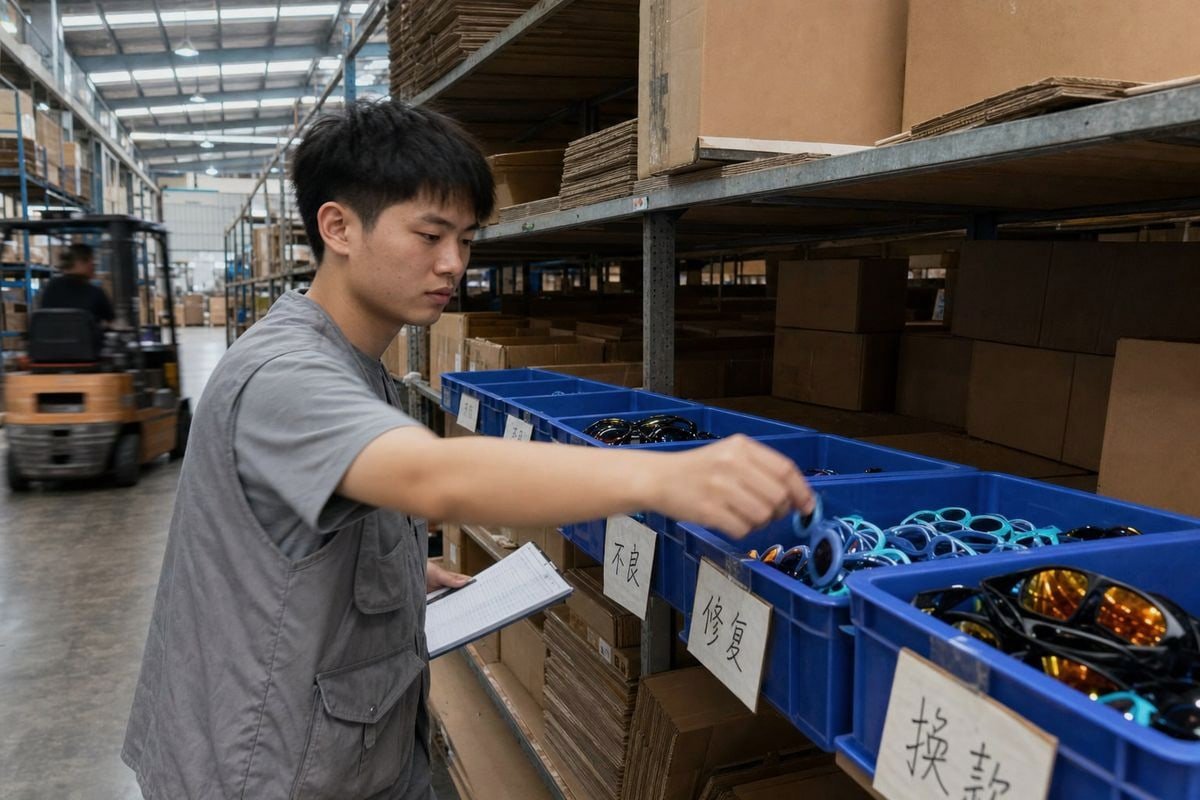
Some sellers treat all opened items as nonresalable to cut labor and liability. I understand the instinct, but for kids eyewear it usually throws away good margin, because "opened" does not automatically mean "unsellable." Other sellers push everything back into new stock, and that is far worse — one parent discovering fingerprints or chew marks on a "new" frame can undo years of trust. The disciplined middle path is a disposition matrix.
The six-lane disposition matrix
| Grade | Condition | Disposition |
|---|---|---|
| Restock as new | Unopened, intact films, clean, all parts present | Full-price inventory |
| Open-box resale | Opened but pristine, complete, safety-verified | Discounted, clearly labeled |
| Sample sale / outlet | Minor cosmetic imperfections, fully disclosed | Outlet channel or staff sale |
| Repair | Fixable hardware issues like loose screws | Inventory refurbishment queue |
| Donate / recycle | Safe and functional but not worth resale | Optical charity or material recovery |
| Destroy | Hygiene risk, safety concern, unfixable damage | Documented destruction |
Resale value optimization without reputation risk
A Certified Pre-Loved digital outlet is the cleanest way to run this. It gives budget-conscious parents a sustainable, lower-priced entry point into your brand, and honesty becomes the selling feature rather than a liability. Every listed frame should carry its inspection date and sanitization record. That transparency turns graded stock into a trust builder.
Inventory refurbishment extends the pool further. Specialized heat-shrink temple sleeves can refresh minor chew marks or scratches on sample frames, extending their try-on life without touching retail stock. Replacement screws and nose pads are cheap fixes with high recovery value. For frames that fail quality checks but remain functional, partnering with optical charities 7 or material recovery programs beats the dumpster — it supports sustainability goals while keeping substandard product permanently out of your retail channel. Resale value optimization is really just honest grading plus the right channel for each grade.
How do I work with my manufacturer to reduce return and unpacking issues from the start?
One of our optical distributor clients cut their damage-related returns sharply after a single change we made together on our production line: individually polybagged frames with tamper-evident seals instead of bulk packing. Prevention upstream always beats processing downstream.
Work with your factory on protective unit packaging, pre-shipment QC on hinges and alignment, accurate sizing data for product pages, durable flexible materials like TPEE and TR90, and dedicated try-on sample stock — so fewer frames return damaged, incomplete, or mismatched to expectations.
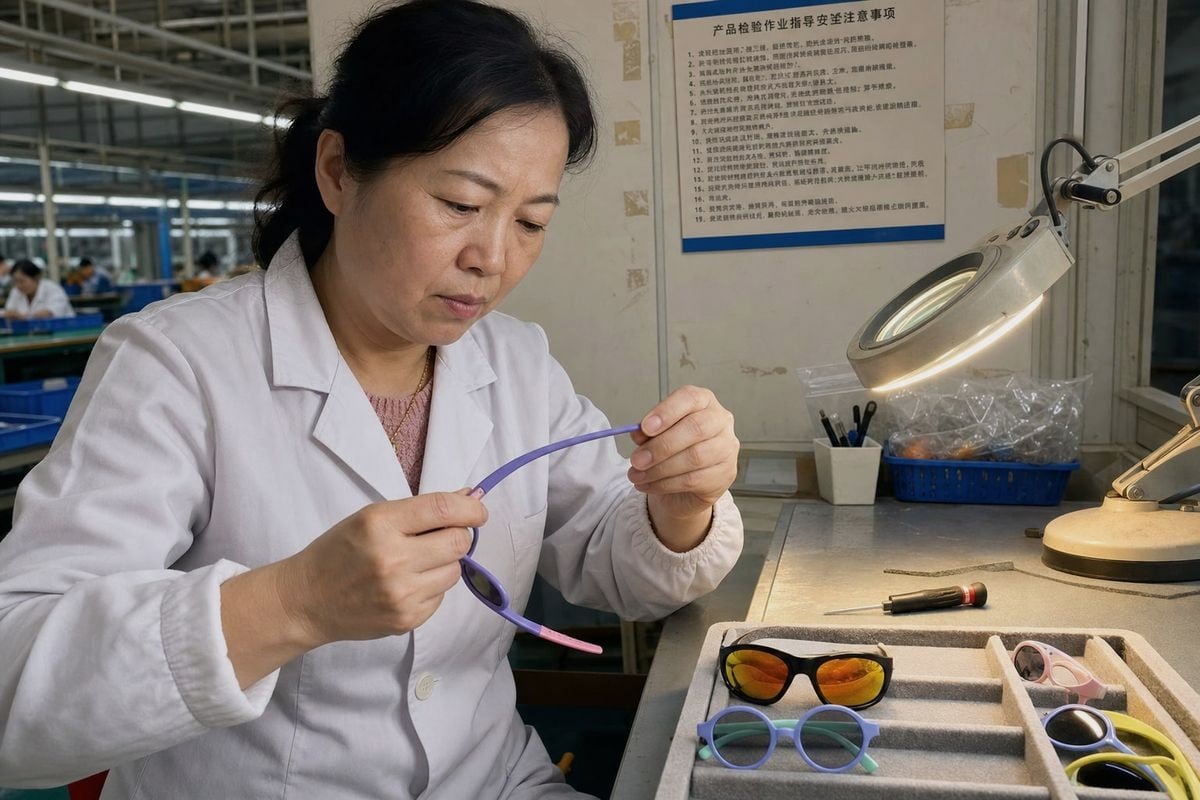
Most returns trace back to three root causes: transit damage, wrong expectations, and fragile design. Your factory influences all three. After 15 years making children's eyewear in our 120-worker facility, I can say the cheapest return is the one your supplier engineered away before the container left the port.
What to ask your factory for
| Return Root Cause | Factory-Side Fix | What to Specify |
|---|---|---|
| Transit and unpacking damage | Individual polybags, protective films, molded inserts | Retail-ready packaging spec in your PO |
| Wrong fit expectations | Accurate frame measurements and age-range data | Dimension sheets for your product pages |
| Fragile frames | Flexible TPEE temples, TR90 fronts | Material spec, not just a price target |
| Hinge and alignment failures | Pre-shipment multi-point QC | Hinge tension and bridge alignment checks per batch |
| Sample wear-out | Dedicated try-on sample runs | Reinforced samples separate from retail stock |
Reduce physical returns before they exist
For high-volume or fragile kids styles, consider moving part of the fitting journey to Virtual Try-On 8 platforms. VTO cuts physical return rates and shipping costs, and it pairs well with accurate factory dimension data — the better your measurements, the better the virtual fit. Meanwhile, keep a dedicated pool of physical samples for the styles that truly need in-hand evaluation.
Use your existing-styles advantage
New brands often over-order untested styles, then drown in returns. This is exactly why we maintain around 800 existing styles: buyers can test the market with small quantities and no mold investment, learn which shapes and sizes their customers actually keep, and only then commit to volume or custom OEM/ODM development. We also share return-reason data back into design — when a client reports repeated hinge complaints on a style, our engineers adjust the tooling or hardware. Feed your return trends to your factory every quarter. A supplier who never hears about your returns can never help prevent them.
結論
Returned try-on samples and unpacked kids sunglasses frames drain margin silently — until you inspect, sanitize, grade, and prevent systematically. Build the workflow once, and every return becomes data, not loss.
脚注
1. Explains the standard process and documentation required for handling returned merchandise in a retail environment. ↩︎
2. Provides professional guidance on identifying and preventing damage to eyeglass lenses from the American Academy of Ophthalmology. ↩︎
3. Comprehensive definition and process overview of Return Merchandise Authorizations (RMA). ↩︎
4. FDA overview of UVC radiation’s effectiveness and safety for disinfecting surfaces and medical devices. ↩︎
5. Technical overview of thermoplastic elastomers, the flexible materials commonly used in durable children’s eyewear frames. ↩︎
6. Official government resource detailing safety regulations for children’s products under the Consumer Product Safety Improvement Act. ↩︎
7. Stable, authoritative overview of the world’s leading eyeglass recycling and vision charity programs. ↩︎
8. Describes the technology behind virtual fitting rooms used by retailers to improve customer experience and reduce returns. ↩︎

 English
  Español de México
  Deutsch
  Français
  日本語
日本語  العربية
  Português do Brasil