How to Get Suppliers to Assemble Kids Optical Frames Unboxing Sets Before Shipment?
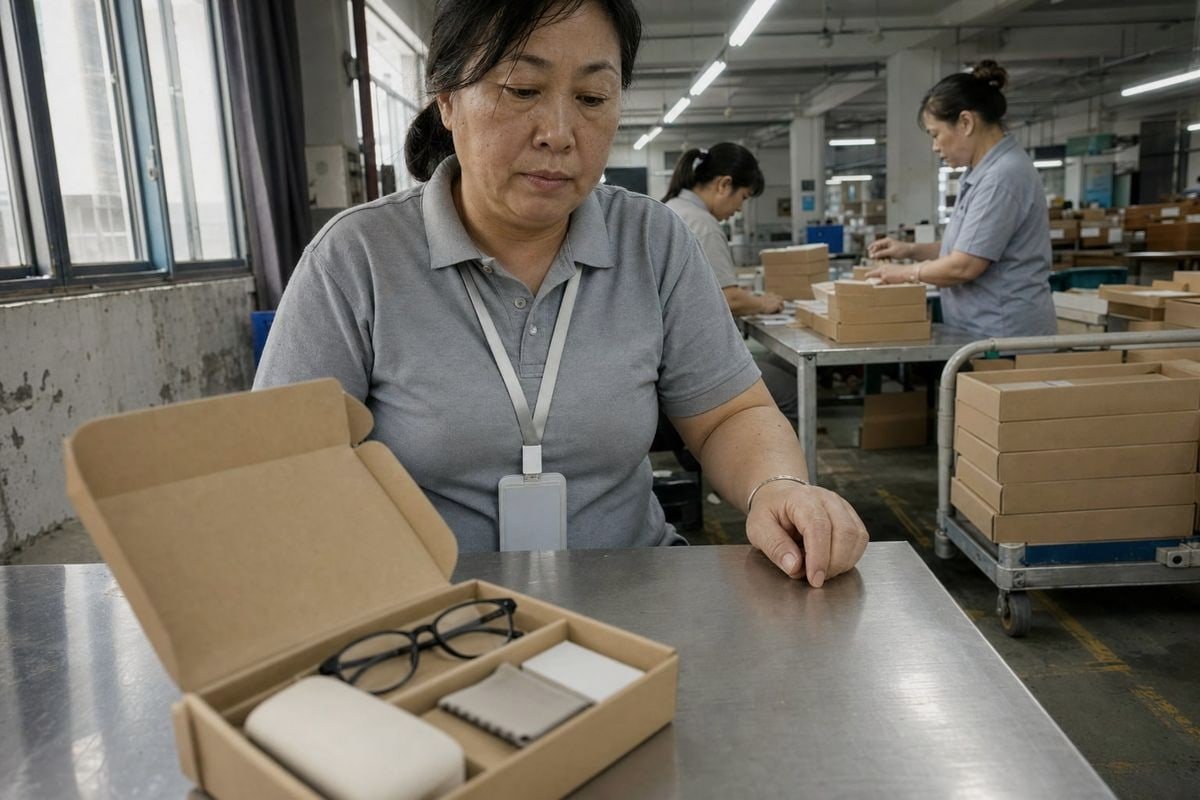
Getting suppliers to assemble kids optical frames 1 unboxing sets before shipment sounds simple — until loose cloths, missing cases, and mixed SKUs arrive at your warehouse and your team spends weeks re-kitting everything by hand.
To get suppliers to assemble kids optical frames unboxing sets before shipment, provide a written kitting specification listing every component by SKU, approve a physical master sample, negotiate assembly into the purchase order, and require pre-shipment photos plus inspection so every set arrives retail-ready.
That is the short answer. Below, I will walk through each step in detail, based on how we actually run kitting and assembly on our own production floor in Taizhou.
How do I find a supplier who can pre-assemble unboxing sets for my kids' optical frames?
A buyer from Australia once told me her previous supplier shipped frames in one carton and cases in another kitting specification 2. Her team spent three weeks matching them up. That conversation shaped how we quote kitting today physical master sample 3.
Find a supplier who can pre-assemble unboxing sets by qualifying actual optical frame manufacturers, not trading companies. Ask for photos of their packing line, proof of prior retail-ready packaging projects, a QC checklist for children's eyewear, and a fully assembled sample kit before ordering.
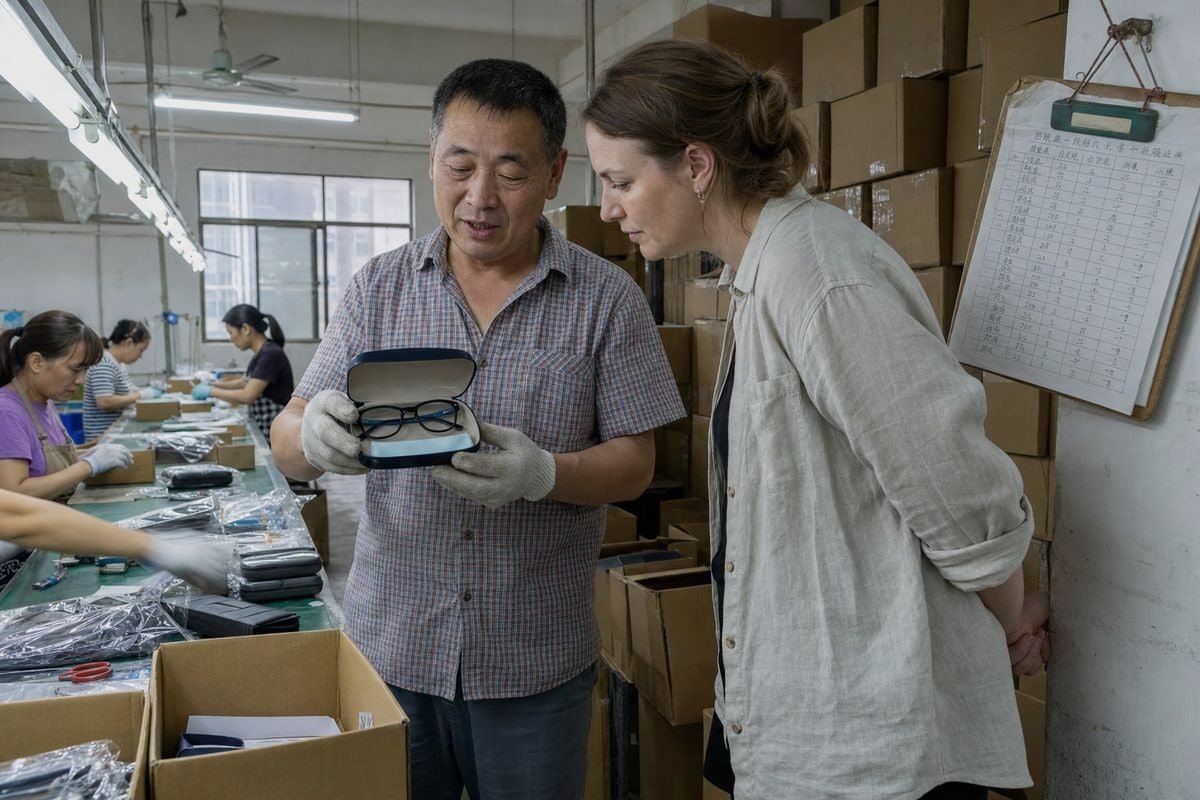
The single biggest filter is whether you are talking to a real factory or a middleman. A trading company can promise kitting and assembly, but it usually outsources the work to a third party with no controls. When something goes wrong — and with children's eyewear accessories, small parts go wrong easily — the trader cannot trace which line or date produced the batch. A factory can.
Questions that separate capable suppliers from risky ones
I recommend asking these directly, in writing, before you discuss price:
- Do you own your production and packing lines, or do you subcontract any assembly steps?
- Can you assemble final retail sets in-house before shipment?
- Do you keep a master sample for each SKU and compare bulk output against it?
- Can you send photos or a short video of your packing area today?
- Have you handled kids-specific frames and カスタムアイウェアパッケージ before?
A strong supplier answers fast and shows evidence. A weak one gets vague.
Strong vs. weak supplier signals
| シグナル | Strong supplier | Weak supplier |
|---|---|---|
| Facility | Factory-based, shows packing line on video | Vague about factory location |
| Experience | Kids-specific eyewear projects with references | Generic "we can do anything" claims |
| Sampling | Assembles a full sample kit willingly | Pushes you to order first |
| 品質管理 | Documented checklist, batch traceability | No records, no master samples |
| パッケージング | In-house retail-ready packaging capability | Outsources without disclosure |
One more practical filter: catalog depth. At our factory, buyers can start from roughly 800 existing styles, which means they can test the market with pre-assembled sets without paying for new molds. A supplier with that kind of range has almost always done kitting for other brands before — and that experience shows in how they handle your first sample request.
What should I include when requesting custom packaging and assembly from my eyewear factory?
There is a trade-off we weigh on every kitting project: the more detailed the buyer's spec, the slower the first sample — but the faster and cleaner every bulk shipment after it. Detail up front always wins.
Include a line-item component list with SKUs and quantities, packing order and placement instructions, branding artwork with vector logos and color codes, labeling and barcode rules, carton configuration, and the required outer protection method such as polybag, shrink-wrap, or box.

The most common failure I see is an open-ended instruction like "pack nicely." That phrase means something different to every packing worker. Replace it with a measurable checklist. When we assembled sets for a translucent pink acetate frame recently, the buyer specified exactly where the microfiber cloth sat under the frame, which way the temples folded, and where the size sticker went on the case. Every carton arrived identical.
Build your kitting specification line by line
A complete spec for a kids' optical frame unboxing set usually covers:
- Components. Frame, protective case, cleaning cloth, insert card, spare parts, warranty or compliance insert — each with its own SKU and quantity per set.
- Assembly order. State whether the frame is pre-folded, inserted into the case, bagged, or tagged, and where accessories sit — inside the case, under the frame, or in a pouch.
- Branding. Provide vector logos, Pantone or CMYK color codes, and print positions. This is where a branded unboxing experience is won or lost.
- Labeling. Barcode placement, SKU stickers, size cards, and any destination-market marks.
- Carton configuration. Sets per carton, single-SKU or mixed cartons, and carton labeling.
Typical components of a kids' unboxing set
| コンポーネント | 目的 | Common spec detail |
|---|---|---|
| Kids' optical frame | Core product | Folded, lenses protected, hinges checked |
| Protective case | Transit and daily protection | Logo print position, color match |
| Microfiber cloth | Care accessory | Placed under frame, branded print |
| Insert or instruction card | Information and compliance | Language matched to destination |
| Spare nose pads / screws | After-sale support | Sealed mini-bag inside case |
| Barcode / SKU label | Retail and fulfillment | Exact placement on outer box |
Two more practical points. First, run packaging design in parallel with frame production, so both are ready for assembly at the same time — sequential timelines quietly add weeks. Second, choose lightweight but sturdy materials like E-flute corrugated or folding carton board, and use child-safe, recyclable materials with non-toxic inks. Parents notice, and freight costs stay down.
Can my supplier handle branded accessories and inserts inside each optical frame package?
Our OEM/ODM team gets this question weekly, usually from brand founders who assume accessories must come from a second vendor. In most cases, they do not — and consolidating everything at the factory is safer.
Yes, a capable eyewear factory can source, brand, and insert accessories — cases, cloths, spare parts, insert cards, and collectibles — directly into each package. Confirm this as a value-added service in writing, supply artwork files, and approve printed samples of every branded item before bulk production.
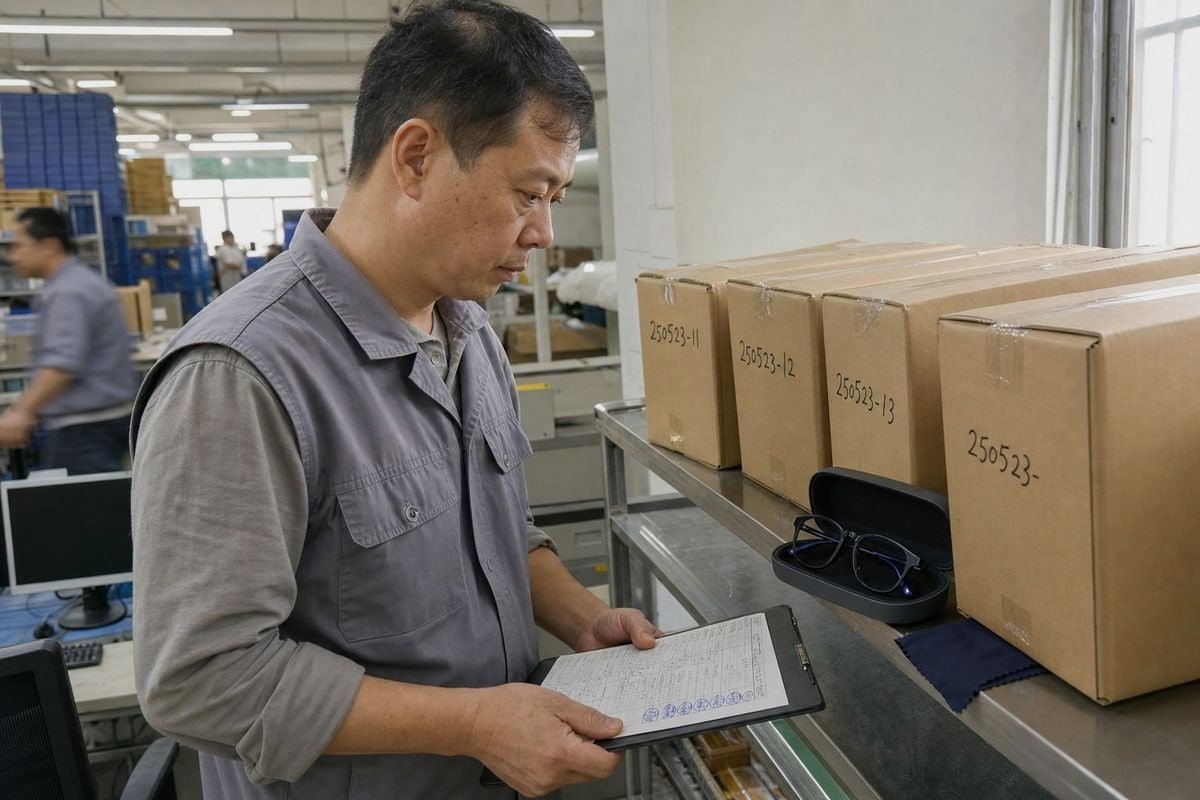
When accessories ship from three different vendors to your warehouse, you become the kitting operation. When they all flow through the factory, kitting happens at the source, and one party is accountable for completeness. That is the core argument for treating your supplier as a supply chain solutions partner rather than a frame vendor.
What factories can typically brand in-house or through vetted partners
At our workshop, we regularly handle custom colors, printed logos on temples, branded cases, printed cloths, and insert cards as part of full OEM/ODM support. For a sporty TR90 frame with flexible TPEE temples — like our black-and-navy style with silicone ear hooks — buyers often add a matching color-coded case and an activity-themed insert card. For softer, pastel styles, the packaging usually shifts toward a cleaner, minimalist presentation. The set should match the frame's personality.
Keep the child in mind, not just the parent
An unboxing set for children's eyewear works on two audiences. Parents judge safety, completeness, and perceived quality within seconds of opening the box. Children respond to color, texture, and small interactive touches. A branded collectible, a fun texture on the insert card, or age-friendly illustrations can lift the experience without adding much cost. But resist clutter. Overpacking raises cost and dimensional weight without improving anything.
One objection I hear: "Won't on-demand or seasonal packaging variations be impossible for a factory?" Not necessarily. If your volumes justify it, discuss whether the supplier can run packaging variants by campaign or channel — some factories can integrate variant assembly into the same packing line, as long as each variant has its own written spec and SKU. What matters is that every variant is defined in measurable terms, not improvised at the packing table. Also verify child-safety basics: non-toxic inks, no sharp insert edges, no loose small parts that can shift and scratch lenses in transit.
How do I ensure quality control when my frames arrive fully assembled and retail-ready?
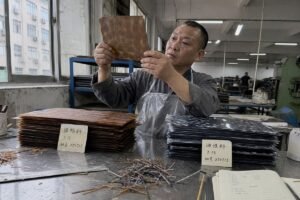
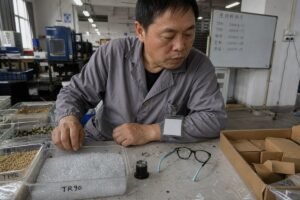
Early in our 15 years of eyewear work, we learned a hard lesson: a beautiful approved sample means nothing if bulk production drifts. That lesson is why our 5S-managed workshop now inspects during assembly, not just at the end.
Ensure quality by approving a sealed master sample, requiring inspections during assembly, during packing, and before shipment, and demanding photo or video evidence of finished sets. Check hinge function, alignment, color matching, logo quality, accessory completeness, and transit protection against the master sample.
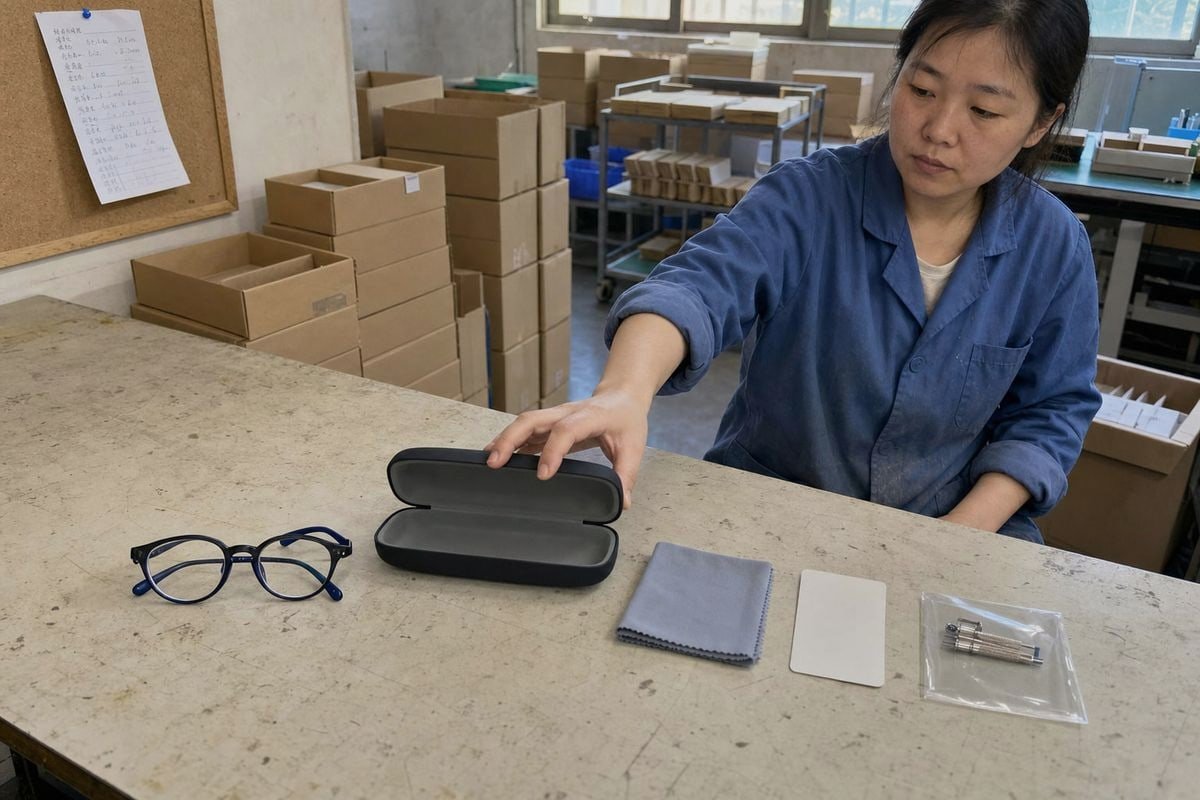
Retail-ready packaging changes your QC problem. Once a set is sealed, opening it to inspect damages the presentation. So the control has to move upstream, into the factory, before sealing. Do not rely on final carton checks alone.
The three-checkpoint QC workflow
| Checkpoint | When | What to verify |
|---|---|---|
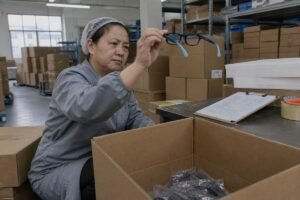
| In-line assembly check | During kitting | Correct components per spec, frame alignment, hinge function, temple closure |
| Packing check | As sets are sealed | Accessory placement, label accuracy, logo print quality, color match across frame and accessories |
| Pre-shipment inspection 4 | Before cartons close | Random set audit against master sample, carton counts, transit protection test |
The master sample is the anchor of the whole system. Keep one approved, signed reference unit per SKU — ideally one at the factory and one at your office. Every dispute about "is this acceptable?" gets answered by comparison, not opinion.
Kids-specific checks that adults' frames don't need
Children's frames deserve extra attention. On our lines, we check that contact areas are polished smooth, that flexible TPEE temples return to shape after bending, and that silicone tips and cable-style ear hooks are securely fitted. We also confirm that nothing inside the set can shift and scratch the demo lenses during transport — a simple shake-and-drop check on a sealed sample catches this early.
Finally, tie QC to your commercial terms. Write the assembly and packing obligations, the inspection rights, and the defect replacement policy into the pro forma invoice or purchase order 5. Clarify whether assembly is included in the unit price or billed as a separate packing fee, and confirm the MOQ for fully assembled sets. If you later use third-party logistics 6 for product fulfillment, factory-sealed, barcode-labeled sets flow straight into their system with no re-work — which is the entire point of doing this upstream.
結論
Pre-assembled unboxing sets turn loose components into retail-ready products before they leave the factory — saving labor, preventing errors, and protecting your brand from the first carton onward.
The path is straightforward. Qualify a real factory with proven kitting capability. Write a line-item specification instead of vague instructions. Consolidate branded accessories at the source. Anchor everything to a master sample and staged inspections, and lock the obligations into your purchase order. Do this once, properly, and every shipment after arrives complete, consistent, and ready to sell. If you want to see how we run this process on our own lines — from 800 ready styles to fully branded, factory-sealed sets — I am always happy to walk a buyer through it, sample kit first.
脚注
1. Discusses eye safety, materials, and standards for children’s eyewear. ↩︎
2. Found a relevant article on a manufacturing industry publication that explains kitting and the need for detailed instructions, which aligns with ‘kitting specification’. ↩︎
3. Found a relevant and working page specifically defining ‘Master Sample’ within the PPAP context, which matches the original intent. ↩︎
4. Describes pre-shipment inspection as a quality control service for finished goods. ↩︎
5. Wikipedia provides a comprehensive and authoritative definition of ‘purchase order’. ↩︎
6. Defines third-party logistics as outsourcing supply chain services like warehousing and fulfillment. ↩︎
 English
  Español de México
  Deutsch
  Français
  日本語
日本語  العربية
  Português do Brasil