How to Design Tiered Wholesale Pricing for Kids Optical Frames?

Tiered wholesale pricing 1 for kids optical frames confuses many buyers I meet. Price too low and margins vanish. Price too rigidly and small brands walk away. Our factory sees this weekly.
Design tiered wholesale pricing for kids optical frames by starting with landed cost, then building three to four quantity brackets — a test tier, a growth tier, and a volume tier — where deeper discounts only apply when larger orders genuinely reduce setup, freight, and per-unit production costs.
That is the short answer. The rest of this guide breaks down each step so you can build tiers that protect your brand and still win orders.
How do I structure wholesale price tiers without undervaluing my kids' eyewear brand?
A buyer from Australia once asked me to match a price she saw on a bulk listing site quality control process 2. I showed her our TR90フレーム 3 with TPEE temples side by side with the cheap sample. She never mentioned that price again.
Structure wholesale price tiers by anchoring each tier to true landed cost plus a target margin, keeping discounts between tiers modest at low volumes, and reserving deep discounts for orders that meaningfully lower your per-unit production, freight, and quality-control costs.

子供製品証明書 children's eyewear market 4 punishes brands that compete on price alone. Parents buying optical frames for their kids care about safety, flexibility, and fit far more than they care about saving two dollars. So your wholesale pricing strategies should reflect value, not just volume.
Start with landed cost, not list price
Landed cost 5 is everything you pay to get a frame into your warehouse. A factory quote rarely tells the full story. In our experience exporting to 20+ countries, buyers who skip this step often discover their "profitable" tier loses money after freight and defect allowance.
Here is the cost stack you should calculate before setting any tier:
| Cost Component | What It Includes | Typical Impact |
|---|---|---|
| Base unit cost | Materials, molding, assembly | Largest single share |
| Setup and MOQ effects | Color runs, mold prep, line changeover | Falls sharply with volume |
| カスタマイズ | Logos, custom colors, packaging | Fixed fees spread per unit |
| Freight and duties | Shipping, インコタームズ 6, import taxes | Varies by destination |
| Defect allowance | Replacements, QC rejections | Small but real |
| Payment terms | Deposits, currency, financing | Often forgotten |
Build markup by tier, not by guesswork
Once you know landed cost, apply markup multipliers by positioning. Entry-level kids' frames often carry a 2.5–3x wholesale-to-retail spread. Mid-range flexible frames support 3–4x. Premium or specialty frames can support 4x or more because durability and safety features justify the price. Leave enough room for your downstream retailer's markup, or the product dies on the shelf.
Protect the brand at the low end
Your smallest tier should still be profitable on its own. Never treat a test order as a loss leader. If a 100-piece order breaks even, a reorder delay hurts you twice. We advise our brand clients to keep the entry-tier discount shallow — around list price — and let the real savings appear at volume, where our production economics genuinely improve.
What order quantities should I set for each pricing tier when sourcing kids optical frames?
One trade-off we weigh constantly on our production line: a 300-piece run of a single colorway costs us far less per unit than three 100-piece runs. That production reality should shape your quantity brackets, not arbitrary round numbers.
Set a test tier around 100–200 pieces, a standard wholesale tier around 300–500 pieces, and a volume tier at 1,000+ pieces. Each jump should reflect real cost savings in production runs, freight consolidation, and setup, so every discount is economically justified.

Quantity brackets are the skeleton of any B2B pricing model. Get them wrong in either direction and buyers behave badly. Too small a gap between tiers, and nobody trades up. Too large a gap, and small accounts churn before they grow.
A practical three-tier framework
Common eyewear supplier guidance points toward brackets like 50–200, 201–500, 501–1,000, and 1,000+ units. Some suppliers of kids' TR90 frames publish breaks at much higher volumes — 1,200, 3,000, and 4,500+ pieces — but those suit commodity bulk buyers, not brands. For most children's brands and importers we serve, this simpler structure works:
| Tier | Order Quantity | Typical Discount | 最適 |
|---|---|---|---|
| Test tier | 100–200 pieces | List price or minimal discount | New brands validating the market |
| Growth tier | 300–500 pieces | Moderate discount | Recurring orders, multi-style buys |
| Volume tier | 1,000+ pieces | Deepest discount | Distributors, established brands |
Why these numbers make sense in production
The logic is not arbitrary. At 100–200 pieces, we are essentially filling a partial run, often from existing styles — which is exactly why our catalog of roughly 800 ready styles exists, so new brands can test without mold investment. At 300–500 pieces, color runs become efficient and packaging setup amortizes well. At 1,000+, freight consolidates, QC sampling per unit drops, and full production runs hit their stride. Each tier boundary marks a point where our real cost per unit steps down. Your discount should mirror that step, nothing more.
Adjust for style mix
One nuance many buyers miss: 500 pieces across one style prices differently than 500 pieces across ten styles. Mixed orders carry more changeover cost. We usually allow mixing within a tier, but we tell buyers honestly when a tighter style mix would unlock a better unit price.
How can I balance MOQ requirements with flexible pricing for new or growing brands?
A lesson I learned early in my fifteen years in eyewear: the buyer you turn away at 150 pieces today would have been your 3,000-piece account in two years. Rigid minimum order quantity policies quietly kill future volume.
Balance MOQ and flexibility by offering existing catalog styles at low minimums for new brands, charging fair — not punitive — premiums on small orders, and creating a clear upgrade path so growing buyers see exactly what larger commitments will earn them.
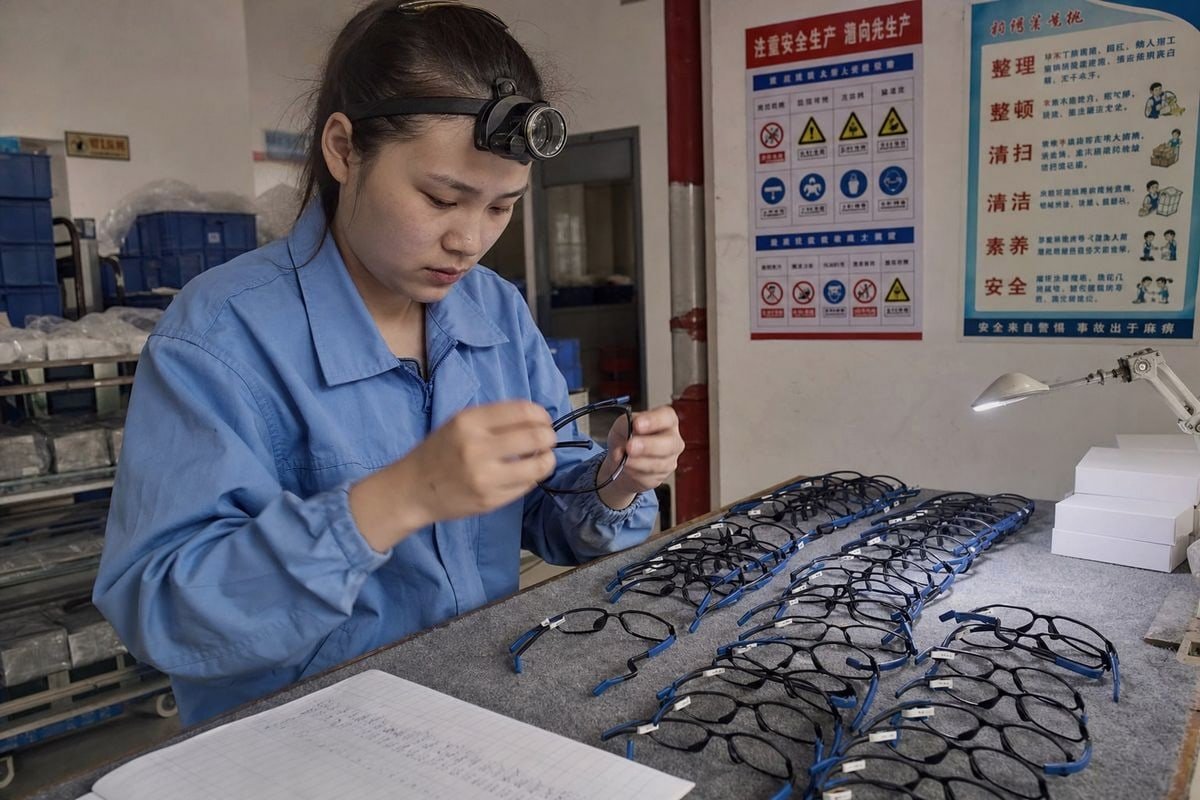
Minimum order quantity exists for a reason. Molds, color runs, and line setup carry fixed costs. But there are smarter ways to handle those costs than simply refusing small orders.
Use existing styles to lower the entry barrier
This is the single biggest unlock for new brands. Custom molds demand high MOQs because tooling is expensive. Ready styles do not. When a Japanese baby-products brand approached us with a 200-piece budget, we steered them to our existing TR90 kids optical frames with TPEE temples, added their logo and custom packaging, and shipped a retail-ready product without any mold investment. Two years later, they order in the thousands. That path only existed because the entry barrier was low.
Here is how flexibility options compare for a growing brand:
| Flexibility Option | How It Works | Trade-Off |
|---|---|---|
| Ready-style catalog orders | Choose from existing designs, add branding | Less design uniqueness |
| Small-order surcharge | Pay a modest premium under standard MOQ | Higher unit cost short-term |
| Blanket order with releases | Commit to annual volume, ship in batches | Requires planning confidence |
| Mixed-style consolidation | Combine styles to hit one tier threshold | Slight changeover cost |
| Graduated reorder pricing | Reorders earn better tiers than first orders | Rewards loyalty over size |
Make the upgrade path visible
Buyers commit more readily when they can see the reward. Publish your tiers clearly, then negotiate exceptions privately. Some eyewear suppliers hide all pricing behind wholesale accounts; others publish quantity breaks openly. We have found a hybrid works best: a clean public tier structure builds trust and reduces friction, while private quotations handle customization options, packaging upgrades, and strategic accounts. Transparency wins the first order. Flexibility wins the tenth.
What factors should I discuss with my manufacturer to build a sustainable tiered pricing model?
During a quotation review last quarter, a European distributor asked us for a single price. We sent back a full price ladder instead — multiple quantity breaks, customization fees itemized, packaging options listed. He told us it was the first quote he could actually plan a business around.
Discuss quantity-break ladders, customization and packaging fees, Incoterms and freight terms, defect and warranty policies, payment terms, and a schedule for periodic price reviews. A sustainable model needs transparency on every cost driver, not just a headline unit price.
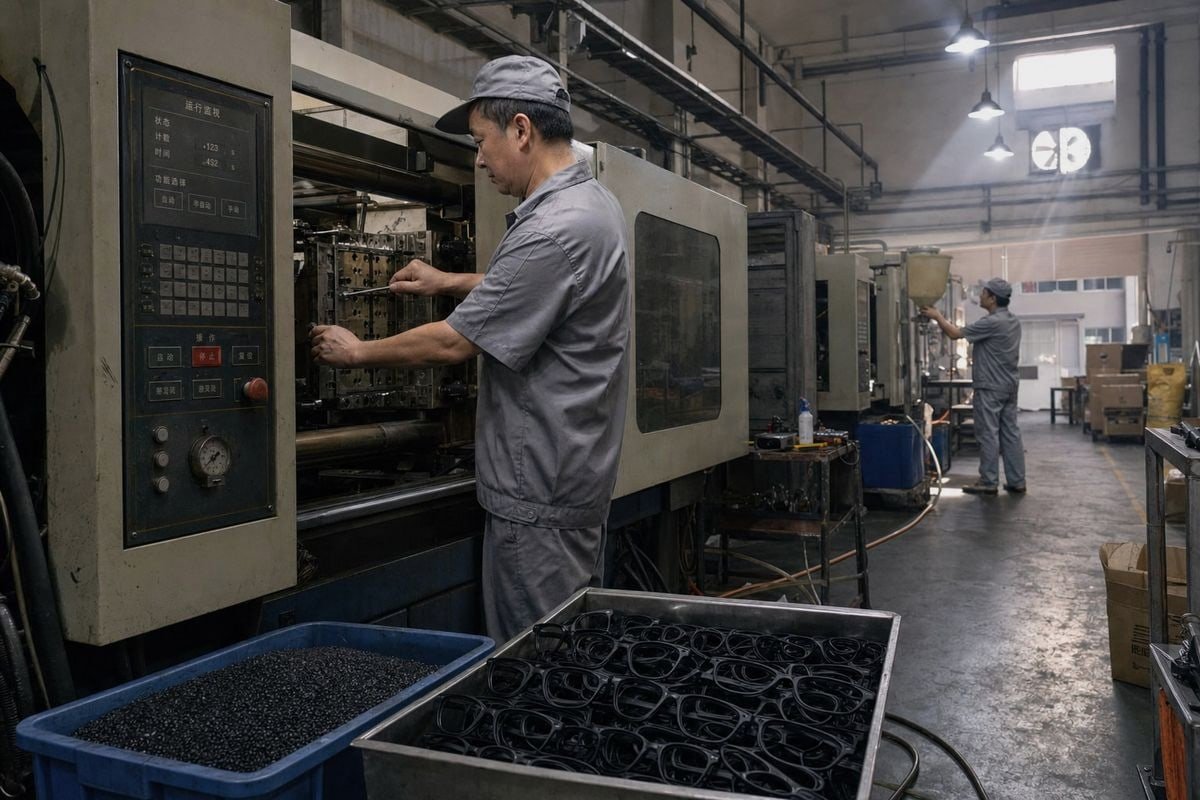
Your tiered pricing model is only as strong as the information behind it. These are the conversations worth having before you sign anything.
Request a complete price ladder
Never accept a single-quantity quote. Ask your eyewear suppliers for at least three quantity breaks with every cost itemized: unit price, logo printing, custom colors, lens options like UV400 or polarized, packaging, and cartons. This lets you model your own tiers accurately instead of reverse-engineering from one number.
Verify you are talking to a factory
Supplier type changes everything. A trading company adds a margin layer and often cannot explain production constraints, which makes tier negotiation guesswork. A factory can tell you exactly why 500 pieces prices better than 300 — because they know where their own costs step down. Ask about workshop management, workforce size, and years of experience. Our 5S管理ワークショップ 7 and 120-person team exist precisely because consistent quality at each tier requires consistent process control, especially for children's products where safety compliance is non-negotiable.
Agree on quality, defects, and materials up front
Kids' frames endure abuse that adult frames never see. Discuss material specifics — TR90 frames, TPEE temples, silicone tips — and how defect allowance is handled. A supplier who absorbs reasonable replacement costs is pricing sustainability into the relationship. One who does not is quietly shifting risk onto your profit margins.
Build in periodic reviews
Raw material prices, freight rates, and currency all move. Agree on quarterly or semi-annual price reviews rather than locking rates forever or renegotiating in a panic. In our experience, buyers who review pricing on a schedule keep their retail markup stable and avoid emergency mid-season increases. Track your sell-through by style and color between reviews, so both sides adjust tiers with data, not opinions.
結論
Weak tiers bleed margin or block growth. Anchor every tier to landed cost, reward volume only when economics justify it, and partner with a factory that shares its numbers openly.
脚注
1. Explains tiered pricing models and their application in B2B contexts. ↩︎
2. Replaced HTTP 404 link with a comprehensive guide on quality control in manufacturing. ↩︎
3. Comprehensive guide on TR90 material in eyewear manufacturing. ↩︎
4. Provides market size, trends, and forecast for kids eyewear. ↩︎
5. Defines landed cost and its components in supply chain. ↩︎
6. Official rules and guidance for international trade terms. ↩︎
7. Replaced HTTP 403 link with an authoritative government source on the 5S methodology. ↩︎



 English
  Español de México
  Deutsch
  Français
  日本語
日本語  العربية
  Português do Brasil