How to Decide Which Stores Get Basic vs Full Range Kids Optical Frames?
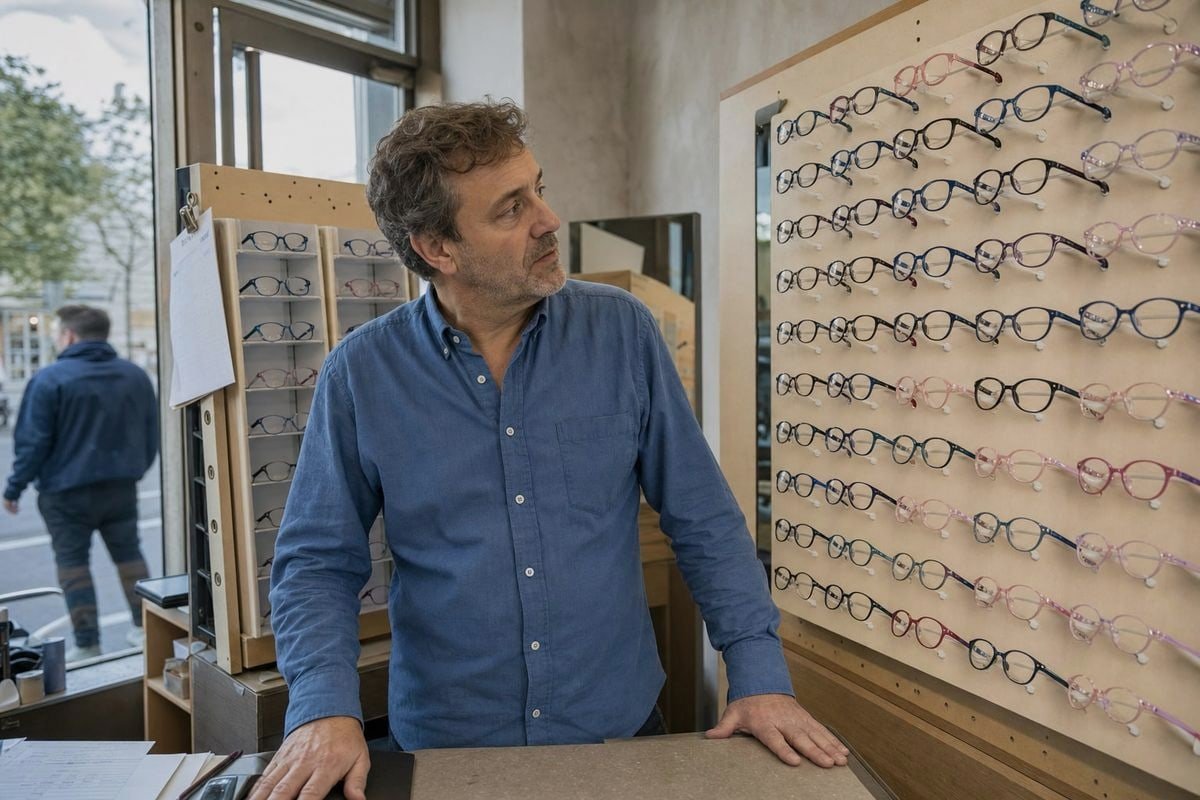
Deciding which stores get basic vs full range kids optical frames trips up many optical buyers we supply. Stock too little and parents walk out. Stock too much and capital dies on the board. Our factory in Taizhou has watched both mistakes drain buyers’ budgets — so we built a store-by-store playbook that fixes it.
Give basic vs full range kids optical frames based on store profile: assign a basic range to stores with low pediatric traffic, limited fitting staff, and budget shoppers; assign a full range to stores with high family traffic, older children, complex prescriptions, and style-driven demand.
That is the short answer. But the real value is in how you score each store. Below, I break the decision into four practical questions any optical retailer or brand buyer can apply this quarter.
How do I identify which stores are ready for a full range versus a basic starter assortment?
During a factory visit last spring, a European distributor asked me to help him split his 40 doors into two tiers. We started not with frames, but with a simple readiness audit of each store.
A store is ready for a full range when it shows strong pediatric traffic, trained fitting staff, physical board space, and proven inventory turnover rate above roughly three turns per year. Stores missing two or more of these markers should start with a basic, high-turn core assortment.
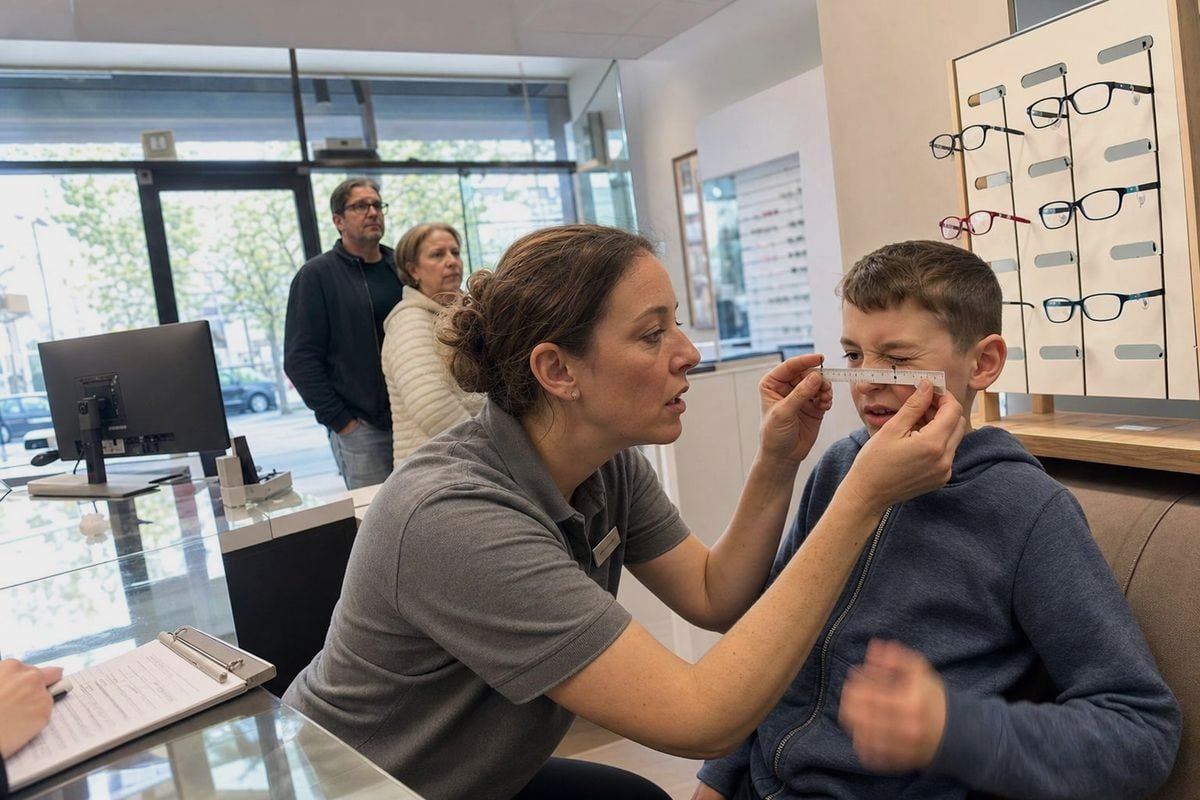
The mistake I see most often is treating this as a gut-feel decision. It should be an audit. In our experience supplying optical chains and independents across 20+ countries, four signals separate full-range stores from basic-range stores almost every time.
The four readiness signals
First, pediatric traffic. Count how many children under 14 actually walk in per week. A store near large elementary school districts or a pediatric ophthalmology 1 practice sees fit variety that a downtown commuter store never will. Second, staff capability. Fitting a wriggling five-year-old is a skill. If nobody on the floor can adjust a temple or measure a child's pupillary distance 2 confidently, a wide assortment just creates confusion. Third, dispensary capacity. Frame board management matters: a satellite office with two small boards should carry a tight, curated core, or the display turns into visual clutter. Fourth, turn history. If kids' frames already sell through three or more times a year, the demand can absorb more SKUs.
A simple scoring table
| Readiness Signal | Basic Range Store | Full Range Store |
|---|---|---|
| Weekly child visits | Under 10 | 20 or more |
| Staff pediatric fitting skill | General optician only | Trained kids' fitter on shift |
| Board space for kids | 1 small board or shelf | Dedicated kids' section |
| Historical kids' frame turns | Below 2x per year | 3x per year or higher |
| Nearby pediatric practices/schools | None within 5 miles | Yes, within 5 miles |
Score each store. Four or five "full range" answers means it earns the wide assortment. Two or fewer means start basic and let sell-through analysis earn the upgrade later. One thing we tell every new buyer: because we hold around 800 existing styles in our catalog, a "basic" store can still be upgraded quickly without mold investment when its numbers improve. That flexibility is exactly why starting conservative costs you very little.
What criteria should I use to match frame variety with each store's customer traffic and demographics?
One lesson our sales team learned early: two stores with identical revenue can need completely different kids' assortments. A buyer in Australia once ordered the same mix for a beach-town store and a city clinic — the beach store sold out of flexible sport frames while the clinic's stayed untouched.
Match frame variety to three demographic layers: the density of children under 12 in the catchment area, the age split between young kids and preteens, and local household income. Younger, utility-focused areas need durable basics; older, trend-conscious areas need style breadth.
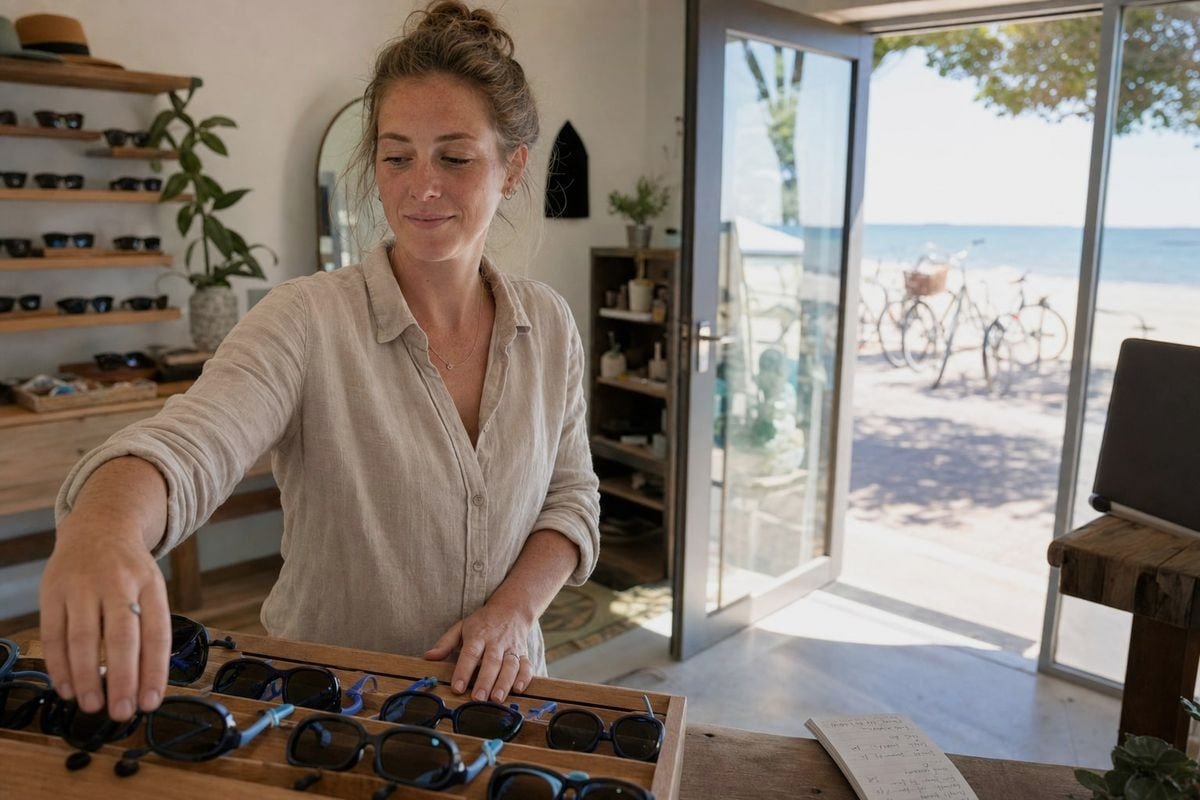
Patient demographics should drive the assortment mix, not corporate preference. I break the analysis into three layers, and each layer changes what goes on the board.
Layer one: how many children, and how old?
Density of children under 12 sets the baseline volume. But the age split sets the style mix. Toddlers and young school kids need soft, flexible, hard-to-break frames — the kind we build in TPEE with silicone ear hooks, because safety and slip-resistance matter more than fashion at that age. Preteens are different. They care about identity. That is where licensed brands, translucent pastel acetates 3, and adult-inspired shapes earn their space. A store serving mostly ages 4–8 can run lean. A store with a strong 9–14 crowd needs color and shape breadth to convert.
Layer two: income and price architecture
Average household income shapes your price architecture. In value-driven neighborhoods, a tight good-better ladder with strong entry pricing wins; some chains prove a basic range works commercially even at very low entry price points. In higher-income or fashion-forward areas, add a premium tier — designer-look youth styles, better finishes, two-tone temples.
Layer three: parental psychographics
Segment by what parents value. Utility-focused areas respond to "indestructible" technical frames and warranty messaging. Trend-conscious neighborhoods respond to color stories and seasonal drops.
| Demographic Profile | Recommended Range | Style Emphasis |
|---|---|---|
| Young families, mid income | Basic, durability-led | Flexible TR90 4/TPEE, primary colors |
| Preteen-heavy, trend-aware | Full | Translucent acetates, licensed brands, fashion shapes |
| Budget-sensitive, high volume | Basic with fast replenishment | Low-cost core, bundled lens offers |
| Affluent, style-driven | Full with premium tier | Designer-look youth frames, premium materials |
How can I balance inventory investment across locations without overstocking slow-moving stores?
The trade-off I weigh most often with buyers is this: every extra SKU improves choice a little but adds inventory dollars, display space, and markdown risk a lot. Kids' eyewear 5 amplifies that risk because children grow fast and sizes fragment demand.
Balance investment by concentrating depth in high-turn hub stores and keeping slow stores on a lean core of 20–40 proven SKUs. Use hub-and-spoke transfers, virtual try-on access to the full catalog, and seasonal pulse upgrades instead of permanent wide stock everywhere.

Assortment planning for children’s frames is really capital allocation. Here is the process I walk buyers through, step by step.
- Set a total kids' inventory budget first. Decide the dollars, then divide by store tier — not the other way around. This prevents "just add a few more styles" creep.
- Build a hub-and-spoke network. Designate one or two full-range hub locations per region. Basic stores act as showrooms. With cloud-based inventory management, a basic store can pull a specialized frame from the hub in a day or two. The parent still gets choice; you avoid duplicating slow SKUs in every door.
- Add digital breadth without physical stock. Virtual try-on kiosks or tablets in basic-range stores give families access to the complete catalog. We support this on our side with full product photography for every catalog style, so partner brands can show far more than they stock.
- Run pulse inventory for peak season. Temporarily upgrade basic stores to fuller status during the eight-week back-to-school season, then pull unsold depth back to hubs before it goes stale.
- Cap slow stores hard. If a location turns kids' frames below twice a year, cut its assortment rather than discounting it. Markdowns on children's frames rarely recover cost.
From our side of the supply chain, minimum order flexibility matters here too. Because buyers can pick from our existing styles instead of committing to custom molds, they can order shallow depth per SKU and reorder fast — which is exactly what a hub-and-spoke model needs to work.
What role should sell-through data and reorder speed play in deciding a store's range level?
A Japanese optical buyer once told me something I still repeat to new clients: "The frame board is a report card, and sell-through is the grade." His chain reviews kids' frame data every eight weeks, and range level is never permanent — stores move up and down.
Sell-through data should be the primary trigger for range changes: promote a store to full range when kids' frames turn three or more times annually, and demote when turns fall below two. Reorder speed determines how lean each store can safely run.
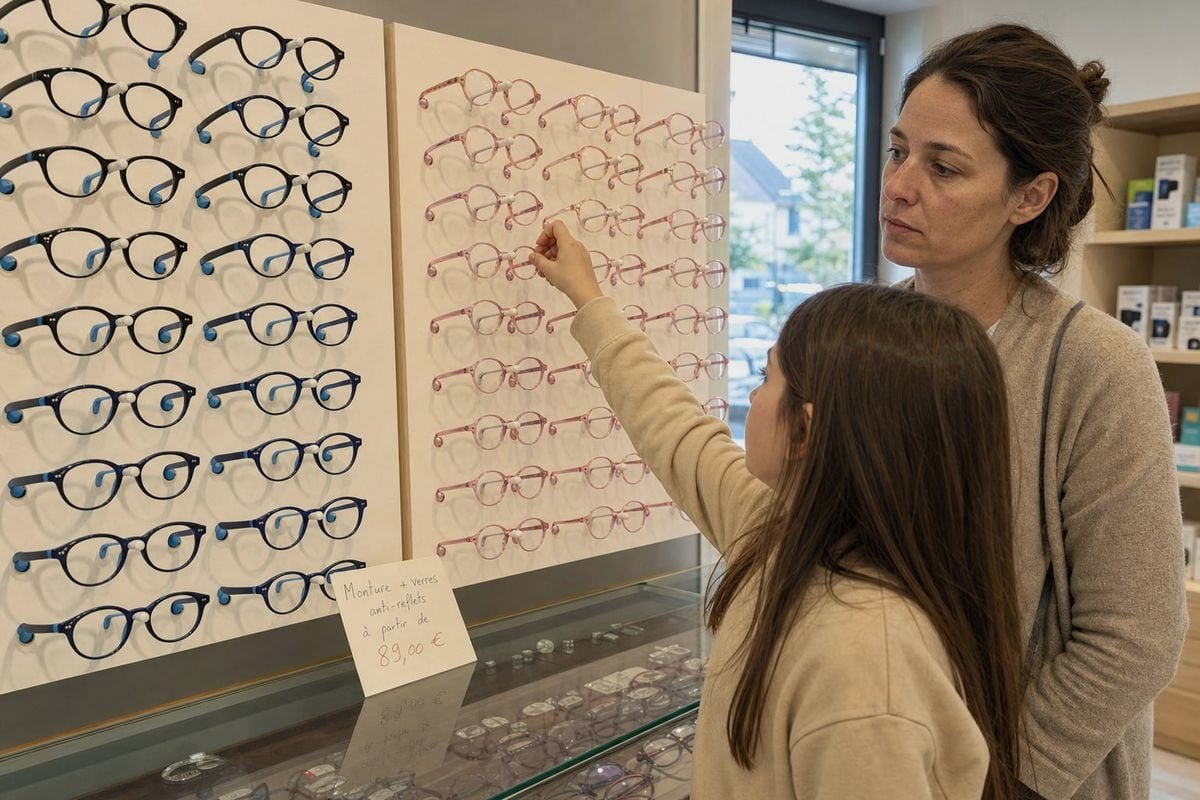
Treat range level as earned, not assigned. Demographics get a store its starting tier; data decides whether it keeps it.
The metrics that matter
Sell-through analysis for kids' eyewear should track more than units. Watch these four numbers per store, per quarter:
| 指標 | What It Tells You | Action Threshold |
|---|---|---|
| Inventory turnover rate | Whether demand justifies SKU count | Above 3x: expand; below 2x: contract |
| Capture rate | Share of pediatric exams converting to frame sales | Low capture with high exams = assortment mismatch |
| 再注文リードタイム | How lean the store can run | Fast replenishment allows shallower stock |
| Warranty/lens plan attachment | Depth of parent commitment | High attachment supports more premium variety |
Capture rate is the one most retailers ignore. If a store performs many children's exams 6 but sells few frames, the range is wrong for that audience — often too narrow in sizes, or misaligned with what managed vision care 7 plans in that community actually cover. Aligning the mix with common local insurance allowances keeps most of the range inside parents' expected out-of-pocket spend.
Why reorder speed changes everything
Reorder speed is the quiet variable. A store that can restock a best-seller in one week can safely carry two units per SKU. A store waiting six weeks needs four. This is where the supply side matters: our production line keeps popular flexible TR90 and TPEE styles in consistent rotation precisely so partners can run lean boards without stockout risk. Fast replenishment shrinks the gap between a basic range and a full range — the basic store simply cycles its winners faster. Also watch growth-protection warranty attachment: stores where parents readily buy pediatric lens replacement plans show deeper engagement and can justify more variety.
結論
Not every store needs every kids' frame. Score each door on traffic, demographics, and turns; start lean, replenish fast, and let sell-through data earn each store its full range.
脚注
1. Information from the American Academy of Ophthalmology regarding specialized eye care and treatments for pediatric patients. ↩︎
2. Defines the measurement of the distance between the centers of the pupils, critical for correctly fitting eyeglass lenses. ↩︎
3. Technical details on cellulose acetate, the plant-based plastic frequently used to manufacture high-quality, durable eyeglass frames. ↩︎
4. Provides technical information on Nylon 12, the thermoplastic material commonly known in the eyewear industry as TR90. ↩︎
5. The leading trade association for the optical industry, providing market research and standards for eyewear products. ↩︎
6. Provides guidance from the CDC on the importance of regular vision screenings and eye exams for children. ↩︎
7. Explains the role of managed vision care in providing access to eye exams and corrective eyewear. ↩︎

 English
  Español de México
  Deutsch
  Français
  日本語
日本語  العربية
  Português do Brasil