How to Avoid Generic Supplier Images When Sourcing Kids’ Sunglasses?
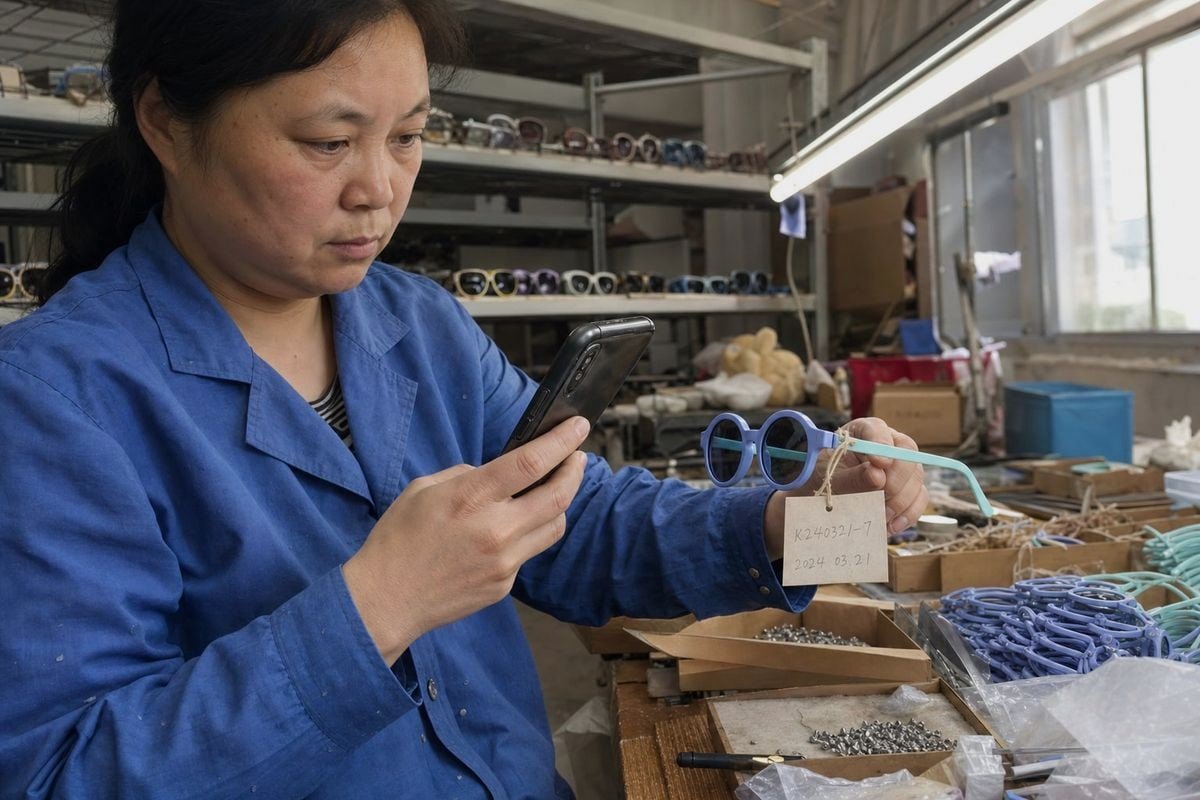
Generic supplier images plague kids’ sunglasses sourcing. I see our own factory photos stolen and reused constantly. If the pictures are fake, what else about that listing is fake?
To avoid generic supplier images when sourcing kids’ sunglasses, demand original factory photos of the exact SKU, request handling videos and date-stamped shots, order physical samples, and verify UV400 test reports. Treat imagery as one due-diligence layer alongside sample checks and factory verification.
This is not just a branding issue. In children’s eyewear, vague photos often hide vague quality control. Let me walk you through how I would screen suppliers if I were on your side of the table.
How can I get real product photos instead of stock images from my sunglasses supplier?
A buyer from Australia once told me she had received identical catalog images 1 from four "different factories." Three of them were traders reselling from the same source. Our workshop photos finally broke the tie.
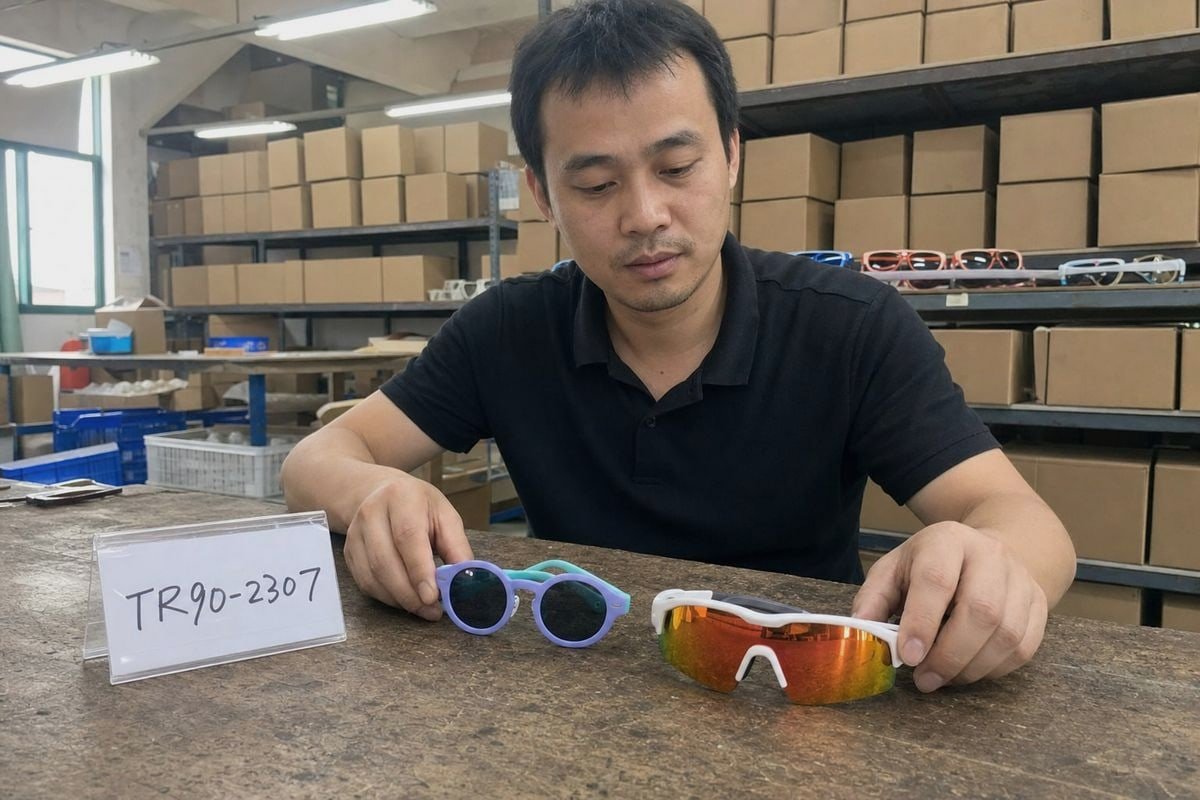
Ask the supplier for fresh, unedited photos of the exact model with a handwritten note showing your company name, today's date, and the SKU code. A real manufacturer can produce these within hours; a catalog reseller usually cannot, or will stall.
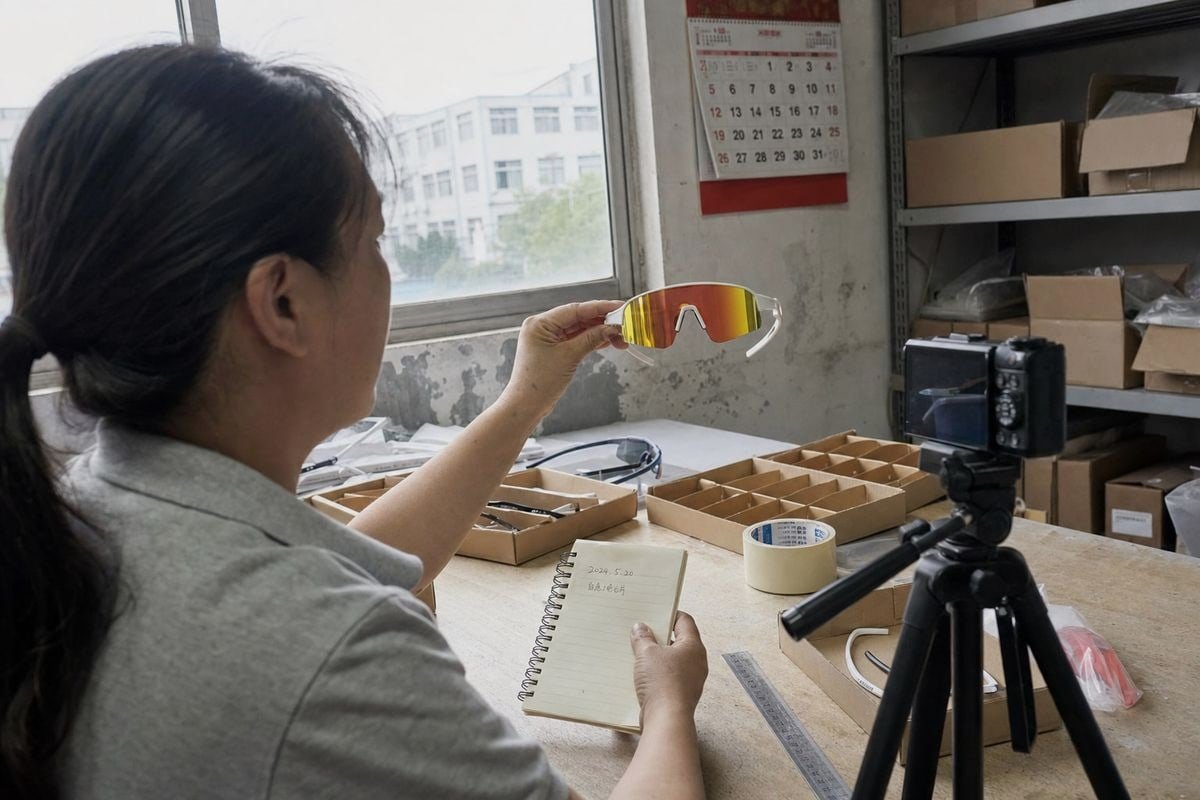
Real photos are easy for a genuine factory and painful for a middleman. That asymmetry is your screening tool. When buyers send us this kind of request, our sales team walks to the sample room, tags the frame, and shoots it on a phone the same day. No trader can do that with product they do not physically hold.
The exact photo set to request
Do not just ask for "more pictures." Ask for a defined set. Here is the request list I recommend, based on what serious buyers ask us for:
| Photo type | 登録番号 |
|---|---|
| Front, side, and top views of the exact SKU | The product exists physically, not just in a render |
| Close-up of hinges, nose bridge, and temple tips | Build quality and hardware consistency |
| Inside-arm markings and lens labeling | Correct sizing marks and UV400 protection claims |
| Handwritten tag with date and your company name | The photo was taken now, for you |
| Frame being flexed or bent on video | Material behavior, especially for TPEE flexible frames |
| Packaging, inserts, barcodes, and cartons | Retail readiness and private label branding capability |
Why video beats still images
Still images can be borrowed. A thirty-second video of someone opening, closing, and gently twisting the frame reveals hinge tension, material flexibility, and finish quality that photos hide. When we demonstrate our TPEE kids' frames, we bend the temples almost flat on camera. A rigid, brittle frame cannot survive that demonstration, so suppliers selling cheap injection plastic will avoid it.
Also ask whether the supplier can later support your own content needs: product sample photography for your listings, lifestyle product photography direction, or even 3D product rendering 2 files. A factory invested in OEM manufacturing services usually has these assets or can help you create them.
What questions should I ask a factory to confirm their catalog images are genuine?
The trade-off I always explain to new buyers is this: tough questions cost you ten minutes now, or a failed shipment 3 costs you three months later. Our team answers detailed spec questions daily, and honestly, we prefer buyers who ask them.
Ask for the mold number, frame measurements, material composition, lens supplier, and available colorways of the pictured model. Then request a photo of that model on the production line or in the sample room. Genuine factories answer specifically; image borrowers answer vaguely.
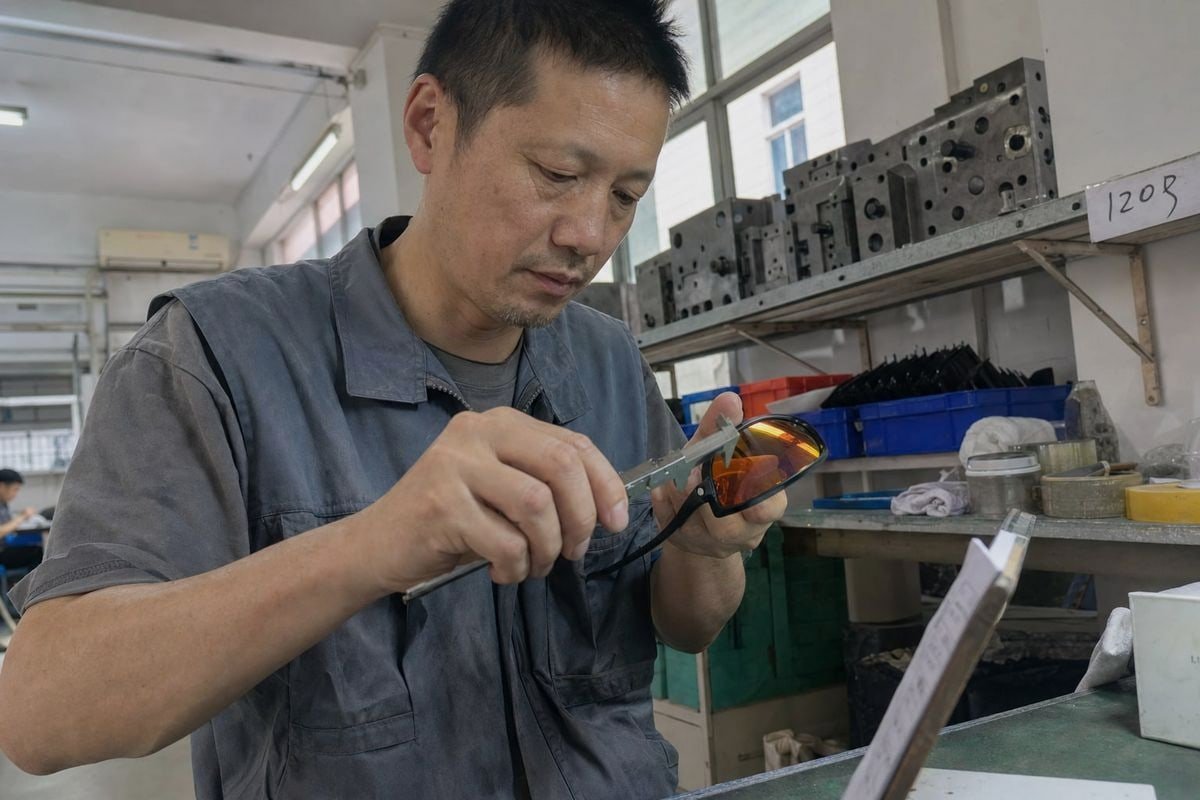
A factory that made the product can talk about the product in detail. A trader who copied the image cannot. Your questions should probe knowledge that only the actual maker would have.
A question script that exposes image borrowers
Use these in sequence during your first two or three exchanges:
- What is the exact lens width, bridge size, and temple length of this model? Which age range does it fit?
- Is the frame TR90, TPEE, or a combination? Can you flex the temple on video for me?
- Do you have the UV400 protection test report for this specific lens, not a generic company certificate?
- Can you offer this model with polarized lens technology, and what is the price difference?
- What is the mold or model number, and how many colorways exist? Show me two of them side by side in one photo.
- Can you photograph this frame today next to a note with my company name?
- If we run a private label branding program, where does the logo go on this model, and what are the printing options?
When buyers ask us question five, we can line up a shield-style sport frame in glossy black with an orange-mirror gradient lens next to the same mold in matte white. A reseller with one stolen image cannot produce that comparison shot.
Interpreting the answers
Watch for deflection. Answers like "all our products are high quality" or "we can do any size" are red flags. A real factory quotes tolerances, cites materials by name, and mentions compliance frameworks like CE, FDA, or CPSIAコンプライアンス 4 without hesitation. Slow, evasive, or copy-pasted responses usually mean the person answering has never touched the product. Consistency matters too: if the measurements in the answer contradict the proportions in the image, the image is not theirs.
Why do so many kids' eyewear suppliers reuse the same generic photos online?
当社の export business 5, I found our own two-tone kids' frame — a periwinkle-blue front with mint-teal temples — listed by a company we had never heard of, using our photo pixel for pixel. That day taught me how common image recycling really is.
Suppliers reuse generic photos because many are traders without physical products, because off-the-shelf goods circulate through shared public catalogs, and because original photography exposes quality gaps. Copying an established factory's images is faster and cheaper than building real capability.
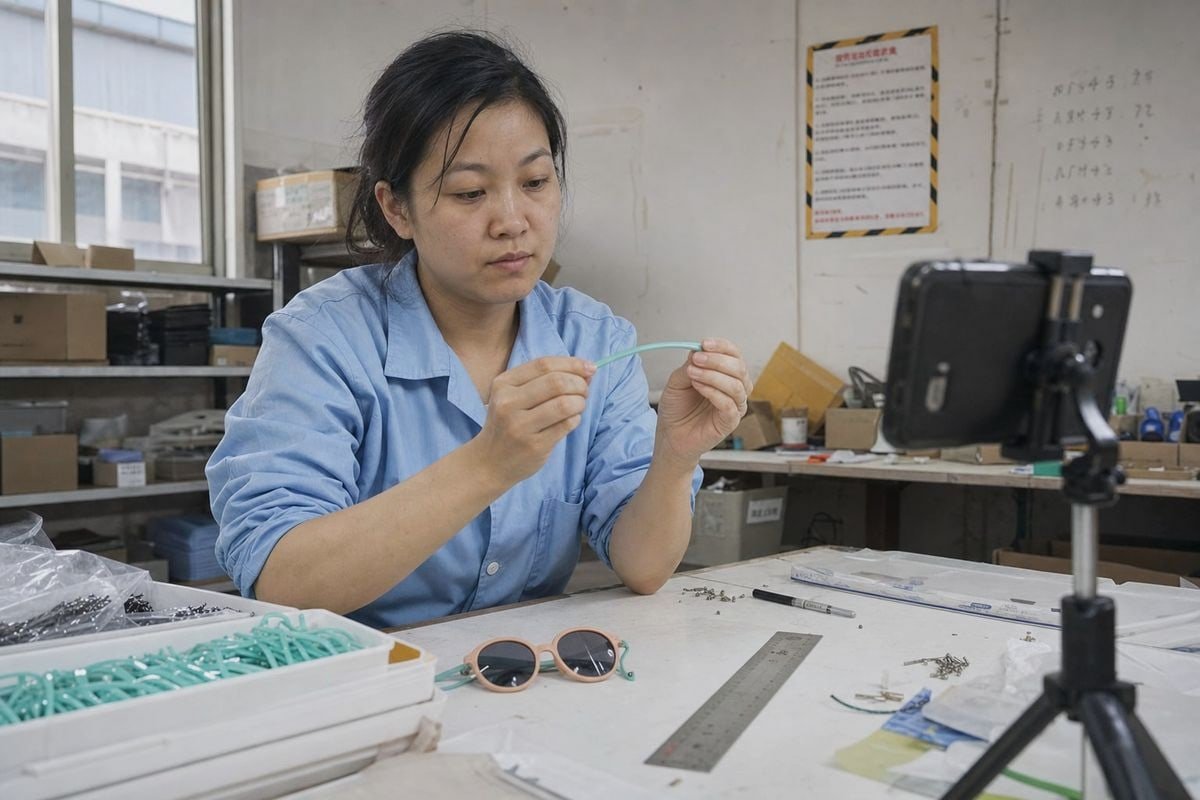
Understanding the cause helps you judge the risk. Not every generic image hides a scam, but each root cause carries a different danger for your brand.
Four root causes and what each means for you
| Root cause | What it signals | Risk to your brand |
|---|---|---|
| Supplier is a trader or broker | No factory control, no direct QC | Inconsistent batches, no accountability |
| Off-the-shelf relabeling | Same product sold to your competitors | Zero differentiation, price wars |
| No private-label program | Cannot support custom packaging or logos | Weak visual brand identity at retail |
| Hiding sample-versus-marketing gaps | Real product looks worse than the photo | Returns, bad reviews, safety exposure |
Why this matters more for children's products
Some buyers argue that generic images are simply "normal" on wholesale directories, so they should be tolerated. I understand the point, but normal does not mean safe. Consumer-safety investigations have found that roughly one in three kids' sunglasses bought from major online marketplaces failed adequate UV protection. In this category, a supplier who is vague about visuals is often equally vague about UV400 testing, small-parts risk 6, and material safety. A dark tint is not protection; toy-grade lenses can look identical to protective ones in a photo. That is exactly why the picture cannot be your evidence. If your listing later needs to meet Amazon FBA image requirements, you will need original assets anyway — so the supplier's ability to support real photography is a commercial requirement, not a nicety.
How do I verify a manufacturer's real production capability before trusting their images?
Something I learned after fifteen years running an eyewear workshop: buyers who visit us, even virtually, order with far more confidence than buyers who only compare photos. Images start the conversation; verification finishes it.
Verify capability by requesting a live video factory tour, model-specific test reports, physical samples from two batches, and evidence of mold ownership. For larger orders, add third-party inspection with random checks. Approve suppliers only when photos, samples, and documents all match.
Think of verification as three layers stacked on top of each other. No single layer is enough. Together, they make it nearly impossible for a supplier to hide behind borrowed visuals.
The three-layer verification framework
| レイヤー | 確認すること | Pass signal |
|---|---|---|
| Visual proof | Live video tour, production shots, workshop conditions | You see the actual model being made or stored, in a managed workshop |
| Physical proof | Two samples from different batches, master sample photos | Samples match the images and match each other |
| Documentary proof | UV400 and impact test reports, CPSIA compliance evidence, business license | Documents name the specific model, not just the company |
Sample verification done properly
Order at least two samples, ideally from separate pre-production runs, and compare them against the supplier's photos under daylight. Check hinge tension, temple flex, lens clarity, and inside-arm markings. Ask for the frame photographed on a child-size dummy head so you can judge fit and coverage — proportions lie in floating product shots. For flexible materials 7 like TPEE, twist the temples yourself. Our frames are engineered to bend and recover because active kids sit on their sunglasses; a sample that snaps in your hands has already failed the real-world test.
After you verify: build your own image library
Once a supplier passes, invest in your own assets so you never depend on theirs. Shoot original photography with diverse child models in playgrounds or beach settings, add extreme close-ups of soft-touch matte textures, include a juice box for size reference, and shoot from a parent's-eye angle. Layer in user-generated content from early customers, and consider 360-degree spins for your product pages. A verified factory plus a proprietary image library is the strongest defense against ever being confused with generic listings.
結論
Generic supplier images in kids' sunglasses sourcing signal risk, not just laziness. Demand original photos, tough answers, verified samples, and real documents — together they protect your brand and children's eyes.
脚注
1. Wikipedia explanation of stock and catalog imagery used in commercial contexts. ↩︎
2. Explains the technology used for creating high-quality digital product visuals. ↩︎
3. Comprehensive guide to managing supply chain risks and preventing shipment failures. ↩︎
4. Authoritative Wikipedia overview of the Consumer Product Safety Improvement Act (CPSIA). ↩︎
5. Wikipedia overview of the export business and international trade practices. ↩︎
6. Official CPSC guidance on small parts hazards in children’s products. ↩︎
7. Technical overview of thermoplastic elastomers, the flexible materials used in durable kids’ frames. ↩︎
 English
  Español de México
  Deutsch
  Français
  日本語
日本語  العربية
  Português do Brasil