How to Ask Suppliers for Removable Demo Lenses on Kids’ Sunglasses?

Buyers often request removable demo lenses 1 on kids’ sunglasses and receive fixed sun lenses instead. On our production line in Taizhou, we see this miscommunication cause costly re-sampling every season.
To ask suppliers for removable demo lenses on kids’ sunglasses, send one clear spec sheet stating the lens must be a clear, non-corrective, removable display lens. Confirm the mounting method, lens material, safety certifications, MOQ, sample fee, and lead time in the same written inquiry.
That answer sounds simple. In practice, each of those points hides a detail that can wreck your order. Let me walk you through each one, step by step.
What should I include in my email when requesting removable demo lens samples?
A buyer from Australia once emailed us asking only for "frames with lenses." We quoted UV400 sun lenses. She actually wanted clear dummy lenses her optical lab 2 could swap out. Two weeks lost.
Your email should state the frame model, target age group, that you need a clear, removable, non-corrective demo lens for display only, the mounting method preference, quantity, logo and packaging needs, and your destination market. Attach one organized spec sheet rather than sending scattered messages.
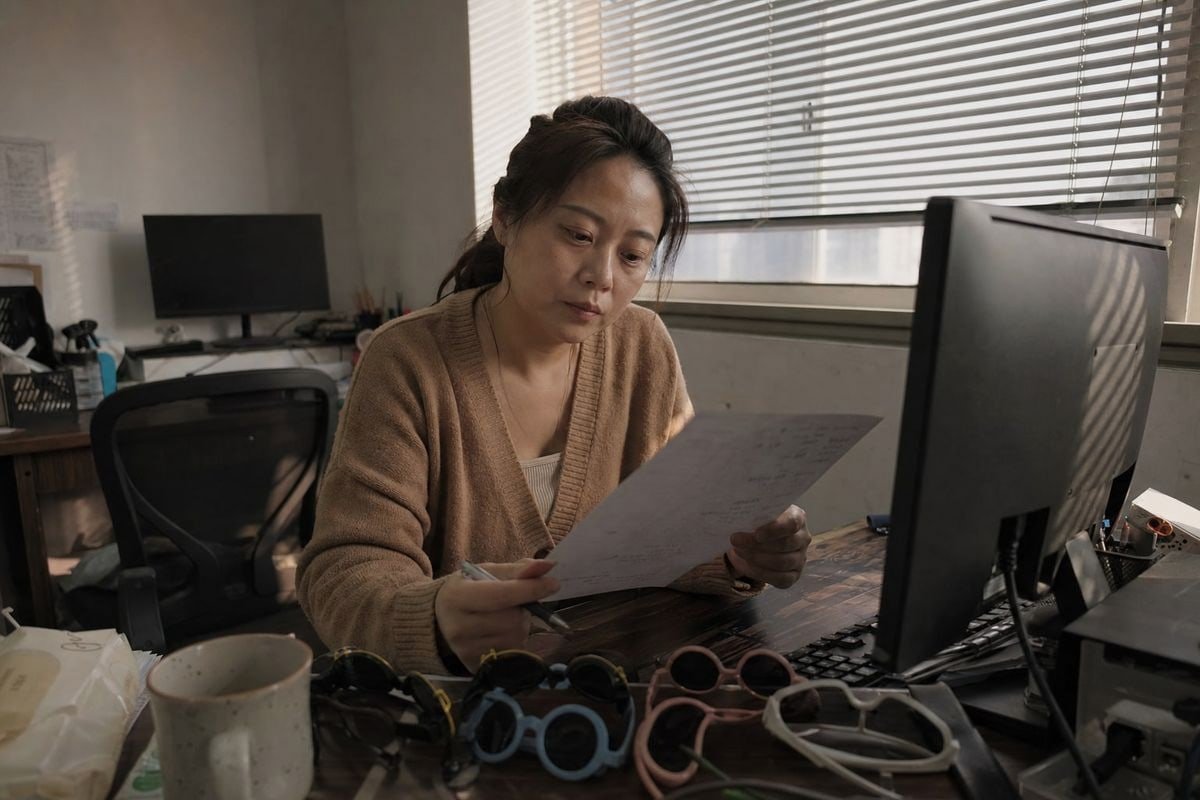
The single biggest mistake we see in inquiries is vagueness. A short "what's your price?" message forces the supplier to guess. Guessing leads to wrong quotes, wrong samples, and wasted weeks. A professional OEM eyewear supplier will always ask for details anyway, so give them upfront.
Use the right terminology first
Say "demo lens," "dummy lens," or "sample display lens" in the first line. Then clarify two things: the lens must be removable at room temperature 3, and it is for presentation only, not optical correction. If you skip either point, the factory may heat-mount a fixed lens because that is their default process for kids' sunglasses.
The core elements of a strong inquiry
Here is the checklist we wish every buyer used with us:
| Element | What to specify | なぜそれが重要なのか |
|---|---|---|
| Product reference | Catalog model number or photos | Avoids quoting the wrong frame |
| Age group | Toddler, preschool, school-age | Frame size and safety rules differ |
| Lens type | Clear plano, removable, unbranded | Prevents fixed tinted lenses |
| Mounting | Cold-mount / snap-fit preferred | Confirms removability |
| ブランディング | Logo position, method, artwork files | Enables private label sunglasses quoting |
| Quantity | Sample qty plus estimated bulk qty | Determines pricing tier |
| 市場 | AU, EU, JP, US, etc. | Triggers correct compliance checks |
Also ask whether the demo lenses can ship separately if that suits the factory's assembly flow better. Finally, request the lens template in DXF or PDF format during sampling. Your local optical lab needs it to cut replacement lenses accurately for that specific mold. One tidy email with all of this gets you an accurate quotation in days, not weeks.
How do I confirm the lens material and safety standards before placing my order?
Children chew on frames. We learned this early in our fifteen years of optical frame manufacturing, and it changed how we discuss even "display only" components with every buyer.
Ask the supplier to confirm in writing that demo lenses are optical-grade polycarbonate or CR-39, BPA-free, and non-toxic, and that the frame and lens comply with your destination market's standards, such as CPSIA for the US or EN and REACH requirements for Europe.
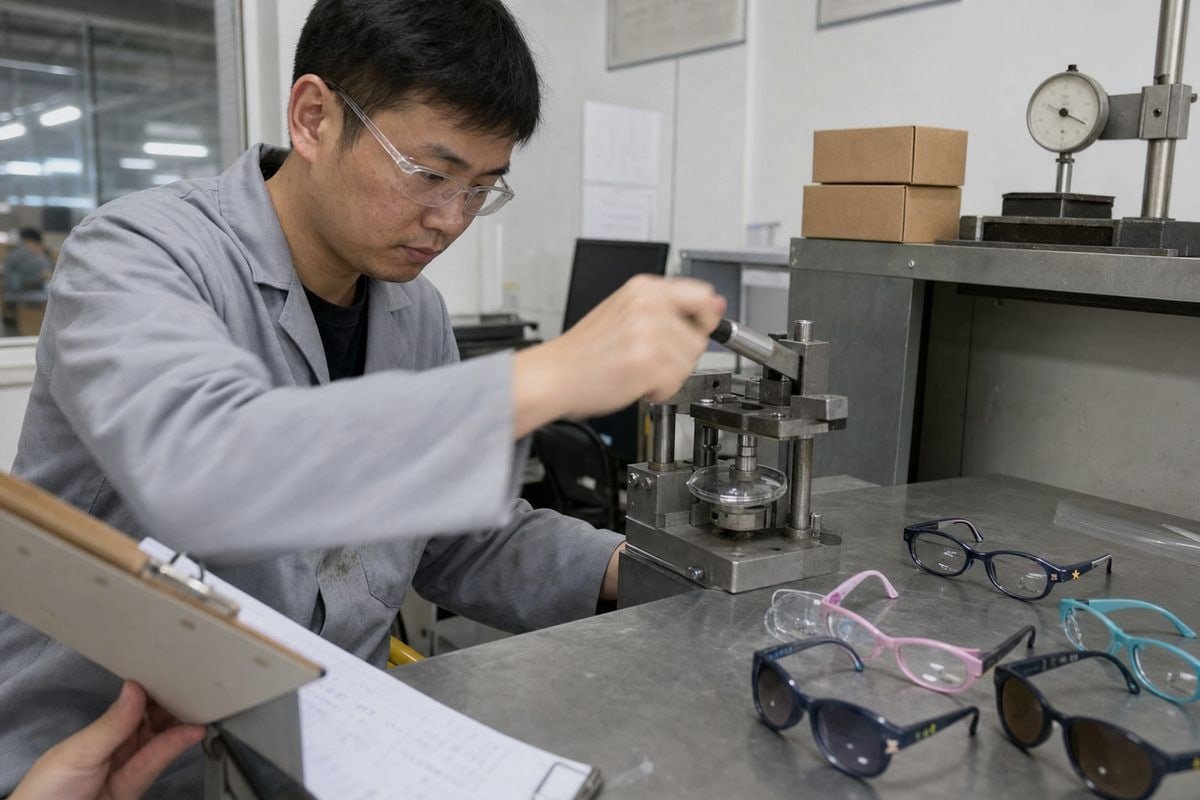
There is a common trap here. Buyers assume a demo lens does not need safety scrutiny because it is "just a placeholder." That logic fails with children's products. A toddler will wear the display sample 4 a parent hands over in a store. The lens touching a child's face must be as safe as the final product.
Which lens material should you accept?
Cheap acrylic inserts distort vision and can create a prism effect. If there is any chance a child wears the frame with demo lenses in, insist on optical-grade clear plano inserts. Here is how the common options compare:
| 素材 | Optical clarity | 耐衝撃性 | Suitable for kids? |
|---|---|---|---|
| ポリカーボネート | 高い | 素晴らしい | Yes, our recommendation |
| CR-39 | 非常に高い | 接触点に集中 | Yes, heavier than PC |
| Cheap acrylic | Poor, distortion risk | 低 | Display shelf only |
Polycarbonate lens material is the standard we default to at our workshop, because it handles impact resistance testing 5 far better than acrylic. Ask your supplier which material they quote by default, because many factories use acrylic to cut cost unless told otherwise.
Written confirmation, not verbal promises
Request the material name on the proforma invoice, not just in a chat message. Ask for available test reports covering BPA-free and non-toxic status. If your final production lenses 6 will be tinted, confirm they meet UV400 protection standards separately. The demo lens and the final lens are two different specifications, and both belong on the same document so nothing gets mixed up during production.
What questions should I ask about MOQ and lead time for custom demo lens designs?
Every custom request involves a trade-off we weigh daily at the factory: extra customization gives buyers flexibility, but it can quietly stretch MOQ and lead time if nobody discusses it early.
Ask for the MOQ per style and per color for the demo lens configuration, whether a frame-only price lowers the MOQ, the sample fee and its refund policy, sampling lead time, bulk production lead time, and how custom logos or packaging affect the schedule.
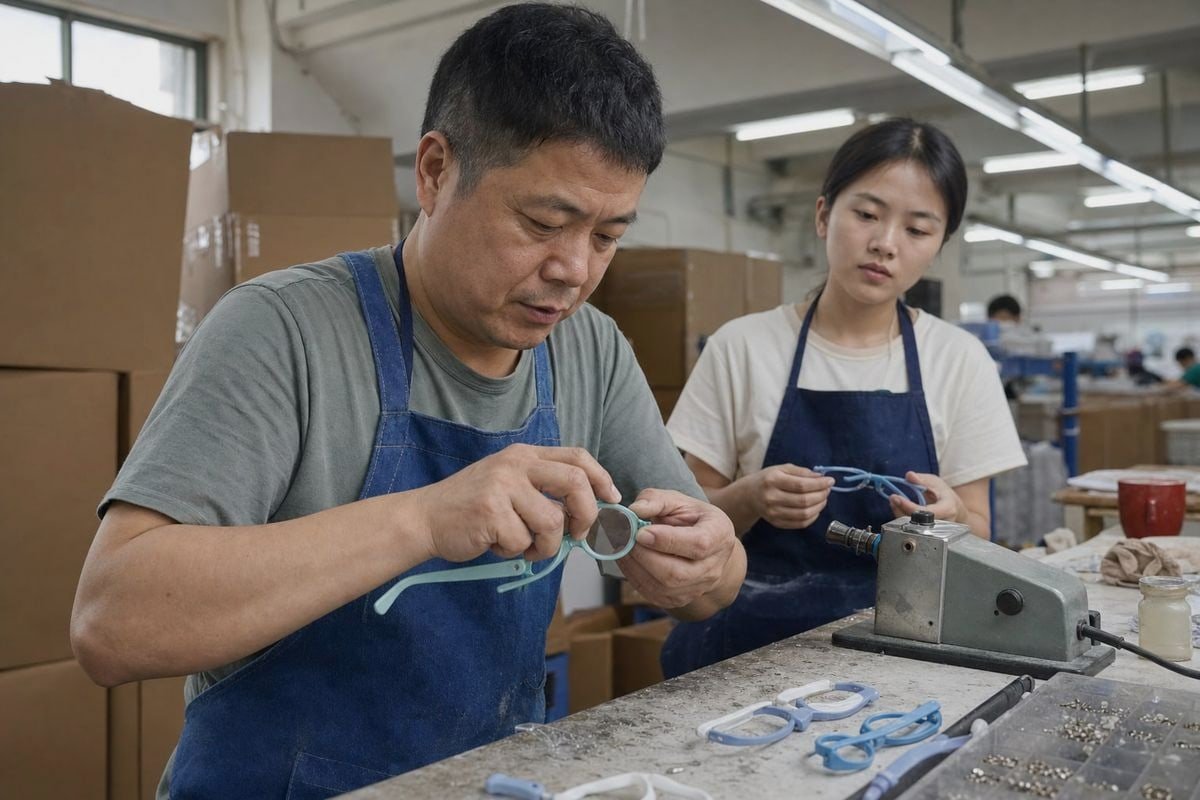
MOQ for custom eyewear is not one number. It changes with the lens setup, the number of colors, and the branding work involved. When a buyer asks us for removable demo lenses on kids' sunglasses instead of our standard assembled units, we re-quote, because the assembly step and lens sourcing both change.
The exact questions to send
- What is the MOQ per style and per colorway for frames with removable clear dummy lenses?
- Do you offer a frame-only price? Kids' sunglasses usually ship pre-assembled, so ordering as frames can lower the unit cost noticeably.
- What is the sample fee, and is it refundable against the bulk order?
- How long is sampling, revision, and pre-production sample approval?
- Does adding my logo, hang tags, or custom packaging extend the lead time?
- Can I mix demo-lens frames and finished sun-lens units in one order?
Why existing styles change the math
New molds mean tooling costs and higher MOQs. This is exactly why we keep roughly 800 existing styles available: a new brand can pick a proven frame, request removable demo lenses on it, and test the market without heavy mold investment. If your supplier only offers fully custom tooling, expect longer timelines and a bigger commitment. A realistic sampling flow runs: initial sample, your feedback, revised sample, then pre-production confirmation. Ask the supplier to map dates onto each of those stages before you pay anything, and get the final lens setup stated clearly on an updated quotation sheet or proforma invoice.
How can I verify a supplier's quality control process for removable lens fittings?
During a QC round last year, our team rejected a batch where demo lenses popped out under light thumb pressure. The groove depth was off by a fraction of a millimeter. Details like that decide everything.
Ask the supplier to describe their lens retention checks, groove tolerance controls, and cold-mount fitting tests, then verify with a pre-production sample. A reliable factory can explain how they test that lenses stay secure during play yet remove cleanly at room temperature.
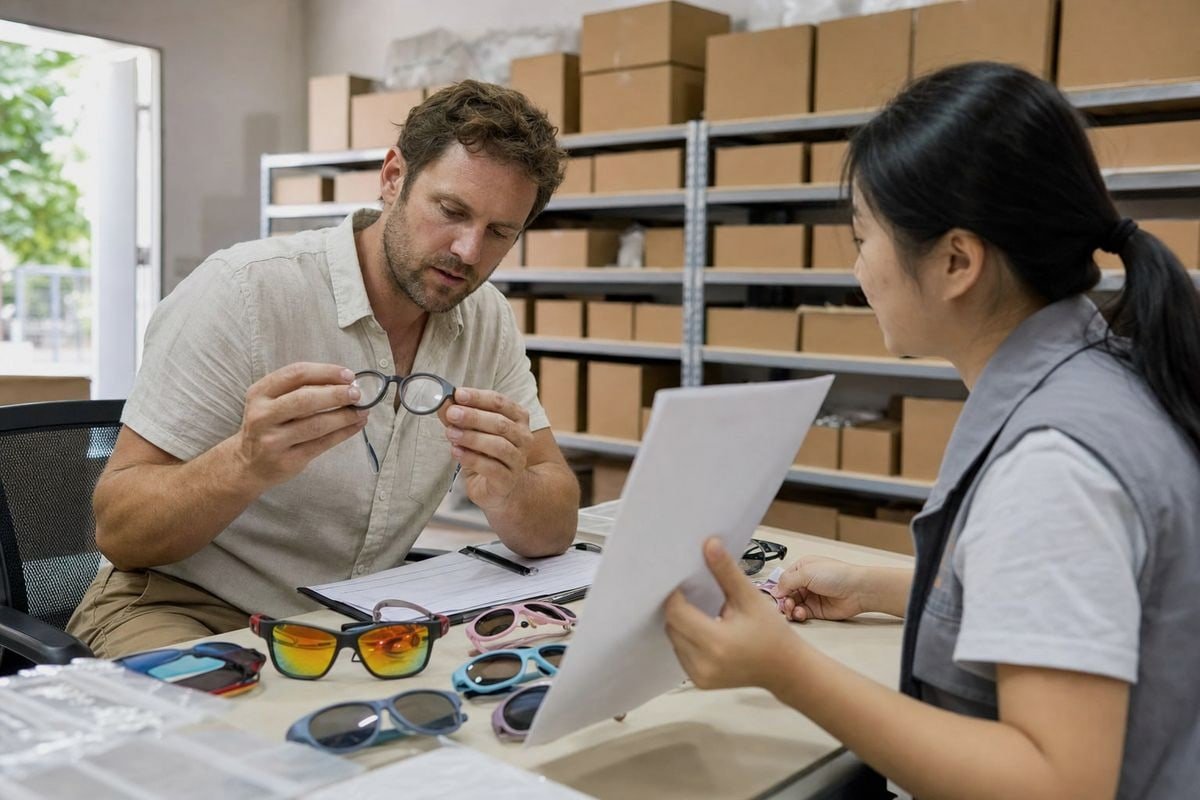
A removable lens fitting is a balancing act. Too loose, and lenses fall out when a child drops the glasses. Too tight, and your optical lab struggles to swap lenses without cracking them. Verifying how a supplier controls that balance tells you more about their competence than any brochure.
What good QC looks like for removable fittings
Ask these specific questions and expect concrete answers:
| QCチェックポイント | What to ask | Red flag answer |
|---|---|---|
| Groove engineering | Do you use a deeper V-groove or dual-groove design? | "All grooves are the same" |
| Retention testing | How do you test lenses against popping out in rough play? | No defined test |
| Cold-mount check | Can lenses be removed and refitted at room temperature? | "We heat-mount everything" |
| フレーム素材 | Is the frame TR90 or TPEE for flex during swaps? | Rigid brittle plastic |
| Sampling stage | Do you provide a pre-production sample for approval? | Bulk starts without approval |
Materials make removability practical
Frame material matters as much as groove design. Cold-glazeable frames built in TR90 7, often paired with TPEE flexible material temples, flex enough for manual lens removal without specialized heating equipment. That flexibility is why we build most of our children's ranges in these materials; rigid acetate-style plastics crack far more easily during lens swaps. Dual-groove engineering adds another layer of security, because a deeper groove can hold both a thin demo lens and a thicker polarized production lens without either popping out.
Finally, insist on a pre-production sample and test it yourself. Pop the lenses out, refit them, flex the temples, and hand the frame to a child if you can. Your hands will confirm what the supplier's QC report claims. A 5S-managed workshop with documented inspection steps should welcome that scrutiny, not resist it.
結論
Vague inquiries produce wrong samples and lost weeks. Specify removable demo lenses clearly, confirm materials, MOQ, lead time, and QC in writing, and your kids' sunglasses order lands right the first time.
脚注
1. Provides context on non-corrective lenses used for demonstration versus prescription lenses. ↩︎
2. Authoritative source on the role of optical professionals in fitting and swapping lenses. ↩︎
3. Defines the standard temperature range for testing material flexibility and assembly. ↩︎
4. Federal safety guidelines for children’s products, applicable to retail display items. ↩︎

 English
  Español de México
  Deutsch
  Français
  日本語
日本語  العربية
  Português do Brasil