キッズ用サングラスの安価な見積もりの裏にある素材のグレードダウンを見抜く方法

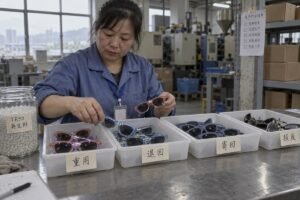
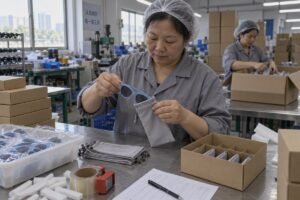
キッズ用サングラスの安価な見積もりの裏にある素材のグレードダウンは、私がバイヤーに最も注意を促している隠れた罠です。当社の台州工場における生産ラインでも、見積もりには決して記載されないすり替えられた素材を目にすることがあります。
キッズ用サングラスの低価格見積もりの裏にある素材のグレードダウンを見抜くには、フレームの正確な樹脂(TR90またはTPEE)およびレンズ基材を書面で確認し、UV400保護および耐衝撃性の試験報告書を要求し、サンプルの柔軟性、光学の鮮明さ、ヒンジ、表面仕上げを物理的にチェックしてください。
見積もりが安いこと自体が必ずしも悪いわけではありません。しかし、理由のない低価格の見積もりは、通常、何かが静かに削減されていることを意味します。以下では、その原因を特定する具体的な方法を解説します。
サプライヤーが私に知らせずにTR90をより安価なプラスチックにすり替えたかどうかを判断するにはどうすればよいですか?
昨年の春、ある欧州のバイヤーから検証用に競合他社の「TR90」サンプルが送られてきました。当社のエンジニアがテンプルを一度ひねっただけで、折れてしまいました。本物のTR90がそのような状態になることは決してありません。
フレームを180度ひねることでTR90のすり替えを見抜くことができます。本物のTR90やTPEEは瞬時に元に戻りますが、一般的なプラスチックは折れるか変形したままになります。また、重量、表面の臭い、耐熱性、傷によって表面塗装の下から白い芯が露出しないかも確認してください。
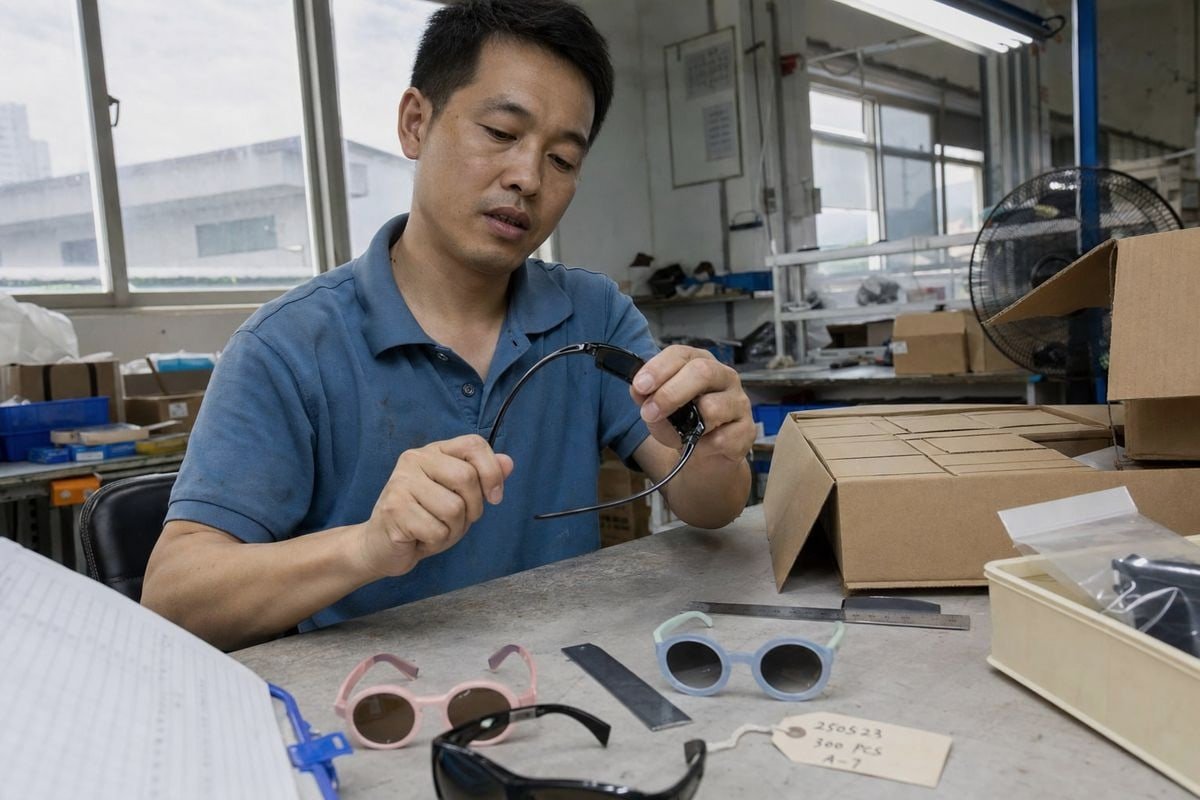
The reason suppliers swap TR90 for generic petroleum-based plastic is simple math. TR90 resin costs meaningfully more per kilogram, and a factory quoting far below market must recover margin somewhere. The frame material is the easiest place to hide it, because most buyers cannot tell the difference from a photo.
数分で実施できる物理テスト
本物のTR90および本物のTPEEフレーム素材には、明確でテスト可能な特性があります。当社では受入材料検査でこれらと同じチェックを行っており、試験設備がなくても任意のサンプルで再現できます。
| テスト | 本物のTR90 / TPEE | グレードダウンされた一般的なプラスチック |
|---|---|---|
| 180°ねじりテスト | 瞬時に元の形状に戻る | 折れる、ひびが入る、または曲がったままになる |
| 手に持った重さ | サイズに対して非常に軽量 | 明らかに重い、または不自然に空洞感がある |
| 車内高温シミュレーション(60℃) | 表面が乾いた状態を保ち安定している | ベタつく、変形する、またはオイルが滲み出る |
| フレーム端部の引っかきテスト | 素材の内部まで色が通っている | 表面の下から白い芯が見える |
| 表面仕上げ | 滑らかで、ゲート痕や気泡がない | 粗い突起、フローライン、目立つ気泡 |
着色状態が真実を物語る
高品質なフレームは、成形前に生の樹脂に顔料を混入するマスターバッチ着色を使用します。安価なフレームは表面塗装されていることが多いです。子供が汗をかいたりテンプルを傷つけたりすると、表面の塗料が肌に色移りし、白い芯が露出します。当社の作業場では、塗料だけでなく樹脂自体が代替されたことを示すため、この「白芯」現象が見られるバッチはすべて不良品として却下します。
ヒンジも確認してください。耐久性のある子供用フレームは、ネジ山が潰れないようにねじ切りされた金属製バレルインサートを使用しています。よくある品質低下の手法は、柔らかいプラスチックにネジを直接打ち込むことです。ヒンジは数週間で緩み、修理できなくなります。そのたった一つの詳細が、コスト削減の全貌を物語っていることがよくあります。
安い見積もりの裏にある実際の素材を確認するために、工場にどのような質問をするべきですか?
以前、オーストラリアの調達マネージャーから、なぜ当社の見積書には樹脂のブランド、レンズ基材、ヒンジのタイプが一行ずつ明記されているのか尋ねられたことがあります。私の答えは「曖昧な見積書は曖昧な素材を隠すから」です。
工場に対して、正確な樹脂グレードとサプライヤー名の開示、化学物質安全性データシート(MSDS)の提示、レンズ基材の確認(アクリルや不特定多数の「PC風」ではなくポリカーボネートであることを確認)、ヒンジ構造の指定、および完成品がどの安全基準に基づいて試験されているかの明記を依頼してください。

適切な質問をすることで具体性が求められますが、コスト削減を優先する業者は具体性を避けます。当社の工場の15年にわたる子供用アイウェアの輸出経験から、誠実なサプライヤーは素材に関する質問に対して迅速かつ書面で回答することを見てきました。回避的なサプライヤーは話を価格にすり替えます。
グレードダウンを暴く7つの質問
- フレームの正確な樹脂およびグレードは何ですか? "「TR90」という表記だけでは不十分です。樹脂メーカーとグレード番号に加え、化学物質安全性データシート(MSDS)の提示を求めてください。
- レンズの基材は何ですか? ポリカーボネート 1、TAC、アクリル、CPはそれぞれ大きく挙動が異なります。「偏光」とはフィルムの特性であり、素材ではありません。
- レンズはUV400ですか?また、透過率テストの結果を示せますか? ステッカーは単なる主張です。分光光度計のレポートこそが証明です UV400保護 2 基準。.
- 素材はBPAフリーかつフタル酸エステル系可塑剤フリーですか? 子供はテンプルエンドを噛むことがあります。 BPAフリーの証明 3 および無鉛塗料の要件は、あらゆる子供用製品にとって重要です。
- ヒンジはどのように作られていますか? 金属製バレルインサートですか、それとも生プラスチックに直接打ち込まれたネジですか?
- レンズの薬研(Vヤゲン)形状はどうなっていますか? 適切なV型薬研はレンズをフレームの溝にしっかり固定します。平エッジのレンズは、夏の暑さでフレームが膨張したときに外れてしまいます。
- Can we audit or video-tour the workshop? A factory quality control audit — even remote — reveals whether 5S management and incoming-material checks actually exist.
Read how they answer, not just what they answer
When a supplier replies with documents, resin brand names, and tolerances, the low quote may be legitimate efficiency. When the reply is "same same as TR90" or "food-grade plastic" with no paperwork, assume a substitution. In our experience, the buyers who ask these questions before sampling save themselves an entire failed season.
子供用サングラスが本物の柔軟で安全な素材を使用していることを証明する検査機関のテストや証明書にはどのようなものがありますか?
Before we ship any new style, our QC team sends samples out for third-party testing. That habit came from a hard lesson early on: buyer trust is built on reports, not promises.
光学性能およびUV性能のANSI Z80.3またはEN ISO 12312-1試験報告書、ポリカーボネートレンズの落球試験結果などの耐衝撃性試験、米国市場向けのCPSIA適合性、EU向けのREACH規制基準、さらにBPAフリーおよびフタル酸エステルフリーの化学試験報告書を要求してください。
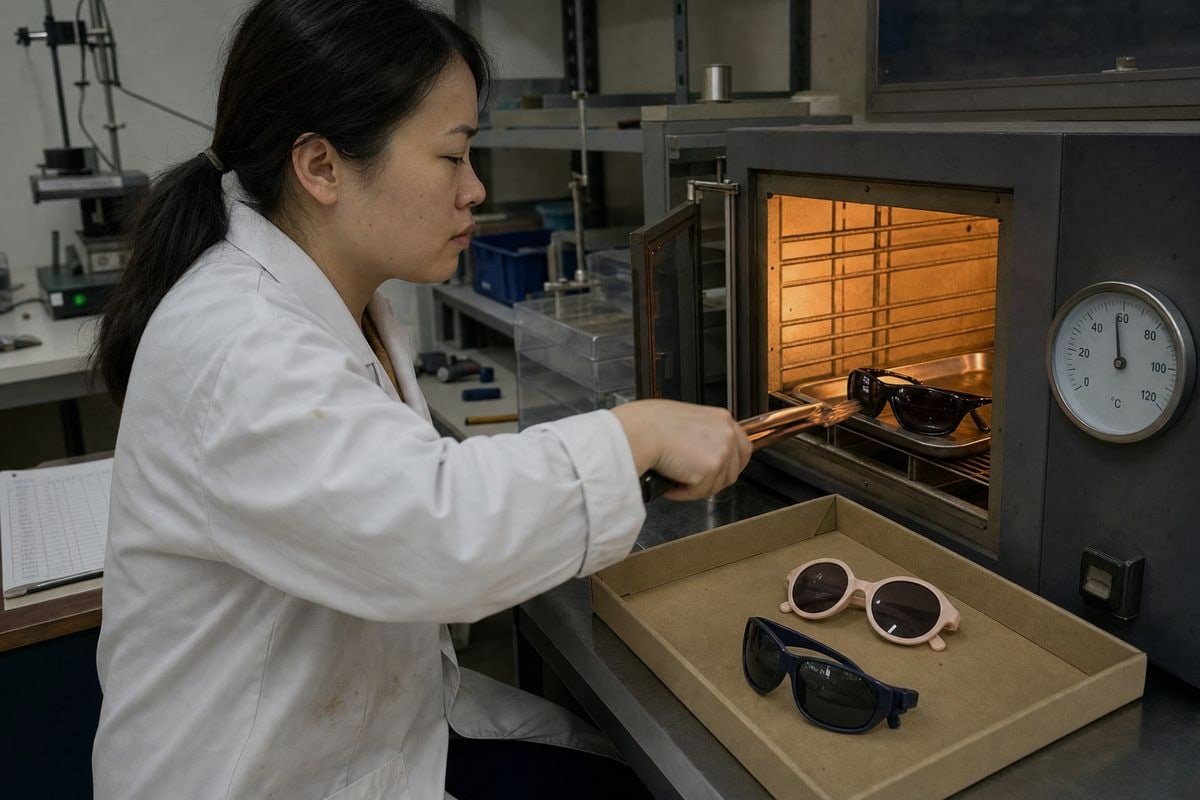
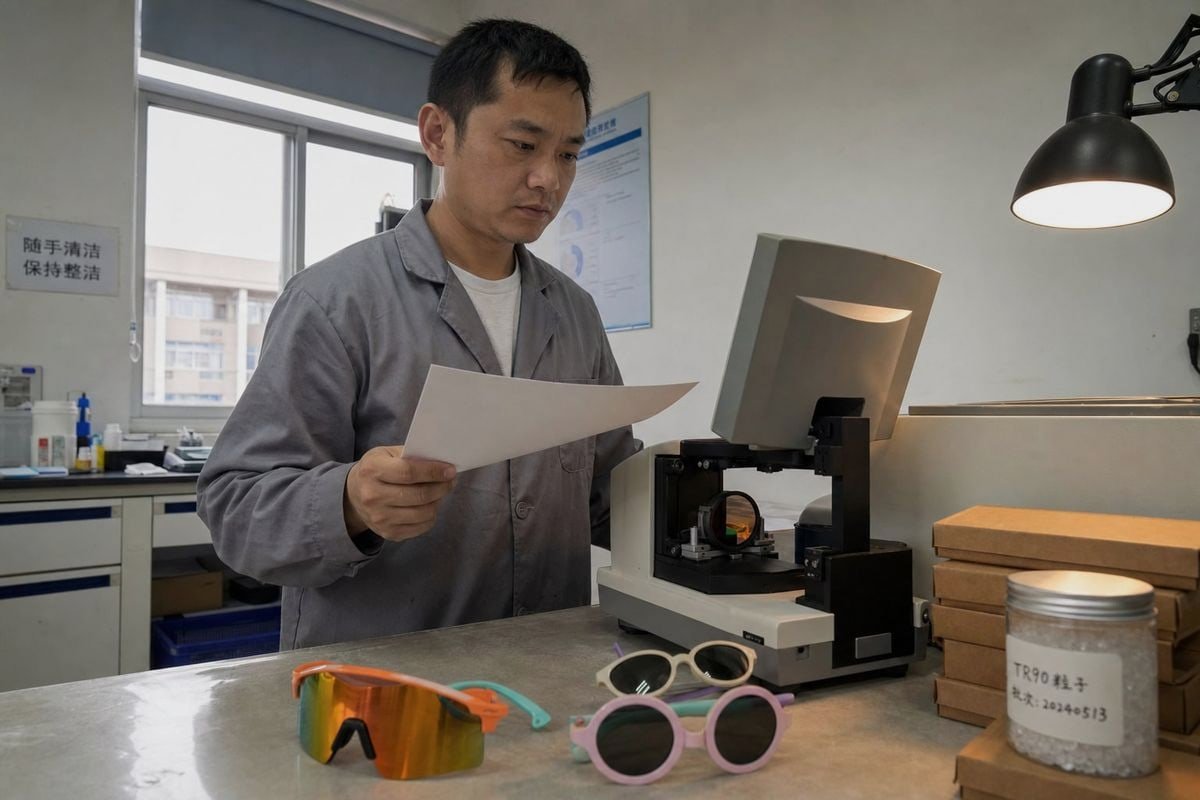
Certificates are only useful if you know which one proves which claim. Many buyers accept a single "UV400" sticker as proof of everything. In reality, safety for children's eyewear splits into three separate proof categories: optical safety, mechanical safety, and chemical safety. A genuinely safe product needs evidence in all three.
Match each claim to its proof
| Claim on the quote | Document that actually proves it | What a downgrade looks like |
|---|---|---|
| "UV400 protection" | Spectral transmittance report to EN ISO 12312-1 or ANSI Z80.3 4 | Dark tint with no UV filtering — worse than no sunglasses |
| "Shatterproof lens" | 耐衝撃性テスト 5 report (drop-ball or equivalent) | Brittle acrylic or CP lens that splinters on impact |
| "Safe for children" | CPSIAコンプライアンス 6 report, lead-free paint requirements, phthalate screening | Unscreened paints and plasticizers on mouth-contact parts |
| "Eco-friendly material" | REACH 規則 7 standards documentation, BPA-free certification | Generic resin with no chemical traceability |
| "Optical quality lens" | Optical clarity grade / refractive power test | Wavy, distorting lens that strains young eyes |
Why the standard matters more than the sticker
One consumer investigation found that a large share of marketplace kids' sunglasses failed UV tests and lacked required CE or UKCA markings entirely. Stickers are printed by the thousand; test reports carry lab names, dates, and sample photos you can verify. When we develop UV400 and polarized lens options for clients, the transmittance curve travels with the order file. Ask your supplier for the same. If the report cannot be traced to a named lab and a real sample, treat it as decoration.
素材や仕様が明記されていない場合、どのように見積もりを公平に比較すればよいですか?
Two quotes for the "same" kids' sunglasses recently crossed my desk, thirty percent apart. Once we normalized the specs line by line, the cheap one was actually the expensive one.
すべてのサプライヤーを1つの仕様書(フレーム樹脂、レンズ基材、UV規格、ヒンジ構造、着色方法、パッケージング、要求される証明書など)に揃えさせることで、見積もりを公平に比較します。その上で仕様の差額を評価します。記載のない仕様は、別段の証明がなされない限り、可能な限り最も安価なバージョンとして扱うべきです。
An unspecified quote is not a neutral quote. It is a quote that reserves the right to downgrade. The fix is a normalization exercise: you define the spec sheet, and every supplier must fill in the same blanks before you compare a single price.
マーケティング言語と物質的現実
| What the quote says | What it might really mean |
|---|---|
| "Polarized lens" | TAC polarized lenses — glare reduction, but little impact protection |
| "PC frame" or "eco plastic" | Generic plastic, not TR90 or TPEE; stiff and brittle |
| "UV resistant" | No verified UV400 protection; tint only |
| "Fashion lens" | Non-optical acrylic with poor optical clarity grade |
| "Spring hinge" | Screws driven into bare plastic, no metal inserts |
Remember: polarization is about glare, not UV safety. TAC polarized lenses can be acceptable for casual adult styles, but polycarbonate vs acrylic lenses is the comparison that decides child safety, because polycarbonate offers roughly ten times the impact resistance of standard plastic and blocks 100% of UVA/UVB by material property.
A fair-comparison process
- Send all suppliers your own spec sheet with every field mandatory.
- Reject any quote returned with blanks or "similar to" language.
- Add the cost of missing certificates to the low quote — testing is never free.
- Order samples and run the flex, distortion, and heat tests yourself.
- Compare landed cost per compliant unit, not price per piece.
At our factory, buyers can also sidestep much of this risk by starting from our roughly 800 existing styles with documented materials, then customizing colors, logos, lenses, and packaging. Known materials plus written specs make every future quote comparable.
結論
Low quotes hide material downgrades in frames, lenses, hinges, and finishes. Verify resins, demand test reports, normalize specs, and test samples yourself — then a fair price becomes a safe price.
脚注
1. Explains material properties relevant to lens impact resistance claims. ↩︎
2. Background reference on UV protection standards and sunglasses lens technology. ↩︎
3. FDA guidance on BPA safety relevant to children’s product material claims. ↩︎
4. Reference for optical safety standards governing sunglasses lens performance. ↩︎
5. ISO standards body defines testing methods for impact resistance verification. ↩︎
6. Official source explaining US children’s product safety law referenced in article. ↩︎
7. EU chemical safety regulation authority explaining REACH compliance requirements. ↩︎
 English
 Español de México
 Deutsch
 Français
 日本語
 العربية
 Português do Brasil